
Llama Trail is a route created by Responsible Trekking and Travel that connects Cusco’s historic center with Machu Picchu via ancient Inca trails. On the first day, you’ll hike alongside llamas and their herders, visit archaeological sites, and rest at the Andean Sky Domes. The adventure continues to Huchuy Qosqo, where you can choose from three ways to reach Machu Picchu along the Inca Trail.
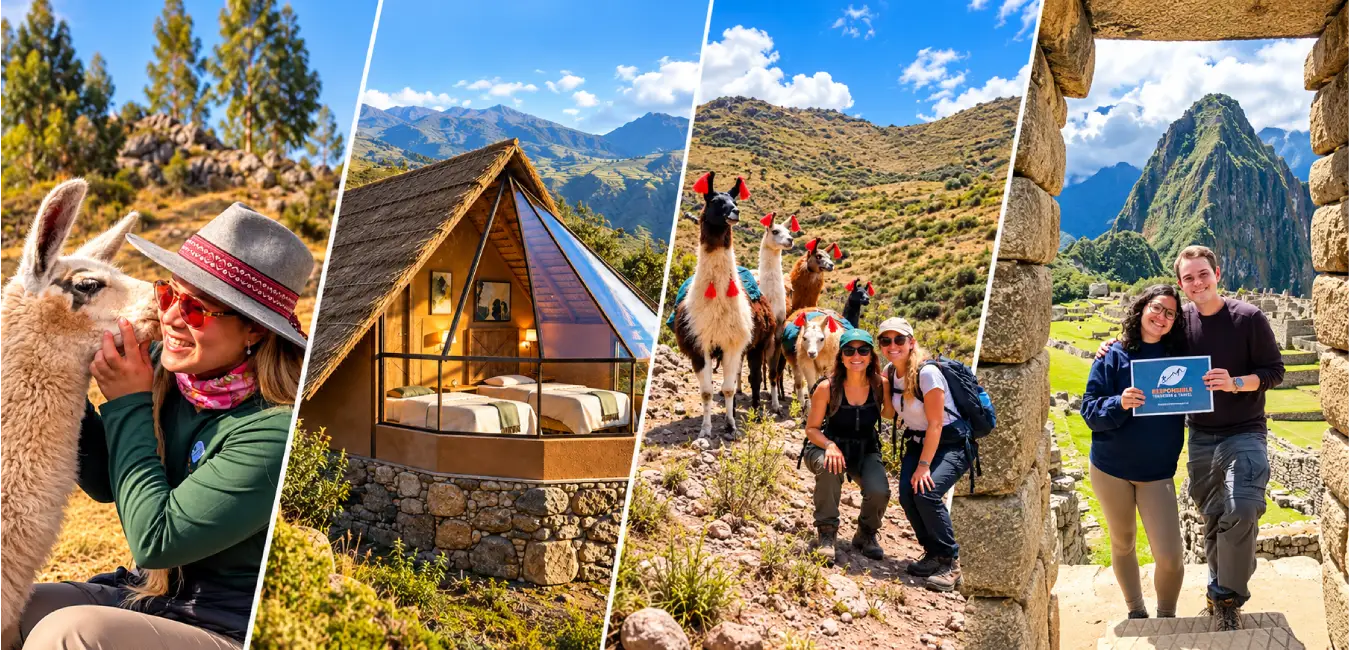
What is the Llama Trail: Qoricancha to Machu Picchu with Andean Sky Dome?
Llama Trail is a trekking route along the Qhapaq Ñan that begins at Qoricancha and crosses the historic center of Cusco to Sacsayhuamán, where llamas accompany you to the Andean Sky Domes. From there, you will continue on foot toward Huchuy Qosqo, exploring ancient trails and Inca archaeological sites. You can then continue your adventure to Machu Picchu via the Inca Trail route of your choice.
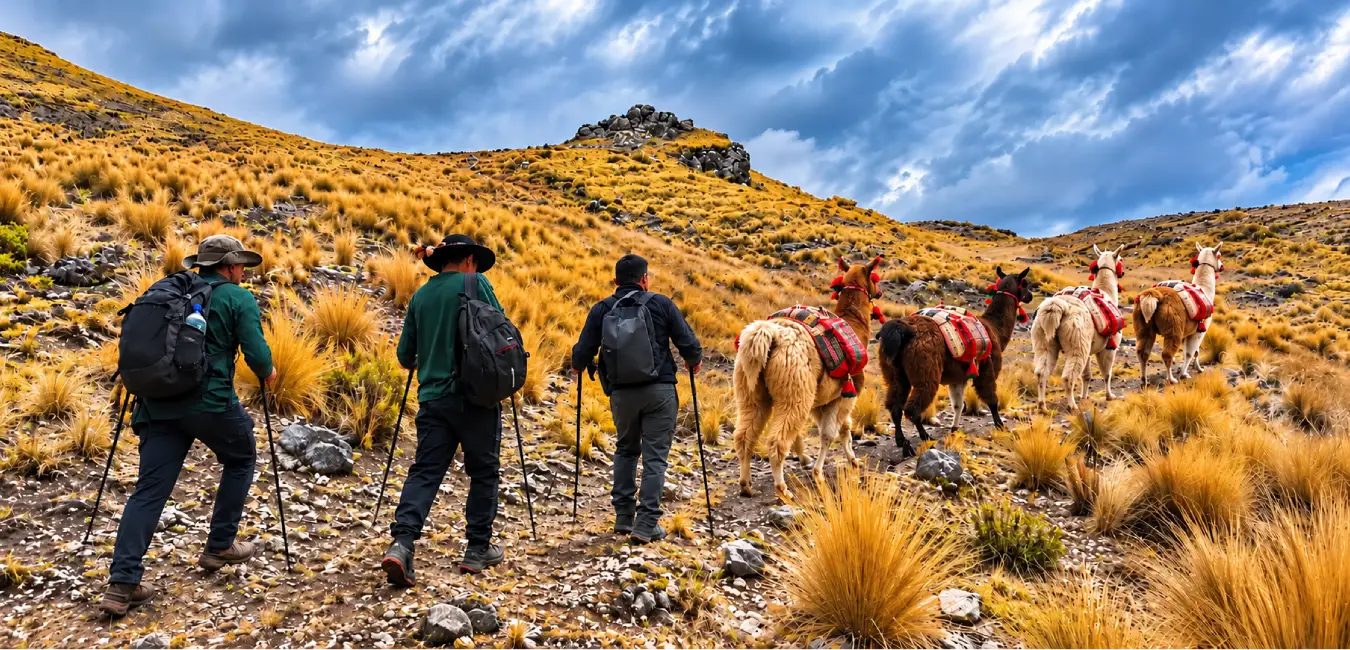
Unlike itineraries that start directly at Kilometer 82 or Kilometer 104, this experience allows you to begin hiking right from the city and gradually discover the landscapes surrounding Cusco all the way to Machu Picchu.
What makes the Llama Trail different?
The Llama Trail brings several experiences together in a single itinerary:
- Start in Cusco: Walk from Qoricancha through the historic center and into the mountains.
- Walk with llamas and local llama herders: Learn firsthand about the relationship between these animals, local communities, and ancient Andean trails.
- Visit archaeological sites: Explore Sacsayhuamán, Chakan, Ñustapacana, Huchuy Qosqo, Llactapata, Sayacmarka, Wiñay Huayna, and Inti Punku, depending on the route you choose.
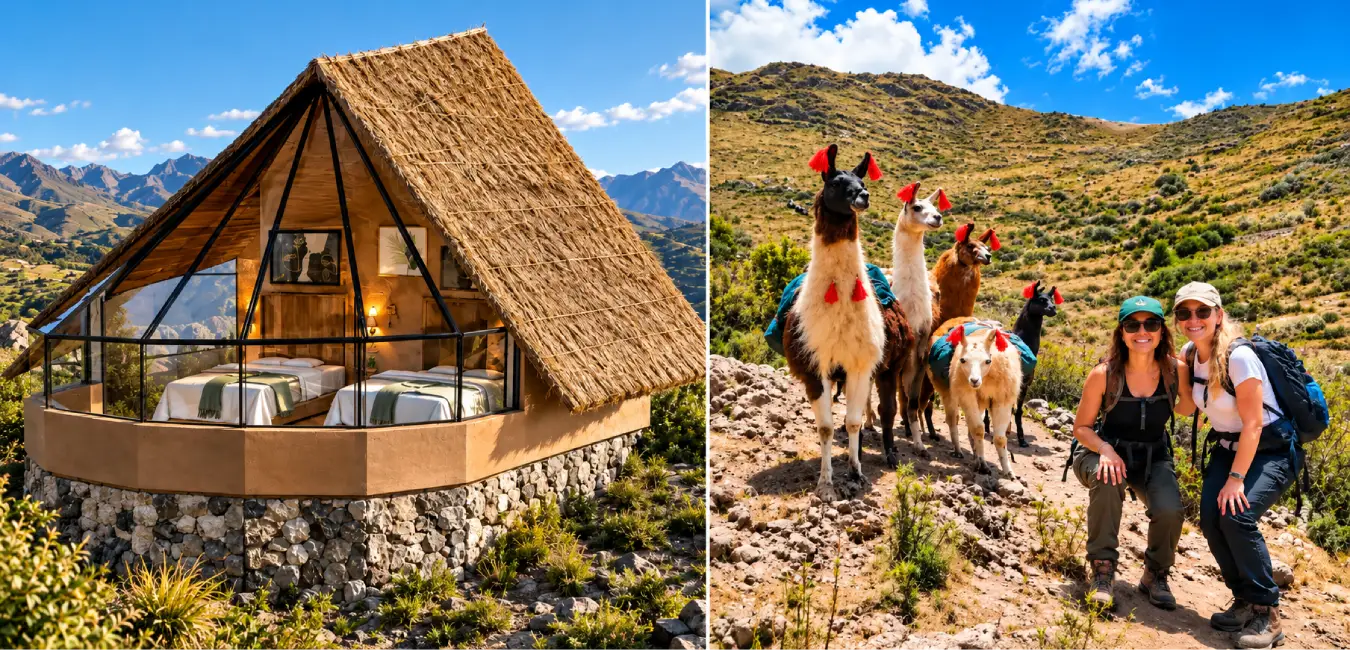
- Stay at the Andean Sky Domes: Relax in a mountain setting and enjoy cultural experiences such as cooking classes, traditional offerings to Mother Earth, and other activities.
- Connect with nature: Hike past lakes, queuña forests, mountains, and cloud forests.
- Choose your route to Machu Picchu: Continue along the Classic Inca Trail, the Short Inca Trail, or travel by train, depending on your chosen itinerary.
In addition, Responsible Trekking and Travel organizes this experience for small groups to simplify coordination, maintain a comfortable hiking pace, and prioritize the llamas' well-being.
What will you see along the route from Qoricancha to Huchuy Qosqo?
Day 1: Qoricancha–Sacsayhuamán–Ñustapacana–Andean Sky Dome
The first day combines historic sites in Cusco with ancient trails that wind into the mountains. The second day, by contrast, takes you mainly through high-altitude landscapes and ends in the Sacred Valley.
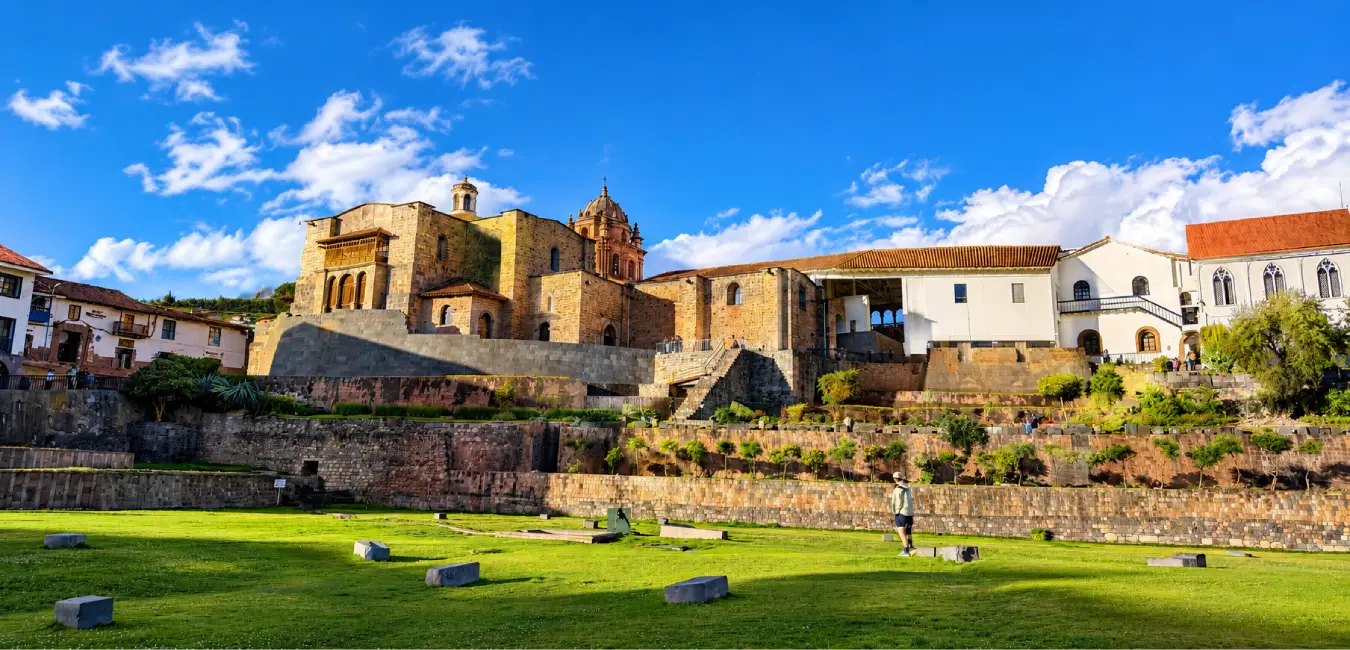
Qoricancha, the Temple of the Sun
Your hike begins just outside Qoricancha, one of the most important religious centers of the Inca Empire in Cusco. Its architecture features finely crafted stone walls that showcase the precision of Inca construction. Here, your guide will explain the site's significance and its connection to the city's ancient ceremonial organization.
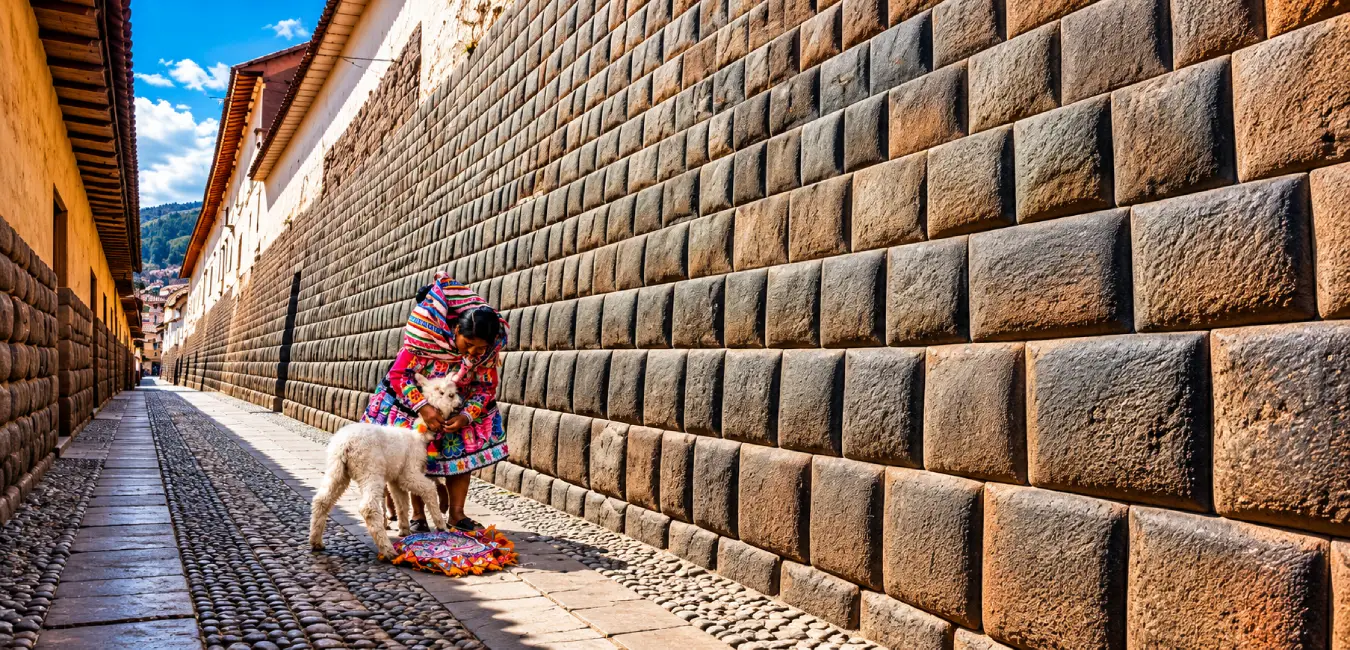
Inti K'ijllu, Loreto Street
Next, you will walk along Inti K'ijllu, now known as Loreto Street. This narrow passage preserves Inca walls and offers a glimpse into how buildings and public spaces were integrated into the ancient capital. Important structures associated with the Inca elite once stood in the surrounding area, including spaces linked to the Acllahuasi and Amaru Kancha.
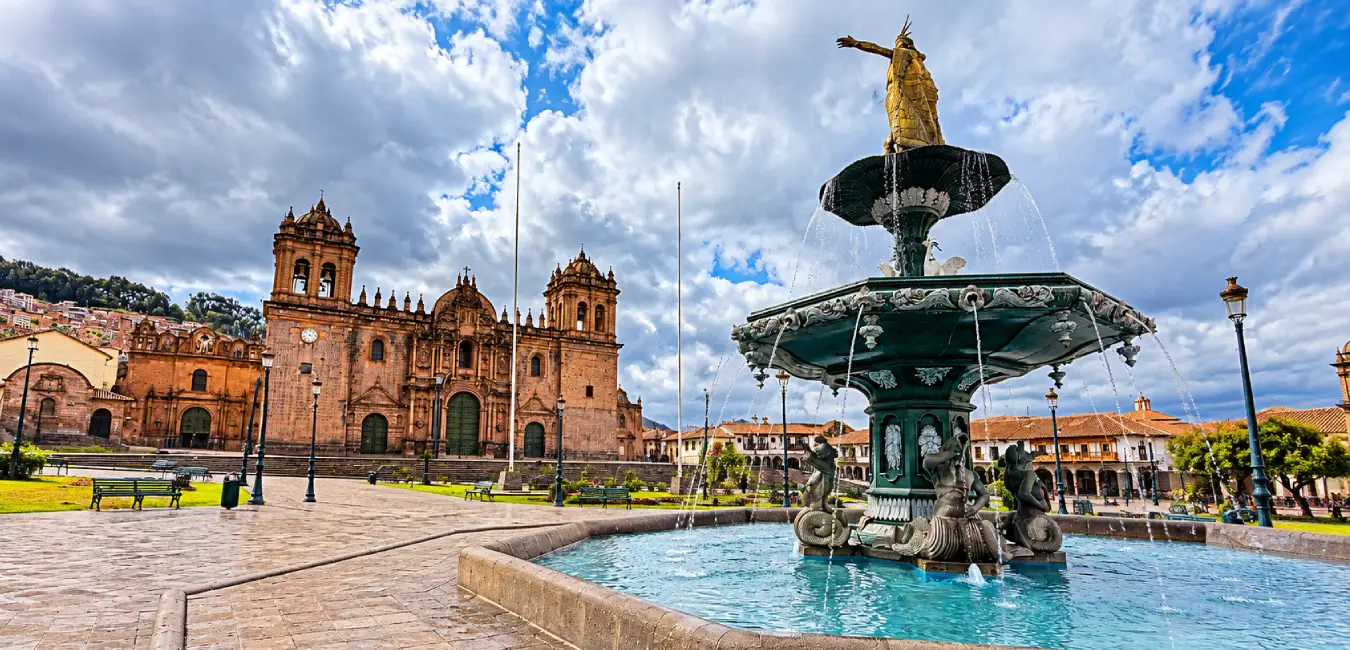
Cusco's Plaza de Armas
Ancient Cusco's Plaza de Armas, known as Huacaypata, was the setting for ceremonies and public celebrations. Your guide will explain how this space played a role in the political and religious life of the Tahuantinsuyo. Take this opportunity to check your backpack, drink some water, and prepare for the uphill section that continues toward the higher parts of the city.
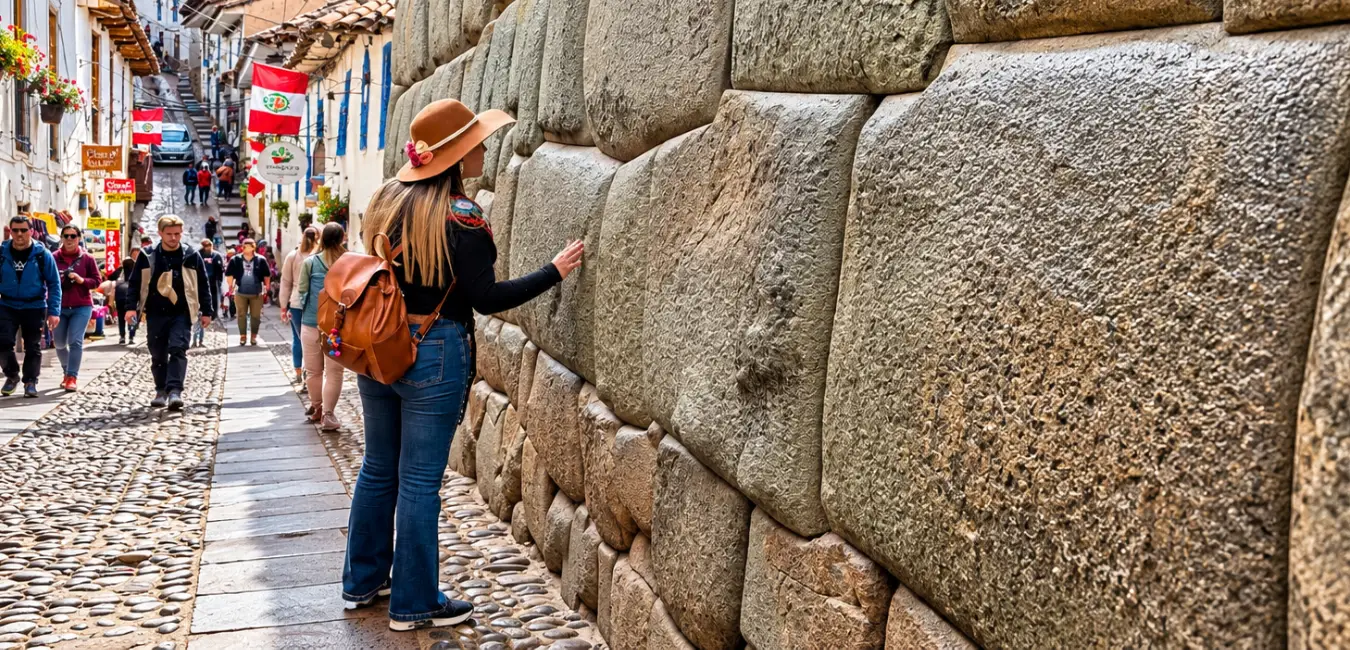
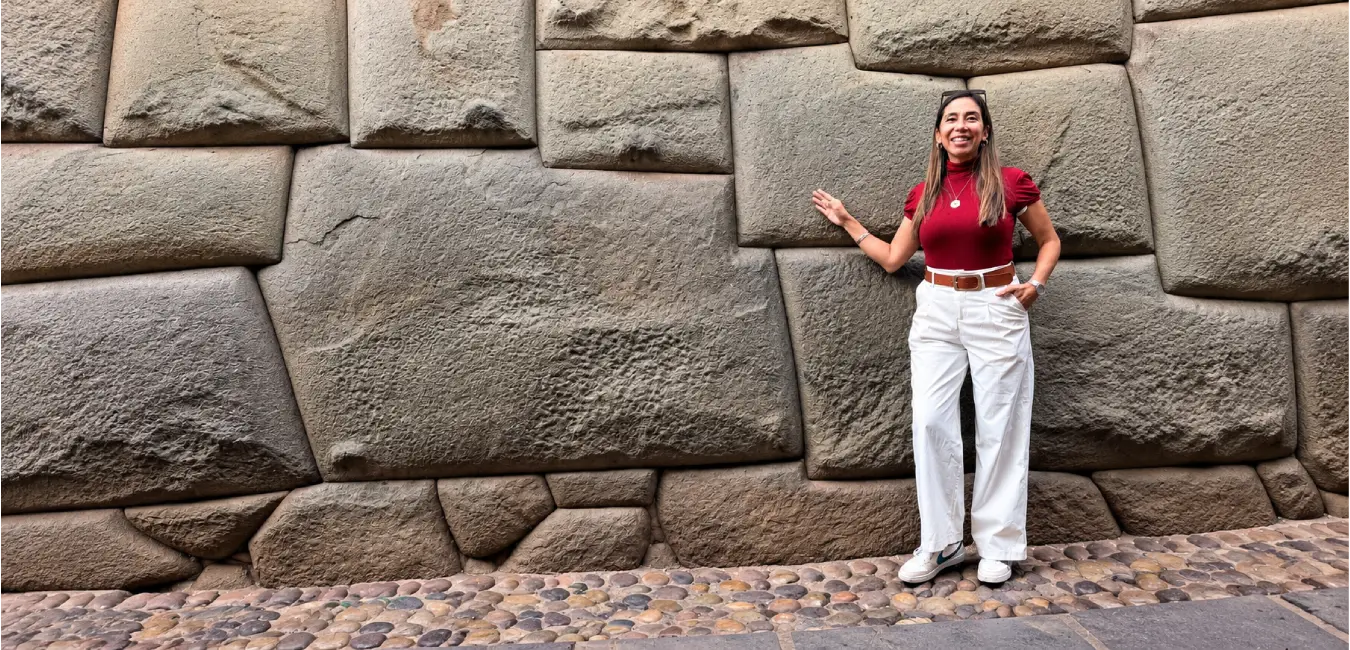
Hatun Rumiyoc and the Twelve Angled Stone
On Hatun Rumiyoc Street, you will find one of the best known examples of Inca stonework: the Twelve Angled Stone. Its irregular shape fits precisely against the neighboring blocks without visible mortar. Notice how the stones fit together and how the wall maintains its stability.
Sapantiana Aqueduct and Siete Borreguitos street
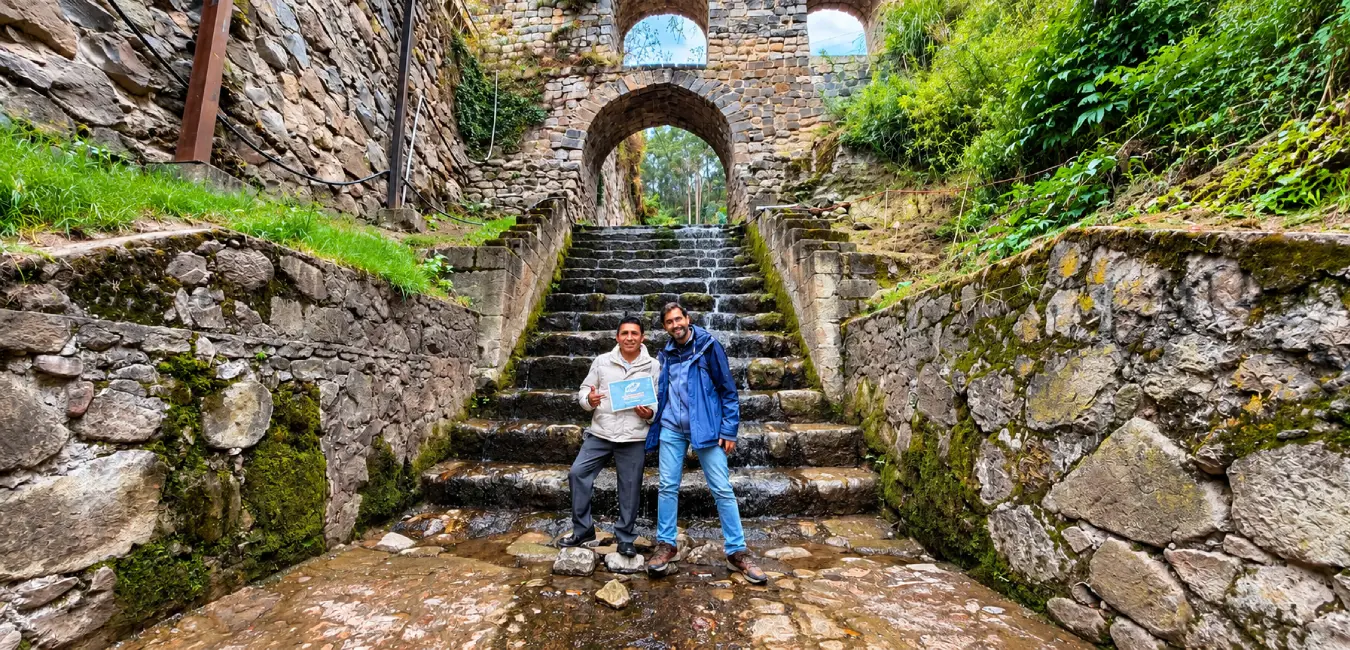
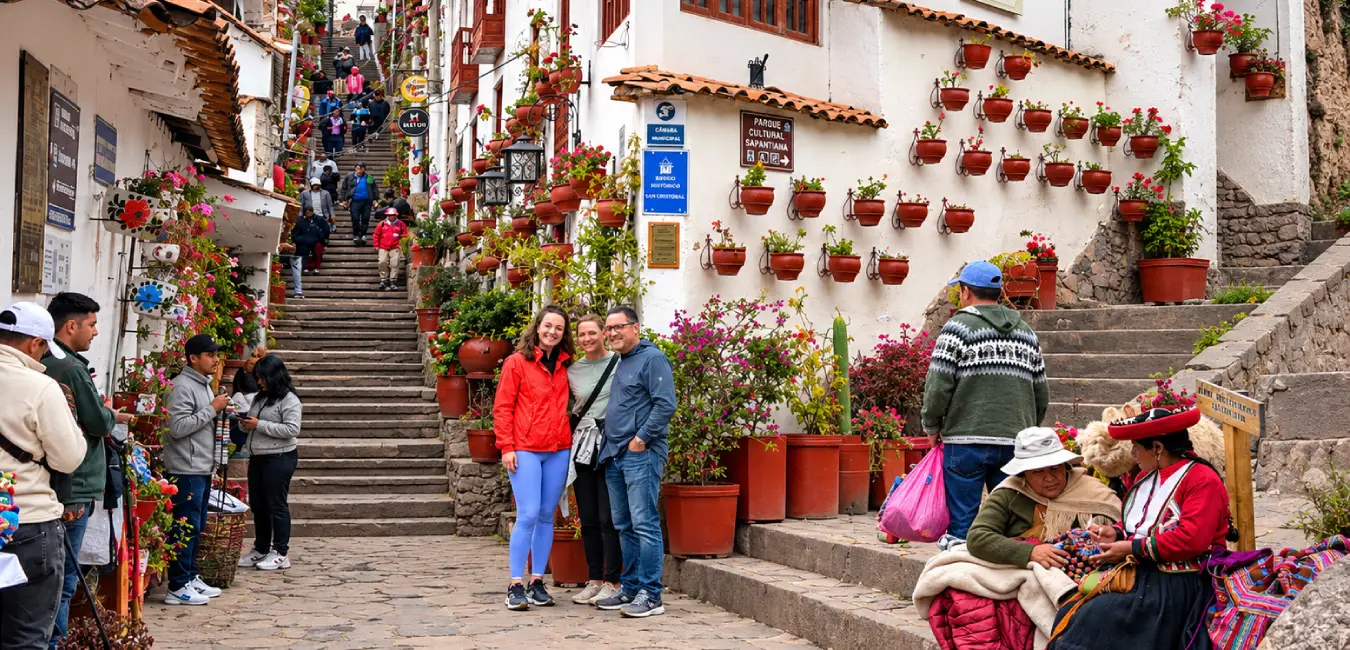
In the San Blas neighborhood, you will reach the Sapantiana Aqueduct, a structure with stone arches beside a ravine. The surrounding area brings together features from different periods and offers an opportunity to discuss water management in the region. Nearby, you will find Siete Borreguitos Street, a narrow passage that leads to the next uphill section.
San Cristóbal viewpoint
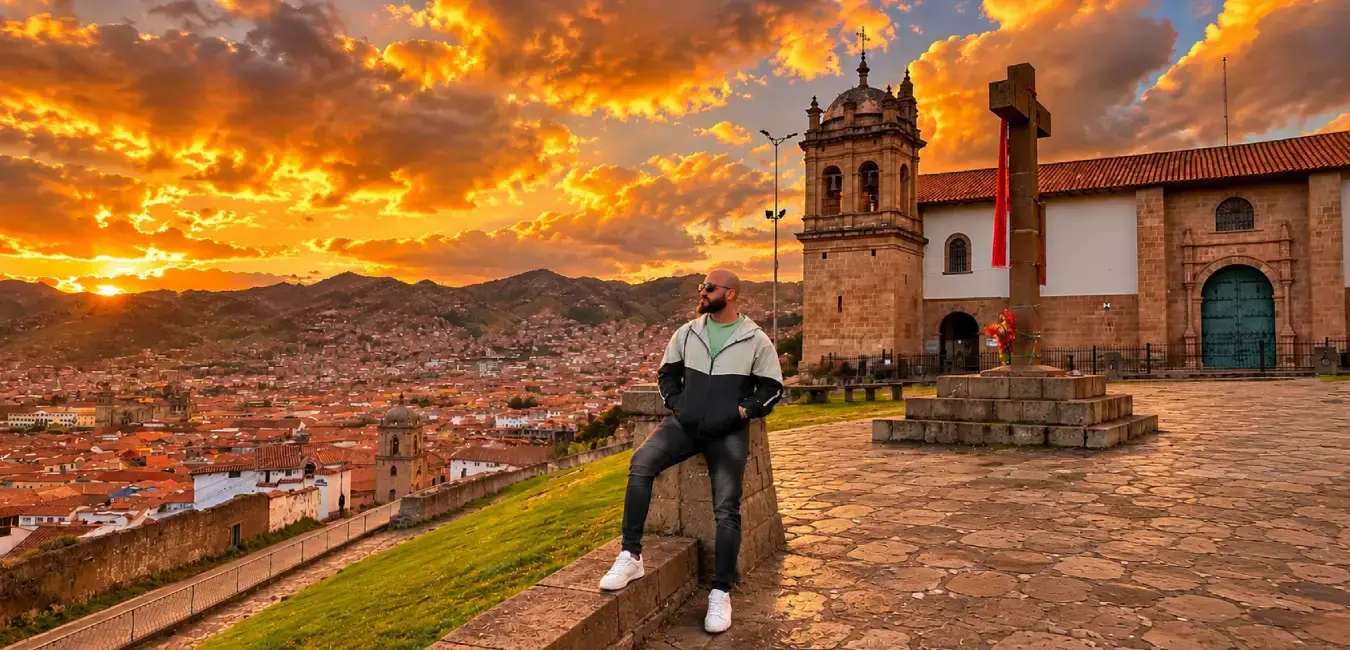
From this viewpoint, you will enjoy sweeping views of Cusco, its rooftops, and the mountains surrounding the city. It is a great place to pause before continuing toward Sacsayhuamán.
Sacsayhuamán
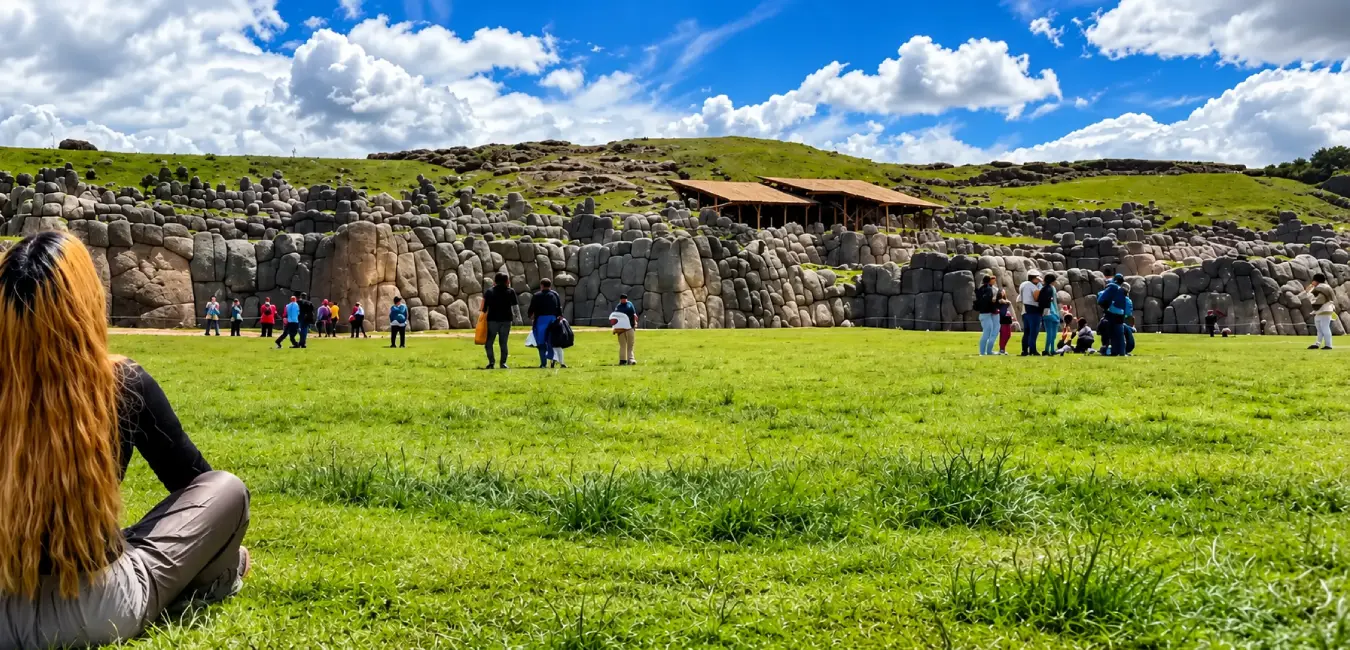
Sacsayhuamán is known for its massive stone walls arranged in zigzag patterns. The complex served ceremonial and administrative purposes and played an important role in Inca urban planning. During your visit, your guide will explain the features of its architecture and how the site relates to the landscape overlooking the upper part of Cusco.
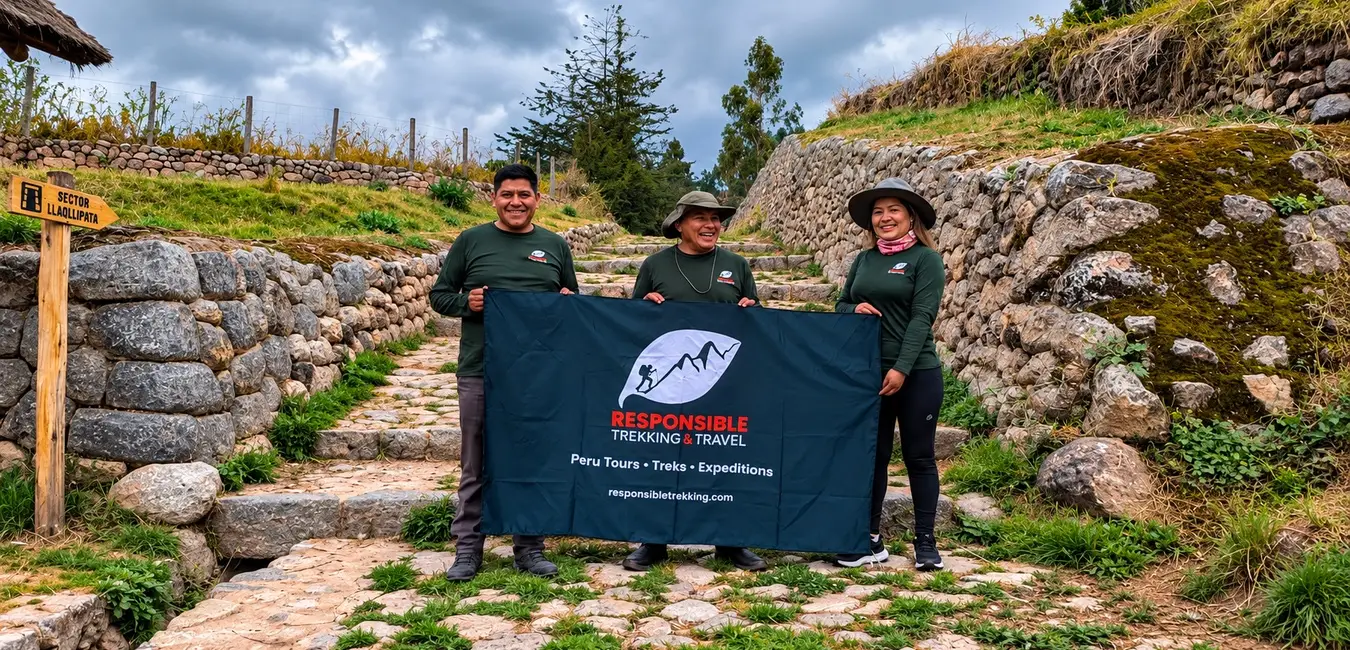
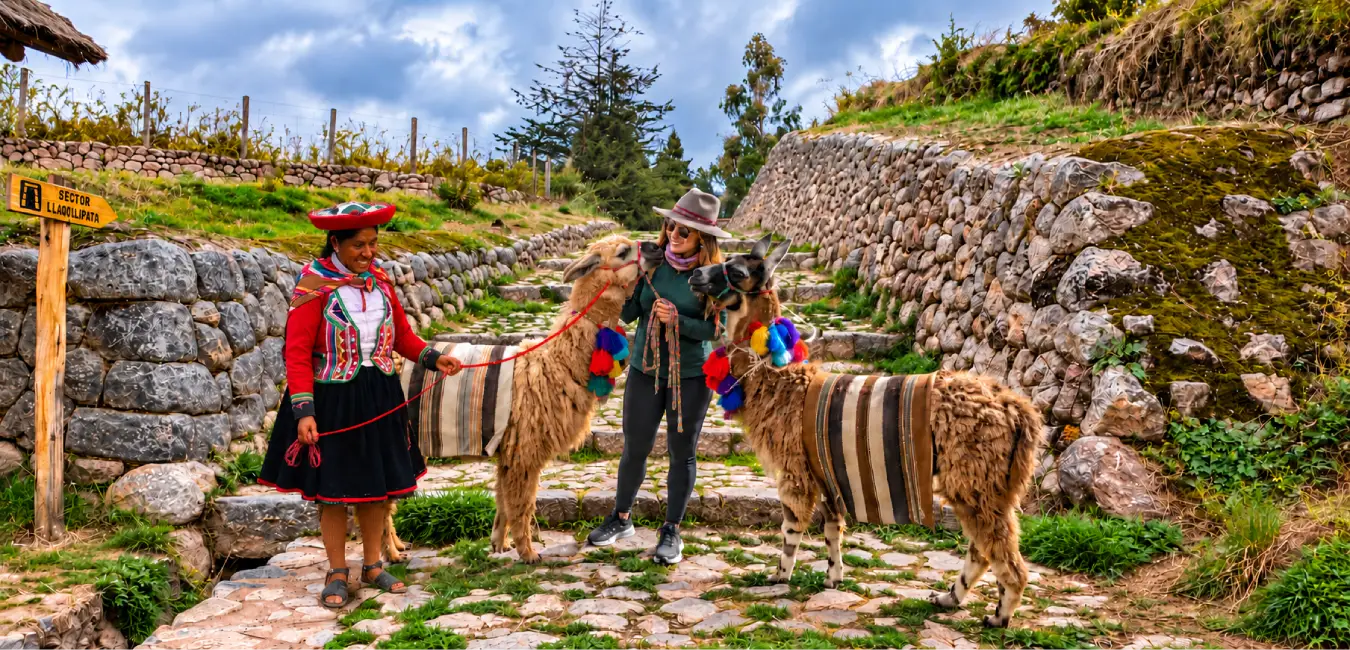
Llaullipata: Meet the Llamas
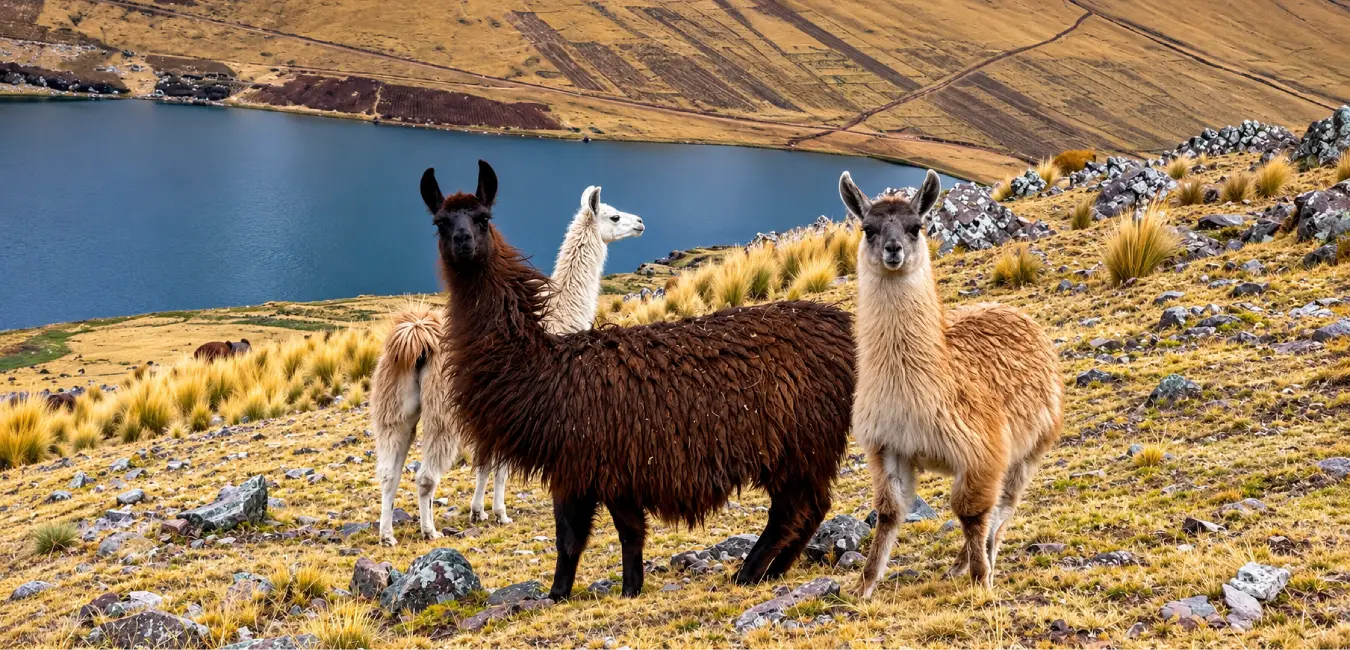
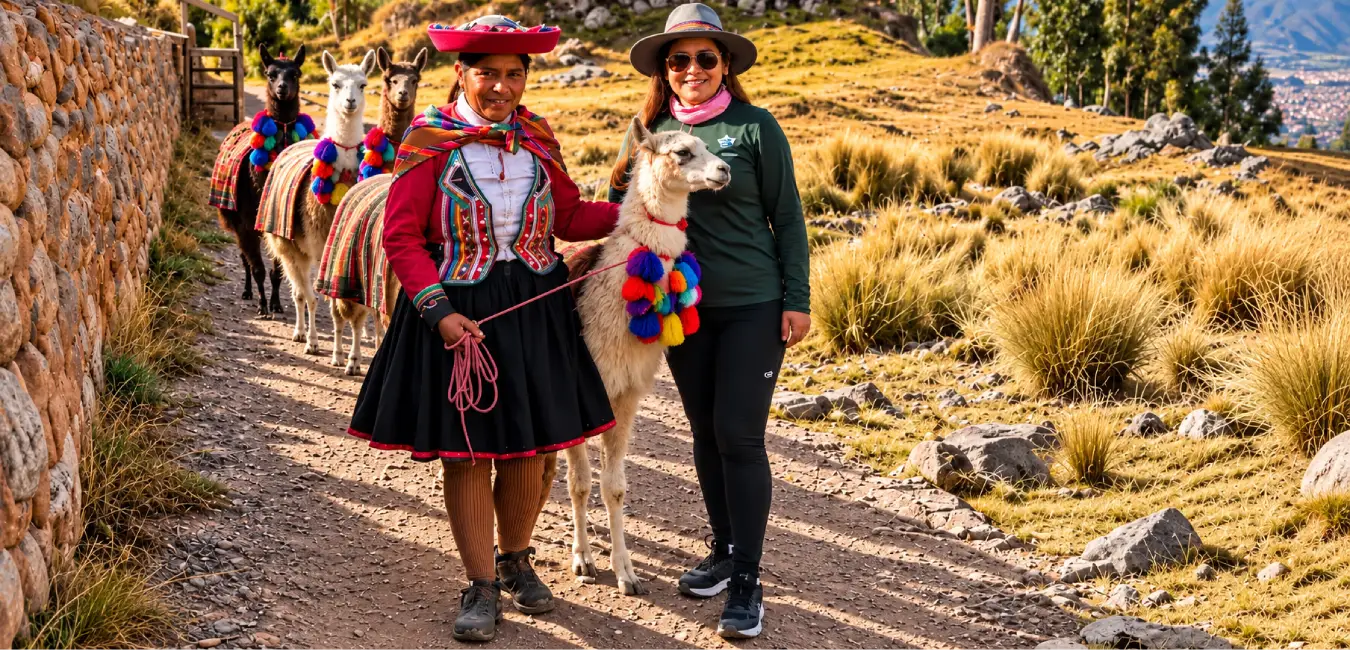
At Llaullipata, you will meet the llamas, alpacas, and local llama herders who will accompany you along the mountain section. From here, the urban landscape gives way to an experience centered on the Qhapaq Ñan.
Walk at the caravan's pace
Keep a safe distance and follow your llama herder's instructions. This will allow you to observe the animals without disrupting their progress.
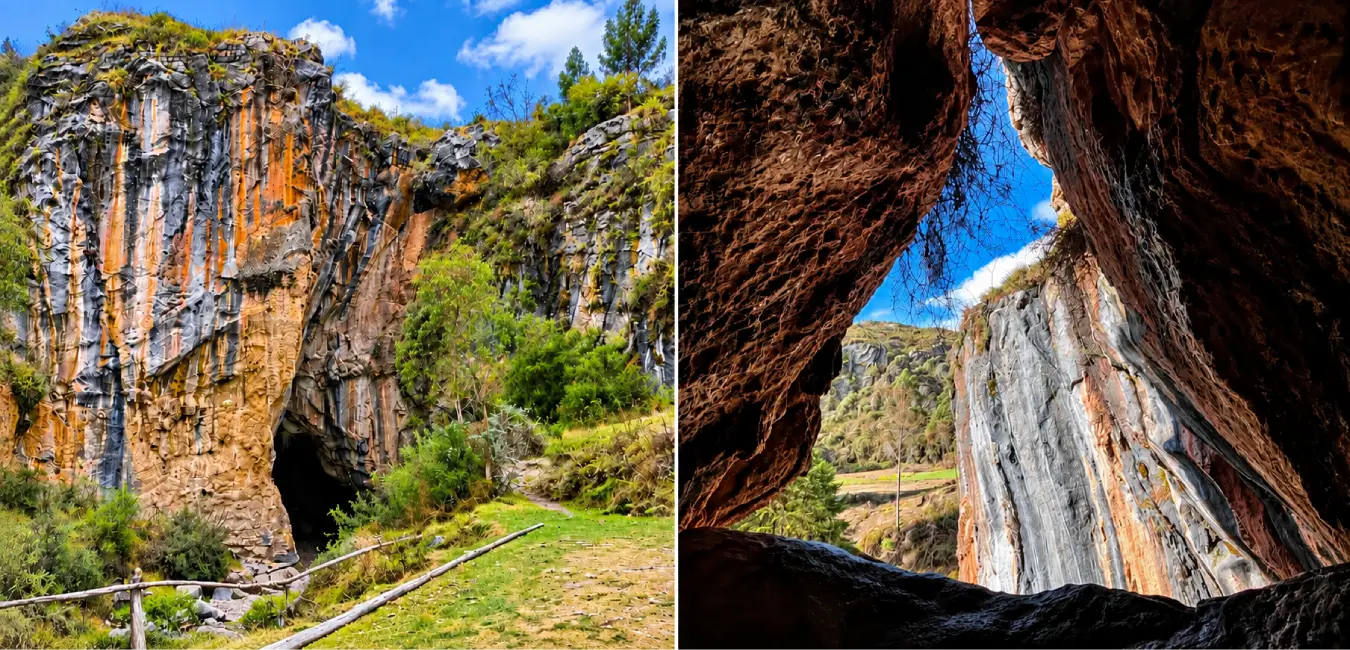
Chakan, or the Devil's Balcony
Chakan, also known as the Devil's Balcony, sits at approximately 3,780 m (12,402 ft). The site features limestone formations, a river, and elements associated with ancient ceremonial practices. Here, you can rest, take photos, and enjoy your box lunch before continuing along the mountain trails.
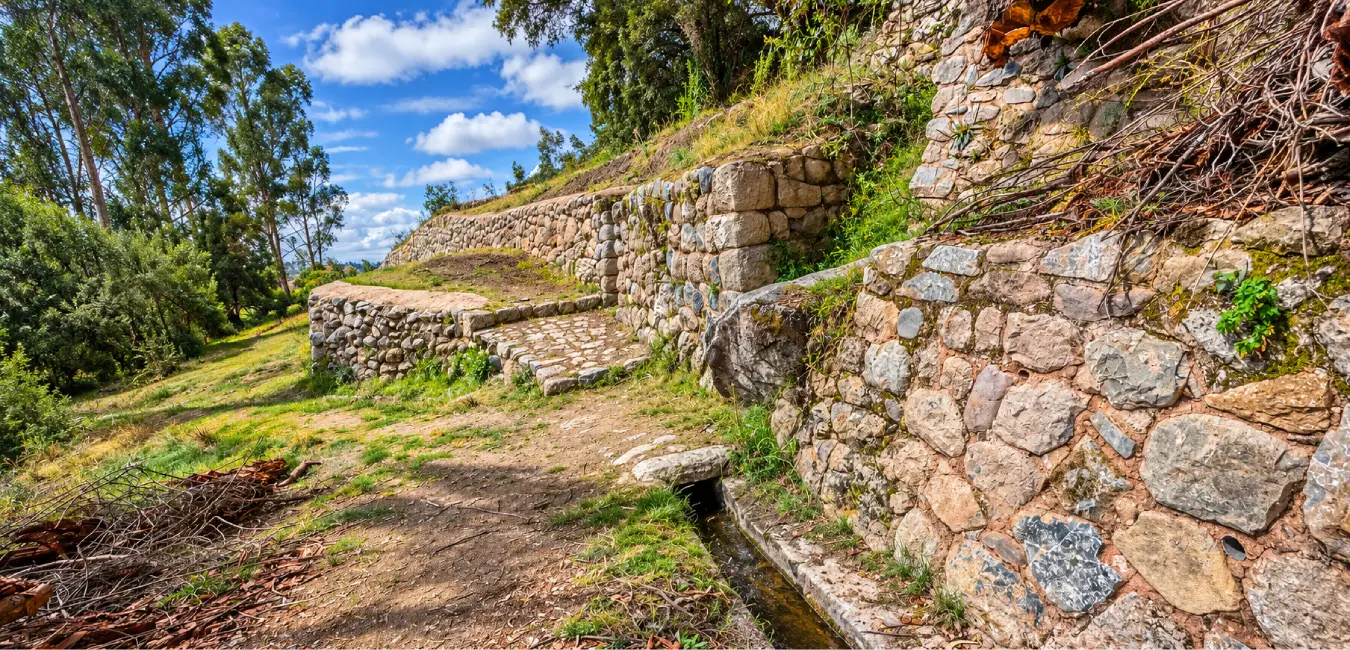
Pukara, Negruyoc, and Salomniyoc Terraces
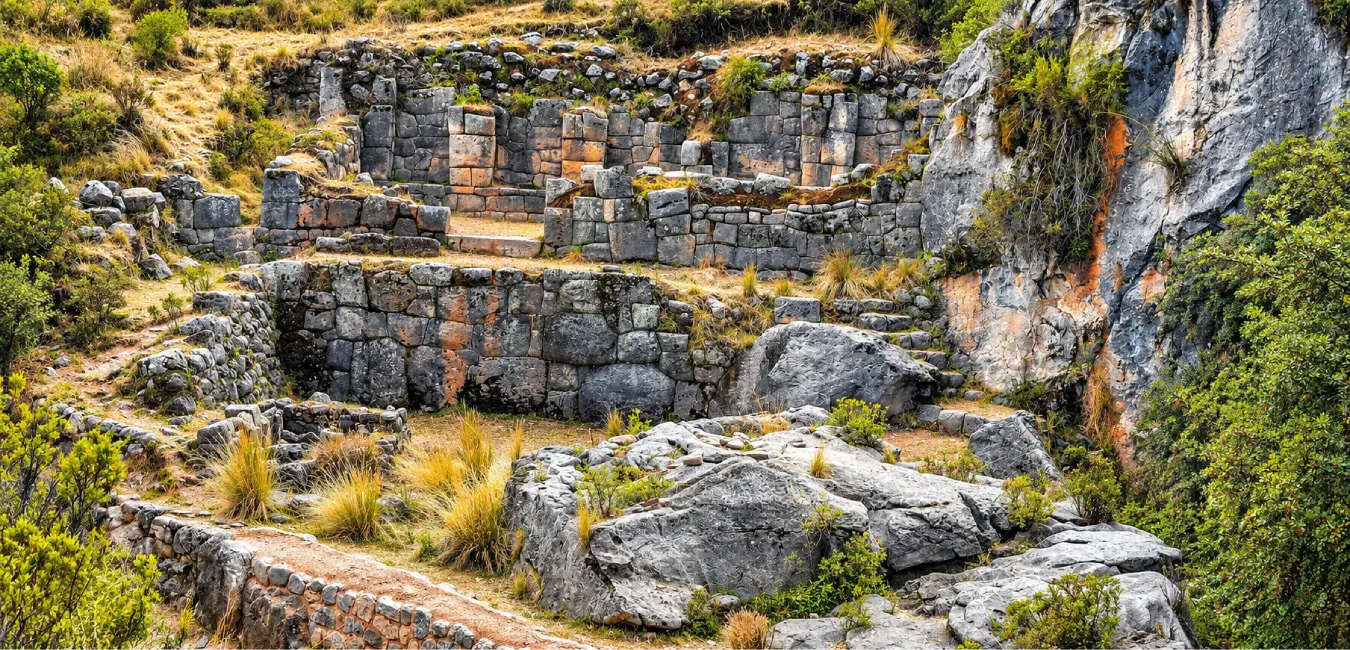
Along the route, you will encounter agricultural terraces, retaining walls, stone structures, and features related to water management. The archaeological remains at Pukara, Negruyoc, and Salomniyoc reveal different ways people adapted to the terrain.
Ñustapacana
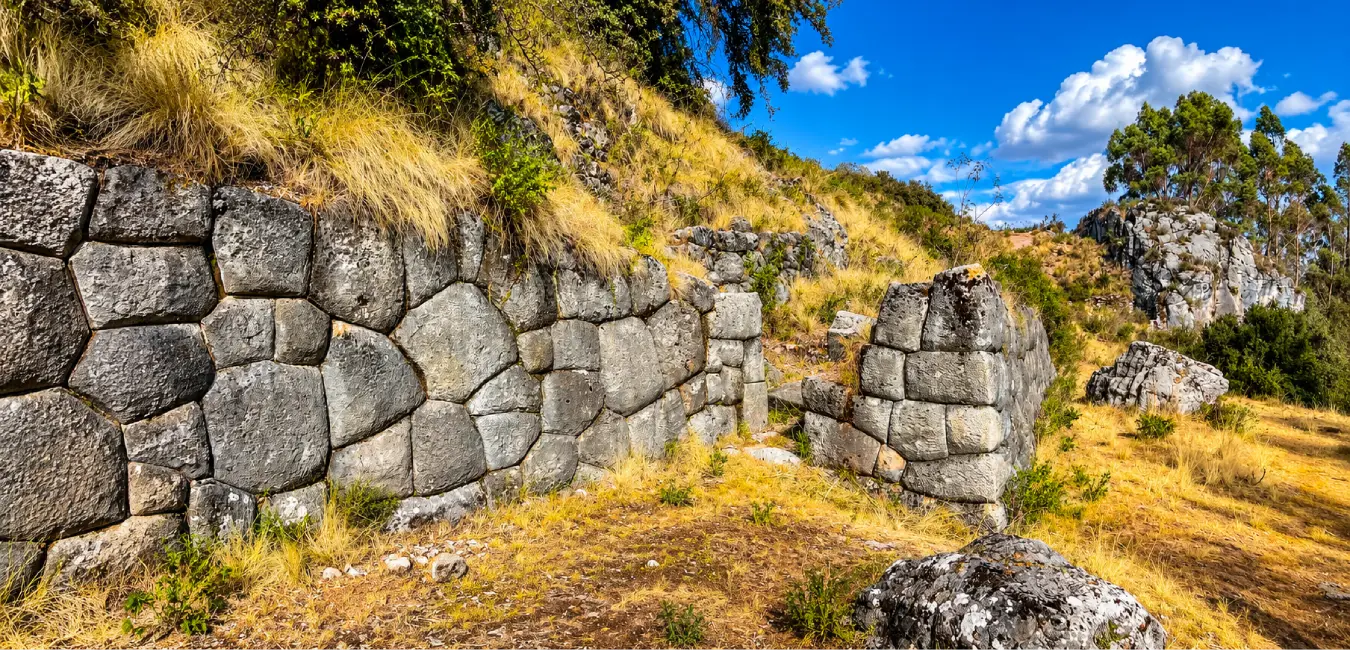
Ñustapacana is an archaeological site associated with a limestone rock formation. The complex preserves structures and small niches that help explain the importance of these places within the Andean landscape.
After your visit
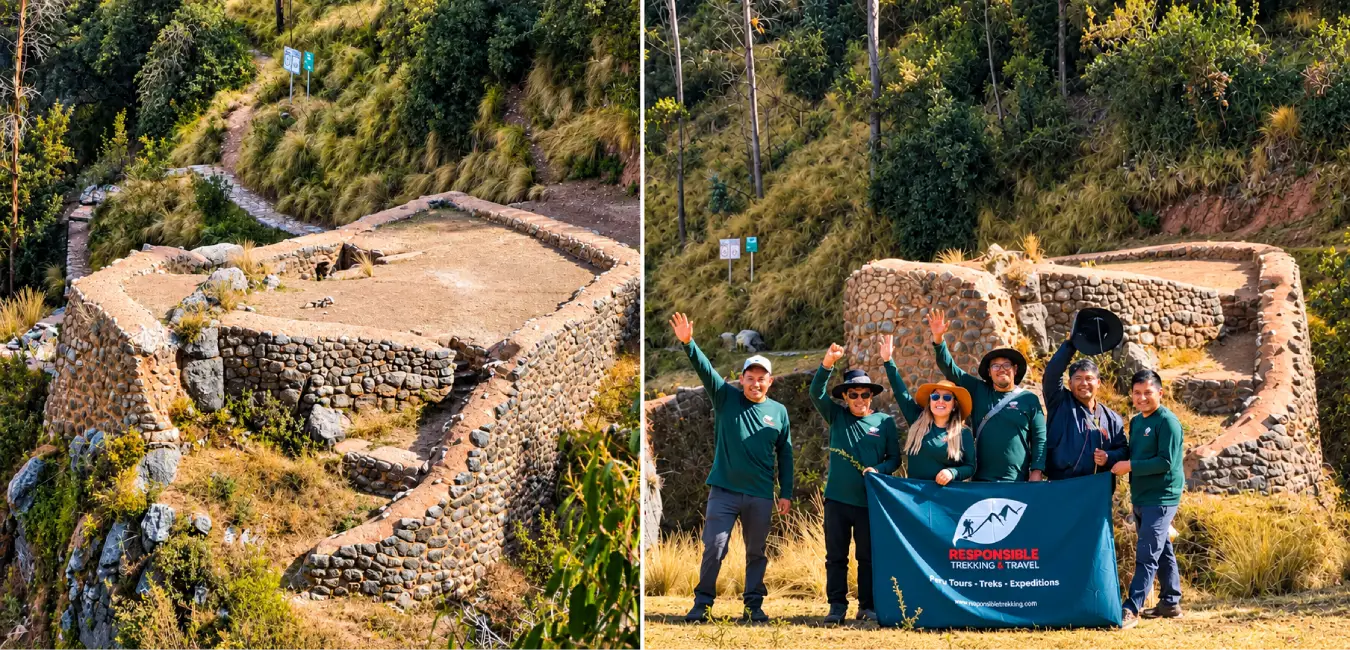
You will continue along the trail toward Piedra Resbalada, where the Andean Sky Domes are located.
Spend the night at the Andean Sky Domes in Piedra Resbalada
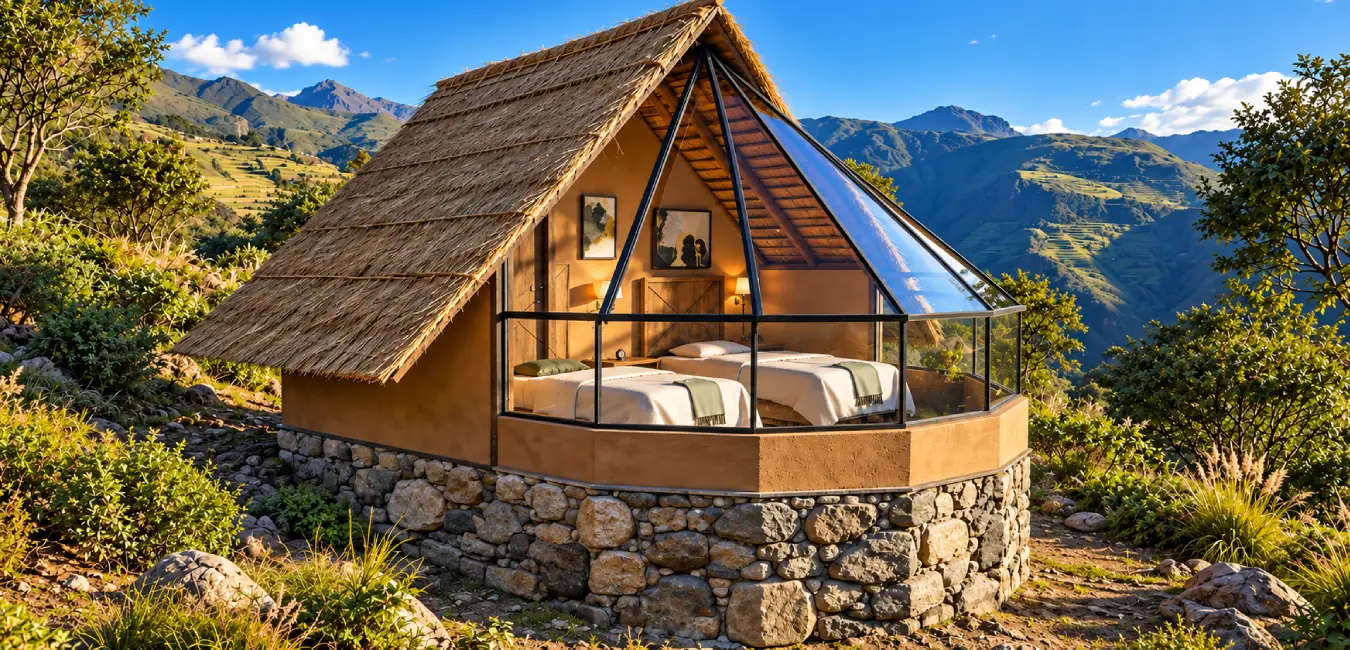
At the end of your first day, you will arrive at our mountain domes, built with natural materials and designed to reduce their impact on the surrounding environment. At approximately 3,850 m (12,631 ft), you can relax, enjoy cultural activities, and recharge in nature before continuing your adventure the next day.
Cultural experiences at the Andean Sky Domes
- Andean astronomy: Learn about Yacana, the celestial llama in the Milky Way.
- Pachamama ceremony: Take part in a traditional offering to give thanks to Mother Earth and the Apus, or sacred mountain spirits.
- Andean textiles: Learn about spinning, weaving, and natural dyes.
- Native potatoes and chuño: Discover Andean potato varieties and traditional preservation techniques.
- Andean corn: Discover local varieties and learn about their importance in agriculture and food traditions.
- Peruvian cuisine: Take part in culinary activities featuring dishes such as pachamanca, huatia, ceviche, and lomo saltado, depending on the program.
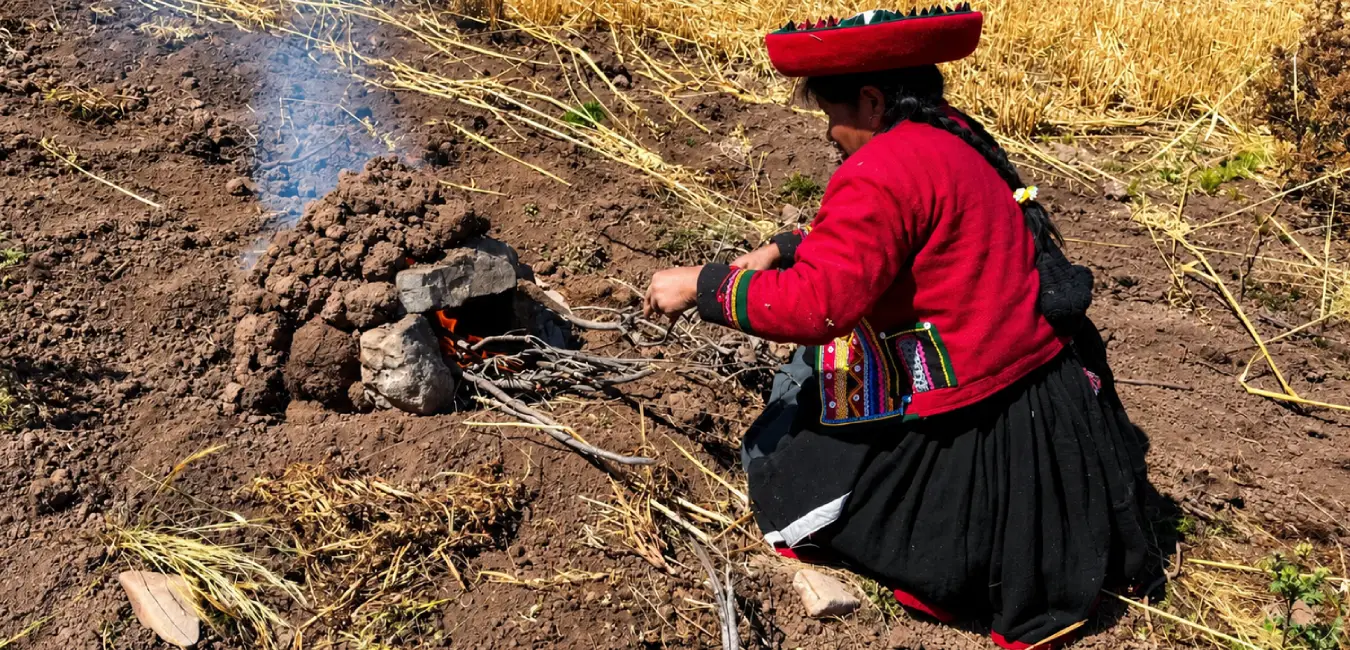
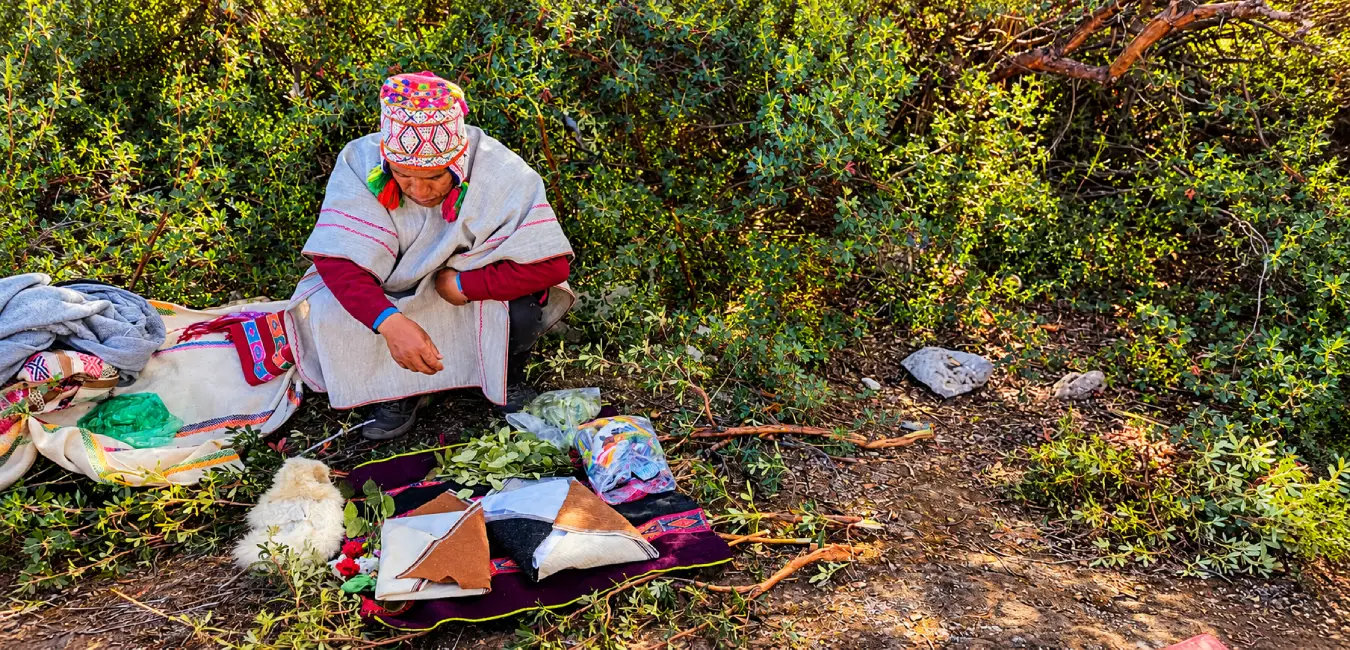
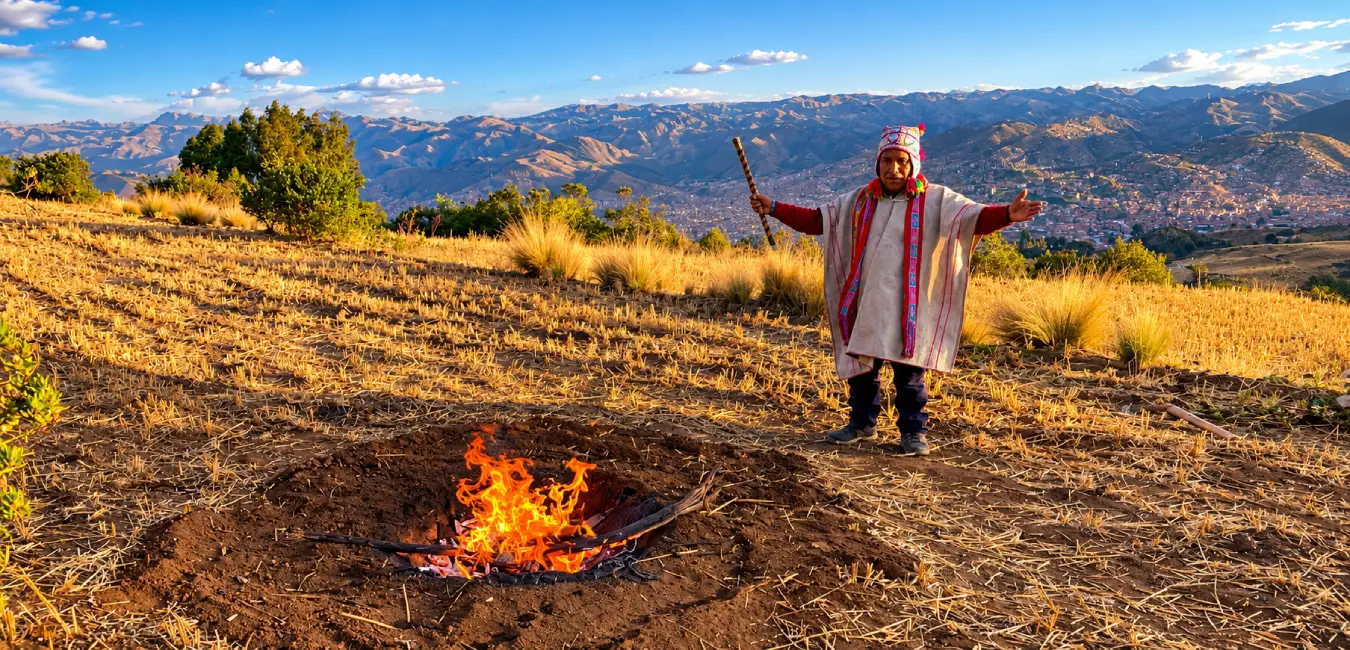
Before booking, ask which of these experiences are included on your travel dates.
Day 2: Six lakes, Pukamarca pass, and Huchuy Qosqo
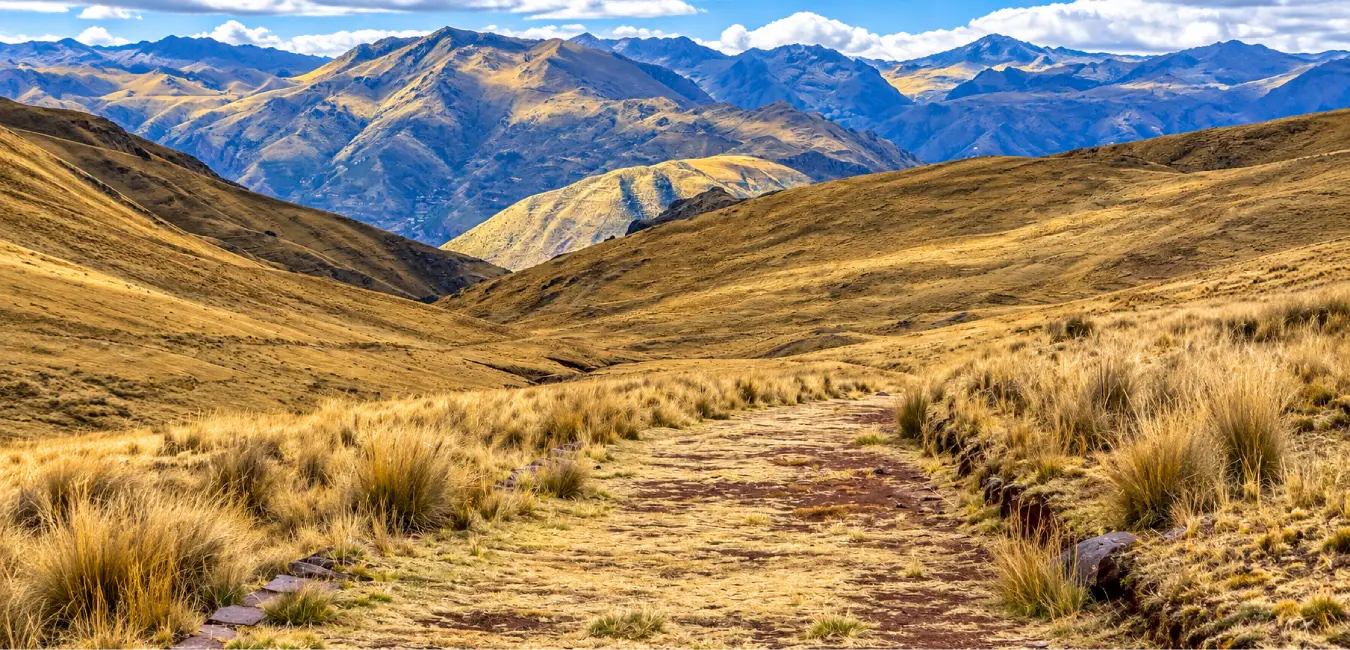
The second day begins after breakfast. You will leave the domes and head toward the open landscapes of the puna, where the climate and vegetation change as you gain elevation.
Andean Lakes
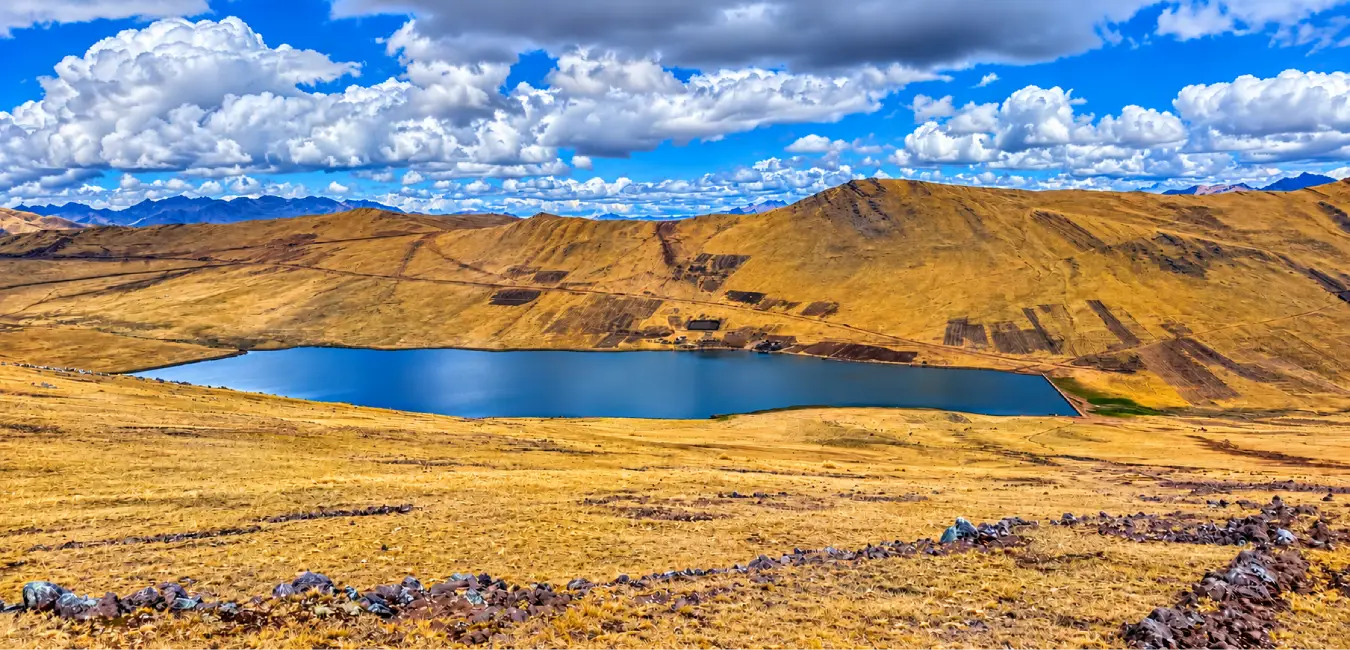
Along the way, you will pass a group of mountain lakes, including Queullacocha, Qoricocha, Piuray, Chinchas, and Cusicocha. The route may vary depending on the operating itinerary and trail conditions. In the surrounding areas, you may be able to spot high Andean birds and local livestock. If you encounter wildlife, keep your distance and do not feed the animals.
Pukamarca Pass, the highest point
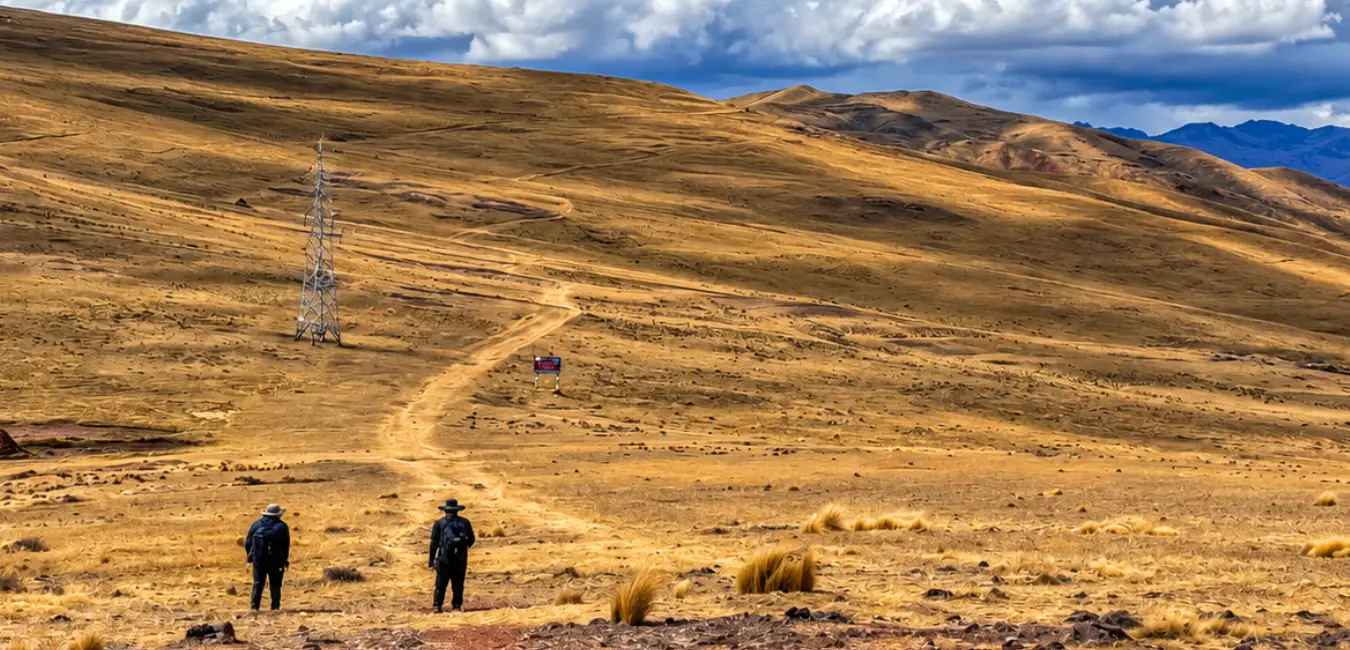
The ascent continues to Pukamarca Pass, located at approximately 4,200 m (13,779 ft). From this pass, you will begin the descent toward Huchuy Qosqo. The altitude can make physical exertion feel more intense. Maintain a steady pace, stay hydrated, and tell your guide if you experience any altitude related symptoms.
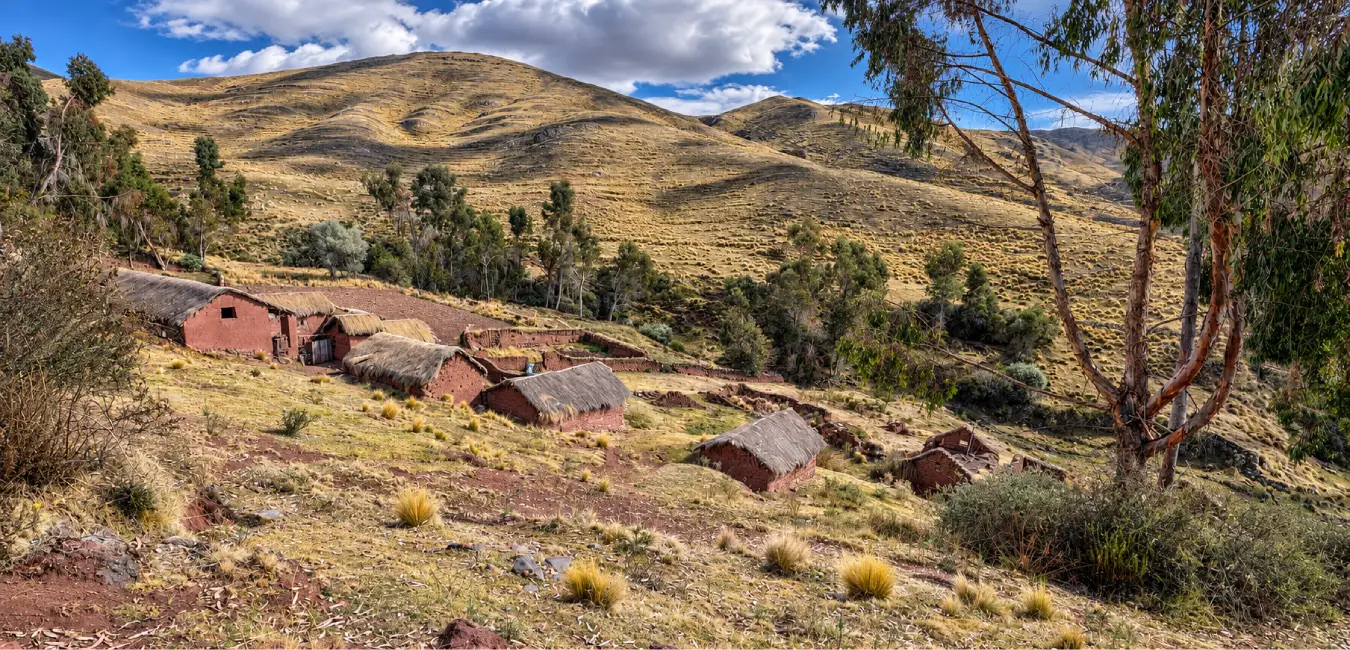
Pukamarca, an Andean Settlement
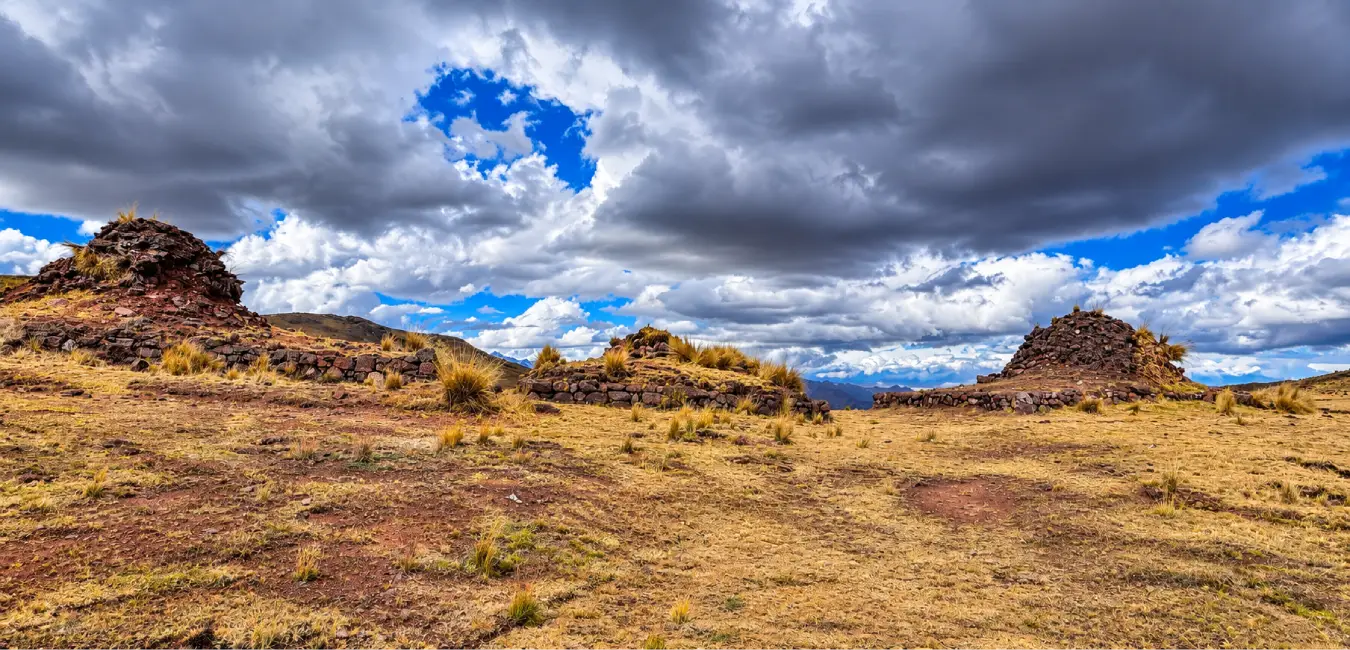
Farther down, you will reach Pukamarca, a settlement that preserves stone buildings, animal enclosures, and walls. These remains offer a glimpse into traditional patterns of rural settlement in the Andes. Explore the site without climbing unstable walls or removing stones or other archaeological objects.
Kallanka and the Puma Punku canyon
At the entrance to the Huchuy Qosqo complex, you will find a kallanka, an elongated building that may have been used to shelter groups of people or host communal activities. You will then descend stone steps toward the Puma Punku Canyon. Along this section, you will see walls, a double-jamb doorway, and wooden bridges crossing the river.
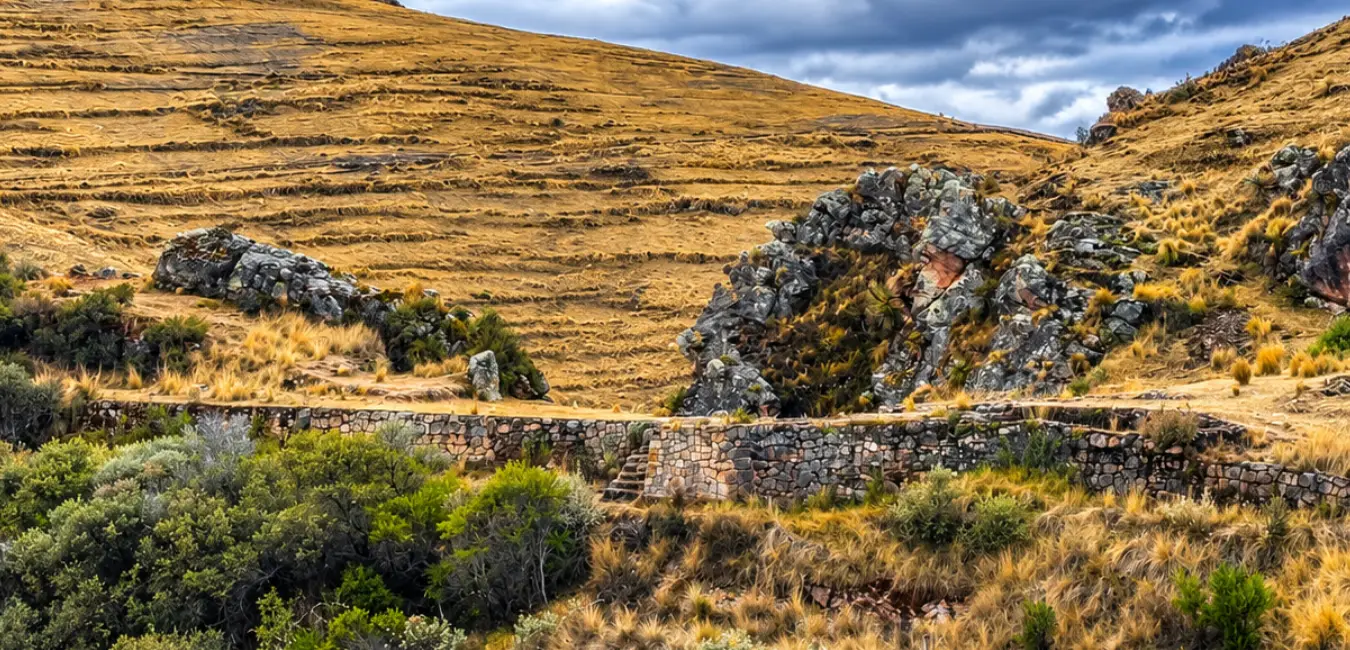
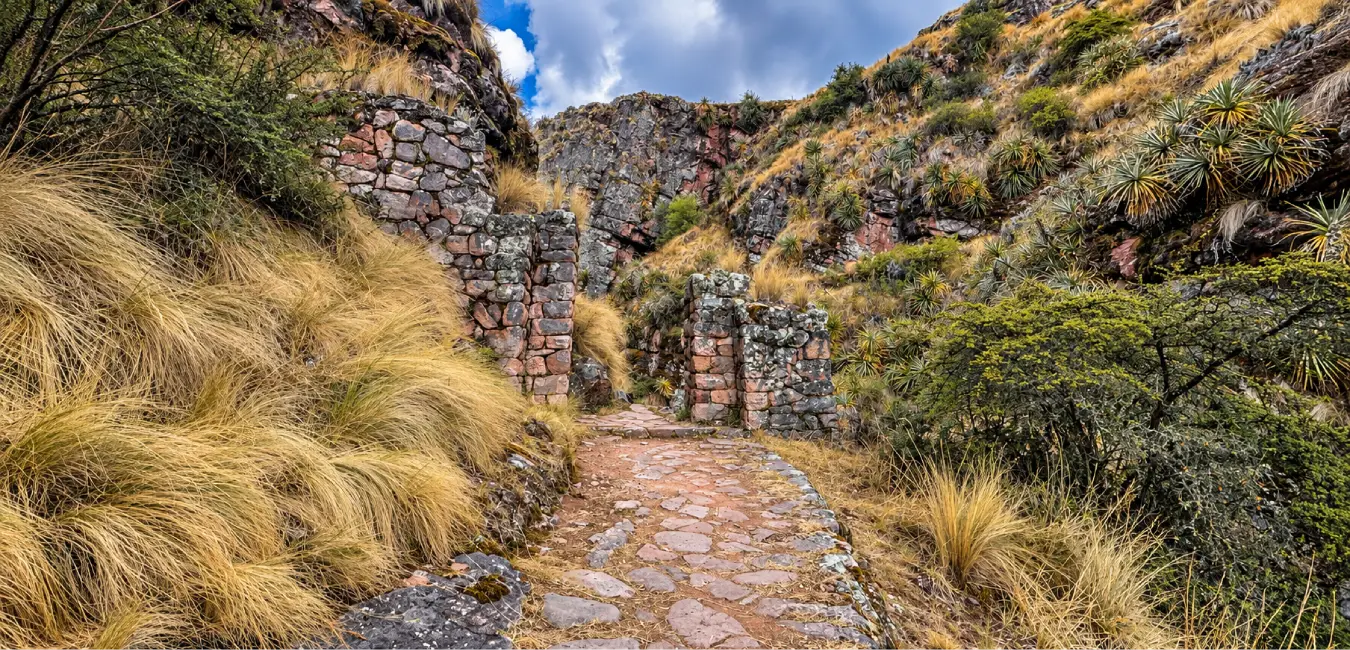
Some sections may be wet and narrow. Cross one at a time and follow your guide's instructions.
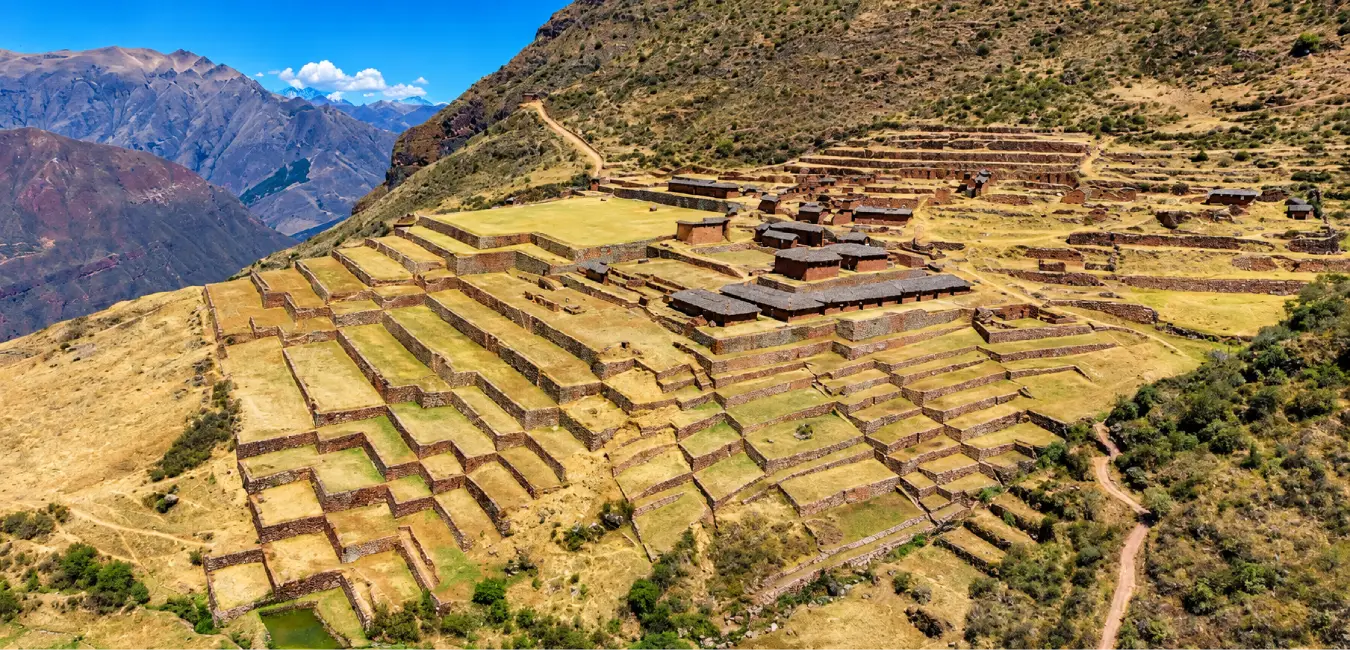
Huchuy Qosqo, the Archaeological complex above the Sacred Valley
Huchuy Qosqo, whose name translates as “Little Cusco,” occupies an elevated position above the Sacred Valley. The site preserves enclosures, terraces, and structures that showcase Inca architectural planning. During your visit, you will explore its main sectors. After the tour, we will continue to Ollantaytambo, where we will begin the next leg of the Inca Trail toward Machu Picchu.
Three ways to continue from Huchuy Qosqo to Machu Picchu
One of the advantages of the Llama Trail is that you can tailor the next part of your journey to your schedule and the type of experience you want. All three options include the initial section with llamas and a visit to Huchuy Qosqo, but they differ in how you reach Machu Picchu.
Option | Package duration | Continuation | Ideal for |
|---|---|---|---|
| A. Llama Trail to Machu Picchu with Domes – Classic Inca Trail. | 6 days / 5 nights | Classic route to Machu Picchu. | Travelers looking for a multi day trek. |
| B. Llama Trail to Machu Picchu with Domes – Short Inca Trail. | 4 days / 3 nights | Hike from Kilometer 104 to Machu Picchu. | Travelers who want to enter on foot and have less time available. |
| C. Llama Trail to Machu Picchu Luxury with Domes and Train. | 3 days / 2 nights | Train to Aguas Calientes and visit to Machu Picchu. | Families and travelers who prefer fewer days of trekking. |
Before booking, confirm the final itinerary, entrance tickets, permits, train services, and accommodations.
Option A: Llama Trail with the Classic Inca Trail, 6 Days / 5 Nights
This option continues from the Sacred Valley to the Classic Inca Trail. After completing the first two days, you will travel to Ollantaytambo to prepare for the next stage.
Itinerary
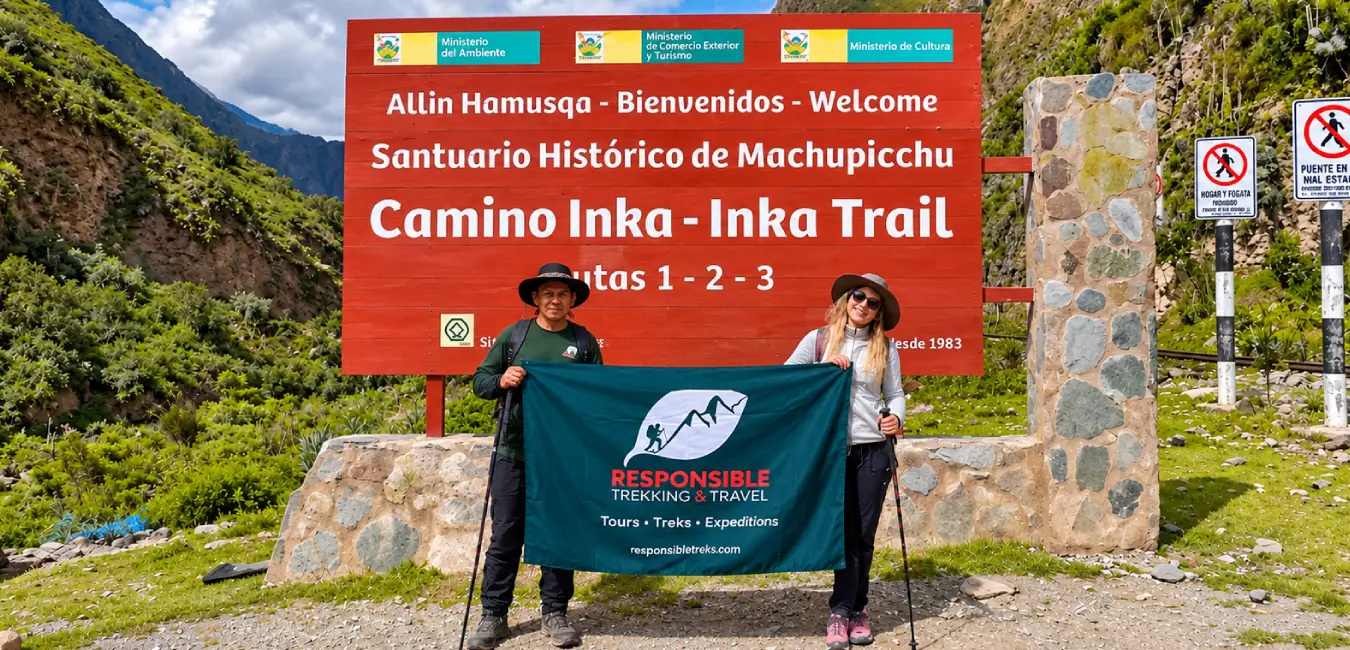
This route includes entry to the trail at Kilometer 82 and hikes through areas such as Ayapata, Warmiwañusca, Runkurakay, Sayacmarca, Phuyupatamarca, and Wiñay Wayna. Finally, you will reach Machu Picchu through the Sun Gate, subject to the confirmed itinerary and permits.
- Choose this option if you want to spend several days hiking the Inca Trail and are prepared for challenging days at high altitude.
- Important: This option requires an official Inca Trail permit, subject to availability and the conditions established by the authorities.
Option B: Llama Trail with the Short Inca Trail, 4 Days / 3 Nights
After completing the two day trek to Huchuy Qosqo, you will travel to Ollantaytambo to spend the night. The next day, you will take the train to Kilometer 104, the starting point of the Short Inca Trail.
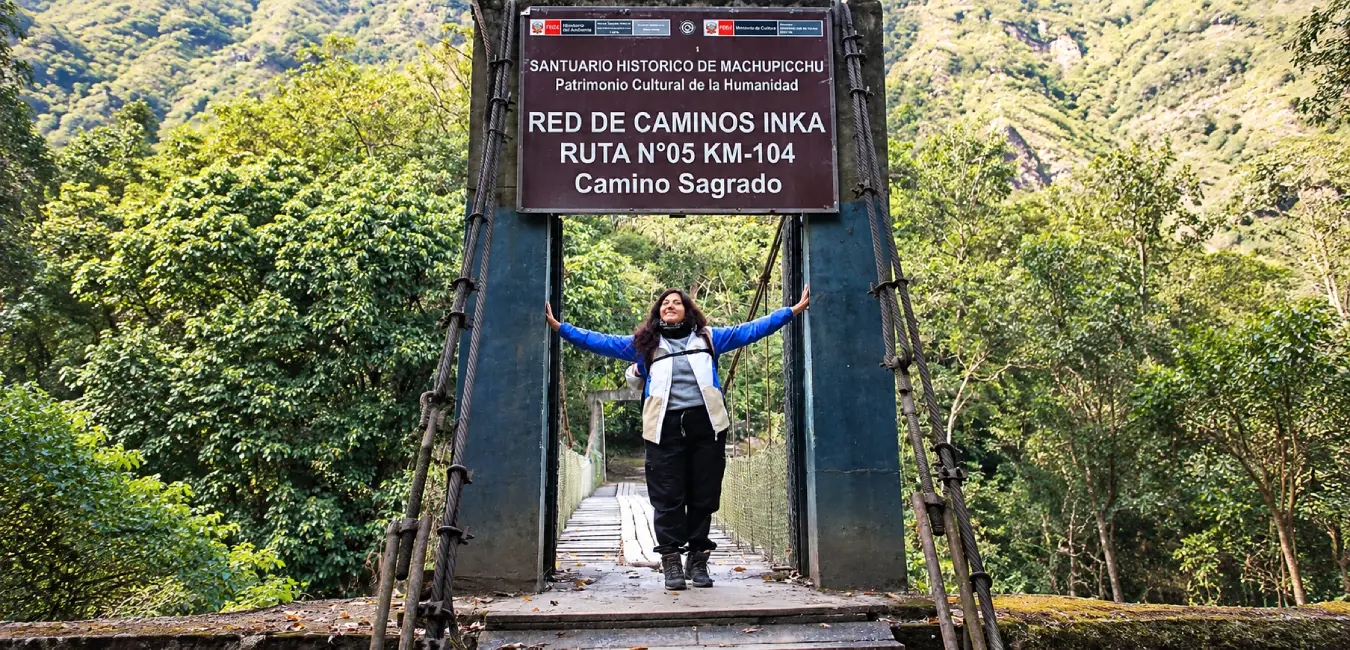
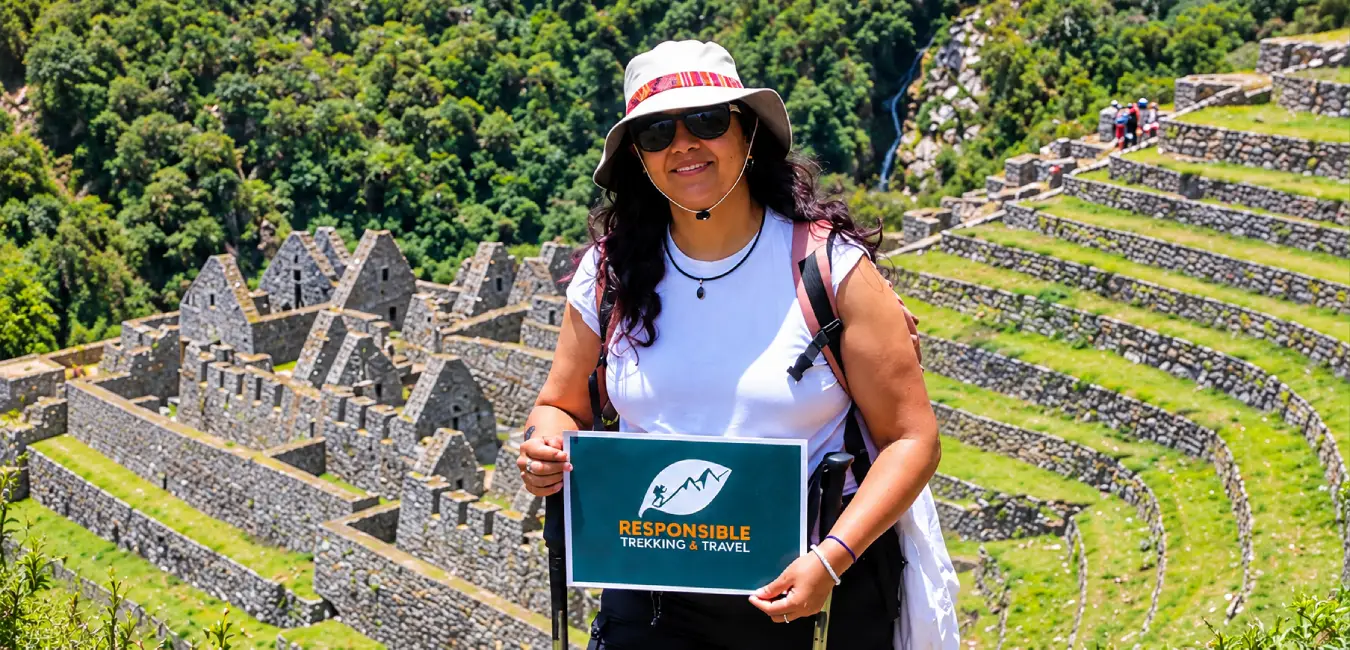
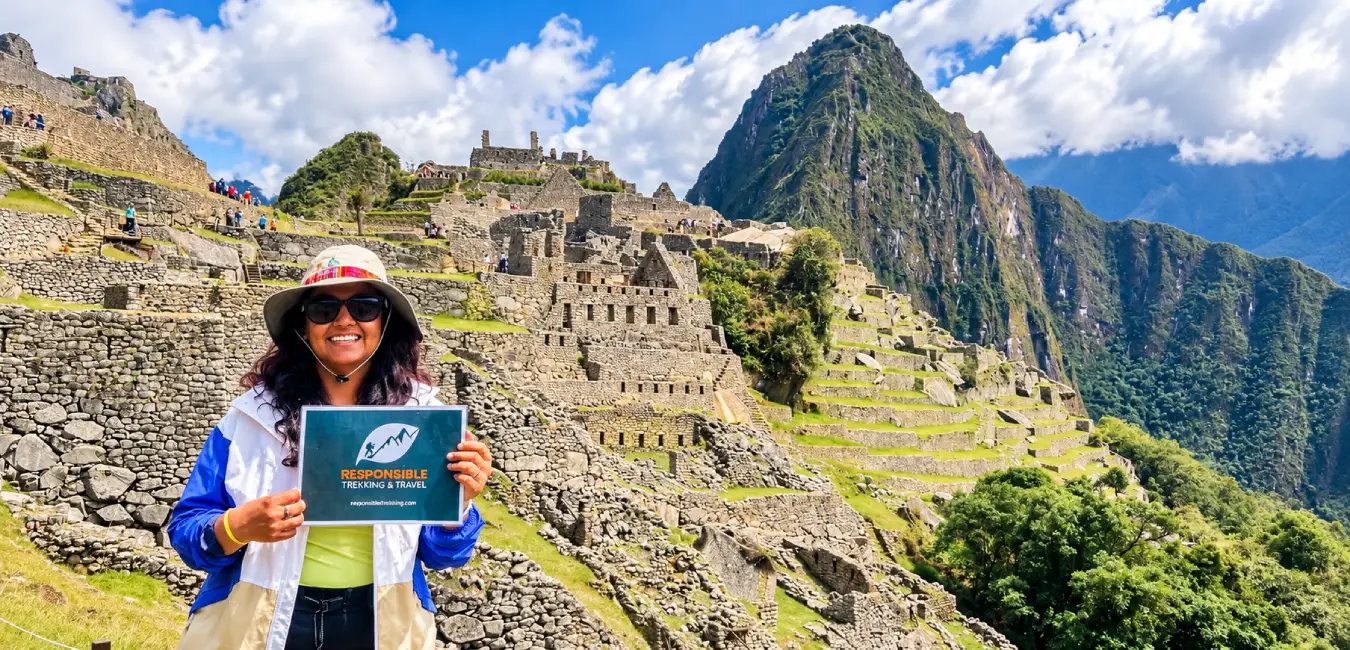
A traveler hiking the Inca Trail from Kilometer 104 toward Machu Picchu.
Itinerary
From there, you will visit Chachabamba and hike uphill toward Wiñay Wayna. You will then continue to the Sun Gate, where you can enjoy your first view of Machu Picchu before descending to Aguas Calientes. On the final day, you will visit the citadel with a guide and return to Cusco according to the confirmed train schedule.
- Choose this option if you want to combine the llama experience and Huchuy Qosqo with a hike into Machu Picchu, but have less time than the Classic Inca Trail requires.
- This route also requires an official permit and entrance tickets, both subject to availability.
Option C: Llama Trail with Train Travel, 3 Days / 2 Nights
This option includes the two days of trekking between Cusco and Huchuy Qosqo but avoids adding another multi-day hike along the Inca Trail.
Itinerary
After visiting the archaeological site, you will travel to Ollantaytambo. The following day, you will take the train to Aguas Calientes and then continue by bus to Machu Picchu for a guided visit.
- Choose this option if you prefer to focus your physical effort on the initial hike and reach Machu Picchu by train. This option may suit families and travelers with limited time, provided they can manage the planned trekking days.
- An Inca Trail permit is not required for this option, but you will need Machu Picchu entrance tickets and the corresponding transportation services.
Elevation profile of the Llama Trail from Qoricancha to Machu Picchu
Location | Approx. elevation | What to expect |
|---|---|---|
| Qoricancha–Cusco | 3,399 m | Start of the urban route |
| Sacsayhuamán | 3,700 m | Transition from the city to the mountains |
| Chakan (Devil's Balcony) | 3,780 m | Stop for a box lunch |
| Andean Sky Dome | 3,850 m | First night; cold temperatures |
| Ruyaq Corralniyoc | 4,100 m | Gradual ascent on Day 2 |
| Pukamarca Pass | 4,200 m | Highest point of the llama trekking section |
| Huchuy Qosqo | 3,600–3,650 m | Guided visit and lunch |
| Ollantaytambo | 2,850 m | Rest night (Classic, Short, and Luxury routes) |
| Warmiwañusca (Classic route) | 4,215 m | Highest point on the Classic Inca Trail |
| Intipunku, the Sun Gate (Short route) | 2,720–2,745 m | First view of Machu Picchu |
| Machu Picchu | 2,430 m | Guided visit to the citadel |
Only want to hike to Huchuy Qosqo?
You can also ask about the 2 day / 1 night Llama Trail with Andean Sky Dome. This option includes the trek from Qoricancha to Huchuy Qosqo, with one night in the domes, and ends with transportation back to Cusco. Keep in mind that this package does not include the continuation to Machu Picchu. If you want to visit the citadel, you will need to arrange that part of your trip separately.
How many kilometers is the Llama Trail?
Main route | Approx. distance | Elevation | Estimated time |
|---|---|---|---|
| Qoricancha – Sacsayhuamán – Ñustapacana – Andean Sky Dome | 9 km / 5.6 mi | 3,850 m / 12,631 ft Andean Sky Dome | Approx. 8–9 hours |
| Andean Sky Dome – Pukamarca Pass – Huchuy Qosqo | 15 km / 9.3 mi | 4,200 m / 13,779 ft Pukamarca Pass | Approx. 7–9 hours |
| Llama Trail to Machu Picchu with Domes, 6 days / 5 nights | 70 km / 43.5 mi | 4,215 m / 13,828 ft Warmiwañusca | Approx. 40 hours |
| Llama Trail to Machu Picchu with Domes, 4 days / 3 nights | 40 km / 24.9 mi | 4,200 m / 13,779 ft Pukamarca Pass | Approx. 32 hours |
| Llama Trail to Machu Picchu Luxury with Domes, 3 days / 2 nights | 28 km / 17.4 mi | 4,200 m / 13,779 ft Pukamarca Pass | Approx. 25 hours |
Llama Trail: Difficulty, weather, and packing
The route ranges from moderate to challenging, mainly because of the length of the hiking days, the elevation changes, and the altitude. On the second day, you will hike above 4,000 m (13,123 ft), so proper acclimatization is important. You do not need to be an athlete, but it helps to have experience hiking for several hours and to prepare physically before your trip.
When is the best time to hike?
Weather in the Andes changes throughout the day and at different elevations. You may experience intense sunshine, cold winds, and rain during the same hike.
Season | Months | What to keep in mind |
|---|---|---|
| Dry season | May to September | Generally offers better hiking conditions, but nights can be very cold. |
| Shoulder season | April and October | The landscape may still be green, and conditions can vary. |
| Rainy season | November to March | Rain, mud, and slippery surfaces are possible. |
| Inca Trail closure | February | The Inca Trail usually closes for maintenance; confirm which alternatives are available. |
The best dates depend on your chosen route, weather conditions, and the availability of permits, trains, and accommodations.
Flora and fauna along the route
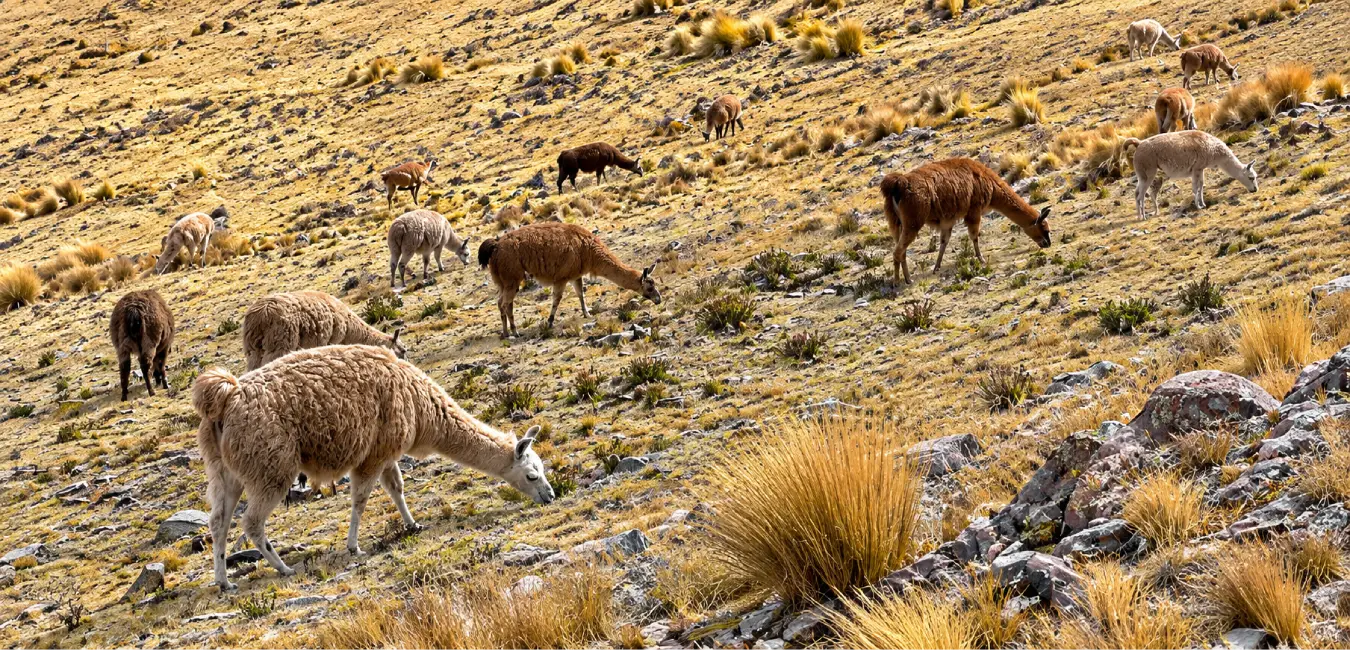
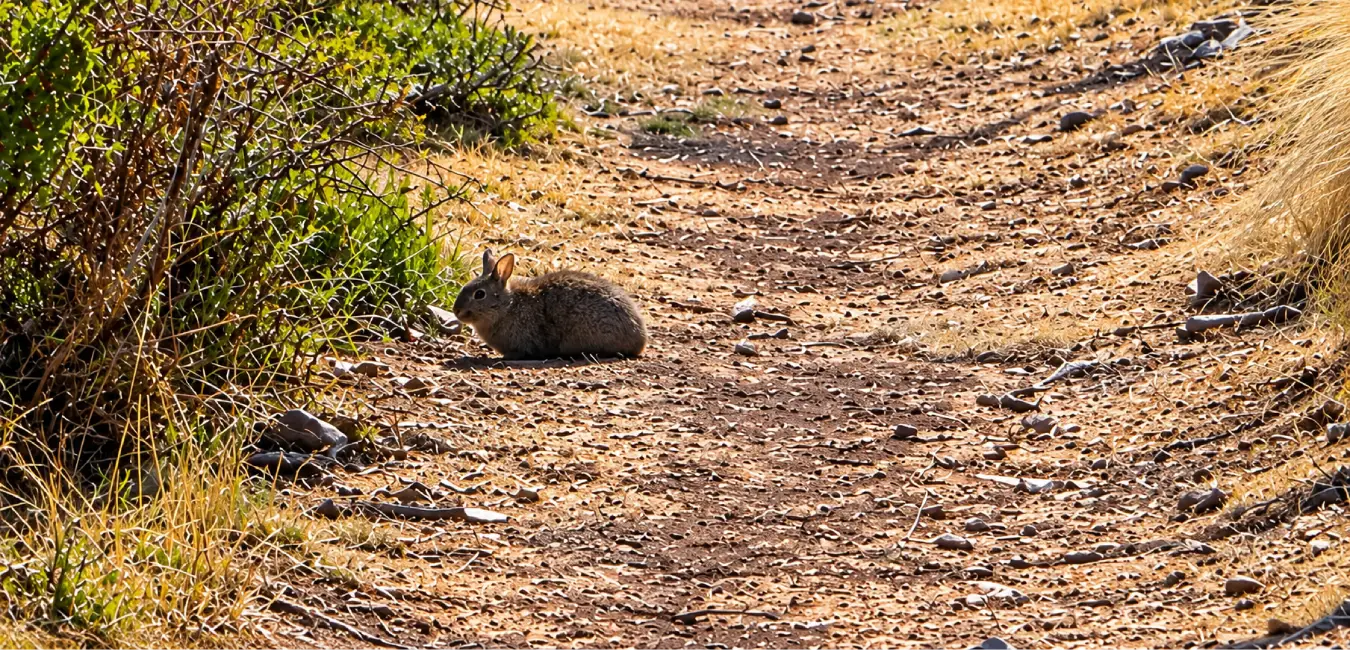
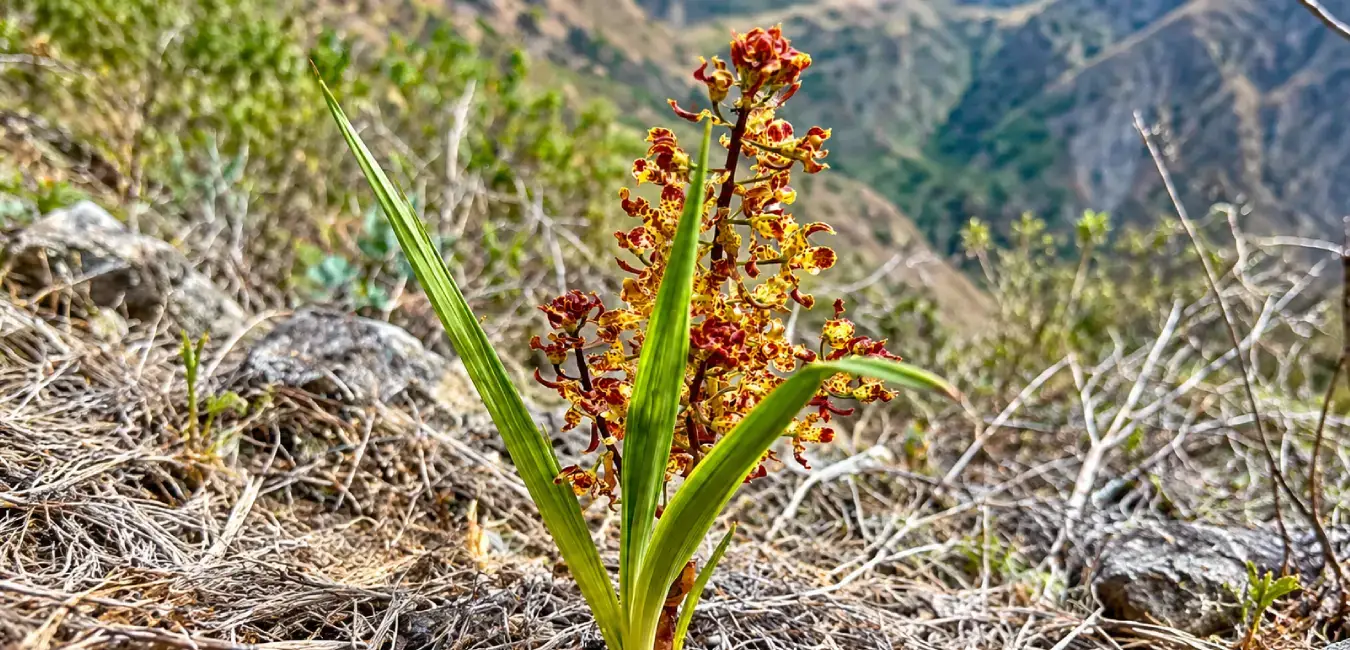
On the Llama Trail, you will encounter a wide variety of flora and fauna as you travel through Andean forests of queuña and chachacomo, puna grasslands, high altitude lakes, and cloud forests. During the hike, you may spot native plants and birds found in these ecosystems, depending on the season. To protect nature, avoid picking plants, feeding wild animals, or leaving the marked trails.
Llamas and local Llama herders: Enjoy the Experience Responsibly
During this trek, you will walk alongside llamas and alpacas that receive care and responsible handling from our team and local llama herders, who will share their knowledge of these animals and the ancient Andean trails. Each llama carries a maximum of 15 kilograms (33 pounds), while you carry a small backpack with your personal belongings.
Golden rules for Llama welfare:
- Do not ride the llamas or pull on their ropes.
- Do not feed them without permission from the llama herder.
- Keep a safe distance when they are resting.
- Keep the caravan's path clear.
- Follow the instructions of the team responsible for the animals.
What should you bring for the hike?
Pack for cold nights, strong sunlight, and the possibility of rain.
For the hike
- Original passport and travel insurance.
- Reusable water bottle and snacks.
- Waterproof jacket or windbreaker.
- Thermal layer and comfortable hiking clothes.
- Sunscreen, sunglasses, and a hat.
- Sun hat or baseball cap.
- Trekking poles.
- Personal medications and cash.
- Cell phone or camera and a portable charger.
For your overnight stay in the Domes
- Personal toiletries.
- Plenty of enthusiasm for enjoying the cultural evenings.
Check with Responsible Trekking and Travel to find out which items the caravan transports and which ones you need to carry yourself during each section.
How to book the Llama Trail from Qoricancha to Machu Picchu
To organize your trip, share the following information with Responsible Trekking and Travel:
- Your travel dates. This allows the team to check service availability.
- Number of travelers. Let the team know whether you are traveling solo, as a couple, with friends, or with family.
- Your preferred route. Choose from the Classic Inca Trail, Short Inca Trail, train option, or the two-day trek to Huchuy Qosqo.
- Any special requirements. Let the team know about dietary restrictions, mobility needs, or any other relevant requirements.
The Llama Trail offers a different way to reach Machu Picchu, combining ancient trails, archaeological sites, Andean landscapes, and opportunities to connect with local culture. At Responsible Trekking and Travel, we want to guide you through every stage of the journey. Ready to experience this adventure with us? Contact us and choose the route that best fits your trip.
Frequently asked questions
Will the Llamas accompany me all the way to Machu Picchu?
The llamas accompany you during the initial section of the experience. The caravan parts ways with you in the Andean Sky Dome area, and you continue via the corresponding Inca Trail route or by train. Do not assume that the llamas will enter every section of the route.
Where will i stay during the trek?
You will spend the first night at the Andean Sky Domes in the Piedra Resbalada area. Accommodations for subsequent nights depend on the package and may include stays in Ollantaytambo, Aguas Calientes, or authorized campsites along the Inca Trail. Confirm the facilities and services available before booking.
Do i need a permit to reach Machu Picchu?
It depends on the option you choose. The Classic Inca Trail and Short Inca Trail require official permits, subject to availability. The train option does not require an Inca Trail permit, but you will need Machu Picchu entrance tickets and transportation services.
How far in advance should i book?
If you choose one of the Inca Trail routes, we recommend checking availability several months in advance, especially during peak season. Availability changes each year and depends on official permits. For the train option, you should also confirm entrance tickets, train schedules, and accommodations.
Can i do this trek if i have never hiked at high altitude?
It depends on your physical condition, acclimatization, and experience hiking for several hours. The route includes elevation changes and sections above 4,000 m (13,123 ft). Before booking, discuss your needs with the tour operator and consult a healthcare professional if you have any concerns.
What happens if inca trail permits are unavailable?
You can ask about the train option, which includes the initial hike with llamas and the visit to Huchuy Qosqo. Availability of Machu Picchu entrance tickets and train services must be confirmed separately.
How many people are in each group?
Responsible Trekking and Travel works with small groups, aiming for a maximum of eight travelers per group. Confirm the expected group size for your dates, as it may depend on operational arrangements and the type of service booked.