
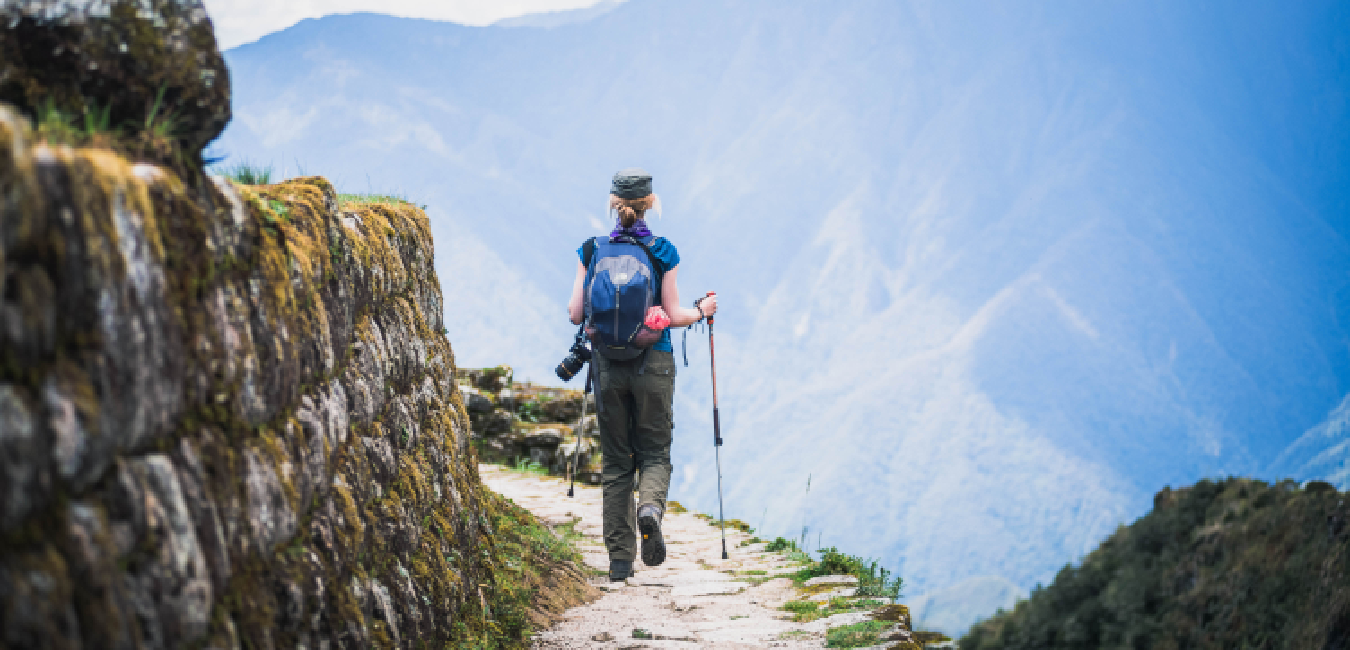
The Inca Trail is one of the most famous hiking routes in the world and the only one that reaches Machu Picchu directly through the ancient paths built by the Incas. However, it is not a conventional hiking trail.
The Inca Trail Network is part of the Machu Picchu Historic Sanctuary, a Protected Natural Area managed by the National Service of Natural Areas Protected by the State (SERNANP), in coordination with Peru's Ministry of Culture. Due to its significant historical, archaeological, and natural value, access is regulated by sustainable tourism rules that must be followed by visitors, travel agencies, guides, and support staff.
In this guide, you will find the main Inca Trail regulations, the documents required for entry, permitted and prohibited items, as well as recommendations for enjoying this experience safely and responsibly.
Did you know...?
The Inca Trail does more than lead to Machu Picchu. It is part of the Qhapaq Ñan, the extensive network of roads built by the Incas that connected much of South America and is now recognized as a UNESCO World Heritage Site.
Why Are There Rules for the Inca Trail?
The Inca Trail regulations are designed to protect one of Peru's most important cultural and natural heritage sites. These regulations help preserve the ancient Inca trails, protect the flora and fauna of the Machu Picchu Historic Sanctuary, and provide a safe and organized experience for thousands of visitors each year.
Their main objectives are:
• Preserve archaeological heritage.
• Protect the ecosystems of the Machu Picchu Historic Sanctuary.
• Reduce the environmental impact caused by tourism.
• Ensure a safe experience for all visitors.
• Promote responsible and sustainable tourism.
| What Does the Regulation Protect? | Why Is It Important? |
|---|---|
| Archaeological sites | Preserves structures that are more than 500 years old. |
| Native flora | Protects species native to the Andes. |
| Wildlife | Prevents disruption of their natural behavior. |
| Historic trails | Reduces erosion caused by visitor traffic. |
| Visitor experience | Maintains safety and order throughout the hike. |
Who Can Operate on the Inca Trail?
The Inca Trail can only be hiked through a travel agency authorized by the relevant authorities.
The agency is responsible for managing entry permits, registering visitors, coordinating the logistics of the trek, and ensuring that each group is accompanied by a properly accredited official tourism guide.
Important
You cannot hike the Inca Trail independently. All visitors must be part of a group organized by an authorized travel agency.
Inca Trail Permits Available
The number of permits available each day is limited and determined according to the trail's carrying capacity, trail conditions, available services, and current management decisions. Permits are not reserved exclusively for tourists: the allocation also includes guides, porters, and cooks, so the actual availability for visitors is lower than the total number of authorized spaces.
NOTE: We recommend booking 5 to 6 months in advance, especially during the busiest months.
Mandatory Identification for All Users
Identification is mandatory. All users of the Inca Trail Network must present their original identification document and register their entry at control and monitoring checkpoints whenever required by SERNANP personnel and the Cusco Decentralized Directorate of Culture. Otherwise, entry and continued access to the trail will not be permitted.
Official tourism guides listed on the official registry must present their original guide ID card to verify their authorization to provide the service.
Documents Required for Hikers
Foreign travelers must present the original passport registered with the reservation, while Peruvian travelers must present their original DNI. Students who qualify for a discounted rate must also carry valid, accepted student identification. Minors must be included in the reservation, present their original identification document, and travel under the responsibility of an adult.
Information must be entered exactly as it appears on the identification document, without nicknames, abbreviations, or incorrectly transcribed numbers. If a visitor renews their passport after making the reservation, they must notify the travel agency before the trip.
The Permit Is Named, Personal, and Non-Transferable
The permit is linked to a specific visitor, date, and route. It cannot be transferred, sold, or used to replace another person, and it is not sold as an open-access ticket at the entrance checkpoint. Changes to the name, date, or route are subject to restrictions and may not be possible once the permit has been issued. If the permit holder cancels or does not show up on the scheduled date, the permit may be forfeited.
Main Inca Trail Rules
Hiking the Inca Trail means following a set of rules designed to protect the Machu Picchu Historic Sanctuary and ensure a safe experience for all visitors. These regulations are mandatory throughout the entire trek and must be followed by travelers, guides, and support staff.
1. Always Stay on the Authorized Trail
The Inca Trail has officially designated paths and access points. During the hike, you are not allowed to leave the marked trail, take shortcuts, or enter restricted areas.
Staying on the designated route helps protect vegetation, reduce soil erosion, and preserve the ancient paths built by the Incas.
Why Is This Important?
Every shortcut creates a new trail that accelerates soil erosion and affects the ecosystems of the Machu Picchu Historic Sanctuary.
2. Stay With Your Group
All visitors must complete the trek with the group registered through their travel agency and under the supervision of the official guide.
Visitors are not allowed to leave their group or join another group during the hike, as this makes official monitoring more difficult and may pose a safety risk.
3. Use Only Authorized Campsites
Inca Trail campsites have been established to minimize environmental impact and organize visitor flow.
For this reason, overnight stays are only permitted in the areas assigned to each group. Camping outside these areas is only considered in emergency situations determined by the responsible personnel.
4. Respect the Trail Facilities
Restrooms located along the Inca Trail are public facilities intended exclusively for that purpose.
They must not be used to wash utensils, store luggage, or as places to rest or sleep.
5. The Inca Trail Is Closed in February
Every year, during the month of February, the Inca Trail temporarily closes for maintenance, ecological restoration, and infrastructure conservation work.
Authorities may also impose temporary closures for safety reasons, extreme weather conditions, or conservation work.
Travel Planning Tip
If you want to hike the Inca Trail, keep in mind that the route remains closed throughout February. The months from April to October are usually the most requested, so we recommend booking several months in advance.
Tourism Use Regulations for the Inca Trail Network
• The maximum group size is 16 visitors.
• Porters are authorized to carry a maximum of 14 kg.
• The Inca Trail will remain closed during the month of February each year for maintenance.
• All reservations must be made through an authorized travel agency responsible for purchasing the entrance permits.
• Visitors may not remain on the trail network longer than the period established for each route.
• Restrooms are public facilities and are clearly marked; they may not be used to wash utensils or sleep.
Items Not Allowed on the Inca Trail
To protect the natural and cultural heritage and ensure the safety of all visitors, certain items are prohibited from entering the trail.
| Not Allowed | Reason |
|---|---|
| Firearms | Visitor safety |
| Hunting or fishing equipment | Wildlife protection |
| Animal traps | Biodiversity conservation |
| Drugs or illegal substances | Compliance with current regulations |
| Drones without authorization | Heritage and privacy protection |
| Sound equipment | Preventing noise pollution |
| Glass containers | Reducing risks and waste |
| Domestic animals | Ecosystem protection |
| Tools such as picks or shovels | Archaeological heritage conservation |
Can I use trekking poles?
Yes. Trekking poles are allowed as long as they have rubber tips, which help protect the stone surfaces of the Inca Trail and reduce wear.
Activities Prohibited on the Inca Trail
The Inca Trail is one of the best-preserved archaeological and natural trails in the world. To protect this heritage, certain activities are strictly prohibited throughout the hike. Violating these regulations may result in penalties, removal from the trail, or even legal action, depending on the severity of the violation.
No Campfires
Campfires are prohibited throughout the Inca Trail, including trails, campsites, and archaeological sites. In addition to the risk of wildfires, fire can cause irreversible damage to high-Andean ecosystems.
Food preparation is handled by the authorized staff of each group, using appropriate equipment and following the regulations established for the route.
Do Not Damage Archaeological Heritage
The archaeological sites you will encounter during the hike are part of the legacy of the Inca civilization and are protected under Peruvian law.
Therefore, it is prohibited to:
• Climb on walls.
• Scratch or mark stones or structures.
• Move stones or other archaeological elements.
• Modify or interfere with any pre-Hispanic structure.
Remember: A single action can cause irreversible damage to heritage that has stood for centuries.
Do Not Remove Plants or Feed Animals
The Machu Picchu Historic Sanctuary is home to a great diversity of plant and animal species native to the Andes.
During the hike, it is not permitted to cut plants, pick flowers, capture animals, or feed them. Although it may seem harmless, feeding wildlife changes its natural behavior and affects the balance of the ecosystem.
Do Not Camp Outside Authorized Areas
Each group has designated areas for spending the night. These areas have been planned to minimize environmental impact and facilitate the management of the Inca Trail.
Camping outside these areas is only allowed in an emergency and with authorization from the responsible personnel.
Avoid Unnecessary Noise
The Inca Trail is an experience meant to be enjoyed through nature and cultural heritage.
Out of respect for the environment and other visitors, speakers, sound equipment, or music played at a volume that disturbs the peace of the trail are not allowed.
Do Not Leave the Campsite at Night
For safety and conservation reasons, visitors should not walk along trails or visit archaeological sites on their own at night.
If you need to leave the campsite for any reason, always check with your guide first.
Responsibilities of Travel Agencies
An authorized company must ensure a formal and safe operation before, during, and after the Inca Trail trek. Regulatory obligations should be distinguished from additional services that each agency may offer commercially.
•Authorization to operate. The company must be registered with the tourism authority and have authorization to operate on the Inca Trail Network. Verify this before submitting documents or transferring money.
• Permit management. The agency registers the information of tourists, guides, and staff within the required deadlines. Provide accurate information and review the confirmation before completing your purchase.
• Authorized guide. The group must be led by an official guide authorized for the route and registered to operate on the Inca Trail. Ask whether a guide who speaks your preferred language is included.
• Risk information. The agency must provide information about altitude, difficulty, weather, services, and restrictions before departure so you can prepare appropriate clothing, medications, and insurance.
• Campsites and logistics. The company coordinates campsites, meals, porters, and transportation according to the program. Ask for a list of inclusions and exclusions, as sleeping bags or trekking poles may cost extra.
• Safety and emergencies. The agency must have procedures in place for accidents or evacuations. Ask what first-aid equipment the group carries and what expenses would be your responsibility.
• Labor regulations. Porters and cooks must be properly registered and work under conditions that comply with the law. Ask how load limits, rest periods, and insurance are handled.
Responsible Waste Management
One of the fundamental principles of the Inca Trail is to leave no trace. All waste generated during the hike, including food scraps and organic waste, must be removed from the trail.
At Responsible Trekking & Travel, we follow the principle of "What comes in, goes out," ensuring that waste is separated, transported, and properly managed outside the Machu Picchu Historic Sanctuary. However, every traveler's cooperation is essential to keeping this heritage site clean and protected.
Responsible Travel Tip: Bring a reusable water bottle, avoid disposable containers, and try to reduce the amount of waste you generate during the hike.
Where Does the Inca Trail Start?
Depending on the experience you have booked, there are two official entry points:
| Route | Starting Point |
|---|---|
| Classic Inca Trail (4 days) | Piscacucho – Kilometer 82 |
| Short Inca Trail (2 days) | Kilometer 104 – Chachabamba |
Each permit is associated with a specific route and cannot be used at a different entry point. Likewise, the official Inca Trail should not be confused with other trekking routes such as Salkantay, Lares, or Inca Jungle, which have different access points and regulations.
What Happens If You Break the Inca Trail Rules?
Following the Inca Trail regulations is a shared responsibility among visitors, travel agencies, guides, and support staff. Failure to comply with these regulations can affect the conservation of the Machu Picchu Historic Sanctuary and may result in different penalties established by the relevant authorities.
Depending on the severity of the violation, consequences may include:
• Denied entry if the identification document does not match the reservation or the permit is invalid.
• Removal of the visitor from the trail for violating the route's regulations.
• Loss of the entrance permit if the visitor does not show up on the scheduled date.
• Administrative or legal proceedings if cultural or natural heritage is damaged.
The best way to avoid problems is to follow your guide's instructions and respect the regulations throughout the entire trek.
Tips for Hiking the Inca Trail Responsibly
In addition to following the regulations, there are simple actions that help preserve the Inca Trail and make the experience more enjoyable for everyone.
Pack Only What You Need
Pack only the essentials for the hike. Traveling light makes the trek easier and helps ensure that porters carry loads within the limits established by the regulations.
Use a Reusable Water Bottle
Avoid purchasing disposable plastic bottles. Bringing a reusable water bottle helps reduce waste during the trek and contributes to the conservation of the Machu Picchu Historic Sanctuary.
Respect the Peace and Quiet of the Environment
One of the greatest attractions of the Inca Trail is the opportunity to connect with nature. Avoid playing music through speakers, shouting, or creating unnecessary noise that could affect other visitors' experience or disturb wildlife.
Follow Your Guide's Instructions
Official guides are knowledgeable about the history, biodiversity, and regulations governing the Inca Trail. Following their recommendations not only improves your experience but also helps protect this heritage site.
Support Local Communities
Whenever possible, purchase handicrafts and products made by local producers. This helps contribute to the economic development of families living in communities near the Inca Trail.
Common Mistakes to Avoid
Many visitors violate the regulations simply because they are unaware of them. Here are some of the most common mistakes:
• Arriving at the checkpoint without the original identification document.
• Assuming that a Machu Picchu ticket allows entry to the Inca Trail.
• Leaving waste behind during the hike.
• Leaving the trail to take photographs.
• Feeding wildlife.
• Bringing prohibited items such as drones or alcoholic beverages.
• Believing that the name on a permit can be changed after it has been issued.
Responsible Trekking Tip: Before traveling, carefully review the information provided by your travel advisor. This will help you prepare your luggage, bring the correct documentation, and avoid problems when entering the trail.
Summary of the Most Important Rules
Remember:
• Bring your original passport or DNI.
• Stay only on authorized trails.
• Always stay with your group and guide.
• Do not leave waste behind during the hike.
• Respect the flora, fauna, and archaeological sites.
• Camp only in authorized areas.
• Do not bring drones, alcoholic beverages, or prohibited items.
• Follow the instructions of control personnel.
Frequently Asked Questions About Inca Trail Rules
Can I hike the Inca Trail without a travel agency?
No. The Inca Trail can only be hiked through an authorized travel agency and with an official tourism guide.
Can I enter with only a copy of my passport?
No. You must present the original document registered during the reservation. Copies or photographs do not replace the original document at the checkpoints.
Are drones allowed?
No. Drones are prohibited unless expressly authorized by the relevant authorities.
Are trekking poles allowed?
Yes. They may be used as long as they have rubber tips to protect the surface of the Inca Trail.
Can I bring alcoholic beverages?
No. Alcoholic beverages and glass containers are not allowed during the trek.
Can I bring pets?
No. Domestic animals and exotic species are prohibited in order to protect the ecosystems of the Machu Picchu Historic Sanctuary.
Why is the Inca Trail closed in February?
Every year, the trail closes during February for maintenance, ecological restoration, and conservation work. Additional temporary closures may also be implemented for safety reasons or due to weather conditions.