Classic Inca Trail – 4 Days / 3 Nights
- Duration
- 4 Days / 3 Nights
- Difficulty
- Moderate / Challenging
- Altitude
- 4 ,215 m / 13,828 ft
- Group Size
- 10 people
Experience the iconic 4 - Day Classic Inca Trail and reach Machu Picchu in one of the most special ways: hiking along ancient Inca paths until you cross the Sun Gate, Inti Punku, where you will have that first magical and unforgettable view of the Inca citadel. This journey is the perfect combination of history, nature, and adventure, ideal for travelers who do not just want to visit Machu Picchu, but truly experience the path that leads to it.
For four days, you will hike along an original section of the Inca Trail, following a route that once connected ceremonial centers, agricultural areas, mountain passes, and sacred spaces. The journey begins near Km 82, in the Sacred Valley, and continues through places such as Llactapata, Ayapata, Dead Woman’s Pass, Runkurakay, Sayacmarca, Phuyupatamarca, Wiñay Wayna, and finally the Sun Gate / Inti Punku, where you will enjoy one of the most exciting first views of Machu Picchu.
This experience is ideal for active travelers looking for more than a traditional visit. Here, you will not only arrive at Machu Picchu; you will walk through history, sleep in campsites, visit Inca archaeological sites that can only be reached on this route, and enjoy a deeper connection with the Andes. You do not need to be an expert trekker, but good physical condition is important, as you will be hiking for several days at altitude.
Tour type: Trekking, nature, history, archaeology, camping, and Machu Picchu.
Total hiking distance: Approximately 43 km / 26 mi.
Accommodation: Campsites along the route.
Languages: English and Spanish.
Tour Highlights
- Hike the Classic Inca Trail to Machu Picchu.
- Follow a historic route once used by the ancient Incas.
- Visit unique archaeological sites along the trail.
- Cross the famous Dead Woman’s Pass, the highest point of the trek.
- Discover places such as Llactapata, Runkurakay, Sayacmarca, Phuyupatamarca, and Wiñay Wayna.
- Arrive at Machu Picchu through the Sun Gate / Inti Punku.
- Enjoy mountain landscapes, valleys, cloud forests, and ancient stone paths.
- Experience camping along the Andean route.
- Travel with a professional guide, trekking chef, porters, and support team.
- Ideal for travelers looking for adventure, history, and a more special arrival to Machu Picchu.
- Reply within 24 hours
- Flexible cancellation
- Locally operated in cusco, Peru
Daily Inclusion Summary
Day 1: Cusco – Km 82 – Ayapata
- Pickup from your hotel in Cusco.
- Tourist transportation to Km 82.
- Inca Trail entrance checkpoint.
- Official Inca Trail permit.
- Professional bilingual guide.
- Porters for camping equipment and logistics.
- Porter for your duffel bag, according to the allowed weight limit.
- Hiking snack, according to the confirmed program.
- Lunch along the route.
- Dinner at the campsite.
- Campsite in Ayapata or a similar area, according to official availability.
Day 2: Ayapata – Dead Woman’s Pass – Runkurakay – Chaquicocha
- Morning hot drink, according to camp organization.
- Breakfast at the campsite.
- Hiking snack, according to the confirmed program.
- Lunch along the route.
- Safe water to refill your bottle, according to the points established by the team.
- Visit to archaeological sites along the route.
- Dinner at the campsite.
- Campsite in Chaquicocha or a similar area, according to official availability.
- Assistance from the guide and support team throughout the day.
Day 3: Chaquicocha – Phuyupatamarca – Wiñay Wayna
- Morning hot drink, according to camp organization.
- Breakfast at the campsite.
- Hiking snack, according to the confirmed program.
- Safe water during the route.
- Visit to archaeological sites such as Phuyupatamarca and Wiñay Wayna, depending on the route and conditions of the day.
- Lunch during the hike.
- Dinner at the campsite.
- Last night of camping near Wiñay Wayna or the assigned area.
Day 4: Wiñay Wayna – Sun Gate – Machu Picchu – Cusco
- Early breakfast at the campsite.
- Hike to the Sun Gate / Inti Punku.
- First view of Machu Picchu from the Inca Trail, if weather allows.
- Entrance to Machu Picchu, according to the confirmed circuit.
- Guided tour of Machu Picchu.
- Bus down to Aguas Calientes.
- Return train to Ollantaytambo.
- Tourist transportation from Ollantaytambo to Cusco.
- Return to your hotel or coordinated point in Cusco.
Not Included
- Breakfast on the first day, unless otherwise specified.
- Lunch and dinner on the last day.
- Additional drinks and snacks.
- Sleeping bag, unless included in the confirmed service.
- Inflatable sleeping mat, unless included in the confirmed service.
- Trekking poles, unless listed as included.
- Single tent, if requested as an additional service.
- Extra porter for additional weight.
- Entrance to Huayna Picchu or Machu Picchu Mountain, unless confirmed as an additional service.
- Personal expenses.
- Tips for the guide, chef, porters, and support staff.
- Travel insurance.
- Services not mentioned in the program.
Day 1: Cusco – Km 82 – Llactapata – Ayapata
Your adventure will begin early with pickup from your hotel in Cusco, Ollantaytambo, or Urubamba. From Cusco, pickup is usually between 4:00 and 4:30 a.m.; from Urubamba, around 5:30 a.m.; and from Ollantaytambo, around 6:00 a.m., as it is closer to the starting point of the hike. Then, we will travel by tourist transportation toward the starting point of the Inca Trail, passing through the Sacred Valley and enjoying views of mountains, Andean villages, farmland, and the Urubamba River.
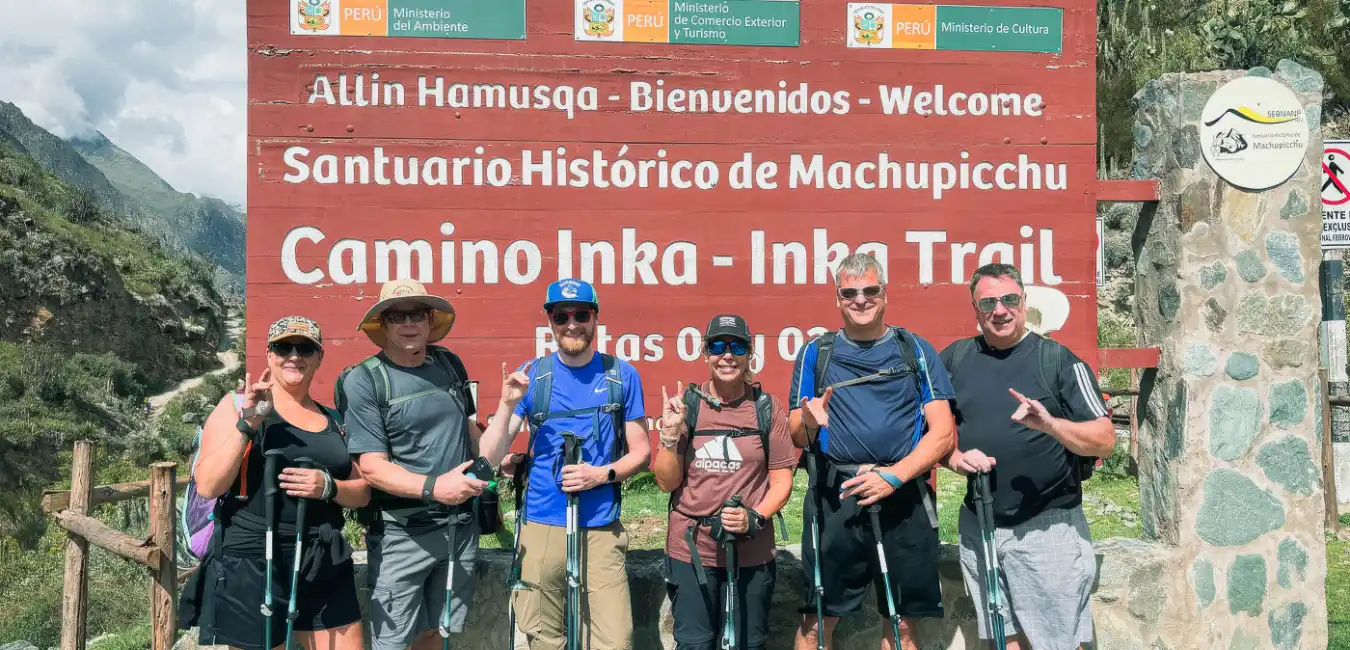
Upon arrival at Km 82, we will pass through the official Inca Trail checkpoint and begin the hike. This first day has a gentler pace than the following days, allowing you to gradually adjust to the trail, the weather, and the atmosphere of the route. You will walk through open paths with views of the valley and surrounding mountains.
Along the way, we will visit Llactapata, one of the first important archaeological sites on the Inca Trail. From here, you will be able to see Inca agricultural terraces and learn more about the role this place had within the ancient network of roads and settlements.
After the visit, we will continue hiking toward the Ayapata area, where our first campsite will be located. Upon arrival, the team will already have everything prepared so you can rest, enjoy dinner, and recover energy for the second day, which will be the most challenging part of the route.
Hiking distance: Approximately 14 km / 8.7 mi.
Trailhead elevation: Approximately 2,720 m / 8,923 ft.
Campsite elevation: Approximately 3,300 m / 10,827 ft.
Difficulty: Moderate.
Weather: Mild during the day and cold at night.
Inca sites visited: Llactapata.
Meals: Lunch and dinner.
Accommodation: Campsite.
Day 2: Ayapata – Dead Woman’s Pass – Pacaymayo – Runkurakay – Sayacmarca – Chaquicocha
After breakfast at the campsite, prepared by the chefs, we will begin one of the most important and challenging days of the Inca Trail. The hike starts with a steady ascent toward Dead Woman’s Pass, the highest point of the entire route. This section requires patience, steady breathing, and a consistent pace, but it is not a race. We will move calmly, taking breaks to rest, hydrate, and enjoy the landscape.
Once we reach the pass, located at approximately 4,215 m / 13,828 ft, you will have time to rest, take photos, and enjoy the satisfaction of reaching one of the most iconic points of the trek. From here, we will begin the descent toward the Pacaymayo Valley, surrounded by mountains and high-altitude landscapes.
After a break, we will continue with the second part of the day. Along the way, we will visit Runkurakay, a circular archaeological site located in a strategic area of the Inca Trail. Then, we will continue along stone paths, Inca stairways, and landscapes that gradually become greener until we reach Sayacmarca, another important archaeological site known for its elevated location and views of the valley.
Later, we will continue toward Chaquicocha, our campsite for the second night. This is a long and demanding day, but also one of the most complete, with a great variety of landscapes, mountain passes, and archaeological sites along the route.
Hiking distance: Approximately 16 km / 9.9 mi.
Trailhead elevation: Approximately 3,300 m / 10,829 ft.
Campsite elevation: Approximately 3,600 m / 11,800 ft.
Difficulty: Challenging.
Weather: Cold, especially in the morning and at the mountain passes.
Inca sites visited: Runkurakay and Sayacmarca.
Meals: Breakfast, lunch, and dinner.
Accommodation: Campsite.
Day 3: Chaquicocha – Phuyupatamarca – Wiñay Wayna
This day is often one of the most beautiful parts of the Inca Trail. After breakfast, we will hike through a greener and more scenic section, with views of mountains, cloud forest, and ancient stone paths that have stood the test of time.
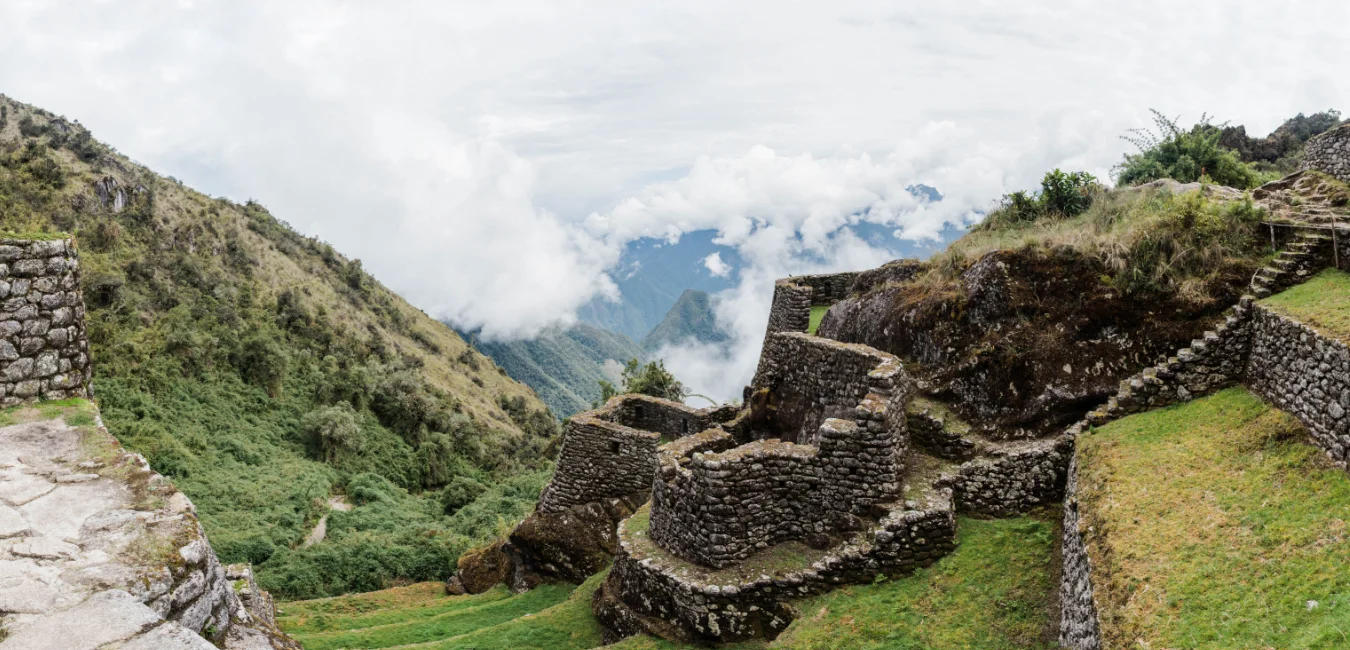
During the route, we will visit Phuyupatamarca, known as “the place above the clouds.” If the weather allows, from this area you can enjoy wide views of the mountains, the valley, and the cloud forest. This part of the trail feels very special because it combines history, landscape, and the feeling of getting closer to Machu Picchu.
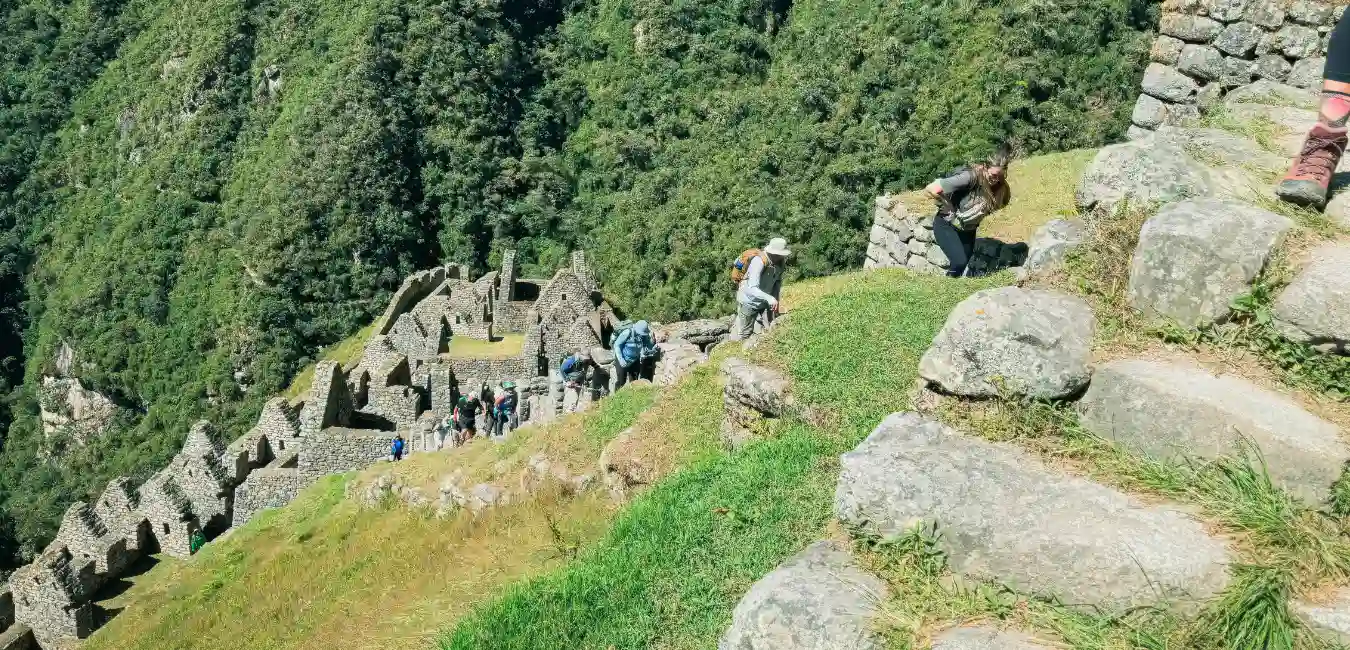
Later, we will descend along Inca stairways toward Wiñay Wayna, one of the most beautiful archaeological sites on the entire Inca Trail. Its terraces, stairways, and location on the mountainside make it one of the most memorable visits of the trek. For many travelers, this place is one of the biggest surprises of the route, not only because of its beauty but also because of the peaceful atmosphere around it.
Our last campsite will be located near this area. Upon arrival, you will have time to rest, share the experience with the group, and prepare for the next day. Your guide will also give you the final instructions for reaching Machu Picchu, as the departure will be very early.
Hiking distance: Approximately 10 km / 6.2 mi.
Trailhead elevation: Approximately 3,600 m / 11,800 ft.
Campsite elevation: Approximately 2,650 m / 8,694 ft.
Difficulty: Moderate.
Weather: Warmer and more humid, with cloud forest conditions.
Inca sites visited: Phuyupatamarca and Wiñay Wayna.
Meals: Breakfast, lunch, and dinner.
Accommodation: Campsite.
Day 4: Wiñay Wayna – Sun Gate – Machu Picchu – Cusco
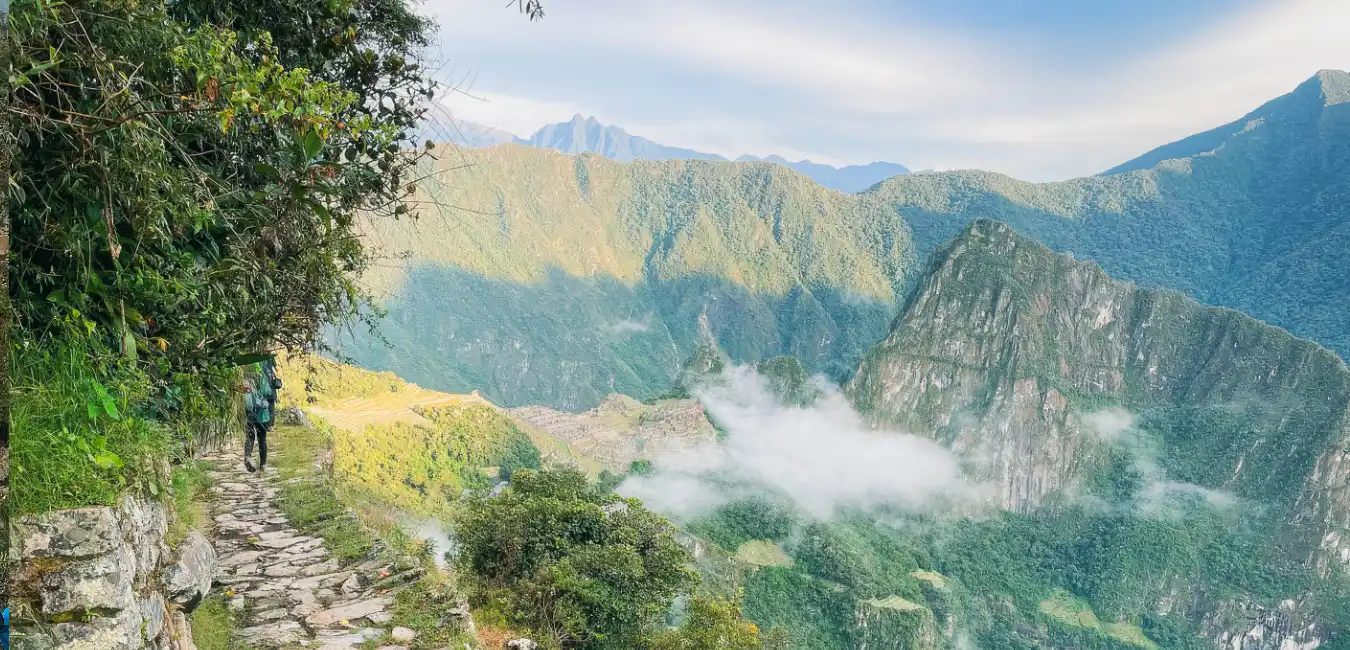
The final day will begin very early. After breakfast, we will start the last hike toward the Sun Gate, also known as Inti Punku. This section has a special meaning, as it was the traditional entrance to Machu Picchu for those who traveled along the Inca Trail.
When you arrive at the Sun Gate, you will have your first view of Machu Picchu from above. After four days of hiking, this moment is often one of the most emotional parts of the entire experience. Seeing the citadel appear between the mountains gives real meaning to all the effort made along the way.
Then, we will descend toward Machu Picchu for the guided tour according to the confirmed circuit. During the visit, your guide will explain the history, architecture, and significance of the citadel within the Andean world.
After the visit, we will take the bus down to Aguas Calientes, where you will have time to have lunch on your own or rest before boarding the return train to Ollantaytambo. Upon arrival, our transportation will take you back to Cusco at night, usually around 7:30 p.m.
Arrival in Cusco will be in the afternoon or evening, depending on the confirmed train schedule.
Hiking distance: Approximately 6 km / 3.7 mi.
Trailhead elevation: Approximately 2,650 m / 8,694 ft.
Machu Picchu elevation: Approximately 2,430 m / 7,972 ft.
Difficulty: Easy to moderate.
Weather: Cool early in the morning and warmer during the day.
Inca sites visited: Sun Gate / Inti Punku and Machu Picchu.
Meals: Breakfast.
Accommodation: Not applicable. Return to Cusco.
Packing List
Preparing your gear well will make the Inca Trail much more comfortable. We recommend traveling light and bringing only what you need for the hike. During the day, you will hike with a small backpack, while your duffel bag will be carried by the porters to the campsite.
The allowed weight for the duffel bag is usually 7 kg / 14 lb, including personal clothing, sleeping bag, and sleeping mat if applicable according to the confirmed service.
Essentials
- Original passport, required to enter the Inca Trail and Machu Picchu.
- Small daypack, comfortable for walking several hours.
- Trekking shoes with good traction and already broken in before the trip.
- Comfortable hiking clothes.
- Waterproof jacket or rain poncho.
- Warm layered clothing for temperature changes.
- Hat or cap for the sun.
- Gloves and warm hat for cold mornings.
- Sunglasses.
- Sunscreen.
- Insect repellent.
- Reusable water bottle or hydration system.
- Headlamp with charged or spare batteries.
- Personal medication.
- Cash in Peruvian soles for drinks, tips, or personal expenses.
For Your Duffel Bag
These items will go in your duffel bag and will be available when you arrive at camp in the afternoon. You will not have access to this bag during the day’s hike.
- Sleeping bag, your own or rented, according to the confirmed service.
- Inflatable sleeping mat, if you choose to bring or rent one.
- Change of clothes for the hiking days.
- Trekking pants or comfortable leggings.
- Breathable shirts or T-shirts.
- Light thermal clothing for sleeping.
- Warm jacket for nights at camp.
- Extra trekking socks.
- Enough underwear for the trek.
- Sandals or light shoes for resting at camp.
- Small quick-dry towel.
- Plastic or waterproof bag for wet or dirty clothes.
Toiletries
- Toothbrush and toothpaste.
- Toilet paper.
- Wet wipes.
- Hand sanitizer.
- Small deodorant.
- Lip balm.
- Moisturizer (optional).
- Personal medication.
- Feminine hygiene products, if needed.
- Small bag for personal trash.
- Biodegradable soap, if you consider it necessary.
Important: We recommend using biodegradable products whenever possible and leaving no waste on the trail.
Inside Your Daypack
Your daypack should include everything you may need while hiking, since your duffel bag will be with the porters and will not be available until you reach the campsite.
- Original passport.
- Water, at least 2 liters to hike comfortably.
- Personal snacks, such as energy bars, dried fruit, or chocolate.
- Waterproof jacket or rain poncho.
- Light warm layer.
- Sunscreen.
- Insect repellent.
- Sunglasses.
- Hat or cap.
- Camera or phone with enough battery.
- Portable charger.
- Personal medication.
- Toilet paper or tissues.
- Hand sanitizer.
- Cash in Peruvian soles.
- Trekking poles, if you use them.
- Backpack cover, especially during the rainy season.
Price
Price from: USD 750 per person.
The price may vary depending on the date, permit availability, number of travelers, type of service, train category, and additional services included.
Private service: Available upon request.
The price will depend on the group size and the level of customization required.
Important note: Inca Trail permits are limited and usually sell out in advance, especially between April and October. We recommend booking as early as possible.
Additional Services Available
Equipment Rental
If you do not want to bring all your gear from home, you can check availability for renting some items for the trek, such as:
- Sleeping bag.
- Inflatable sleeping mat.
- Trekking poles.
- Single tent.
Prices may vary depending on availability and must be confirmed before the tour begins.
Additional Porter
If you would like to carry more than the allowed weight in the included duffel bag, you can request an additional porter, subject to availability and Inca Trail regulations.
This service must be booked in advance, as porters must also be registered within the official Inca Trail permit and logistics.
Huayna Picchu or Machu Picchu Mountain
Depending on availability, it may be possible to add Huayna Picchu or Machu Picchu Mountain to complement your Machu Picchu visit.
These tickets are limited and must be booked in advance. They have an additional cost and are subject to availability from the Ministry of Culture.
Train Upgrade
The tour includes the return train according to the confirmed service. If you would like a more panoramic or higher-category train experience, an upgrade can be quoted, subject to availability and schedule.
Frequently Asked Questions
Is the Classic Inca Trail difficult?
The difficulty is moderate to challenging. It is not a technical route, but it does require good physical condition because you will hike for several days with uphill sections, downhill sections, Inca stairs, and high mountain passes
Do I need a permit for this tour?
Yes. An official Inca Trail permit is required. Spaces are limited, so we recommend booking in advance.
Do we arrive at Machu Picchu by hiking?
Yes. You will arrive at Machu Picchu by hiking through the Sun Gate / Inti Punku, one of the most special ways to see the citadel for the first time.
Where do we sleep during the tour?
You will sleep in organized campsites along the route, according to the confirmed program.
Do I need previous trekking experience?
You do not need to be an expert, but you should have good physical condition and be used to walking several hours a day.
What happens if it rains?
The tour can operate with light or moderate rain. That is why it is important to bring waterproof clothing. In case of extreme conditions, the guide and operator will evaluate the route for safety.
Can I add Huayna Picchu or Machu Picchu Mountain?
It may be possible depending on availability. This option must be requested in advance and may have an additional cost.