
When people come to Cusco, they are usually coming for one thing Machu Picchu. No doubt about it. But talk to travelers leaving Cusco and some of them will be surprised by the experience they are not expecting: the city itself.
The former capital of the Inca Empire, the largest and most organized pre-colonial state in all of the Americas, the Incas knew it as Qosqo, the navel of the world. Today it is a UNESCO World Heritage Site and an active city of stone streets, baroque churches, and markets that have been around since forever. Two nights here are not enough; the next step is catching your train to Aguas Calientes.
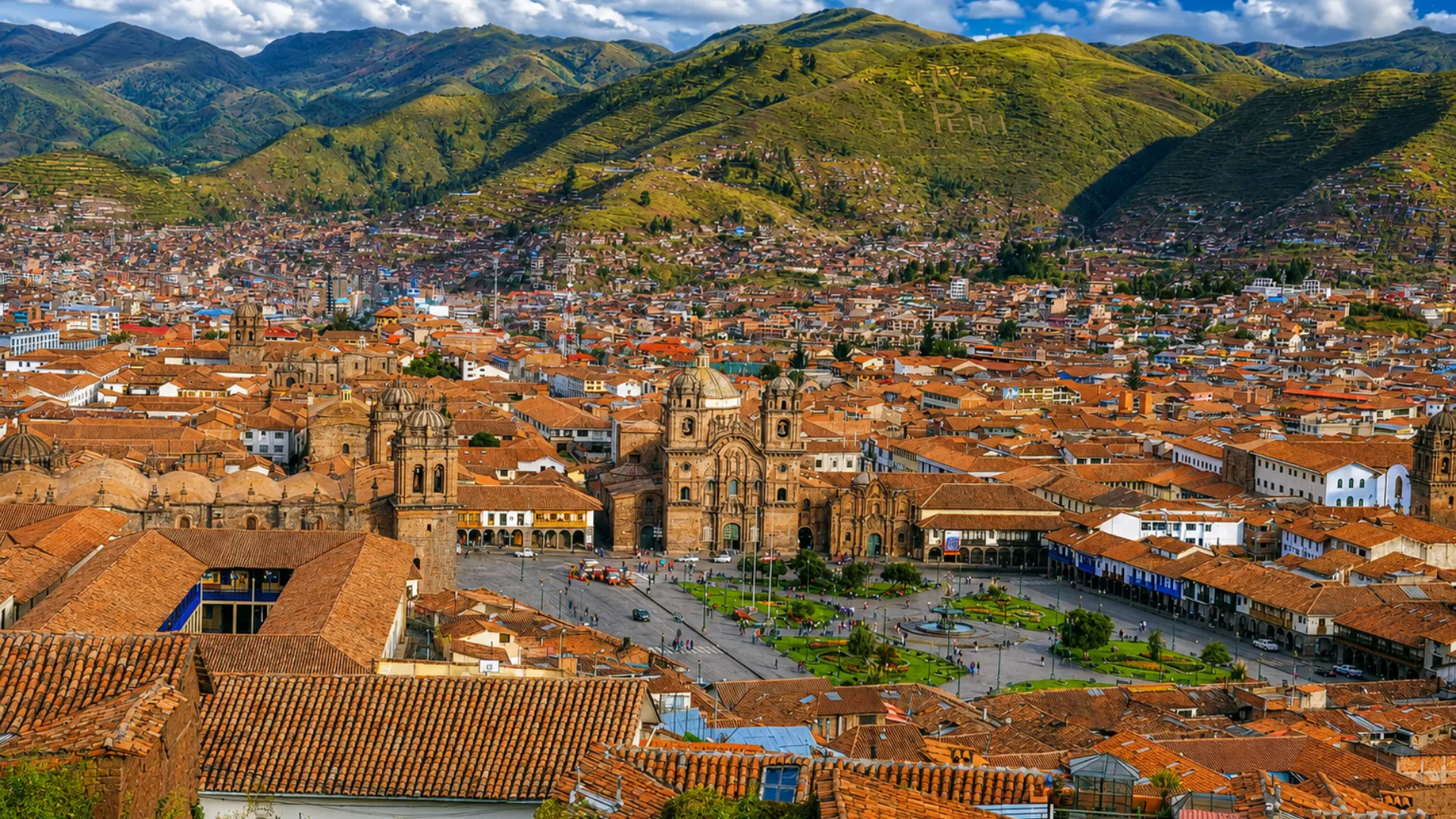
Cusco at a Glance
| Location | Cusco Region, southeastern Peru |
| Distance from Lima | About 570 km in a straight line |
| Elevation | 3,400 m / 11,155 ft |
| Airport | Alejandro Velasco Astete (CUZ) |
| Currency | Peruvian sol (PEN) |
| Time zone | GMT-5 |
| Languages | Spanish and Quechua |
| UNESCO status | World Heritage Site since 1983 |
Why Cusco Is More Than a Stopover
The origins of Cusco date back to the 12th century and it became the capital of an empire that ruled all of South America, ranging from southern Colombia down through central Chile. Every single road leading out of this empire started from Cusco.
When the Spanish conquered this city in the 1530s, they did not destroy it. They built upon it. It is this detail that makes the experience of walking through Cusco interesting as opposed to simply aesthetically pleasing. There is an example of a colonial-era church being built atop a beautifully fit foundation made by the Incas. Earthquakes shattered the colonial stones but the Incans' were still intact. Throughout the colonial era, Cusco was the epicenter of the Viceroyalty of Peru, and the fusion of Andean and European culture can be seen through its architecture, cuisine, and festivities.
The historical center of Cusco can be easily explored within the span of a day.
Before the Inca: The Lake That Became a City
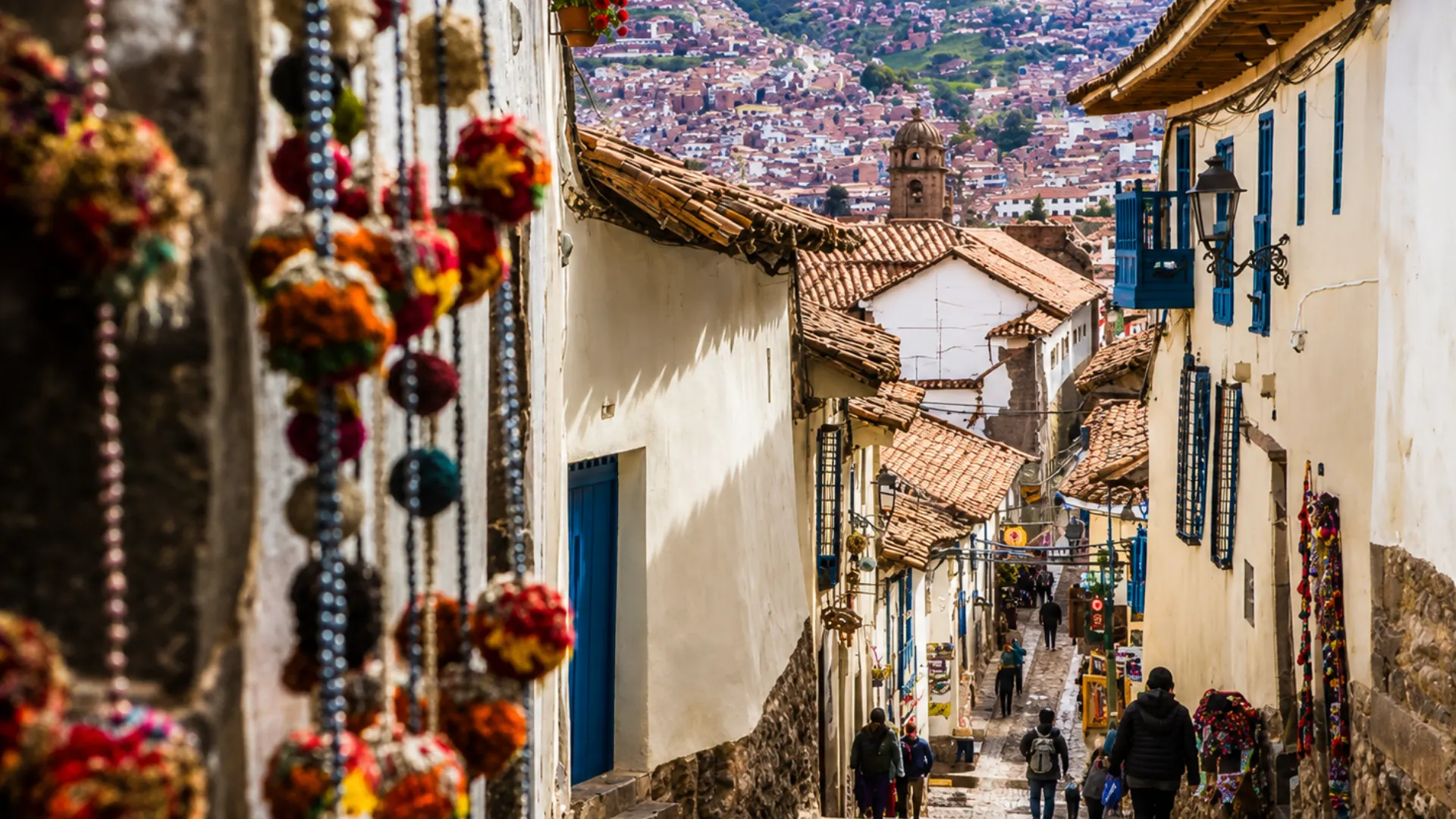
Long before anyone laid a stone here, the valley you're standing in was underwater.
Geologists call it Lake Morkill. It was a glacial lake that filled the basin now occupied by the districts of Cusco, Wanchaq, Santiago, San Sebastián, and San Jerónimo, stretching roughly 24 kilometers from the Picchu hill to a narrow point called Angostura. It belonged to the Pleistocene, and its shoreline supported fish, mollusks, and Ice Age megafauna.
The name comes from the Yale scientific expedition of 1911 and 1912, the same expedition led by Hiram Bingham that brought Machu Picchu to international attention. The geologist on the team, Herbert Gregory, named the lake after the head of the southern railway who had helped move their equipment.
Eventually tectonic movement broke the natural dam at Angostura, in what is now San Jerónimo, and the water drained out. What was left behind was flat, fertile ground, and the first settled cultures of the valley, Marcavalle and Chanapata, moved in.
You can still see the evidence. Clay layers and beds of fossilized algae and freshwater snails show up on the Qoripata hill, which would have been an island. The Huacarpay lagoon and the Huasao wetlands south of the city are the surviving remnants. And in the Regional Historical Museum, in the house of Garcilaso de la Vega, you can see fossils pulled from the old lakebed, including a mastodon and the intact shell of a glyptodont measuring nearly three meters.
Most visitors never hear this part. It's worth knowing, because it explains why an empire chose this particular valley.
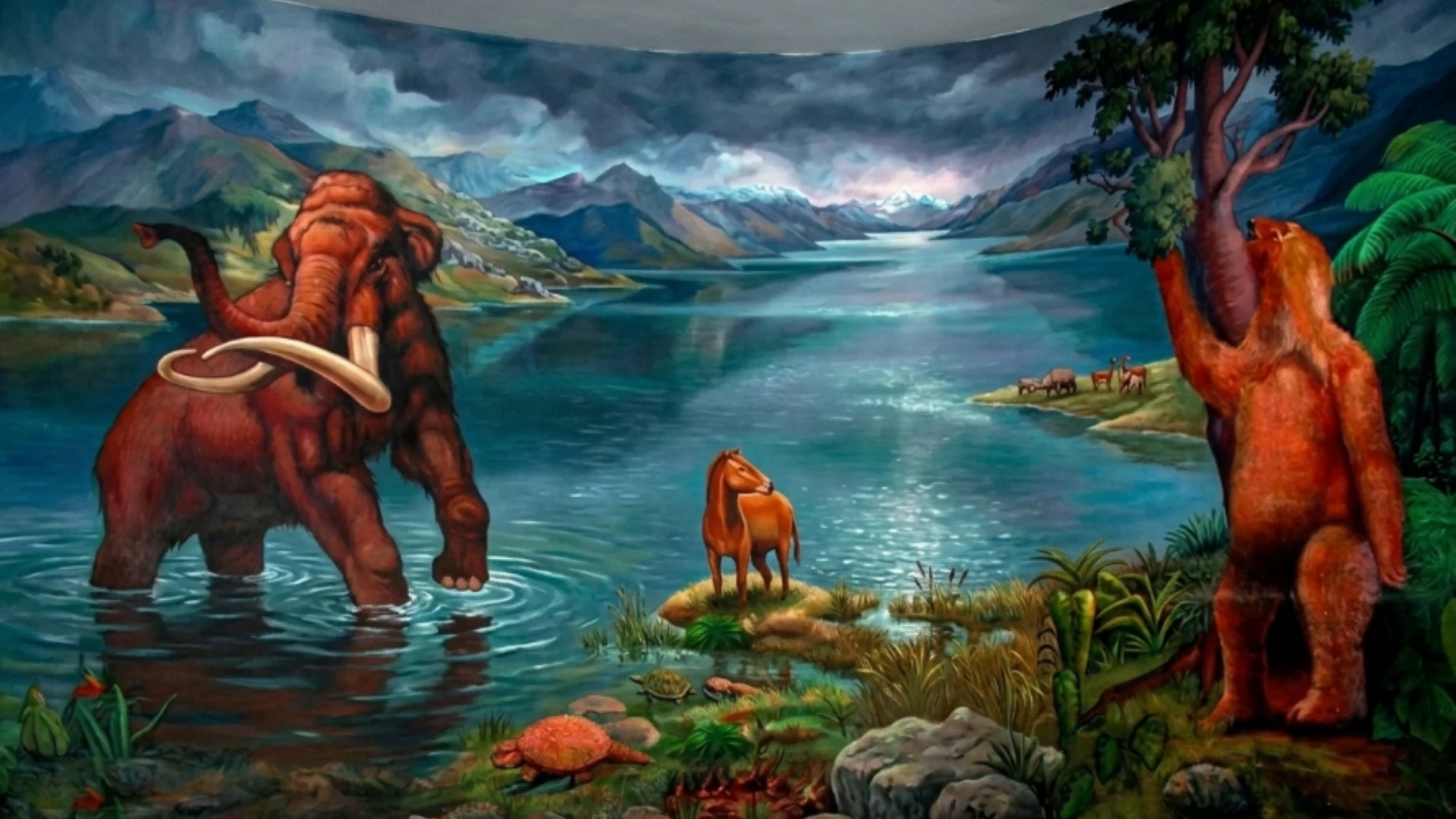
The Legend of Origin of Cusco
The Inca had no writing system, so their origin myth survived through the chroniclers of the Spanish conquest in the sixteenth century. There are two main versions, which do not compete with each other. One is celestial, and the other is political; Cusco contains both.
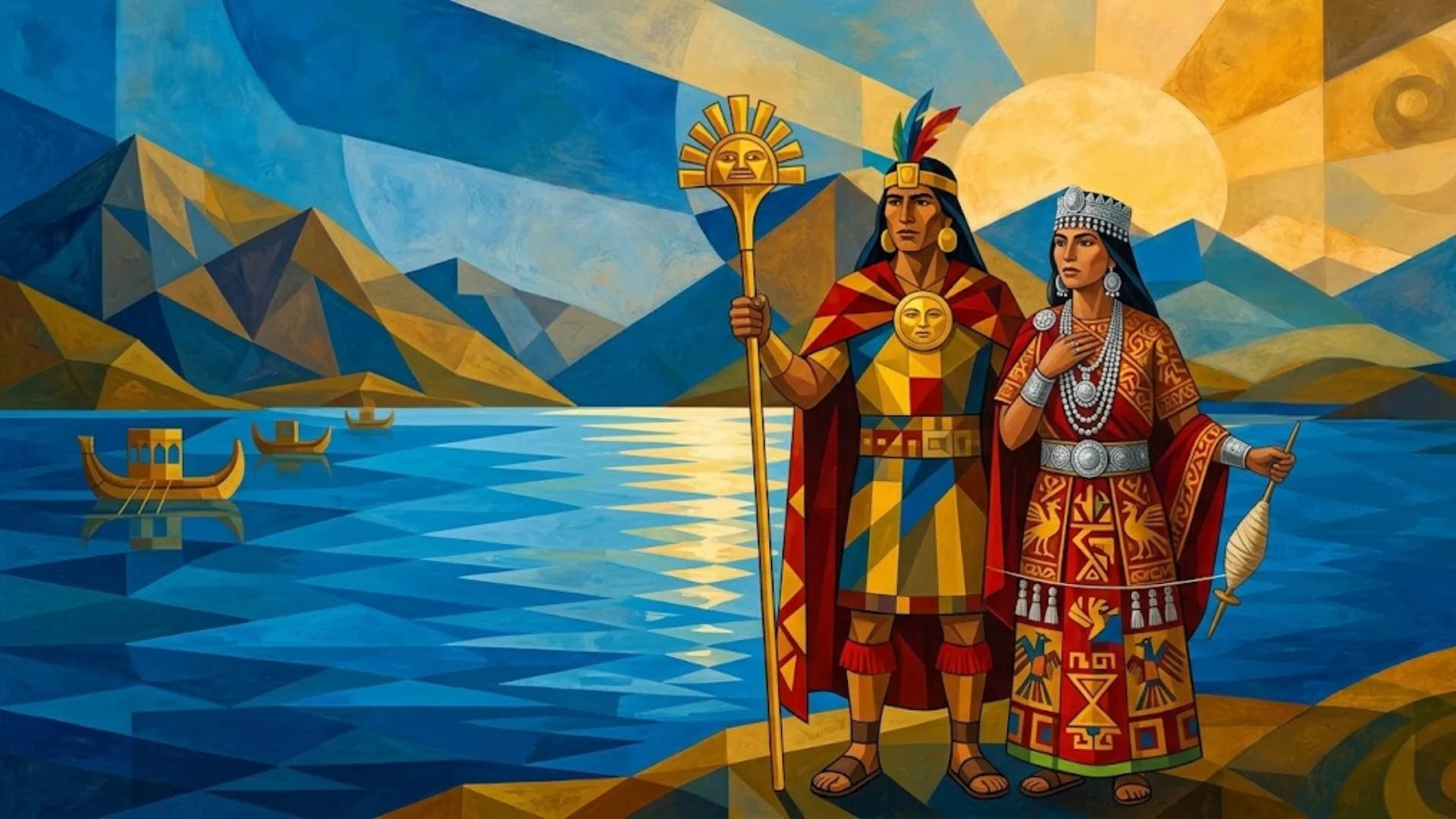
Manco Cápac and Mama Ocllo
In the more widely known version, the Sun Inti looked down on the Earth, filled with people without agriculture, laws or religion and decided to send his children there to teach them the good life. Manco Cápac and Mama Ocllo emerged out of the water of Lake Titicaca holding a golden staff.
Their instructions were clear walk north, find a place where the staff sinks in the soil, build a city there. And they found such a spot at the top of Huanacaure hill over this valley. Manco Cápac taught men agriculture and building and Mama Ocllo women weaving and housekeeping, and thus Qosqo was born.
The Ayar Brothers
This one is much more mysterious and, to many historians, closer to the historical truth. Four brothers and four sisters emerged out of a cave called Tampu T'oqo at Pacaritambo, south of Cusco the rock formation with three windows.
Four brothers were Ayar Manco, Ayar Cachi, Ayar Uchu and Ayar Auca. Ayar Cachi was very strong and could break mountains with a slingshot, and his siblings, being afraid of him, managed to trick him into going back into the cave and closed it up behind him. Ayar Uchu turned into a huaca at Huanacaure, Ayar Auca turned into a huaca at the site of the future city and marked its center. Thus, only Ayar Manco was left, and he became Manco Cápac.
If it is a myth of foundation, then it is the story of a family. If it is history, it is the chronicle of the ethnic group that absorbs or exterminates its rivals.
The City Shaped Like a Puma
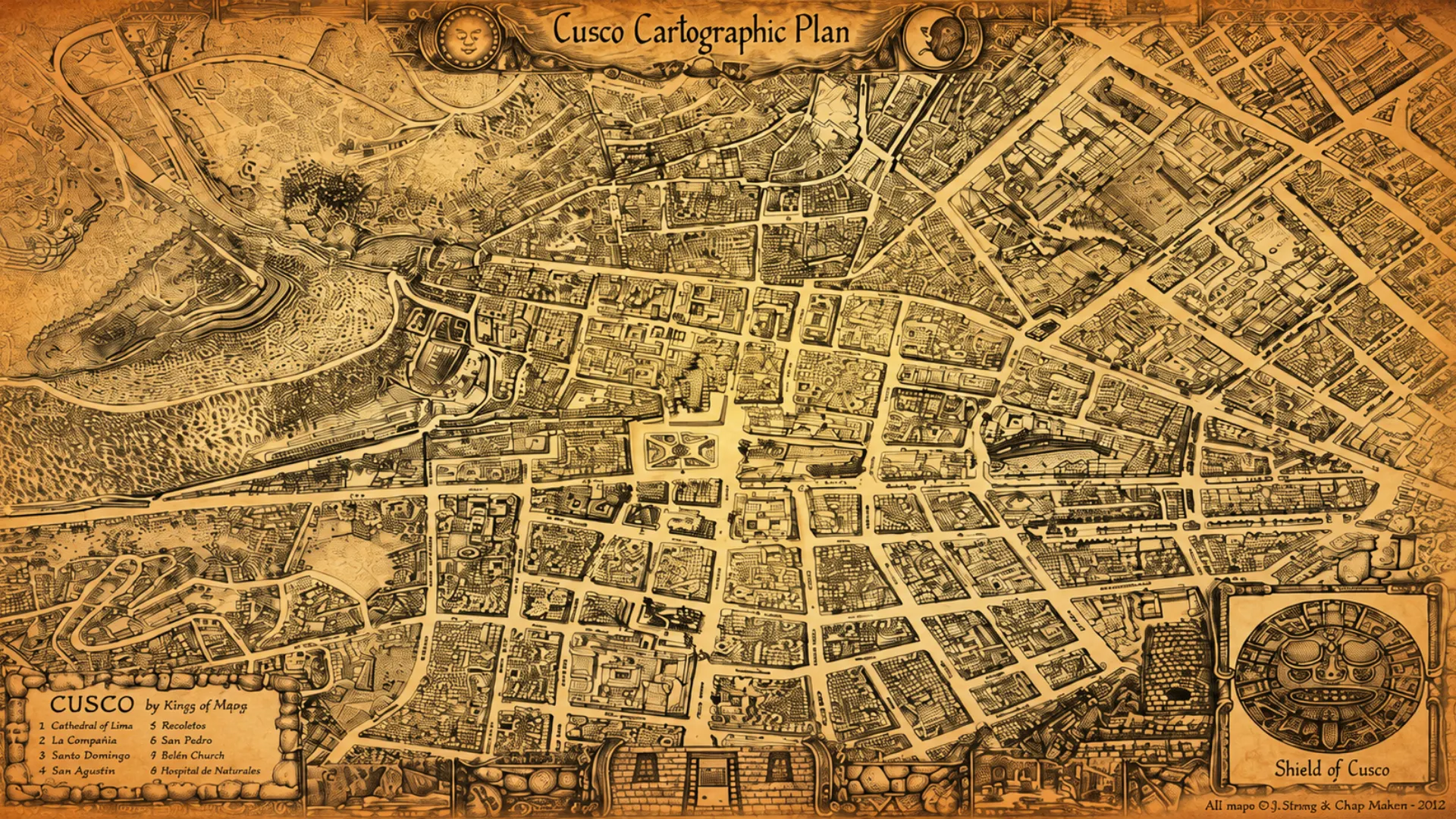
Then there is a third narrative, which you can still find on a map. Pachacútec, the ninth emperor and the individual who converted a little kingdom into an empire, is known to have redesigned the town of Cusco in the shape of a puma in crouch.
Sacsayhuamán, located above Cusco, is the head, with the zigzag walls representing the teeth. The space between the rivers Saphy and Tullumayo form the body, with the point at which the two rivers converge being known as Pumaqchupan, meaning the tail of the puma. The central square was located at the belly of the animal.
Whether the plan was taken literally or symbolically remains unclear. One thing, however, that is certain is that the puma, alongside the condor and the serpent, was one of the three sacred animals of the Andes, and creating your capital in their shape was a message.
How the Inca Divided the City
The organization makes the wandering very interesting, because one can still see how the city was divided by the streets.
Hanan and Urin
In Inca Cusco there were two moieties, namely Hanan Qosqo (the Upper City) and Urin Qosqo (the Lower City). It was not only geographic division, but the ranking between two moieties, their difference in the role of ceremonies and even the difference in royal bloodline. Traditionally the dynasty was divided in two: the first Incas belonged to Urin, and the latter to Hanan.
Andean thinking is always based on complementing two elements in anything that can be found.
The Four Suyus
The city was the place, where four quarters of the empire united. Tawantinsuyu is literally the four parts: Chinchaysuyu to the northwest, Antisuyu to the northeast, where the jungle starts; Collasuyu to the southeast, towards Lake Titicaca and Cuntisuyu to the southwest, towards the coast.
Four roads departed from the main square, one for each quarter of the empire.
The Inca Neighborhoods
Chronicles of the Incas, including those of Garcilaso de la Vega, have recorded as many as a dozen barrios in the capital of Cusco. The following are some examples of them whose names have been preserved either as streets or districts:
- Qollqanpata, the terraces below San Cristóbal, associated with the first Inca
- T'oqokachi, now San Blas
- Qarmenqa, now Santa Ana, where the road to Chinchaysuyu began
- Rimacpampa, the square where announcements were made, at the start of the Collasuyu road
- Pumaqchupan, the puma's tail
- Kayaukachi, Chaquillchaca, Picchu, Quillipata, Munaysenqa, Pumacurco, and Cantutpata
The heart of the city between the two rivers was exclusively for the nobility while everyone else stayed in the surrounding barrios depending upon their region of origin.
The City Today
Modern Cusco maintains an adaptation of the same layout. The Centro Histórico contains the plazas, churches, and Inca stone work. San Blas rises up the northeast slope. San Cristóbal is situated higher up in the Qollqanpata terrace area. Santa Ana and San Pedro stretch out towards the market and former railroad station in the west. Wanchaq, Santiago, San Sebastián, and San Jerónimo make up the residential quarter of the old lakebed.
As a tourist, almost anything you would need can be found within the historic center and San Blas.
The Inca Palaces of Cusco
Every Inca ruler had his own palace, and when he passed away, his mummy and panaca (descendants) continued to inhabit it. The successor then built a new one. This is why the main plaza was surrounded by palaces rather than containing only one, and why the central part of the city was built upon the walls of the empire.
The Spaniards took possession of these structures and used them to build their churches, mansions, and government buildings. All but one of these palaces remain standing in one form or another. Below are the names that they held, how they are used today, and where to find them.
Qasana
Then: Palace of Pachacútec, the leader that reconstructed Cusco and expanded the empire. According to chroniclers there was a great hall big enough to host thousands of people inside.
Now: The arcade of shops, restaurants, and the Portal de Panes.
Where: North-western side of the Plaza de Armas, the arcade with the arches opposite to the Cathedral.
Qorakora
Then: A palace that is usually associated with Inca Roca, situated next to the Qasana, on the same side of the square.
Now: Commercial arcades and balcony of upper floors looking out at the square.
Where: Plaza de Armas, west of Qasana.
Amarukancha
Then: The enclosure of the serpent, palace of Huayna Cápac, the last Inca that ruled the unified empire.
Now: The Iglesia de la Compañía de Jesús, one of the most exquisite baroque churches of the Americas.
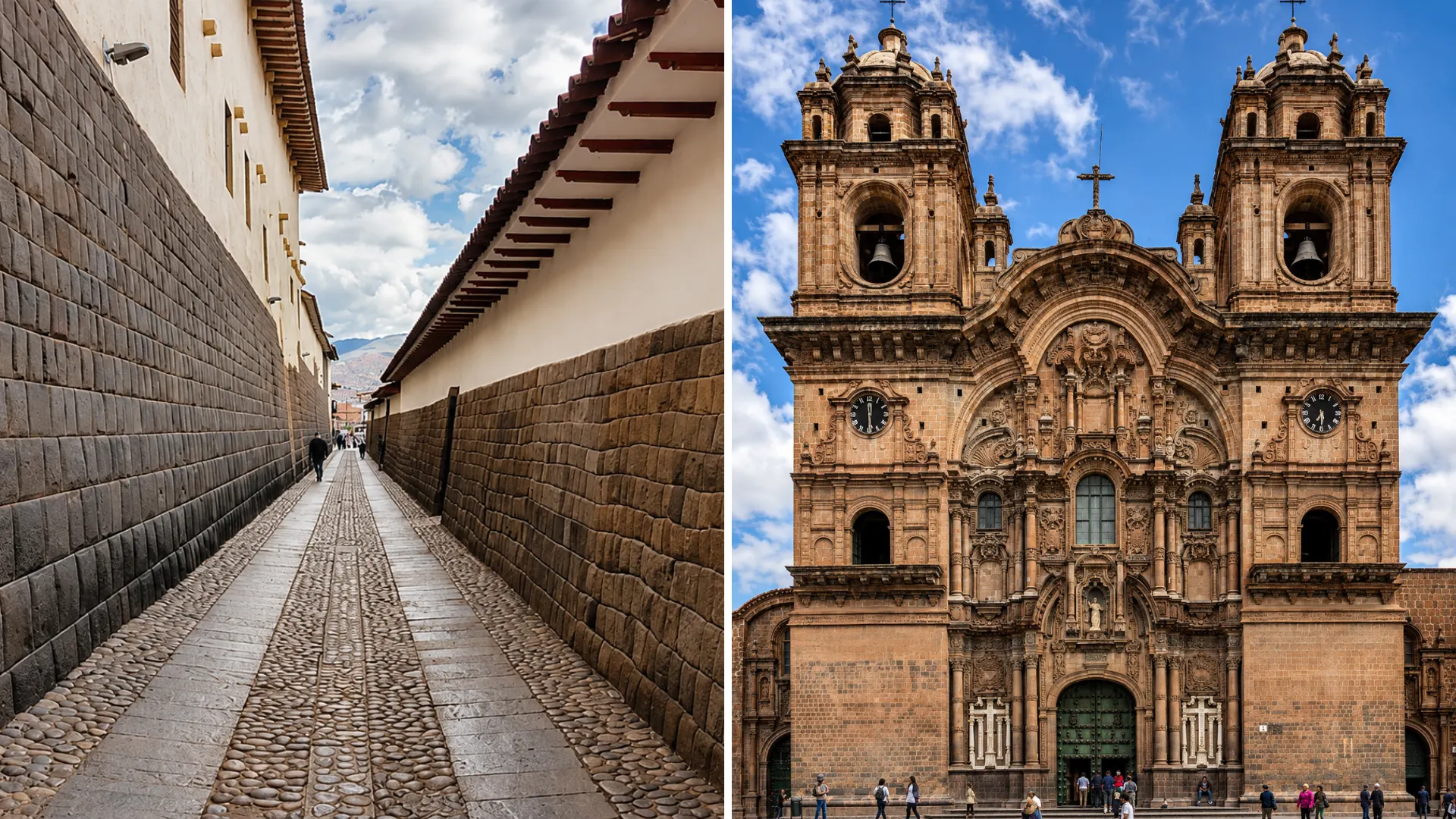
Where: South-east side of the Plaza de Armas, where the Inca wall is still preserved along the Calle Loreto, the narrow street besides the church, one of the best preserved Inca streets of Cusco.
Hatun Kancha
Then: The great enclosure, connected to Túpac Inca Yupanqui, occupying a full city block.
Now: Colonial buildings, hotels, and shops, where sections of the original wall can be seen.
Where: The city block behind the Cathedral, at Calle Santa Catalina Angosta and Calle Palacio.
Pucamarca
Then: Red place, the place linked with Túpac Inca Yupanqui.
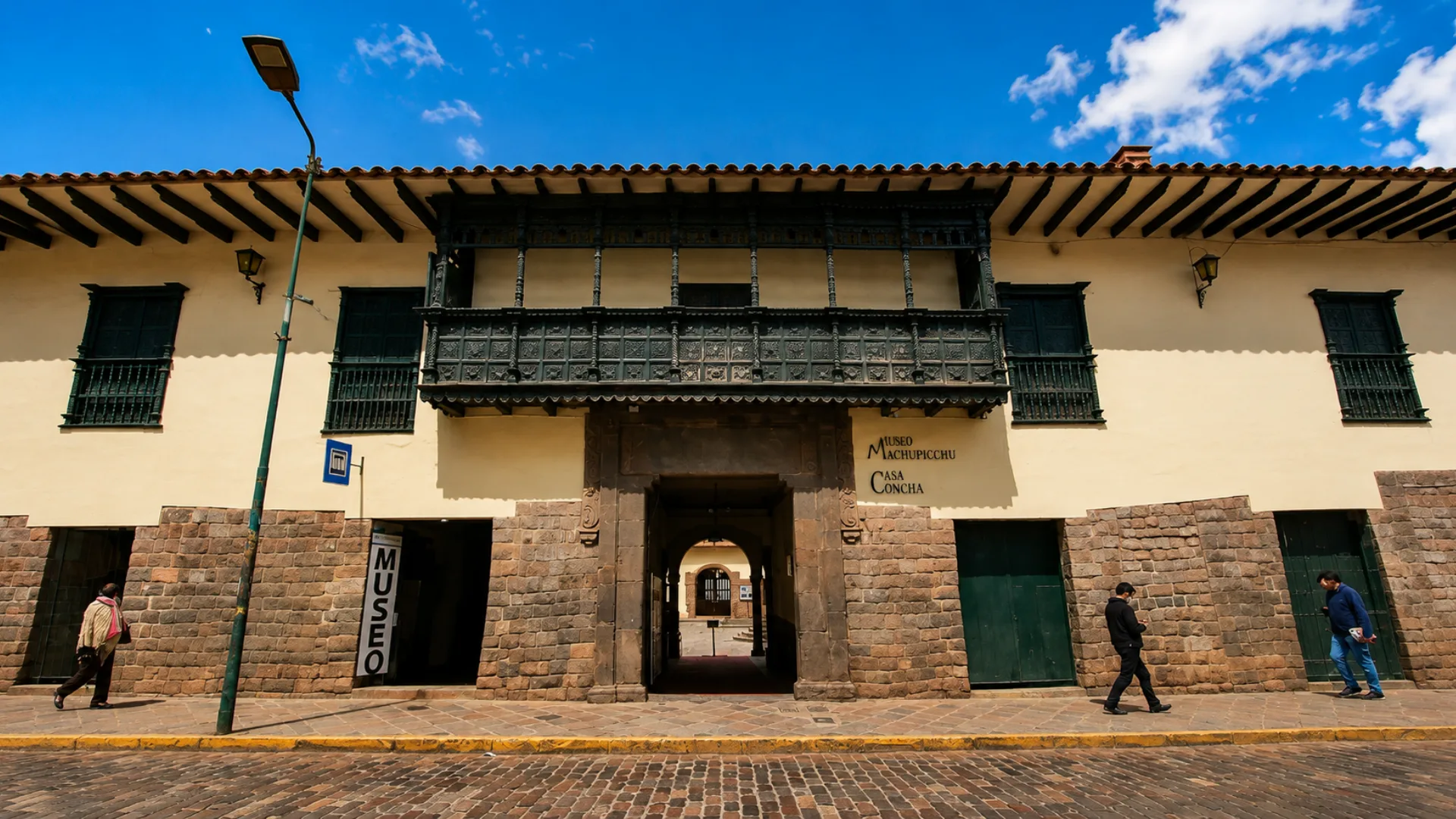
Now: Casa Concha, which houses the collection of artifacts Yale University returned to Peru and now is Machu Picchu Museum.
Where: Calle Santa Catalina Ancha 320, two blocks away from the main square.
Acllawasi
Then: The dwelling of the chosen women where they weaved and made offerings for the state.
Now: The convent and museum named after Santa Catalina, a female religious order situated in an Inca dwelling.
Where: Calle Santa Catalina Angosta, a block away south-east from the main square.
Qollqanpata
Then: Linked by tradition with Manco Cápac, the legendary founder. Name means place of storehouses, a nod to the qollqas that once stood there.
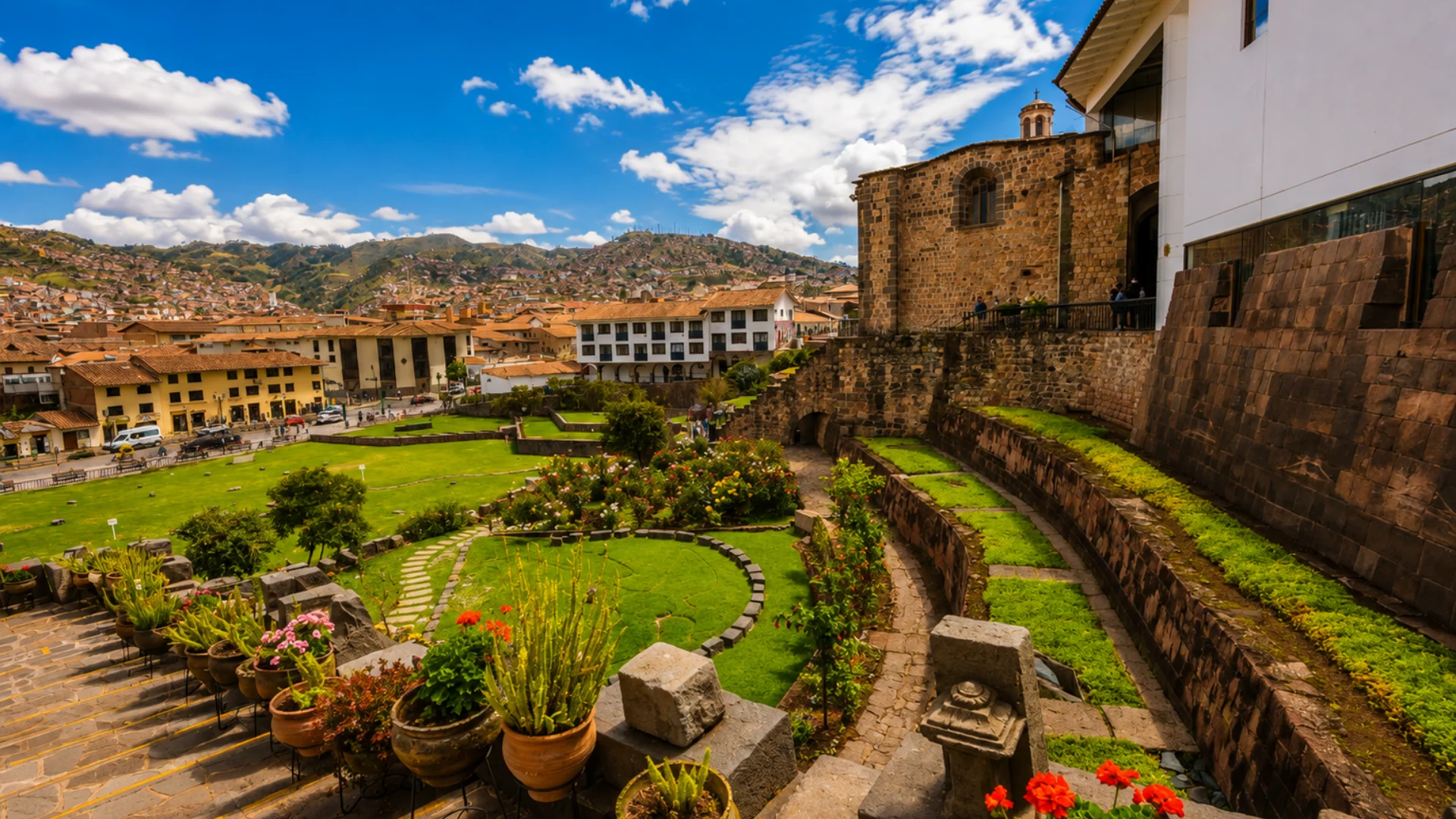
Now: Terrace gardens below the church of San Cristóbal, serving today as the best free viewpoint in the city.
Where: On the hill above the center on the road to Sacsayhuamán, a fifteen-minute walk up from the plaza.
Hatunrumiyoc
Then: Residence of the Inca Roca. Name means the one with the great stone.
Now: The Archbishop's Palace and the Museum of Religious Art. The Inca wall beside the road is preserved and contains the famous twelve-angled stone, a diorite block fashioned with twelve surfaces to fit its neighbors.
Where: Calle Hatunrumiyoc, from the plaza to San Blas.
Qorikancha
Then: Not a palace but the empire’s most holy temple, the Temple of the Sun and where all ceque lines begin.
Now: The Convento de Santo Domingo and Qorikancha site museum.
Where: Corner of Avenida El Sol and Calle Santo Domingo, three blocks southeast of the plaza.
Walking down Calle Loreto and then turning around and walking down Calle Hatunrumiyoc will take about fifteen minutes and provide the best image of what the imperial city really looked like prior to 1533.
How to Get to Cusco
Just about everyone reaches via the international airport Jorge Chávez airport in Lima.
By Air
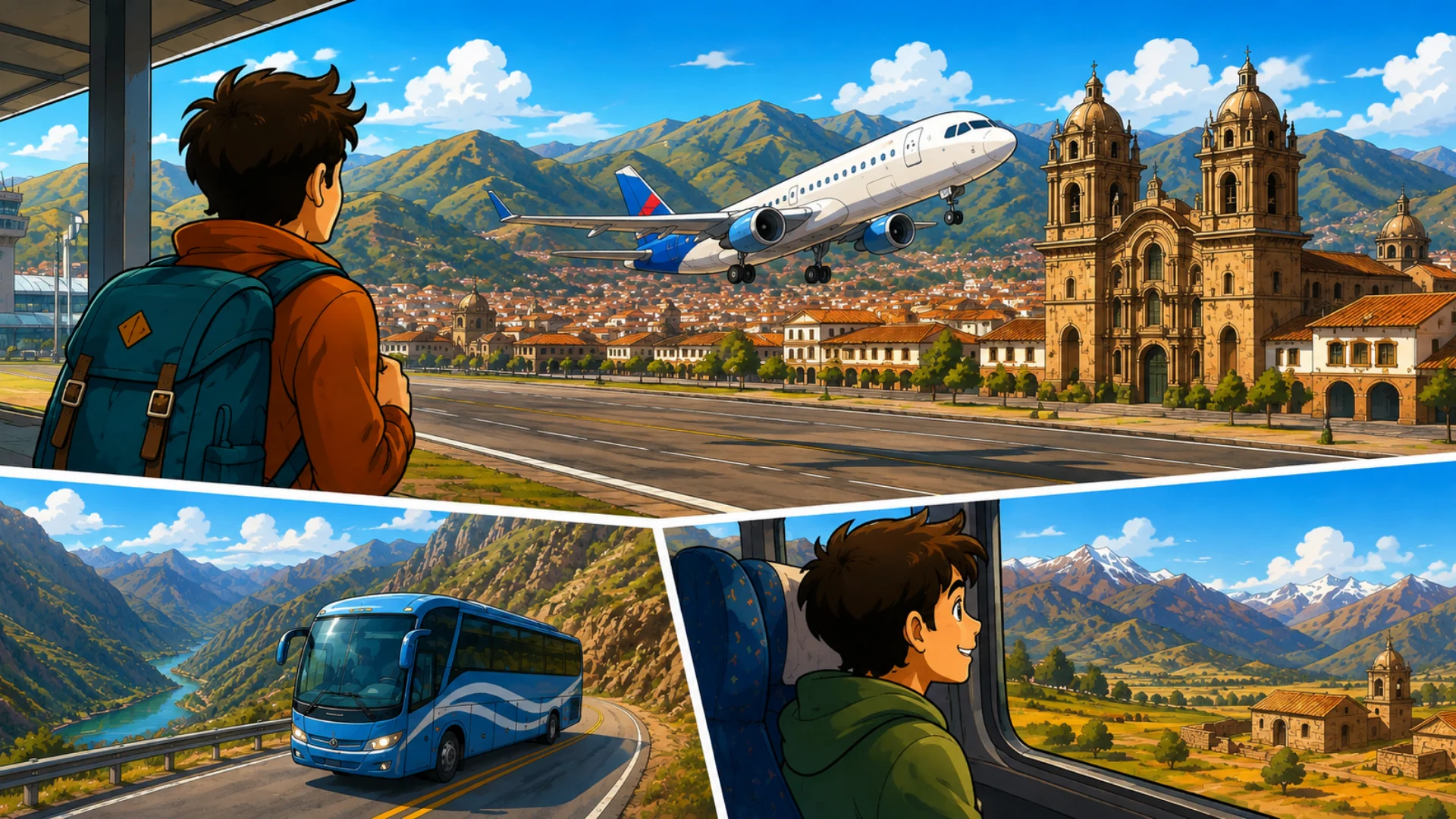
The obvious choice, air travel gets you there. You can reach Cusco via direct flights that depart from Lima throughout the day and that take approximately 80 to 90 minutes. It is another 15 to 20 minutes to reach the city center by taxi from Alejandro Velasco Astete airport.
Flights operate via LATAM, Sky Airline, and JetSmart. Some connections are made from Arequipa, Bogotá, and La Paz.
A word of advice often given for very valid reasons: choose the morning flight. The weather in the Andes changes during the afternoon, and the likelihood of your flight being cancelled increases during the day. For your plans on how to reach Cusco from Lima, a morning flight may be better than the reduced cost of an evening one.
By Bus
The overland journey from Lima is about 21 to 22 hours depending on which road you take. The cost is approximately S/70 to S/90 (about $25), while the higher-priced, reclining seat, luxury buses cost about S/180 (about $50). Two bus companies provide such services, Cruz del Sur and Oltursa. The online portal for making reservations is usually RedBus.
It is indeed a long journey. The positives? The views along the way and the cost, of course.
The bus from Arequipa takes around 10 hours. The bus from Puno, located on Lake Titicaca, takes about 7 to 8 hours. There are also tour buses that make a stop on the way at ruins and colonial churches. This is one clear advantage of reaching Cusco from either of these two cities since you will be somewhat acclimatized instead of coming from the sea level straight to 11,000 feet in 90 minutes.
Altitude Sickness
This is the one thing that people often underestimate, and this is the thing that will probably ruin the first couple of days of your journey.
Cusco is 3,400 meters high. The air contains less oxygen than the air in the regions where most travelers come from. The symptoms of altitude sickness in Cusco are headache, shortness of breath, dizziness, fatigue, or nausea occurring within the first day. This condition is quite typical and usually goes away within two days.
Give Yourself Two Days
Land, head to your hotel, and do practically nothing. Sleep, hydrate, eat something light. Don’t book a trek, a trip to Rainbow Mountain, or any destination over 14,000 feet elevation within those first two days. That’s why people get sick and unhappy about their expensive adventure vacation.
Any reliable service provider will tell you to land at least 48 hours before any trek takes place. And there is a reason behind such advice.
What Actually Helps
- Rest on arrival. Nothing else from this list is quite as important.
- Hydrate constantly, even when you're not thirsty.
- Coca tea and muña tea are available everywhere and actually do work. Chewing coca leaves also works great.
- Eat smaller, lighter meals for the first day. Heavy food plus thin air is a rough combination.
- Skip alcohol the first night or two.
- Acetazolamide (Diamox) can be bought in any pharmacy in Cusco. It is usually prescribed as preparation for traveling. Make sure to ask your own physician, however, since not everybody can use this drug.
- Supplemental oxygen is also available at most hotels in the city and people working there know how to provide it to tourists.
Finally, there is one additional tip for traveling to Cusco that is worth considering. The valley is situated roughly 500-600 meters lower than the city. Some experienced travelers spend their first couple of nights in either Urubamba or Ollantaytambo and move to Cusco after that. The effect of acclimation in Cusco is more effective without fighting both altitude and jet lag on the same day.
Some positive information regarding the main destination of the trip: Machu Picchu is located at the elevation of 2,430 m (7,970 ft). The town of Aguas Calientes is even lower, at about 2,040 m.
Best Time to Visit Cusco
The Andes have two seasons that determine the climate of Machu Picchu and all treks in the area.
Dry Season: May to October
Blue skies, good trekking trails, and typical postcard weather. High temperatures average 21°C (70°F), while nighttime temperatures drop considerably and can fall as low as -2°C (28°F) in June and July.
Dry Season: May to October
Clear skies, reliable trail conditions, and the classic postcard weather. Daytime highs reach around 21°C (70°F) and nights get genuinely cold, sometimes dropping to -2°C (28°F) in June and July.
This is peak season. Expect crowds at the main sites, higher hotel rates, and tickets selling out weeks or months ahead.
Rainy Season: November to April
Rain, humidity, and overcast stretches, with February the wettest month by a wide margin. Temperatures are milder overall, roughly 6°C to 23°C (43°F to 73°F), and the nights are far more comfortable than in June.
The tradeoff is worth considering. Hills go green, prices drop, and you'll share the ruins with a fraction of the people. Rain here tends to come in afternoon bursts rather than all-day gray, and mornings are often clear. The rainy season in Cusco gets a worse reputation than it deserves if you pack a poncho and stay flexible.
One hard rule: the classic Inca Trail closes every February for maintenance. Alternative treks stay open.
The Sweet Spot
April, May, September, and October. Shoulder months give you good odds on weather without full high-season pricing or crowds. If someone asks me the best time to visit Cusco, I say late April or early October almost every time. November can also be excellent.
Things to Do in Cusco
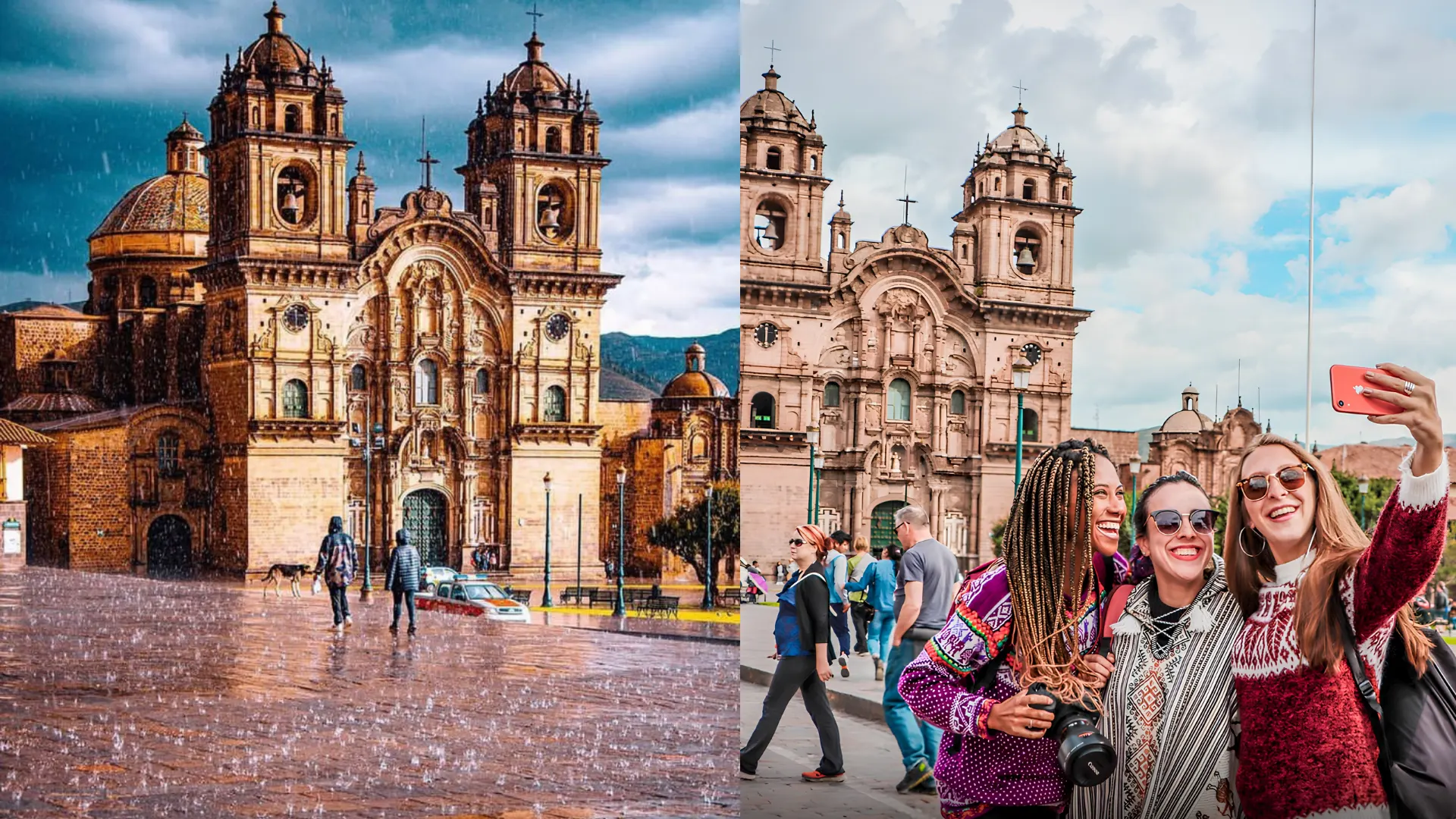
Even if the big attractions sit outside the city, set aside at least a full day for Cusco itself. If you're short on time, prioritize the Centro Histórico.
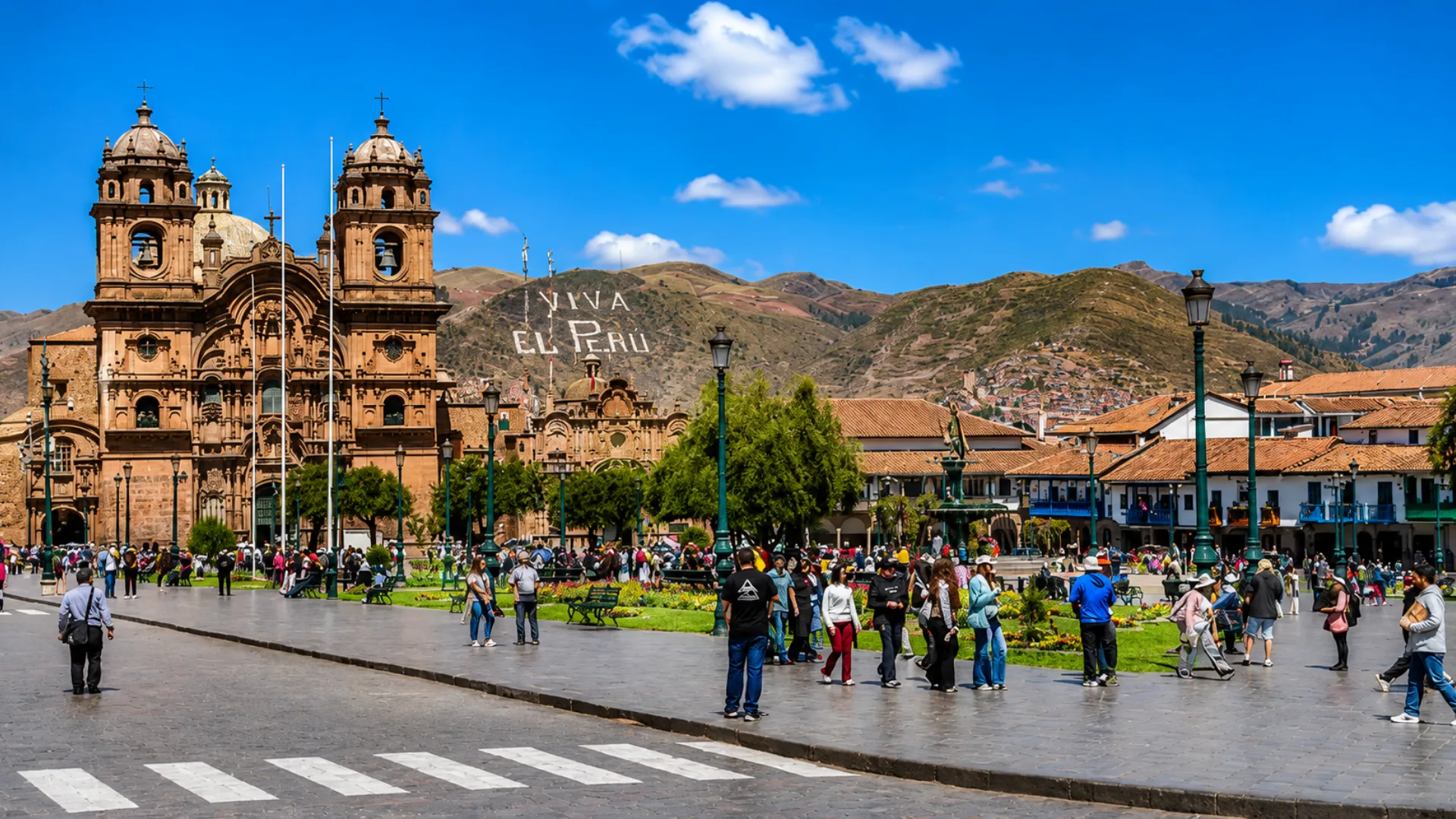
Plaza de Armas
The main square is where the city began. Unlike most Latin American plazas, this one wasn't a colonial invention. The Inca called it Huacaypata, the place of weeping, and used it for ceremonies and state gatherings. The Spanish widened it and built their churches and mansions on the palaces that stood there.
Today it's gardens, benches, a fountain, and a ring of cafés, restaurants, and craft shops. Sitting there in the early evening and watching the city fill the square is free and one of the better things to do in Cusco.
Two buildings dominate it:
Cusco Cathedral, which holds one of the most famous paintings in Peru: a Last Supper where the dish on the table is a roasted guinea pig. That single detail tells you how thoroughly Andean and Catholic traditions merged here.
Iglesia de la Compañía de Jesús, a striking piece of Andean baroque with a gilded interior.
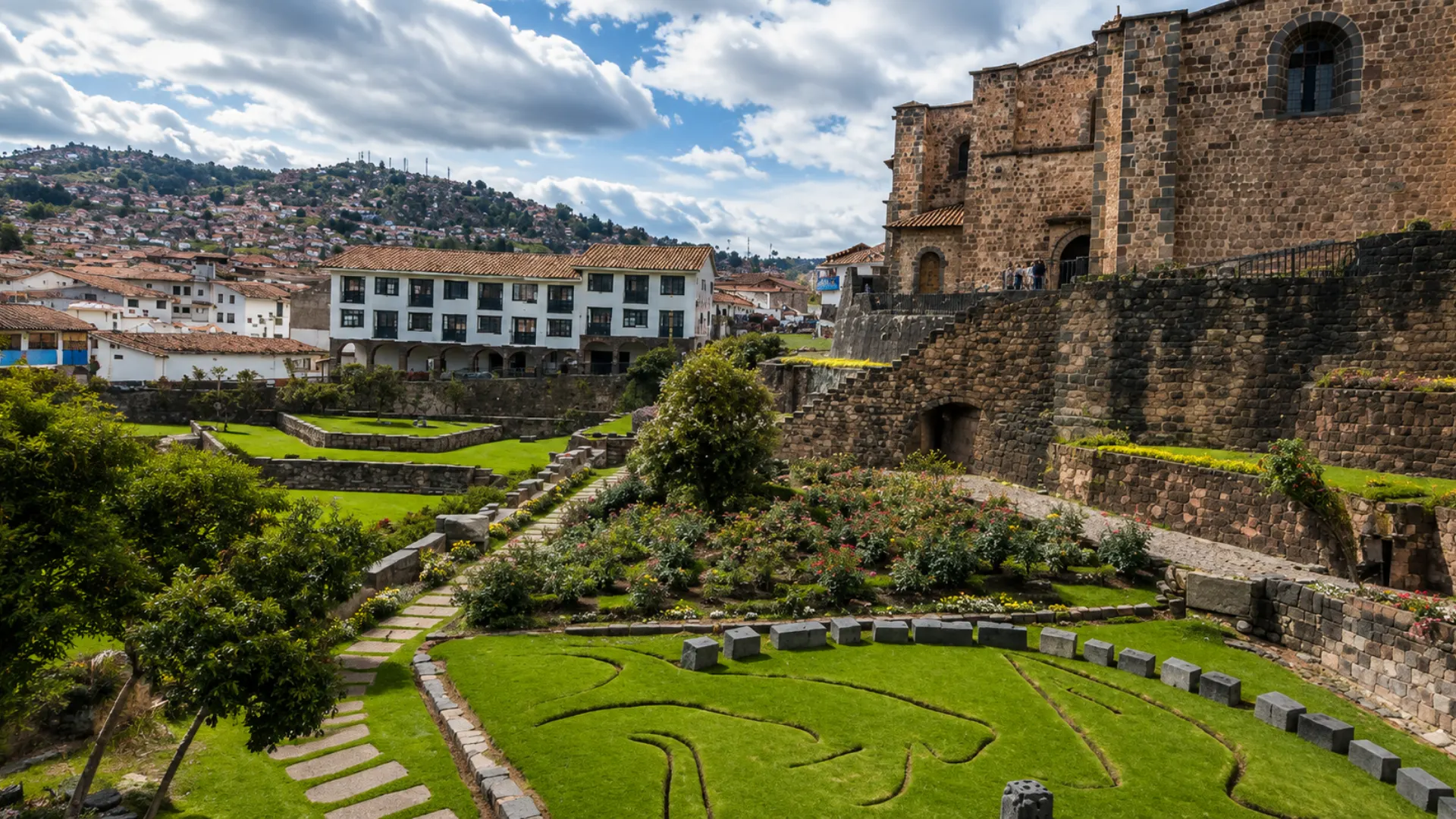
Qorikancha, the Temple of the Sun
Qorikancha was the most sacred site in the Inca Empire, with walls reportedly sheathed in gold plate in honor of Inti, the sun. The Spanish stripped it and raised the Convento de Santo Domingo on the foundations.
What's left is a strange, powerful hybrid. Colonial arches run straight into Inca walls that are still perfectly aligned after five centuries, and the curved exterior wall on the Avenida El Sol side is some of the finest stonework anywhere. The interior garden and the small collection of Inca artifacts are worth the extra twenty minutes.
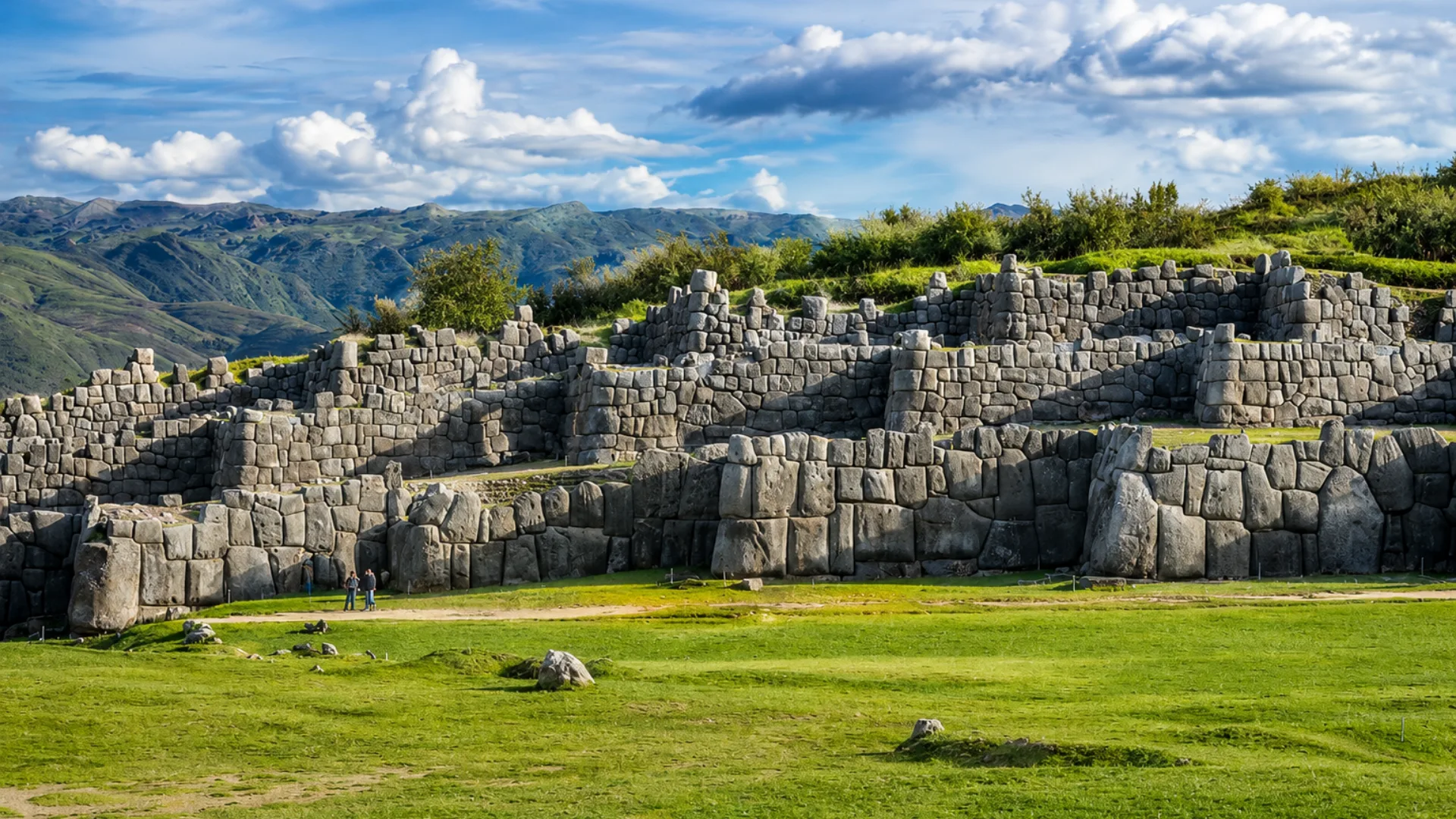
Sacsayhuamán
Fifteen minutes above the city, Sacsayhuamán is the site that makes the scale of Inca engineering land. The zigzag walls are built from blocks weighing more than 100 tons, cut and fitted without mortar so tightly that a blade won't slide between them.
It functioned as a fortress, but it was also ceremonial ground, and it still hosts the Inti Raymi festival every June 24. From the site it's a ten-minute walk to Cristo Blanco for a panoramic view over the city.
You can walk up from the Plaza de Armas in 30 to 45 minutes, or take a taxi if you're still adjusting to the altitude. Most people take the taxi up and walk down.
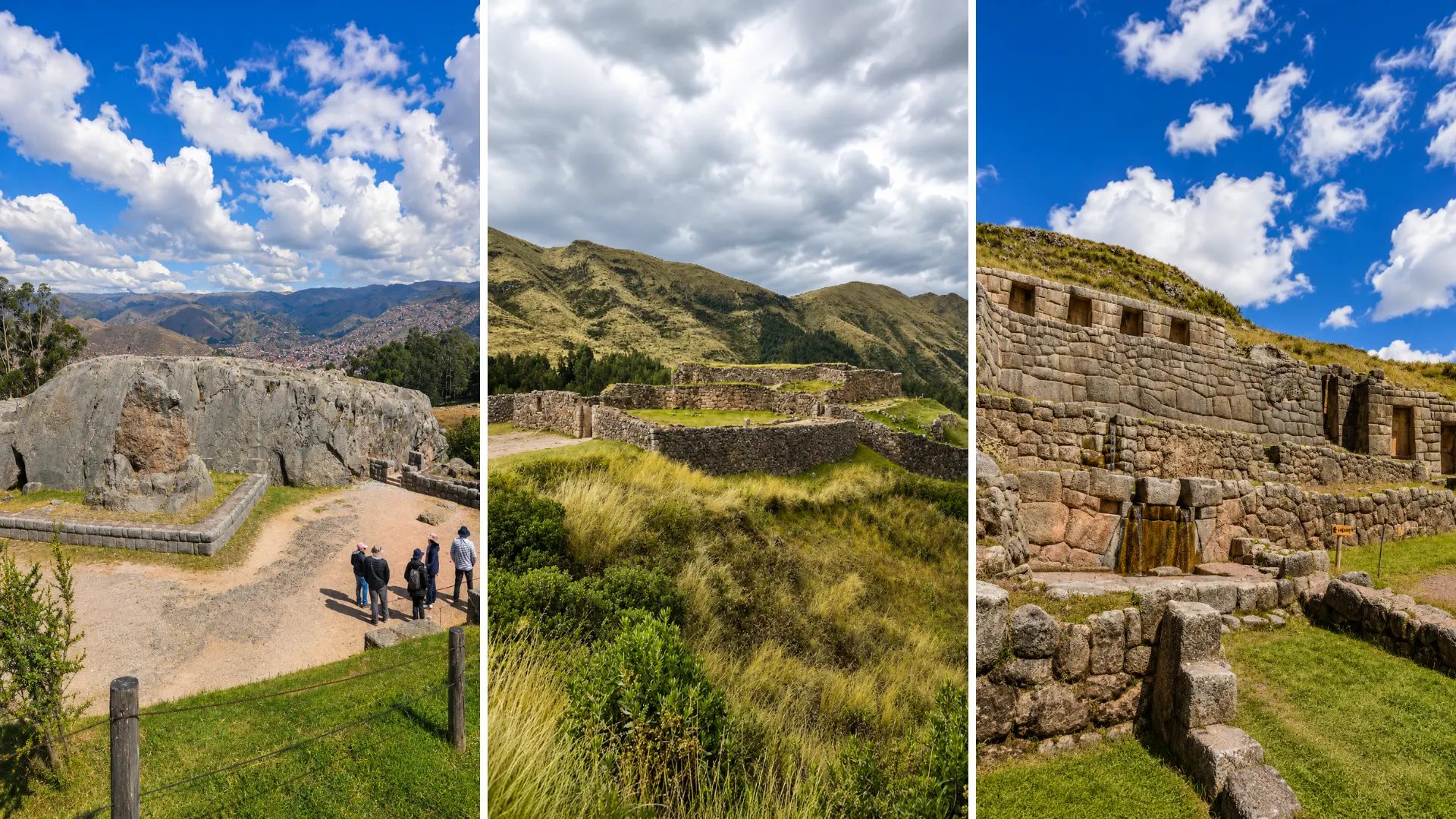
Q'enqo, Puka Pukara, and Tambomachay
Three smaller sites sit along the same road above Sacsayhuamán, which makes a natural half-day circuit.
Q'enqo means labyrinth. It's a rock outcrop carved with channels, niches, and a subterranean passage, and it was used for rituals and offerings. Puka Pukara, the red fortress, was a checkpoint and rest stop on the road into the city, with a wide view over the valley. Tambomachay, often called the Inca's bath, is a set of terraced fountains and aqueducts that still run with clear water, built as a site of water worship.
Wear comfortable shoes and bring sun protection. The sun at this altitude is stronger than it feels.
The San Blas Neighborhood
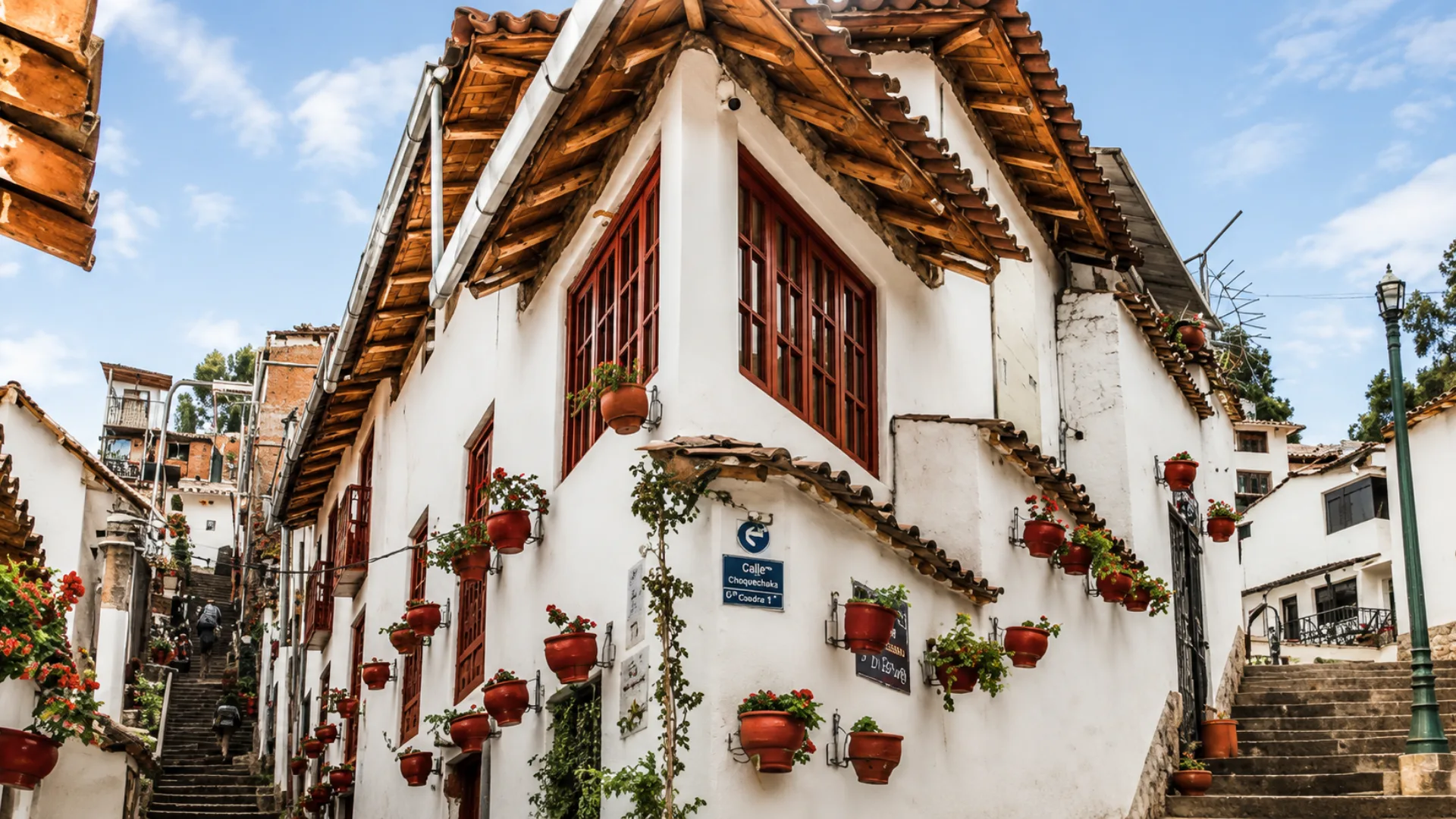
San Blas climbs the hill between the plaza and the ruins, and it's the artisan quarter. Narrow cobblestone lanes, workshops, galleries, small cafés, and bars with views over the rooftops.
The neighborhood church holds a carved wooden pulpit considered one of the masterpieces of colonial Cusqueñan art. The San Blas viewpoint gives you one of the best panoramas in the city. Go in the morning before the sun gets strong, and be honest with yourself about the stairs. They're steep.
San Pedro Market
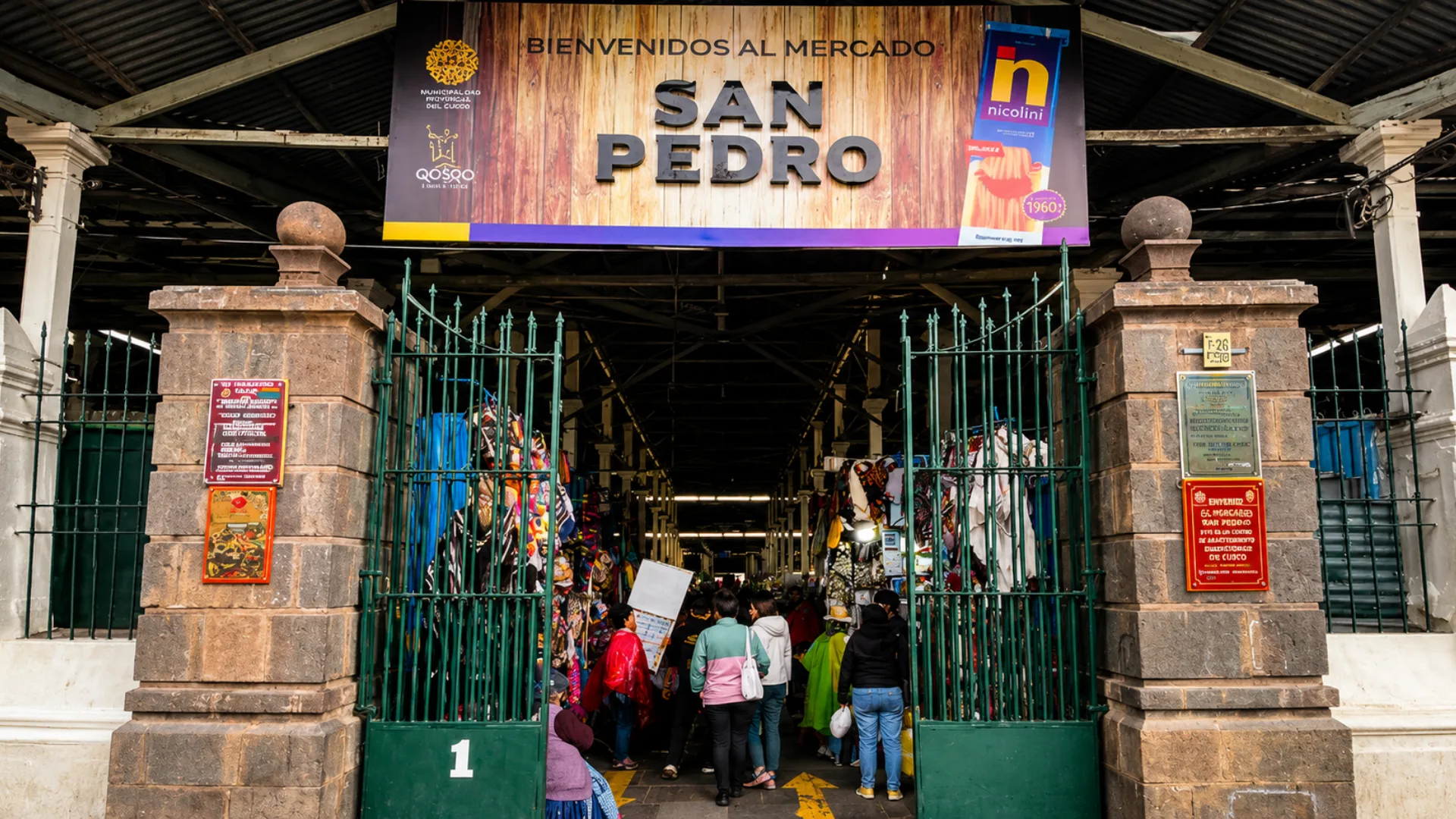
The main market, a ten-minute walk from the plaza. Juice stands, cheese vendors, bread stalls, sacks of quinoa and kiwicha, medicinal herbs, and a food court where a full lunch runs a few dollars.
This is where local food in Cusco is at its most honest. Caldo de gallina, lomo saltado, bistec montado, papas a la huancaína, and fresh juice for pocket change. Go before noon while everything is still moving.
Keep your bag in front of you, and ask before photographing vendors.
Other Small Things Worth Doing
- Find the twelve-angled stone on Calle Hatunrumiyoc, a single block cut to fit its neighbors on twelve faces.
- Take a free walking tour from the plaza to get oriented on your first afternoon.
- Do a food tour if you want context for what you're eating.
- Shop for textiles in San Blas or at the markets, where designs still carry family and cosmological symbols rather than being purely decorative.
The Plazas of Cusco
Cusco is a city of squares, and most of them were squares long before the Spanish arrived. Walking between them is the single best way to spend a first afternoon.
Plaza de Armas (Huacaypata)
The one everybody knows. In Inca times Huacaypata was roughly twice its current size and was covered with sand carried up from the coast, a detail the chroniclers found remarkable. It hosted the empire's most important ceremonies, and the mummies of dead Incas were brought out to attend them.
The Spanish cut it down, walled it in with the Cathedral and the Compañía, and built the arcaded portales that still ring it. It remains the center of civic life. Come back at night, when the churches are lit and the square fills up.
Plaza Regocijo (Kusipata)
Just west of the main square, Kusipata was originally the other half of the same great plaza, separated from Huacaypata by the Saphy river, which now runs underground beneath Avenida El Sol and Calle Saphy. The Spanish filled the river in and split the space into two squares.
Today Plaza Regocijo is quieter, greener, and surrounded by restaurants and colonial houses. It's where locals sit when the main square gets busy.
Plaza San Francisco
Two blocks southwest, this square sits in front of the San Francisco convent and its church, which holds one of the largest colonial paintings in South America. The plaza has a different feel from the tourist center, more everyday, and the arch of Santa Clara at the far end marks the old road out toward Cuntisuyu.
Plazoleta de San Blas
The small square at the top of the artisan neighborhood, with the San Blas church, a fountain, and steps where people sit in the late afternoon. On weekends there's often a craft market. It's one of the best places in the city to simply stop moving.
Plazoleta de las Nazarenas
A quiet square northeast of the Cathedral, ringed by some of the finest colonial houses in Cusco. The Museum of Pre-Columbian Art and several high-end hotels sit around it. Almost nobody stumbles into it, which is exactly its appeal.
Plazoleta Limacpampa (Rimacpampa)
Southeast of the center, Rimacpampa was the square where imperial announcements were read aloud, and the road to Collasuyu began here. It's a working plaza now, less polished and worth the ten-minute walk down Calle Maruri past Inca walls.
Plaza Santa Ana and Plaza Túpac Amaru
Santa Ana sits uphill to the west in the old Qarmenqa barrio, where the road to Chinchaysuyu started, with a wide view over the city. Túpac Amaru is a modern civic square in Wanchaq and shows you a Cusco that isn't performing for visitors.
Museums of Cusco
Most of Cusco's museums occupy convents and colonial mansions built on Inca foundations, which means the building is usually half the reason to go. Several are covered by the Cusco tourist ticket, and a few of the best are not.
Museo Histórico Regional (Casa del Inca Garcilaso de la Vega)
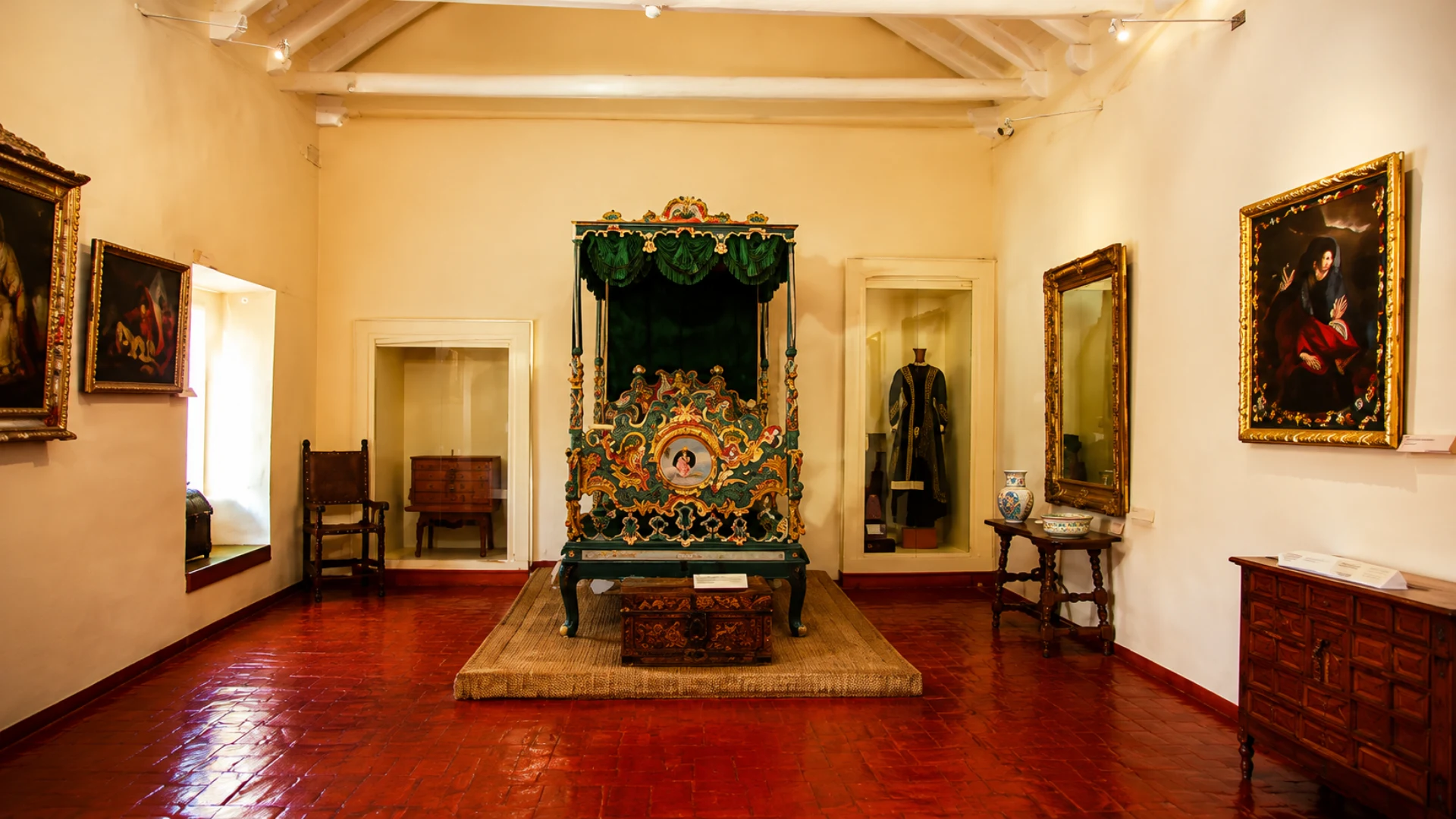
Housed in the birthplace of the chronicler Garcilaso de la Vega, this is the museum that tells the story of the valley from the beginning. Its earliest rooms cover the Lake Morkill period, with fossils recovered from the old lakebed including mastodon remains and a glyptodont shell. From there it runs through pre-Inca cultures, the Inca, and the colonial period, with a strong collection of Cusco School painting. Included in the tourist ticket.
Museo Inka (Casa del Almirante)
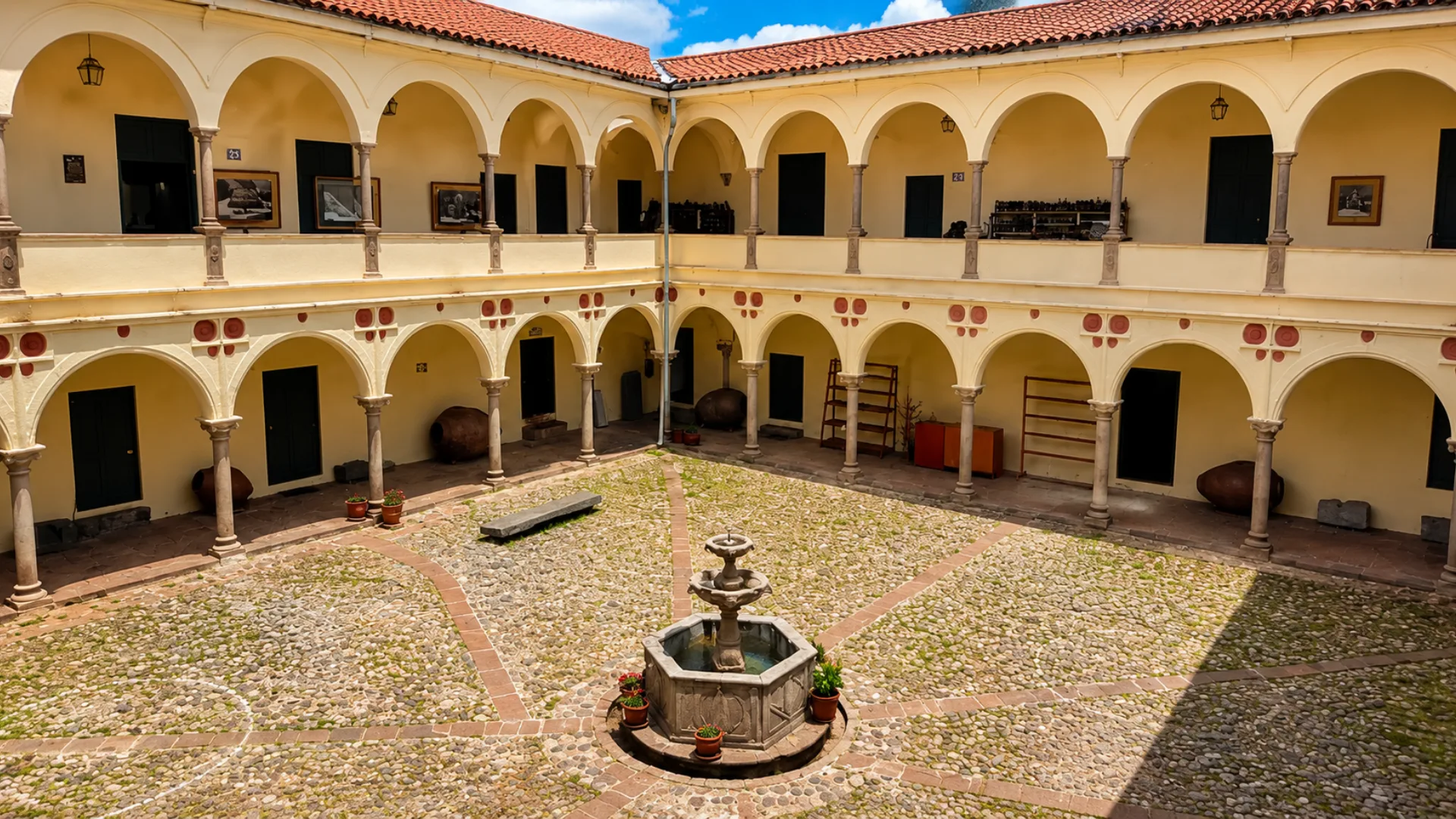
In a colonial mansion near the Cathedral, this is the best archaeological collection in the city: ceramics, metalwork, textiles, and the largest display of Inca keros (ceremonial wooden cups) anywhere. Weavers often work in the courtyard. Not on the tourist ticket, and worth the separate entry.
Museo de Arte Precolombino (MAP)
On Plazoleta de las Nazarenas, in the Casa Cabrera. This one treats pre-Columbian objects as art rather than artifacts, with careful lighting and minimal cases, drawing from the Larco collection in Lima. It's the most beautifully presented museum in Cusco.
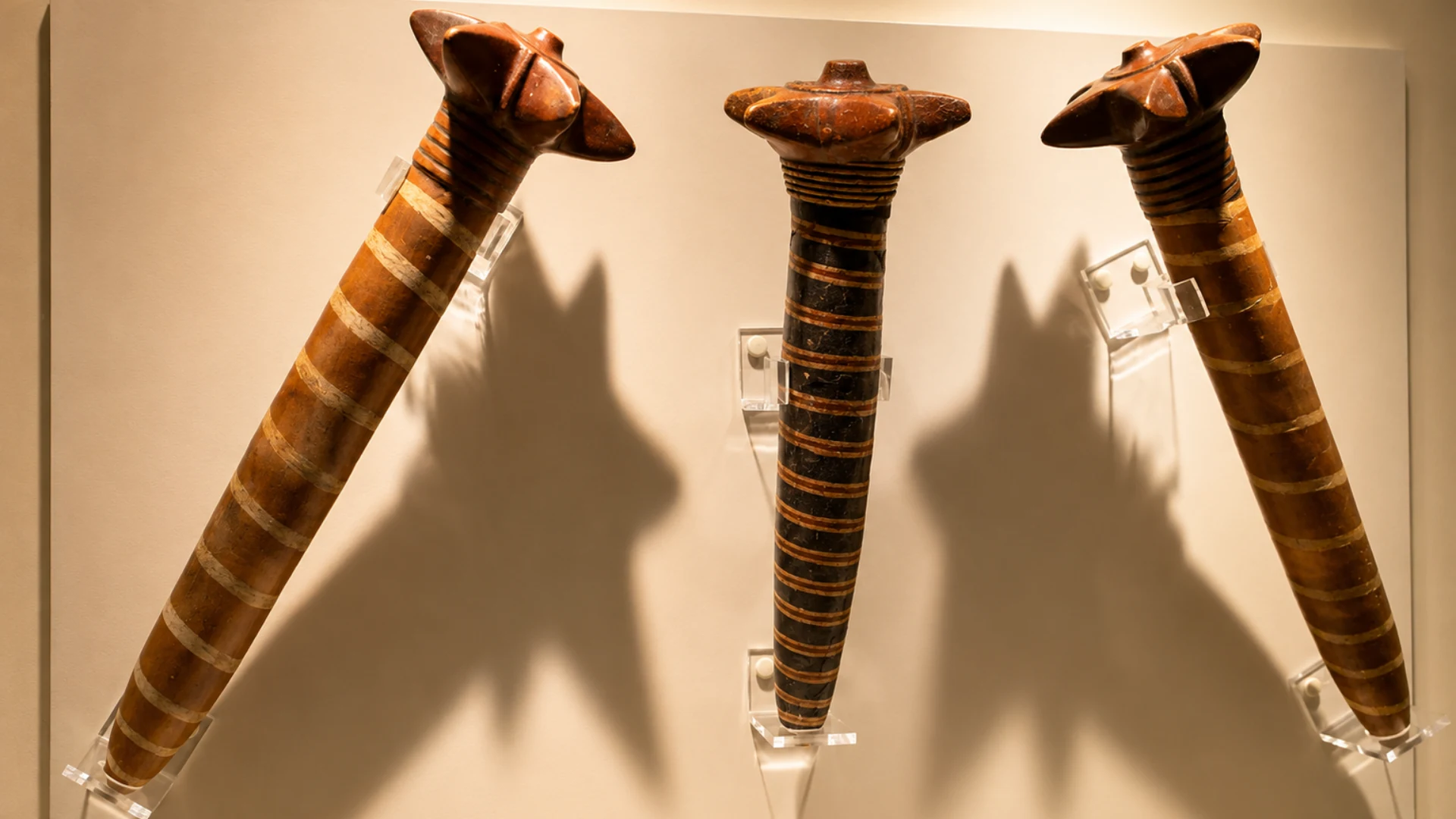
Museo Machu Picchu, Casa Concha
Built on Pucamarca, the palace of Túpac Inca Yupanqui. It holds the artifacts Hiram Bingham's expedition removed from Machu Picchu in 1912, which Yale University returned to Peru a century later. If you're going to the citadel, going here first changes what you see.
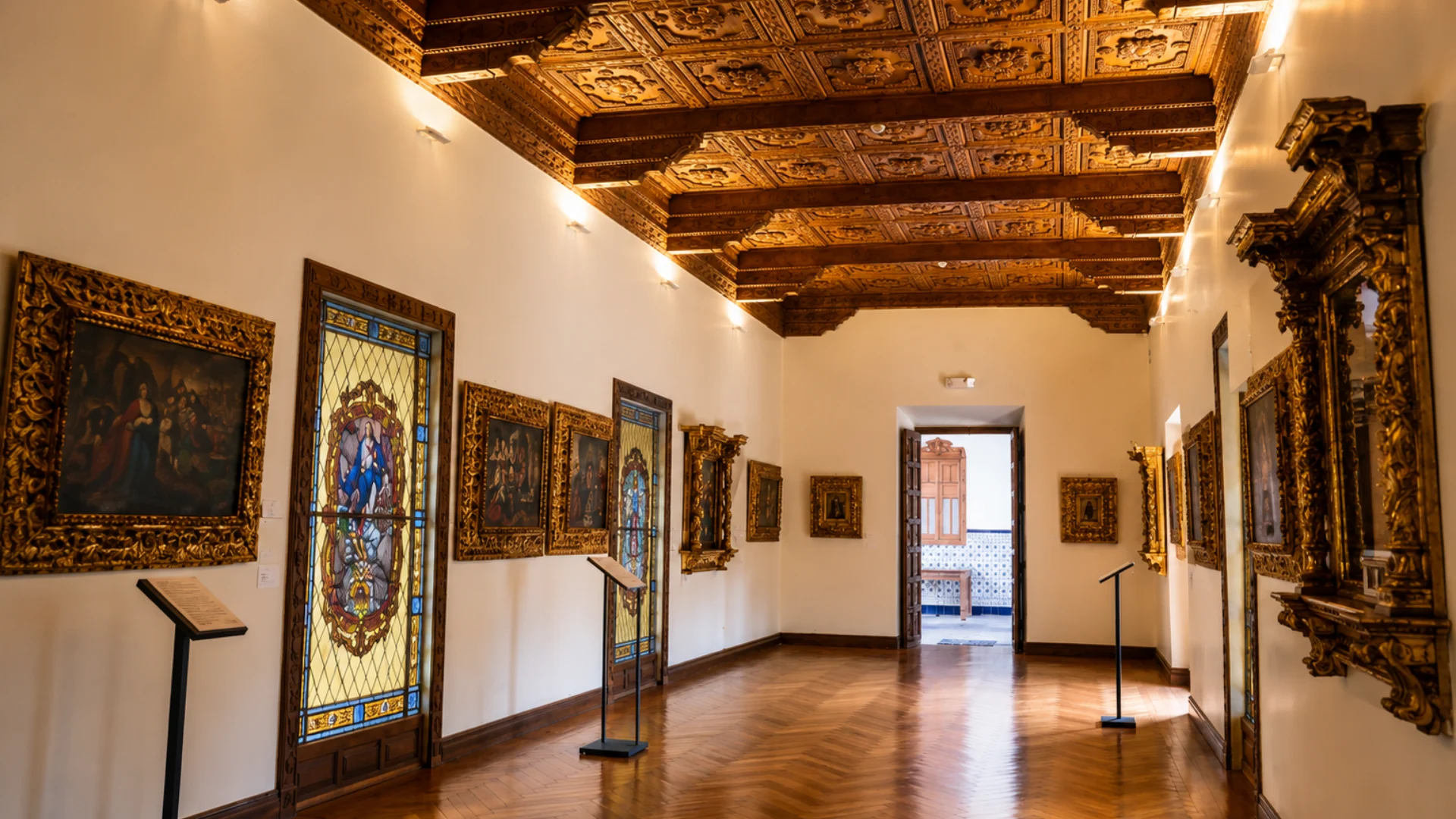
Museo de Arte Religioso (Palacio Arzobispal)
The Archbishop's Palace sits on the palace of Inca Roca, on the street with the twelve-angled stone. Inside is colonial religious painting, including work showing how Andean symbols were folded into Catholic imagery.
Museo de Sitio del Qorikancha
An underground museum on Avenida El Sol, in front of the Qorikancha gardens, with material recovered from the temple site itself. Small, and included in the tourist ticket.
Museo de Santa Catalina
A working convent since the sixteenth century, built on the Acllawasi, the house where the chosen women of the Inca lived. The layering here is unusually direct: a Spanish religious institution for women placed exactly on an Inca one.
Also on the Tourist Ticket
- Museo de Arte Popular, folk art and crafts from the region
- Museo de Arte Contemporáneo, in the municipal building on Plaza Regocijo
- Centro Qosqo de Arte Nativo, which runs nightly music and dance performances
- Monumento a Pachacútec, a tower at the Wanchaq roundabout with exhibition floors and a viewing platform at the top
Smaller and More Specialized
The Museo de la Coca explains the plant's role in Andean life, the Museo del Pisco is more bar than museum and is honest about it, the ChocoMuseo runs chocolate workshops that work well with kids, and the Planetarium Cusco covers Andean astronomy, including the dark constellations the Inca read in the Milky Way.
The Cusco Tourist Ticket, Explained
You can't buy individual tickets for most archaeological sites around Cusco. Entry is bundled into a combined pass called the Boleto Turístico, administered by an agency called COSITUC.
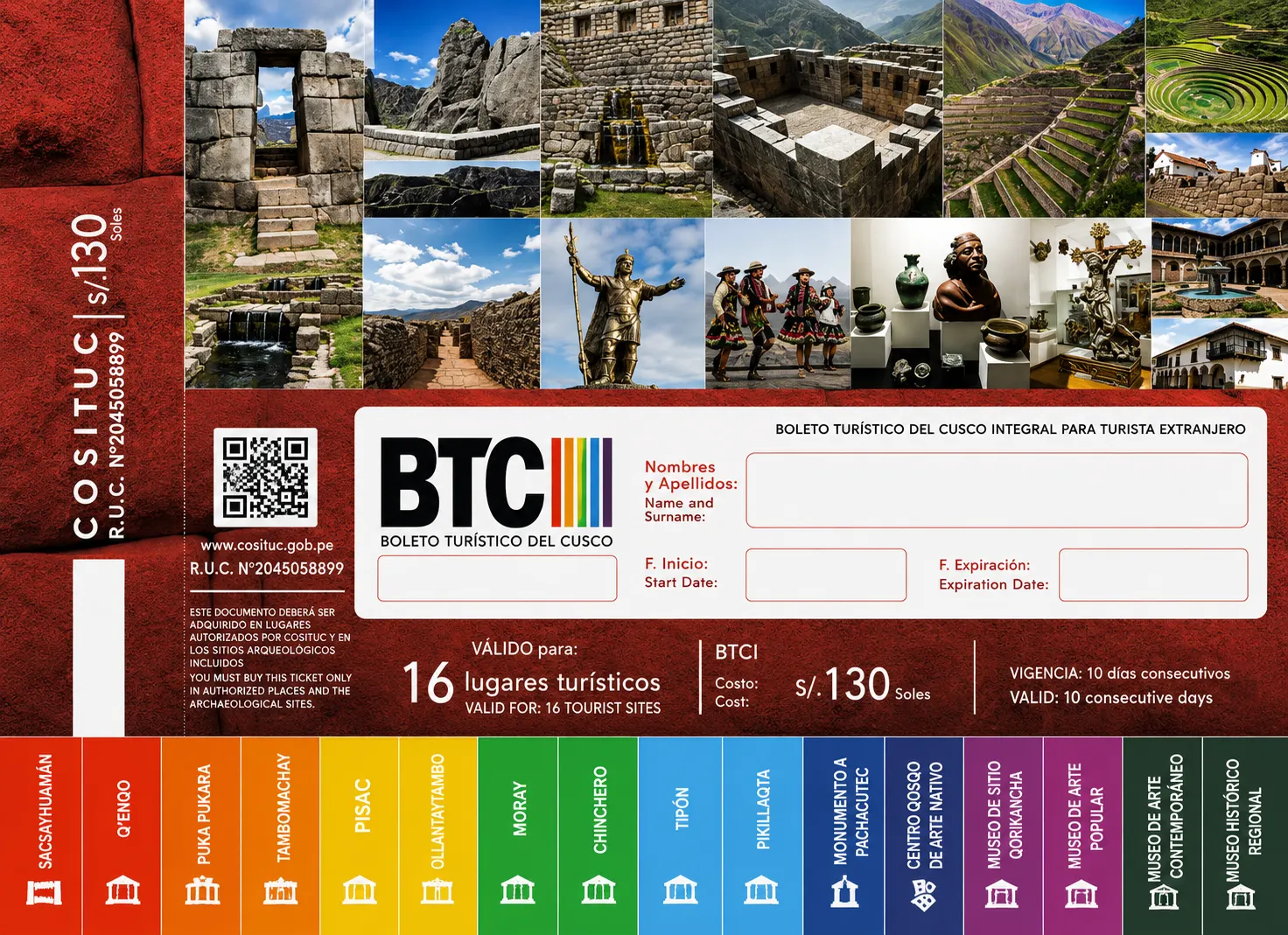
The full ticket costs S/130 for foreign adults, covers 16 sites, and stays valid for 10 days. Partial tickets cost S/70 and cover a single circuit for one or two days:
- Circuit I: Sacsayhuamán, Q'enqo, Puka Pukara, Tambomachay
- Circuit II: city museums and the South Valley sites (Tipón, Pikillacta)
- Circuit III: Sacred Valley (Pisac, Ollantaytambo, Chinchero, Moray)
Here's the math that matters. If your plan includes both the city circuit and the Sacred Valley, the full pass beats buying two partials. If you're only doing the city tour in a single day, the partial is enough. Choosing the right Cusco tourist ticket saves most travelers around $20.
Three practical notes. There's no official online sale, so you buy in person at the COSITUC office on Avenida El Sol 103 or at participating sites. Bring cash in soles, since card and app payments carry a surcharge and some entry points don't take them. And each site can only be entered once per ticket.
Not included: Machu Picchu, the Maras salt pans, and the Cathedral. Those are separate.
Getting Around Cusco
The center is small. Most places you'll want are a 15 to 30 minute walk apart, and around the Plaza de Armas you may not need transport at all.
Taxis are everywhere and easy to flag, but agree on the fare before you get in, since meters aren't standard. Uber and InDrive both operate here and take the negotiation out of it, which is why a lot of visitors default to them.
For the ruins above town, walking is realistic once you're acclimatized. For the Sacred Valley, colectivos (shared vans) leave from fixed points in the city for Pisac, Urubamba, and Ollantaytambo and cost a few soles each. They're the cheapest way to move around and they run frequently.
Getting around Cusco independently is genuinely easy. Tours save time, not difficulty.
Day Trips from Cusco
A note on sequencing: everything below except the Sacred Valley sits higher than Cusco. Save the high-altitude trips for after you've adjusted, and ideally after Machu Picchu, so a bad altitude day doesn't cost you the main event.
The Sacred Valley of the Incas
If you only have time for one day trip, make it this one. The Sacred Valley of the Incas follows the Urubamba River northwest of the city and holds the densest concentration of Inca sites outside Machu Picchu itself.
Pisac has agricultural terraces cascading down a mountainside, ceremonial buildings, and an Intihuatana solar marker at the top. The town below holds a craft market that's busiest and best on Sundays.
Ollantaytambo is a living Inca town, still laid out on the original street grid with the original water channels running through it. The terraced fortress at the end of the main square was one of the few places the Inca successfully defended against the Spanish. It's also the main train departure point for Machu Picchu.
Chinchero sits closest to Cusco and is known for weaving. The colonial church there was built on an Inca palace, and the local cooperatives give textile demonstrations that are genuinely interesting rather than staged.
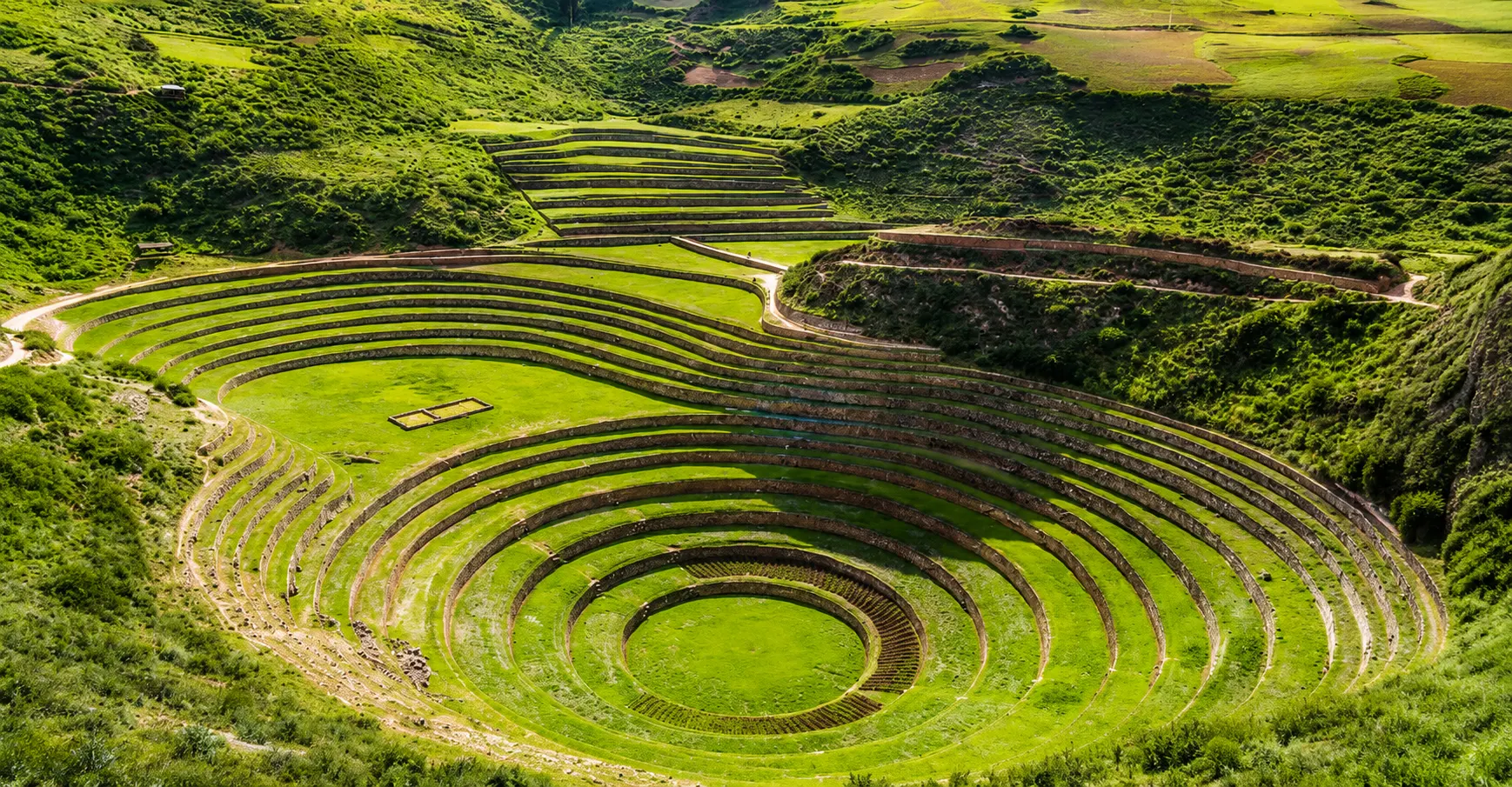
Moray is a set of concentric circular terraces dropping into the ground like an amphitheater, almost certainly used as an agricultural testing ground where each level created a different microclimate.
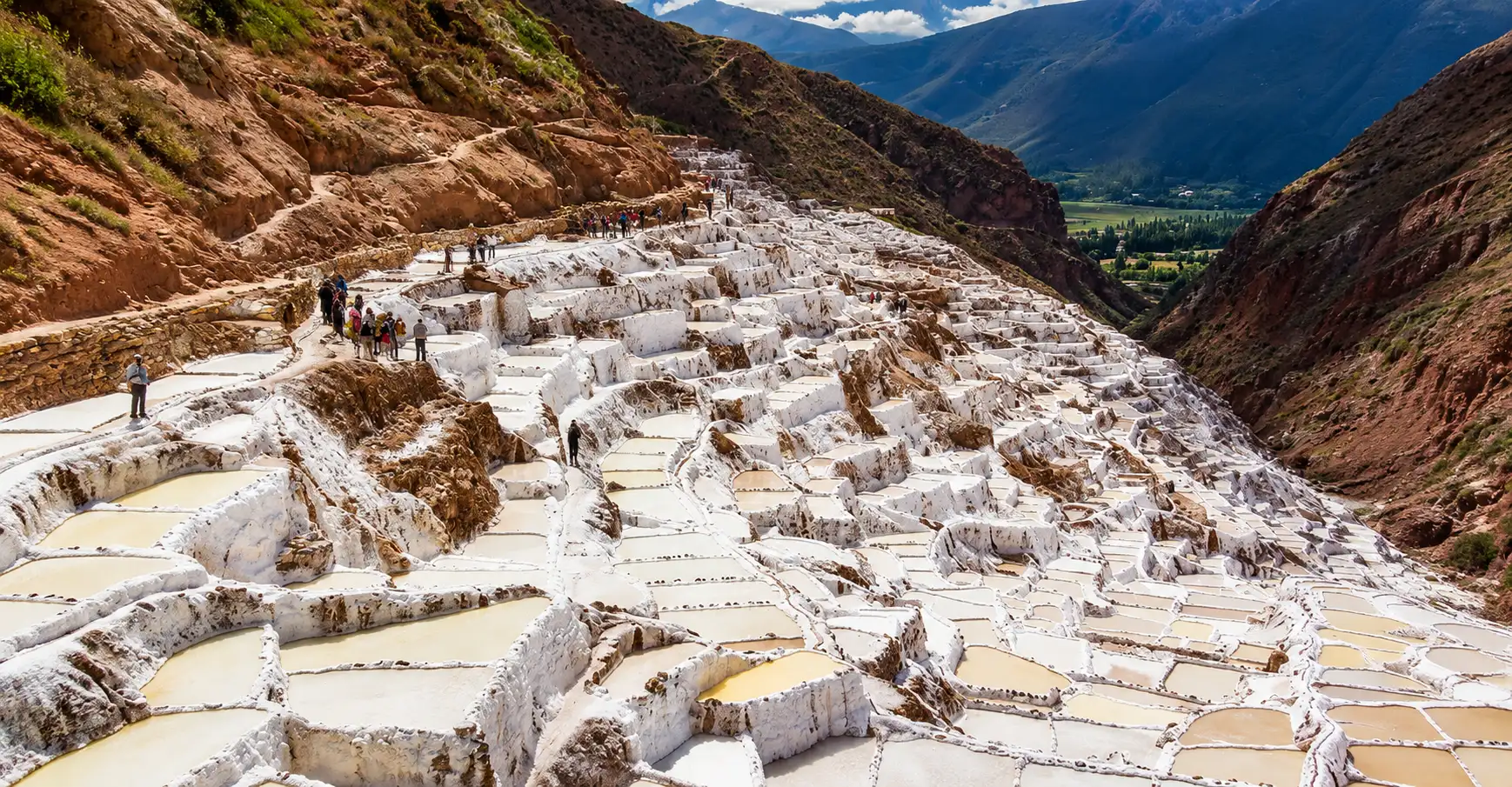
Maras is the salt operation nearby: thousands of shallow evaporation ponds worked by the same families for generations. Entry is a separate small fee, around S/20.
You can do the valley as a full-day tour or independently by colectivo. Independent takes longer and costs a fraction.
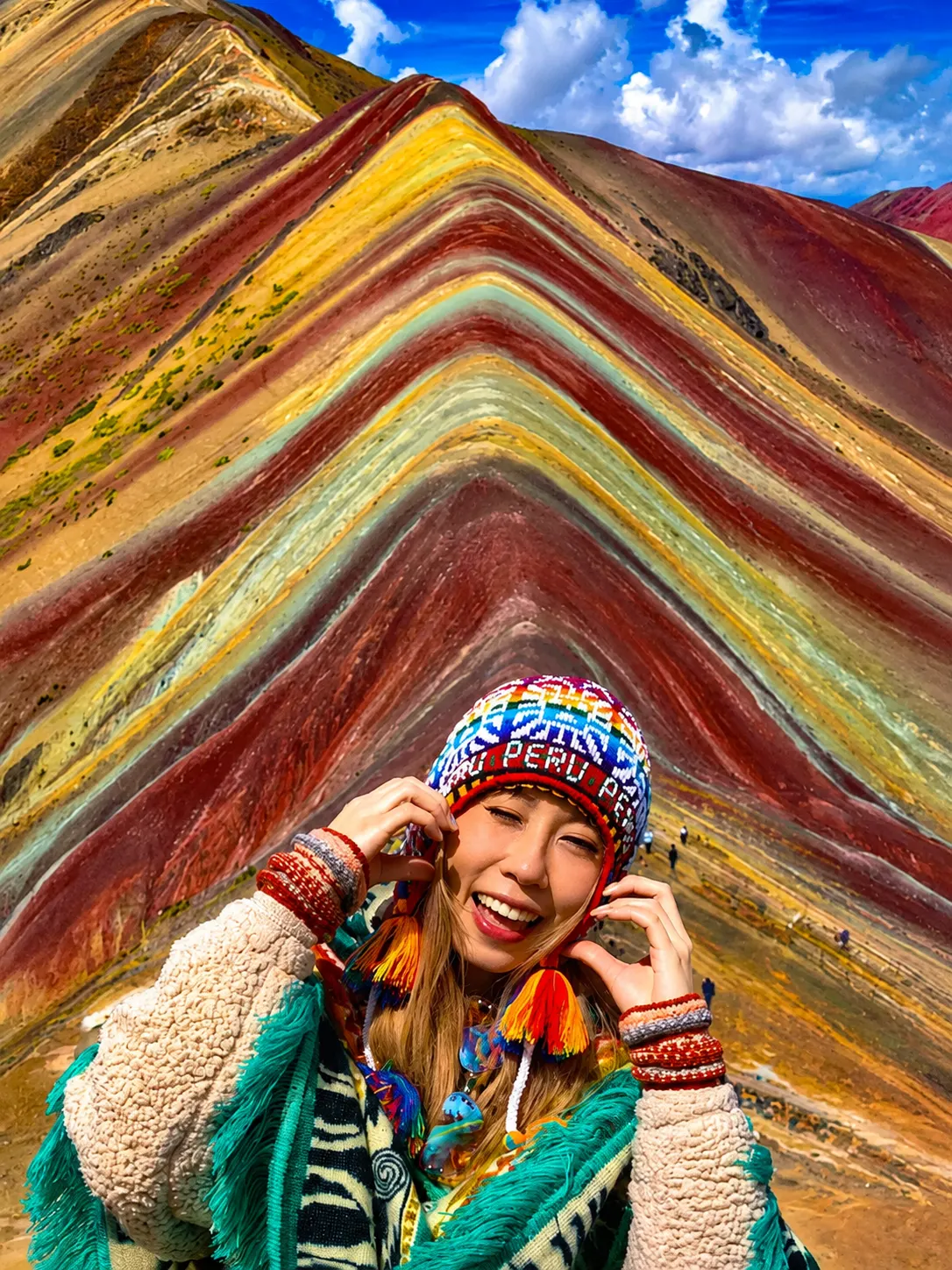
Rainbow Mountain (Vinicunca)
Vinicunca sits at roughly 5,000 m (about 17,000 ft), around 100 km southeast of the city. The mineral striping is real, though most photos online are heavily saturated.
Organized trips leave Cusco around 3 a.m. and get back after dark. To do it independently, take a bus toward Cusipata, about two hours, then hire local transport to the trailhead at Phulawasipata. The hike takes two to three hours depending on your pace and how acclimatized you are. Horses are available for part of the climb.
Do not do this in your first three days. A Rainbow Mountain tour is the single most common cause of a ruined week in Cusco.
There's a lower, easier alternative called Palccoyo with similar coloring and almost no crowds. Ask about it.
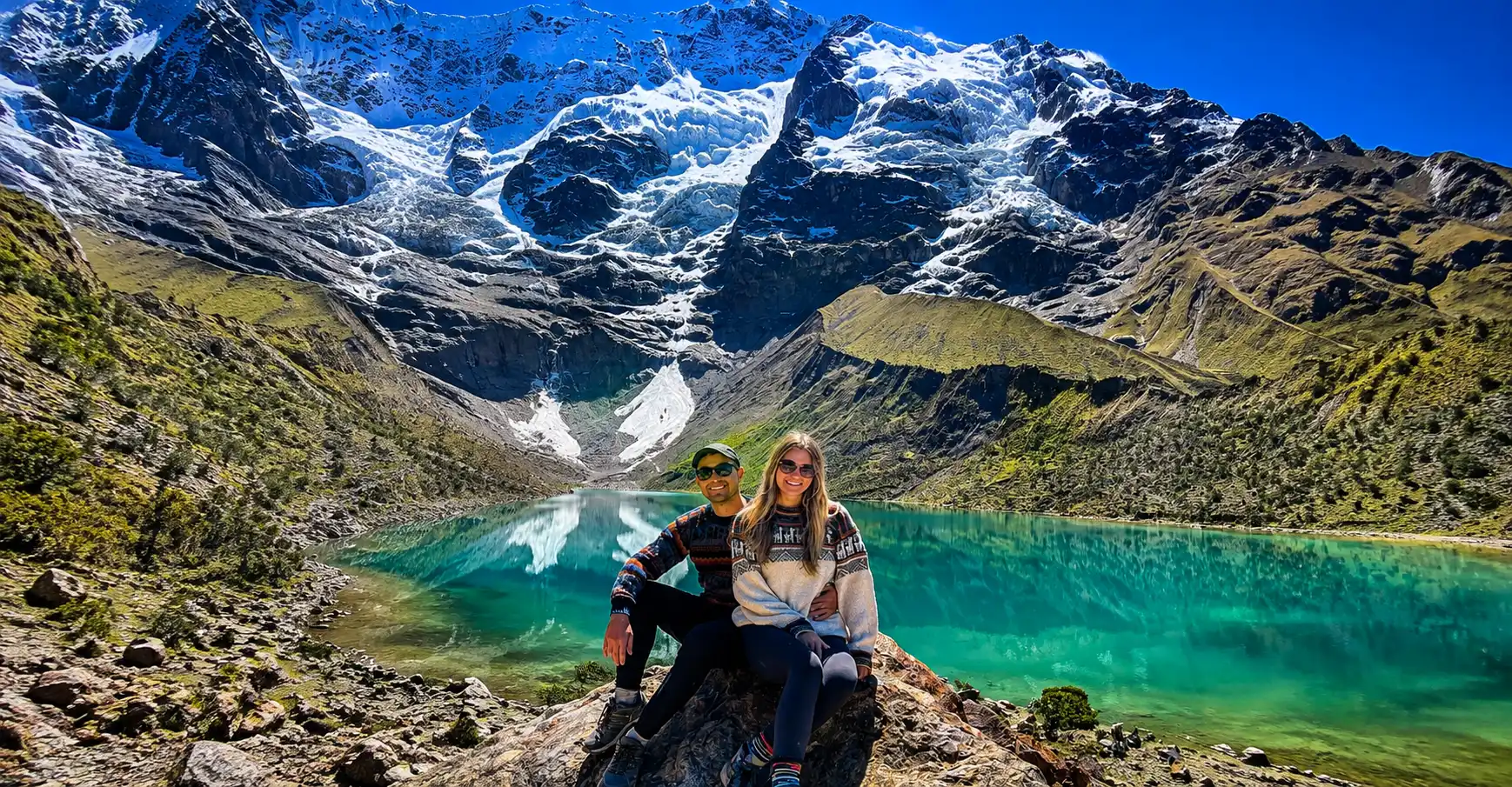
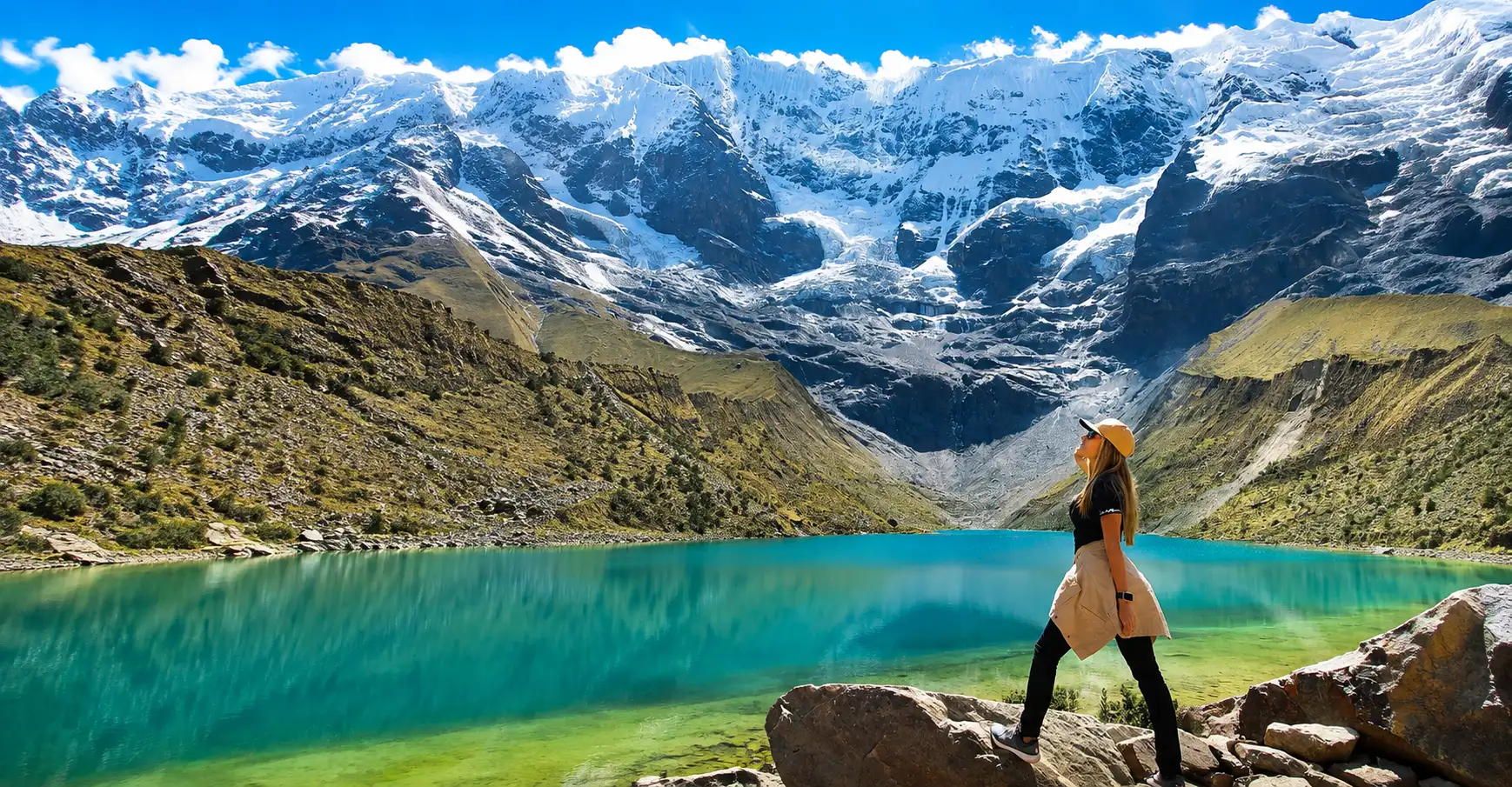
Humantay Lake
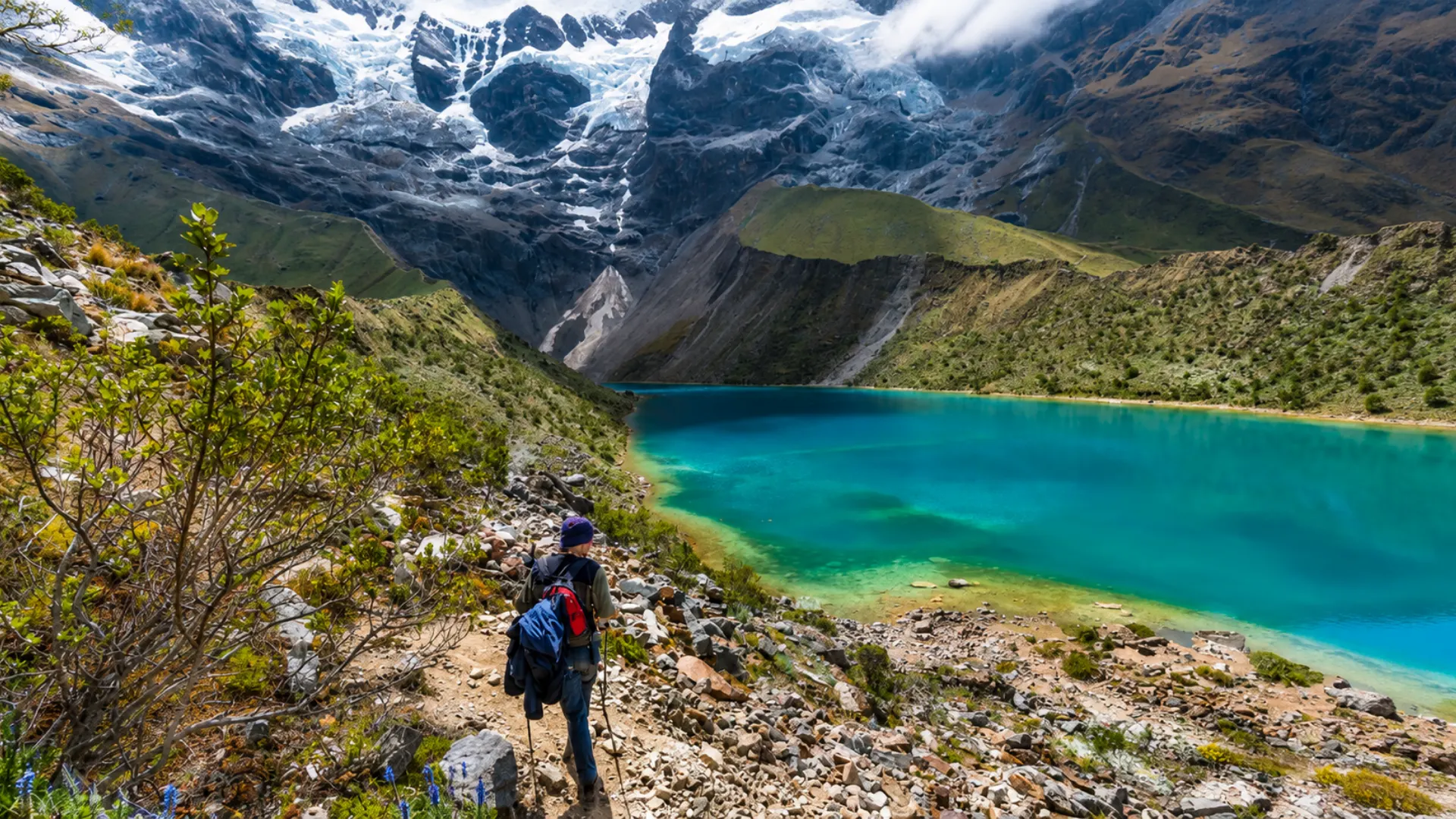
A turquoise glacial lake below a snow peak, reached by a steep 90-minute hike from the trailhead at around 4,200 m. Also a long day, also high altitude, also not a day-one activity. Plenty of travelers find the Humantay Lake day trip more rewarding than Rainbow Mountain, and it doesn't require a 3 a.m. start quite as often.
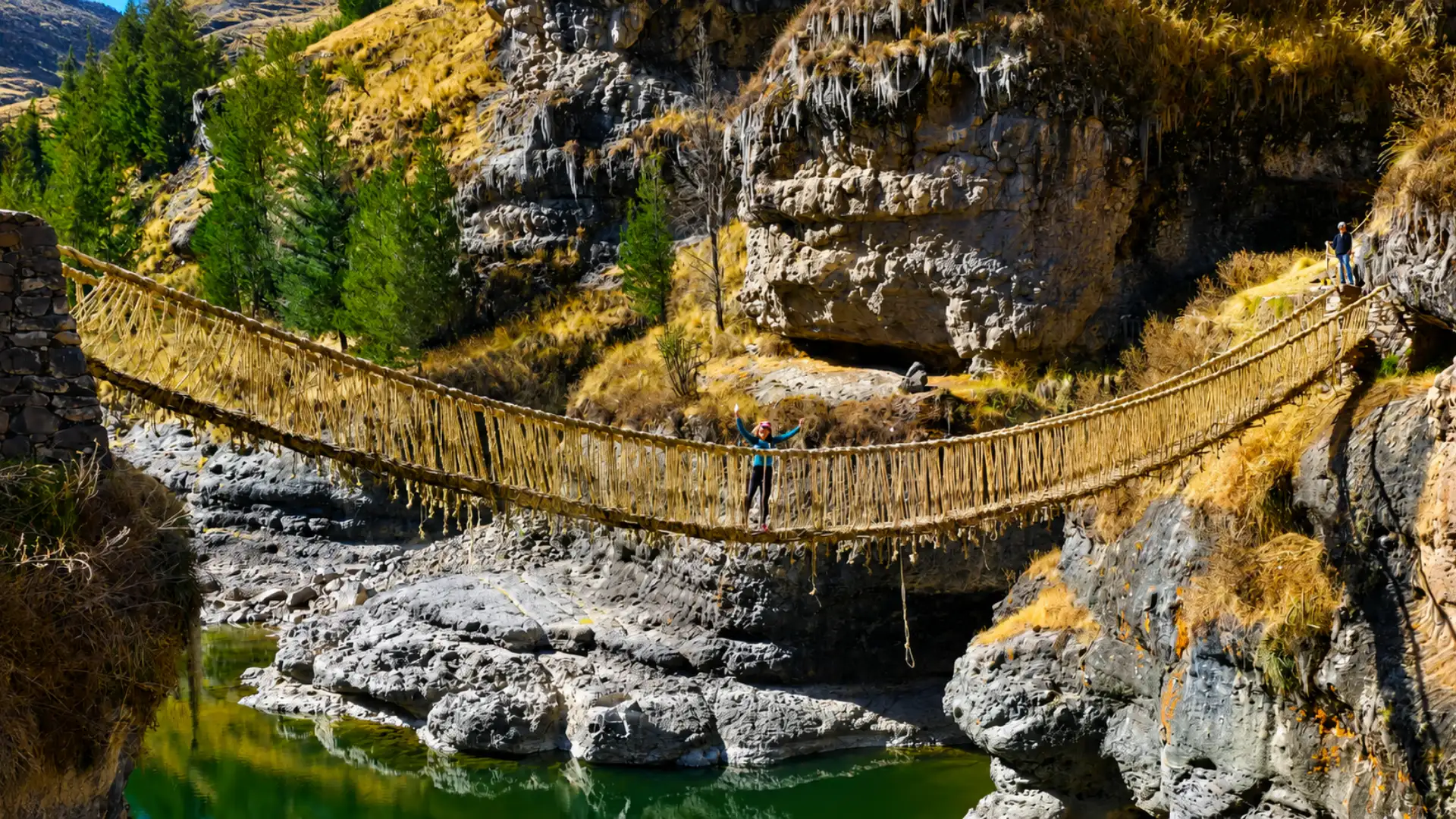
Qeswachaka, the Last Inca Bridge
A woven grass suspension bridge over the Apurímac River, rebuilt by hand every year by the surrounding communities using the same techniques their ancestors used. It's a long drive and it gets almost no tourist traffic compared to the headline sites, which is exactly why it's good.
The South Valley
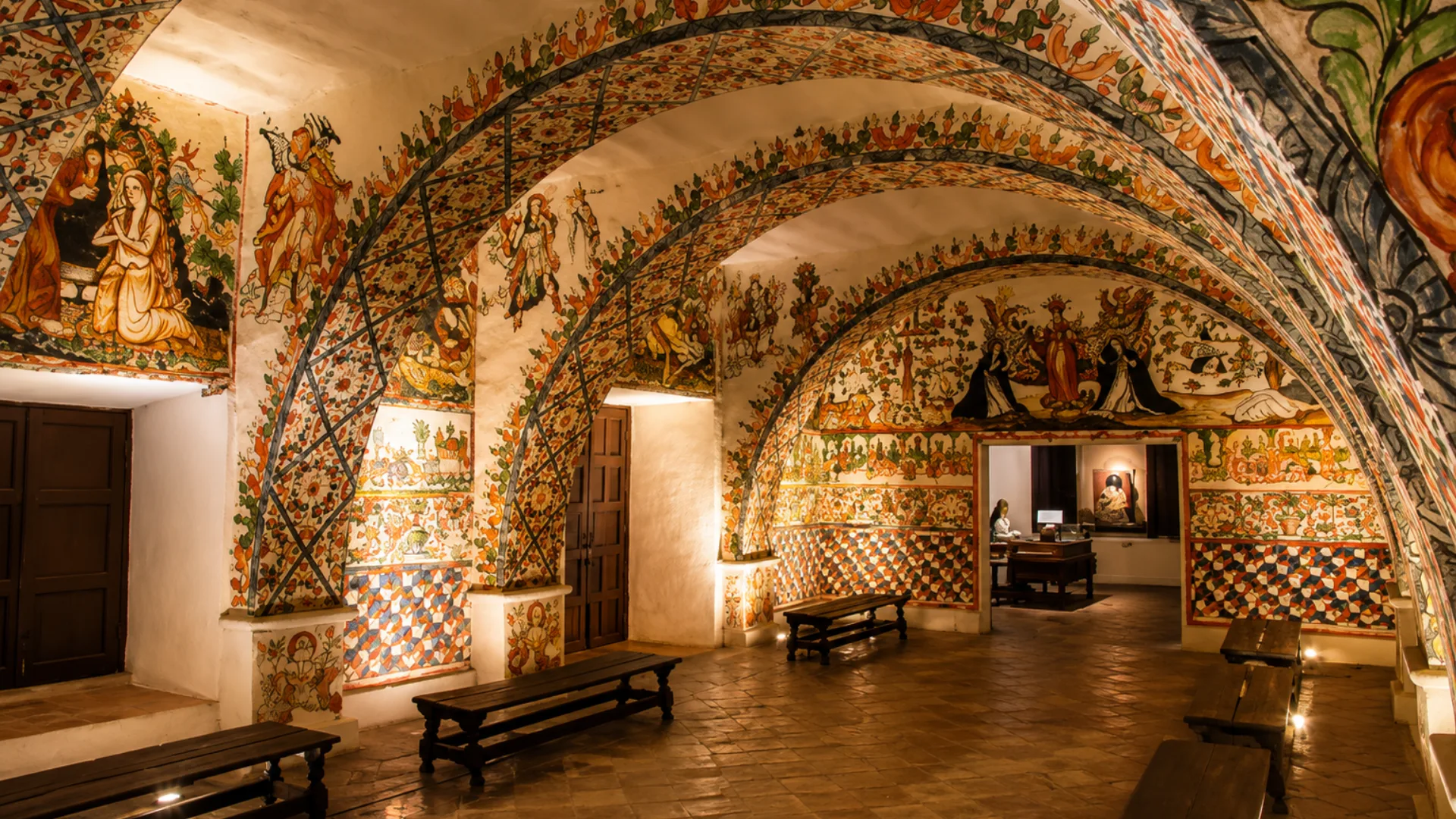
Tipón, Pikillacta, and Andahuaylillas are all covered by the tourist ticket and see a fraction of the visitors. Tipón is a masterpiece of Inca water engineering with fountains still running. Pikillacta is pre-Inca, built by the Wari. Andahuaylillas has a small church nicknamed the Sistine Chapel of the Andes for its painted interior.
If you want ruins without crowds, go south.
Where to Eat in Cusco
Cusco punches above its weight. Peruvian food is one of the best reasons to come, and the Cusqueñan versions have their own character.
What to Try
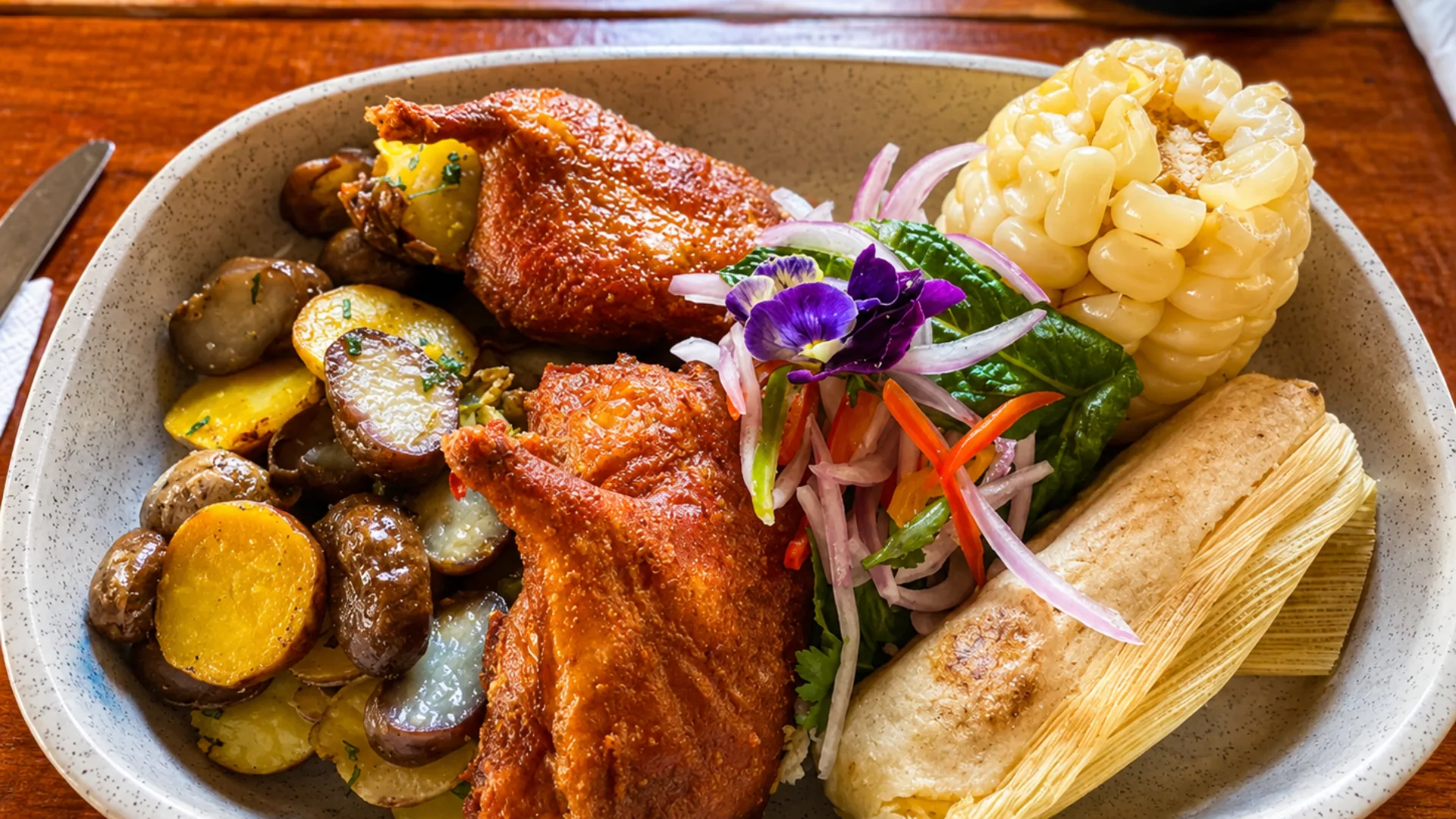
Lomo saltado, beef stir-fried with onions, tomatoes, and fries over rice, is the gateway dish. Ají de gallina is a mild creamy shredded chicken. Chiriuchu is the signature Cusco dish, a cold plate of assorted meats, cheese, corn, and seaweed served mainly around Corpus Christi. Chicharrón cusqueño is a Sunday morning tradition, best in Saylla just outside the city. Sopa de quinua and caldo de gallina are what people actually eat on cold mornings.
Cuy, or guinea pig, is the regional specialty visitors always ask about. It's traditional, it's roasted whole, and it's usually a special-occasion dish rather than everyday food. Try it or don't, but don't be strange about it.
Ceviche is coastal and better in Lima, though a good trout version exists here. For a cheap lunch, ask for the menú del día, a set meal with soup, main, and drink for around $3 to $5. Sampling the traditional food of Cusco at a market stall or a neighborhood restaurant will beat the tourist places on the plaza almost every time.
To drink: chicha morada, a sweet purple corn drink, is excellent. Chicha de jora, the fermented version, is an acquired taste.
Budget
- San Pedro Market food stalls, for the reasons above.
- El Mordisco, Calle San Juan de Dios 298, for straightforward Peruvian classics.
Mid-Range and High-End
- Morena Peruvian Kitchen, Calle Procuradores 320, near the Plaza de Armas. Modern Peruvian pulling from the coast, Amazon, and Andes.
- Kusykay Peruvian Craft Food, Calle Triunfo 338A. Traditional recipes with a creative turn.
- Cicciolina, Calle Palacio 110, second floor. Italian and Peruvian crossover, and one of the most consistently recommended rooms in the city.
- Pachapapa, Carmen Bajo 120 in San Blas. Traditional Cusqueñan cooking including roasted cuy and stuffed peppers.
- Yaku Restaurant, Calle San Juan de Dios 214 near Plaza Regocijo. Modern takes on classic dishes with local ingredients.
- Tunupa, on the Plaza de Armas, with balcony seating over the square and a broad menu covering ceviche, causa, alpaca, quinotto, and Peruvian desserts. There's a second location in the Sacred Valley that runs a large buffet.
- Don Pancho, Portal de Panes 139 on the Plaza de Armas. Criolla dishes and a balcony over the square.
Vegetarian and Vegan
- Organika, Calle Ataud 154. Farm-to-table using produce from their own Sacred Valley garden.
- Green Point, Carmen Bajo 235. Vegan versions of Peruvian classics, including a well-known vegan ceviche, plus cheap daily menus.
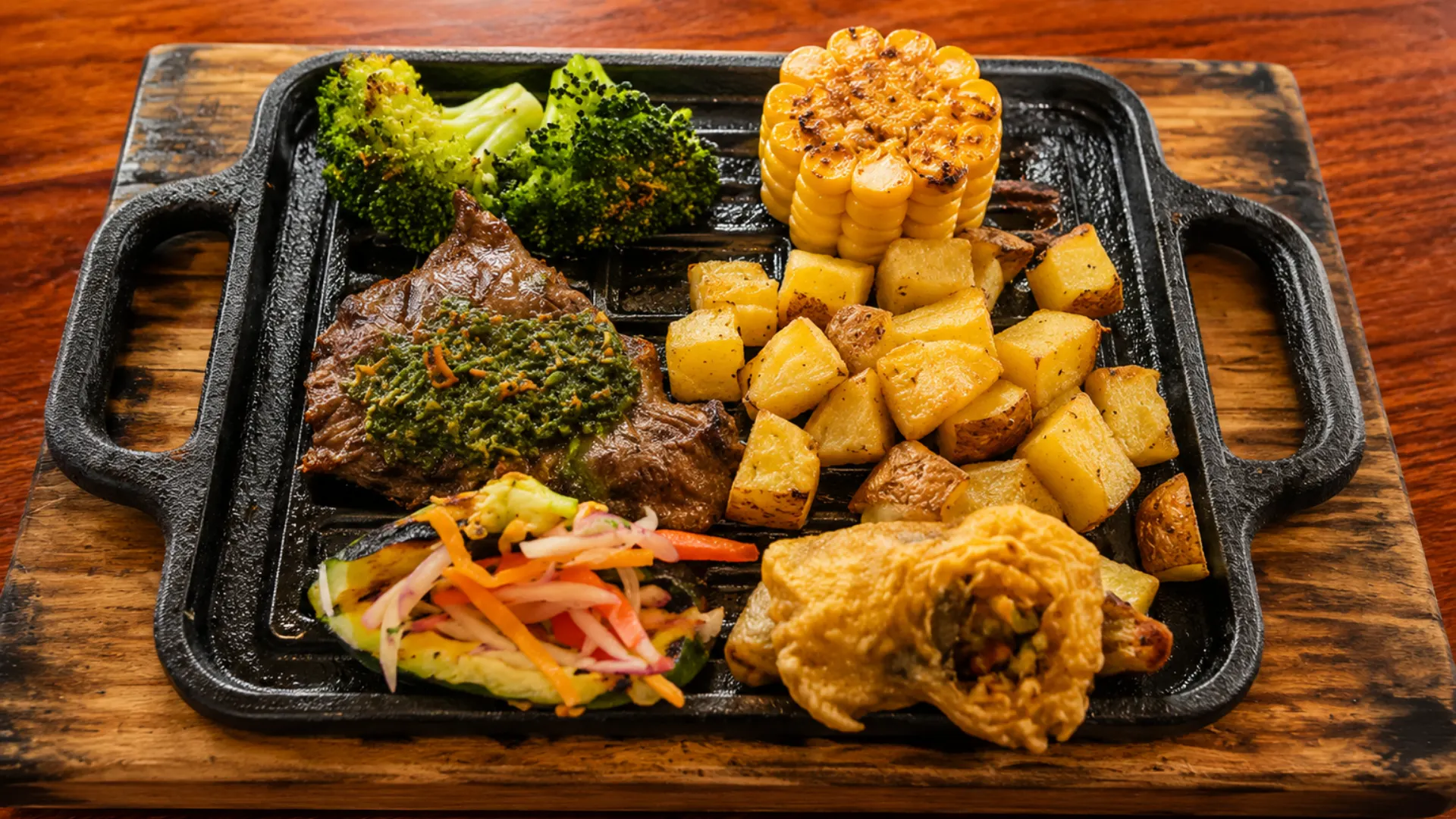
The best restaurants in Cusco cluster in the center and San Blas, so you're rarely more than a short walk from a good meal.
Where to Stay in Cusco
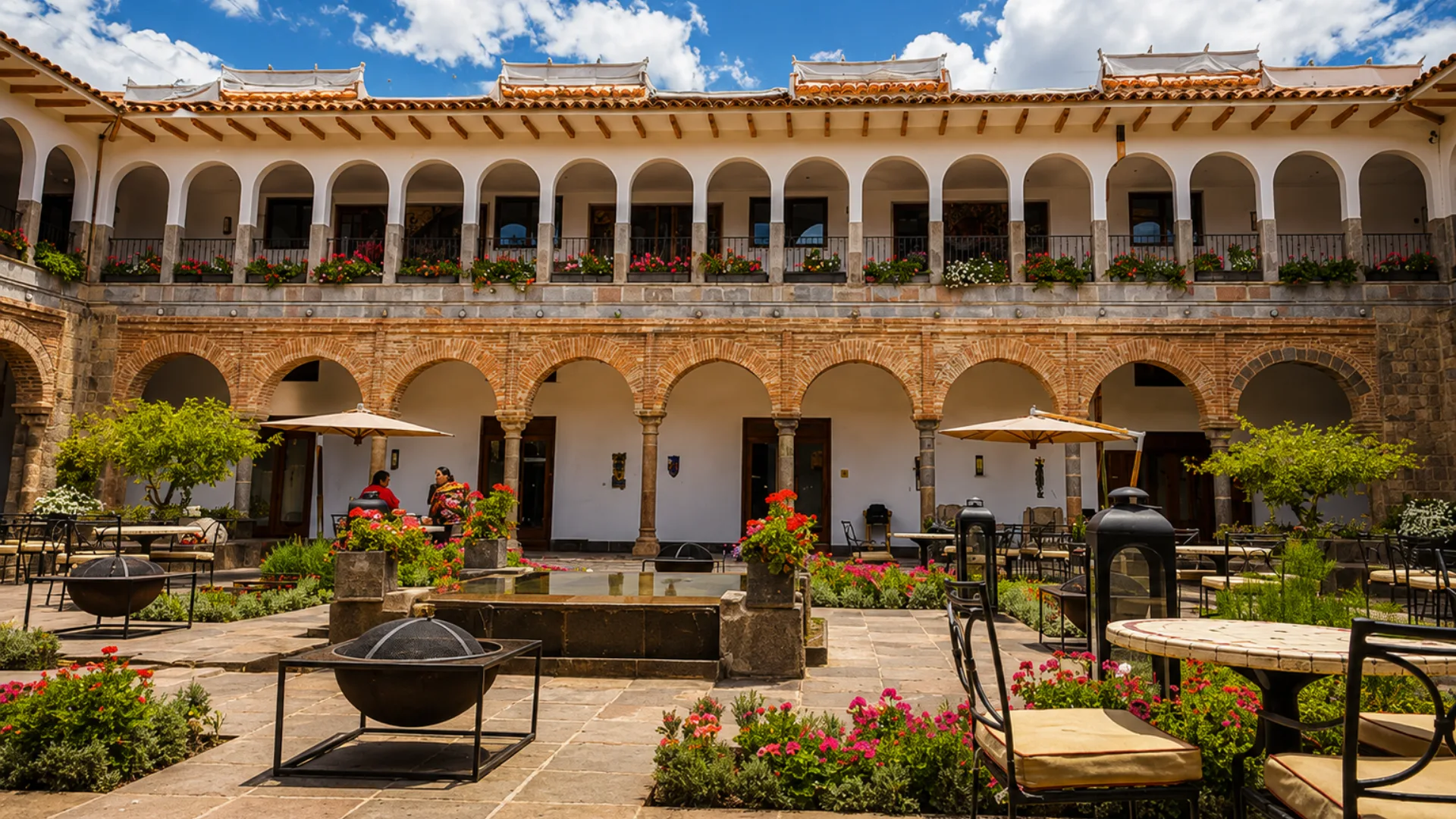
The historic center is full of colonial casonas, many converted into hotels. Staying within a ten-minute walk of the Plaza de Armas makes life easier, especially during your first days when you'll be moving slowly.
San Blas is quieter and prettier but involves stairs. The area along Avenida El Sol is more practical and less charming, with better rates.
Budget
- Black Llama Hostel, Mesón de la Estrella 172. Dorms and private rooms, garden, bar, coffee shop, free breakfast, two blocks from the plaza.
- Ayni Cusco, Andrés Avelino Cáceres A-6. Further out, but strong views over the city.
Mid-Range
- Munay Wasi Inn, Av. Tullumayo 418
- Monasterio San Pedro, Cascaparo 116
- Anahuarque Boutique, Calle San Agustín 236
- Maytaq Wasi, Santa Catalina Ancha 342
Luxury
- JW Marriott El Convento, Ruinas 432. A restored sixteenth-century convent with oxygen-enriched rooms, a spa, and two small archaeological exhibits on site.
- Belmond Palacio Nazarenas, Nazarenas 223. All suites with in-room oxygen, a heated outdoor pool, and a quiet location close to everything.
- Aranwa Cusco Boutique, Calle San Juan de Dios 255 near Plaza Regocijo. Colonial style, on-site spa, very convenient location.
One practical filter when choosing hotels in Cusco: check access. Properties are scattered across steep, narrow streets, and some are genuinely hard for a taxi to reach. Also check whether the room has heating, because a lot of older buildings don't and the nights get cold.
Festivals and Living Culture
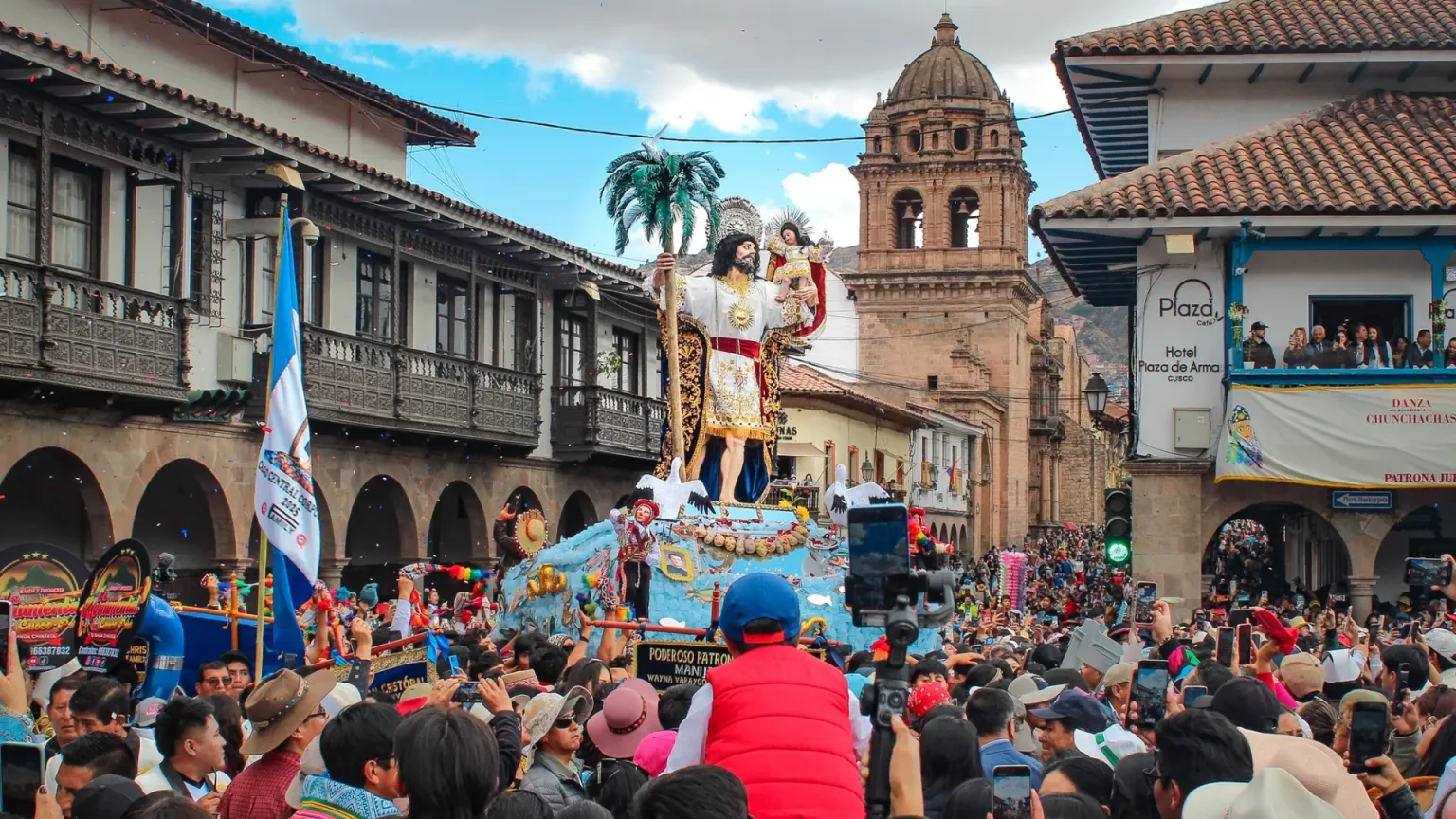
Cusco's calendar is where the Andean and Catholic layers are most visible.
Inti Raymi, June 24, is the festival of the sun, a reconstruction of the Inca ceremony marking the winter solstice and the start of the agricultural year. It fills Sacsayhuamán with costumed performers and draws visitors from around the world. Book accommodation months ahead if you're coming for it.
Corpus Christi, in late May or June, brings saints' images in procession from parish churches into the Cathedral, accompanied by music and enormous crowds. It's when chiriuchu is eaten.
Semana Santa, Holy Week, combines Catholic processions with older Andean elements, particularly the Monday procession of the Señor de los Temblores.
The Cusco anniversary celebrations in June fill the whole month with parades and events.
Crafts and Textiles
Andean weaving is not decorative filler. Patterns carry cosmological symbols, community identity, and family history, and the techniques pass down through generations. San Blas and San Pedro are the two best places to look, and Chinchero in the Sacred Valley is where you can watch the process from raw fleece to finished cloth.
Buy from cooperatives or directly from weavers where you can. The price difference is small and it goes to the right place.
Practical Travel Tips
Money
The currency is the sol. Cards work in hotels and mid-range restaurants but not at markets, colectivos, or the tourist ticket office. ATM fees are high, so take out larger amounts less often. Keep small bills, because nobody wants to break a 100. Exchange houses (casas de cambio) along Avenida El Sol generally give better rates than the airport.
Safety
Cusco is considered one of the safer cities in Peru, and most visits pass without incident. Standard precautions still apply:
- Use registered taxis or apps like Uber and InDrive rather than flagging unmarked cars at night.
- Check the back seat before you get out. Lost phones are rarely recovered.
- Leave jewelry and valuables in the hotel safe.
- Watch your bag in crowds, especially around San Pedro Market and the Plaza de Armas.
- Don't walk alone in empty areas after dark.
Water and Food
Don't drink the tap water. Bottled or filtered only, including for brushing teeth if you're cautious. Street food is fine when it's cooked in front of you and the stall is busy. Ease into rich meals during your first day.
Packing
Layers, always. The temperature swing between midday sun and night is severe. Bring a warm jacket even in the dry season, sun protection at any time of year, a hat, sturdy shoes, and a rain poncho if you're visiting between November and April. You can buy anything you forget in Cusco cheaply.
Connectivity and Insurance
Pick up a local SIM or eSIM at the airport. Coverage is solid in the city and the valley, patchy on treks. Most hotels and cafés have Wi-Fi.
Travel insurance is worth having here. High-altitude activity, remote trailheads, and weather-related delays are all real, and a policy that covers trekking and medical evacuation is a reasonable investment. These Cusco travel tips are mostly about giving yourself margin.
The Ceque System: The Invisible Map of Cusco
This is the part of Inca Cusco you can't photograph, and it may be the most remarkable thing the city ever built.
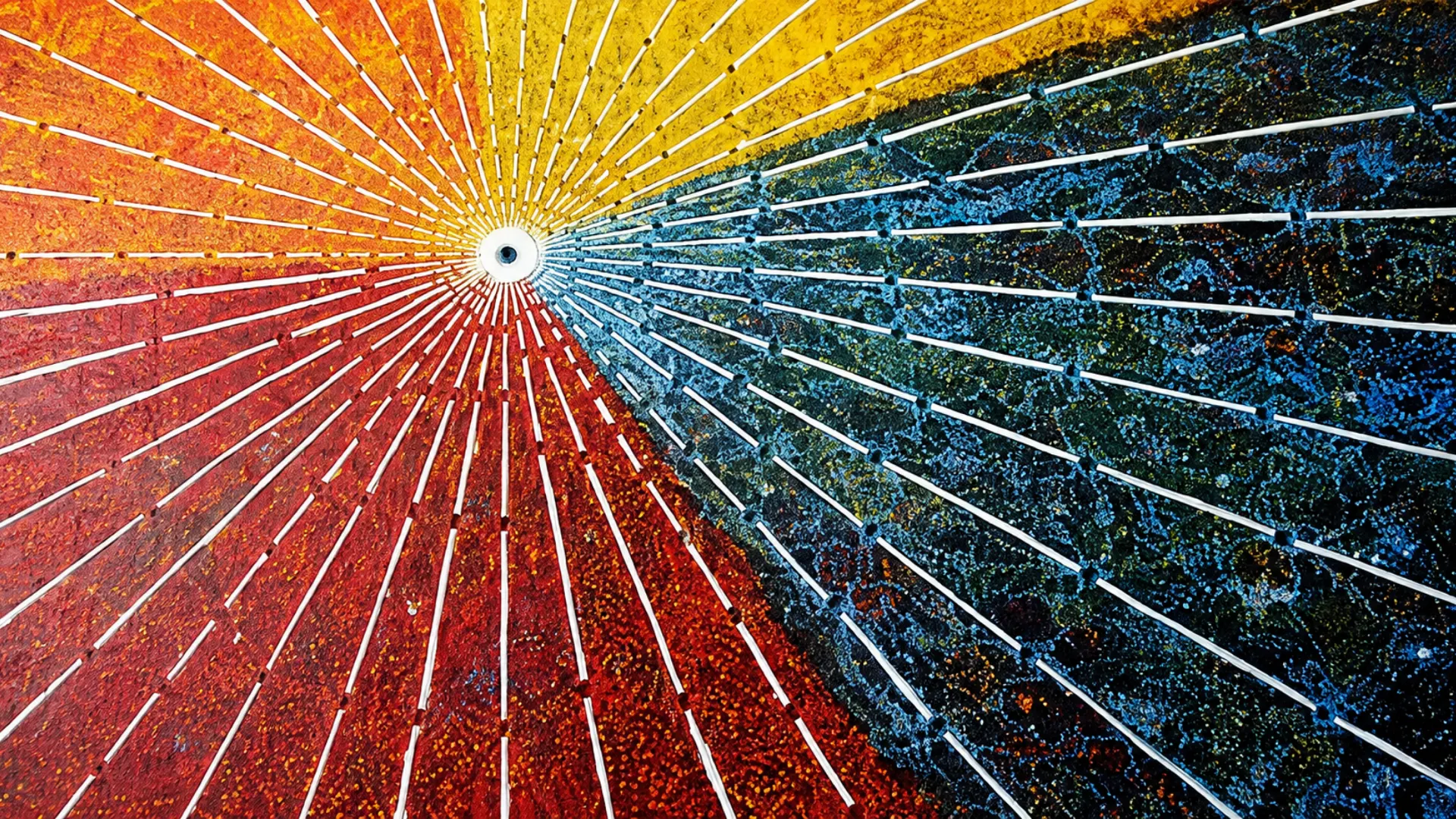
The ceque system was a network of ritual lines radiating out from the Qorikancha across the surrounding landscape. The Spanish official Polo de Ondegardo documented it in 1559 by interviewing Inca nobles, and the priest Bernabé Cobo preserved the fullest account in 1653. Between them they recorded 41 ceques (some counts say 42) organizing 328 huacas, or sacred places.
A huaca could be almost anything: a spring, a boulder, a bend in a canal, a cave, a hill, a place where something important once happened. What made it sacred was its position in the system, not its size.
How It Worked
Each ceque was assigned to a specific ayllu or panaca, a kin group, which was responsible for maintaining its shrines and making offerings there on the correct days. The lines were grouped by the four suyus, and the ceques themselves carried rank, which meant the system encoded the entire social hierarchy of the valley in the landscape itself.
The distribution wasn't even. Chinchaysuyu, Antisuyu, and Collasuyu held nine ceques each, while Cuntisuyu held fourteen, reflecting how the territory to the southwest had grown.
The Calendar in the Landscape
The number 328 is where it gets strange. It's exactly twelve sidereal lunar months of 27.3 days, the time the moon takes to return to the same star. The anthropologist Tom Zuidema argued that each huaca corresponded to one day, making the ceque system a calendar written across the ground, with the remaining 37 days of the solar year accounted for by the period when the Pleiades disappear from view.
Whether or not that interpretation holds in full, the underlying point stands. The Inca did not separate religion, astronomy, land tenure, water rights, and social organization into different systems. They were one system, and it was drawn on the valley.
Researchers still argue about where the lines actually ran. Brian Bauer spent five years in the 1990s trying to locate the shrines on the ground, and much of the system remains unresolved.
Can You See It?
Not directly, but you can stand at the center. The Qorikancha was the origin point for every ceque, which is the real reason it mattered more than any other building in the empire. Ask a good guide about it there, and the temple stops being a ruin with a convent on top and becomes the hub of a map that covered the entire Cusco valley.
How to Get from Cusco to Machu Picchu
Everything up to this point has been about Cusco itself, which is where most of your time will actually go. This last stretch covers the citadel: how to reach it, how the ticket system works, what the treks involve, and which tour formats exist.
There's no road to Machu Picchu. Every route ends with a train or a long walk.
By Train
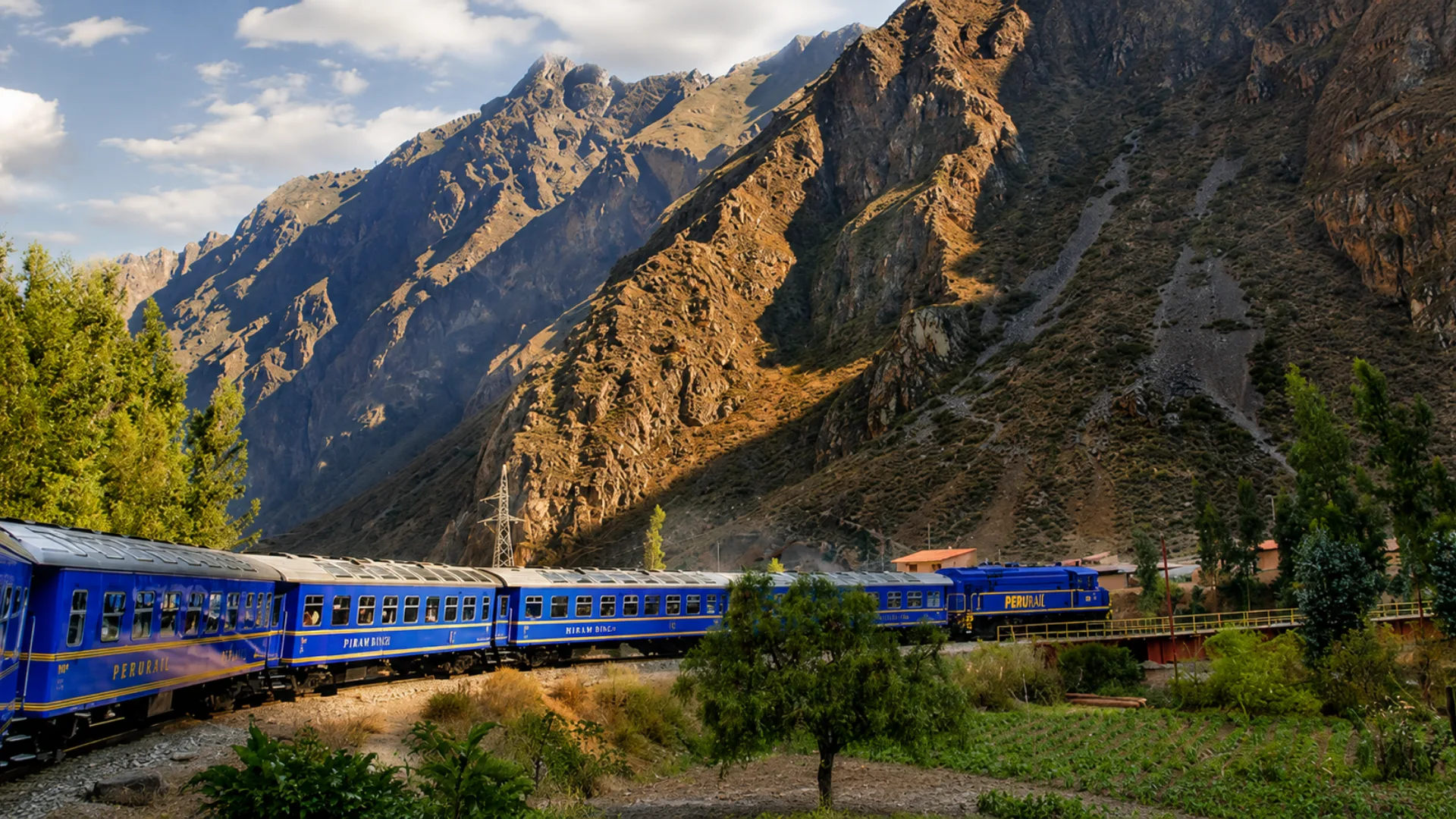
The standard option, and the one most visitors use. Trains run to Aguas Calientes (also called Machu Picchu Pueblo) from Ollantaytambo, about 90 minutes from Cusco by road, and sometimes from Poroy, about 13 km outside the city, depending on the season. PeruRail and Inca Rail both operate the route.
The ride takes roughly 1.5 to 2 hours through the cloud forest. From Aguas Calientes, a shuttle bus climbs the switchbacks to the entrance in about 30 minutes, or you can walk up in around 90 minutes if you want the extra challenge.
Round-trip fares start around $70 and climb steeply for luxury service. When you're figuring out how to get to Machu Picchu from Cusco, lock in your entry ticket first and match the train to it. Doing it the other way around is how people end up with a 6 a.m. entry slot and a train that arrives at nine.
The Budget Route via Hidroeléctrica
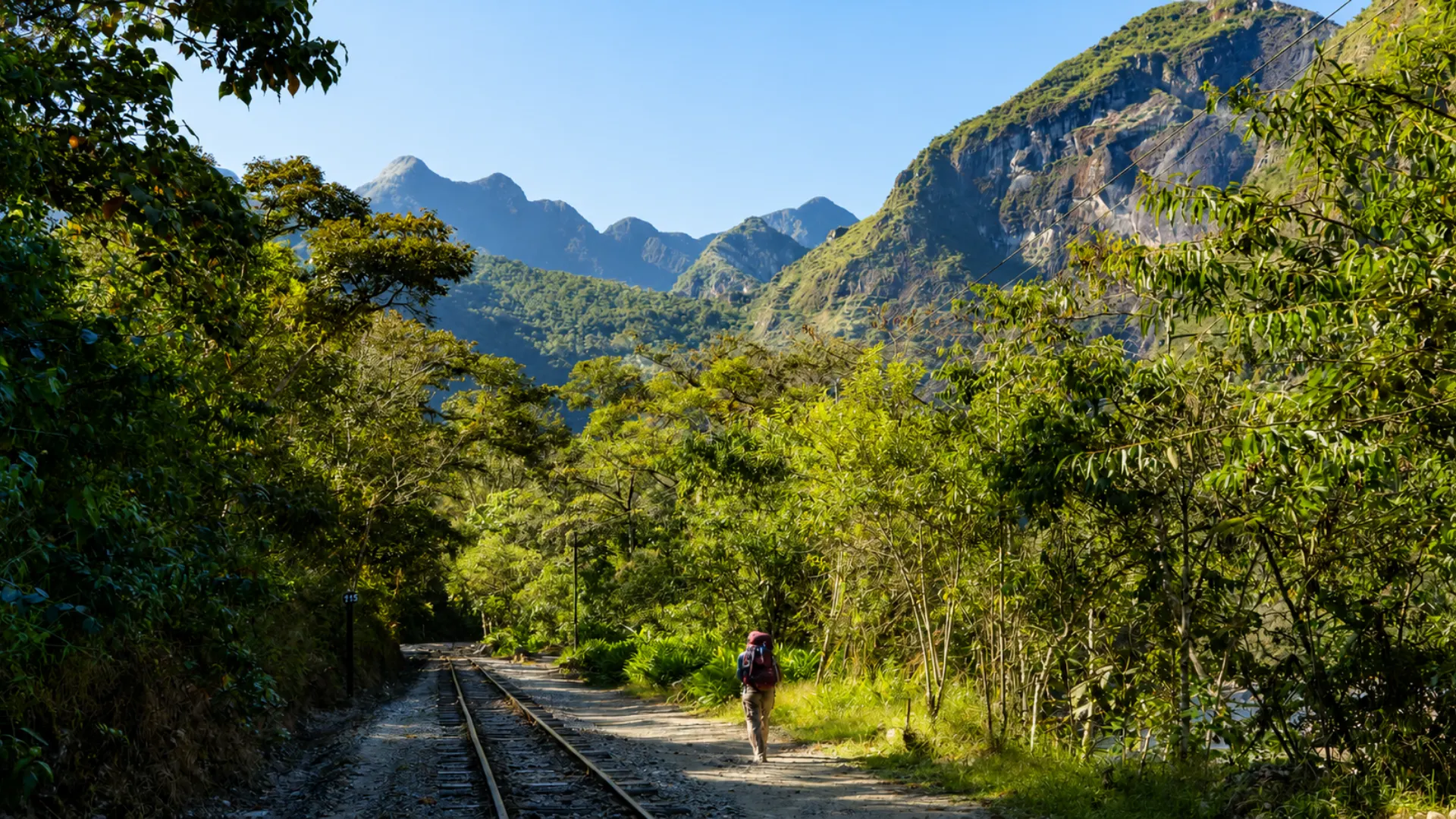
Take a van from Cusco to Hidroeléctrica, six to seven hours, then walk about two to three hours along the train tracks into Aguas Calientes. It's a long day and it saves real money. Plenty of backpackers do it.
It's also the route most affected by landslides in the rainy season, so build in buffer time if you go this way.
Day Trip or Overnight?
A full-day trip from Cusco is possible and is the cheapest packaged option, but it's a fourteen-hour day with limited time at the site. Staying a night in Aguas Calientes lets you enter early, before the day-trippers arrive, and most people who've done both prefer it.
Machu Picchu Tickets and Circuits
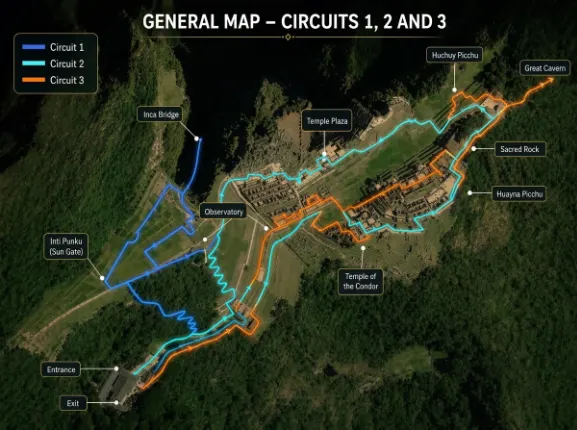
You can't wander freely at Machu Picchu anymore. Visitors are assigned to numbered circuits with fixed entry times, and re-entry isn't permitted.
- Standard circuit entry for foreign adults runs around S/152, roughly $40 to $47. Huayna Picchu and Machu Picchu Mountain add-ons cost more, in the $53 to $75 range depending on the combination.
- Daily capacity is capped, around 4,500 on normal days and higher on designated peak dates.
- Tickets are sold through the government platform and matched to your passport. The name and number must be exact, and no changes are permitted after purchase.
- Circuit 2 is the one with the classic Guardian House view. It's what most first-timers want.
- Circuit 1 involves fewer stairs and suits visitors with mobility concerns, though it gives up that viewpoint.
For Machu Picchu tickets, book two to three months ahead for the dry season and further out if you want Huayna Picchu, which sells out first. Low season often has last-minute availability, usually in afternoon slots and less popular circuits.
Bring the same passport you booked with. Tickets are scanned and checked at the gate.
Trekking to Machu Picchu
Hiking in is the other way to arrive, and for a lot of people it's the better one.
The Classic Inca Trail
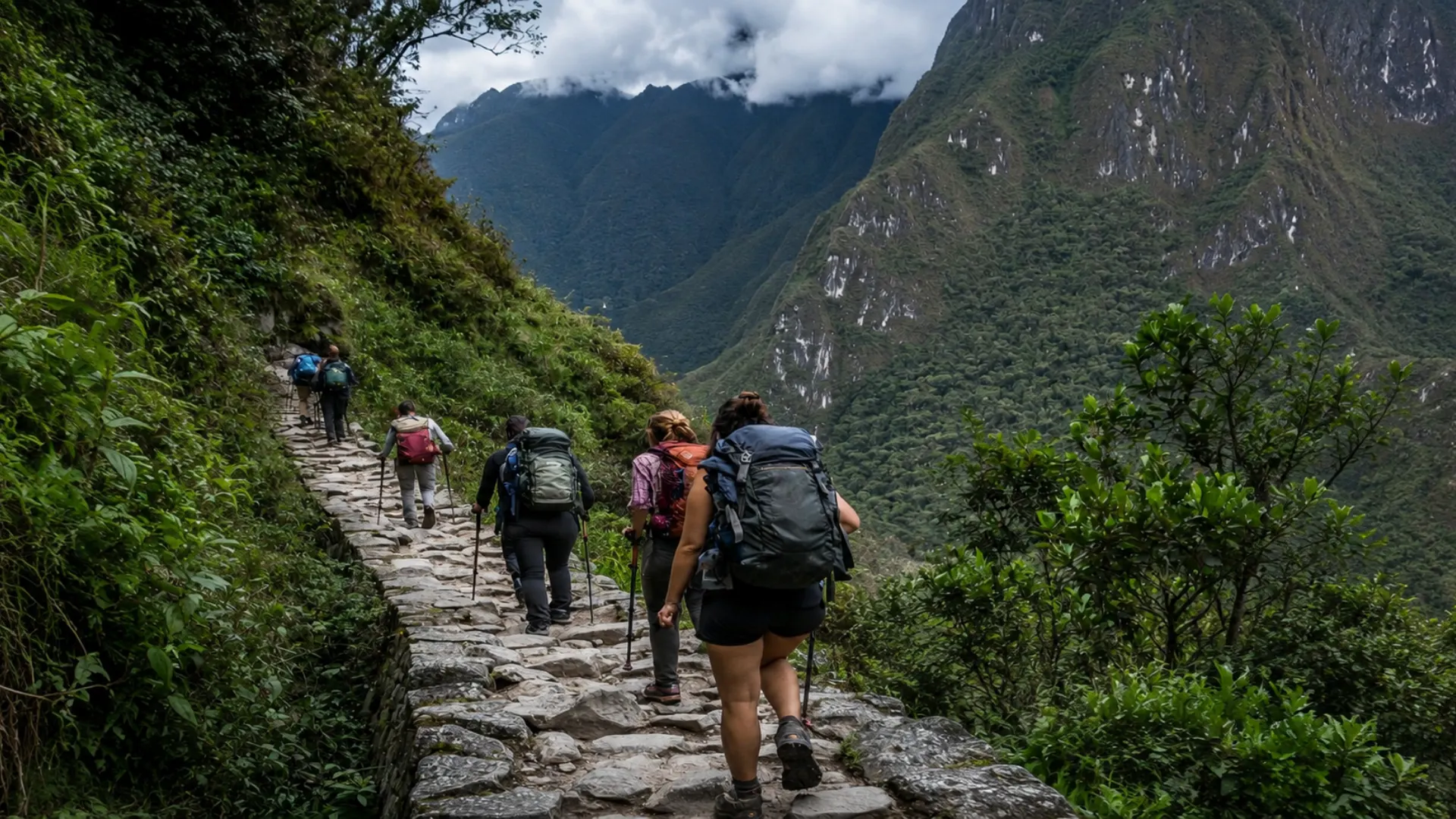
Four days and roughly 24 miles through high passes, cloud forest, and a string of Inca sites, ending at the Sun Gate with the citadel below you. Permits are strictly limited, sell out months ahead, and can only be booked through a licensed operator. The trail closes every February.
If the Inca Trail permits are gone for your dates, don't panic. There are good alternatives.
The Short Inca Trail
A two-day version that covers the last stretch of the classic route, including the arrival through Inti Punku in the late afternoon when the site is nearly empty. It's the best option for people who want the Sun Gate moment without four days of camping.
Salkantay Trek
Five days, higher and more dramatic than the Inca Trail, passing Salkantay Mountain and Humantay Lake before dropping into the cloud forest. No permit cap, which means you can book it much closer to your dates. The Salkantay Trek is the most popular alternative route for a reason.
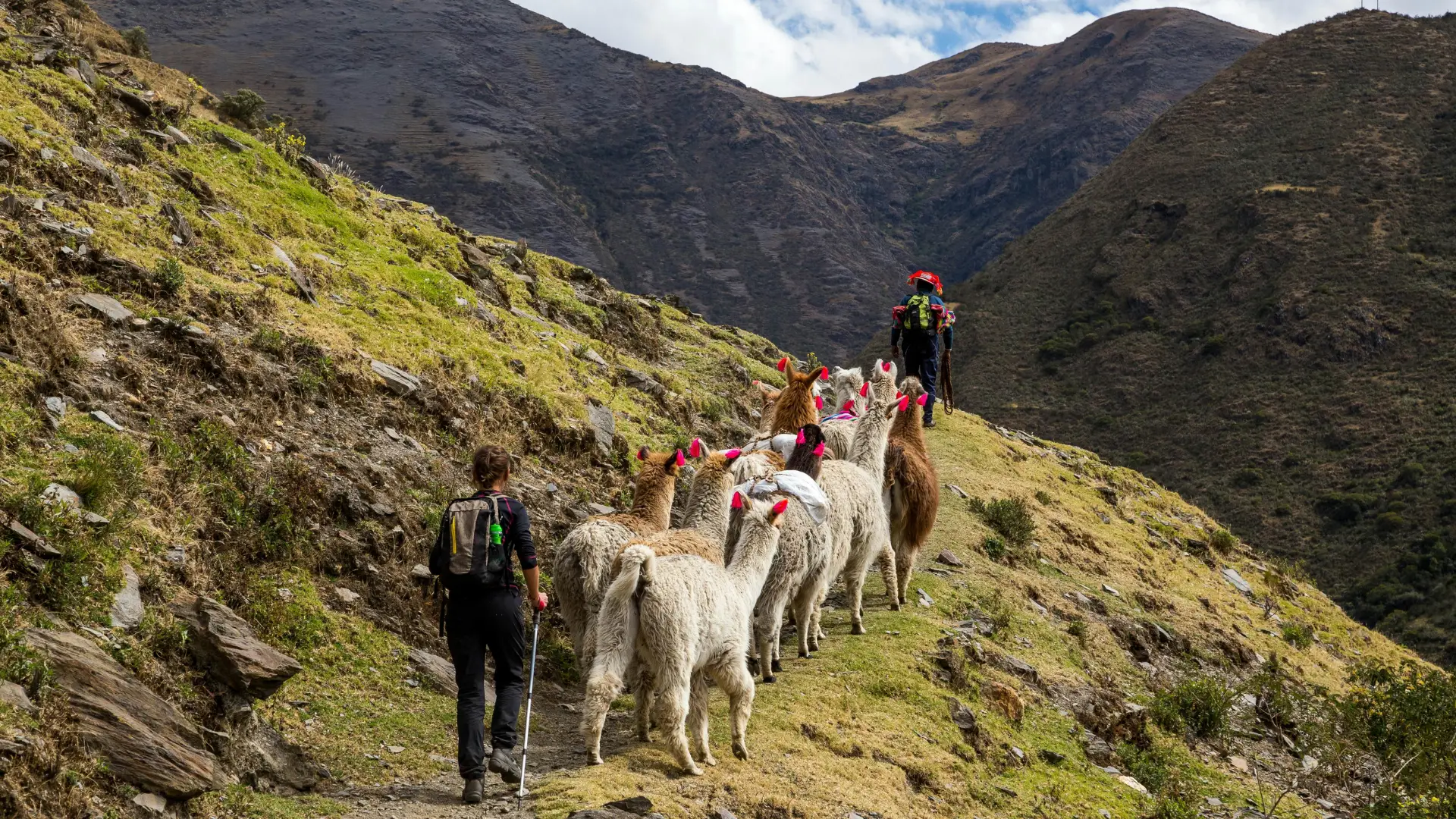
Lares Trek
Off the beaten path, focused on Andean communities rather than archaeology. You hike alongside llamas and alpacas, visit weaving villages, and see a side of the region most tours skip.
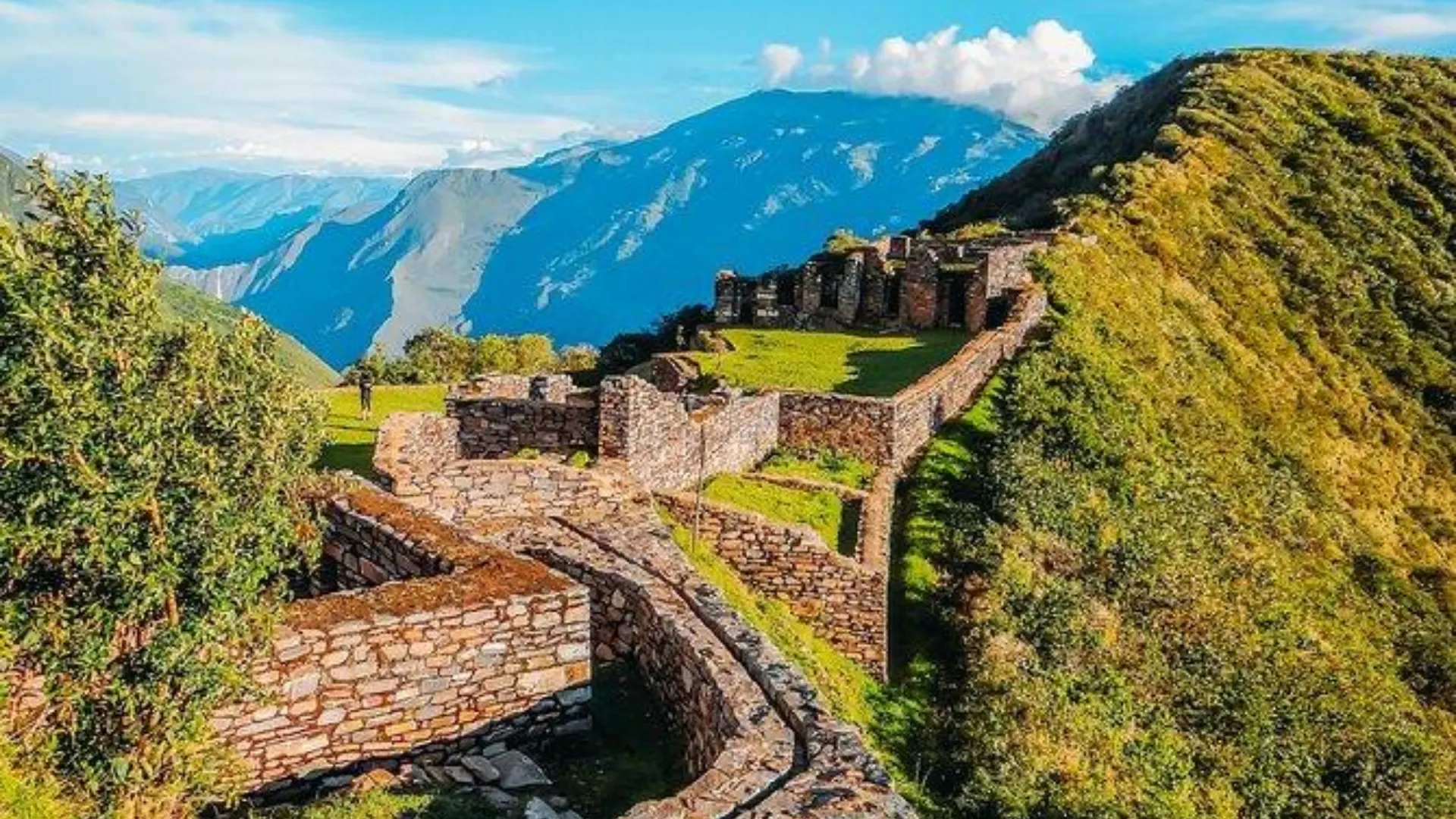
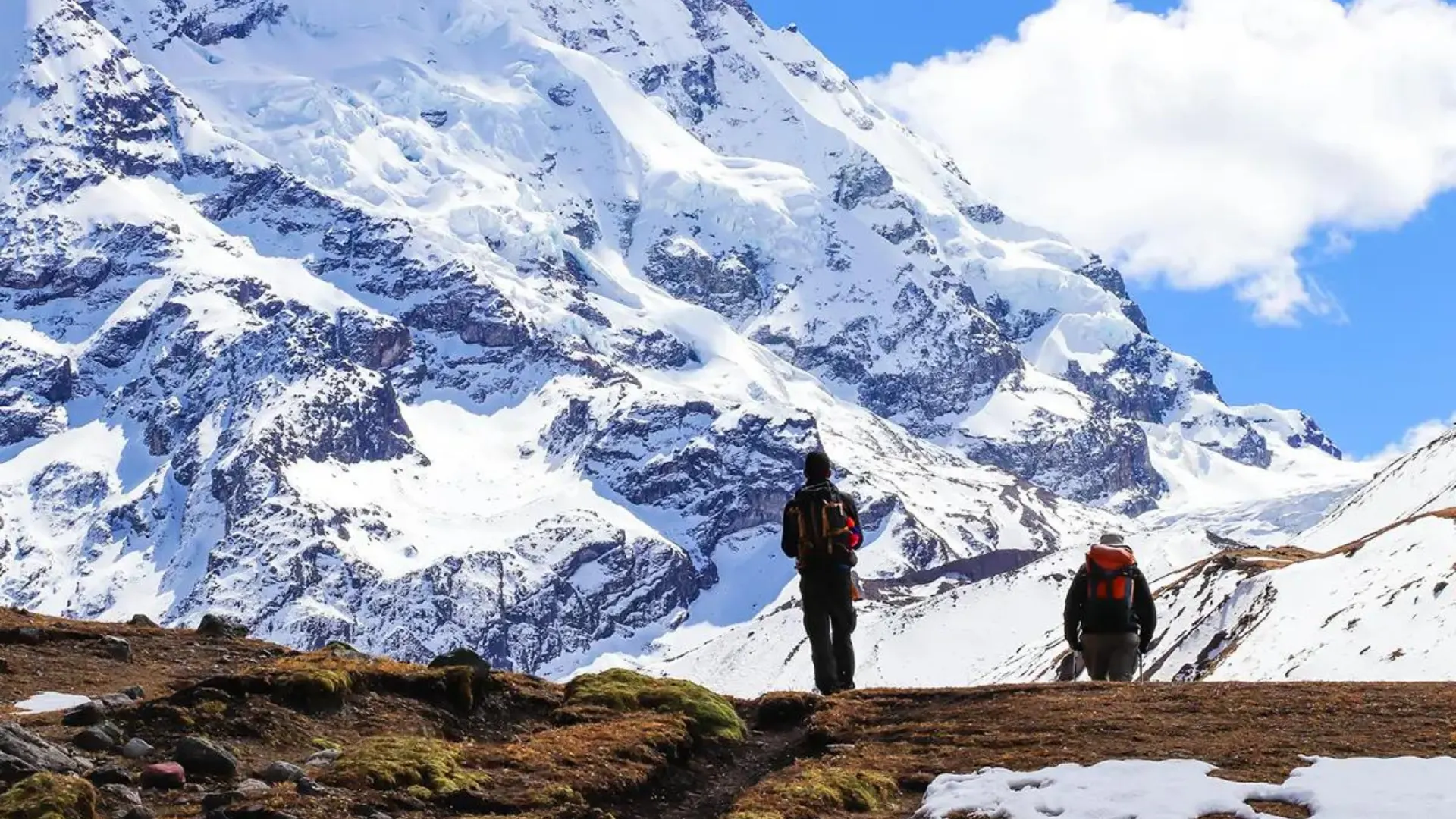
Choquequirao and Ausangate
For people who want serious remoteness. Choquequirao is a large Inca complex reachable only on foot, and Ausangate circles a sacred 6,300 m peak. Both are demanding multi-day treks with almost no crowds.
How Hard Are They?
Most organized treks are built so that people of mixed fitness levels can finish them. Some sections are genuinely tough and others are easy walking. Train a bit before you come, arrive at least two days early to acclimatize, and be honest with your guide about how you're feeling. Train-based trips to Machu Picchu require no fitness at all and can be done by almost anyone.
Machu Picchu Tours from Cusco
There's no single right way to do it. What follows is what's actually on offer, and who each format suits.
Full-Day Tour from Cusco
The cheapest packaged option. You leave Cusco very early, take the train from Ollantaytambo, spend two to three hours at the citadel, and return the same night. Expect a fourteen-hour day.
It works if you're short on time. It's tiring, and a single train delay eats into your visit.
Two-Day Tour with a Night in Aguas Calientes
The most common choice, and the one most people prefer after doing both. You travel down on day one, sleep in Aguas Calientes, and enter Machu Picchu early on day two before the day-trippers arrive. The hot springs in town are a reasonable way to spend the first evening.
Sacred Valley and Machu Picchu, Two Days
Combines the valley with the citadel. You visit Pisac and Ollantaytambo (some versions add Awanacancha and the Pisac market) on the way down, sleep in Aguas Calientes, and see Machu Picchu the next morning. Efficient, because Ollantaytambo is on the route anyway.
Maras, Moray, and Machu Picchu, Two Days
The same structure with a different first day: Chinchero, Moray, the Maras salt pans, and Ollantaytambo, then Machu Picchu. Better if terraces and Inca engineering interest you more than markets.
Four-Day Cusco, Sacred Valley, and Machu Picchu
The standard package for a short trip to Peru. City tour, Sacred Valley, Machu Picchu, and a return on the panoramic train, with acclimatization built into the first day. If you only have four or five days in the region, this is the sensible shape.
Trekking Tours
Covered above: the classic four-day Inca Trail, the two-day Short Inca Trail, the five-day Salkantay Trek, Lares, and the longer Choquequirao and Ausangate routes. All require an operator except the unregulated alternatives, and the Inca Trail requires permits booked months ahead.
Doing It Independently
Perfectly possible. Book your entry ticket on the government platform, book your train with PeruRail or Inca Rail, take a colectivo or taxi to Ollantaytambo, and buy the shuttle bus ticket in Aguas Calientes. You'll save money and spend more time organizing.
What to Check Before Booking Any Tour
- Whether the Machu Picchu entry ticket is included, and which circuit
- Whether the shuttle bus up from Aguas Calientes is included, since it often isn't
- Whether a licensed guide is included at the site
- Which train service and class you're booked on
- Group size, and whether the operator is registered with Peru's tourism authority
Cheap packages usually get cheap by leaving out the bus, the guide, or the entry ticket. Ask directly.
Mistakes Travelers Make
- Booking a high-altitude trek for day one. The most expensive mistake on this list.
- Assuming Machu Picchu tickets are available last minute in July. They aren't.
- Buying the full tourist ticket when a partial would do, or the reverse.
- Not carrying cash. Half the things you'll want to pay for don't take cards.
- Flying out the same afternoon you return from Machu Picchu. One delayed train and you've missed an international connection.
- Booking the train before the entry ticket. Your circuit time dictates everything else.
- Treating Cusco as a two-night stopover. People consistently wish they'd stayed longer.
Frequently Asked Questions
How many days do you need in Cusco?
Four to five minimum if Machu Picchu is on the list. Seven gives you room for the Sacred Valley, a high-altitude day hike, and time in the city without rushing.
How many days to acclimatize before a trek?
At least two full days in Cusco or the Sacred Valley before any trek or high-altitude excursion. Three is better if you're coming straight from sea level.
Is Cusco worth visiting without Machu Picchu?
Yes. The city, the ruins above it, and the Sacred Valley would justify the trip on their own.
Is Cusco safe?
Generally yes, with normal urban precautions. Petty theft in crowded areas is the main risk.
Do you need a guide?
Not for the city, though a walking tour helps on day one. At Machu Picchu, guides are required for certain circuits and useful everywhere else, since the site has almost no signage.
What's the elevation?
Cusco is at 3,400 m (11,155 ft). Machu Picchu is much lower at about 2,430 m (7,970 ft), and Aguas Calientes lower still.
Can you visit the Sacred Valley independently?
Yes. Colectivos run from fixed points in the city to Pisac, Urubamba, and Ollantaytambo for a few soles. You'll need the tourist ticket for site entry.
Where do you buy souvenirs and crafts?
San Blas for artisan workshops and galleries, San Pedro Market for volume and price, Pisac on Sundays for the classic market experience, and Chinchero for textiles bought directly from weavers.
How far is Cusco from Lima?
About 570 km in a straight line. Roughly 80 to 90 minutes by air, or 21 to 22 hours by bus.
Where can you exchange money?
Casas de cambio along Avenida El Sol and around the Plaza de Armas generally offer better rates than the airport or hotels. Compare a couple before committing.
Cusco rewards people who slow down. Give the altitude its due, buy the right ticket, book Machu Picchu early, eat at the market at least once, and leave a day unplanned. The city will fill it.