
Huchuy Qosqo is an Inca archaeological site perched above the Sacred Valley at around 3,600 m (11,811 ft) in elevation, overlooking Lamay. You can reach it on foot from Lamay, Chinchero, Tambomachay, or Cusco, depending on the route you choose. Each trail offers a different experience and varying levels of difficulty. In this guide, we’ll explain how to get there, which route to choose, what to see, and how to combine Huchuy Qosqo with Machu Picchu.
What is Huchuy Qosqo?
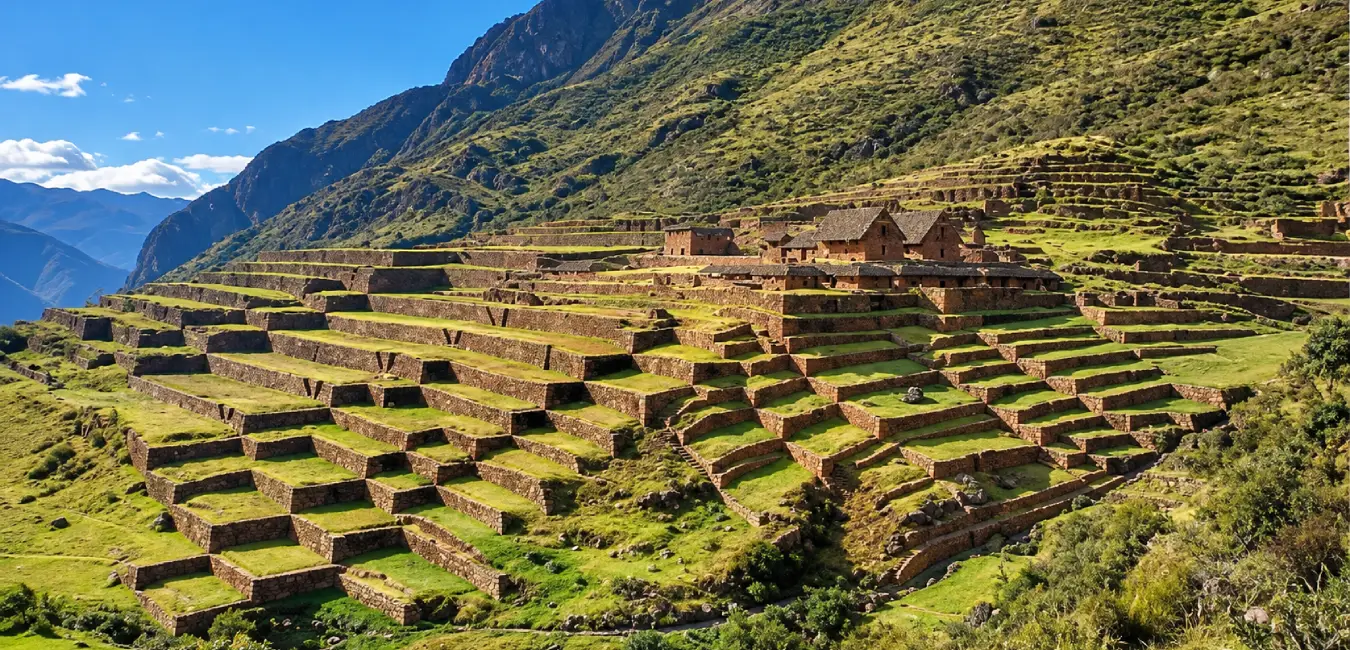
The Huchuy Qosqo citadel was the royal estate of Inca Wiracocha and his panaka, the lineage that managed his lands, herds, and possessions even after his death. Like other Inca royal residences, it served several purposes at once: a palace, administrative center, ceremonial space, and agricultural production area. It was built between AD 1420 and 1530, predating Machu Picchu.
What does Huchuy Qosqo mean?
In Quechua, "huchuy" means small, while "Qosqo" refers to the former capital of the Tahuantinsuyo. For this reason, the name is translated as "Little Cusco," a name that only became popular in the 20th century because the site's layout resembles that of the Inca capital. It was originally known as "Caquia Xaquixaguana," while before the Incas, the area was also known as "Sacsahuana or Huana."
Where is Huchuy Qosqo?
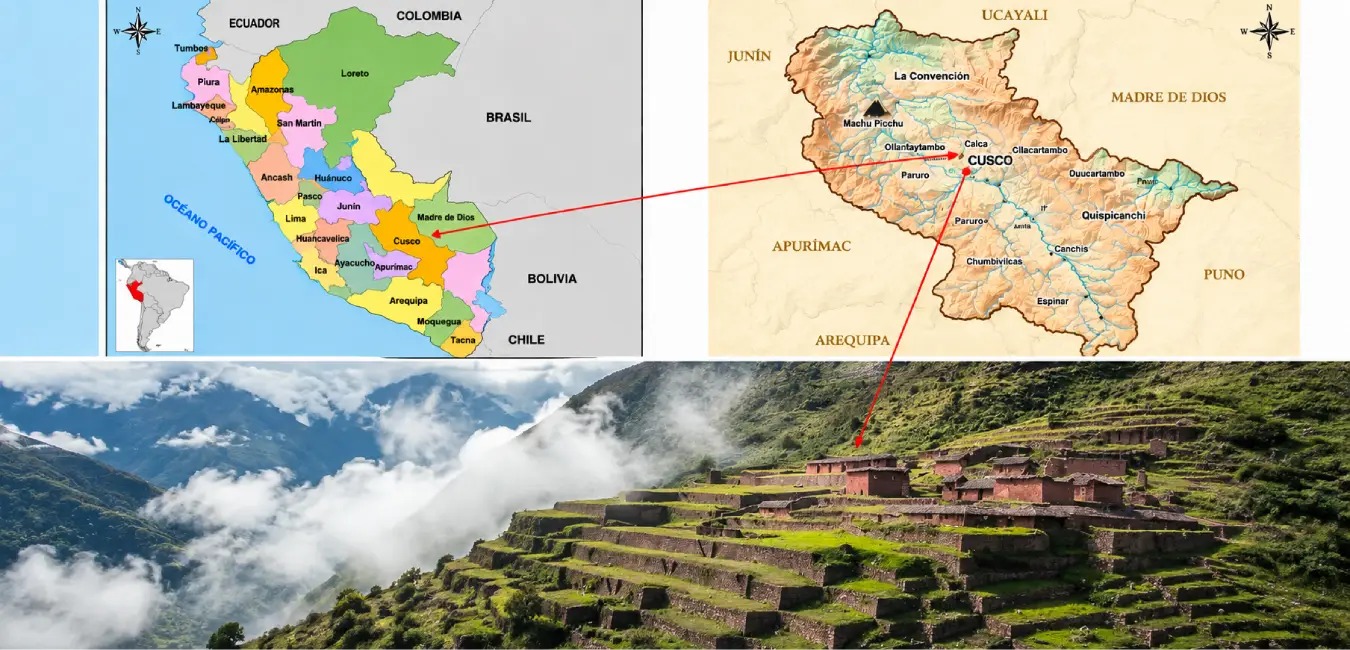
The Huchuy Qosqo complex occupies the plateau of Raqaraqay Hill, about 3 km (1.9 mi) west of the town of Lamay, in the district of the same name and within the province of Calca. While Lamay sits at 2,920 m (9,580 ft) along the Vilcanota River, the ruins stand between 3,600 and 3,650 m (11,811 - 11,975 ft). This nearly 700 meter (2,300 foot) difference explains both the demanding climb and the sweeping views over Calca, Lamay, and Urubamba.
How to get to Huchuy Qosqo from Cusco
You can only reach Huchuy Qosqo on foot. There are four routes, and although they all end at the same site, each one demands something different from your body.
Which route should you choose based on your time, fitness level, and experience?
Route | Approx. distance | Time | Max. elevation | Difficulty | Ideal for |
|---|---|---|---|---|---|
| Qoricancha-Ñustapaqana-Huchuy Qosqo (with llamas) | 25 km (15.5 mi) | 2 days | Over 4,200 m (13,780 ft) | Moderate | Travelers who want to hike from downtown Cusco and experience the tradition of the llama herders. |
| Lamay-Huchuy Qosqo | 6 km (3.7 mi) uphill | 2-3 hours uphill | 3,650 m (11,975 ft) | Moderate to challenging (steep climb) | Travelers with limited time and good physical fitness. |
| Chinchero / Taucca-Huchuy Qosqo | 15-17 km (9.3-10.6 mi) | 5-7 hours | Over 4,200 m (13,780 ft) | Moderate | A full day hike through high-altitude landscapes. |
| Tambomachay-Huchuy Qosqo | 19 km (11.8 mi) | 8 hours | Over 4,200 m (13,780 ft) | Challenging | Acclimatized trekkers; a first stage toward Machu Picchu. |
Huchuy Qosqo tours from Cusco
Responsible Trekking takes you along ancient Inca trails from Coricancha to Huchuy Qosqo, giving you an experience where your only concern is enjoying the trail and the company of our llamas. As you hike through the Andean landscapes, our team takes care of all the logistics, from transportation to camping, so you can enjoy the route at your own pace.
Route 1: Huchuy Qosqo trek with Llamas
This route connects Cusco, starting at Qoricancha, with Sacsayhuamán, where llamas and a local llama herder accompany you along the way. You then continue toward Ñustapaqana, in Chacán, and the Puma Punku Canyon, covering about 25 km (15.5 mi) over two days. You spend the night in the mountain domes, surrounded by Andean landscapes. The next day, you continue along the Inca trail to Huchuy Qosqo, then descend to Lamay and return to Cusco or continue on to Machu Picchu.
What do the Llamas do during the hike?
The llamas mainly serve as pack animals and carry part of the equipment needed during the hike, while you carry only a small daypack with your personal belongings. The llamas are part of the experience without replacing porters or carrying excessive loads.
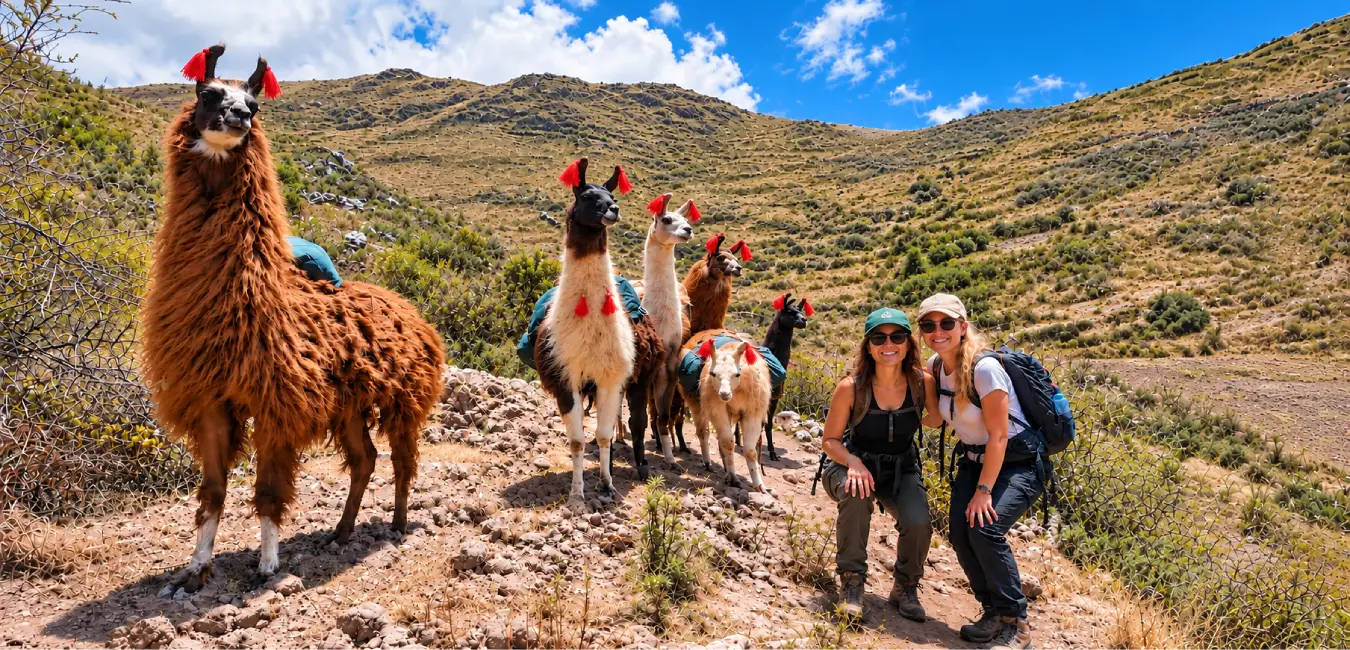
How should you behave around the Llamas?
If you take this route, remember that llamas are not there for riding or display. They are working animals and should be treated with respect.
During the hike:
- Do not try to ride them.
- Do not feed them without permission from the llama herder.
- Do not pull on their ropes or try to separate them from the group.
- Keep a safe distance while they are resting.
- Allow the llama herder to manage the caravan.
- Do not block the animals' path on narrow trails.
- Follow the pace established by the responsible team.
How to get to Huchuy Qosqo on your own
Route 2: Lamay – Huchuy Qosqo (the shortest route)
To get to Lamay, take a collectivo to Pisac in Cusco from the stop on Puputi Street, which operates from 5:00 a.m. to 7:00 p.m. In Pisac, take another collectivo to Lamay for about S/ 2. From Lamay, cross the bridge over the Vilcanota River and begin the zigzag ascent. Although this is the shortest route, it is not the easiest: you climb about 700 meters (2,300 feet) in just two to three hours and then descend along the same trail to return to Cusco that day.
Keep in mind…
This trail has very little shade and becomes slippery when it rains. For that reason, start hiking before 8:00 a.m., wear a hat and sunscreen, and use trekking poles on the descent. To return, the collectivo from Lamay to Cusco costs around S/ 6 and takes about 40 minutes.
Route 3: Chinchero – Taucca – Huchuy Qosqo
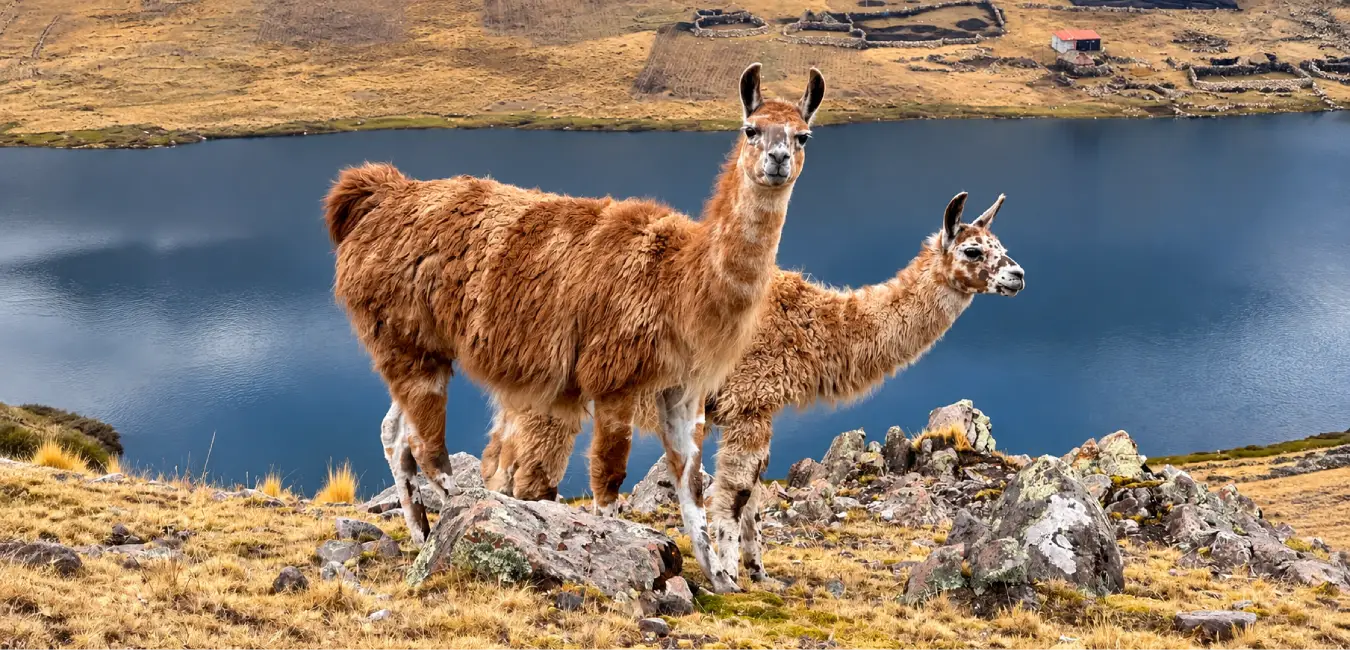
In Cusco, take a collectivo to Urubamba that passes through Chinchero; the ride takes between 40 and 50 minutes and costs about S/ 10. In Chinchero, hire a taxi to the trailhead in the Taucca community for around S/ 20. From Taucca, hike alongside Queullacocha Lake, cross high altitude grasslands, and pass over a mountain pass at about 4,200 meters (13,780 feet), with views of the snow capped mountains. You then descend through the Puma Punku Canyon and a restored section of Inca trail to Huchuy Qosqo.
Route 4: Tambomachay – Huchuy Qosqo
This route begins at the Tambomachay archaeological site, about 20 minutes from Cusco along the road to Pisac. Any collectivo traveling to Pisac from Puputi can drop you off at the entrance. From there, the trail climbs into the puna, passes high altitude lakes, and crosses mountain passes above 4,200 meters (13,780 feet). You then descend along a section of Inca trail to the palace.
Traveler tip…
The route is about 18 km (11.8 mi) in total and takes nearly eight hours of hiking. For this reason, we recommend splitting it into two days, camping near Huchuy Qosqo and traveling with Responsible Trekking.
How many days do you need to visit Huchuy Qosqo?
Depending on how much time you have, you can experience Huchuy Qosqo in three different ways. Shorter routes can fit into a free day in your itinerary, while longer routes allow you to camp beneath a sky full of stars and, if you wish, continue your journey to Machu Picchu.
Format | Typical route | What the experience includes | Ideal for |
|---|---|---|---|
Huchuy Qosqo is an excellent alternative to the Inca Trail.
It does not require the permits for the Classic Inca Trail, which often sell out months in advance, while still preserving the spirit of walking along Inca trails toward Machu Picchu, with far fewer groups around you.
Huchuy Qosqo vs. the Inca Trail
Huchuy Qosqo can be an option for travelers who want to hike along ancient Inca trails and later connect with Machu Picchu without taking the Classic Inca Trail.
Aspect | Huchuy Qosqo Trek | Classic Inca Trail |
|---|---|---|
Huchuy Qosqo - Machu Picchu
| Tours | Route | Duration | Max. Elevation | Difficulty | Llamas | Arrival at Machu Picchu | Ideal For |
|---|---|---|---|---|---|---|---|
| Coricancha + Classic Inca Trail | Coricancha → Ñustapaqana → Andean Sky Dome → Huchuy Qosqo → Ollantaytambo → Km 82 | 6 days | 4,215 m (13,829 ft) | Moderate to challenging | Yes | Classic Inca Trail | Travelers looking for a complete trekking experience with a night in the domes. |
| Coricancha + Short Inca Trail | Coricancha → Ñustapaqana → Andean Sky Dome → Huchuy Qosqo → Ollantaytambo → Km 104 | 4 days | 4,200 m (13,780 ft) | Moderate to challenging | Yes | Short Inca Trail | Travelers who want to combine Huchuy Qosqo with the Inca Trail and spend the night in the domes. |
| Coricancha + Train | Coricancha → Ñustapaqana → Andean Sky Dome → Huchuy Qosqo → Sacred Valley → Aguas Calientes | 4 days | Up to 4,200 m (13,780 ft) | Moderate | Yes | Train + bus | Travelers who prefer to combine trekking, a night in the domes, and a train ride. |
Main plaza
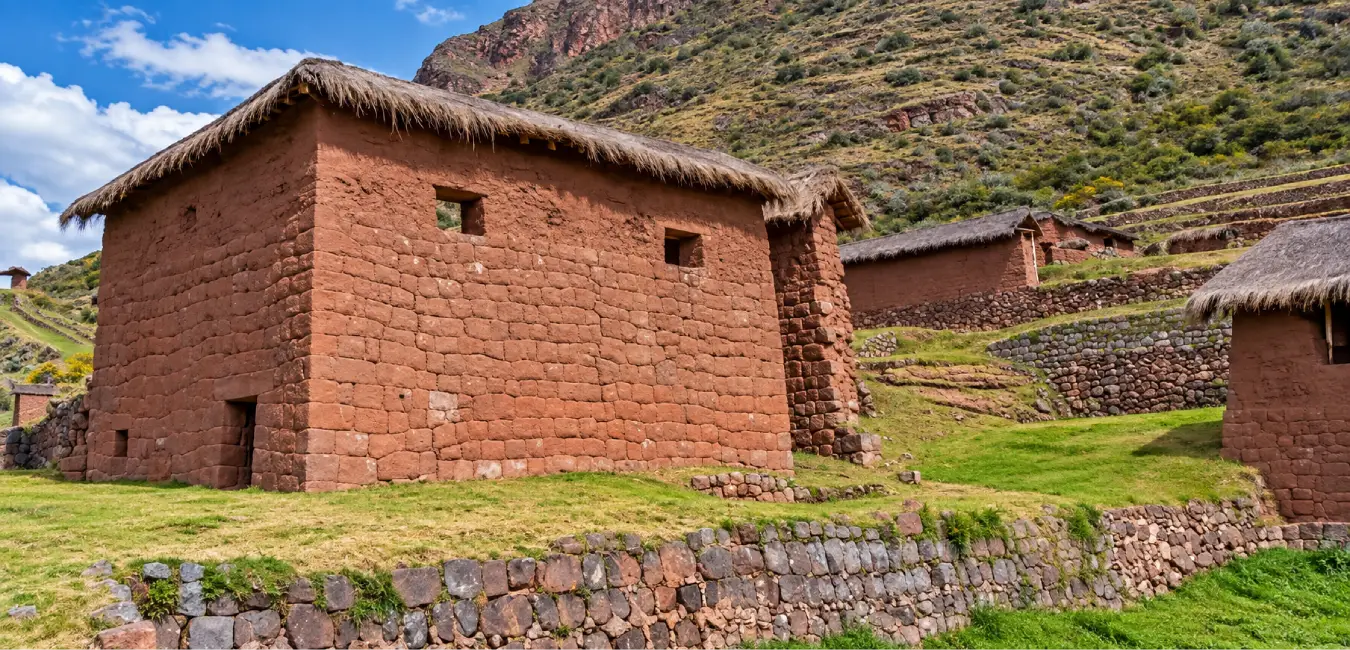
This ceremonial space, known as “Huakaypata,” is located above the terraces of Huchuy Qosqo. It is important to note that this space does not have the traditional quadrilateral shape. Ceremonies and offerings were held here. Its name also mirrors that of the great plaza of Inca Cusco, now known as Plaza de Armas, another indication that the site was designed to imitate the capital.
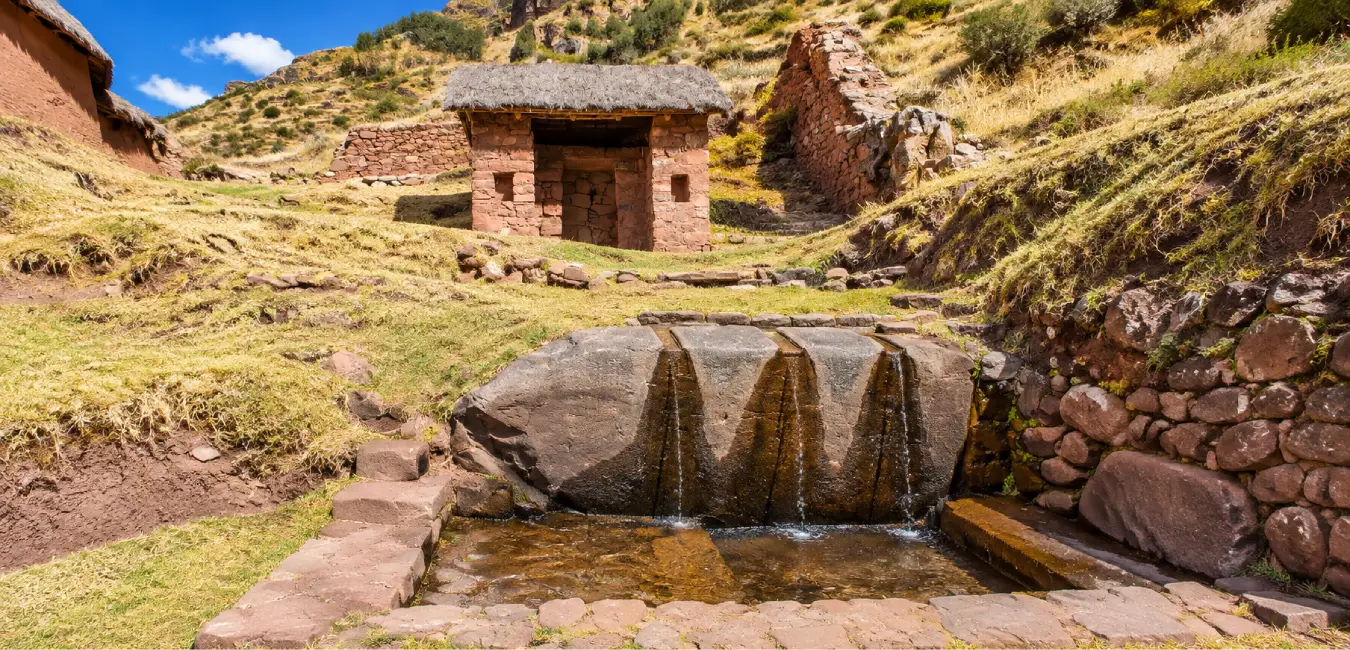
Water channels
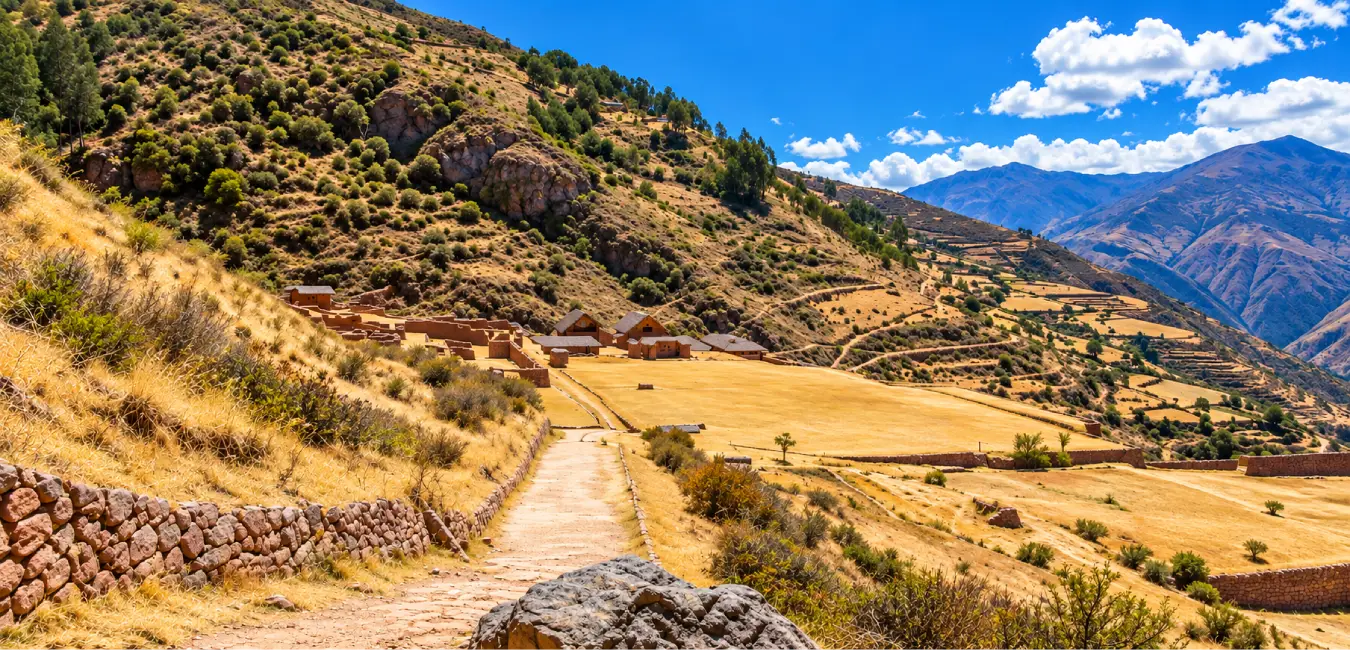
A stone lined channel about 800 meters (2,625 feet) long supplies water to Huchuy Qosqo. Remarkably, water still flows through it, providing living evidence of Inca hydraulic engineering. For this reason, we recommend following its course to understand how water reached each sector of the site.
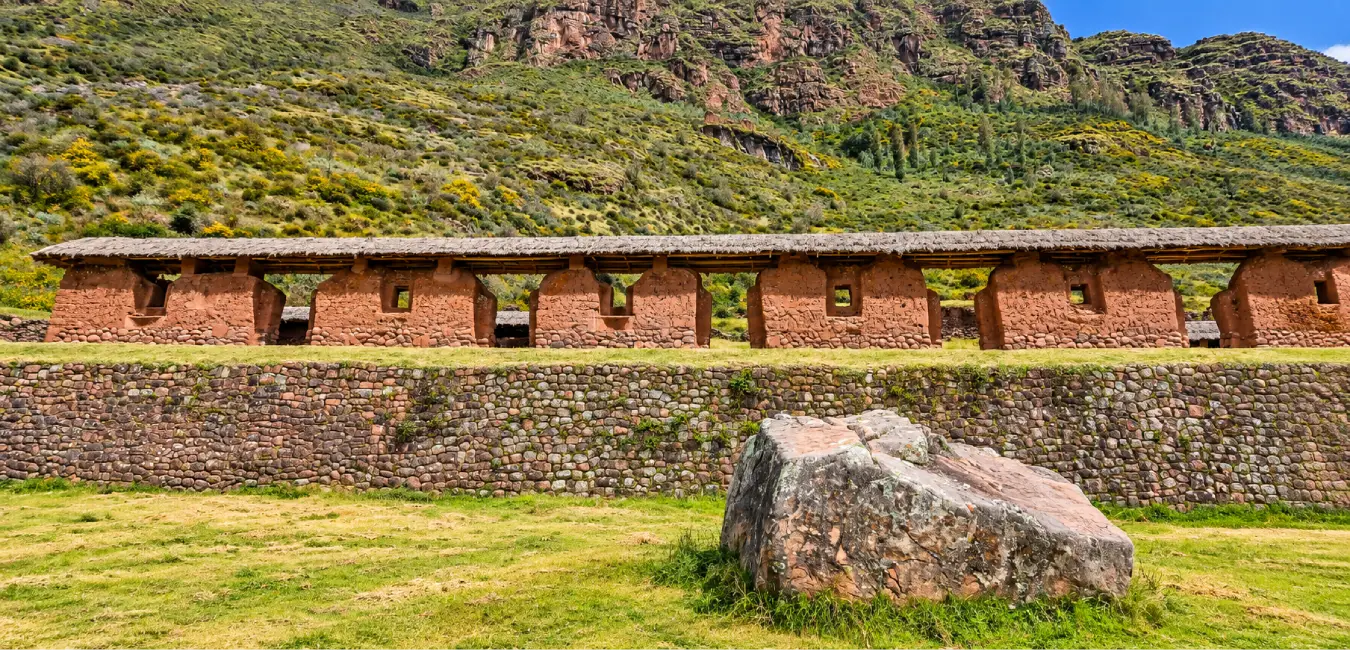
Common residences
The common residences at Huchuy Qosqo are rectangular structures built from a combination of stone and adobe. These buildings have one or two doorways and are scattered throughout the archaeological site.
Qolqas or storage houses
The Qolqas, also known as “storehouses,” were structures specifically designed for food preservation at high altitude. Their strategic construction and location took advantage of low temperatures and natural ventilation, allowing products such as corn, quinoa, and other essential foods to be preserved for the Inca population.
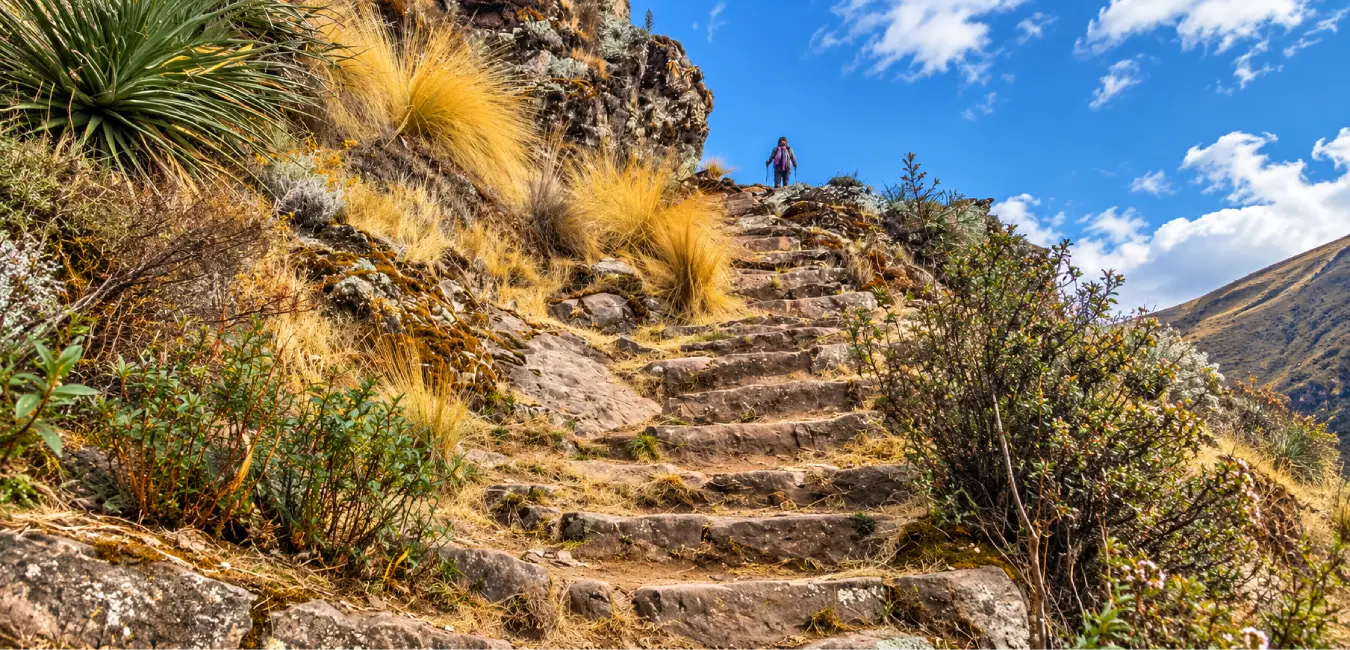
Inca Trail
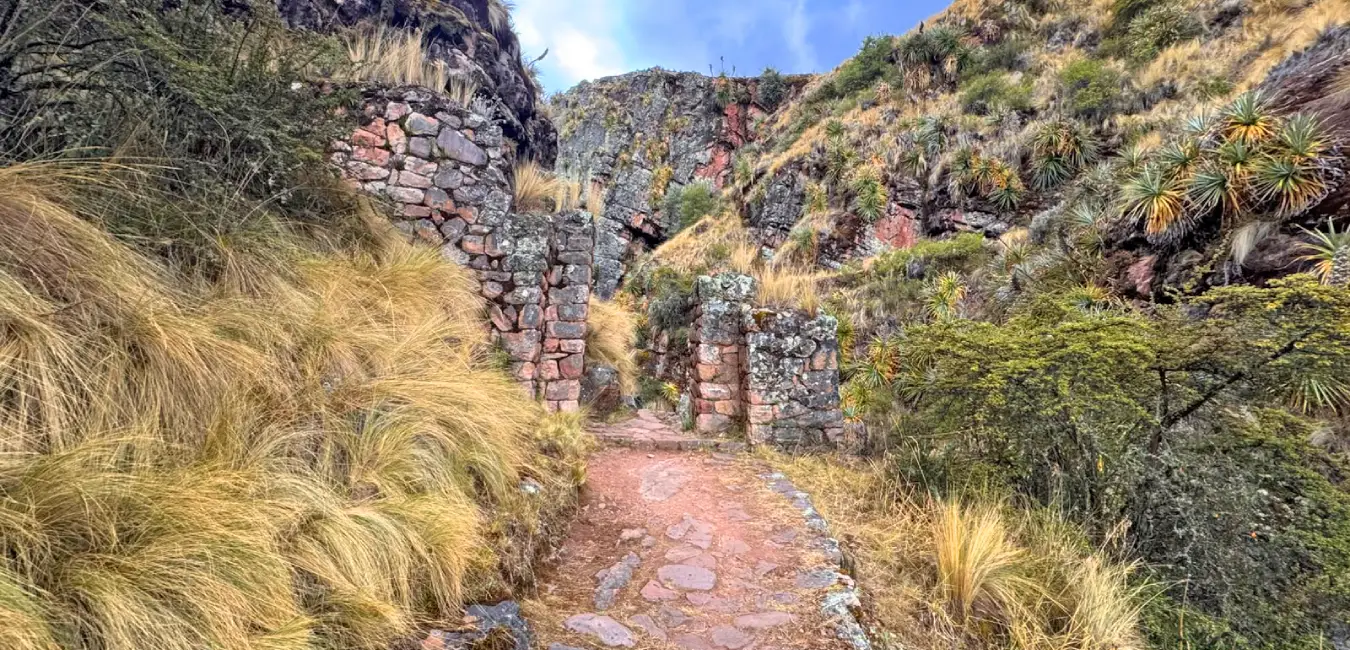
The Inca Trail is a stone paved path connecting Huchuy Qosqo with Cusco. Along the route, it is bordered by retaining and supporting walls, so take a close look at its original stonework and stairways.
Lookout or Inca prison
On the eastern side of Huchuy Qosqo, right at the edge of a cliff, you will find this rectangular enclosure made of finely carved stone. From here, you get one of the best views of the valley, with Lamay and the Vilcanota River below you. Keep your camera ready, but always maintain a safe distance from the edge.
Chincana
The Chincana is a three meter long (9.8 foot long) tunnel, carefully carved into stone and located at the edge of a cliff. This structure stands at the top of the Pauqartik’a estate.
Quarry
The quarry was where the Incas extracted stone to build Huchuy Qosqo. You can still see carved stones ready to be transported, as well as partially carved pieces, providing evidence of the advanced stoneworking techniques used by the Inca Empire.
Colonial reservoir
The colonial reservoir is located in the central section of the Huchuy Qosqo enclosures. It was built during the colonial period using stones taken from earlier structures and joined with lime mortar. It is no longer in use.
Practical information for visiting Huchuy Qosqo
Entrance and opening hours at Huchuy Qosqo
Admission to Huchuy Qosqo is completely free. You only need to sign the visitor log directly with the site guardians at the entrance checkpoint. The site is open every day from 8:00 a.m. to 5:00 p.m., and you do not need a permit or advance reservation.
Trail information…
Huchuy Qosqo is not included in the Cusco Tourist Ticket. There are also no restaurants or restrooms at the site, and drone use requires authorization from the Ministry of Culture.
Essential items to bring
- Plenty of water, snacks, and nuts.
- Sunscreen, a hat, and sunglasses.
- Warm layers and a rain poncho.
- Trekking shoes with good traction and trekking poles.
- Headlamp with spare batteries.
- Small first-aid kit and cash in Peruvian soles.
- Lightweight backpack and a bag for carrying out your trash.
Safety tips
- Acclimatize to the altitude before the hike.
- Hike at your own pace.
- Stay hydrated throughout the hike.
- Follow the signs and respect trail instructions.
Altitude sickness
If you experience a severe headache, nausea, or dizziness that does not improve with rest, stop ascending. Descending is the most effective measure for dealing with altitude sickness.
Flora and fauna on the way to Huchuy Qosqo
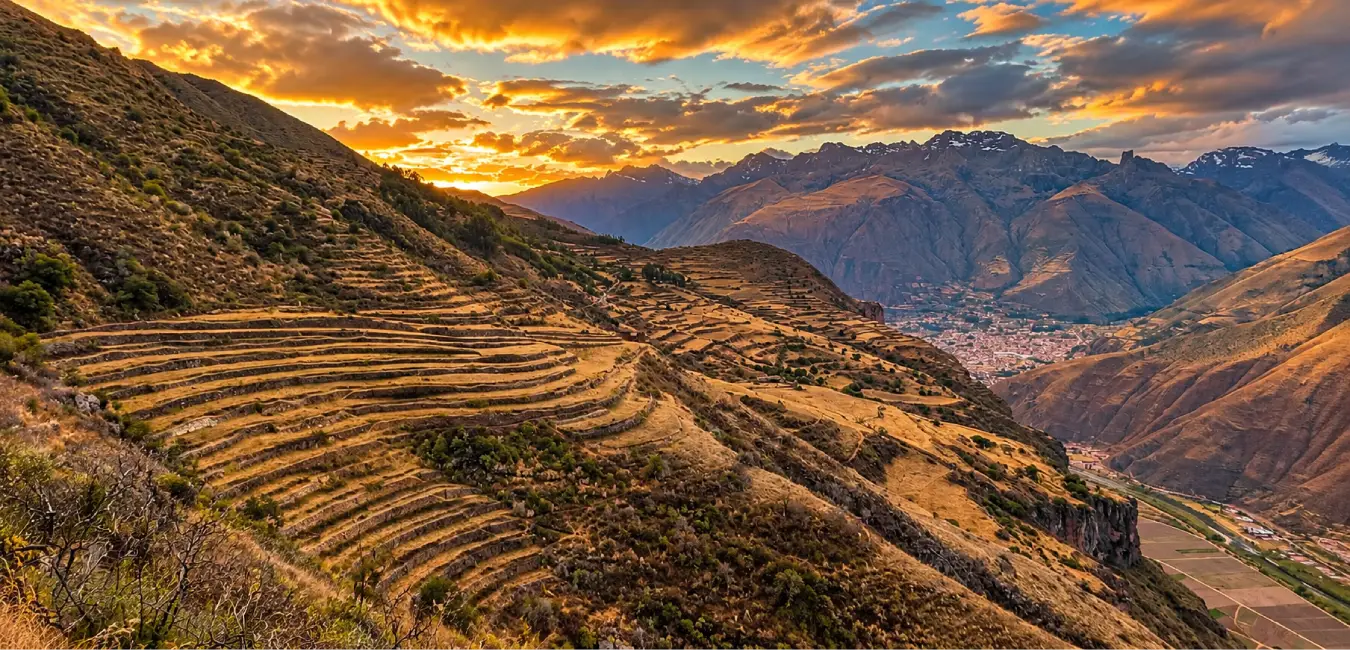
As you climb toward the palace of Wiracocha, the landscape changes from a temperate valley to the puna highlands. Along the way, you will see native plants of Cusco and the kantu, Peru's national flower. If you pay close attention, you may also spot Andean tinamous and lizards basking in the sun on the rocks.
Best time to visit Huchuy Qosqo
The weather at Huchuy Qosqo is cold and dry, with cool winds, especially in the afternoons and evenings. Temperatures range from 5 °C to 18 °C (41 °F to 64 °F), depending on the season.
Season | Months | Trail conditions | Recommendation |
|---|---|---|---|
Our recommendation...
Start your hike very early. This helps you avoid the strong midday sun, enjoy softer light for your photos, and gives you enough time to return before dark, which in Cusco falls between 5:30 and 6:30 p.m., depending on the time of year.
Best time for photos
The best time to start your hike and take photos at Huchuy Qosqo is early in the morning and in the afternoon. At these times, the weather is cool and the sunlight is soft, making it easier to capture the landscape with natural-looking colors.
Attractions near Huchuy Qosqo
- Pisac: Known for its artisan market and impressive archaeological complex, it is a great place to explore Inca culture.
- Calca: A quiet town surrounded by beautiful landscapes and nearby hot springs, perfect for relaxing and enjoying the area.
- Chinchero: Combines traditional weavers, Inca terraces, and Piuray Lake. So, if you choose the Taucca route, it is worth arriving early and spending an hour exploring the main square and colonial church before starting your hike.
“Hike to Little Cusco with Responsible Trekking. Our Cusco-born guides will help you choose the route that best fits your time and fitness level. You travel in small groups with muleteers, local cooks, and llamas carrying the equipment. Contact us by WhatsApp or email and start planning your Huchuy Qosqo hike.
Frequently asked questions about Huchuy Qosqo
Can you hike to Huchuy Qosqo with llamas?
Yes. On the Coricancha – Ñustapaqana – Huchuy Qosqo route, you start hiking from downtown Cusco accompanied by llamas and a local llama herder. The llamas carry part of the equipment while you hike with only your daypack. This experience also gives you the opportunity to learn more about the traditional way of life of Andean llama herders.
Why include llamas on the Huchuy Qosqo route with Responsible Trekking?
Because Huchuy Qosqo sits along ancient Andean trails and forms part of the cultural landscape of the Sacred Valley. The Qhapaq Ñan demonstrates how important roads and llama caravans were for moving people and goods throughout the Andes. Today, we share this travel experience as a way to reconnect travelers with the relationship between llama herders, animals, and these ancient trails.
Can you go from Huchuy Qosqo to Machu Picchu?
Yes. From Huchuy Qosqo, you can connect with Lamay, rest in Ollantaytambo, and spend the night in Aguas Calientes before heading up to Machu Picchu.
Do i need a permit for the Huchuy Qosqo trek?
No. Unlike the Classic Inca Trail, which requires permits that often sell out months in advance, you do not need a permit or advance reservation to hike to Huchuy Qosqo. You only need to register at the site checkpoint. This makes the route an option if you arrive in Cusco without having booked the Inca Trail but still want to hike along ancient Inca trails.
What are the recommendations for people with little hiking experience?
It is important to start early to avoid the midday heat, hike at a moderate pace, and rest whenever necessary.
Are there food services or restaurants near the site?
No, there are no food services near Huchuy Qosqo. It is best to bring your own food or plan to have lunch in a nearby town before or after your visit.
Are there designated areas to rest along the route?
Yes. Along the trail, you will find natural areas where you can stop and rest. Use these spots to hydrate and enjoy the scenery.
Are there restroom facilities at the site?
There are no restroom facilities at the site. It is recommended that you use the restrooms at your hiking starting point or destination before or after the hike.