
Coricancha, also known as Qorikancha or the Temple of the Sun, was one of the most important sanctuaries in the Inca world and was primarily dedicated to Inti, the Sun god. Located in the historic center of Cusco, this ancient religious complex is known for its impressive Inca stone walls and the Santo Domingo Convent, which was built over part of its original structures.
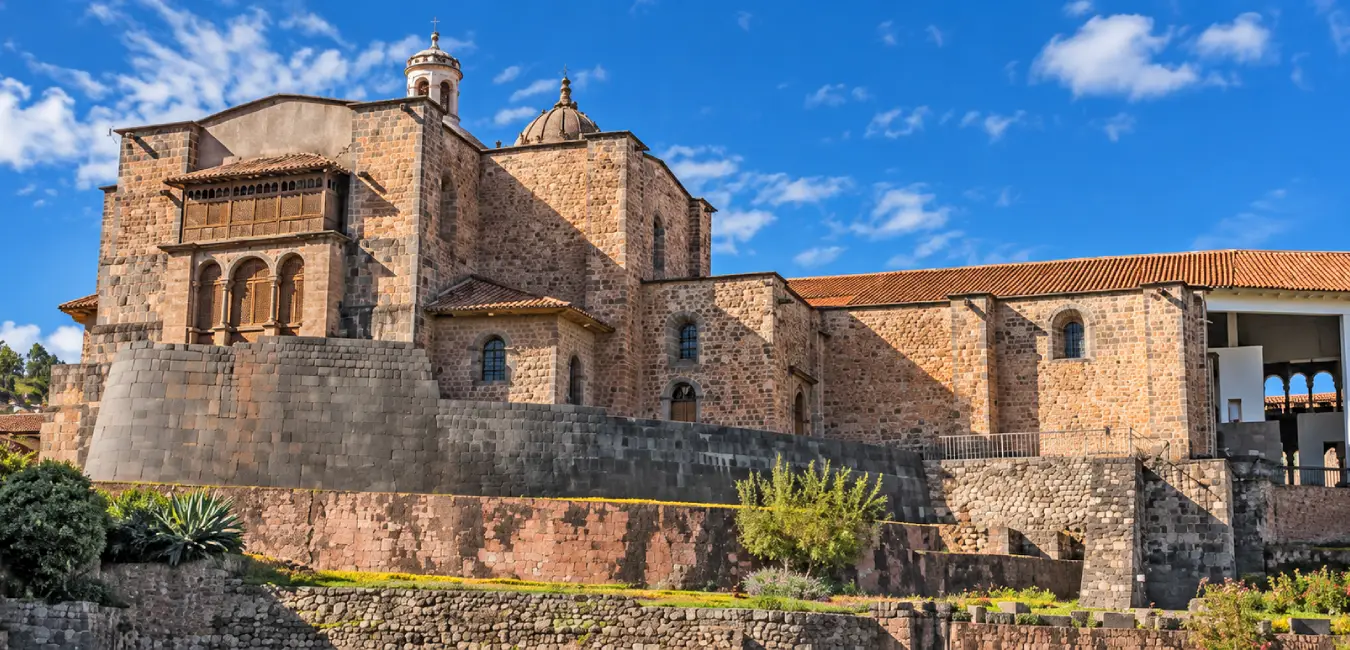
In this blog, you will find everything you need to know to visit Coricancha: its history, what to see, which gods were worshiped, where it is located, how to get there, opening hours, admission price, its relationship with the Tourist Ticket, and tips to make the most of your visit.
Quick information about Coricancha
Information | Coricancha |
|---|---|
| Location | Historic center of Cusco |
| Address | Santo Domingo / Av. El Sol |
| Elevation | 3,399 m (11,152 ft) above sea level |
What is Coricancha?
Coricancha is an Inca temple that served as the religious, political, and astronomical center of the Inca Empire. From this point, priests organized the agricultural calendar, observed the solstices, and led ceremonies that marked the lives of millions of people. In addition, the complex divided the city into its traditional two halves, Hanan Qosqo and Urin Qosqo.
Why Coricancha is important and why you should visit
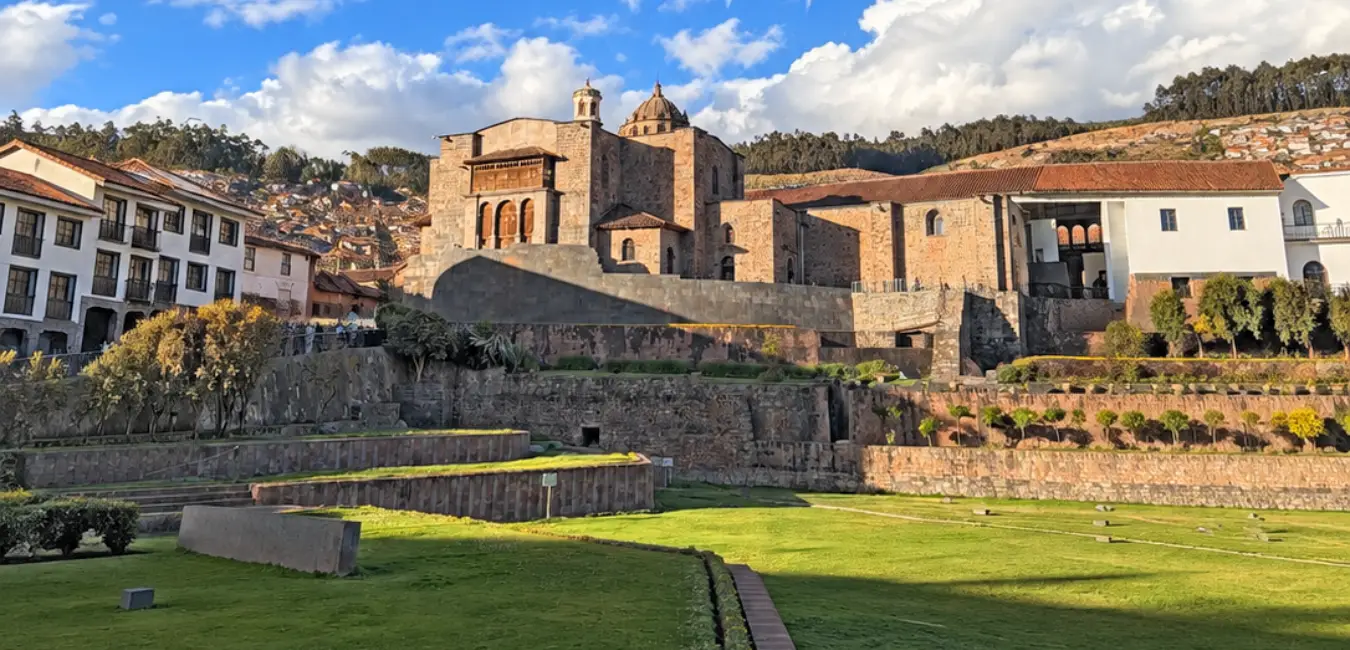
Coricancha is important because it helps you understand the role Cusco played as the capital of the Tahuantinsuyo. Its history brings together different stages of the city: the development of Inca Cusco, the Spanish conquest, and the transformation of the ancient complex into a colonial space. For this reason, visiting it allows you to see, in one place, how the city changed over time.
Where is Coricancha located?
The temple occupies an entire city block in the historic center of Cusco, at the intersection of El Sol Avenue and Santo Domingo Street. The main entrance faces Santo Domingo Square, while the famous exterior wall runs along Ahuacpinta Street, where an original section of nearly sixty meters is still preserved.
What does Coricancha mean in Quechua?
The name Coricancha comes from Quechua: “Quri” means gold and “Kancha” means an enclosed or walled compound, so it can be understood as “golden enclosure,” referring to the use of this metal in the ancient sanctuary. Its interior walls were covered with gold plates, and the sanctuary housed representations of deities, animals, and plants made of gold and silver.
History tells us that…
When the first rays of sunlight reached them, these pieces reflected the light and highlighted the splendor of the ancient sanctuary.
Coricancha, Qorikancha, or Qoricancha: Which spelling is Correct?
All three spellings are correct because they refer to the same place. The spelling Qorikancha follows the standardized Quechua alphabet, while Coricancha comes from the colonial Spanish adaptation and remains the most commonly used form in Spanish. By the way, before the great imperial reform, the site was known as "Inticancha or Intiwasi," meaning House of the Sun.
How to get to Qoricancha
Getting to Coricancha is very easy because it is only two blocks from Cusco's Plaza de Armas, and you can easily walk there. In addition, its imposing architecture makes it easy to recognize when you arrive.
On foot from the Plaza de Armas
From the Plaza de Armas, you only walk 400 meters (about 0.25 miles), which takes about seven to eight minutes downhill along Loreto Street. Then take El Sol Avenue and continue until you see the convent tower.
The route the Incas used to walk…
If you want to arrive as people did five hundred years ago, leave the Plaza de Armas through Loreto Alley, which the Incas called Intiqhicllu, cross Maruri Street, leave Pucamarca on your left, and walk down Pampa del Castillo, which was once a farm called Mancochuqui, dedicated to Huanacauri, the major huaca of the Incas. Finish at Coricancha or Intipampa, the Plain of the Sun, which was once about twelve meters wider than the current space.
By taxi or public transportation
If you are staying at a hotel farther away or arriving by taxi with luggage, ask the driver to drop you off in front of Coricancha or at the entrance. Many shared buses also travel along El Sol Avenue, so you can get off in front of the temple gardens. Even so, keep in mind that traffic in the city center becomes congested in the late morning, so walking is often faster.
Coricancha hours, prices, and tickets in 2026
This is the part that causes the most confusion, especially because Coricancha is managed independently. Pay attention to the following three points and you will avoid the classic mistake of arriving with the wrong ticket.
Temple of the Sun Opening Hours
Information | Details |
|---|---|
| Monday through Saturday | 8:30 a.m. – 5:30 p.m. |
| Sundays | 2:00 p.m. – 5:00 p.m. |
| Recommended time | 1 to 1.5 hours to explore the temple and convent |
| Best time to enter | At least 45 minutes before closing |
| Sunday mornings | Access is limited because of the convent's religious activities |
| Can the hours change? | Yes. There may be changes during patron-saint festivals and Catholic celebrations |
| Recommendation | If you have a tight itinerary, confirm the hours on the same day |
Coricancha admission price
Information | Details |
|---|---|
| General admission | S/ 15 per adult |
| University students | S/ 8 with a valid student ID |
| Children under 10 | Free admission |
| Where to buy | Directly at the Coricancha entrance |
| Advance reservation | Not necessary |
| Payment method | It is recommended to bring cash in Peruvian soles |
| Online sales | There is no official online ticket sales |
Local tip…
Before buying your ticket, cross the gardens along El Sol Avenue and look at the curved wall from below. From that angle, you can truly understand the scale of the Inca terrace. It is also a good spot for photographing the wall.
Is Qoricancha included in the tourist ticket?
No. The Cusco Tourist Ticket, administered by COSITUC, covers 16 attractions in its comprehensive version, although the Santo Domingo temple and convent are not included. However, it does include the Qorikancha Site Museum, which occupies a separate space beneath the gardens along El Sol Avenue. In other words, these are two different visits and two different tickets.
Ticket | What It Allows You to See | Adult Price | Where to Buy |
|---|---|---|---|
| Coricancha Admission | Inca temple, cloister, and Santo Domingo convent. | S/ 15 (S/ 8 students) | At the entrance, Santo Domingo Square |
| Comprehensive Tourist Ticket | 16 attractions, including the Qorikancha Site Museum, Sacsayhuamán, and the Sacred Valley. | S/ 130, valid for 10 days. | COSITUC office, 103 El Sol Avenue |
| Partial Tourist Ticket. | Only the sites included in one circuit, depending on the route you choose. | S/ 70, valid for 1 or 2 days. | COSITUC office or ticket booths at some sites. |
As you can see, both tickets complement each other. That is why many travelers combine admission to the temple with the classic city tour and use the same day to visit Sacsayhuamán, Q’enqo, Puka Pukara, and Tambomachay.
The history of Coricancha, from the Inca Inticancha to the Santo Domingo convent
Qoricancha has a history that began before the Incas and changed with the arrival of the Spanish. Would you like to learn its complete history? Let's begin.
Origins of Qoricancha
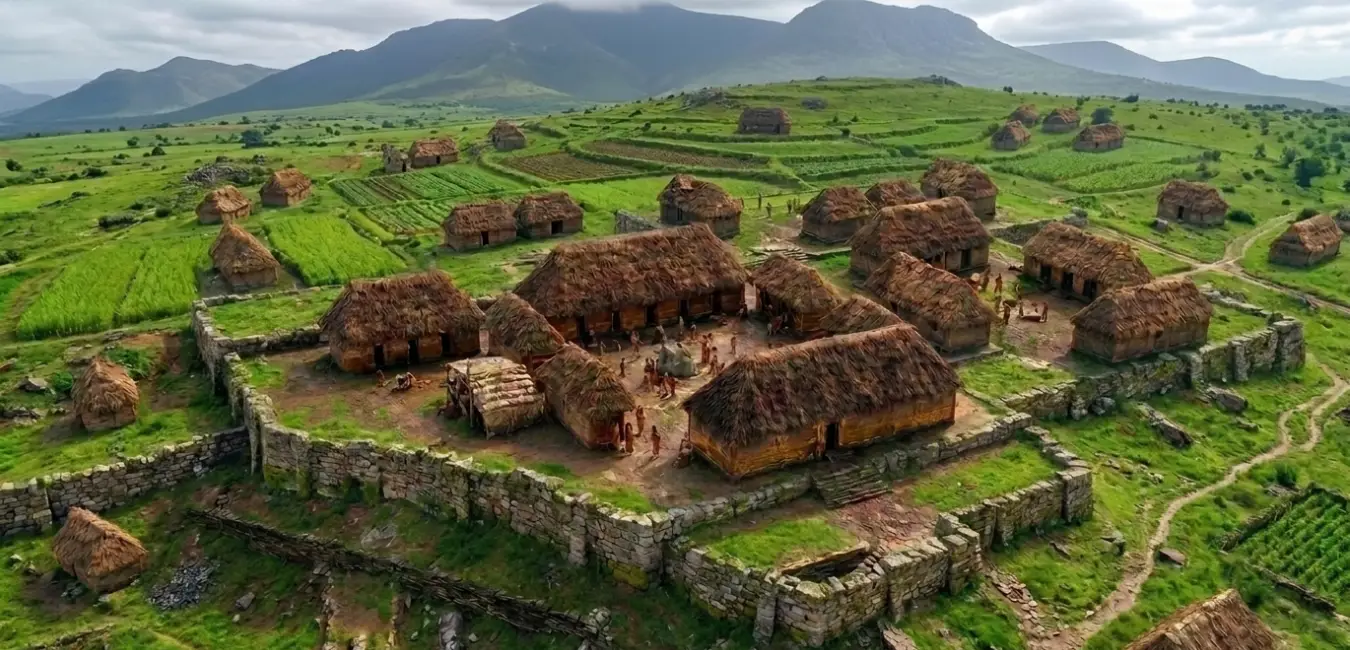
Before the arrival of the Incas, this site had already been occupied by different groups and cultures, including: Killke, Marcavalle, Chanapata, Qotakalli, and Lucre, meaning cultures that were earlier than and contemporary with the first Incas. The sacred hill of Qoricancha was therefore already the setting for ceremonies before the Inca period. During this early stage, the complex was called "Inticancha" and was much smaller.
Early inca stages at Coricancha
Chroniclers mention that Manco Cápac established the first sanctuary of the Sun at this site, then known as "Inticancha." His successor, Sinchi Roca, is said to have expanded the complex and continued using it as a residence and religious space for the first Inca rulers. This tradition indicates that the first Incas of Cusco maintained a close relationship with Inticancha until Cápac Yupanqui, but its true transformation came under Inca Pachacútec.
The great transformation of Coricancha
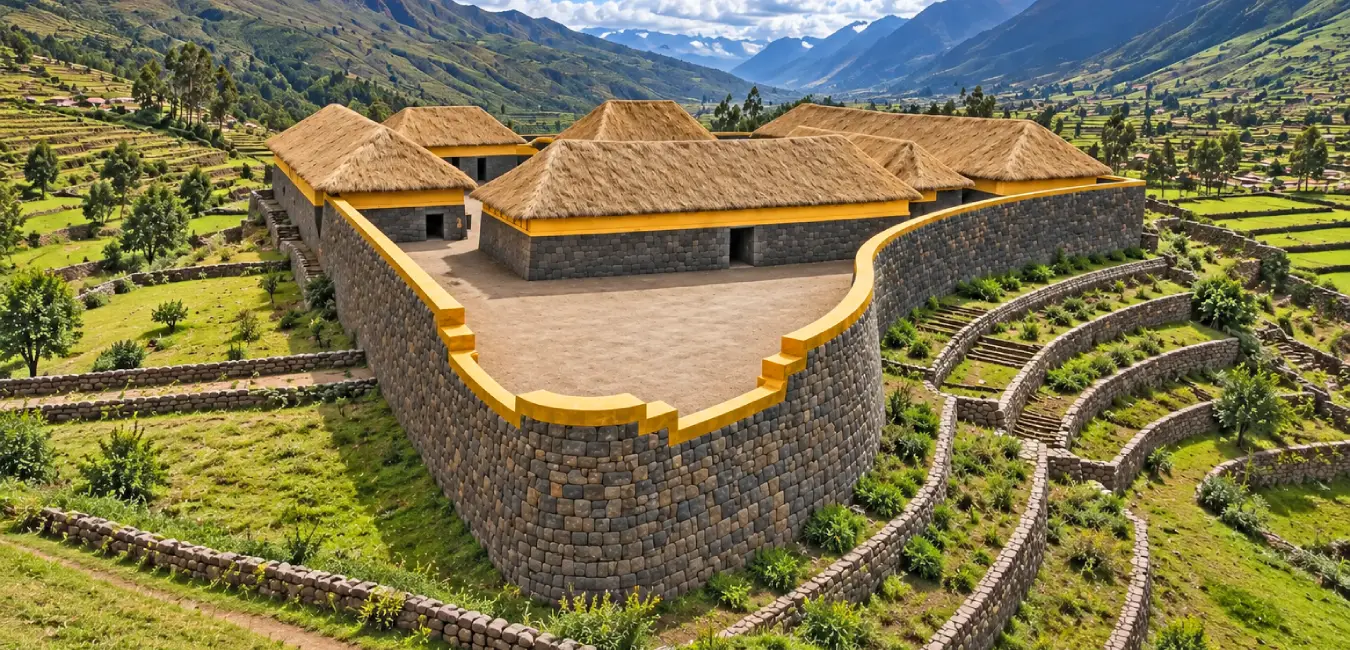
Everything changed in the 15th century. After defeating the Chancas, Inca Pachacútec reorganized Cusco and, using a cord, measured and laid out the House of the Sun, rebuilding the sanctuary on a monumental scale. His stonemasons built walls of andesite and limestone that were perfectly polished and then covered them with gold plates. In the courtyard, they installed a ceremonial garden with maize, llamas, and shepherds made of solid gold in life-size form, while the god Punchao shone at the center of it all.
Did you know…?
Those pieces were not cast by Cusco artisans. They were crafted by goldsmiths of Chimú origin, brought from the northern coast after that kingdom was annexed. Coricancha literally brought together the best of the entire empire.
Coricancha during the spanish conquest
While the Spanish were staying in Cajamarca, news circulated about a temple in Cusco filled with gold. Pizarro then sent three men to verify it on February 15, 1533 (Pedro Martin de Moguer, Martin Bueno, and Juan de Zarate).
The looting of Qoricancha
The Spanish arrival in 1533 disrupted that order within a matter of months. To gather the ransom for Atahualpa, the conquistadors tore all the gold plates from the walls and melted down irreplaceable ceremonial pieces. Today, all that remains of that metallic splendor are the marks left by the fasteners in the stone.
Catholic imposition on the inca temple
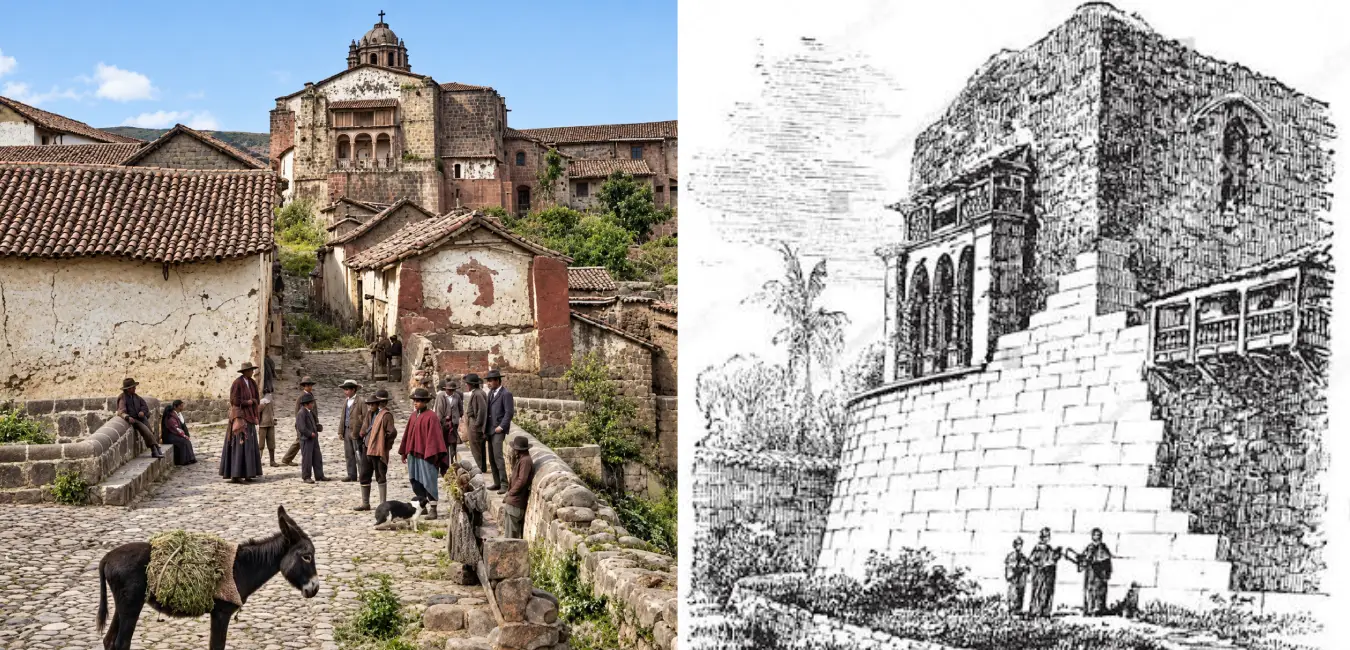
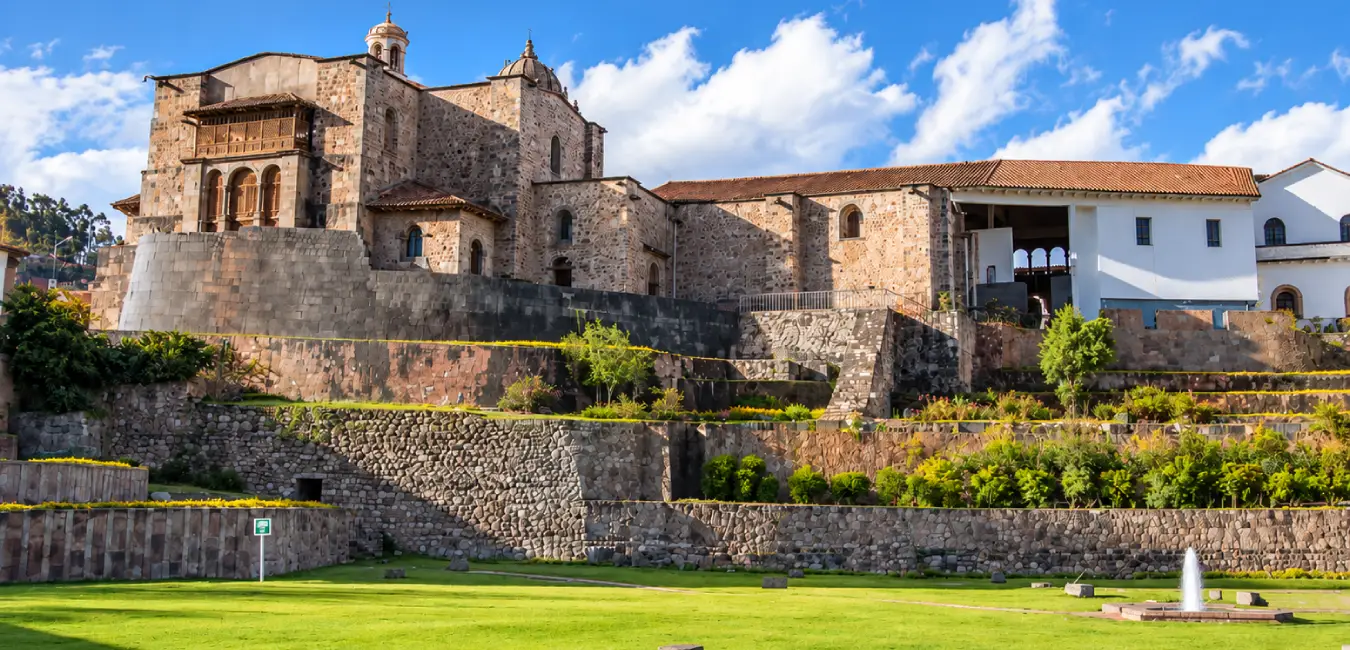
Francisco Pizarro handed the complex over to the Dominican order, which built its church and convent on top of it. However, history took an ironic turn. The earthquake of 1650 severely damaged the church, so much so that reconstruction lasted until 1680, while the Inca temple remained intact. Three centuries later, the 1950 earthquake repeated the same pattern: the colonial structures collapsed while the Inca structures endured.
A fact that surprises everyone…
The Inca masonry at Coricancha withstood two devastating earthquakes without losing its stability. The blocks lean inward at an angle of about three to five degrees and are not held together with mortar, allowing them to absorb movement rather than resist it. This earthquake-resistant engineering is more than five hundred years old.
Interesting facts about Coricancha
Let's learn a little more about the role Coricancha played within Inca society. You're sure to find at least one fact that surprises you!
Life and rituals inside Coricancha
Coricancha was one of the main sacred spaces in Cusco during the Inca period, where religious and ceremonial practices took place that shaped life at the ancient sanctuary.
Who entered and worked inside Coricancha?
The temple was not an empty building between ceremonies; it was home to a specialized community. Entry to the Temple of the Sun was restricted, including:
- The Sapa Inca: the highest authority of the Tahuantinsuyo and the central figure in the state cult of the Sun.
- Willaq Umu: the high priest of the solar cult, the second-highest authority in the empire after the Sapa Inca. He determined the conditions for entry and presided over rituals.
- Other priests: responsible for rituals, offerings, and maintaining the cult.
- Tarpuntaes: priests responsible for astronomical tasks and the agricultural calendar, meaning the observers who determined when to plant.
- Acllas and ñustas: women dedicated to serving the Sun who performed ritual duties, watered the garden, prepared ceremonial chicha, and cared for the sanctuary's ornaments.
- Chimú goldsmiths: artisans brought from the northern coast who crafted figures out of gold, silver, and tumbaga.
- Specialized sanctuary staff: people responsible for tasks related to maintenance and religious ceremonies.
How did people enter Coricancha during the Inca Period?
Entry to the Temple of the Sun was restricted. Visitors had to enter barefoot, fasting, and carrying a symbolic load on their backs as a sign of humility before the god Inti.
What about the rest of the population?
Access for the common people or general population was restricted. Only the Sapa Inca, priests, and highest-ranking authorities could enter the inner courtyard. The rest of the population remained outside, in the open esplanade.
Which dods were worshiped at Qoricancha?
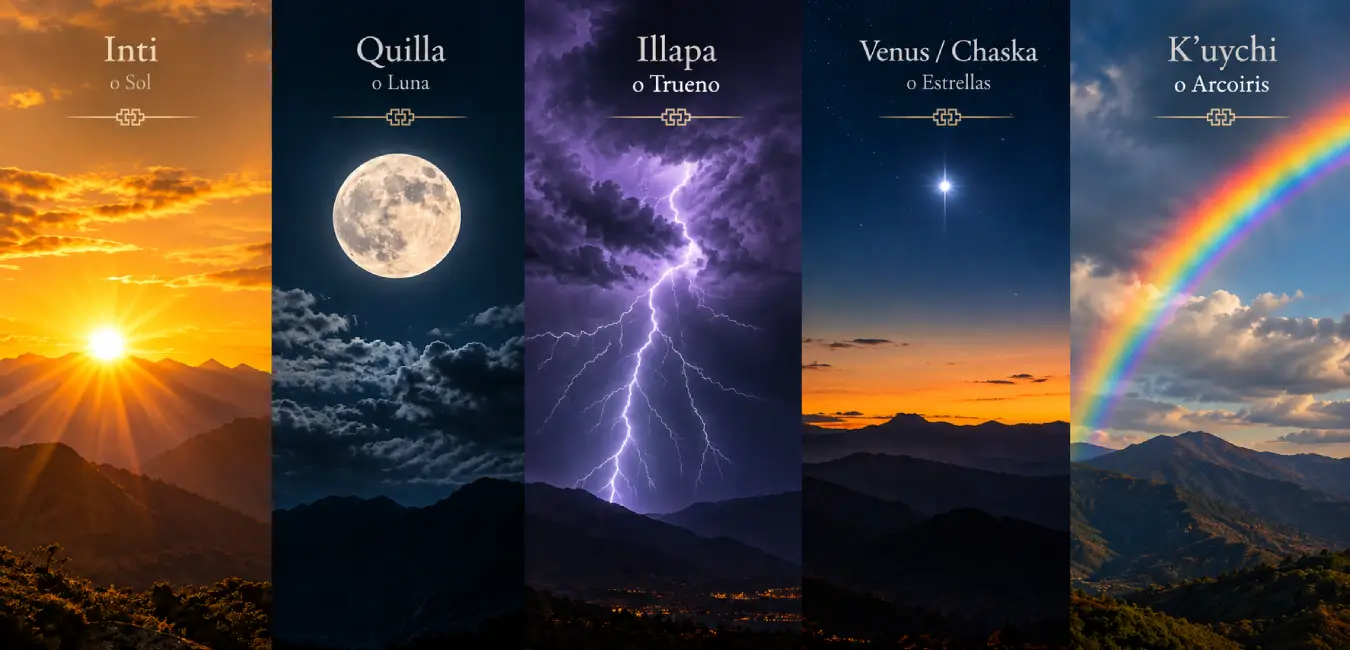
This temple was built to honor the god Inti or Sun, the principal god of the Incas. At the same time, it also housed: the goddess Quilla or Moon, Illapa or Thunder, K’uychi or Rainbow, Venus / Chaska or Stars, as well as the principal deities of newly conquered peoples or ethnic groups, which helped strengthen the political and religious control of the Tahuantinsuyo.
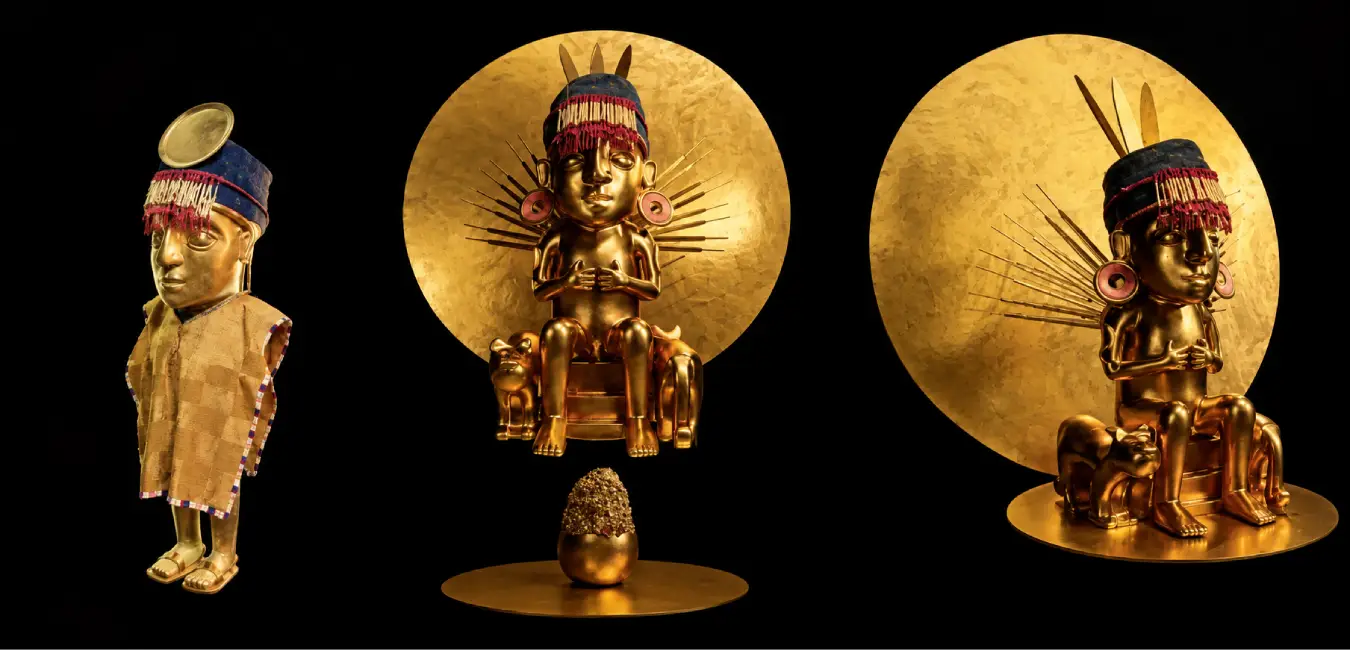
Punchao, the lost golden idol
Historical sources mention that Punchao was a representation of the Sun made of gold in the form of a 10-year-old child and was one of the most important pieces in Coricancha. Inside it, the ashes of the hearts of former Inca rulers were preserved. During the Inca resistance, it was taken to Vilcabamba, where it remained hidden until 1572. It was then sent to Spain, and its whereabouts have been unknown ever since.
What ceremonies and festivals were held at Coricancha?
Coricancha was one of the main sacred spaces in Cusco and played a role in important religious ceremonies of the Inca state.
The most frequent ones were:
- La Situa: a ceremony of ritual purification and renewal held in Cusco. The Incas brought the image of Viracocha Pachayachachic and Chuquilla to Coricancha to receive offerings.
- Huarachicuy: an initiation ceremony in which young members of the Inca elite underwent different trials before taking on new social and military responsibilities. The temple garden was covered with maize and golden fruits for the occasion.
- Sapa Inca succession ceremonies: the mascapaicha was the symbol of the ruler's authority and was associated with the succession ceremony.
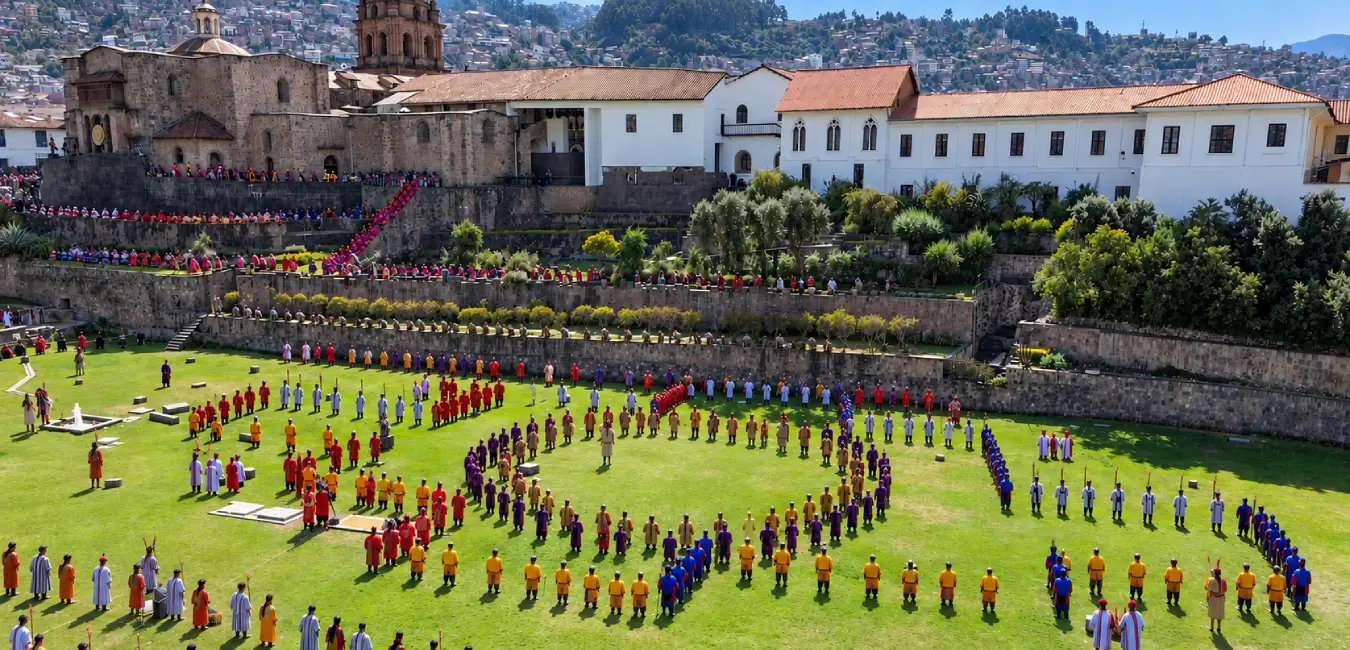
- Inti Raymi: the Festival of the Sun was one of the main celebrations of the Inca calendar. During the celebration, the procession went to Coricancha to worship the Sun and present offerings.
Today..
Coricancha is the first setting of Inti Raymi every June 24, where the greeting to the Sun takes place before the celebrations continue in the Plaza de Armas and Sacsayhuamán. This modern reenactment was established in 1944.
Why is Coricancha considered a proto-museum?
Coricancha functioned as a proto-museum because it preserved and displayed objects with a clear political purpose. The Incas brought the idols and huacas of conquered provinces to the temple. Each annexed people was represented within the sanctuary, and this symbolic presence helped facilitate control of the new territory much more effectively than force alone. In other words, Coricancha was a deliberate collection representing the entire empire.
The knowledge preserved at Coricancha
Alongside those idols, large gold and silver sheets depicting mythical scenes, painted panels, quipus recording the deeds of ancestors, and yupanas or models of Inca buildings were kept. The amautas, meaning wise men or scholars, and the quipucamayocs, specialists in recording information with cords, came to consult them. The sanctuary educated the elite while impressing them, much like a state museum would.
The Inca mummies seated on golden thrones
Inside Coricancha, on both sides of the image of the Sun, the embalmed bodies of the deceased rulers rested, arranged according to age, seated on golden chairs with their faces wrapped. Only Huayna Cápac faced the solar effigy, as a sign of special favor. The Incas hid these bodies during the conquest, and in 1559 five of them were found: three Incas and two coyas. The rest remain missing to this day.
The Ceque System, the Sacred Network That Began at Coricancha
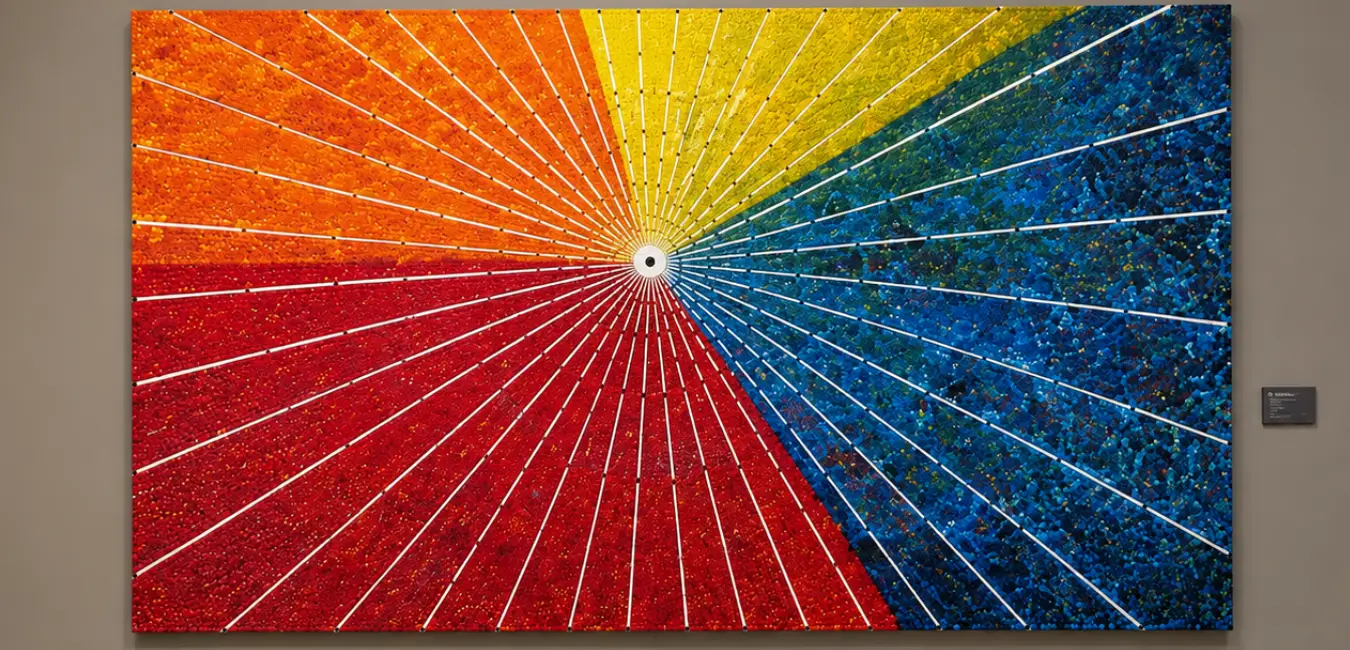
According to the chronicles, the ceque system was a network of 41 sacred lines that originated at Coricancha and connected 327 huacas throughout Cusco. These huacas included springs, rocks, mountains, and other places considered sacred by the Incas.
The cosmological drawing by Juan de Santa Cruz Pachacuti
It was represented in 1613 by the Indigenous scholar Juan de Santacruz Pachacuti Yamqui Salcamaygua, who drew with a pen a diagram of the main altar of Coricancha. He depicted a central oval figure, the Sun and Moon flanking it, stars, constellations, the rainbow, a tree, a lagoon, and a human couple.
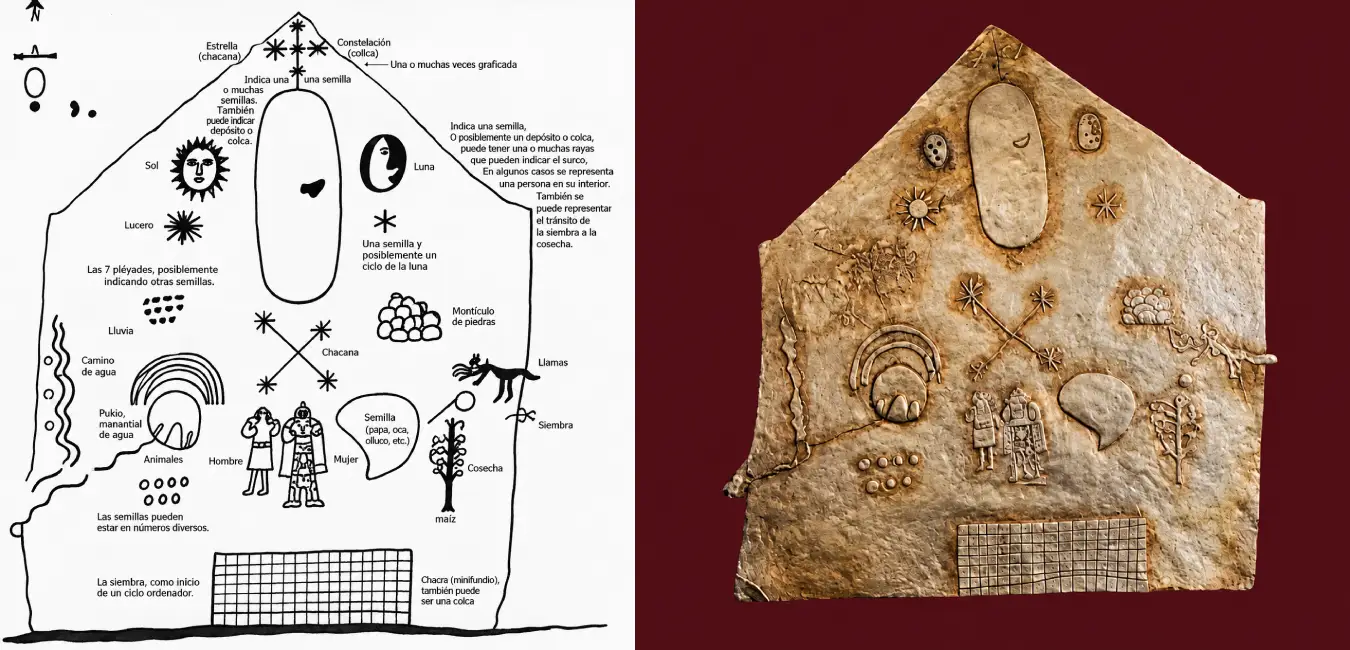
The drawing as a whole represented the upper world, the world here, and the world within, together with the social and territorial relationships that sustained the empire.
What to see at Coricancha
During your visit, you will find remains of different spaces from the ancient Inca sanctuary, along with elements of the colonial convent. Here are the places I recommend paying close attention to.
Highlights you should not miss
Let's begin…
The curved wall, the most famous view
Start outside and look at the temple's curved wall, a gentle curve of more than ninety degrees that crowned a system of terraces descending toward the river. The stonemasons shaped each block so that the surface continued the curve without breaks, something extraordinarily difficult even with modern tools. Look at it in the afternoon light and you will see the stone change color.
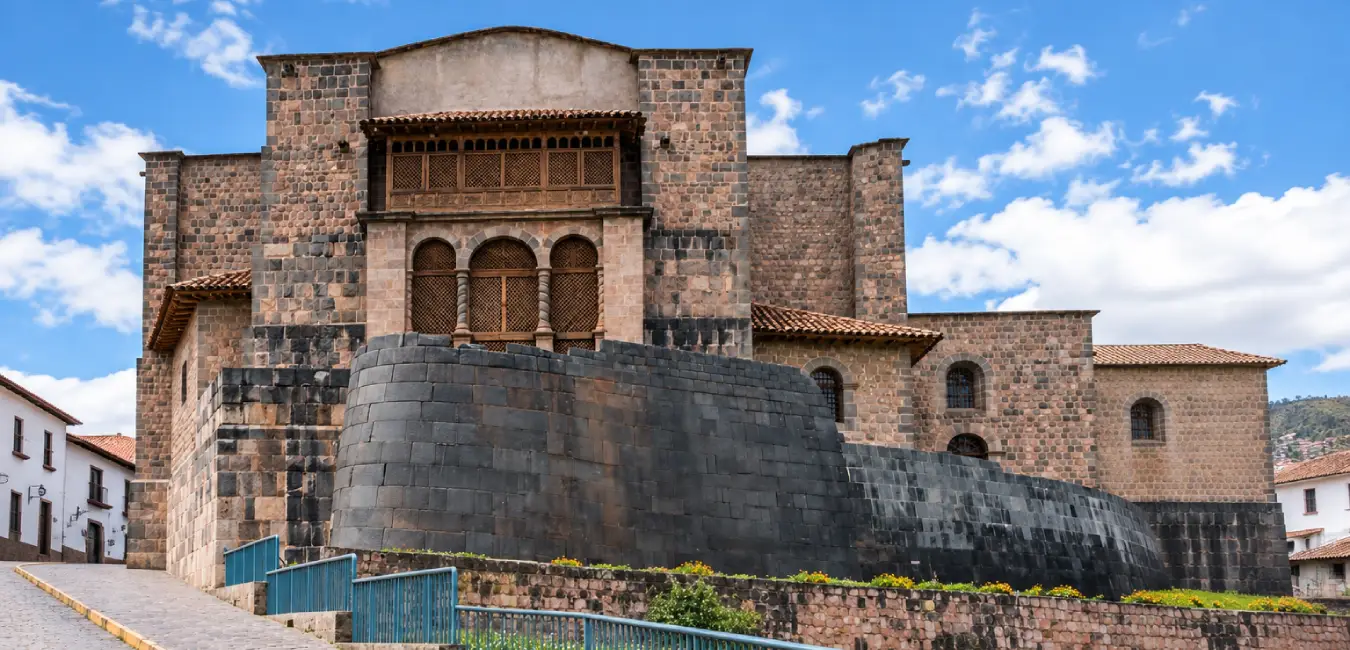
The facade and the gold band that is no longer there
The original facade had a single doorway at the center of a huge expanse of fine masonry, with no decoration other than a continuous band of pure gold, three meters high, positioned about three meters above the ground. Above it ran an eave and an extremely fine thatched roof. There were no reliefs or figures: the Incas relied on proportion, the brilliance of the metal, and the quality of the stonework to create the effect.
The temple of the Sun
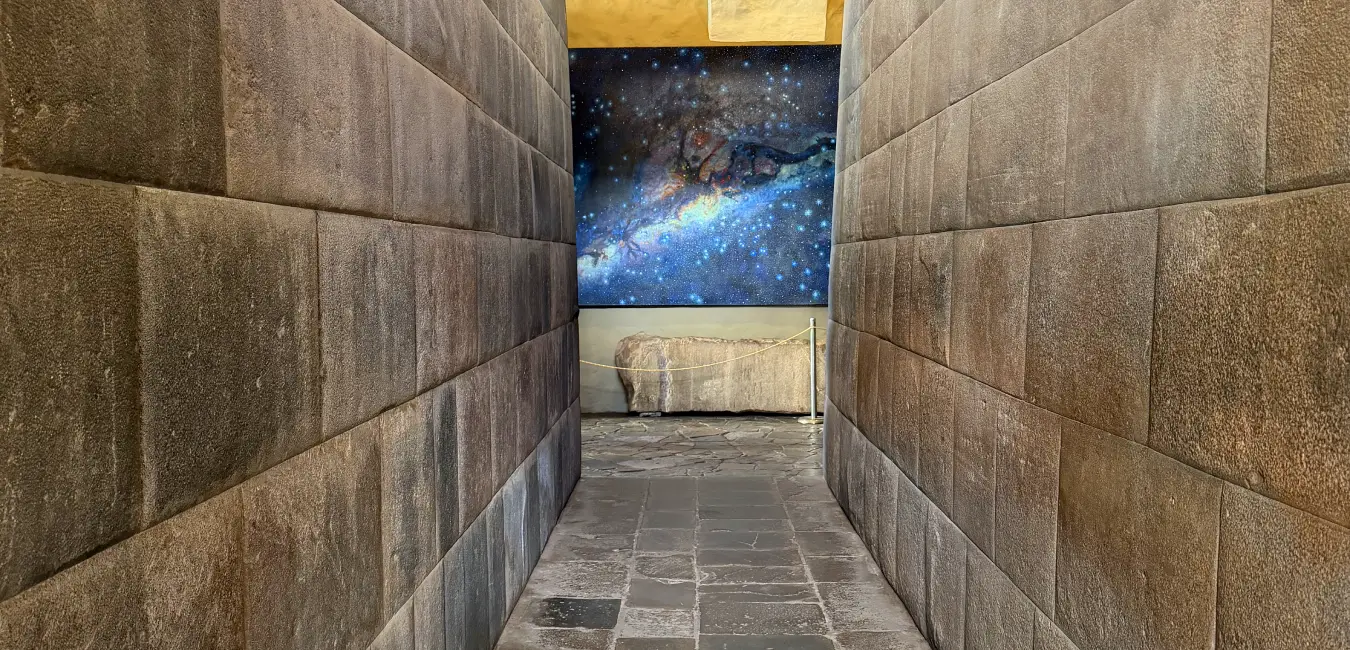
Inside, you will recognize the main enclosure by its trapezoidal niches and double-jamb doorways, reserved for figures of the highest rank. Look closely at the small holes and aligned incisions in the wall: this is where the gold plates were attached, and a metal sheet mounted on the facade reflected the rays of the rising sun. The room faces east, so the morning light entered directly from the front.
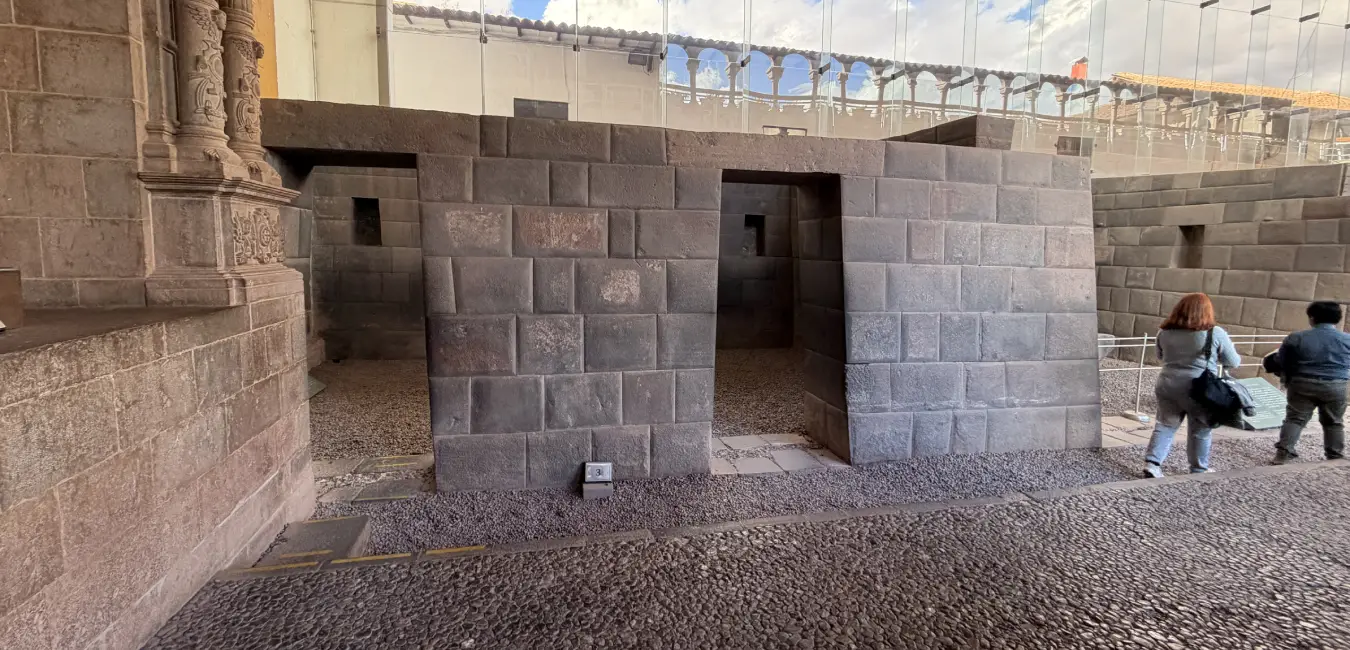
The temple of the Moon and the temple of the Stars
Next to it are the surviving rooms dedicated to Quilla, the Moon, and to the stars. The room in the northwest corner corresponded to the Moon, while the next one, separated by a corridor with a double jamb doorway, honored Venus, the Pleiades, and other constellations that served to forecast the rainy season. Here the walls feature cushioned masonry, a slightly bulging finish that catches the light in a different way.
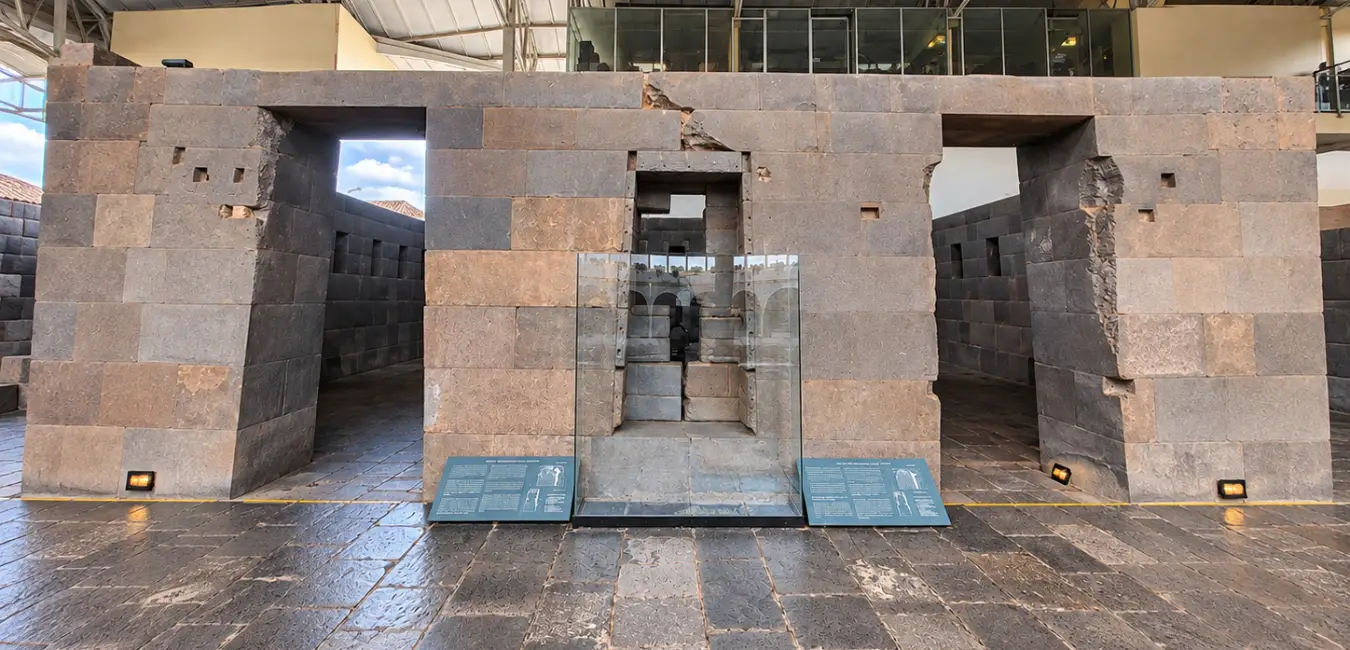
The Rooms of Thunder and the Rainbow
These two twin rooms are located opposite each other. Illapa, lord of lightning, thunder, and storms, governed the rains, while K’uychi, the rainbow, was considered a direct emanation of the Sun. Each room retains three evenly spaced doorways and side windows. Stand at the point where the windows line up and you will understand why that perspective has become visitors' favorite photo spot.
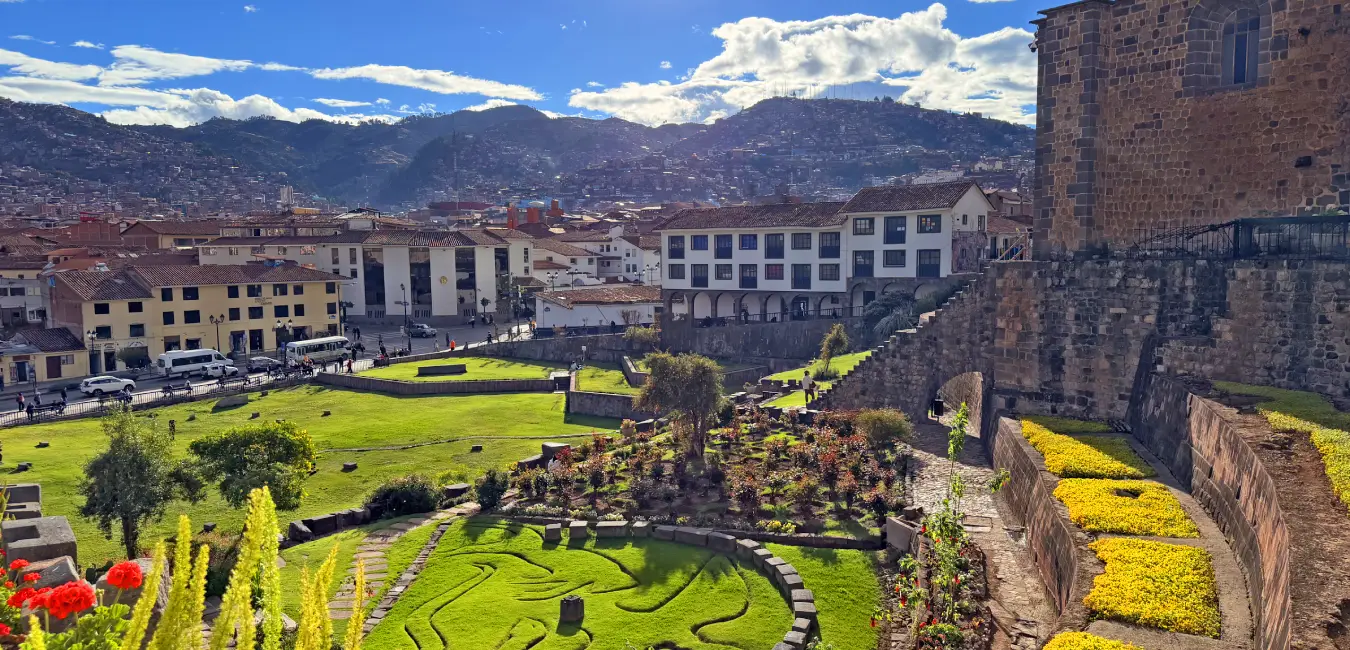
The central courtyard and Solar garden
The central courtyard had a ceremonial stone fountain at its center, as this was where the famous golden garden once stood, which the Acllas watered by hand while carrying water on their backs. Three times a year, the ñustas decorated it with ears of maize and fruits made of precious metal: during planting, harvest, and the Huarachicuy. The Spanish called it the Solar Garden because this was the point reached by offerings sent from the four suyos.
The six chambers and the cancha loggia
Observe how the spaces are arranged and you will notice a pattern. The design is based on the cancha, meaning a courtyard surrounded by rectangular rooms. The six chambers of the main courtyard remain completely separate, and none shares a party wall with its neighbor, something uncommon even in Inca architecture. The gables were built in painted adobe, while the roofs combined a wooden structure with a thatch covering, meaning that what you see today in stone was actually only the lower half of the building.
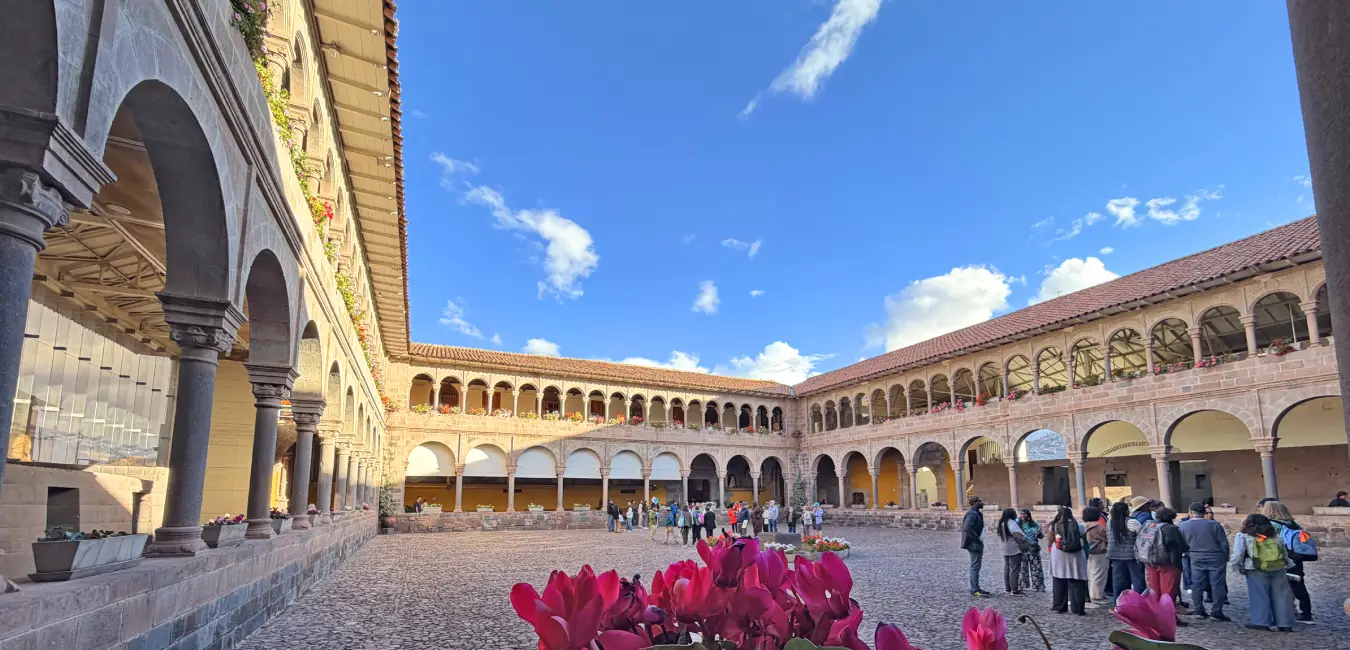
The colonial cloister and Cusco school paintings
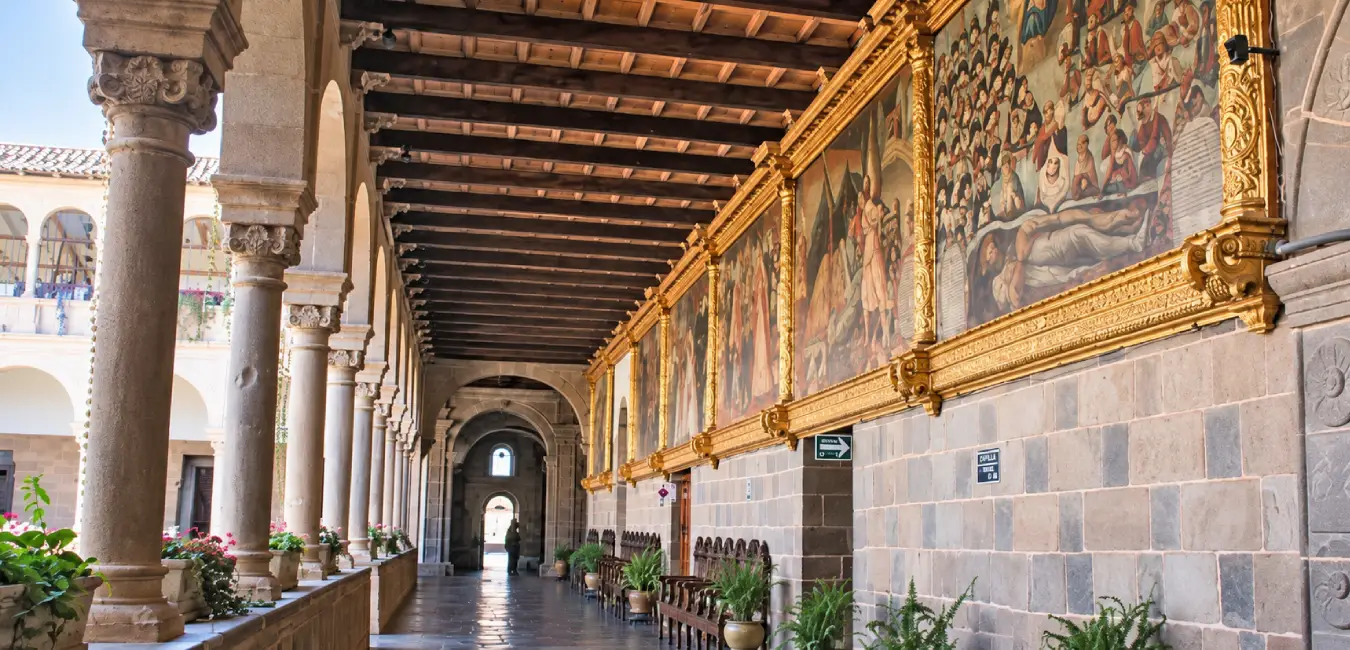
The convent displays paintings from the Cusco School, semicircular arches, and a serene cloister from which you can appreciate the contrast between the two architectural traditions. Precisely this superimposition, as abrupt as it is fascinating, makes Coricancha a unique place in Peru.
The Qorikancha Site Museum
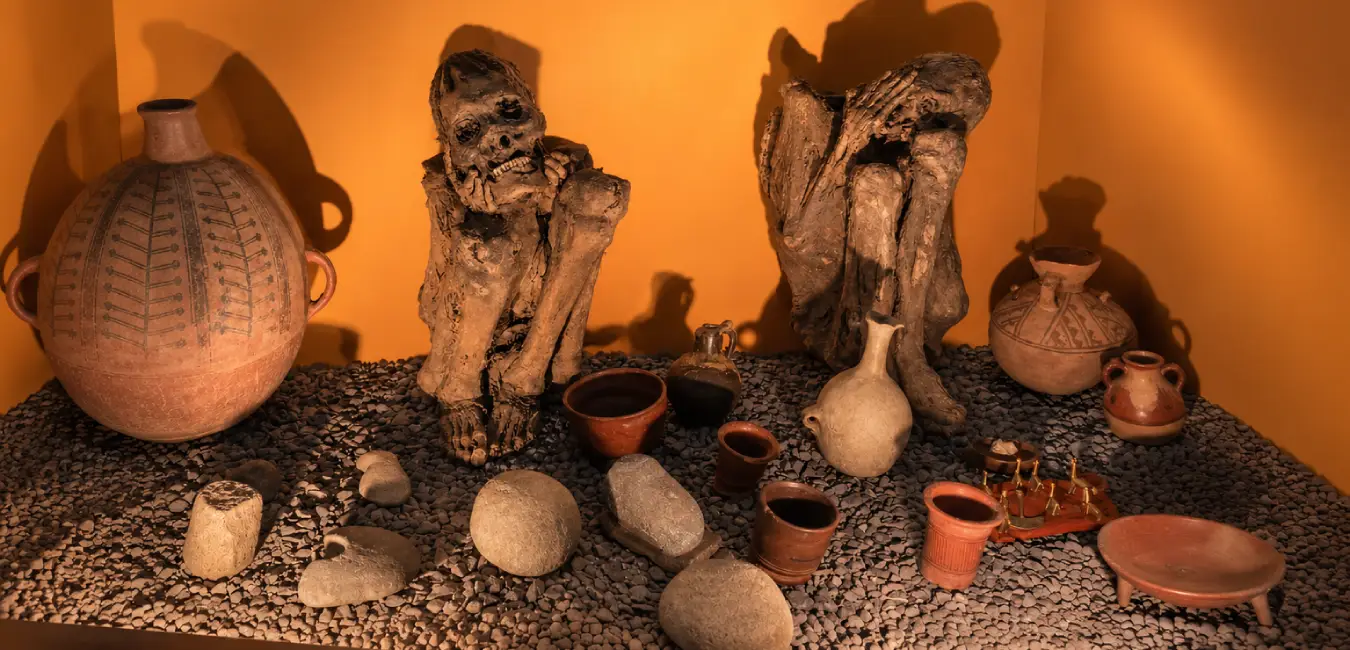
Located beneath the gardens along El Sol Avenue, it functions as an underground museum with five rooms displaying objects found in the nearby esplanade between 1993 and 1995, such as: The visit takes about thirty minutes and is included in the Cusco Tourist Ticket. Therefore, if you have already purchased that ticket for the city tour, make sure to explore this place.
Difference between Coricancha and the Site Museum
Aspect | Coricancha | Qorikancha Site Museum |
|---|---|---|
| What is it? | An archaeological complex preserving part of the architecture of the ancient Inca sanctuary and the later colonial superimposition. | An archaeological museum created to preserve and display objects recovered during research conducted at the site. |
| What you can see | Architecture and spaces from the ancient complex, including Inca walls, rooms, courtyards, and elements of colonial construction. | Ceramics, stone artifacts, metalwork, skulls with trepanations, and models. |
| Collection | Its main value lies in the architectural complex and its historical stratigraphy. | It contains more than 105 cultural artifacts from pre-Inca, Inca, and colonial periods, mainly ceramics and metal objects. |
Tips for Visiting Coricancha
If this is your first time in Cusco, keep these tips in mind to make the most of your visit to Coricancha and explore the city.
The best time of year to visit Coricancha
The dry season, from April to October, offers clear skies and comfortable conditions for walking, although it also attracts more visitors. Meanwhile, the rainy season, from November to March, brings afternoon downpours but gives you a much less crowded Cusco. And if you travel in late June, keep in mind that Inti Raymi is celebrated on June 24: the ceremony begins right at the Coricancha esplanade before moving up to Sacsayhuamán.
How much time do you need to visit Coricancha?
- Quick visit: 45-60 min.
- Regular visit: 1-1.5 h.
- Temple + museum: approximately 1.5-2 h.
- Guided visit: depends on the tour.
What is the best time of day?
Aspect | Time | Recommendation |
|---|---|---|
| First thing in the morning | 8:30-10:00 a.m. | This is the recommended time if you want to explore Coricancha more peacefully and avoid some of the activity from tour groups. |
| Mid-morning | 10:00 a.m.-12:00 p.m. | There is usually more visitor traffic and organized tour groups. |
| Afternoon | 2:00-5:00 p.m. | This is a good alternative if you cannot go early. You may also encounter tour groups in the afternoon. |
| Busiest days | All day | Visitor numbers increase during peak tourist seasons, holidays, and June celebrations, especially around Inti Raymi (June 24). |
| Monday through Friday | 8:30-10:00 a.m. | If you want a quieter visit, this is the time slot we recommend. |
Do you need a guide for Coricancha?
A guide is not required; you can visit Coricancha on your own. However, having a guide will help you understand the history, architecture, and meaning of each room more clearly, as well as learn details that can easily go unnoticed during the visit.
What to bring to Coricancha
- Bring cash in Peruvian soles. In Cusco, many ticket booths and stores in the city center do not accept cards, so it is best to withdraw money before leaving your hotel.
- Wear comfortable shoes. The floors combine polished stone, uneven steps, and changes in elevation. Shoes with good grip make a difference.
- Take the altitude into account. The city sits at 3,399 meters (11,152 feet) above sea level. Take the stairs slowly, stay hydrated, and do not hesitate to take breaks.
- Remember that this is a religious site. The convent is still active, so keep your voice down, do not touch the walls, and respect marked areas.
- Ask before taking photographs. You can photograph the complex without any problem, although some cloister rooms restrict flash photography and tripods.
- Hire a guide if you are traveling independently. You will find certified guides at the entrance. Agree on the price and language before starting, or arrive with your tour guide so you do not have to improvise.
- Partial accessibility. Several areas are accessible to wheelchair users and strollers, although some upper rooms retain original steps.
Places near Coricancha
The temple fits perfectly into a walking tour of the historic center. These are the stops located just a few minutes away.
Places you can reach on foot
Place | Approx. Distance | Time | Known For... |
|---|---|---|---|
| Cusco Plaza de Armas | 500 m (0.31 mi) | 5-7 min | Cathedral and Church of the Society of Jesus. |
| Hatun Rumiyoc | 700 m (0.43 mi) | 9-10 min | Inca wall and the Twelve-Angle Stone. |
| Inka Museum | 800 m (0.5 mi) | 10-12 min | Qeros, textiles, and archaeological artifacts. |
| San Blas | 1 km (0.62 mi) | 12-15 min | Artisans, workshops, restaurants, and lookout point. |
| 7 Borreguitos + Sapantiana | 1.2 km (0.75 mi) | 15-20 min | Traditional street and stone aqueduct. |
| San Cristóbal Lookout | 1.4 km (0.87 mi) | 20-25 min | Panoramic view of Cusco. |
| San Pedro Market | 1.1 km (0.68 mi) | 14-16 min | Fruits, juices, and local food. |
How to include Coricancha in your Cusco itinerary
Depending on how many days you have, you can visit Coricancha and use this table as a starting point.
If you have | When to visit Coricancha | What to combine it with |
|---|---|---|
| 2 hours | First thing in the morning (8:30 a.m.) to make the most of your time. | Coricancha, Plaza de Armas - Cathedral, and Hatun Rumiyoc. |
| Half a day | In the morning, ideally between 8:30 and 10:00 a.m. | Coricancha, Plaza de Armas, Hatun Rumiyoc, San Blas, and the Lookout. |
| 1 day in Cusco | Early, at 8:30 a.m., before the groups arrive | Plaza de Armas, Cathedral, and Hatun Rumiyoc |
| 3 days in Cusco | The afternoon of the first day, while you acclimatize | City tour with Sacsayhuamán and the Sacred Valley the following day |
| 5 days or more | The day before traveling to Machu Picchu | Site Museum, San Blas, Maras, and Moray |
Coricancha + City Tour
Coricancha - Sacsayhuamán - Q’enqo - Puka Pukara - Tambomachay.
What is the relationship between Coricancha and Machu Picchu?
Visiting Coricancha before exploring Machu Picchu can help you better understand some aspects of Inca architecture and religion that you will encounter later.
Coricancha | Machu Picchu |
|---|---|
| Important sanctuary in Inca Cusco | Inca complex in the Andes |
| Primarily associated with the solar cult | Complex with diverse functions |
| In the historic center of Cusco | In the Machupicchu region |
| Religious and ceremonial space | Residential, ceremonial, and agricultural space |
| Helps you understand imperial Cusco | Allows you to experience Inca architecture in a mountainous setting |
Coricancha vs. Machu Picchu vs. Sacsayhuamán
Place | Main function | Location | What stands out |
|---|---|---|---|
| Coricancha | Religious and ceremonial | Cusco | Architecture and solar cult |
| Sacsayhuamán | Ceremonial and strategic | Cusco | Massive stone walls |
| Machu Picchu | Multifunctional complex | Machu Picchu | Architecture and landscape |
Would you like to visit Coricancha as part of a complete tour of Cusco? At Responsible Trekking, we can help you organize your visit along with the Plaza de Armas, Sacsayhuamán, and other historic sites in the city. Contact us and learn more about our Cusco City Tour.
Frequently asked questions about Coricancha
Is Coricancha worth visiting?
Yes, especially if you are interested in understanding the Inca worldview. No other site in Cusco brings together imperial stonework, astronomical symbolism, and colonial superimposition in the same space. In addition, admission is inexpensive and the visit can be completed in a little over an hour.
Does the Cusco City Tour include Coricancha?
It depends on the agency. Some city tours include it with admission included, while others only stop outside. Confirm this when booking so you do not end up paying twice.
Can you take photos inside Coricancha?
Yes, personal photography is allowed along the general circuit. However, some cloister rooms restrict flash photography and the use of tripods, so check the signs.
Is there still any gold in the temple?
No gold plates remain. The conquistadors removed and melted down the gold covering in 1533. What you can still see are the holes where the fasteners holding the plates were installed, and that evidence is more revealing than you might imagine.
Do you need to reserve your ticket in advance?
No, you do not. You can purchase the ticket at the entrance on the same day. Still, if you are traveling in June or July, arrive early because the line gets longer by mid-morning.
Is Coricancha open on sundays?
Yes, but only in the afternoon, from 2:00 p.m. to 5:00 p.m., because the convent holds its religious celebrations in the morning.
Is it accessible for people with reduced mobility?
Partially. The courtyard, cloister, and much of the circuit are accessible, although some Inca rooms retain original steps and thresholds that cannot be modified.
Where is Punchao, the temple's golden idol, now?
Its whereabouts are unknown. Viceroy Toledo sent it to Philip II in 1572 and suggested giving it to Pope Gregory XIII. From that point onward, the documentary trail disappears, and it most likely ended up being melted down.
Why is Coricancha said to have been an Inca Museum?
Because it collected and displayed the idols of conquered peoples, along with quipus, painted panels, models, and the mummies of rulers. Recent research interprets it as a proto-museum, meaning an institution that brought objects together to educate the elite and legitimize state power.