
Cusco’s Plaza de Armas is much more than the iconic square you see in photographs of the city. Here, you can experience how Cusco’s Inca past, colonial history, and modern day life come together in one remarkable place. In this guide, you’ll discover what makes the plaza special, along with practical recommendations to help you enjoy it without missing the essentials. We’ll also show you how to easily include it in your Cusco itinerary.
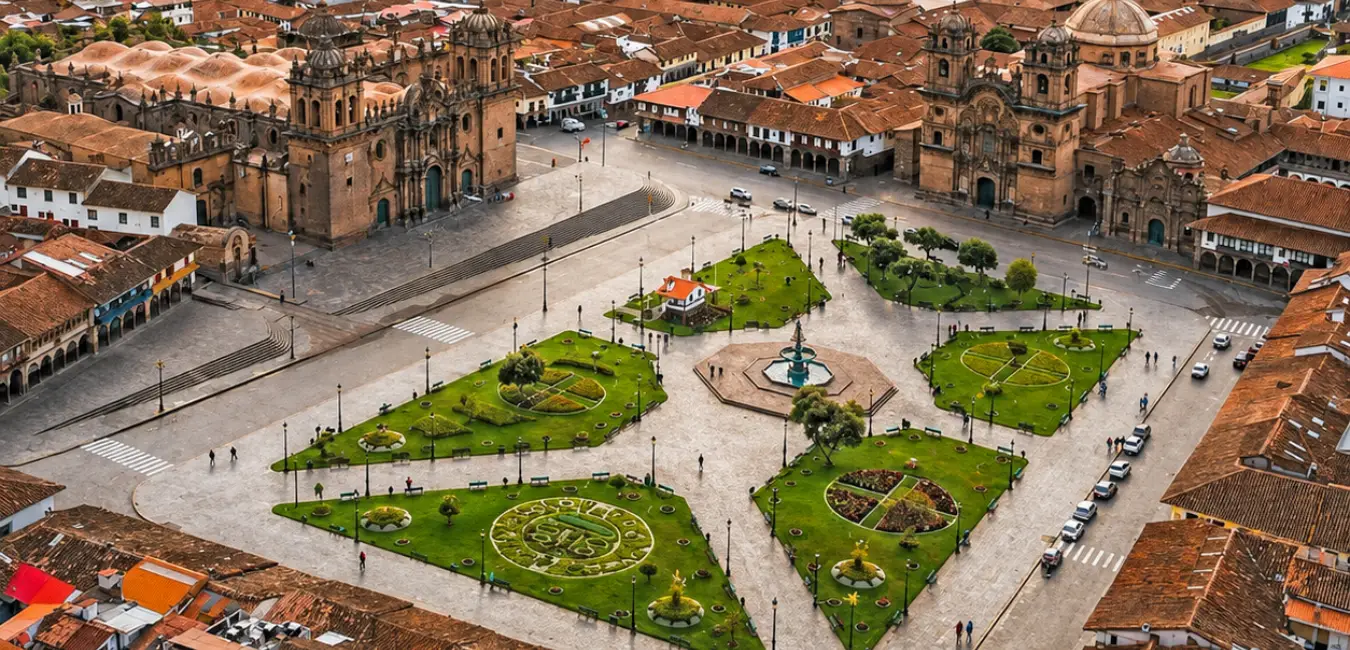
Start your journey in Cusco’s Plaza de Armas, the Heart of the andean world
The Incas considered Cusco the navel of the world, and Huacaypata, today’s Plaza de Armas, held a central place in this worldview. Today, the plaza remains one of the city’s main gathering places for visitors arriving in Cusco. In this guide, you’ll discover its history, location, altitude, how to get there, what to see, and where to eat or stay. Get ready to experience Cusco as more than just a photo opportunity.
Why is it called Plaza de Armas?
During Inca times, this place was known by Quechua names such as “Huaycaypata, Haukaypata, or Awkaypata.” After the Spanish arrived, the plaza was also used for military activities and gatherings of soldiers, who would leave their weapons in the center of the square. This is where the name “Plaza de Armas” came from, and it has remained in use ever since.
Quick facts about Cusco’s Plaza de Armas
Location | Historic Center of Cusco, Cusco District, Cusco Region, Peru. |
| Altitude | Approximately 3,399 meters (11,152 feet) above sea level. |
| UNESCO Recognition | Cusco’s historic center has been a UNESCO World Heritage Site since 1983. |
| Inca Name | Huacaypata (or Aucaypata), connected to the Cusipata esplanade. |
| Admission | Free and open 24 hours a day. Temples and museums charge separate admission fees. |
| Recommended Time | 2 hours for a basic visit; 4 hours if you visit the Cathedral and a museum. |
What is Cusco’s Plaza de Armas?
The Plaza de Armas is the main public space in Cusco’s Historic Center and one of the most important places for understanding the history of the Inca city of Cusco.
Where is Cusco’s Plaza de Armas located?
Cusco’s Plaza de Armas sits at the exact center of the city’s historic district, in the city of Cusco, Cusco Province, Cusco Region, in southeastern Peru.
How do you get to Cusco’s Plaza de Armas?
Getting there is easy, especially since the plaza serves as the center of the city. However, the best route depends on where you’re coming from.
1. From Cusco Airport
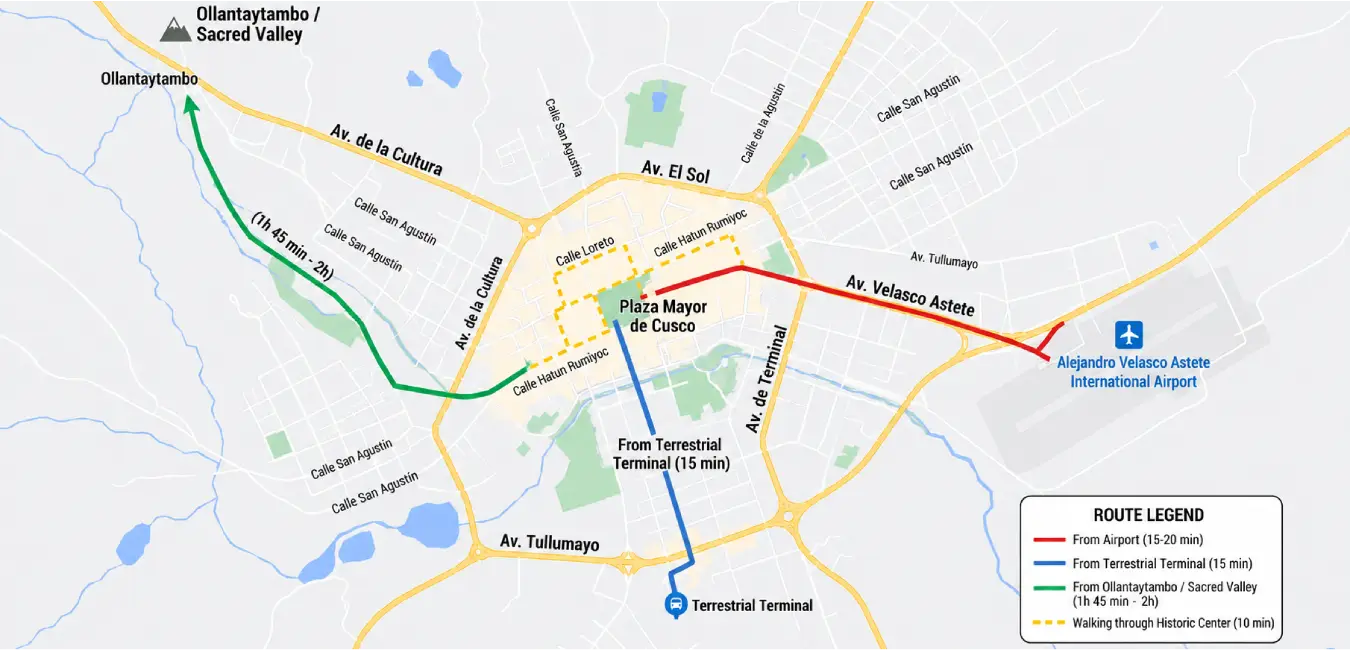
The airport is within the city, so the transfer is very short. By taxi, it takes about 15 to 20 minutes, depending on traffic. Always use an authorized taxi from the official airport taxi counter or a ride hailing app to avoid inflated fares. If you’re traveling with us at Responsible Trekking, your private transfer will be waiting for you at the arrivals exit.
2. From Cusco’s bus terminal
The bus terminal is located on Avenida Vallecito in the Santiago district. From there, a taxi will take you to the plaza in about 15 minutes. There are also local buses that travel toward the city center, although not all of them enter the historic district because vehicle access is restricted in the area.
3. From Machu Picchu, Ollantaytambo, or the Sacred Valley
If you’re returning from Machu Picchu, your train will take you to Ollantaytambo. From there, the drive to Cusco takes between 1 hour 45 minutes and 2 hours. Shared minivans, shared taxis, and private transportation are available. Always confirm your train’s current departure or arrival station, as the stations in use may change depending on the season and railway maintenance or construction.
4. Walking from downtown
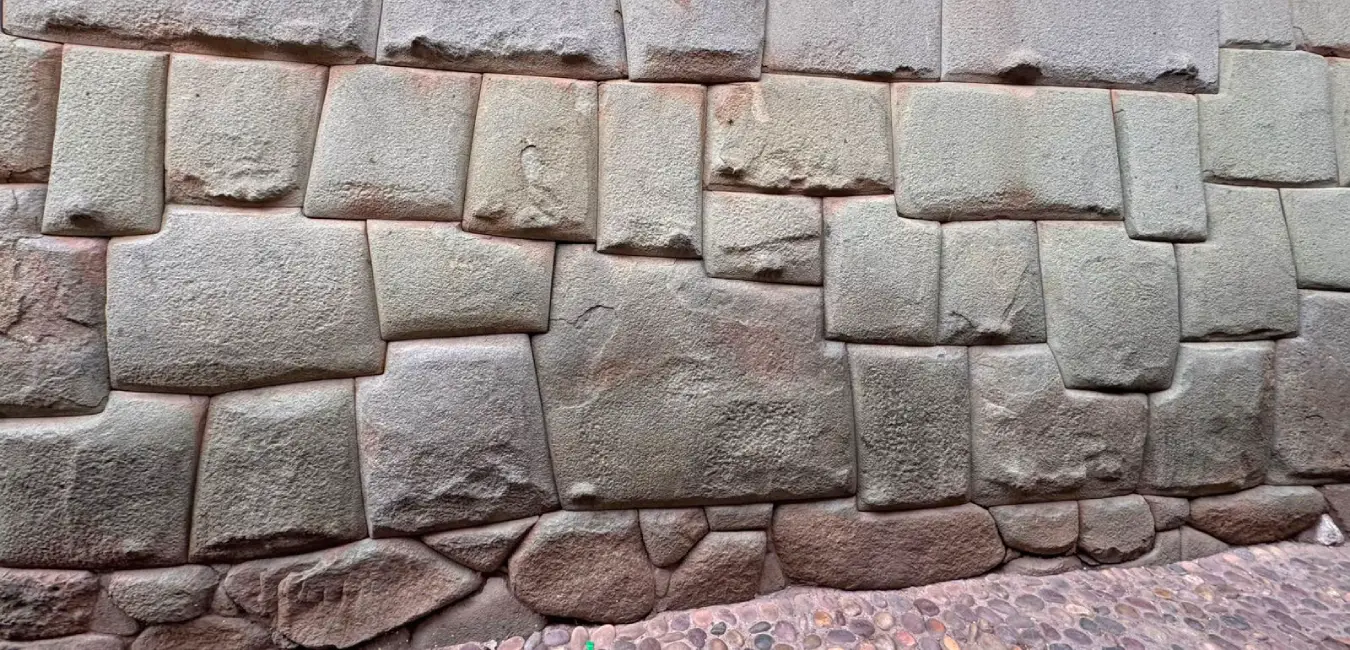
If you’re already in the historic center, forget about transportation. Nearly all downtown hotels are less than a 10 minute walk from the plaza. Walking also gives you the chance to see Inca stonework along Loreto Street and Hatun Rumiyoc along the way. Just wear comfortable shoes: the cobblestones are beautiful but uneven.
Approximate Transportation Costs
From | Transportation | Approx. Time | Recommendation | Approx. Cost |
| CUZ Airport | Authorized taxi or ride-hailing app. | 15 – 20 min | Agree on the fare before getting in, or use an app. | S/ 8.00 to S/ 10.00 |
| Bus Terminal | Taxi. | 15 min | Exit through the main entrance and do not accept offers from inside the terminal. | S/ 8.00 |
| Ollantaytambo | Van, shared ride, or private transportation. | 1 hr 45 min – 2 hrs | Book private transportation if you have large or bulky luggage. | Shared: S/ 8.00 Private: S/ 12.00 |
| Sacred Valley (Pisac). | Bus or van. | 1 hr – 1 hr 15 min. | Combine it with a visit to the Pisac market. | S/ 5.00 |
History of Cusco’s Plaza de Armas
Few plazas in the Americas contain so many layers of history. Here, you can trace the origins of Tahuantinsuyo’s urban planning, the violence of the conquest, the splendor of Andean Baroque, and the city’s Republican-era history. Let’s explore that history in chronological order.
The Plaza de Armas before the Incas
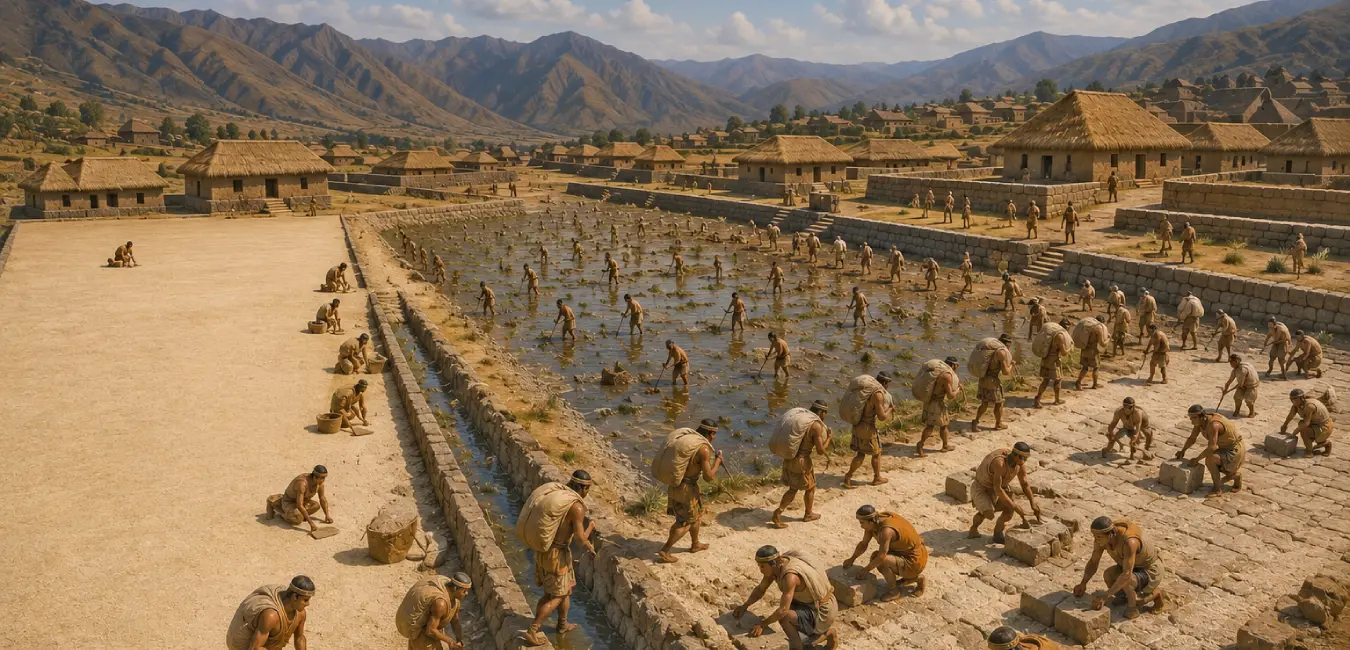
According to Inca tradition, Manco Cápac and Mama Ocllo arrived in Cusco and founded the city after settling in the area of what is now the Qorikancha. At the time, the area now occupied by Cusco’s Plaza de Armas was a marshy zone that formed part of the remains of the ancient Lake Morqui.
Construction of the Plaza during the Inca era
Later, Inca Sinchi Roca is said to have ordered the water to be drained and the land filled to level the area. The Incas used white sand brought from the Pacific coast. During the pre - Hispanic period, the plaza consisted of Aucaypata, today’s Plaza de Armas, and Cusipata, now known as Plaza del Regocijo. These two areas originally formed one large open space and were separated by the Saphy River.
The transformation of the Plaza
Later, Pachacútec, the ninth Sapa Inca, continued transforming the area until he turned it into an important ceremonial center with a quadrangular layout. According to tradition, the plaza represented the belly of the puma, and offerings of gold, silver, and spondylus were made there in honor of Wiracocha. At its center stood an Ushnu, where important rituals and ceremonies dedicated to the Sun took place a tradition that lives on today through Inti Raymi.
Huacaypata and Kusipata: The Plaza during the Tahuantinsuyo
During the Inca period, the plaza was considerably larger than it is today. It was not a single plaza but rather two complementary esplanades, separated by the Saphi River, that together formed one large public space.
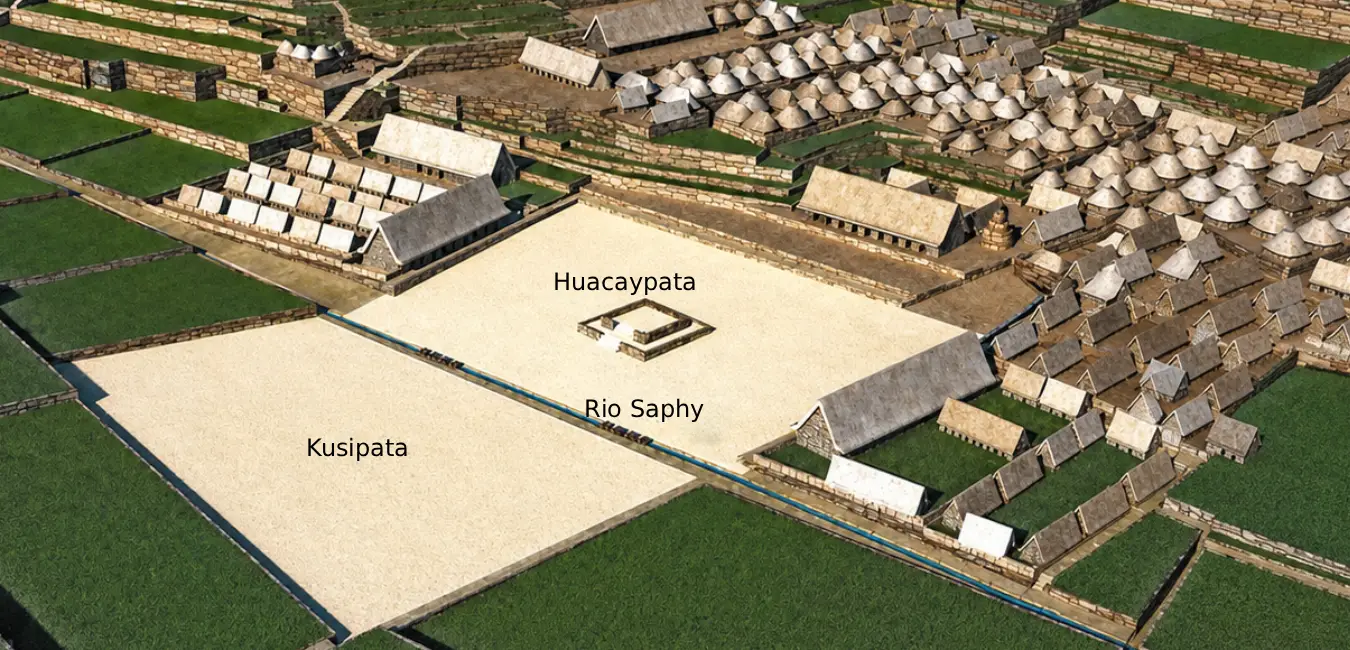
- Huacaypata (or Aucaypata). The ceremonial and political esplanade. Here, the Inca presided over major celebrations, received curacas from the four suyus, and led rituals associated with the agricultural calendar. During major ceremonies such as Inti Raymi, the mummies of previous rulers were brought out to symbolically take part in the proceedings.
- Cusipata - Kusipata. The esplanade on the other side of the river, intended for public gatherings, commerce, and large-scale celebrations. Over time, the colonial urban layout fragmented it, and today it corresponds to Plaza del Regocijo.
Cusco’s Plaza de Armas vs. Plaza del Regocijo
Cusco’s Plaza de Armas | Plaza del Regocijo | |
| Inca Name | Huacaypata | Kusipata |
| Colonial Era | Main ceremonial and public square of the city | Space for festivals, theater, and bullfighting |
| Also Known As | Plaza Mayor | Plaza del Cabildo |
| Notable Building | Cathedral and Church of the Society of Jesus | Cusco Municipal Palace |
| Today | Main tourist area in the Historic Center | Quieter plaza surrounded by historic mansions and buildings |
| Key Difference | Religious monuments, arcades, and a lively tourist atmosphere | Quieter atmosphere and a strong institutional presence |
The Inca Palaces around the Plaza
Surrounding Huacaypata were the palaces of the Inca rulers: the Kiswarkancha of Wiracocha, the Amarukancha of Huayna Cápac, the Kasana of Pachacútec, and the Acllawasi of the Virgins of the Sun. As a result, anyone standing in the center of the plaza would have been surrounded by the political, religious, and symbolic power of the entire empire.
Did you know…
The city of Cusco was shaped like a puma, and this transformation of the city took approximately 20 years.
The spanish conquest and the Colonial transformation
When the Spanish arrived in the 16th century, the plaza changed its function but not its importance. The conquistadors quickly understood that controlling Huacaypata meant controlling the Andean worldview. They therefore began building their churches and temples over the Inca palaces.
The transformation of Inca walls around Cusco’s Plaza de Armas
The Cathedral was built over the Kiswarkancha, the palace associated with Wiracocha. The Church of the Society of Jesus was built over Huayna Cápac’s Amarukancha. The Santa Catalina Convent replaced the Acllawasi. Yet the Inca walls did not disappear they became foundations for the new buildings. Their quality became especially evident when earthquakes brought down entire colonial structures while the pre - Hispanic foundations remained intact.
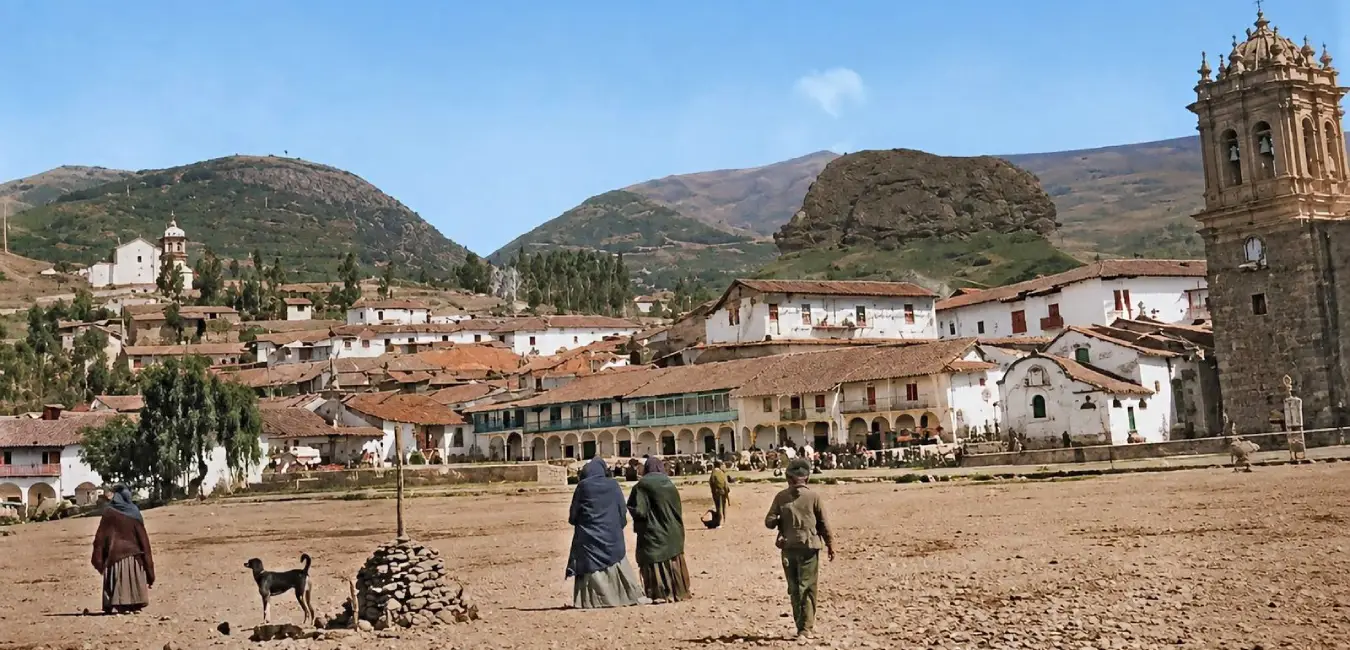
Events that shaped the History of Cusco’s Plaza de Armas
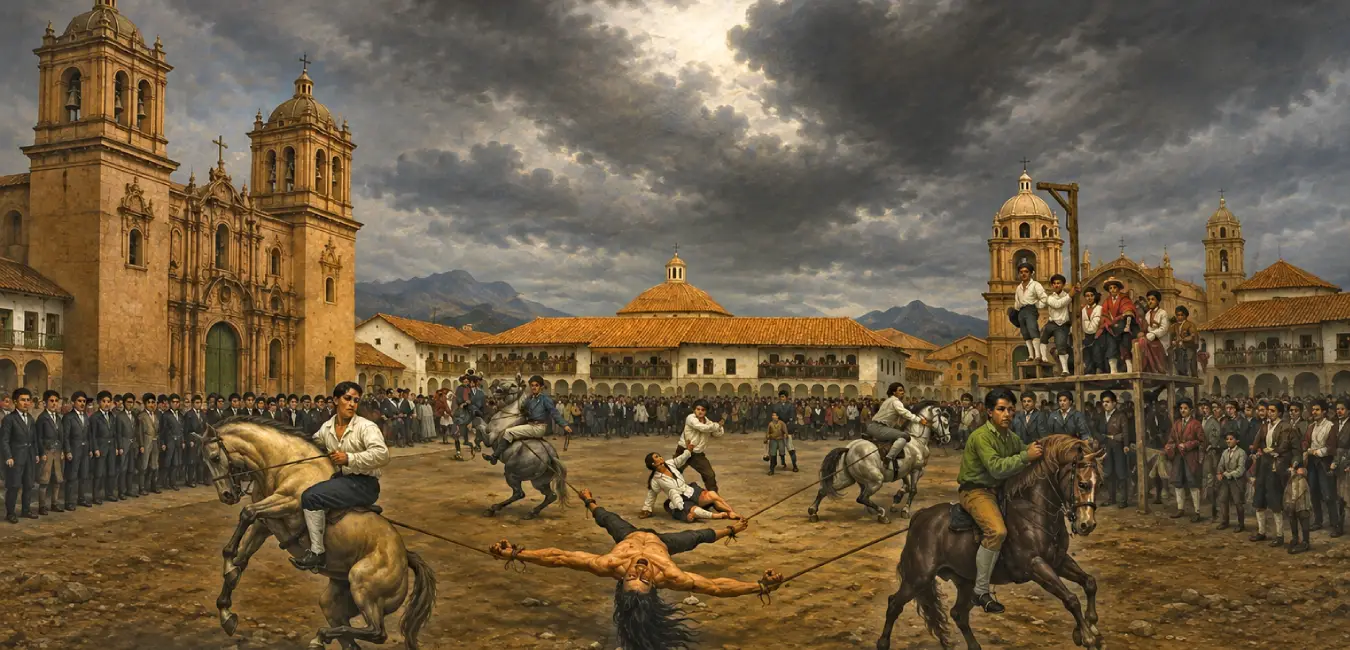
The plaza was a battlefield during Manco Inca’s siege in 1536, and Túpac Amaru II was executed here in 1781 following the largest anti - colonial uprising in Spanish America. In fact, this event turned the plaza into a symbol of resistance long before independence.
The Plaza de Armas during the Republican era
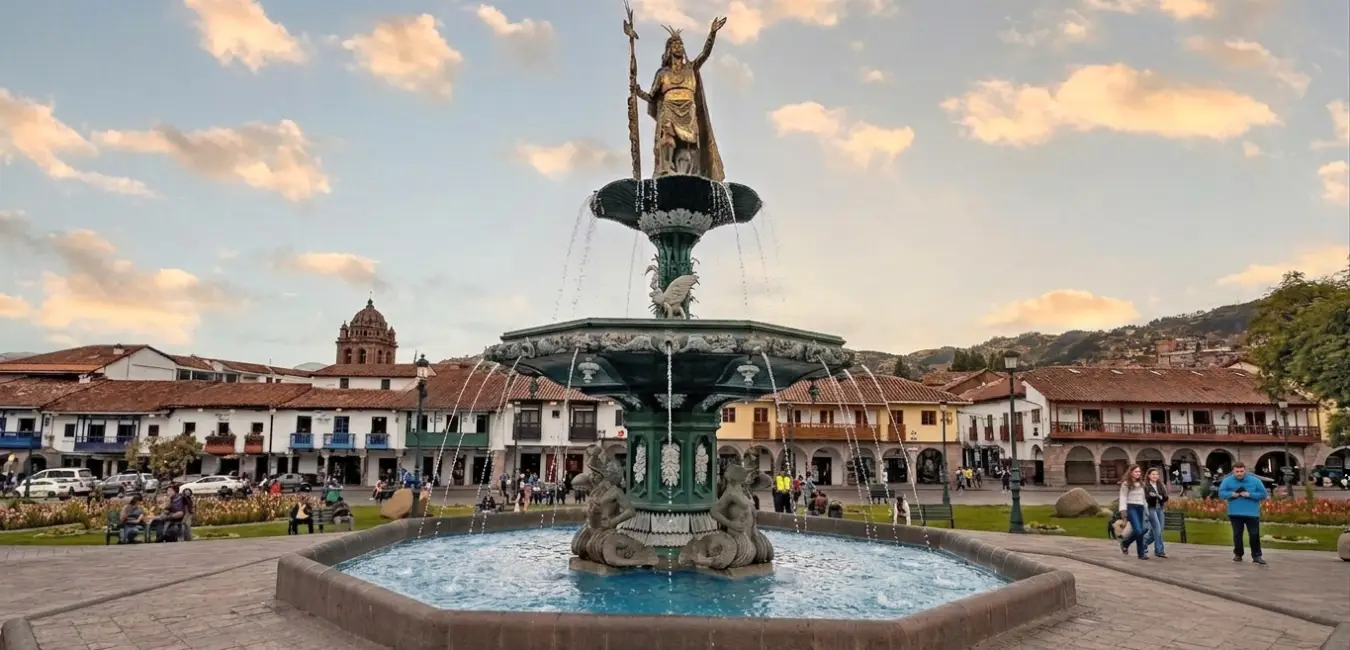
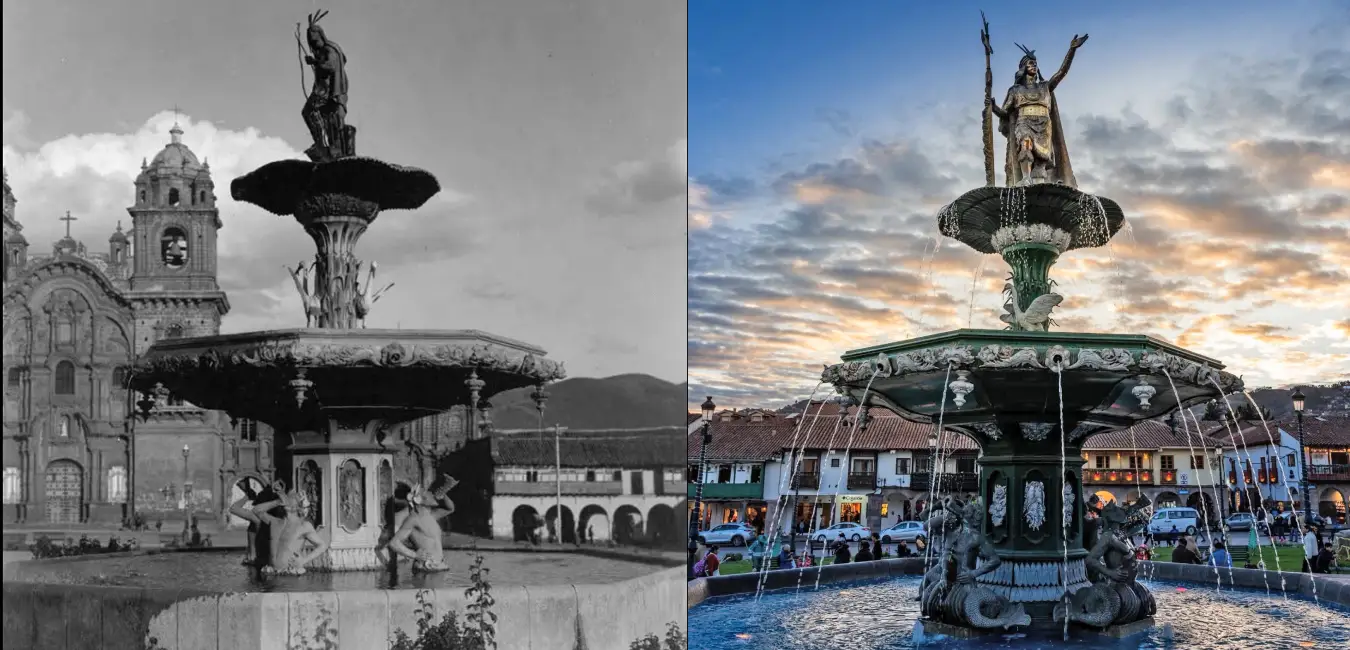
In 1872, a cast iron fountain was installed in the center of Cusco’s Plaza de Armas. It was commissioned from a foundry in the United States and designed in the neoclassical style of the period. For nearly a century, it was topped by the figure of a North American Indigenous chief, commonly known as “the Apache.” In 1969, a group of Cusqueños pulled down the statue as a way of reclaiming Andean identity.
Important fact…
In 1983, UNESCO added Cusco’s historic center to the World Heritage List. Then, in 2011, the Municipality of Cusco placed a statue of Pachacútec in its place. Today, it stands as one of the most photographed features of the plaza.
Timeline of Cusco’s Plaza de Armas
Period | Name / Function | What You Can Still See |
| Pre-Inca | Marshy land considered sacred | The land level created by drainage and fill |
| Inca (15th – 16th centuries) | Huacaypata and Cusipata: ceremonial and political center | Stone walls along Loreto Street and Hatun Rumiyoc |
| Colonial (16th – 18th centuries) | Christian and commercial Plaza Mayor | Cathedral, La Compañía, arcades, and wooden balconies |
| Republican (19th – 20th centuries) | Modernized civic plaza | 1872 cast-iron fountain |
Cusco’s Plaza de Armas today
Today, Cusco’s Plaza de Armas is surrounded by colonial arcades, churches, and wooden balconies that give it its distinctive charm. As you walk along the nearby streets, you’ll also find walls and surviving remains of Inca architecture. Together, these elements allow you to discover, within just a few hundred feet, the different periods that have shaped Cusco’s history.
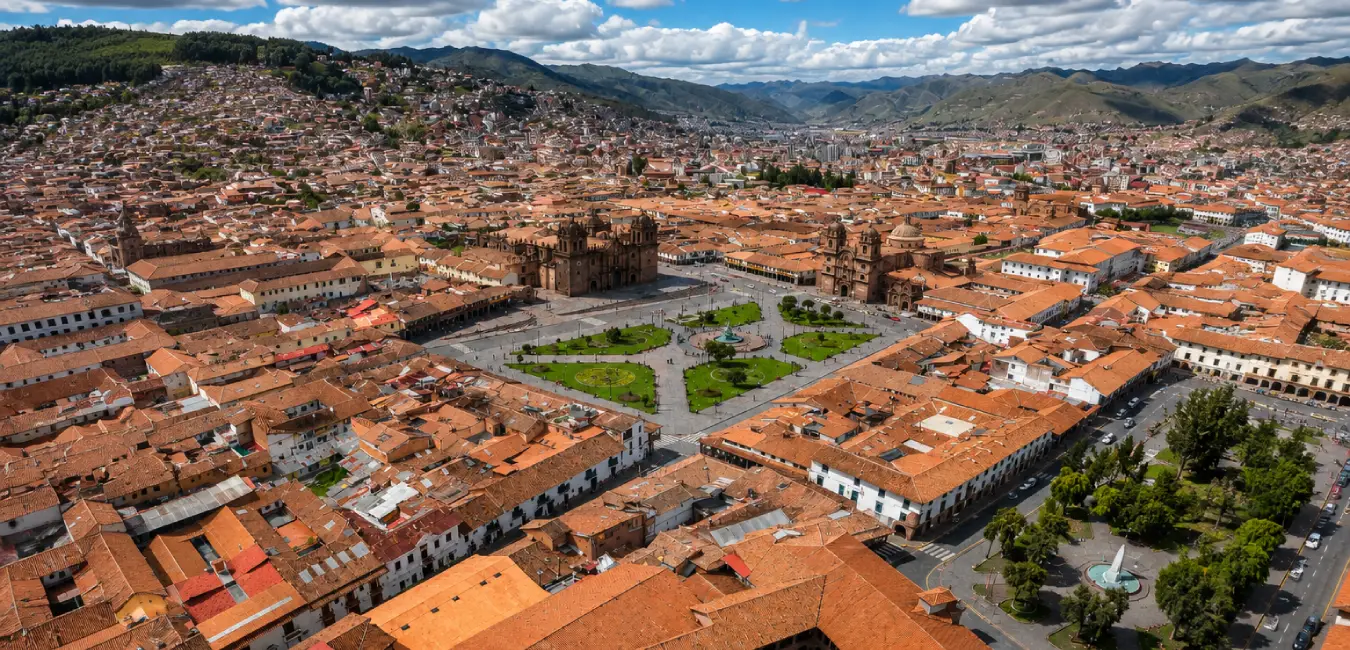
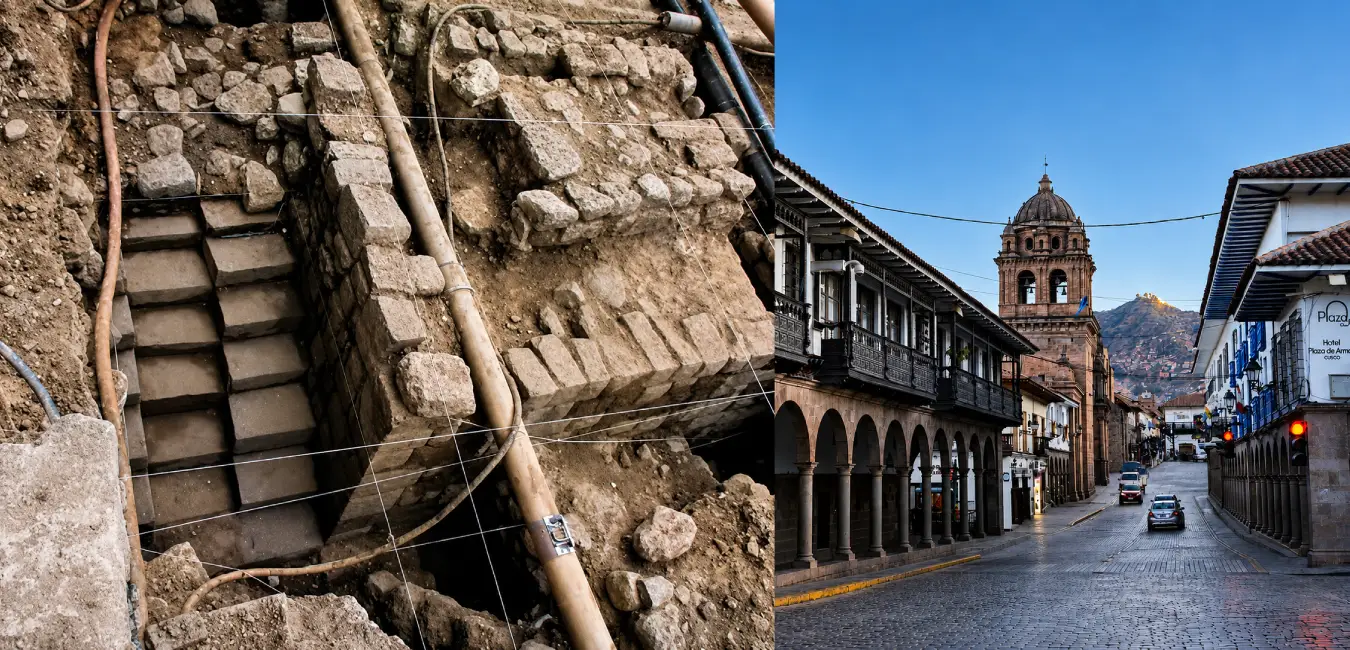
Cusco Historic Center: Mantas street
In September 2014, during municipal road improvement work, workers uncovered a platform with finely cut stone walls, two access stairways that formed part of the original entrance to the ancient Jaucaipata plaza, and water channels that were part of a huaca associated with water worship and connected to the former course of the Saphy River. The Ministry of Culture ordered that the structures be reburied to ensure their long term preservation.
What to see in Cusco’s Plaza de Armas
This small rectangular plaza brings together some of Peru’s most valuable monuments. Follow this order and you’ll make the most of your time.
Architecture surrounding Cusco’s Main Plaza
Cusco Cathedral
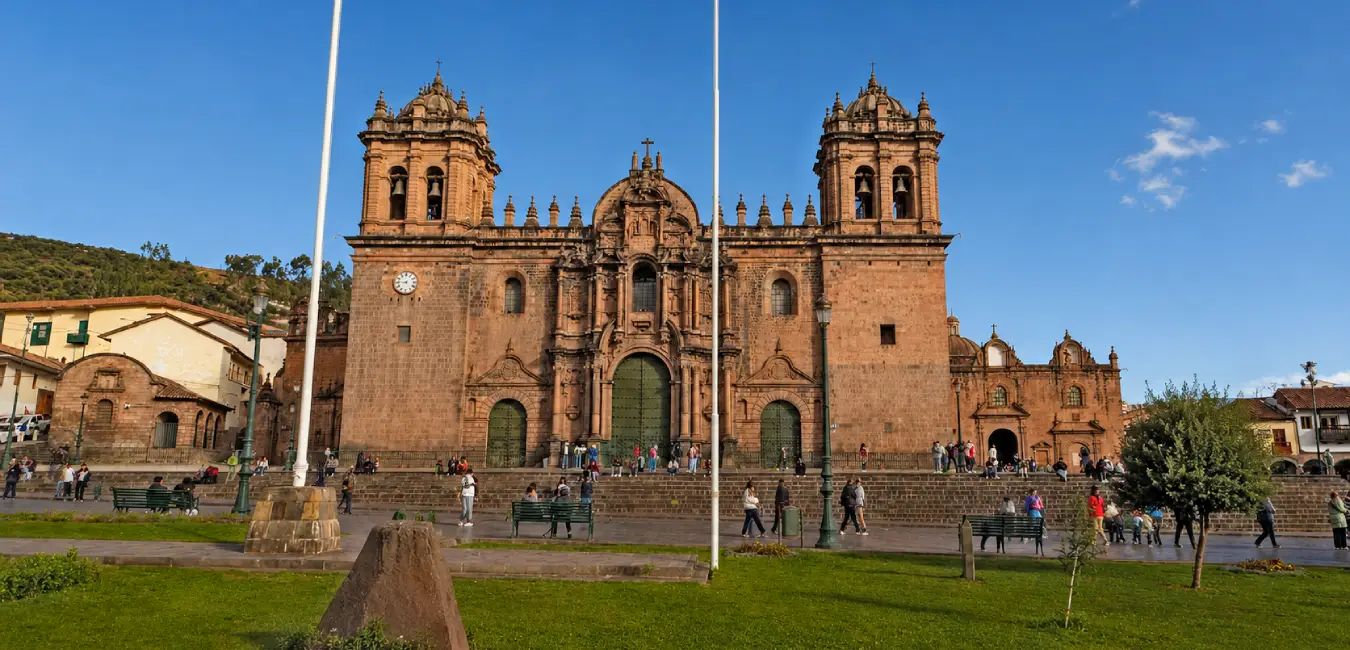
The Cathedral dominates the northeastern side and serves as the most important religious complex in the city. Construction began in 1560 and was completed in 1654, nearly a century later. That lengthy construction period explains the mix of architectural styles: a restrained Renaissance facade contrasts with an elaborate interior.
The complex includes:
- On the left: El Triunfo Church, begun in 1536 and considered the first Christian building in the city.
- On the right: the Church of the Holy Family, built between 1723 and 1735 to expand the complex’s capacity.
The church of the society of Jesus
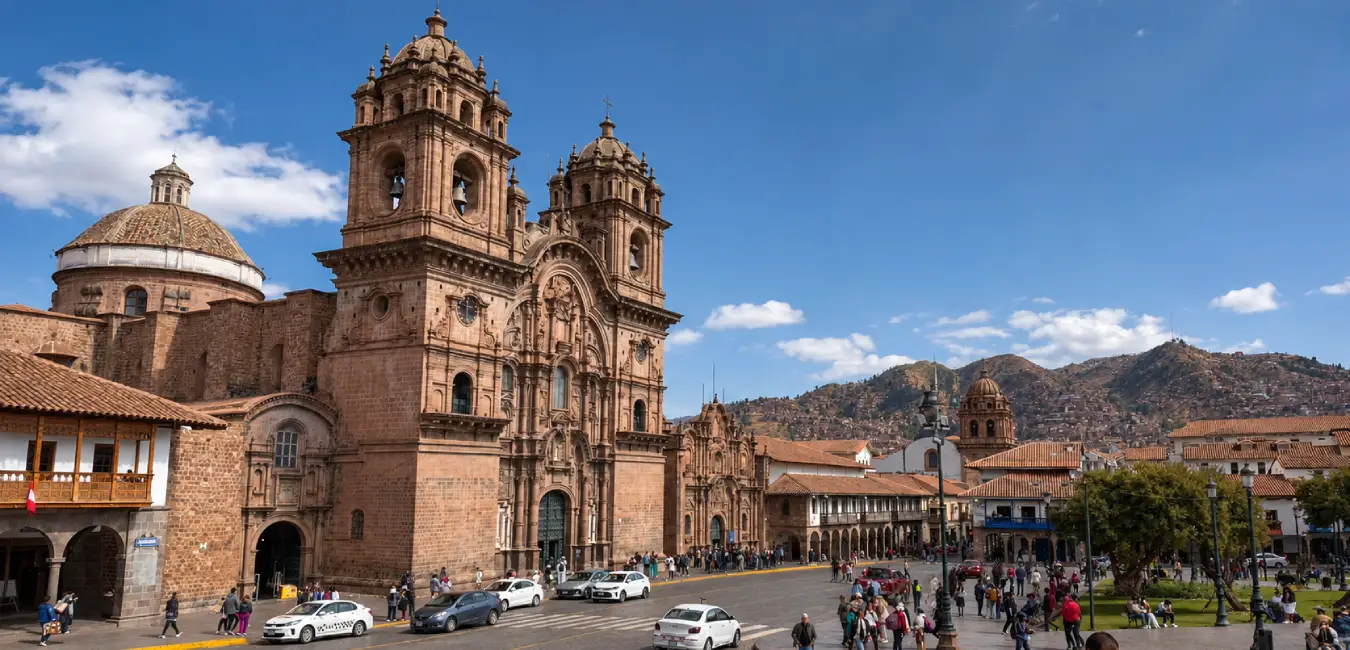
On the southeastern side stands La Compañía, built by the Jesuit order over the Amarukancha palace of Huayna Cápac. Its Baroque facade, carved from andesite stone, is considered a masterpiece. And that grandeur was no accident: the Jesuits openly competed with the Cathedral for architectural prominence, a rivalry that eventually required intervention from the Vatican.
The eight colonial arcades
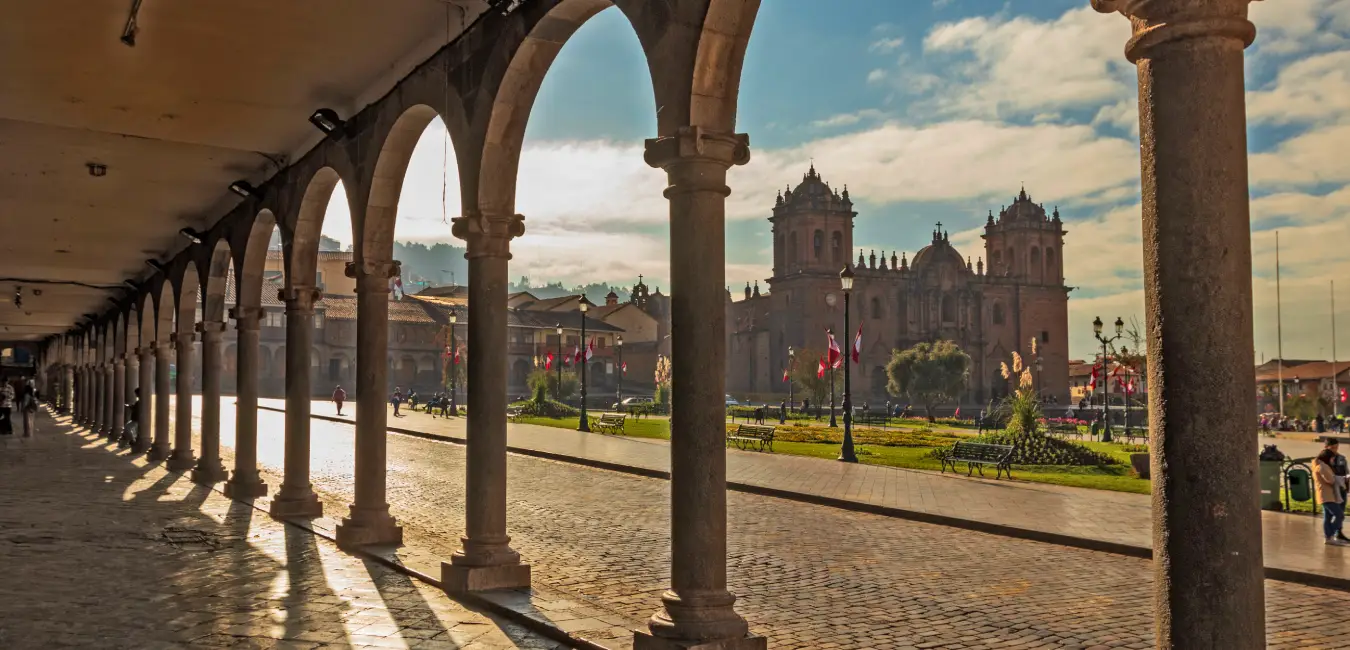
The arched corridors surrounding the plaza still preserve the names of the trades once practiced there. Each one tells a small part of everyday colonial life.
Arcade | Origin of the Name |
|---|---|
| Portal de Panes | Built where Pachacútec’s Kasana palace once stood; later became a center for bread sales |
| Portal de Carnes | To the right of the Cathedral; meat was sold here during the plaza markets |
| Portal de Harinas | A marketplace for corn, wheat, chuño, and jora flour used to make chicha |
| Portal de Confiturías | Known for the sweets and nougats sold during celebrations such as Corpus Christi |
| Portal de Comercio | Formerly Portal de Ropavejeros, where imported fabrics and fine clothing were sold |
| Portal de la Compañía | Formerly Portal de Sastres, where tailors serving Cusco’s elite worked |
| Portal de Carrizos | A center for selling reeds and maguey used in roofs and homes |
| Portal de Belén | Named after the Virgin of Belén, the city’s patron saint |
The central fountain and monument to Pachacútec
At the center of the plaza, the 1872 cast iron fountain remains a popular meeting point. Since 2011, it has been topped by a statue of Pachacútec, the ruler who transformed Cusco into the capital of the Inca Empire. Visit around sunset: when the lights come on, the reflection of the water against the Cathedral creates a unique photo opportunity.
The Inca walls just outside the Plaza
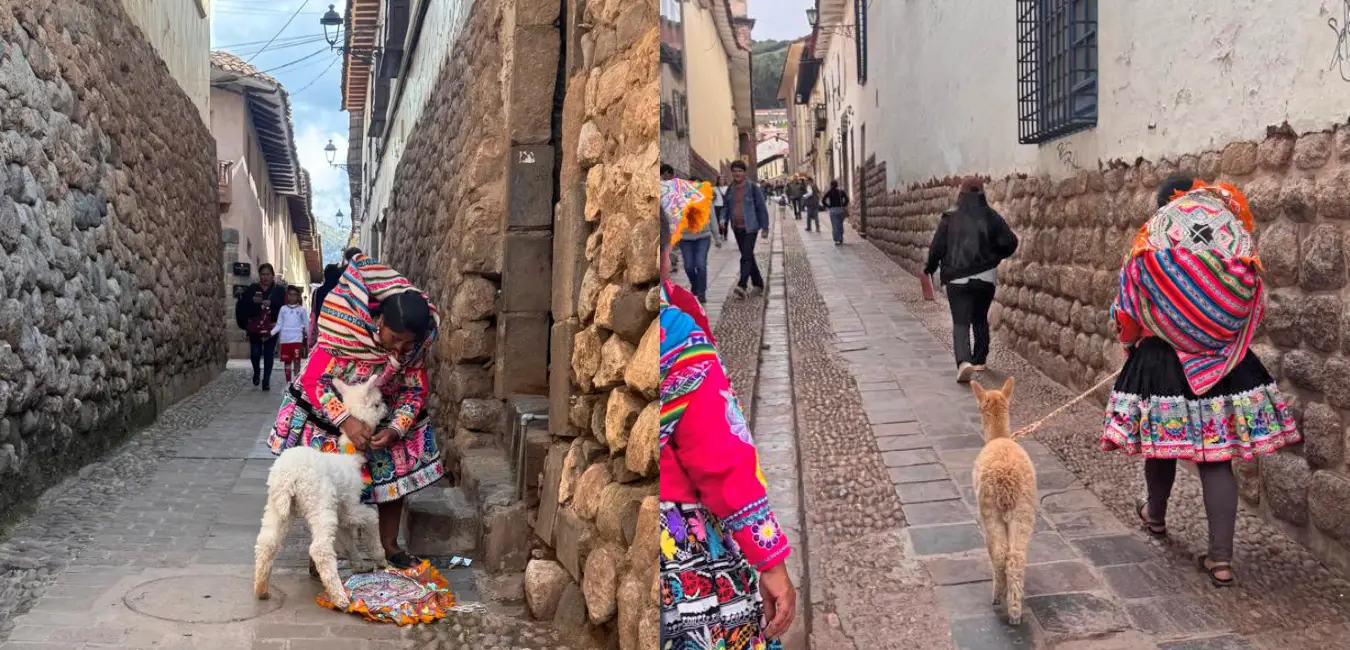
Less than a three minute walk from the plaza, you’ll find Inca architecture. On Hatun Rumiyoc Street, you’ll come across the Twelve Angle Stone, fitted without mortar with a level of precision that still amazes engineers. On Loreto Street, meanwhile, you can see the surviving walls of the former Acllawasi. Walk both streets you’ll get a much better sense of the scale of what once stood here.
What to Do in Cusco’s Plaza de Armas
The plaza offers much more than just a photo opportunity. These are the experiences that are truly worth your time.
Activities to enjoy in the Plaza
Let’s start with:
Take a Guided City Tour through the Historic Center
A professional guide can turn historic facades into compelling stories. In about four hours, you’ll visit the Cathedral, Corikancha, and the Inca walls in the surrounding area, while learning why each stone was placed exactly where it is. If your time in Cusco is limited, this is the best option.
Photograph the Plaza at sunrise and after dark
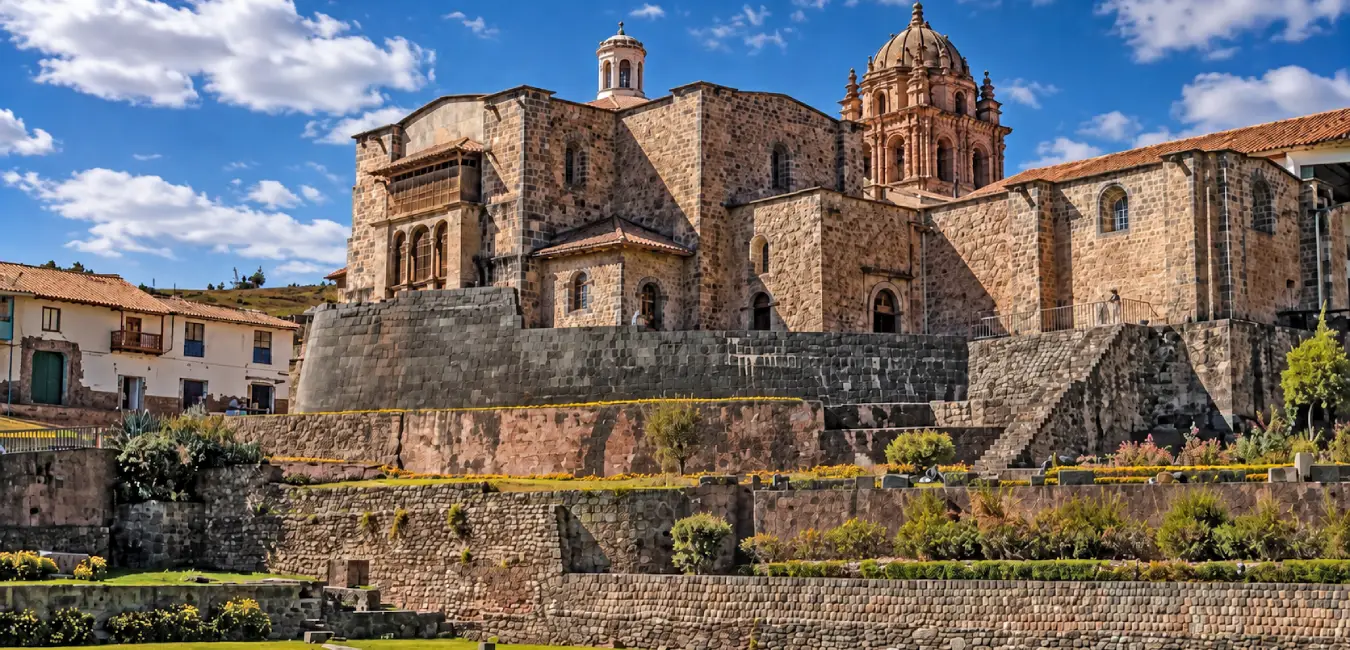
Arrive before 7:00 a.m. and you’ll find the plaza nearly empty, with golden light falling across the stone. Come back after 6:30 p.m., when the artificial lighting outlines the towers against the evening sky. These two windows offer the best photography opportunities of the day.
Experience a Cusqueñan festival
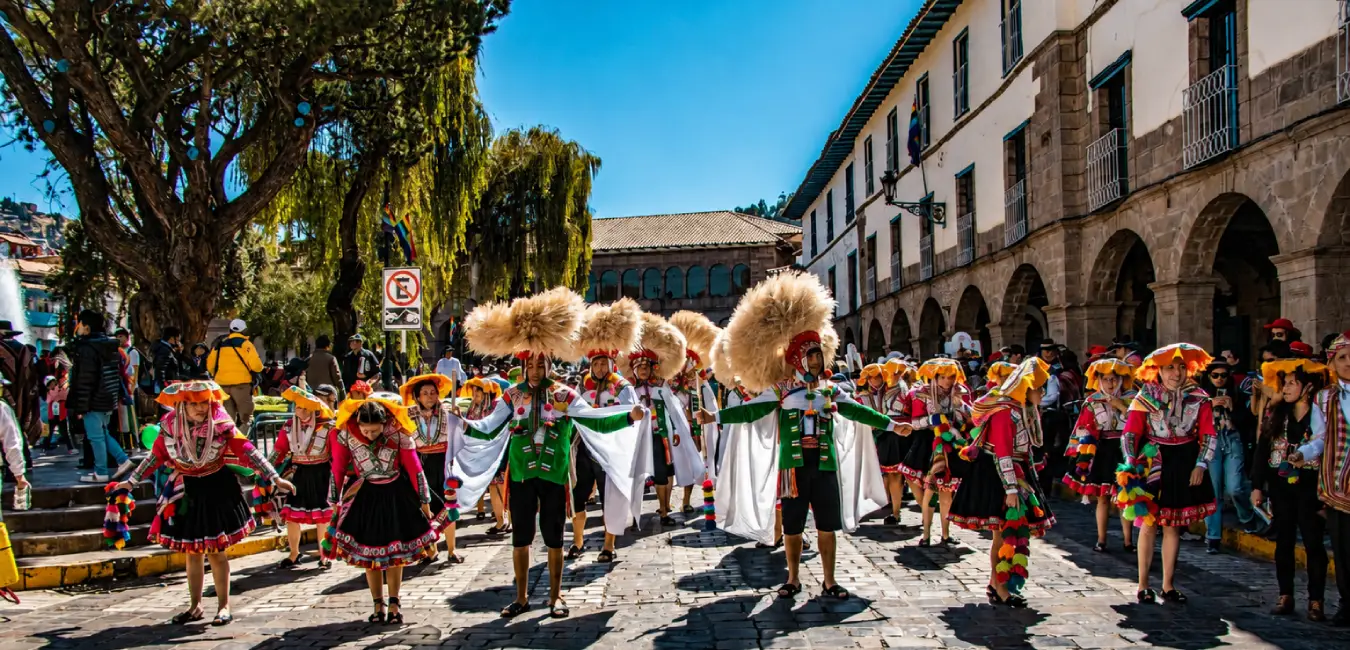
If your dates coincide with a celebration, adjust your itinerary so you can be here. The plaza becomes a stage for dances, processions, and music that bring the entire city together.
Festival | When | What You’ll See in the Plaza |
|---|---|---|
| Señor de los Temblores | Holy Monday (March or April) | Procession of the Black Christ, with ñucchu flowers raining down from the balconies. |
| Corpus Christi | May or June (movable date) | The arrival of fifteen saints and virgins from the city’s parishes, accompanied by bands and Chiriuchu. |
| Inti Raymi | June 24 | Reenactment of the Festival of the Sun; the plaza is one of the three venues where the ceremony is staged. |
| Cusco Festivities | Throughout June | During the jubilee month, the plaza hosts traditional dances, music, parades, and cultural activities. It is one of the main settings for celebrating the city’s identity and traditions. |
| Death of Túpac Amaru II | May 18 | The plaza commemorates the execution of Túpac Amaru II, which took place on May 18, 1781. Today, this historic event is remembered through activities and reenactments that keep his memory alive. |
| Independence Day | July 28 | Civic parades, music, and a festive atmosphere throughout the day. |
| New Year’s Eve | December 31 | During the evening, locals and travelers gather to say goodbye to the old year and welcome the new one. The plaza takes on a lively atmosphere with music, celebrations, and large crowds of visitors. |
| Cusco Carnival | February or March (movable date) | The plaza comes alive with music, dances, games, and color during Carnival celebrations. It’s a great opportunity to experience cultural expressions and traditions that remain alive in Cusco. |
| Santurantikuy or traditional Cusco Christmas fair | December 24 | One of the oldest artisan fairs in the Americas, dedicated to traditional Christmas religious imagery and crafts. |
Visit the museums and galleries Around the Plaza
- Inka Museum: Housed in the Casa del Almirante, it displays ceramics, textiles, metalwork, and mummies. Its courtyard often hosts traditional weaving demonstrations.
- Museum of Religious Art: Located in the Archbishop’s Palace, built over Inca foundations. It features paintings from the Cusco School and religious artifacts.
- Pre-Columbian Art Museum (MAP): Just a short walk away in Nazarenas Square, it showcases pre-Hispanic artifacts in an excellent museum setting.
- Contemporary Art Galleries: Around the arcades, you’ll find galleries showcasing contemporary Andean art, ideal if you’re looking for an original piece to take home.
Explore the nightlife
The arcades and surrounding streets are home to bars with terraces, peñas featuring Andean music, and nightclubs. The area is usually quite lively, especially around the arcades, restaurants, and main streets. As in any tourist area, keep an eye on your belongings.
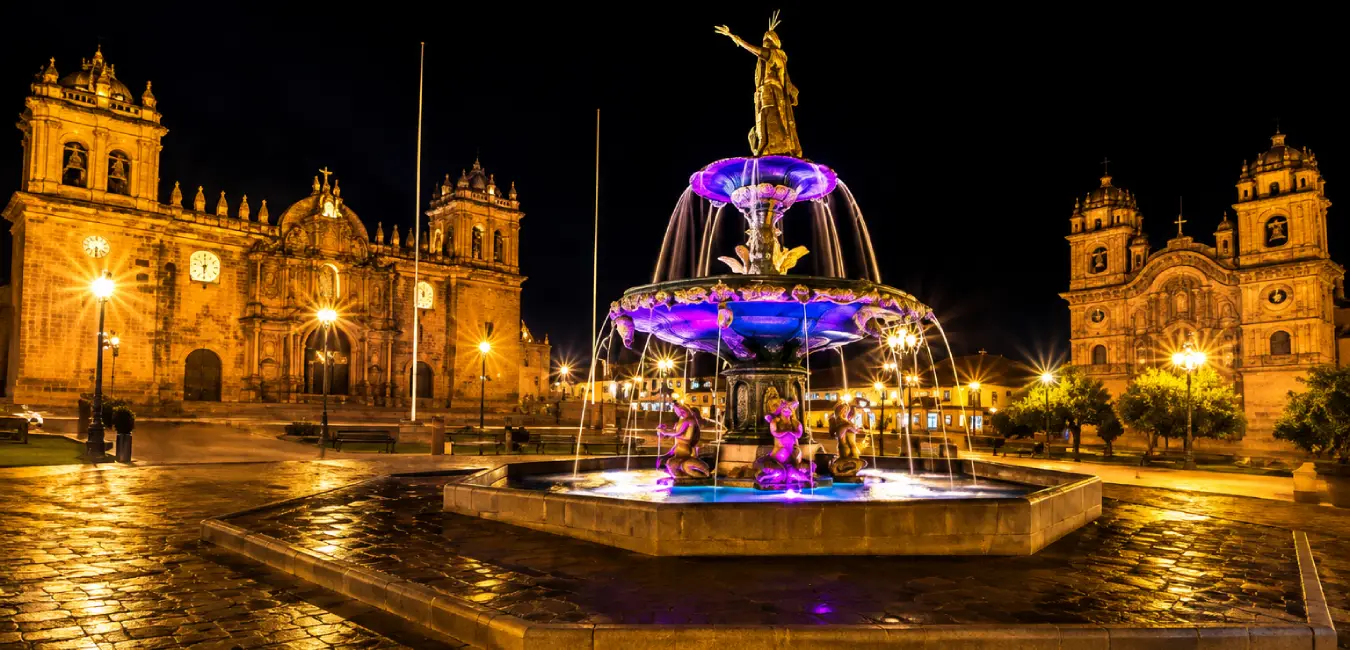
Cusco’s Plaza de Armas: Day vs. Night
Visit the Plaza de Armas at night to enjoy the illuminated facades and the lively atmosphere of the plaza.
Daytime | Nighttime |
|---|---|
| Ideal for: learning about the history and architecture. | Ideal for: enjoying the atmosphere and nighttime lighting. |
| You can get a better look at the Cathedral, La Compañía, and the arcades. | The illuminated facades create a completely different atmosphere. |
| The best time to explore the historic streets. | A great time to sit on a balcony and watch the plaza. |
| More tours and visitors. | More activity around restaurants, bars, and cafés. |
| Best for visiting churches and museums. | Best for nighttime photography. |
| You can combine it with Qorikancha, San Blas, or a City Tour. | You can combine it with dinner or an evening stroll. |
| Recommendation: arrive early if you want photos with fewer people around. | Recommendation: come back after dark to see the plaza illuminated. |
My recommendation…
Visit at both times of day. During the day, you’ll be able to better appreciate its architecture and history, while at night, the illuminated churches, arcades, and balconies create a completely different atmosphere.
Exploring Cusco’s Plaza de Armas Based on your available time
1.If you have 30 minutes: Plaza + photos.
2. If you have 1 hour: Plaza + Cathedral/La Compañía.
3. If you have 2 hours: Plaza + Historic Center.
- 0 - 20 min: Plaza de Armas + Arcades.
- 20 - 50 min: Cathedral + Church of the Society of Jesus.
- 50 - 70 min: Triunfo Street + Twelve Angle Stone.
- 70 - 100 min: Qorikancha.
- 100 - 120 min: San Blas or return to the plaza.
4. If you have half a day: Plaza + Qorikancha + San Blas.
5. If you have a full day: Full City Tour.
Our eecommendation…
If this is your first time in Cusco, we recommend exploring the Plaza de Armas in the morning and combining it with Qorikancha and Sacsayhuamán. This gives you a relaxed introduction to the city before taking on more demanding activities.
Tips for visiting Cusco’s Plaza de Armas
If you’re visiting Cusco’s Plaza de Armas, keep these tips in mind to make the most of your visit and avoid any issues along the way.
Cusco’s Plaza de Armas: Essential information for your visit
As you begin your visit, keep these basic details in mind. They’ll help you make the most of Cusco’s Plaza de Armas, from altitude and weather to opening hours, services, and useful recommendations.
Admission and hours at Cusco’s Plaza de Armas
Access to the plaza is free. The Cathedral and Church of the Society of Jesus charge separate admission fees, and admission to the Cathedral is included in the Archiepiscopal Religious Circuit ticket.
- The Cusco Tourist Ticket (BTG) does not include the Cathedral or La Compañía, although it does cover several nearby museums and archaeological sites.
- Temple hours vary and may be suspended during Masses and festivals. Check the same day before planning your visit.
How high above sea level is Cusco’s Plaza de Armas?
Cusco’s main plaza sits at approximately 3,399 meters (11,152 feet) above sea level. This can be a surprise for travelers arriving directly from warm, low altitude destinations. As a result, your body needs about 24 to 48 hours to acclimatize.
That’s exactly why we recommend…
Making the plaza your first introduction to Cusco. It’s flat, just minutes from most hotels in the city center, and allows you to walk at an easy pace while you acclimatize. In other words, the Plaza de Armas can be a good choice for your first day in Cusco.
How to acclimatize properly from your first day
- Walk at an easy pace: The hills in the historic center are short but demanding. Take your time and don’t hesitate to stop for a break.
- Drink more water than usual: The dry mountain air can dehydrate you quickly. Drink water throughout the day.
- Eat light during the first 24 hours: Andean soups, coca tea, and muña herbal tea are often easier on your stomach than a heavy meal.
- Avoid alcohol on your first day: Even though the plaza’s bars may be tempting, alcohol can worsen altitude related symptoms.
- Get plenty of rest your first night: Save strenuous excursions for your second or third day. Your performance will improve noticeably.
- Talk to your doctor before traveling: If you have a heart or respiratory condition, speak with your doctor before planning the trip.
What is the weather like in Cusco’s Plaza de Armas?
Around midday, temperatures can reach 20 to 22 °C (68 to 72 °F), while overnight temperatures frequently drop below 5 °C (41 °F). That’s why dressing in layers works best: a T-shirt, fleece, and windbreaker can handle almost any day.
Safety around the Plaza
The Plaza de Armas is one of the most closely monitored areas in Cusco, with a visible police presence and security cameras. You can generally walk around during the day and at night with peace of mind. Still, use the same common sense you would in any tourist destination: keep your backpack in front of you in crowded areas, don’t leave your phone on a restaurant table, and use authorized taxis or ride-hailing apps when returning at night.
Money, connectivity, and services
- Cash: There are ATMs and currency exchange offices on Avenida El Sol, just one block away. Carry small denomination soles for handicrafts and taxis.
- Cards: Restaurants and hotels around the plaza accept cards, but many artisan stalls do not.
- Wi-Fi: If public Wi-Fi is available in the plaza, cafés and restaurants also offer free connections to their customers.
- Restrooms: Use those in nearby restaurants or shopping centers; public restrooms are scarce and usually require a small tip.
- Accessibility: The plaza itself is flat and wheelchair-accessible, although the cobblestone streets nearby can make getting around more difficult.
Best time to visit
Cusco is a year-round destination, but the experience varies considerably depending on the season.
Season | Months | Advantages | Considerations |
|---|---|---|---|
| Dry | May to October | Clear skies, little rain, and the best photography conditions | More visitors and higher prices, especially in June and July |
| Rainy | November to April | Green landscapes, fewer visitors, and more affordable rates | Afternoon rain; bring a rain jacket and shoes with good traction |
| Transition | April and November | A good balance between weather and crowds | Variable weather: be prepared for both conditions |
Where to take the best photos of Cusco’s Plaza de Armas
- In front of the Cathedral: Front facing view of the plaza and gardens.
- In front of La Compañía: Excellent perspective of the Baroque facade.
- From the arcades: Lets you frame the arches in the foreground.
- From San Cristóbal: Panoramic view overlooking the entire city.
- At sunrise: Fewer people and soft light.
- At sunset: Beautiful light on the buildings and mountains.
How to get your bearings in the Plaza in 30 seconds
Look at the Cathedral: that side faces northeast, and from there you can orient yourself to everything else.
- To the right of the Cathedral, Triunfo Street leads uphill toward San Blas and the Twelve Angle Stone.
- To the left of La Compañía, Avenida El Sol runs downhill, where you’ll find banks, currency exchange offices, and Qorikancha.
- Procuradores, Tecsecocha, and Suecia streets are the heart of Cusco’s nightlife. Keep this in mind when choosing your hotel.
Why visit Cusco’s Plaza de Armas?
Because visiting the Plaza de Armas allows you to connect with everyday life in Cusco and see how the city keeps its traditions alive. It’s an ideal place to begin getting familiar with the city’s rhythm, spaces, and character. Its surroundings also bring together food, cultural, and shopping experiences that you can enjoy at your own pace.
Restaurants around Cusco’s Plaza de Armas
The balconies along the arcades are home to some of the restaurants with the best views in Peru. That said, choose carefully: the prime location drives prices up, and not every restaurant offers the same level of quality. Here are some options that combine solid food with a great overall experience.
Restaurant | Location | What Sets it apart | Price range |
|---|---|---|---|
| Ukllay Traditional Peruvian Cuisine | Portal de Panes 109 (terrace) | Traditional Peruvian cuisine with one of the best direct views of the plaza. Reservations recommended in advance. | Mid-range |
| Hanz | Portal de Carnes 216 | Contemporary Peruvian fine dining, floor-to-ceiling windows overlooking the plaza, and attentive service. | High-end |
| Calle del Medio | Calle del Medio 113 | Andean fusion cuisine and cocktails. The balcony offers a full view of the rectangular plaza. | Mid-range |
| Tunupa | Portal de Confiturías 233, 2nd floor | Peruvian buffet accompanied by a live folkloric show. Ideal for groups. | Mid-range |
| Huaraca Grill | Portal de Comercio 129, 2nd floor | Andean grilled meats, oven-roasted guinea pig, and alpaca served in generous portions. Good value for the view. | Mid-range |
| Don Pancho Taberna Peruana | Portal de Panes 151 | Classic tavern overlooking the plaza, with live music on some evenings. | Mid-range |
| Pietra | Suecia 320 (corner of the plaza) | Creative Peruvian cuisine in a quiet courtyard just steps from the bustle. | Mid-range |
| Kusykay Peruvian Craft Food | Triunfo 338-A (half a block away) | Local and organic ingredients, creative cuisine, and a warm atmosphere. | Mid-range |
Hotels around Cusco’s Plaza de Armas
Staying near the plaza has a major advantage: you eliminate transportation time and can walk almost everywhere. The trade-off is that you’ll pay a little more and may have to deal with some nighttime noise. Consider both factors before booking.
Accommodation | Location | Profile | Category |
|---|---|---|---|
| Wyndham Costa del Sol Cusco | Santa Teresa 344 (2 blocks away) | Restored former convent with a colonial courtyard and an excellent breakfast. | Upscale |
| JW Marriott El Convento Cusco | Ruinas 432 (3 blocks away) | 16th-century convent converted into a luxury hotel, with Inca remains preserved inside. | Luxury |
| Belmond Hotel Monasterio | Plazoleta Nazarenas (3 blocks away) | 1592 monastery with its own chapel; one of the most exclusive experiences in Cusco. | Luxury |
| El Virrey Boutique | Portal Comercio 165 | Directly across from the plaza. Some rooms have balconies with direct views of the Cathedral. | Mid-range |
| Casa Andina Standard Cusco Plaza | Espinar 142 (1 block away) | Reliable Peruvian hotel chain, consistent service, and an unbeatable location. | Mid-range |
| Artinka Boutique Hotel | Procuradores 378 | Newer boutique hotel, personalized service, and breakfast available for early-morning tours. | Mid-range |
| Casona Plaza Hotel Cusco | Tecsecocha 490-A | Good value for money just two minutes from the plaza. | Mid-range |
| Cusco Plaza Hostel | Portal de Comercio 113 | Budget-friendly, with its own restaurant and views of the plaza. Ideal for backpackers. | Budget |
Details almost nobody tells you
Procuradores, Suecia, and Tecsecocha streets are home to bars and nightclubs that stay open until the early morning hours. If you’re a light sleeper or heading to Machu Picchu early the next day, request an interior-facing room or choose a hotel on Santa Teresa, Ruinas, or Nazarenas streets. You’ll still be just minutes from the plaza, but you’ll have a much quieter night.
Which route works best?
A good route is Plaza de Armas - Cathedral - Church of the Society of Jesus - Triunfo Street - Twelve-Angle Stone - San Blas. If you have more time, you can continue to Qorikancha and finish your walk in the Historic Center.
How can you combine it with the City Tour?
You can visit the Plaza de Armas during the City Tour, as it is normally part of the Historic Center portion of the tour, together with Qorikancha and nearby archaeological sites. If you have time, set aside some time afterward to explore the plaza on your own at a more relaxed pace.
When should you visit it during your itinerary?
- If you have 1 day: Plaza + Historic Center.
- If you have 2 days: Day 1 Plaza + City Tour / Day 2 Sacred Valley.
- If you have 3 - 4 days: Cusco - Sacred Valley - Machu Picchu.
- If you’re doing a trek: Visit the plaza on your arrival day to acclimatize.
What to avoid at Cusco’s Plaza de Armas
- Don’t arrive with an overly packed itinerary.
- Don’t try to see the entire Historic Center in 30 minutes.
- Don’t rely on taxi fares that haven’t been agreed upon beforehand.
- Don’t choose a restaurant solely because of the view.
- Don’t schedule a physically demanding activity immediately after arriving if you need time to acclimatize.
- Don’t visit churches without checking their hours first.
- Don’t walk around with your phone out in very crowded areas.
Other tourist attractions you can visit on foot from the Plaza de Armas
Just a short walk from Cusco’s Plaza de Armas, you’ll find temples, streets, and historic sites that will help you better understand the importance of this plaza and the city’s history. You can easily explore them on foot and discover a different part of Cusco’s Inca and colonial heritage at each stop. Let’s get started.
Tourist attractions near Cusco’s Plaza de Armas
Place | Distance / Walking time | What You’ll find | Recommended time |
|---|---|---|---|
| Qorikancha | 500 m · 6 min | Temple of the Sun and a blend of Inca and colonial architecture. | 45 min – 1 hr |
| Twelve-Angle Stone | 00 m · 8 min | An impressive example of Inca architectural precision on Hatun Rumiyoc Street, part of the Palace of Inca Roca. | 15 – 20 min |
| Inka Museum | 300 m · 4 min | Ceramics, textiles, metalwork, mummies, and artifacts from Andean history. | 1 – 1½ h |
| 7 Culebras Street | 300 m · 4 min | Inca walls and traditional architectural details. | 15 – 20 min |
| San Blas Neighborhood | 800 m · 10–15 min | Cobblestone streets, artisan workshops, and small plazas. | 1 – 2 h |
| 7 Borreguitos Street | 750 m · 13 min | Stone stairways, stone walls, and one of Cusco’s most picturesque corners. | 20 – 30 min |
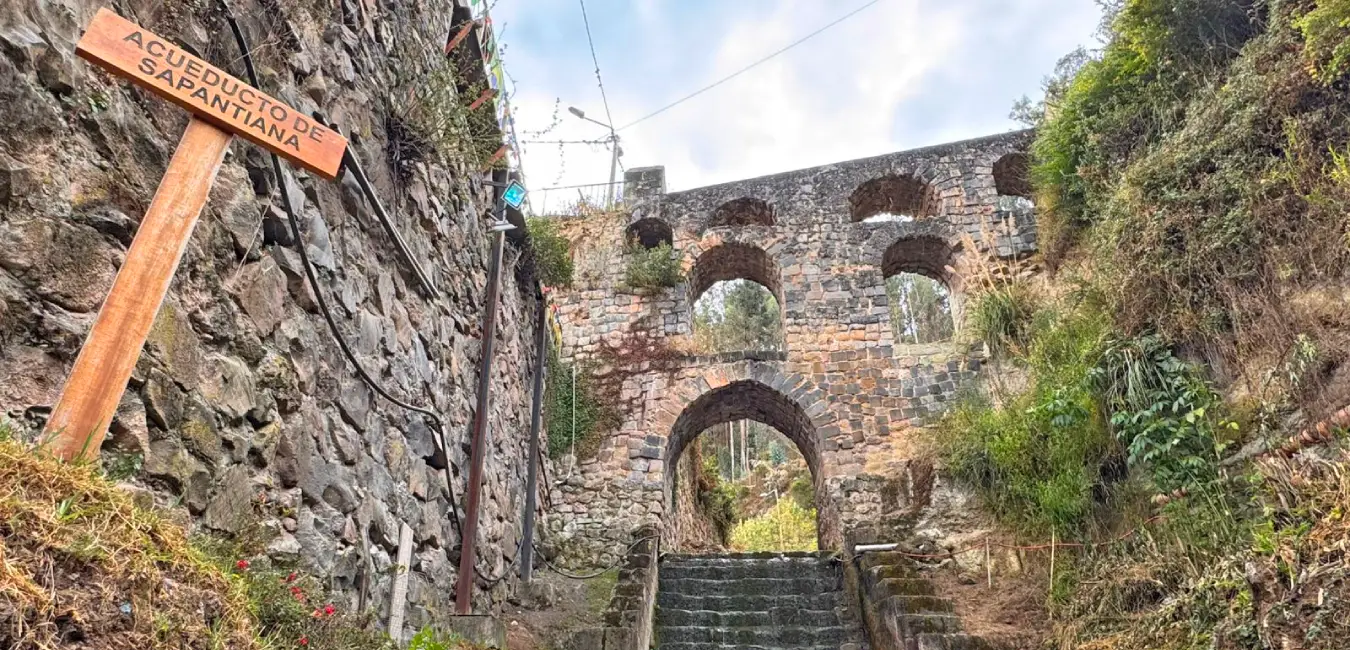
| Sapantiana Aqueduct | 1.3 km · 20 min | Stone arches and ancient hydraulic engineering. | 20 – 30 min |
| San Cristóbal Viewpoint | 1 km · 15 min | Panoramic views of Cusco, the church, and the Qolcanpata Palace. | 30 – 45 min |
Nearby sites to visit from Cusco’s Plaza de Armas by transportation
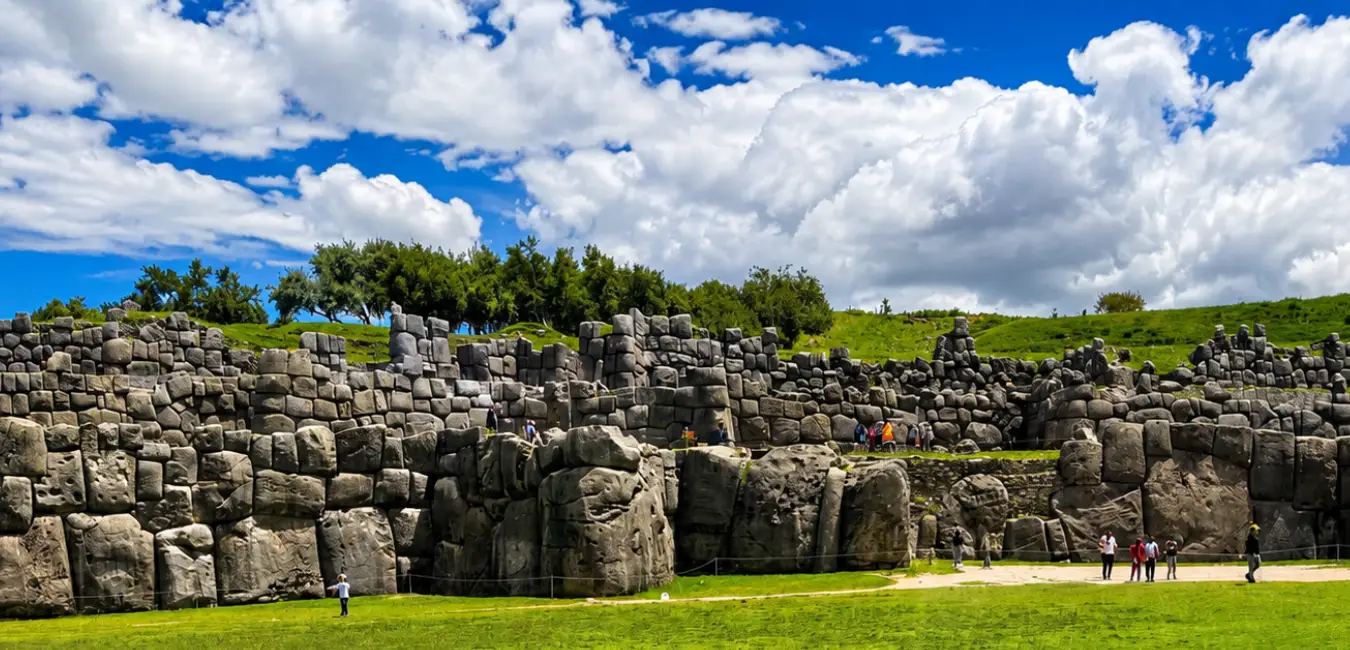
From Cusco’s Plaza de Armas, you can continue your journey and discover incredible archaeological sites located just a few miles from the plaza. Make the most of your stay by getting a closer look at Inca history in a truly special way.
Archaeological Site | Distance / Time from the Plaza | What you’ll find | Recommended time |
|---|---|---|---|
| Sacsayhuamán | 2 km · 10 - 15 min by vehicle | Massive stone walls, open plazas, and ceremonial spaces overlooking Cusco. | 1 - 1½ h |
| Q’enqo | 3 km · 15 - 20 min by vehicle | Rock formations, channels, and ceremonial spaces carved into the stone. | 30 - 45 min |
| Puca Pucara | 7 km · 25 - 30 min by vehicle | An ancient control complex with walls, terraces, and enclosures. | 30 - 45 min |
| Tambomachay | 8 km - 30 min by vehicle | Fountains, channels, and structures associated with the worship of water. | 30 - 45 min |
Tours and experiences you can combine with the Plaza de Armas
From Cusco, you can continue on to:
- Sacred Valley: Plaza de Armas - Pisac - Ollantaytambo - Machu Picchu.
- Machu Picchu: Plaza de Armas - Cusco - Ollantaytambo - Machu Picchu.
- Rainbow Mountain: Plaza de Armas - For travelers who are well acclimatized.
- Humantay Lake: Plaza de Armas - More physically demanding excursion.
- Salkantay Trek: - For those looking for a trekking experience.
- Inca Trail: Plaza de Armas - For a historic trekking experience.
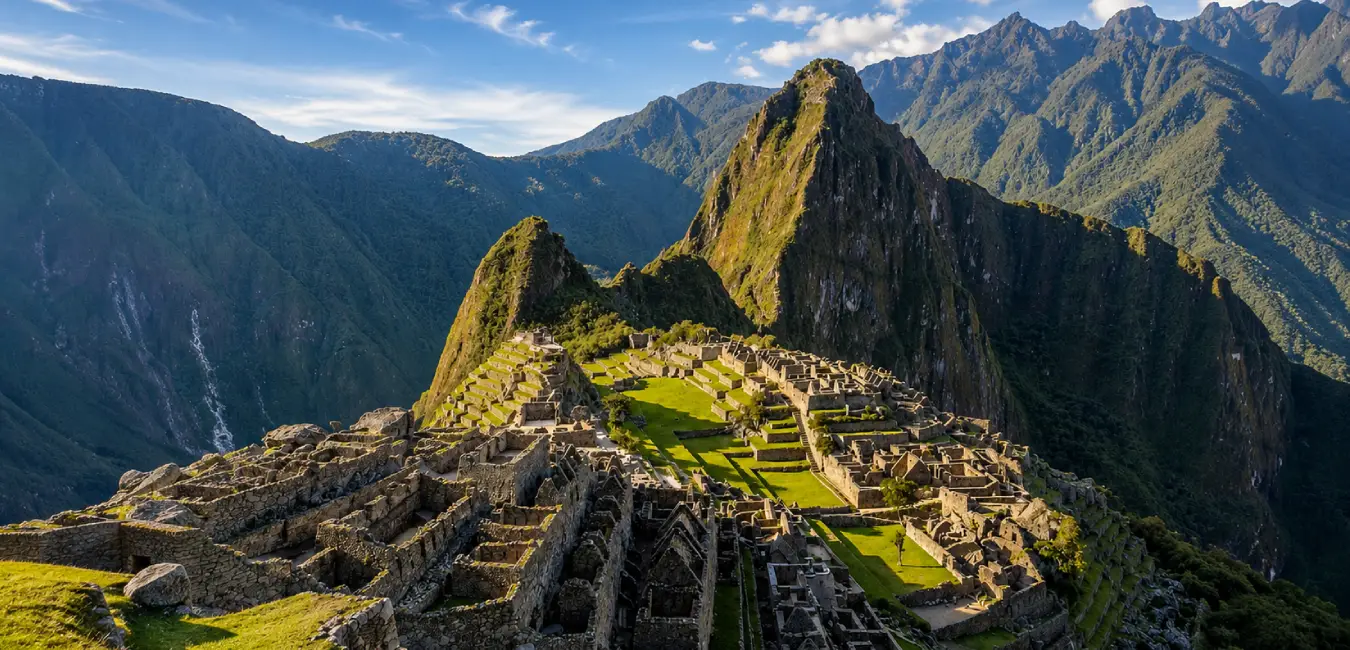
“So take your time. Walk through all eight arcades, step inside the Cathedral, try a Chiriuchu, and sit for a while and take it all in. And when you’re ready to venture farther to the Sacred Valley, Rainbow Mountain, or Machu Picchu we’ll be there to accompany you. Write to Responsible Trekking and let’s design your personalized trip.”
Frequently asked questions about Cusco’s Plaza de Armas
How much time should you spend at Cusco’s Plaza de Armas?
You can explore the plaza in about 30 to 45 minutes, but I recommend allowing 1 to 2 hours if you want to visit its churches, take photos, and walk through the historic streets nearby.
Where can I take the best photos of Cusco’s Plaza de Armas?
You can get great views from different points around the plaza, especially from in front of the Cathedral and the Church of the Society of Jesus. It’s also worth photographing the arcades and the streets leading away from the plaza to capture the historic architecture.
Are there restaurants and cafés near the Plaza de Armas?
Yes. Around the plaza and along the nearby streets, you’ll find a wide variety of restaurants, cafés, bars, and chocolate shops. You can choose from traditional Cusqueñan cuisine to international options.
Where can I buy handicrafts near the Plaza de Armas?
You’ll find handicraft shops and galleries throughout the Historic Center. For a more traditional experience, walk toward San Blas, known for its artisan workshops and artists, or visit the city’s markets and artisan centers.
Which Historic streets can I explore from the Plaza de Armas?
From the plaza, you can walk along Loreto Street, Triunfo Street, Hatun Rumiyoc, and Santa Catalina Angosta. These streets preserve important examples of Inca and colonial architecture.
Can I visit the Plaza de Armas before going to Machu Picchu?
Yes, and it’s an excellent option. You can explore the Plaza de Armas and other attractions in the Historic Center before traveling to Machu Picchu, especially if you have at least one day to get familiar with Cusco and adjust to the altitude.
Is Cusco’s Plaza de Armas accessible for people with reduced mobility?
You can access the central plaza, but some streets in the Historic Center have stone surfaces, uneven ground, slopes, and narrow sidewalks. If you need an accessible route, it’s best to plan your route in advance and confirm the accessibility conditions at the monuments you want to visit.
What is the difference between the Plaza de Armas and Plaza del Regocijo?
They are two different plazas in the Historic Center. Today’s Plaza de Armas corresponds to the former Haucaypata sector, while Plaza del Regocijo occupies the area historically known as Cusipata; both were part of the large pre-Hispanic urban space.
What Is the Cultural importance of Cusco’s Plaza de Armas?
The plaza brings together different periods of Cusco’s history: the Inca era, the colonial period, and the modern city. In addition to its monuments, it continues to host religious, cultural, and traditional celebrations that remain an important part of Cusqueñan identity.