
Sacsayhuamán is one of Cusco's major archaeological sites, renowned for its massive stone walls, ceremonial terraces, and connection to the ancient capital of Tahuantinsuyo. In this guide, you will find the history of Sacsayhuamán, the meaning of its name, admission prices, opening hours, how to get there from Cusco, what to see, and tips for planning your visit.
What is Sacsayhuamán?
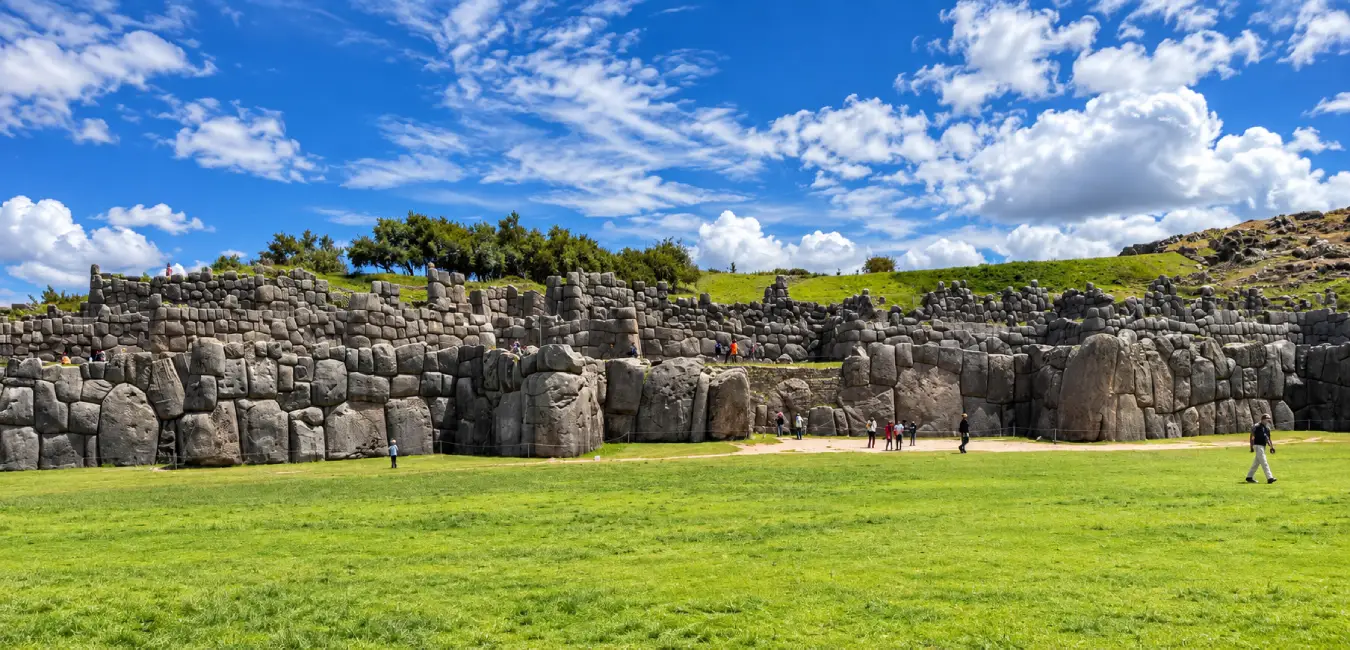
Sacsayhuamán is an Inca ceremonial complex built on a hill overlooking Cusco. The Ministry of Culture identifies it as the Temple of the Sun of Hanan Qosqo (Upper Cusco), meaning it was the counterpart of the Coricancha, which belonged to Hurin Qosqo (Lower Cusco). Today, Saqsaywaman Archaeological Park covers more than 3,000 hectares and also protects other nearby sanctuaries.
What does Sacsayhuamán mean?
The name comes from Quechua, where Saqsay means “to be satisfied” and waman means “falcon.” So, literally, it means “satisfied falcon.” It is not a random name. For the Incas, the falcon was a sacred bird associated with Manco Qhapaq, the mythical founder of Cusco, and it served as a messenger between the earth and the gods. Falcons were also carried on their war standards.
Don't get confused by the spelling
You may see it written as Sacsayhuaman, Saqsayhuamán, or Sacsaywaman. They all refer to the same place; Saqsaywaman is the official Quechua form.
Was Sacsayhuamán a temple or a fortress?
Although it has traditionally been called a “fortress” since 1536, it was actually built as a temple with ceremonial and religious functions. It was later used for military purposes during the conquest, when Manco Inca used the hill as a stronghold against the Spanish. Chroniclers described it as they saw it during that war, and the nickname stuck. But as you'll see below, its history goes much deeper than a single battle.
Is Sacsayhuamán worth visiting?
Yes, especially if this is your first time in Cusco. Sacsayhuamán helps you understand how the Incas thought and built before you visit Machu Picchu, and it also gives you one of the best views of the city.
Who is it ideal for?
- History buffs: this is one of the best examples of Inca cyclopean architecture.
- Photographers: the morning light on the limestone is something else.
- Families: kids won't want to leave the Rodadero, a natural rock slide.
- Active travelers: the walk uphill is short, with views that make every step worthwhile.
- How much time you need: 2 to 3 hours for the complex; half a day if you add the nearby sites.
Advice from a local guide
“Many travelers arrive thinking Sacsayhuamán is ‘just a big wall’ and leave saying it was the best part of Cusco. Understanding what you're looking at makes all the difference.”
Where is Sacsayhuamán?
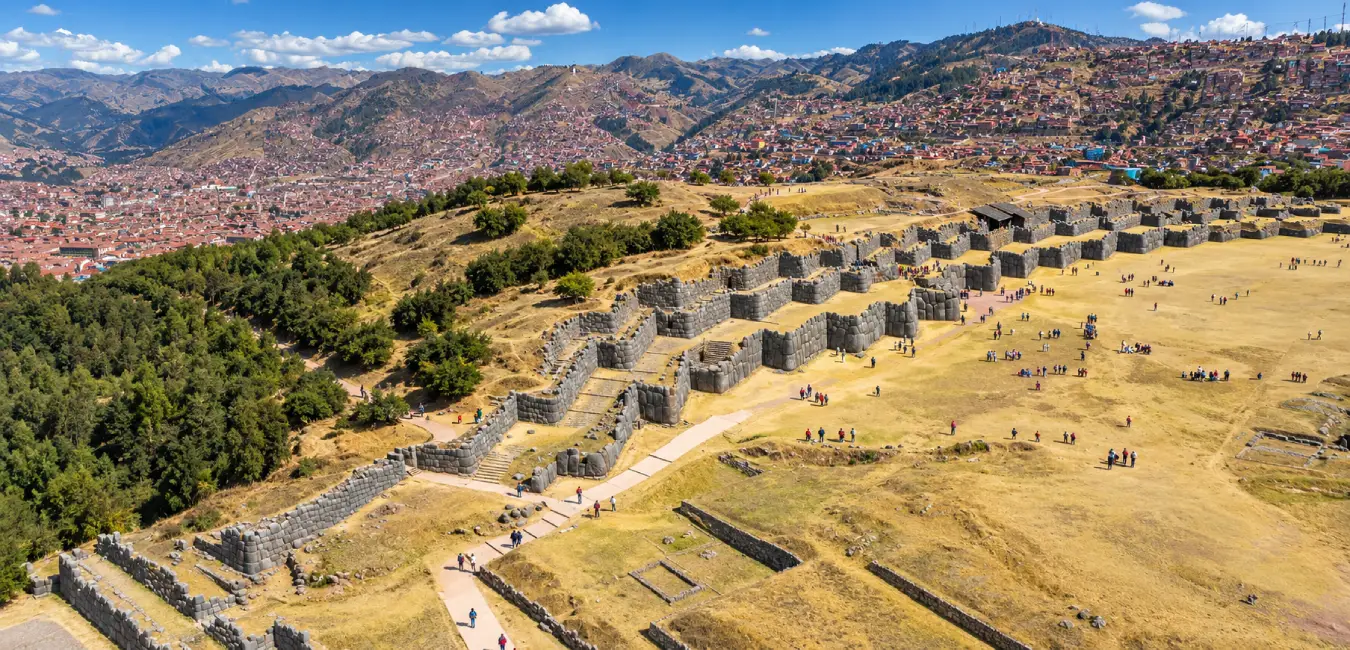
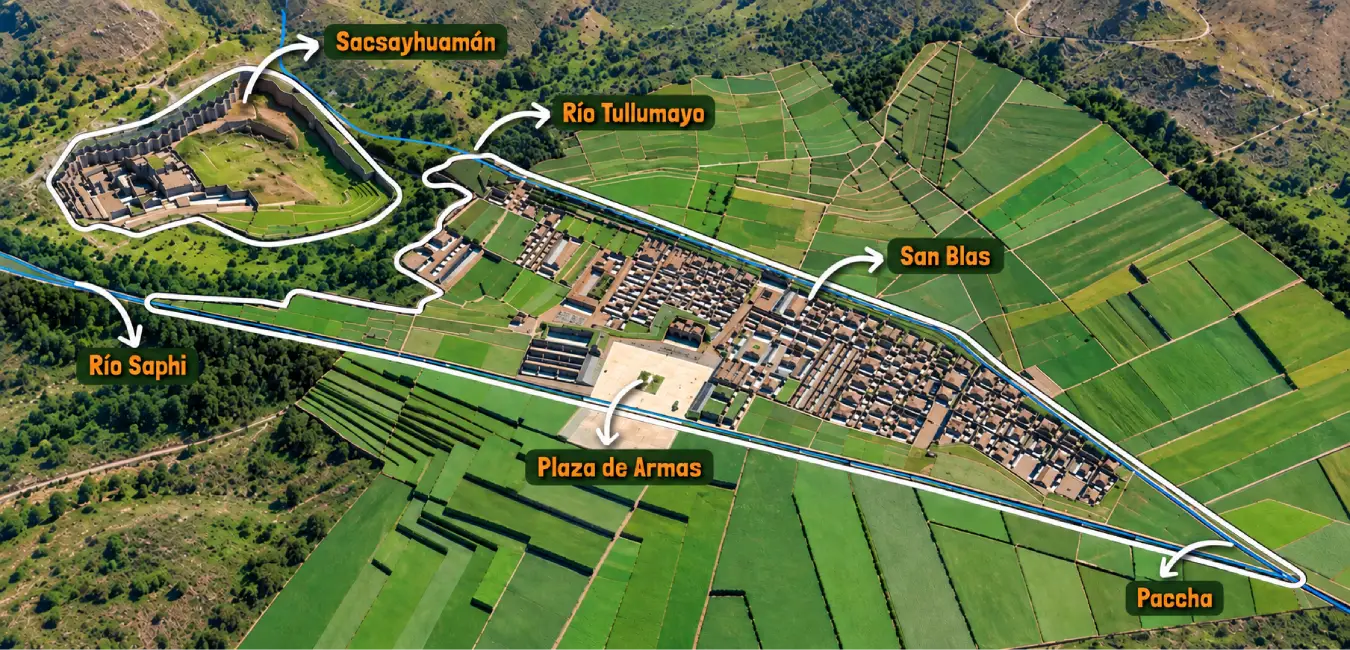
Sacsayhuamán stands on a plateau north of Cusco's historic center, between the Saphy and Tullumayu rivers, surrounded by agricultural terraces. During the Inca period, the neighborhoods of Qolqampata (now San Cristóbal) and Toqocachi (now San Blas) connected it to the city. And the best part is that you can still reach it along those same routes today.
What is the weather like at Sacsayhuamán?
The climate is dry and mild, with an average temperature of around 12 °C. During the day, temperatures can reach around 20 °C; however, on June and July nights, they can drop to around 0 °C. That's why dressing in layers is a good idea.
Sacsayhuamán at a glance
Information | Sacsayhuamán |
|---|---|
| Location | Cusco, Peru |
| Elevation | approx. 12,139 feet (3,700 m) |
| Site type | Archaeological complex |
| Main culture | Inca |
| Location relative to Cusco | North of the city |
History of Sacsayhuamán
Who was here before the Incas?
Long before the Tahuantinsuyo, this hill, Cruz Moqo, was already a sacred place. The Killke culture or Ayarmacas, which inhabited the Cusco Valley between 1,000 and 1,476 A.D., before the expansion of the Incas, built a ceremonial center in the Cruzmoqo sector and worked the green diorite terraces. Centuries later, the Incas used and expanded these spaces.
Who built Sacsayhuamán?
The Inca Pachacútec, in the 15th century. According to tradition, the Sun appeared to him at the Susurpuquio spring and promised him victory over the Chancas. Pachacútec won and, in gratitude, dedicated this temple to the Sun. Later, Túpac Inca Yupanqui, Huayna Cápac, and Huáscar continued the work for decades.
Twenty thousand hands and the Mita system
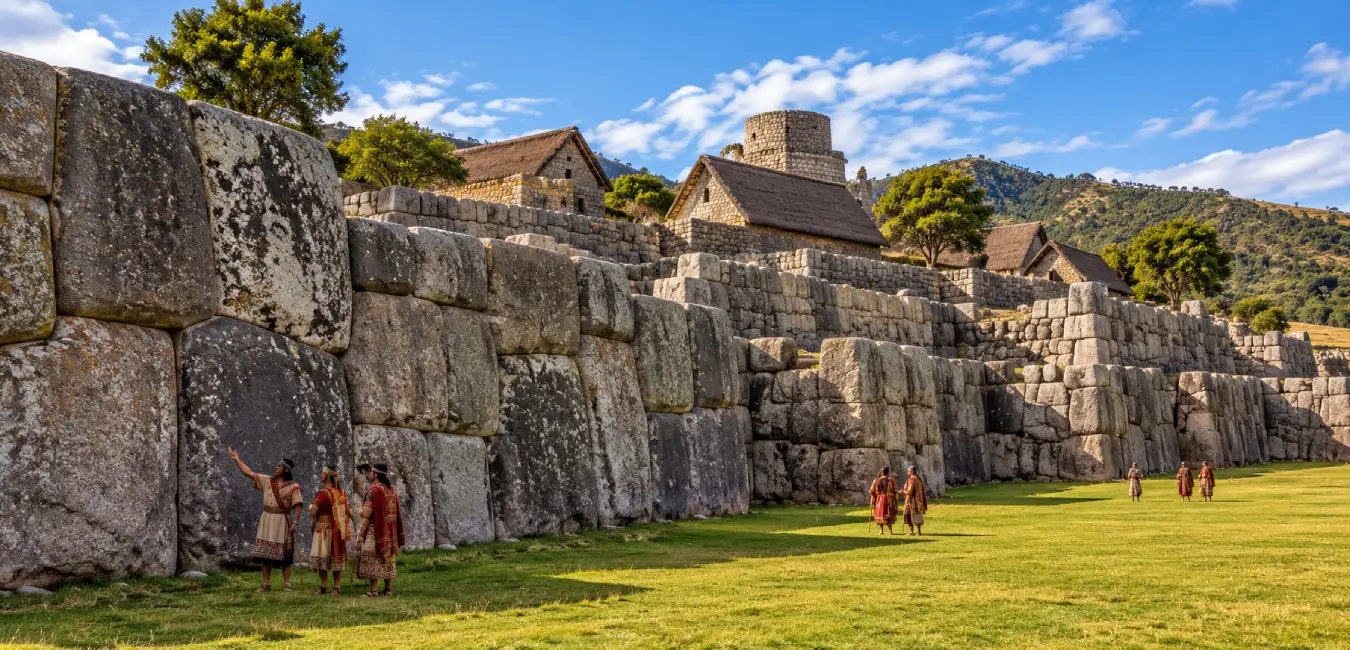
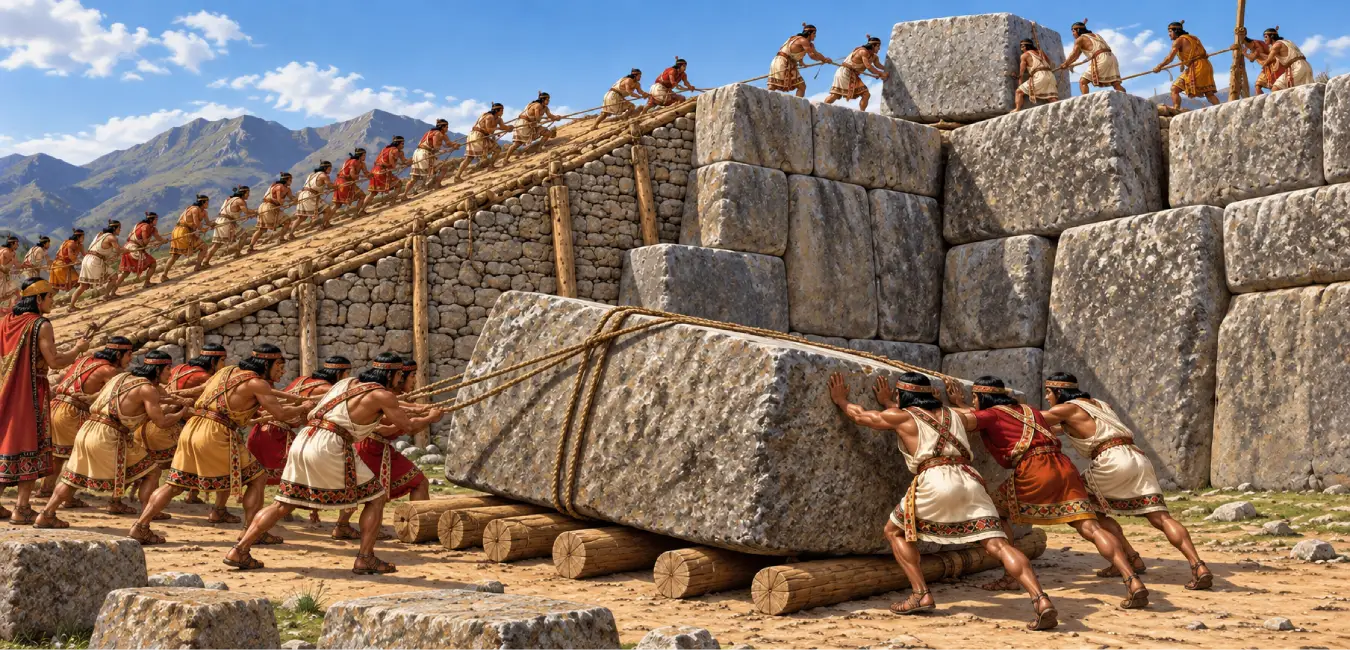
The project was made possible through the Mita, a rotational labor system that the Inca state required from the peoples of the empire. Chroniclers mention around 20,000 people. Some quarried stone, others braided ropes, and others dug foundations. The names of the master builders have even survived: Huallpa Rimachi, Maricanchi, Acahuana Inca, and Calla Cunchuy.
What happened at Sacsayhuamán in 1536?
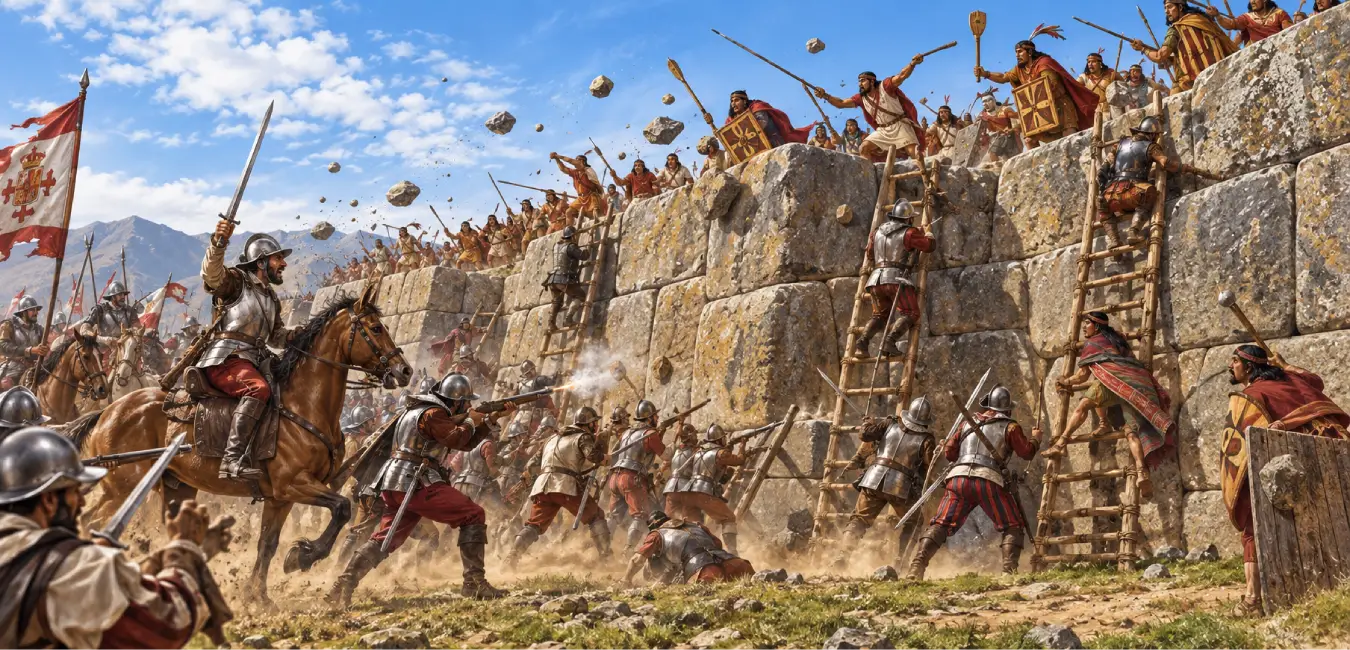
Four years after the arrival of the Spanish, Manco Inca rebelled in an attempt to retake Cusco and turned the hill into his headquarters. Tradition says that Captain Cahuide, before surrendering, jumped from the top of Muyuqmarka. After the defeat, in the mid 16th century, the colonizers used the sanctuary as a quarry, taking whatever stones they could to build mansions, churches, and Cusco Cathedral. That's why only the largest ones remain today: simply put, they couldn't move them.
Sacsayhuamán today
In 1934, historian Luis E. Valcárcel excavated the site and uncovered the foundations of the towers. Half a century later, in 1983, UNESCO inscribed the City of Cusco, including Sacsayhuamán, as a World Heritage Site. Today, the site symbolizes Cusco pride and, every year, hosts the region's most important celebration.
Sacsayhuamán Architecture
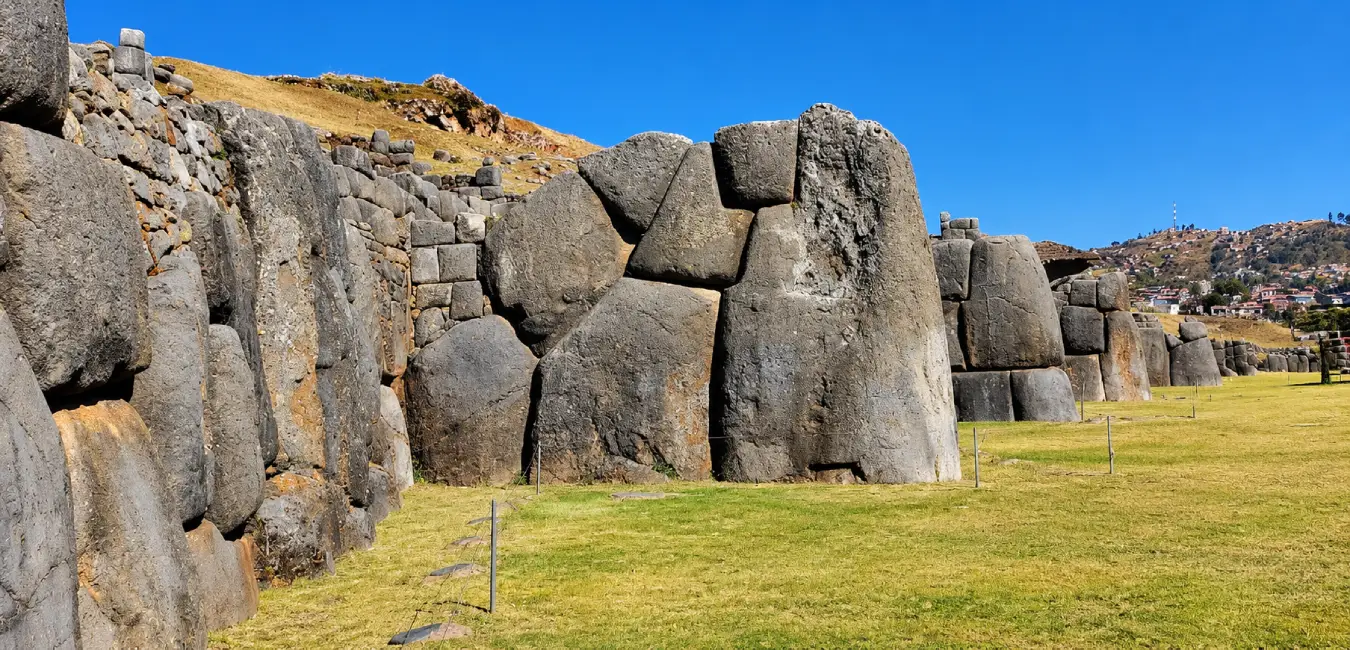
This monument is a masterpiece of cyclopean architecture: walls built without mortar, polygonal blocks fitted together with extraordinary precision, and a respectful integration with the natural terrain. In fact, Inca architects followed the topography rather than destroying it and used locally available materials.
How did they build Sacsayhuamán?
Sacsayhuamán is a masterpiece of Inca architecture, with some blocks estimated to weigh more than 100 tons, while the largest measures about 26 feet high (8 meters).
Where did the stones come from?
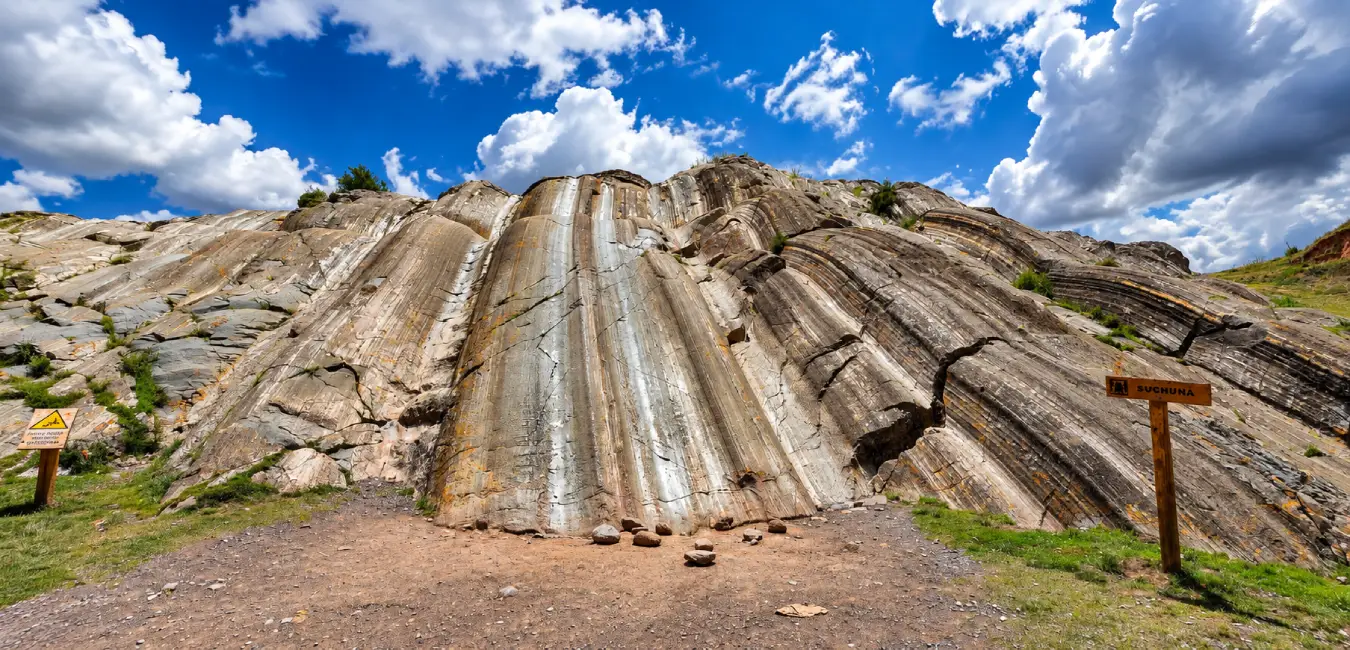
Most of the stones are made of limestone and came from the same hill where Sacsayhuamán stands. Andesite, on the other hand, was transported from the Rumiqolqa and Huaccoto quarries, while diorite was worked from the rocky outcrop at Suchuna.
How did they move the stones?
The Incas first leveled the route and dragged the blocks over rollers and rounded stones tied with ropes. They relied on human labor, adapting the method to the size and shape of each block. To lift and position them, they used wooden levers. Protrusions and grooves have been identified on the blocks that may have helped workers grip them with ropes and levers.
How did they cut the stones?
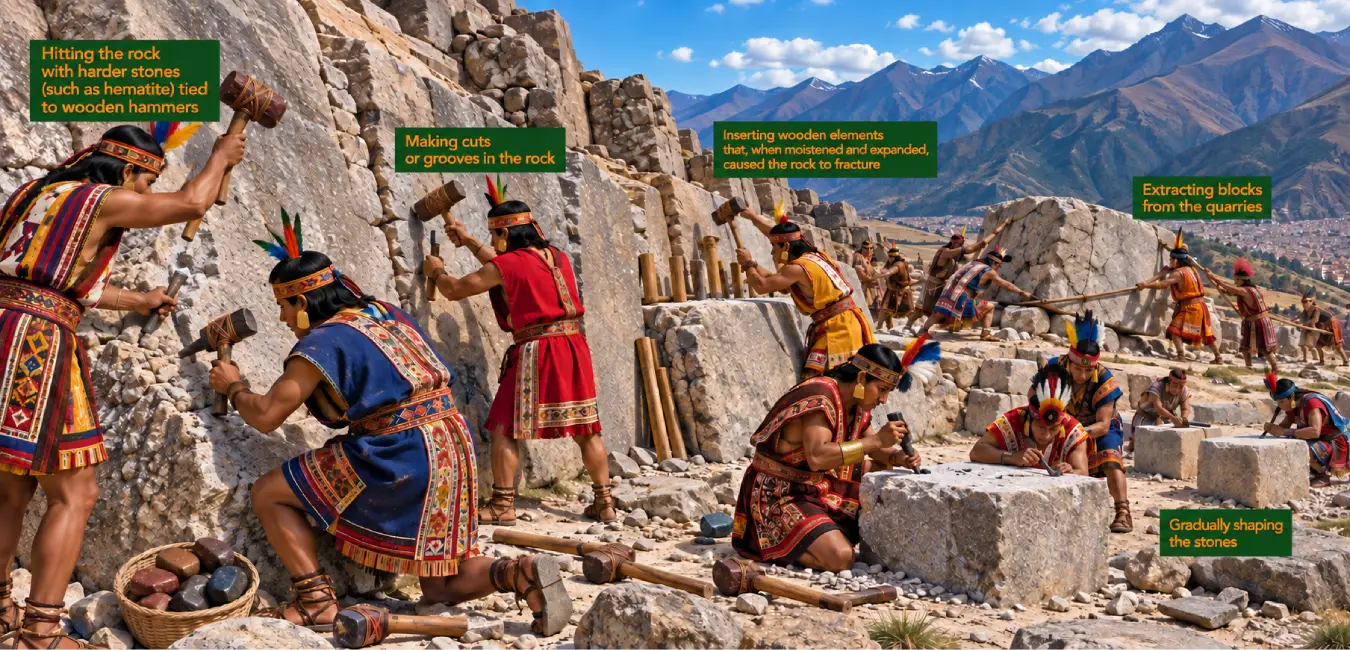
Inca stonemasons struck the rock with harder stones, such as hematite, to extract and shape the blocks directly at the quarries. They could also make cuts or grooves in the rock and insert wooden elements that, when moistened and expanded, helped cause the rock to fracture. Once the block had been extracted, the stonemasons gradually shaped it.
How did they fit the stones together?
Inca stonemasons first positioned each block to check its placement and then progressively modified the contact surfaces until they achieved the desired fit. Each stone had a specific position within the wall. The contact surfaces could be worked and polished before the block was permanently placed, allowing for extremely tight and precise joints.
Did they use mortar?
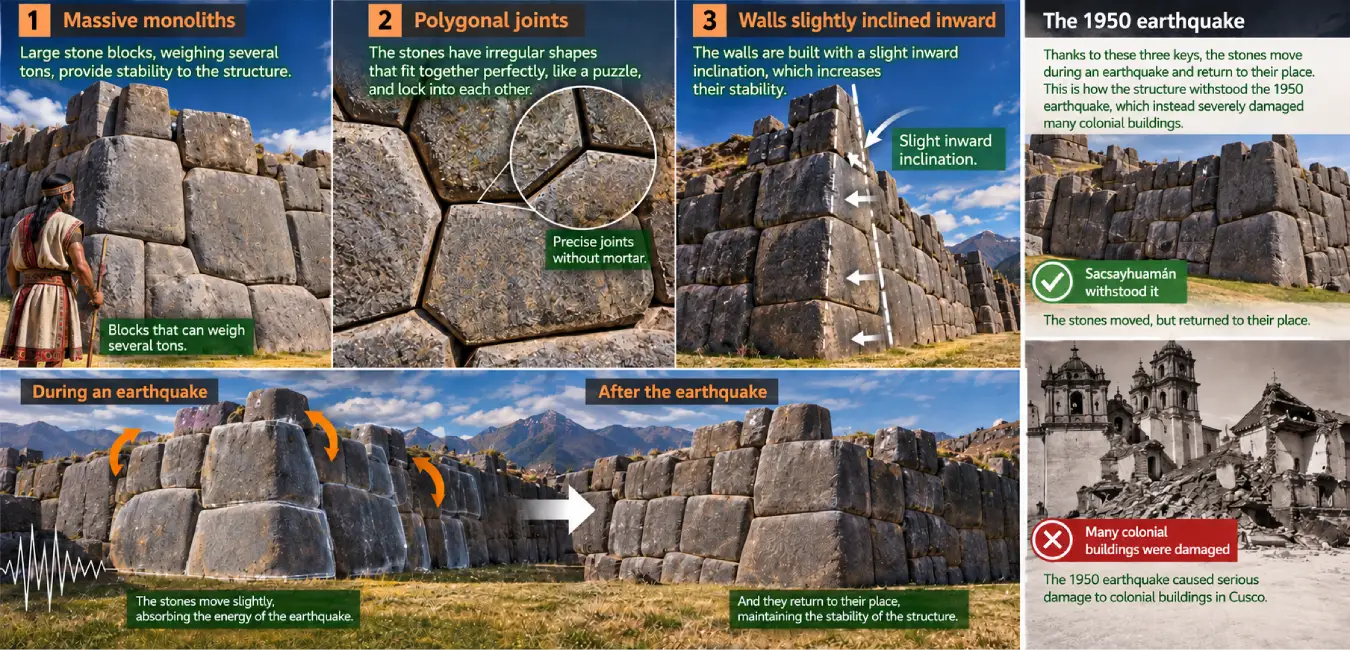
No, not in the large stone walls of Sacsayhuamán. The blocks were placed using a dry stone masonry system, without relying on mortar to hold them together. The stability of the wall depends mainly on the geometry of the blocks, their enormous weight, the contact between their surfaces, and the irregular shape of the stones, which creates multiple points of contact. This helps distribute loads and provides stability to the structure as a whole.
Why does Sacsayhuamán withstand earthquakes?
The secret lies in three key features: extremely heavy monoliths, polygonal joints that lock together, and walls that are slightly inward leaning. Thanks to this design, the stones can move during an earthquake and then settle back into place. This helped the complex withstand the 1950 earthquake, which severely damaged many colonial buildings.
Details that will surprise you
- Smart drainage: a network of channels carries rainwater away to prevent landslides and protect the walls.
- The puma's head: according to the tradition recorded by chroniclers, Inca Cusco was shaped like a puma, and Sacsayhuamán represented its head, a symbol of power and government.
- Architecture that respects the landscape: the Incas followed the topography rather than destroying it and used local materials, a lesson in sustainability that we at Responsible Trekking take very seriously.
Sacsayhuamán in numbers
Fact | Figure |
|---|---|
| Wall height | 10 to 30 feet (3 to 9 meters), depending on the terrain |
| Length of the zigzag walls | Around 1,312 feet (400 meters) |
| Overlapping platforms | 3 levels |
| Weight of the largest block | More than 100 tons (estimated) |
| Use of mortar | None |
| Size of the archaeological park | More than 3,000 hectares |
Myths and reality about Sacsayhuamán
Such remarkable precision, as you might expect, has given rise to numerous legends. Here are the most widely circulated ones and what we actually know:
Myth | What we know |
|---|---|
| It was only a fortress | It was primarily a temple; its military use came later and lasted only a short time. |
| It has tunnels leading to Qoricancha | No archaeological research has confirmed this connection. |
| It was impossible to move those stones | Planning, organized labor, and techniques such as ramps, rollers, and ropes were enough. |
| Extraterrestrials built it | The quarries, tools that have been found, and historical chronicles demonstrate that it was an Andean achievement. |
| Cusco had the exact shape of a puma | It is an interpretation based on the chroniclers and is widely circulated, but it is not a verified plan. |
Celebrations at Sacsayhuamán
Inti Raymi, the festival of the Sun
Every June 24. The Festival of the Sun begins at Qoricancha, continues through the Plaza de Armas, and reaches its main celebration on the Sacsayhuamán esplanade, with hundreds of actors, music, and dances representing the four suyos. Its modern version has been staged since 1944.
What is Warachikuy?
It is another celebration that brings the sanctuary to life through a recreation of the rite in which young Inca nobles passed into adulthood, undergoing tests of strength, speed, and courage. The prize was the “wara,” a garment that opened the doors to the army.
If You're Coming for Inti Raymi
Official grandstand seats sell out months in advance, and the archaeological site's schedule changes during those days. Contact us ahead of time so we can help you secure your spot and your hotel.
How to plan your visit to Sacsayhuamán
What are Sacsayhuamán's opening hours?
It is open every day from 7:00 a.m. to 5:30 p.m. Our advice: arrive before 9:00 a.m. At that time, the site is almost empty, the air is cool, and the light is perfect. That said, opening hours often change during the June festivities.
How much does admission to Sacsayhuamán cost?
Here's something many people don't know: there is no individual admission ticket. You enter with the Cusco Tourist Ticket, administered by COSITUC. These are the rates for foreign visitors:
Ticket Type | Includes | Adult | Student | Validity |
|---|---|---|---|---|
| Full | 16 attractions (Circuits I, II, and III) | S/ 130 | S/ 70 | 10 days |
| Partial Circuit I | Sacsayhuamán, Q’enqo, Puka Pukara, and Tambomachay | S/ 70 | S/ 40 | 1 day |
Applies to children under 17 with an identity document and young adults ages 18 to 25 with a valid university ID or ISIC card. Peruvians pay reduced rates.
Which tourist ticket is right for you?
It depends on your itinerary. Only doing the City Tour? The partial ticket is enough. Also visiting the Sacred Valley? Then the full ticket is cheaper than buying two partial tickets, and it also includes museums.
Where to buy the tourist ticket
It must be purchased in person, and some locations only accept cash. You have three options:
| Point of Sale | Address | Reference hours |
|---|---|---|
What is the best time to visit Sacsayhuamán?
The best time to visit Sacsayhuamán is from April to October. Even so, mornings during the rainy season are often clear, so plan your visit early.
Season | Months | What it's like | Best for |
|---|---|---|---|
How to get to Sacsayhuamán from downtown Cusco
You have three ways to reach the sanctuary, which sits on a plateau between the Saphy and Tullumayu rivers: two on foot and one by vehicle. The walking routes follow the ancient Inca roads that connected the sanctuary with the neighborhoods of San Cristóbal (Qolqampata) and San Blas (Toqocachi).
How to get there on foot
San Cristóbal route (20 to 30 minutes)
This is the most direct option. Leave the Plaza de Armas via Suecia Street, continue along Resbalosa Street to the San Cristóbal church, and from there, reach the Sapantiana control point. Short, yes, but steep; the route is approximately 1 mile (1.6 km).
San Blas route (45 minutes)
It's longer, but also more scenic. Take Triunfo Street, pass Hatunrumiyoc (the 12-Angle Stone), continue along Choquechaca, climb through Siete Borreguitos and Pumacurco, and you'll also reach Sapantiana. The route is approximately 1.2 miles (2 km).
Advice from our guides
Take a vehicle up and walk back down. This way, you avoid the uphill effort at 11,155 feet (3,400 m) while enjoying views of Cusco as you descend through San Cristóbal.
How to get there by taxi (10 to 15 minutes)
If you'd rather save your energy, you can take a taxi from the Plaza de Armas to Sacsayhuamán. The road distance is approximately 1.1 miles (1.8 km) and, without traffic, can be covered in just a few minutes, depending on traffic and your exact departure point.
“If you've only been in the city for a few days, take a taxi up and walk back down. If you're already acclimated, the uphill walk is short and very scenic.”
Can you visit Sacsayhuamán on your first day in Cusco?
You can, but take it easy. The route inside the complex is mostly flat, so it's a good first outing. The challenge is getting there. Keep these things in mind:
- You climb almost 985 feet higher: Cusco sits at 11,155 feet (3,400 m), while the sanctuary is around 12,139 feet (3,700 m).
- The uphill climb feels twice as hard: with less oxygen, San Cristóbal can feel endless.
- Your body needs time: rest for a few hours, drink water or coca tea, and save the alcohol for another day. Here you'll find more tips to avoid altitude sickness in Cusco.
- Take a car up and walk back down: it's the smarter combination.
- No more than 2 hours: walk slowly and take breaks.
Sacsayhuamán on your own or with a tour?
Both options work; it all depends on your time and how much you want to understand about what you're seeing.
On your own | With a tour |
Only have half a day? Then a tour combining Sacsayhuamán, Q’enqo, Puka Pukara, Tambomachay, and Qoricancha is, without a doubt, the most practical way to see them all.
Cusco City Tour with Responsible Trekking
- Includes: hotel pickup, transportation, an official bilingual guide, and visits to Sacsayhuamán, Q’enqo, Puka Pukara, Tambomachay, and Qoricancha.
- Duration: half a day, with morning or afternoon departures.
- Small groups and local operations focused on sustainable tourism.
What to see at Sacsayhuamán
The complex is larger than it appears from the entrance. This table will help you plan your visit:
Sector | Approximate time | Why visit it |
The Zigzag walls
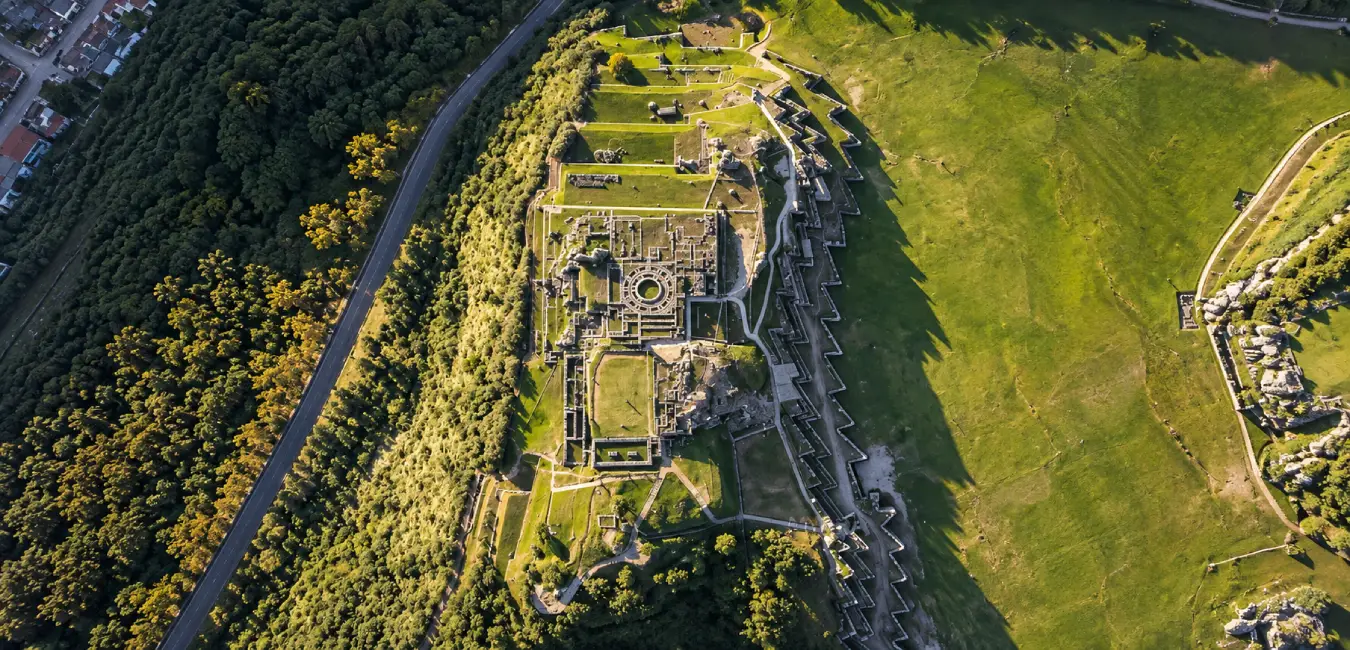
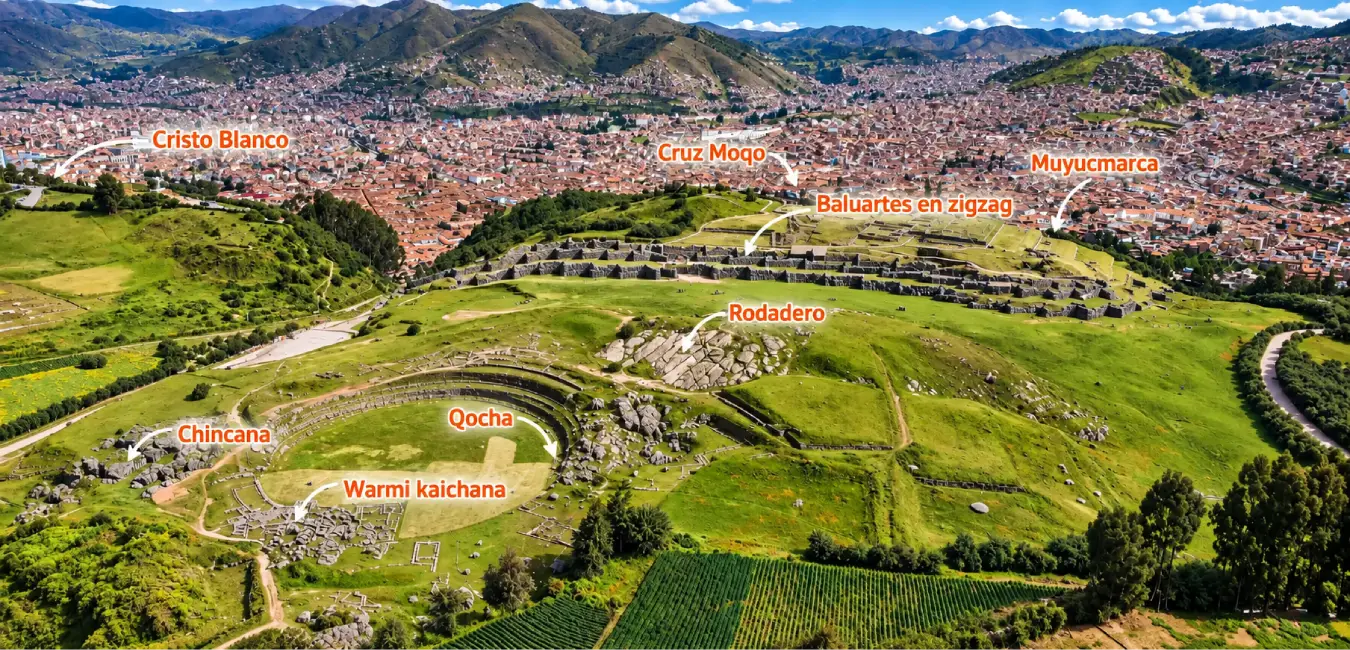
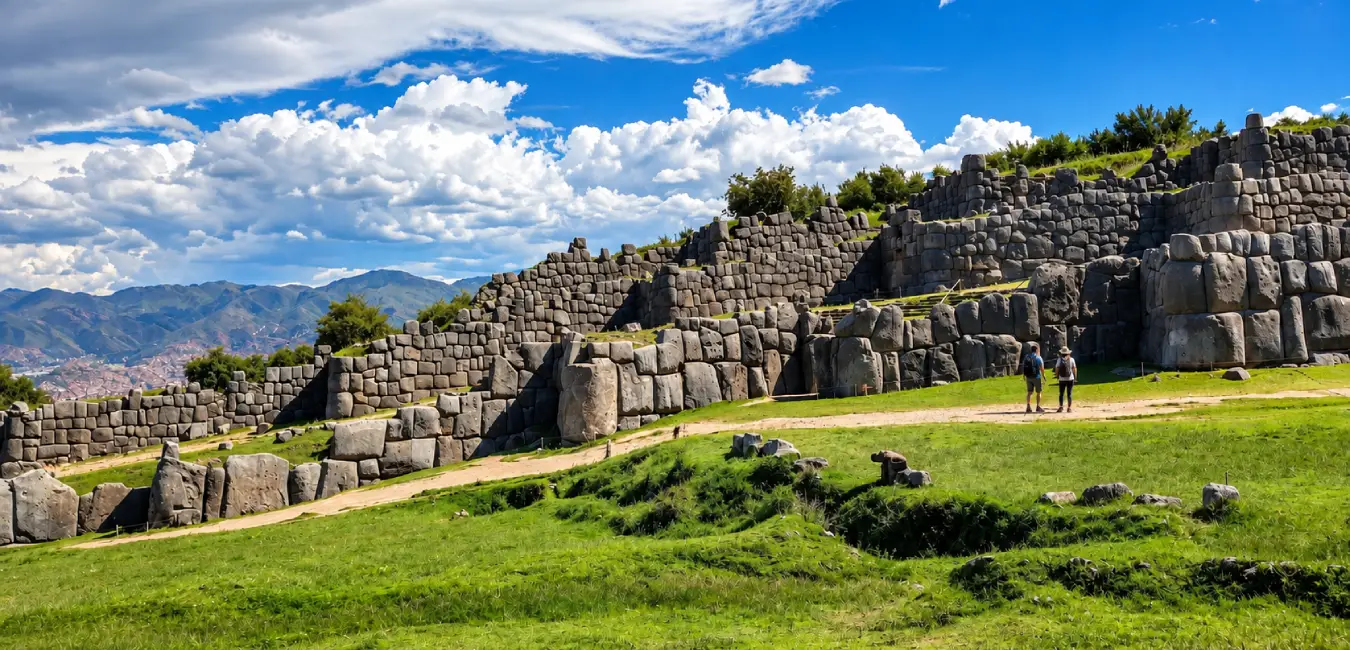
They form the signature image of the sanctuary, three overlapping terraces that extend in a zigzag pattern and frame the large ceremonial plaza. The first and lowest platform contains the largest monoliths. According to an Andean interpretation, this broken shape evokes Illapa, the god of lightning, thunder, and lightning bolts.
The gateways
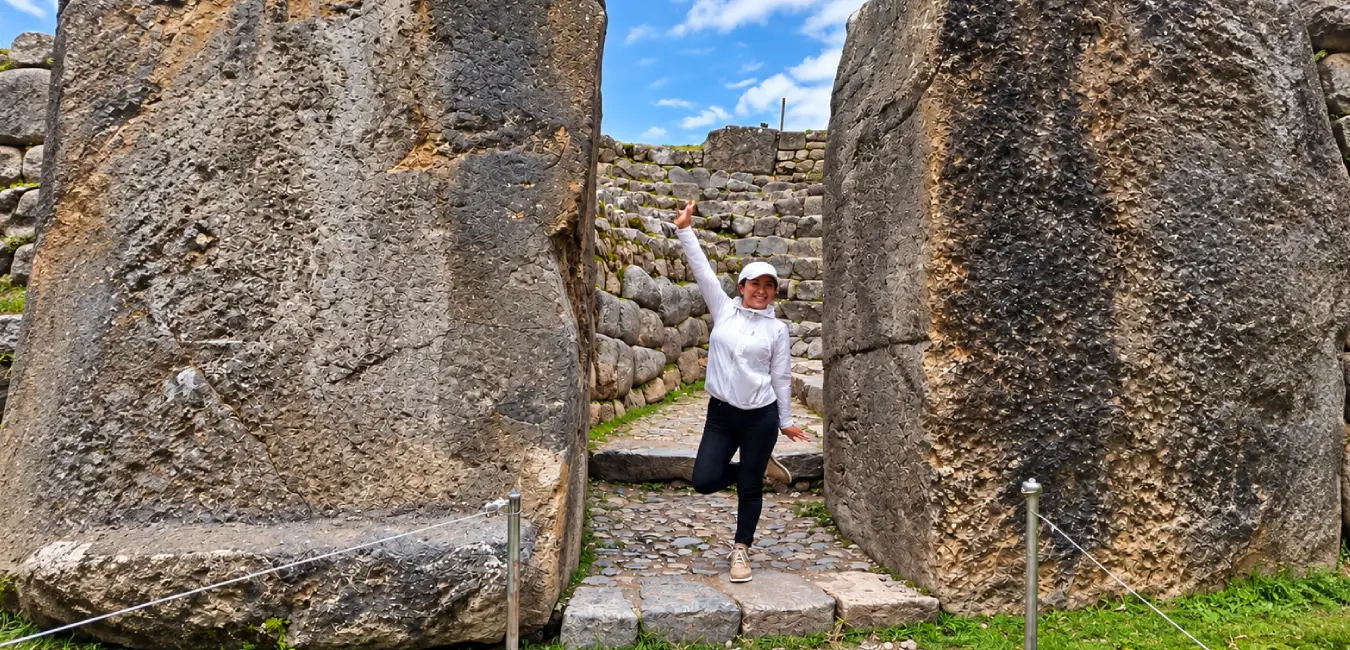
Between the terraces, you'll find 9 trapezoidal doorways: Tiopunku on the first terrace, Ajawanapunku on the second, and Wiracochapunku on the third. On the eastern side, you'll also find Rumipunku, the “stone gateway,” which led to the upper section.
Muyuqmarka and the towers
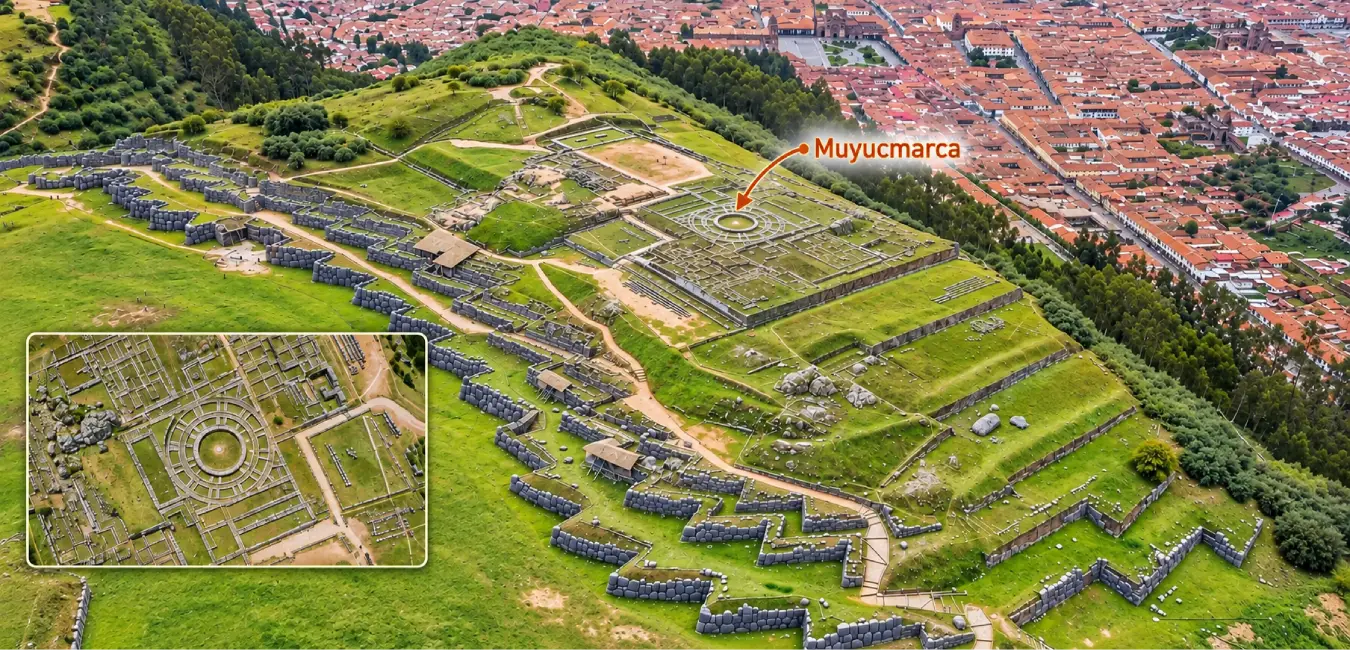
Three towers once stood above the complex: the circular Muyuqmarka, Paucarmarka, and Sallaqmarka. Today, only their foundations remain, but their channels reveal that Muyuqmarka stored water. From this point, you get one of the most complete views of Cusco.
El Rodadero
Cross the plaza and you'll reach El Rodadero, a diorite rock so smooth that generations of Cusco children have slid down it. Archaeologists have also documented burials here.
Inca's throne
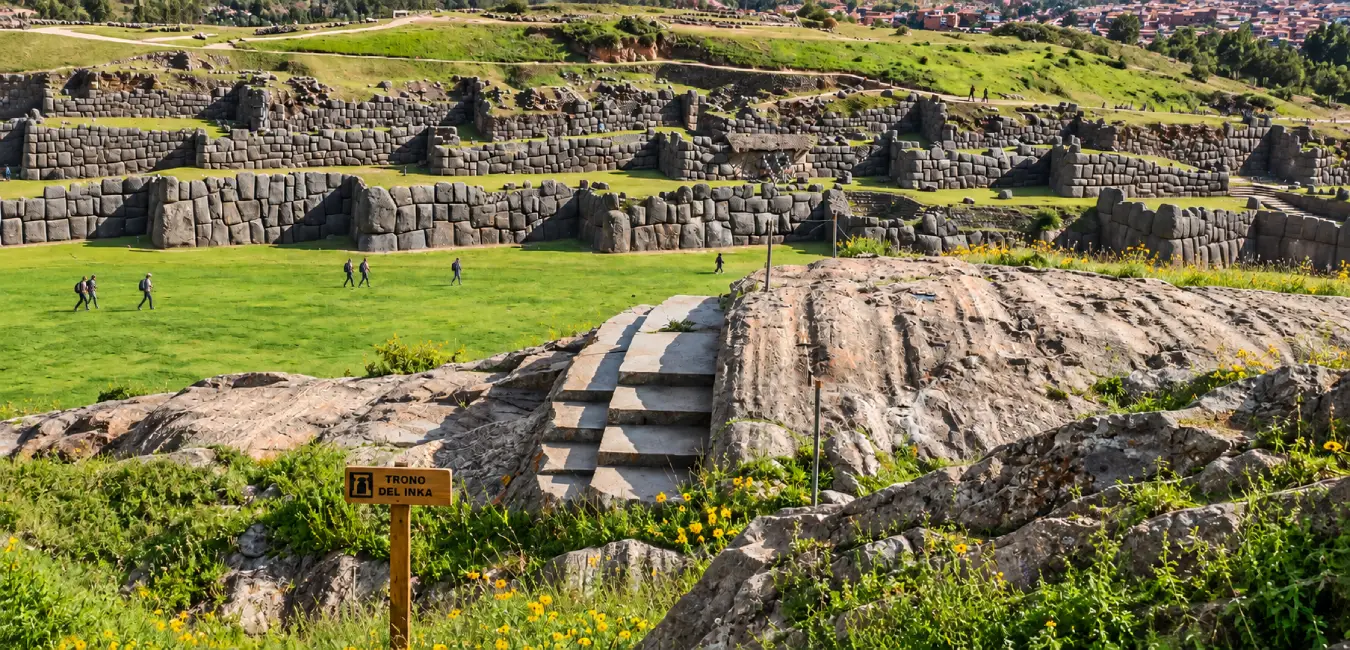
Nearby, you'll find the Inca's Throne, or Kusilluchayoq, a staircase carved directly into the bedrock with 14 finely carved steps, used for ceremonial purposes and offering views across the entire sanctuary.
La Qocha
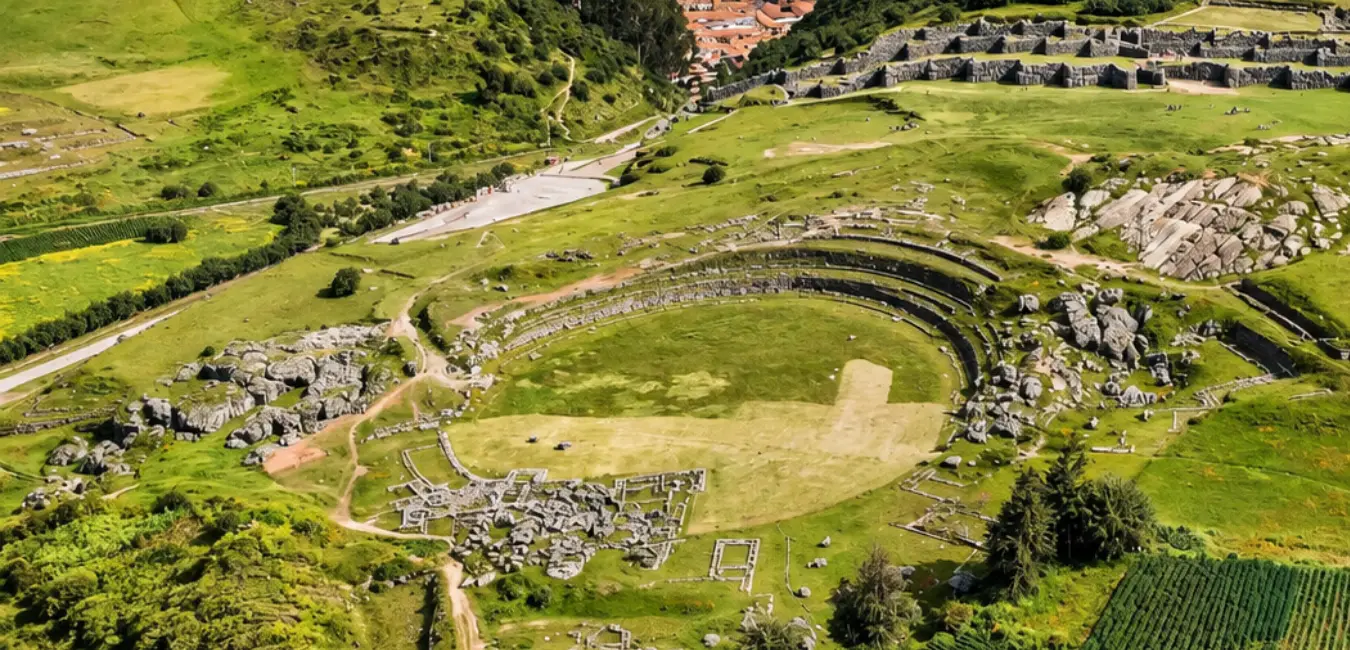
To the north, La Qocha extends across a large sunken circular courtyard with concentric walls and internal channels, probably associated with water and rituals.
Warmi Kajchana
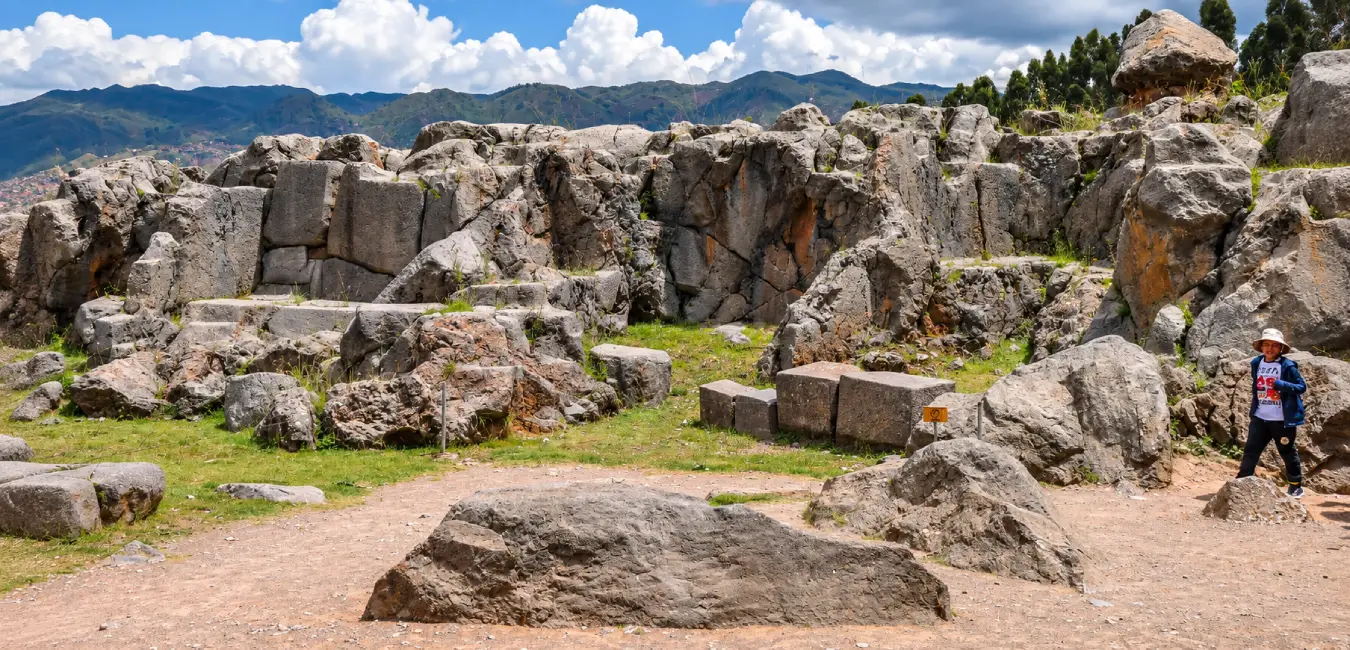
Warmi Kajchana, meanwhile, features stepped rock that resembles a series of seats, associated with fertility rituals.
The Chincanas
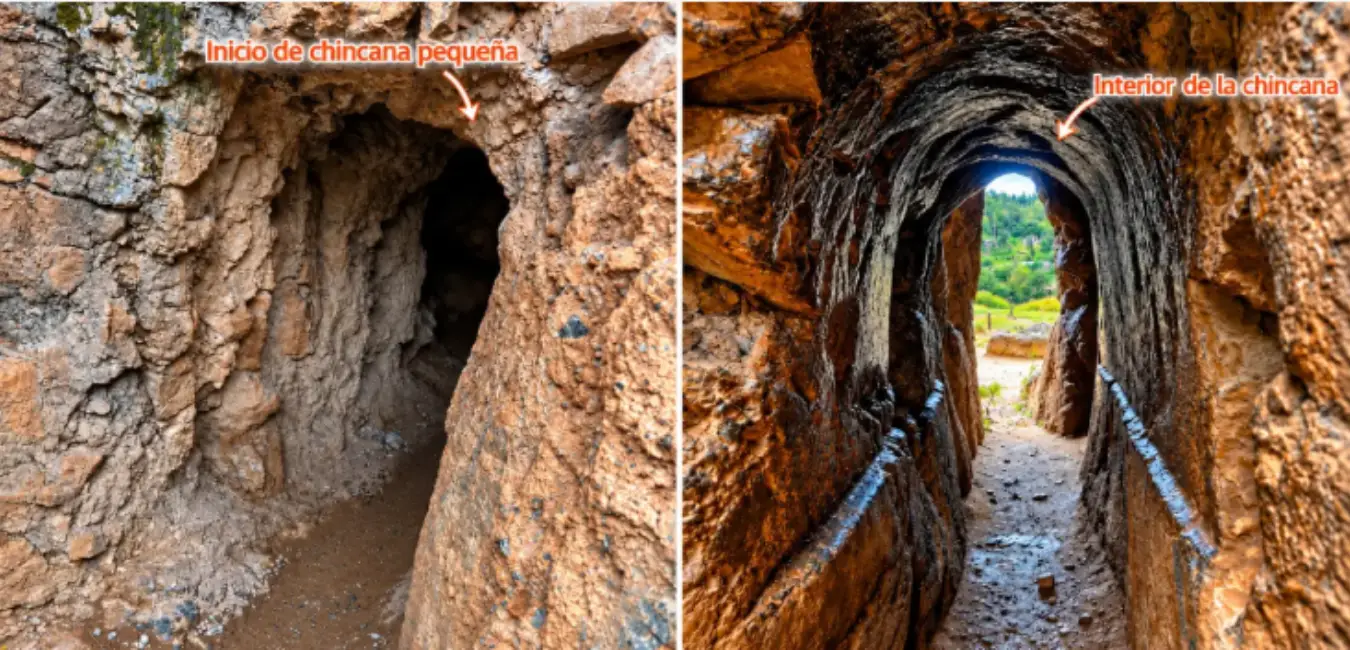
Finally, the Chincana is a narrow tunnel carved into limestone. It likely began as a natural drainage passage, but the Incas transformed it into a symbolic gateway to the Uku Pacha, the underworld.
Advice from our guides
Visit the different sections in this order: walls, towers, El Rodadero, Inca's Throne, Qocha, and Chincana. This way, you'll finish near the exit toward Q’enqo and Cristo Blanco and avoid retracing your steps.
Flora and fauna of Sacsayhuamán
Sacsayhuamán is also a green oasis for Cusco. As you walk, keep an eye out for these native plants of Cusco:
Native flora | Scientific name |
Fauna | Scientific name |
Half day route through Sacsayhuamán
Not sure how to organize your morning? We recommend these half day tours in Cusco. Here's the route we recommend to our travelers:
Time | Activity |
|---|---|
What else can you visit on the same Day?
Sacsayhuamán is the first stop on Circuit I of the tourist ticket. That's why we recommend taking advantage of the same day as part of your acclimatization:
- Cristo Blanco: An 8-meter statue on Pukamoqo Hill, created by Cusco sculptor Francisco Olazo in 1945 and donated by the Palestinian community; it serves as a natural viewpoint.
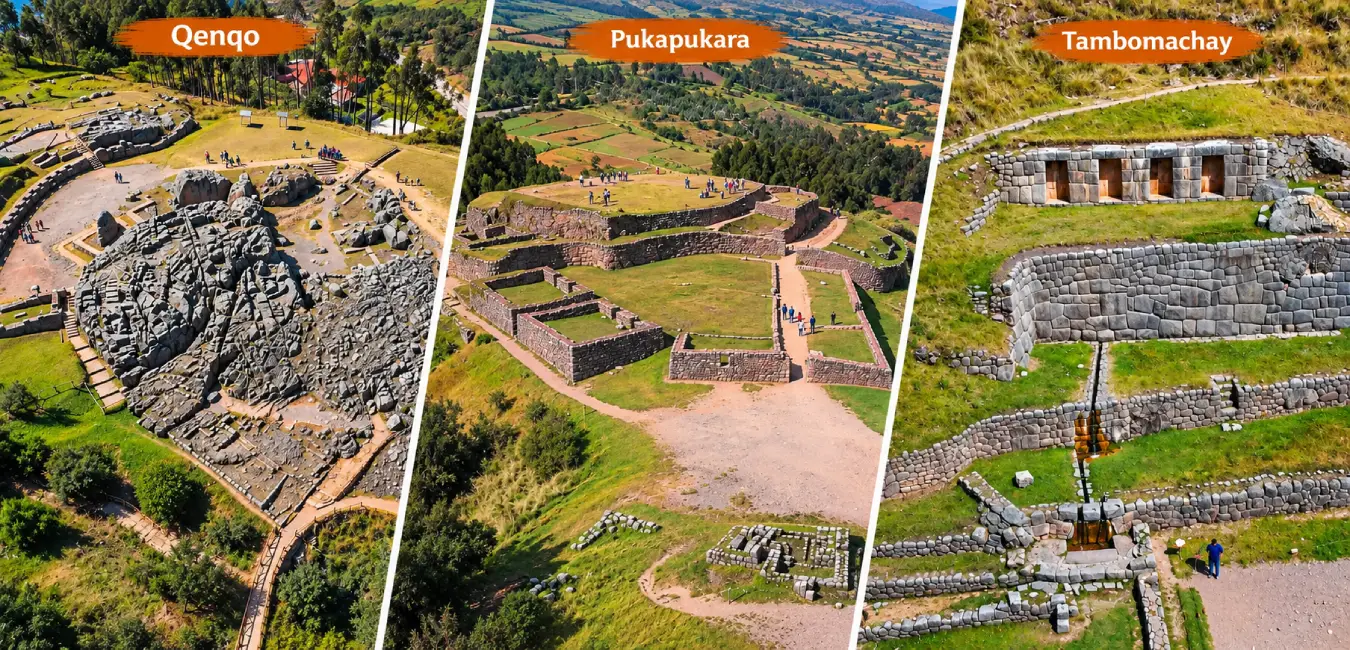
- Q’enqo: A sanctuary carved into the rock, with zigzag passageways and an underground altar dedicated to Pachamama.
- Puka Pukara: A control post on the road to Antisuyo, with wide views of the valley.
- Tambomachay: Known as the “Inca's bath,” it preserves 5 fountains that still flow and provides evidence of an ancient water cult.
- Inkilltambo: A lesser-visited sanctuary with carved niches and terraces beside a small stream.
- Coricancha and Cusco Cathedral: Back in the city center, they complete the story of Hurin Qosqo and colonial Cusco.
Can you explore Sacsayhuamán on horseback?
Yes, and it's a different kind of experience. Several routes leave from the area around the complex toward the Temple of the Moon and other lesser visited sanctuaries. It's ideal if you've already seen the classic sights and want open countryside, quiet surroundings, and scenery.
If You Prefer to See More
Replace the walk downhill with transportation to Q’enqo, Puka Pukara, and Tambomachay, or join the afternoon City Tour, which includes these sites and Qoricancha.
Tips for your visit to Sacsayhuamán
What to Bring to Sacsayhuamán
- Tourist ticket and your original passport or national ID.
- Wide brimmed hat, sunglasses, and sunscreen.
- Layered clothing and a lightweight jacket.
- Shoes with rubber soles for the stones and grass.
- Water in a reusable bottle, cash in Peruvian soles, and your camera.
- Waterproof poncho if you're traveling between November and March.
What is not allowed?
Protecting Sacsayhuamán is everyone's responsibility. During your visit:
- Do not climb, scratch, or otherwise damage the walls by touching them.
- Do not leave trash or organic waste behind.
- Do not pick plants or feed the animals.
- Do not camp or fly drones without authorization from the Ministry of Culture.
- Do not conduct commercial filming or photography without permission.
7 mistakes to avoid when visiting Sacsayhuamán
- Underestimating the altitude. At 12,139 feet (3,700 m), everything feels more tiring.
- Walking uphill on the day you arrive. Your body isn't ready yet.
- Wearing just one layer of clothing. In one morning, you can go from cold temperatures to strong sunshine.
- Thinking it was only a fortress. You'll miss its sacred side.
- Staying only at the walls. Some of the best parts are also on the other side of the plaza.
- Wasting your ticket. The same ticket gets you into three other nearby sites.
- Skipping Qocha and Chincana. They are the quietest corners of the complex.
Where to eat and stay near Sacsayhuamán
Recommended restaurants
Restaurant | Location | Specialty |
|---|---|---|
Whether you're eating at a restaurant or the market, try Chiriuchu, Cusco style adobo, or mushroom kapchi, and pair them with chicha de jora, frutillada, or coca tea.
Hotels on the route to Sacsayhuamán
If you'd like to stay near the walking route, consider Casa Cartagena (Pumacurco 336), Belmond Hotel Monasterio (Plazoleta Nazarenas 337), or Inkaterra La Casona (Plazoleta Nazarenas 211).
“You can't truly understand Sacsayhuamán through photographs alone: you have to stand in front of its walls, feel the wind across the plaza, and listen to the stories held within its stones. That's why at Responsible Trekking, we accompany you with Cusco-born guides, small groups, and a genuine commitment to protecting our heritage and Andean communities. Book your Cusco City Tour or combine it with the Sacred Valley and Machu Picchu in one trip.”
Frequently asked questions about Sacsayhuamán
How much does a taxi from Cusco to Sacsayhuamán cost?
Usually between S/ 10 and S/ 15 from the historic center. Agree on the fare before getting in or use a transportation app.
Can you visit Sacsayhuamán without a guide?
Yes, you only need your ticket. Even so, official guides are available at the entrance to help you interpret each section.
Is it safe to visit Sacsayhuamán?
Yes. The route has signage and security personnel. As in any busy place, keep an eye on your belongings.
How do you pronounce Sacsayhuamán?
In Spanish, it's usually pronounced approximately “sak-say-wa-MAHN,” although pronunciation can vary depending on the speaker.
Can you visit Sacsayhuamán with children?
Yes. Sacsayhuamán can be a good destination for families with children, especially because there are open spaces and areas that can be fun for younger visitors, such as El Rodadero. Keep in mind, however, that you're at around 12,139 feet (3,700 m) above sea level, with uneven sections and stone surfaces, so it's best to walk at a relaxed pace and keep a close eye on young children. COSITUC also states that children under 10 years old can enter free with the Tourist Ticket when they present the required identification document.
Is Sacsayhuamán accessible for people with reduced mobility?
Access is not fully accessible in every area. The complex sits on uneven terrain, with changes in elevation, stone paths, stairways, and sections that can be challenging for people with reduced mobility. If you need an adapted route, it's best to plan ahead and check the access conditions on the day of your visit.
Are there restrooms at Sacsayhuamán?
Yes, there are restrooms associated with the visitor area, but we recommend using them before starting your visit rather than relying on finding facilities in every section of the complex. Sacsayhuamán is quite large, and some areas are far apart. If you're visiting Q’enqo, Puka Pukara, and Tambomachay as well, it's especially helpful to plan your restroom stops in advance.
What is the best time to take photos at Sacsayhuamán?
For photography, the early morning is usually an excellent option: the light is softer, temperatures are comfortable, and you'll generally find fewer visitors. If you're looking for warmer light, the afternoon can also work very well. In either case, avoid the strongest midday sunlight if you want to photograph the details of the stones without overly harsh contrasts.
Can you visit Sacsayhuamán and Machu Picchu on the same day?
In theory, it may be possible, but it's not a combination we recommend. Sacsayhuamán is close to Cusco, while reaching Machu Picchu requires traveling to Aguas Calientes and then continuing to the sanctuary. The most practical option is to visit Sacsayhuamán as part of your Cusco itinerary and dedicate a full day to Machu Picchu, especially if you want to enjoy each experience without rushing.
Can you buy the Sacsayhuamán tourist ticket online?
No. COSITUC currently indicates that the Cusco Tourist Ticket must be purchased in person. Sacsayhuamán is part of Circuit I, and you can purchase the corresponding partial ticket for this circuit or the Full Tourist Ticket, depending on the places you want to visit during your trip.