
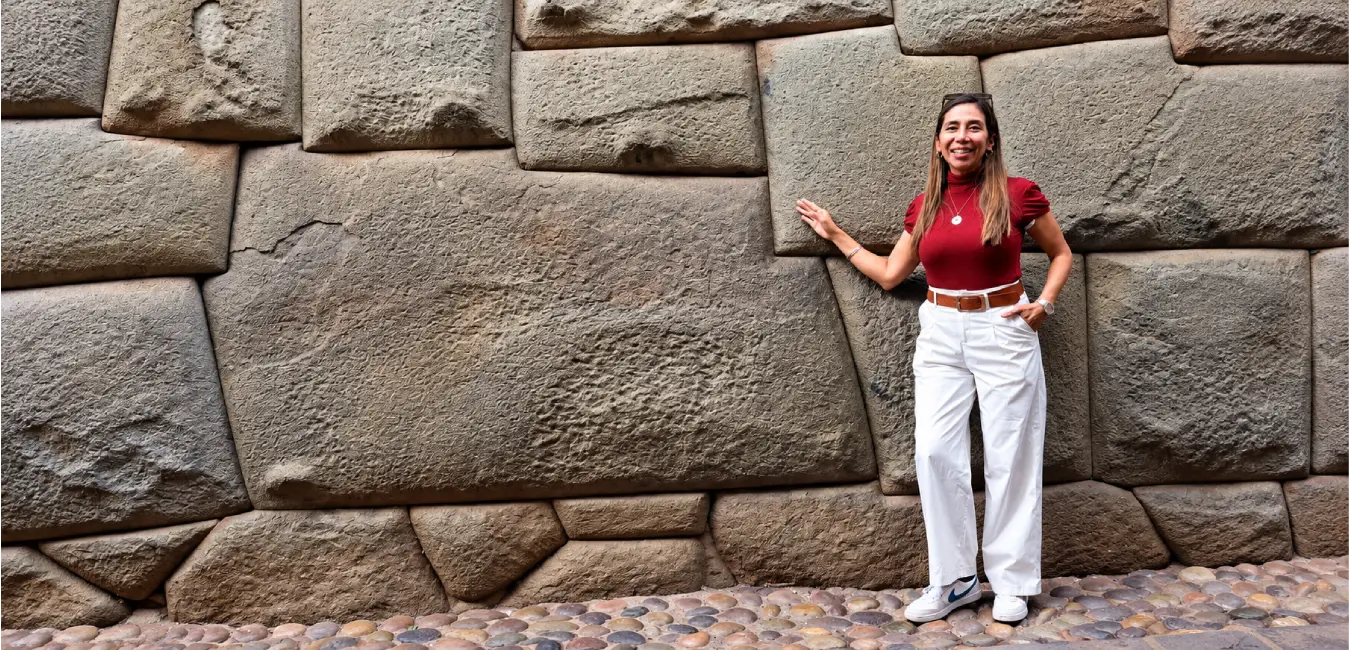
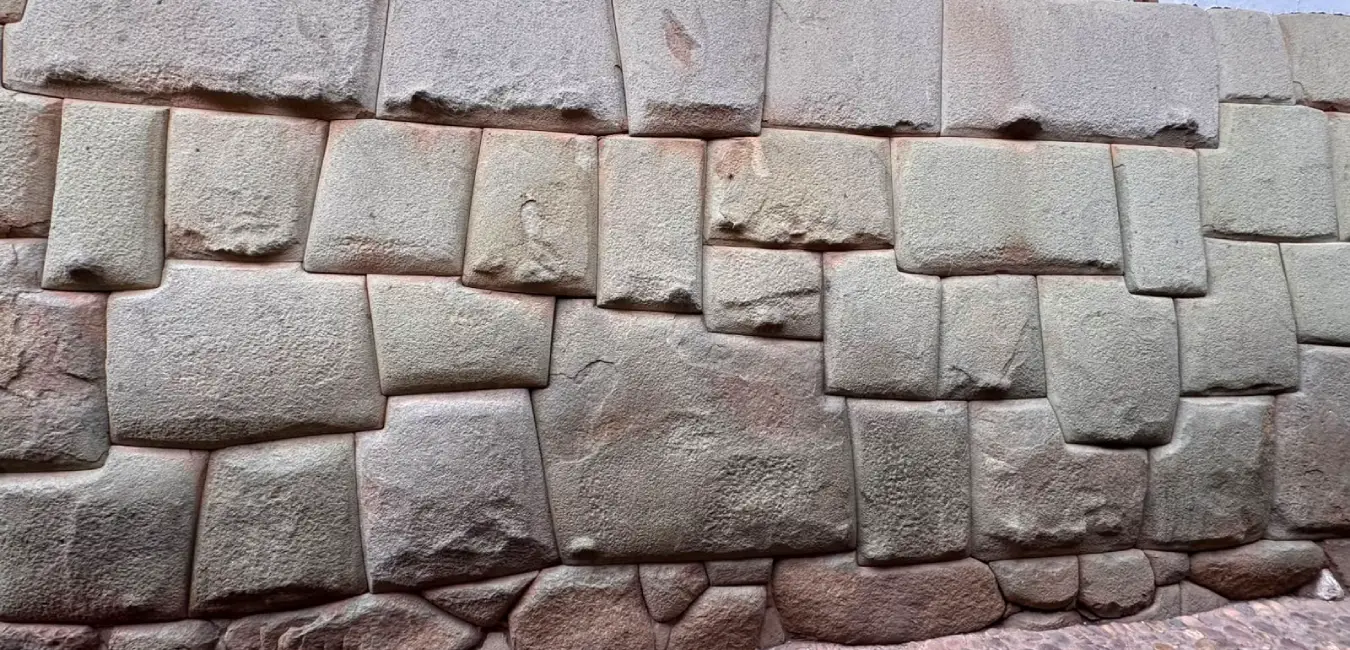
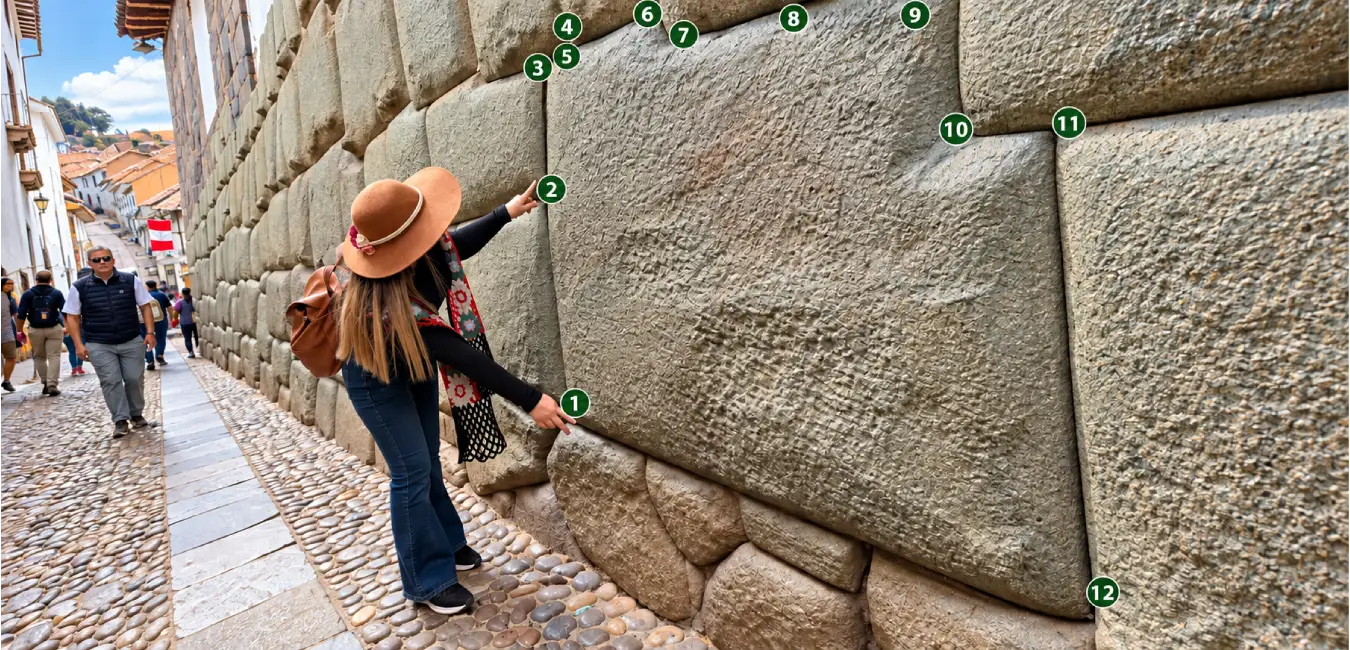
The Stone of the 12 Angles in Cusco is one of the most renowned examples of Inca architecture and engineering. Located on Hatun Rumiyoc Street, this massive stone stands out for its twelve angles and the precision with which it fits into the ancient Inca wall. In this guide, you will discover its history, significance, and location, as well as how to get there and key tips for visiting this symbol of the Inca legacy.
Getting to know the twelve angled stone
The 12 angled stone blends art and science and is considered an architectural icon of the city of Cusco, Peru. This architectural enigma challenges the modern understanding of scholars and scientists. It has endured for centuries, standing the test of time with precisely fitted angles that require no mortar.
What does “12 angled stone” mean?
The name has two explanations, and both are correct:
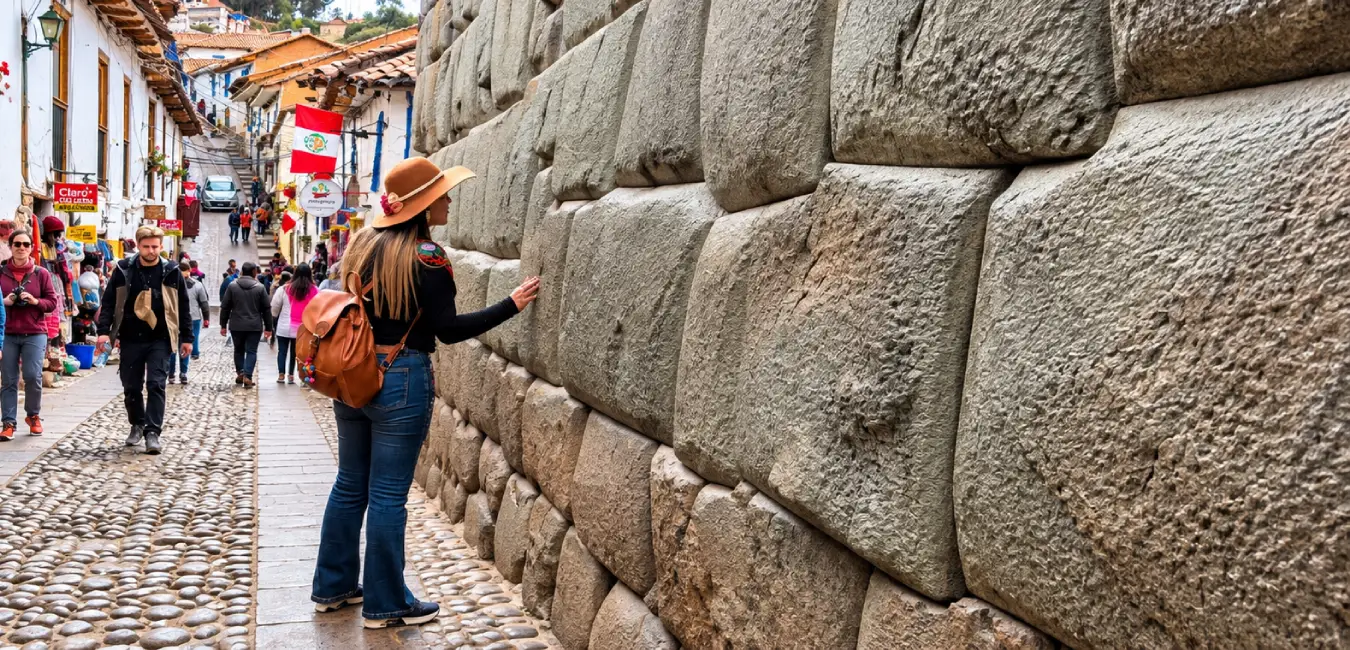
- In Quechua, Hatun Rumiyoq means "large rock." In this expression, "hatun" means "large," while "rumiyoq" refers to a stone or rock.
- In Spanish, "Twelve angled stone" describes the twelve corners carved into the block, which forms part of an Inca wall.
Location and how to get to the 12 angled stone
The stone is located in Cusco's historic center, on Hatun Rumiyoq Street, just a few blocks from Cusco's Plaza de Armas.
Walking from Cusco's Plaza de Armas (5-8 minutes)
- Once you arrive in Cusco, head to the Plaza de Armas, also known as the main square.
- From there, walk uphill along triunfo street.
- Continue straight until you reach Hatun Rumiyoq street.
- Look for the long, dark Inca wall. The stone protrudes slightly, almost like a pillow fitted into the wall.
Taking a taxi from another part of the city
The ride usually costs around 10 to 15 soles. However, the historic center is so compact that walking is often more convenient. You can also enjoy the cobblestone streets along the way.
Weather, language, and the best time to visit
Before heading out, it helps to understand the city's climate and local context. This table summarizes the essentials:
Topic | What you should know |
|---|---|
| Weather | Mild and dry. Temperatures range from around 5°C (41°F) at night to approximately 20°C (68°F) during the day. Nights can be colder in June and July. |
| Seasons | Rainy season runs from November through March. The dry season lasts from April through October. |
| Languages | Spanish is the main language, followed by Quechua, the ancestral language of the Incas. Tour guides also commonly speak English and other languages. |
| Best time to visit | You can visit year round because the stone is outdoors. However, the dry season offers a better chance of clear skies. |
How do you get to the 12 angled stone?
To see the twelve angled Stone, you first need to reach the city of Cusco. Once there, head to the main square. From there, walk northeast along triunfo street until you reach Hatun Rumiyoq street, where you can see the famous twelve angled stone.
History of the 12 angled stone
The Inca Period
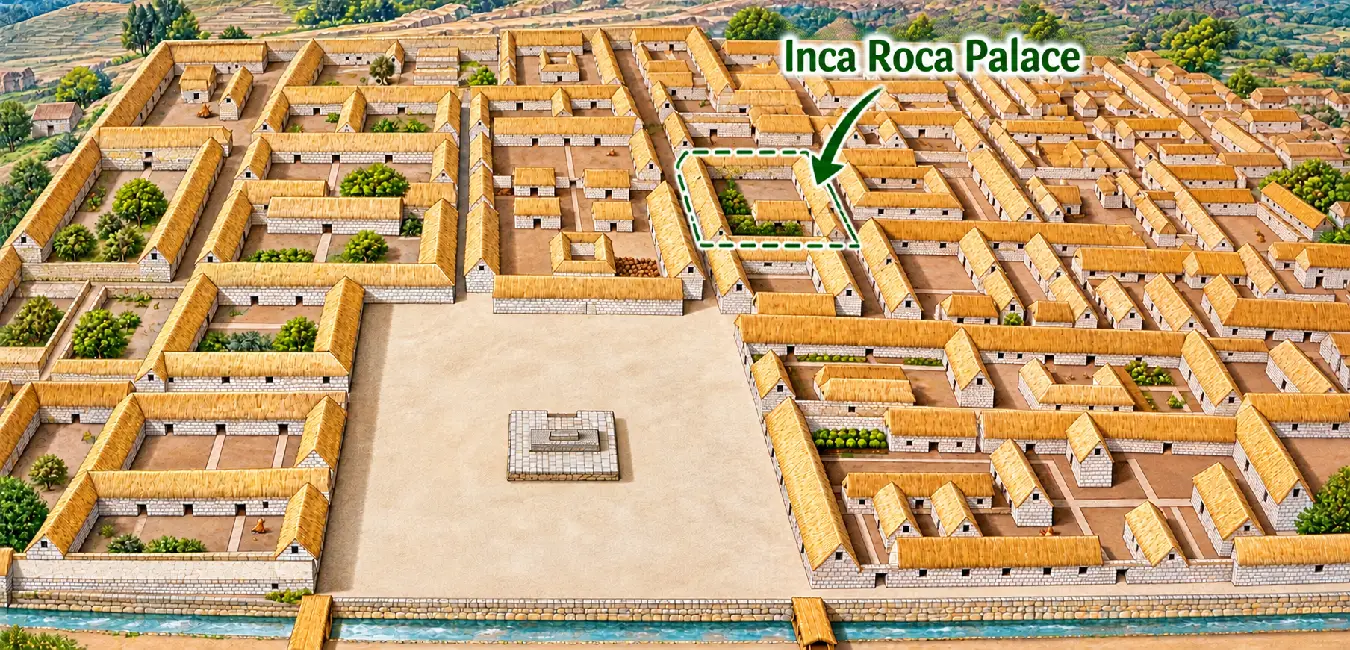
The stone dates back to the time of Inca Roca, the sixth Inca ruler and the first of the Hanan Cusco dynasty. After Capac Yupanqui died, Inca Roca assumed power and decided to build his own palace. This established the tradition of each Inca ruler building a residence of his own.
The History of Inca Roca
In addition, Inca Roca divided the city into Hanan Cusco and Urin Cusco. According to tradition, after his death in the late 14th century, his panaca (royal family lineage) became known as Wika Kirau Panaca Ayllu.
Construction of Inca Roca's Palace
Inca Roca built his palace in Coracora using the mita labor system and green diorite stone, employing massive polygonal masonry without mortar. The famous twelve angled stone is integrated into this wall. It measures 2 meters (6.6 feet) and weighs 6 metric tons (6.6 US tons), contributing to the structure's stability. The stone is part of a 15 meter long (49 foot long) wall that symbolizes the palace's power and grandeur. The palace served both civic and domestic purposes.
Key facts about Inca Roca
- Family: He was the father of Yahuar Huácac, another well known Inca ruler.
- Expansion: Tradition credits him with launching the first military expeditions beyond the Cusco Valley. During these campaigns, he subdued the Maskas of Paruro, the Pinaguas of Muyna, and the people of Caytomarca.
- Water and Agriculture: He promoted the canalization of the Huatanay river, which was essential for irrigation and agricultural development in the region. Canals were also built in the four Inca neighborhoods to improve water distribution.
- Education: He founded the Yachay Huasi, an institution designed to educate Inca princes and prepare future leaders.
- Roads: He is credited with establishing the first road to Collasuyu, one of the four regions of the Tahuantinsuyo, helping strengthen control over the empire.
Did you know?
The wall is approximately 15 meters (49 feet) long and symbolizes the palace's power and grandeur. The building served both civic and domestic purposes.
The Colonial Period
When the spanish arrived, they removed the Incas from the palace. On its foundations, they built the house of Vicente de Valverde, the first bishop of Cusco. He lived there with his sister, María Valverde, who was married to the Almagrist conquistador Rodrigo de Ordóñez.
16th Century
In the mid 17th century, the palace passed into the hands of Pablo Costilla and Gallinato, the second Marquis of San Juan de Buenavista.
In 1719, the property became part of the family of the Marquises of Rocafuerte, following the marriage of the fifth marchioness, Constanza Costilla Gallinato de Valverde, to Nicolás Jiménez de Lobatón y Azaña, the first Marquis of Rocafuerte. This family gave the building the features it retains today.
20th Century
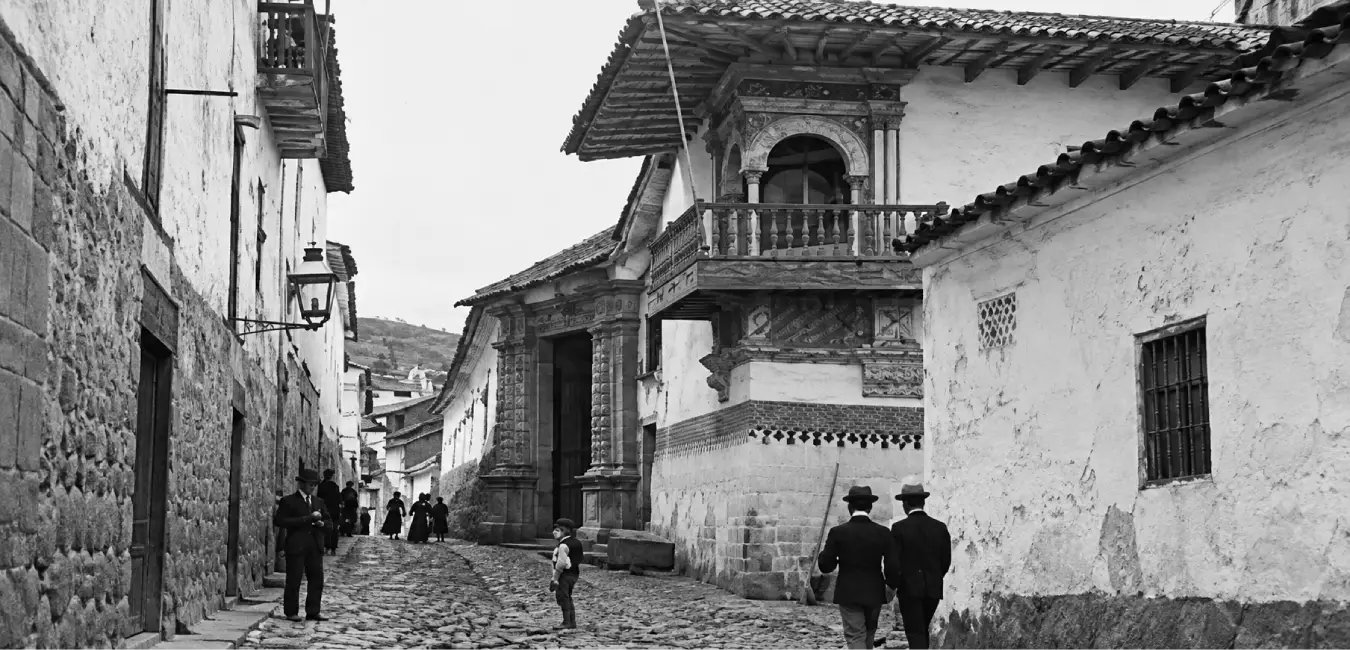
Felipe Hermosa and Sarmiento, the first archbishop of Cusco, purchased the building to convert it into the Archbishop's Palace.
In 1966, Monsignor Ricardo Durand Flores changed its purpose. With the help of collector José Orihuela Yábar, who owned a notable collection of Cusco paintings, he transformed the palace into the José Orihuela Yábar Art Museum.
The modern era
- On March 8, 2014, the stone was vandalized when someone sprayed it with red paint. Traces of the damage are still visible.
- In 1983, UNESCO declared the city of Cusco a World Heritage Site. The stone is also recognized as part of Peru's National Cultural Heritage.
- Today, the building belongs to the Archdiocese of Cusco and houses the Museum of Religious Art.
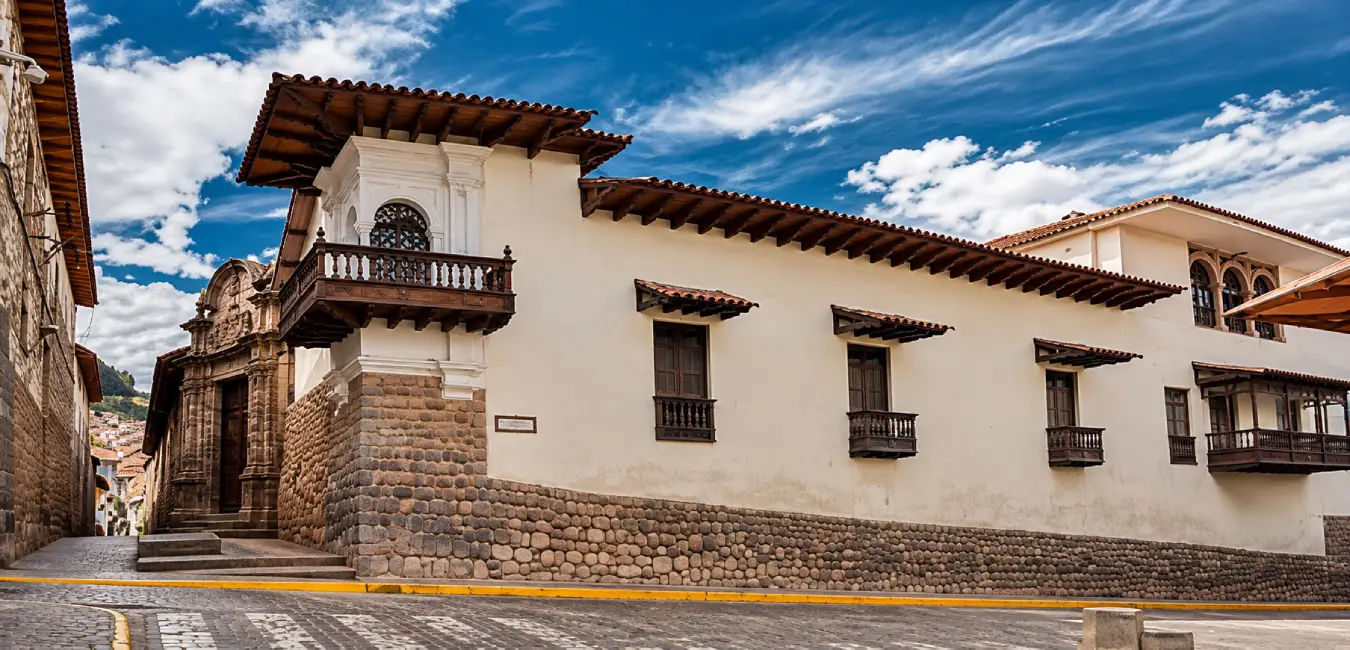
In summary...
The stone represents the resilience of Inca culture in the face of colonization. It also shows how two different cultures merged and survived alongside each other.
Architectural wonders
As an architectural feature of Inca Roca's palace, the twelve angled stone symbolizes the power this complex represented within Inca society. Today, it has become a cultural and tourist symbol, valued by locals and visitors alike. The stone is admired as an example of the advanced technology of Inca culture, as well as the remarkable precision in craftsmanship and structural engineering that the Incas achieved.
The 12 angled stone at a glance
Fact | Details |
|---|---|
| Location | Hatun Rumiyoq Street, historic center of Cusco |
| Walking distance | 5-8 minutes from Plaza de Armas |
| Angles | 12 |
| Rock type | Green diorite, of volcanic origin |
| Size | Varies by source. Some sources describe it as approximately 1 meter (3.3 feet) high and 1.20 meters (3.9 feet) long. |
| Possible Quarry | San Blas, formerly known as Toqocachi (according to local guides) |
| Admission | Free; no tourist ticket required |
| Hours | Open 24 hours because it is located on a public street |
| Visit duration | 15-20 minutes |
| Approximate weight | About 6 metric tons (6.6 US tons) |
How the Incas built the 12 angled stone
Construction techniques
Stoneworkers shaped the rock using sledgehammers, hammers, and copper and bronze chisels. They then polished it with wet sand. They also used the cushioning technique, which leaves the face of the stone slightly bulging outward. That is why it looks like a pillow embedded in the wall.
Important fact...
According to local guides, the blocks were extracted from a nearby quarry in San Blas and split using fire, water, and percussion. Many people then hauled them using ramps, ropes, and wooden rollers. There is no definitive explanation, but the key seems to have been planning, patience, and skills accumulated over generations.
A structure designed to withstand earthquakes
The 12 angles are not just for looks. The Incas designed this joint so the stones would fit together like an interlocking system, providing stability during earthquakes. In other words, beauty and strength go hand in hand. This precision sets the stone apart: its twelve geometric angles fit perfectly with the surrounding blocks.
Take a look at the entire wall
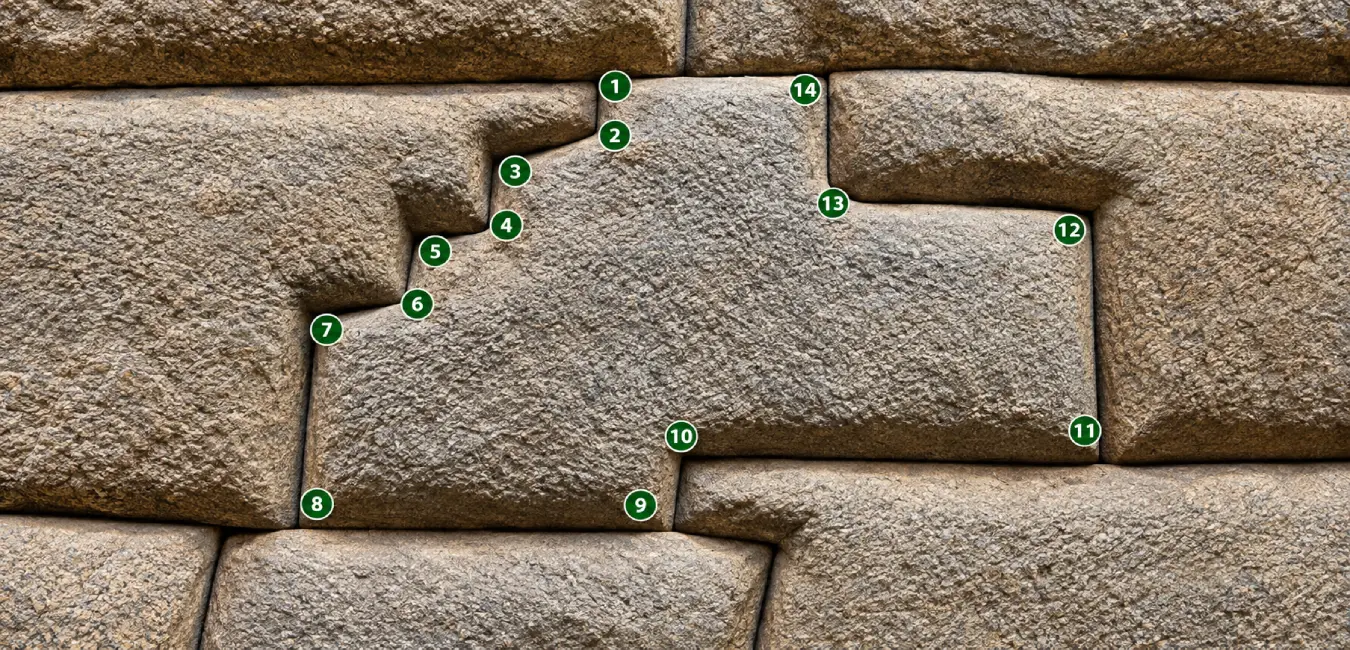
Don't stop at taking a photo of the famous stone. Other blocks nearby have even more angles, including the thirteen angled stone. Some guides also point out shapes in the wall that resemble a puma, a snake, and a condor. Take a moment to look over the entire wall.
A little more History...
This street was also part of a Qhapaq Ñan road that connected Cusco with Antisuyu, from where coca leaves used in ceremonies were brought. In other words, you are not walking along just any alley, but along an ancient Inca route.
Places near the 12 angled stone
The location has another advantage: almost everything is just a short walk away. You can easily plan a full outing through the historic center.
Place | Why visit |
|---|---|
| Museum of religious art | Located in the same building, it houses an impressive collection of colonial religious art. |
| San Blas neighborhood and church | Built over an Inca structure, the neighborhood stands out for its narrow streets and art workshops, including that of the famous Hilario Mendívil. |
| Plaza de Armas | Also known as the Main Square, it is just a few blocks away. Here, you can appreciate the city's urban layout. |
| Cusco Cathedral | A magnificent example of colonial architecture, located right on the main square. |
| Sapantiana Aqueduct | An ancient hydraulic structure that reflects Inca ingenuity. |
| San Blas Lookout | Offers panoramic views of the entire city. |
| Coricancha | One of the most important temples of the Inca Empire, dedicated to the sun god. During the colonial period, it was converted into a convent. |
Tips and recommendations for your visit
How to enjoy the stone
- Do not touch the stone. This helps preserve its integrity.
- Avoid the crowds. This is a popular attraction, so visit early in the morning or during less crowded hours.
- Look before you take a photo. Pay attention to the joints, as there is almost no space between the stones.
What to bring
- A camera to capture the details of the stone and its surroundings.
- Cash, including coins and small bills, if you plan to buy souvenirs or handicrafts.
- A warm jacket, because mornings and nights in Cusco are cold.
Safety
- Keep an eye on your belongings. Cusco is a safe city, but it is wise to stay alert, as you would at any tourist destination.
- Watch where you walk. The streets are narrow and busy, so check traffic before crossing.
- Avoid dark or deserted streets after nightfall.
- Be polite to street vendors. Many depend on these sales to make a living, so respond kindly even if you do not want to buy anything.
Explore Cusco with a local guide. At Responsible Trekking, we work with small groups and are a 100% locally owned tour operator. If you want to follow the Inca trails beyond the city, our Llama Trail: Qoricancha to Machu Picchu takes you along the route from Sacsayhuamán to the Andean Sky Dome, accompanied by llamas. You can also combine your experience with Machu Picchu via the classic Inca Trail, the Short Inca Trail, or by train.
Frequently asked questions about the 12 angled stone
Do you have to pay to see the twelve angled stone?
No. The stone is part of an Inca wall on a public street, so there is no admission fee and you do not need a tourist ticket.
What makes the 12 angled stone special?
The precise carving of its twelve corners. The Incas achieved this without modern technology, demonstrating their advanced engineering skills and remarkable precision.
Is it safe to visit?
Yes. The area is monitored by the police and local security patrols. However, as at any tourist destination, it is wise to keep an eye on your belongings.
Can i touch the stone?
No. Conservation rules prohibit touching it because sweat and salts from our skin can damage the stone over time.
Why was the stone not destroyed during colonization?
The Spanish reused Inca buildings and constructed their homes on top of the existing foundations. That is why the stone remains in its original location.
Are there restaurants near the stone?
Yes. Cusco's city center has restaurants, cafés, ice cream shops, and markets offering gourmet, traditional, and local food to suit different tastes and budgets.
Can i visit at night?
Yes, because the street is public and is usually illuminated. Even so, go with someone else and avoid dark or deserted stretches.
What is the best way to learn about its history?
Read about it first, then visit with a professional guide who can enrich your experience with details you might not notice on your own.
Can i visit on my own?
Yes. However, I recommend reading about its history beforehand or using a mobile guide to make the most of your visit.
Are there any restrictions on taking photos?
No. However, because the area gets crowded, politely ask others not to block the view if you want to photograph the entire stone.
How long does a visit take?
Between 15 and 20 minutes. If you combine the visit with San Blas, allow half a day.
Is this the stone with the most angles in Cusco?
No. Other stones have more corners, but this is the most famous one.