
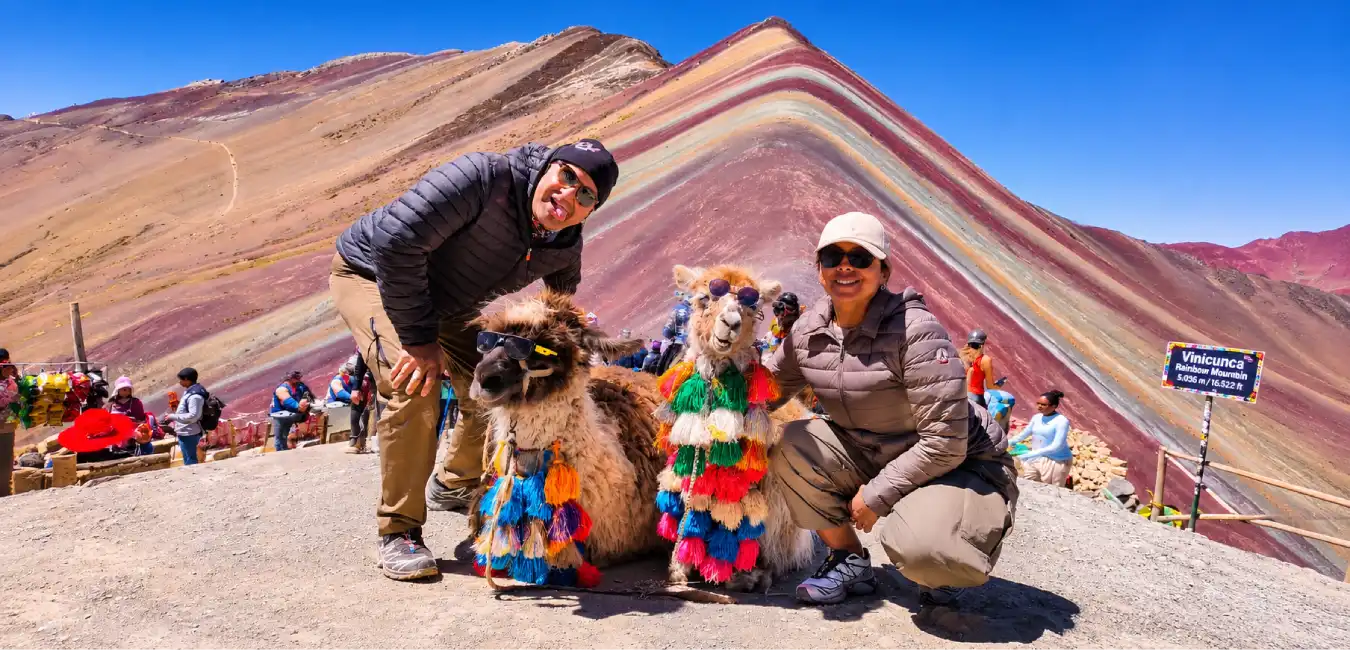
Rainbow Mountain in Cusco, also known as Vinicunca or the Mountain of Seven Colors, is one of Peru’s most popular natural attractions. Located at an elevation of over 5,000 meters (16,404 feet), it stands out for its colorful mineral layers and stunning views of Ausangate Mountain. If you're planning a visit, find out how to get there from Cusco, how much the entrance fee costs, the best time to go, and what you need to know before taking this day trip.
What is Rainbow Mountain?
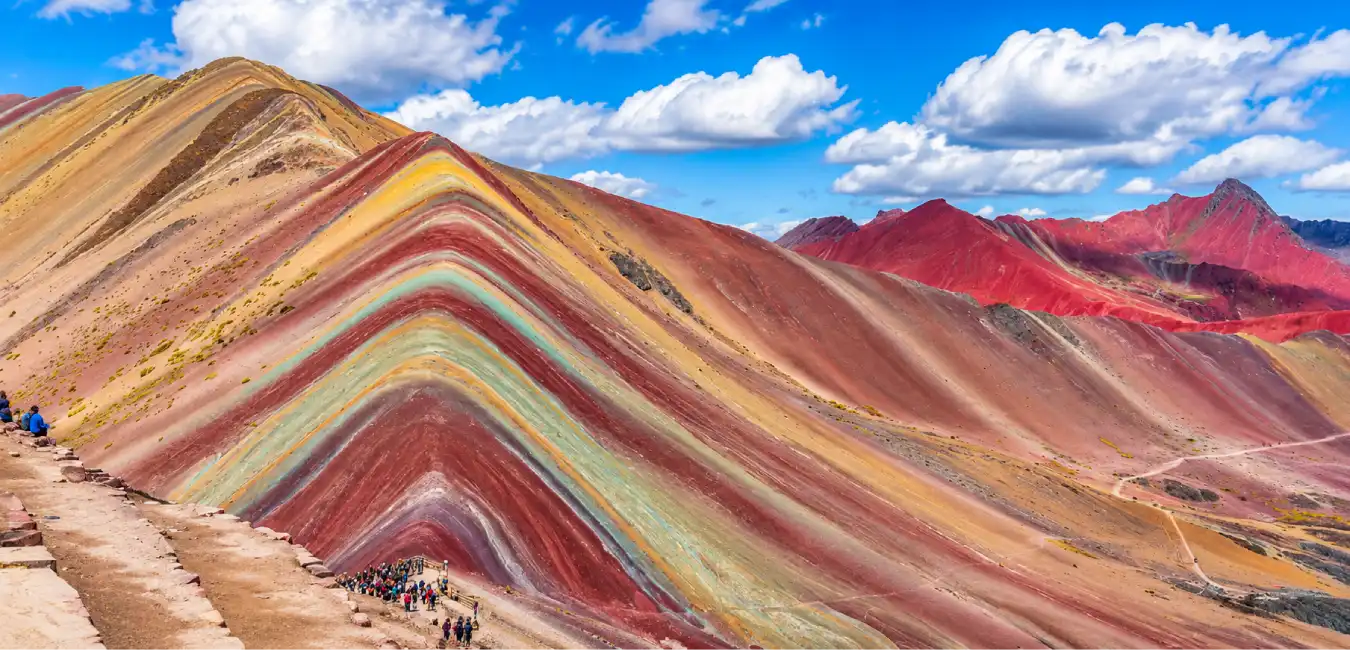
Vinicunca is a geological formation in the Peruvian Andes, known for the layers of sediment that create different shades along its slopes. It is located in the Vilcanota Mountain Range, near Ausangate Mountain, surrounded by high altitude grasslands and communities with a long tradition of livestock farming.
Why is it called Rainbow Mountain?
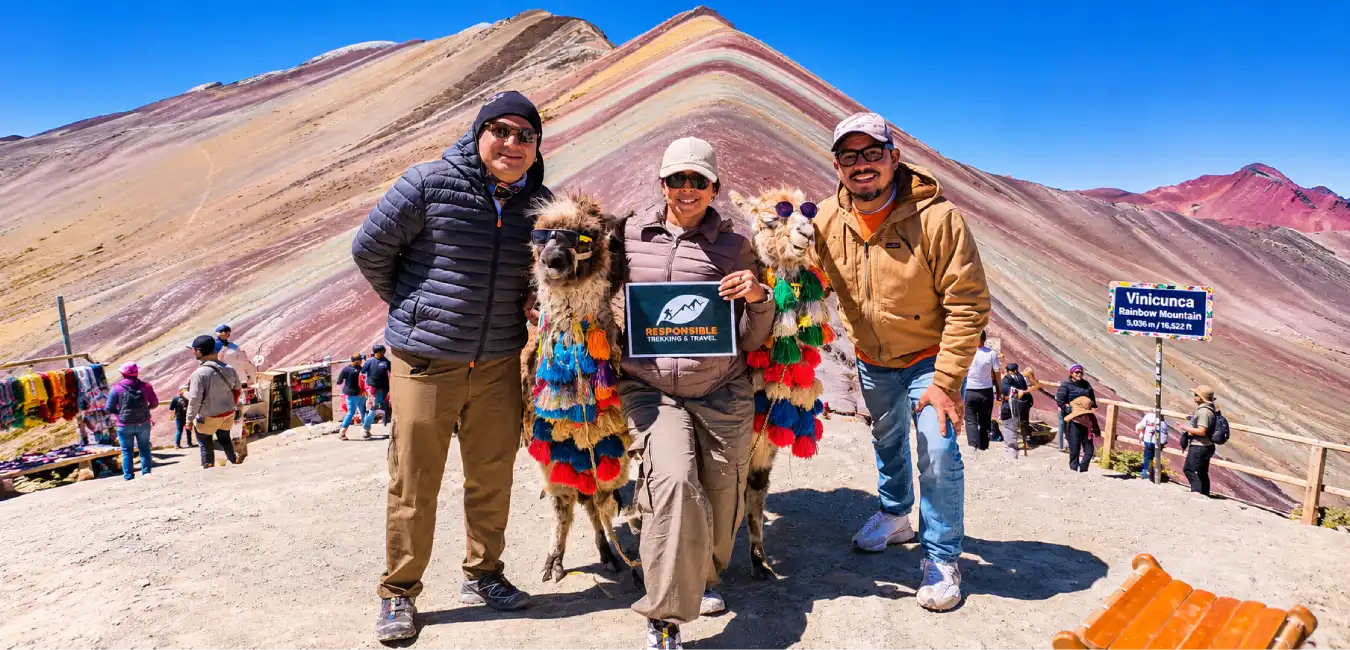
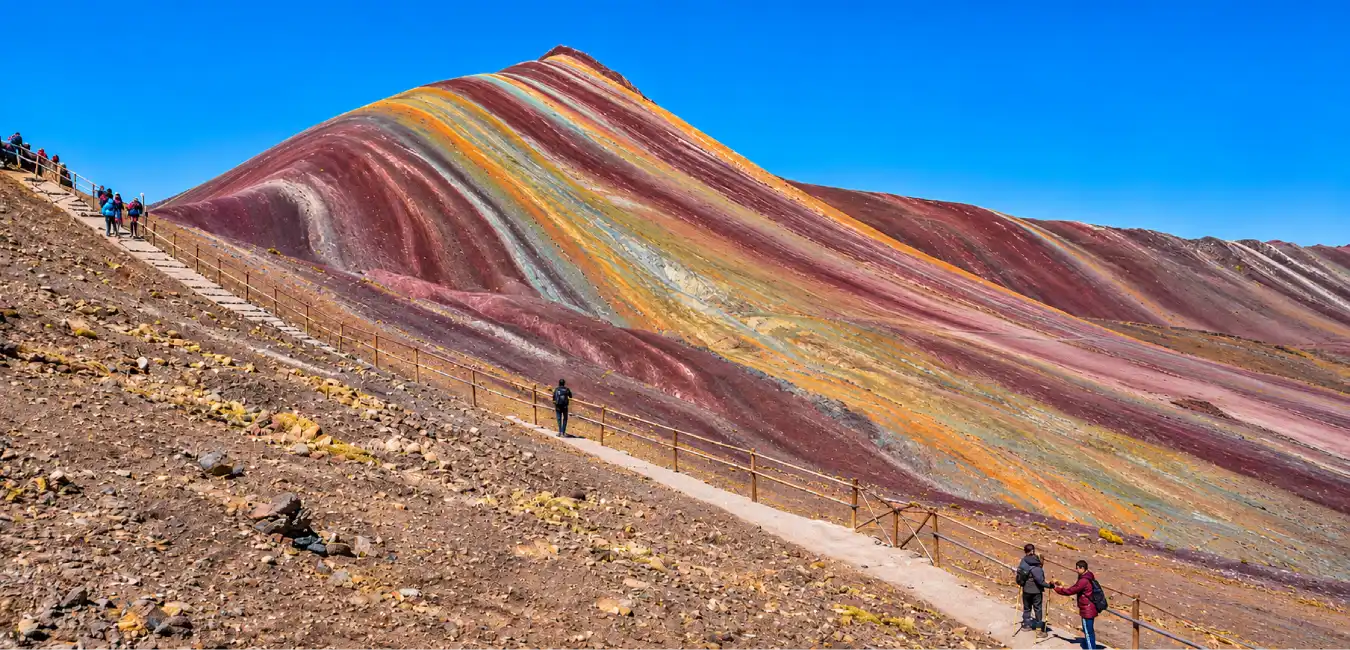
Its popular name refers to the different bands of color that run along its slopes and, when viewed from certain spots, resemble a rainbow. However, you won't always see exactly seven distinct colors. Sunlight, cloud cover, and weather conditions can change the way the colors appear.
What does Vinicunca Mean?
The name "Vinicunca," also spelled "Winikunka," comes from Quechua. It is associated with the terms "wini," referring to the rounded black stones known as "wini rumi," and "kunka," meaning neck. For this reason, the name is commonly interpreted as “neck of black stones.”
When did Rainbow Mountain become famous?
Vinicunca gained international attention in 2015, when travelers and hikers exploring the Ausangate region began sharing photos of the mountain on social media. Its growing popularity has also been covered by international media outlets, including Business Insider.
Where is Rainbow Mountain located?
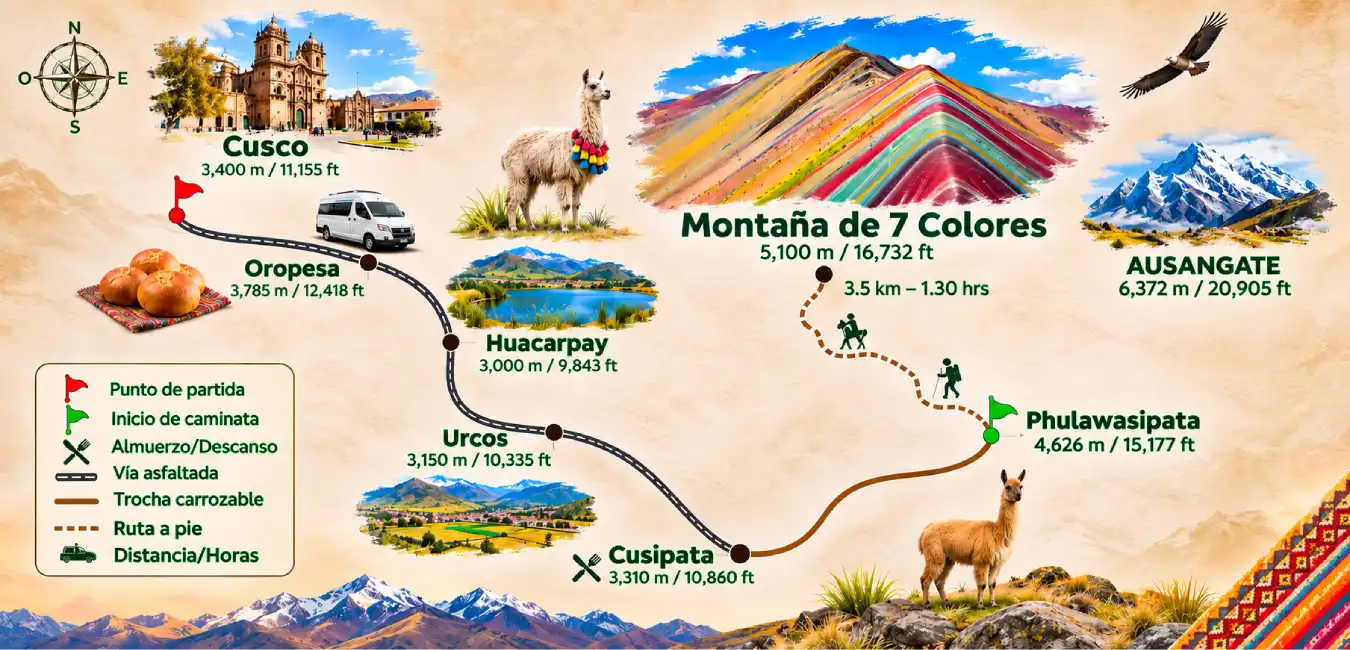
Vinicunca is located in the Vilcanota Mountain Range, southeast of the city of Cusco. Tourist access routes run through Cusipata and Pitumarca, connecting visitors with different local farming communities.
How high is Rainbow Mountain?
The mountain reaches approximately 5,036 meters (16,522 feet) above sea level, while the main viewpoint sits above 5,200 meters (17,060 feet). This elevation makes the hike physically challenging, even for people who are used to walking. For comparison, Cusco sits at approximately 3,399 meters (11,152 feet), while Machu Picchu is located at around 2,430 meters (7,972 feet) above sea level.
Good to know
The hike starts above 4,300 meters (14,108 feet) above sea level. That's why altitude is often a bigger challenge than the actual trail distance.
How to get to Rainbow Mountain from Cusco?
To reach Rainbow Mountain, you'll need to travel south from Cusco by road and continue to one of the access points managed by local communities. From there, you'll hike to the Vinicunca viewpoint.
How many routes are there to Vinicunca?
There are two main routes to Rainbow Mountain: Cusipata and Pitumarca. Both lead to the mountain, but they differ in travel time, hiking distance, and available services.
A- Cusipata route, the most popular option
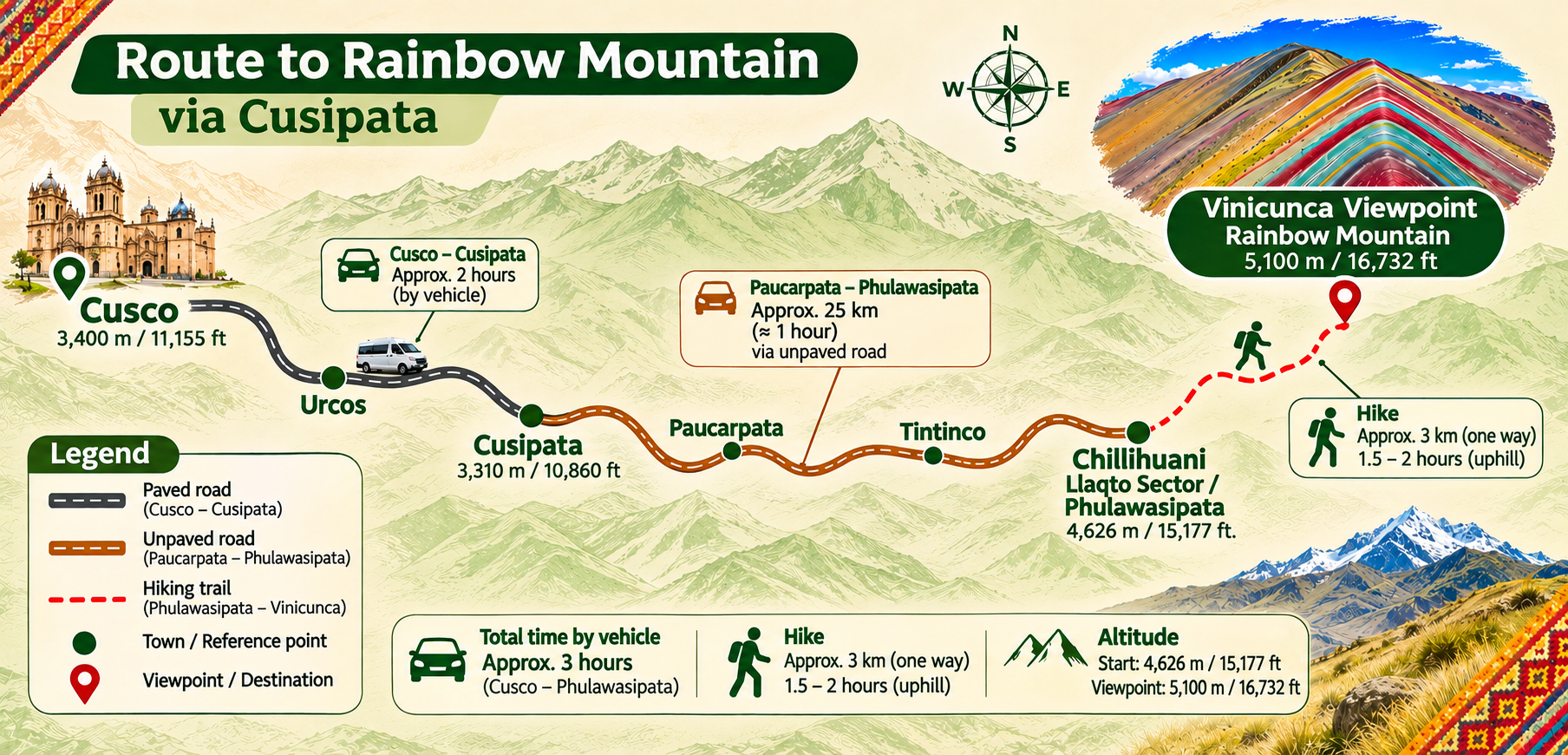
From Cusco, the drive to Cusipata takes approximately two hours. From there, you'll continue along an unpaved road to Phulawasipata or Llaqto, in the Chillihuani area, where the hike begins. The trail is approximately 3 to 5 km (1.9 to 3.1 miles) one way. The uphill hike usually takes between 1.5 and 2 hours, depending on your fitness level, hiking pace, and how well you've adjusted to the altitude.
This route has more developed tourist facilities.
Along the way, you'll find parking areas, restrooms, checkpoints, and horse rental services.
B- Pitumarca route, a less crowded alternative
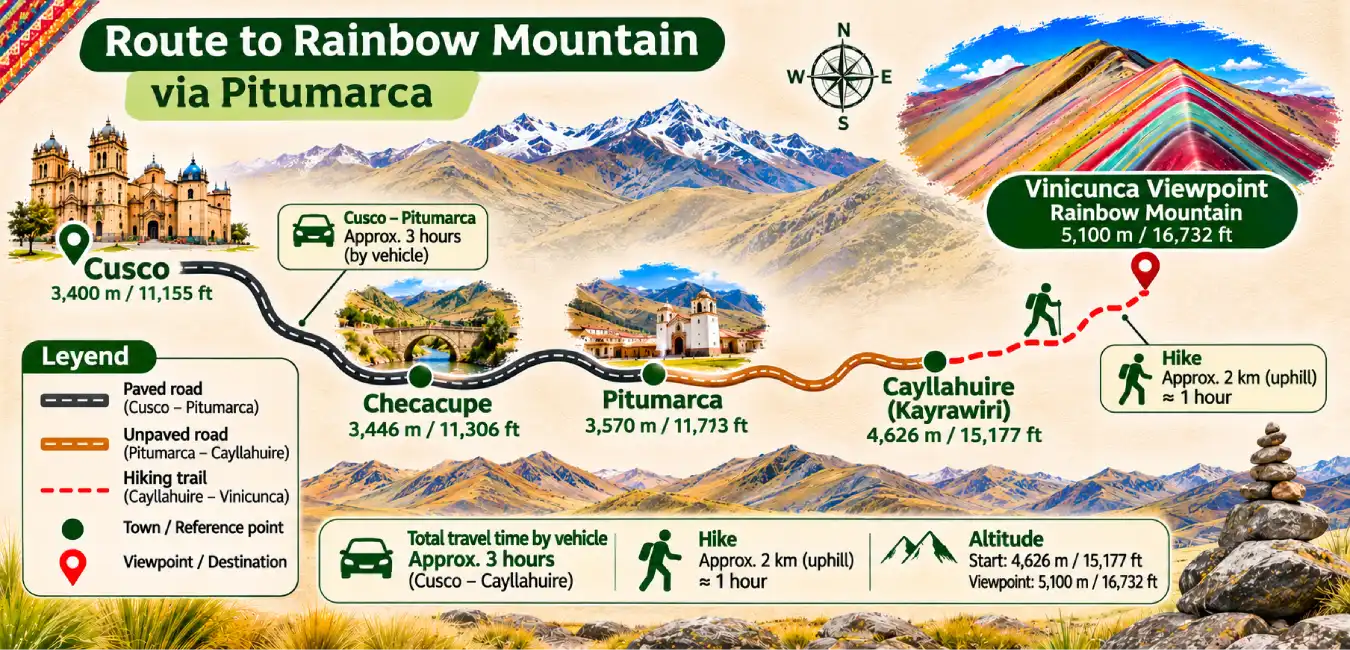
The Pitumarca route begins with a drive from Cusco that takes approximately three hours. You'll travel through Checacupe and Pitumarca before reaching the Cayllahuire area, also known as Kayrawiri. From here, the uphill hike covers approximately 2 km (1.2 miles) and takes around one hour.
Compared to the Cusipata route
This route generally attracts fewer visitors and offers more limited tourist services. In some cases, you may also find ATV services that cover part of the journey.
Which route should you choose to visit Rainbow Mountain?
Feature | Cusipata route | Pitumarca route |
|---|---|---|
| Travel time from Cusco | Approximately 2 hours, plus the final stretch | Approximately 3 hours |
| Hiking starting point | Phulawasipata / Llaqto | Cayllahuire (Kayrawiri) |
| One-way hiking distance | 3 to 5 km (1.9 to 3.1 miles) | About 2 km (1.2 miles) |
| Uphill hiking time | 1.5 to 2 hours | About 1 hour |
| Available services | Restrooms, horse rentals, parking | Limited facilities, ATV services |
| Crowd levels | High | Moderate to low |
Is it better to visit Vinicunca with a tour or on your own?
You can visit Rainbow Mountain in two ways:
With an organized tour from Cusco
This is a convenient option if you'd rather have your transportation and schedule arranged in advance. Depending on the tour package, it may include hotel pickup, round trip tourist transportation, a guide, breakfast, lunch, and assistance throughout the hike.
Visiting on your own
You'll need to arrange public transportation to Cusipata or Checacupe and organize an additional transfer to the trailhead. You'll also be responsible for paying the entrance fee and arranging any local services you need. If you decide to travel independently, make sure to confirm the return transportation schedules and check vehicle availability for the final stretches of the journey.
What to see at Rainbow Mountain and in the surrounding area?
A visit to Vinicunca is about more than just admiring its colorful mineral bands. Along the way, you'll also encounter high altitude grasslands, snow capped mountains, and wildlife native to the Andes.
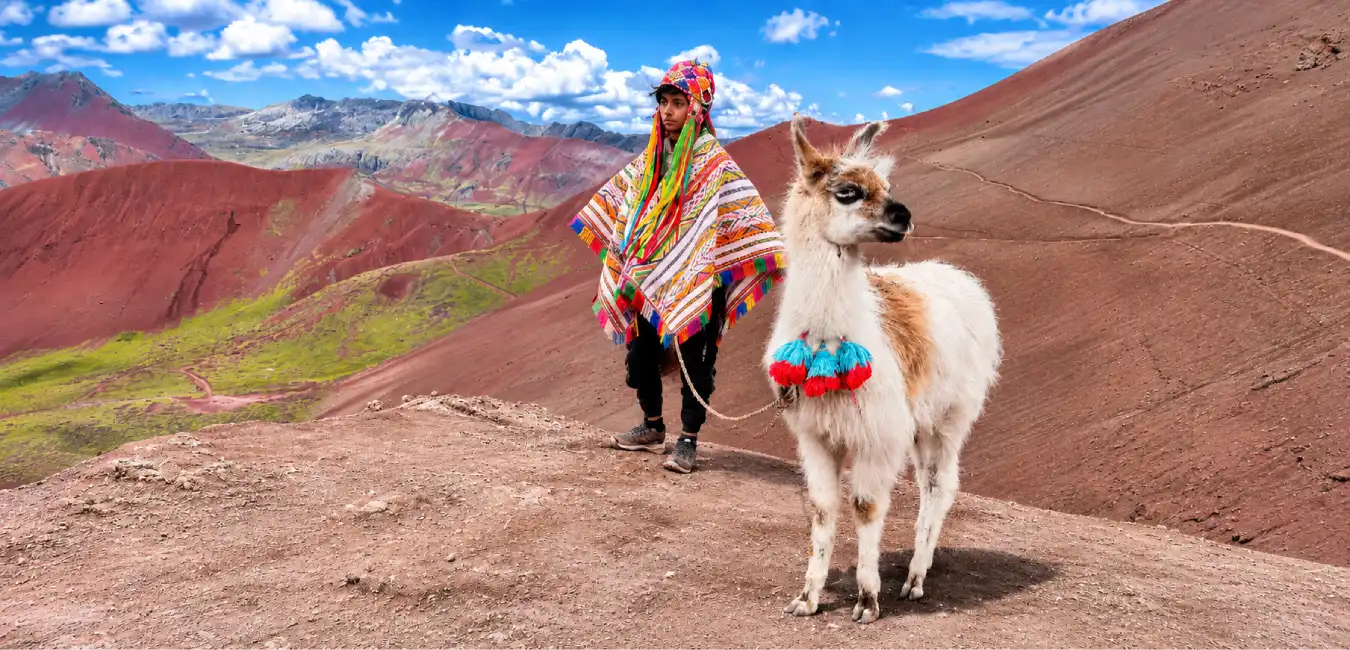
The main Vinicunca viewpoint
The main viewpoint offers panoramic views of the mineral bands that make Rainbow Mountain so unique. From here, you can see the different shades across its slopes and, weather permitting, enjoy views of the surrounding mountain landscape.
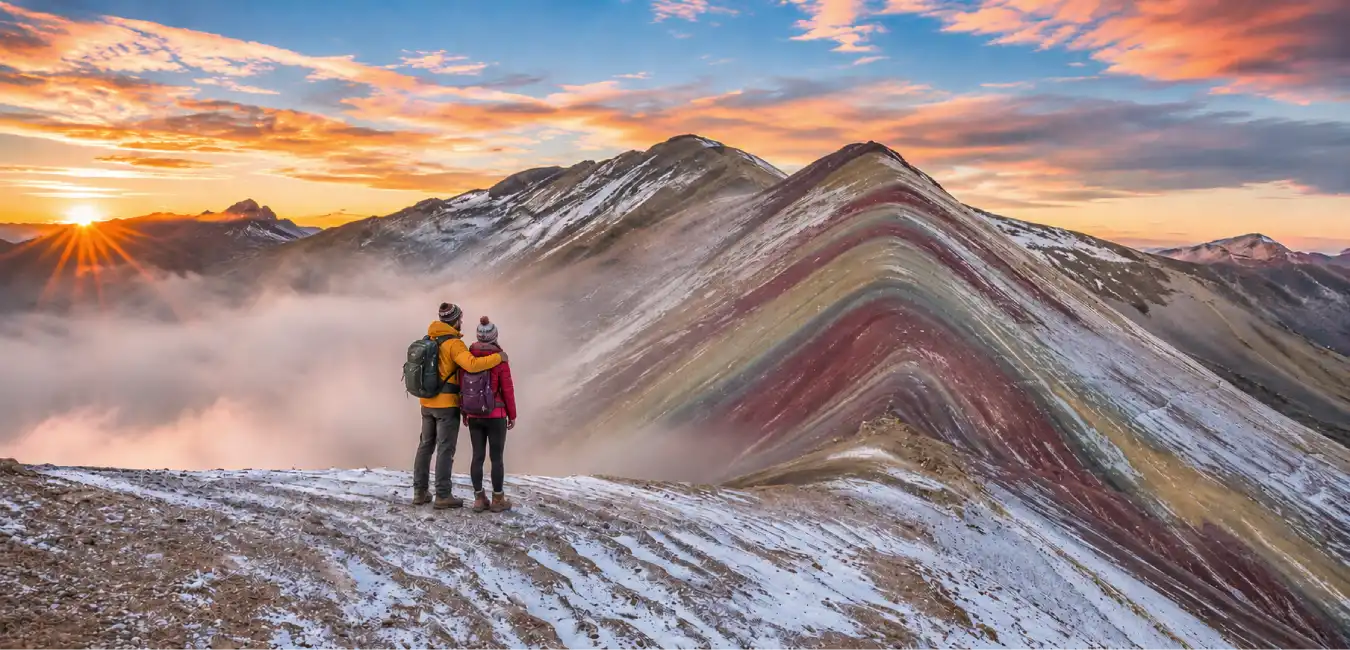
Red Valley, a great addition to your visit
Red Valley is located near Vinicunca and stands out for its reddish slopes, which are related to the mineral composition of its soil and rocks. You can add this stop to your excursion if you have enough time and weather conditions allow. Keep in mind that the detour may require an additional 30 to 40 minutes of hiking, and a separate entrance fee may apply.
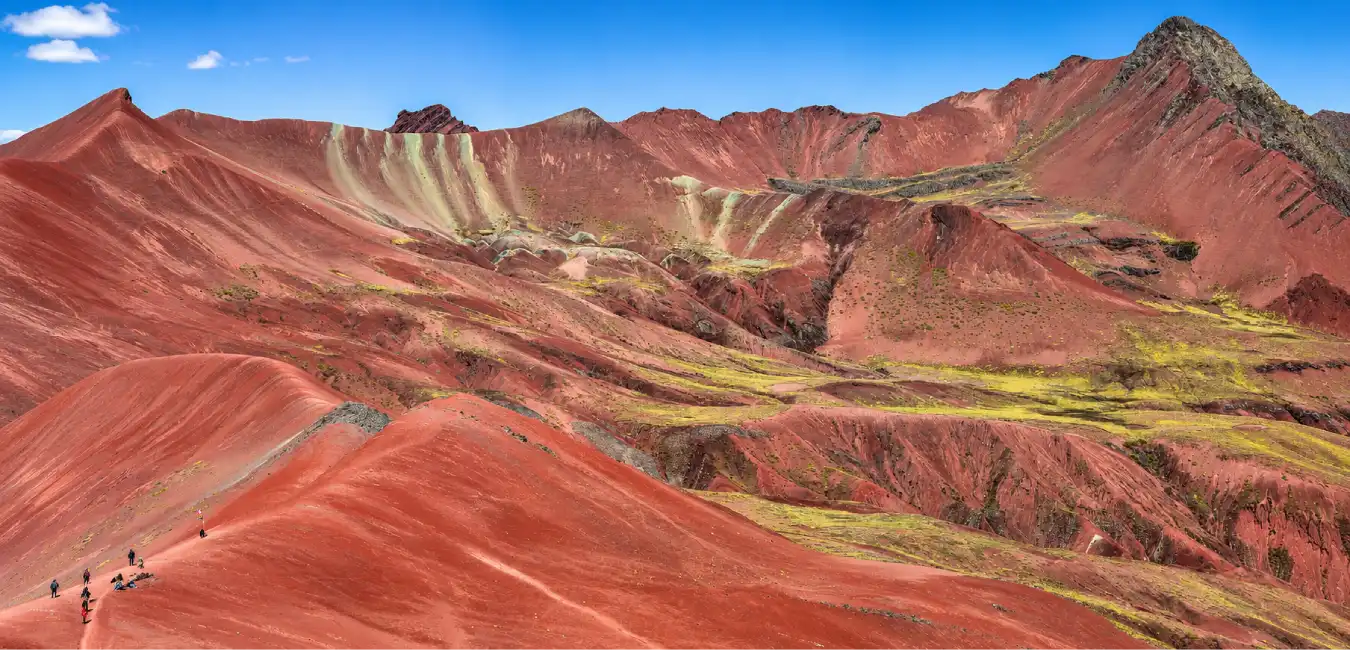
Views of Ausangate mountain
Throughout much of the journey, you'll have views of snow capped Ausangate, one of the most important mountains in the Vilcanota Mountain Range. For Andean communities, Ausangate is an Apu, or sacred mountain, associated with protection and the local Andean worldview. Along the trail, you may also come across apachetas, small piles of stones associated with traditional expressions of respect and offerings.
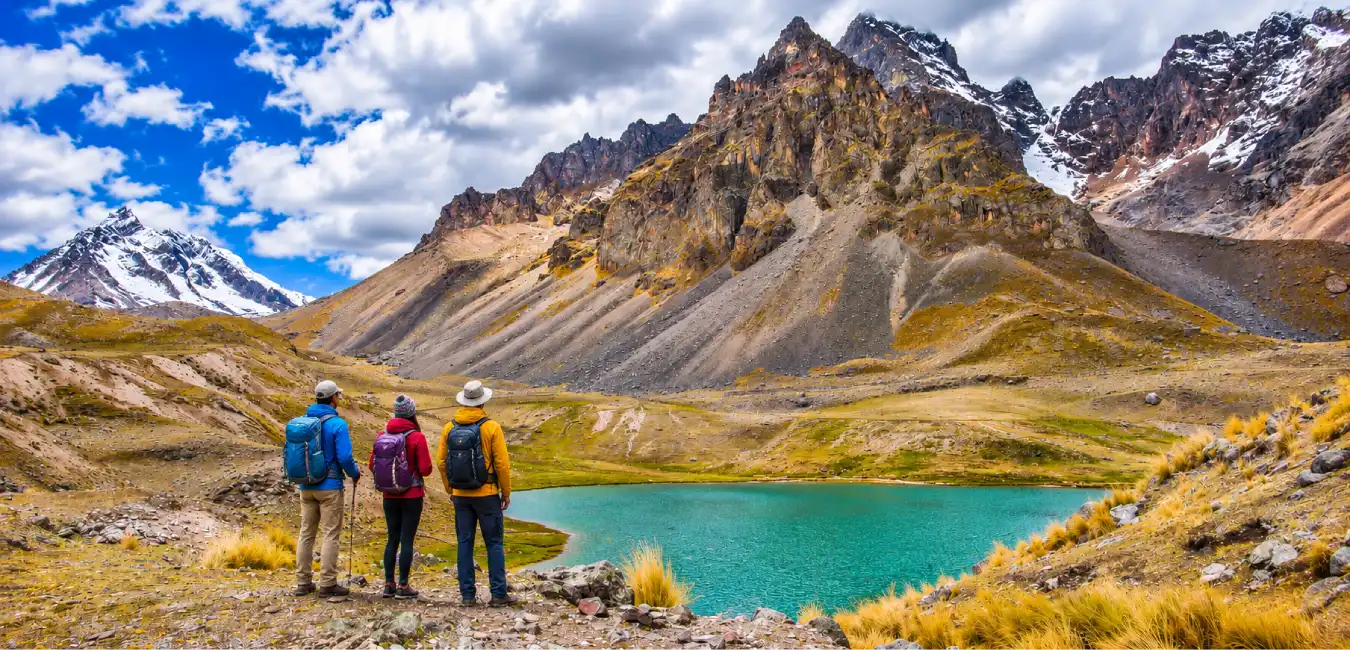
Llamas, Alpacas, and andean wildlife
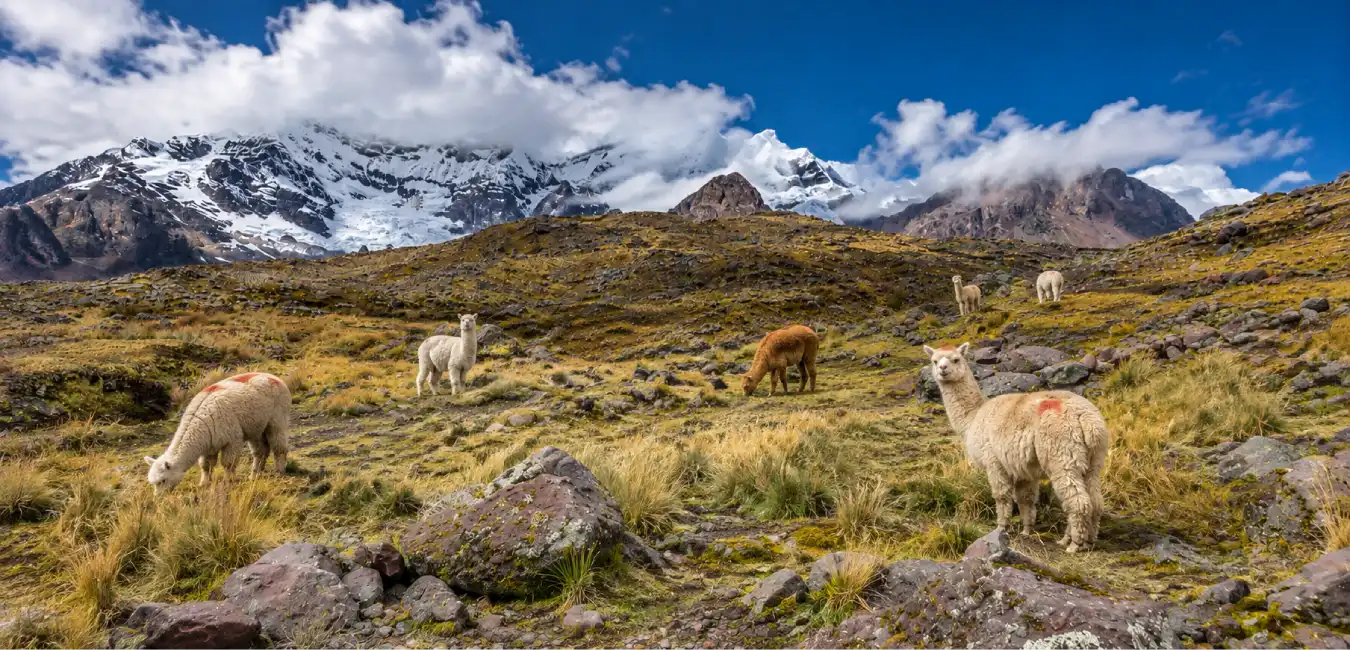
In the high altitude grasslands, you'll often see llamas and alpacas, which play an important role in local livestock farming. You may also spot ichu grass, lichens, and other plant species adapted to cold temperatures. If you're lucky, you might even see vicuñas, vizcachas, or Andean foxes. Keep a respectful distance and avoid feeding the animals.
History and geological formation of Vinicunca
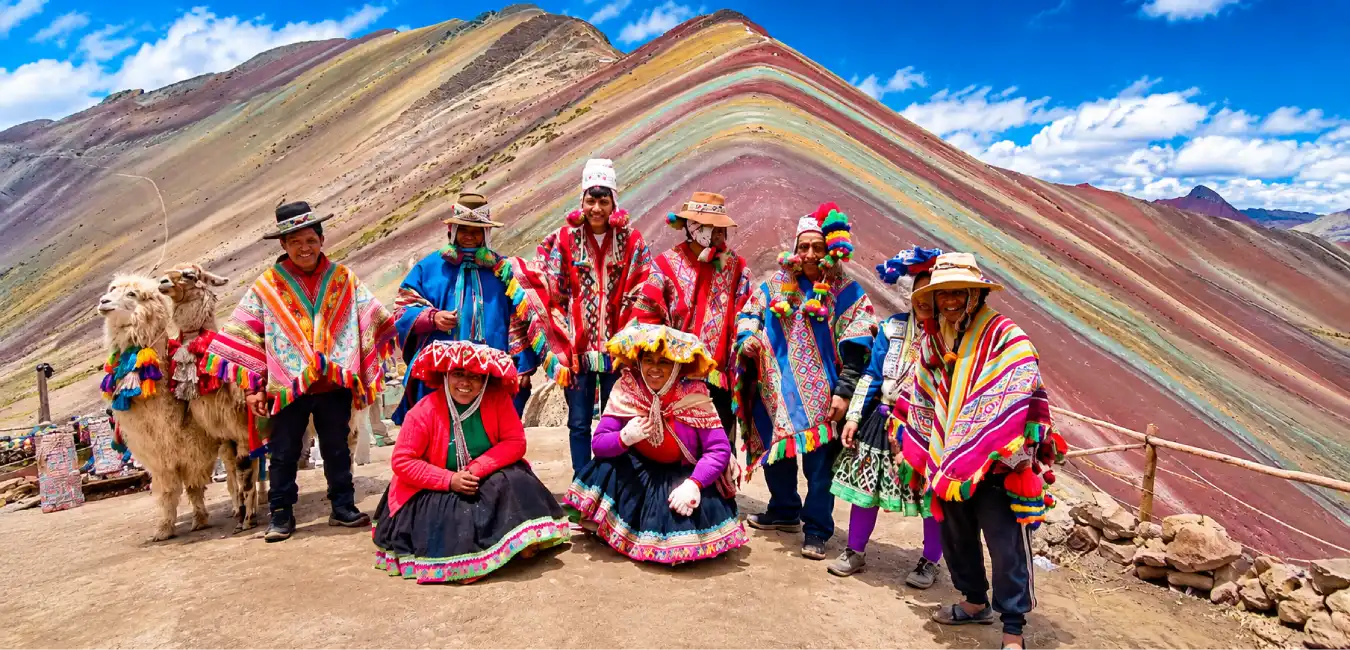
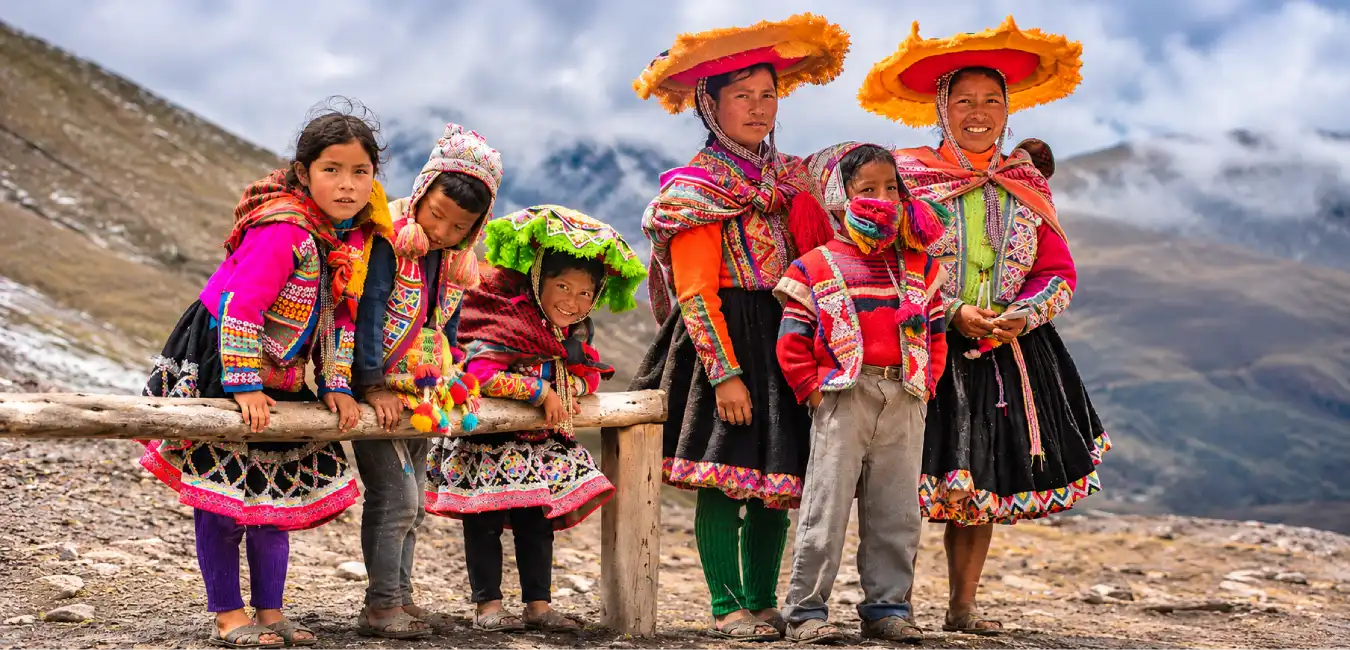
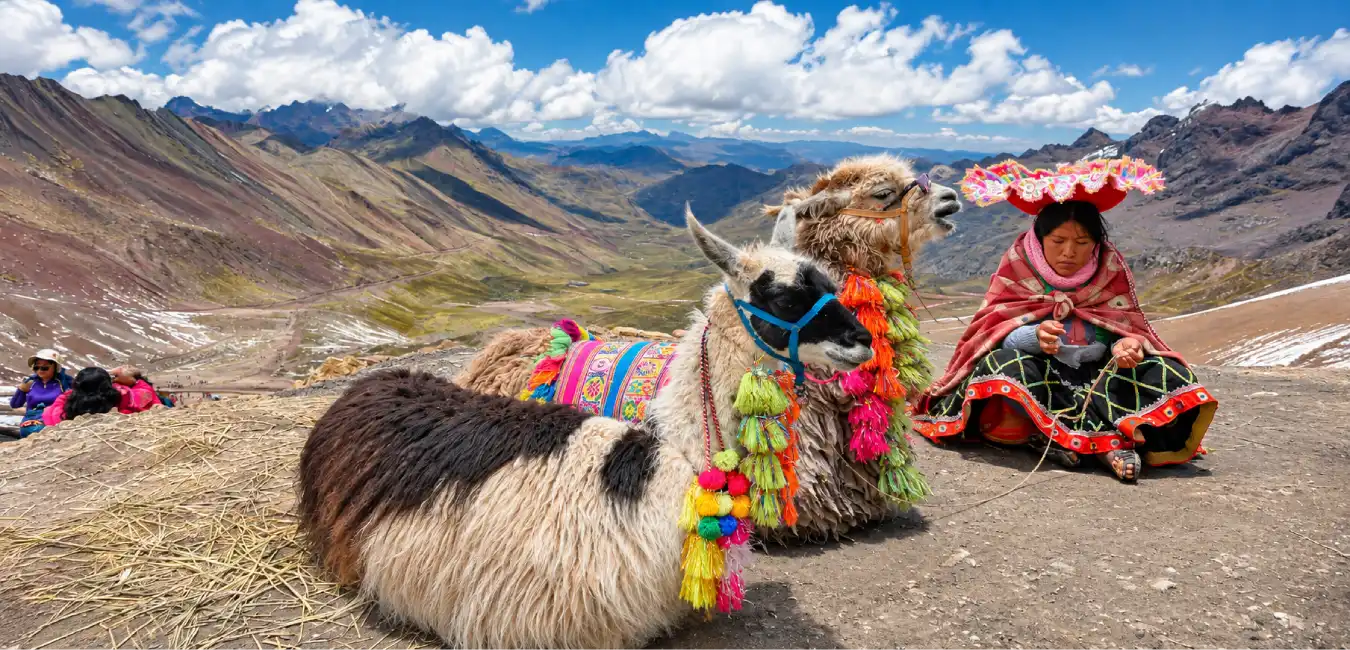
The lands surrounding Vinicunca have traditionally been used by local farming communities for llama and alpaca grazing. Today, local residents also take part in tourism by managing access routes and providing services to visitors.
How did Vinicunca's colors form?
Vinicunca's colors have a geological origin linked to the accumulation of sediments over millions of years. Ancient natural processes deposited different materials in layers, which were later affected by the tectonic movements that formed the Andes Mountains. Over time, erosion caused by wind, rain, and ice exposed these layers.
Which minerals create Vinicunca's colors?
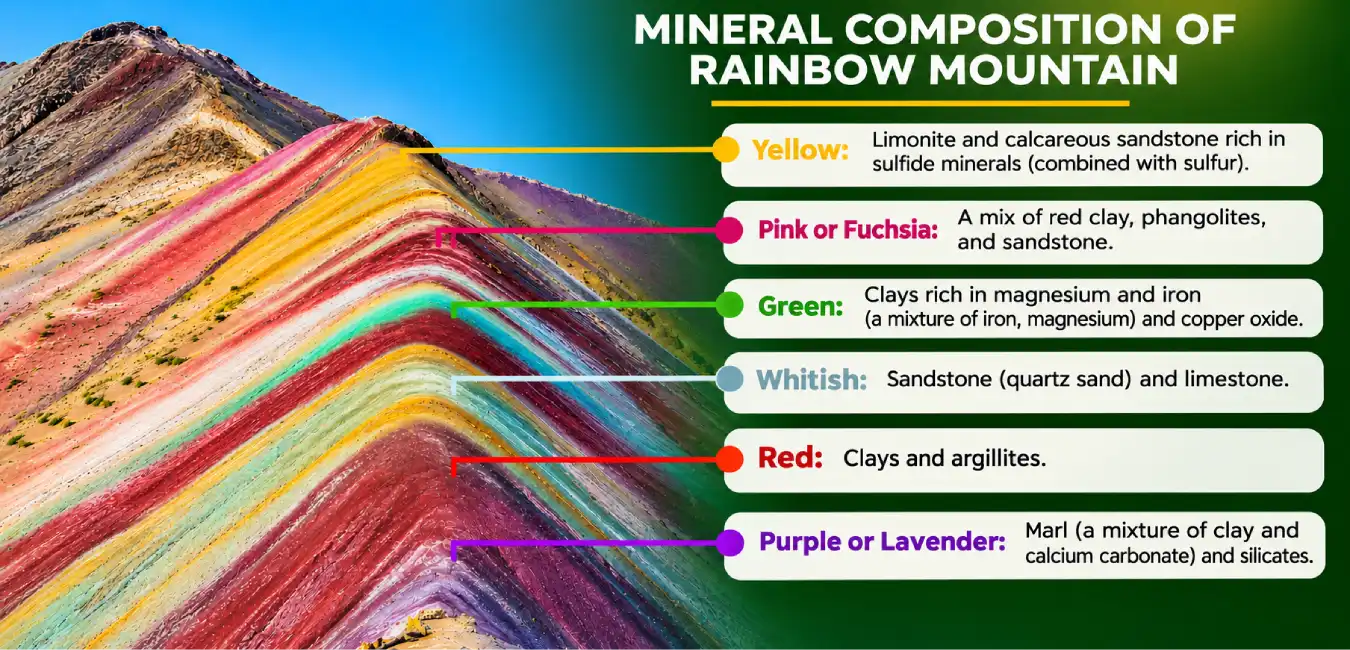
Vinicunca's different shades are related to the mineral composition of its rocks and sediments. The colors can vary depending on lighting and moisture conditions.
Color | Approximate mineral origin |
|---|---|
| Red and pink | Clay, mudstone, and iron oxides. |
| Green | Clay rich in iron, magnesium, and copper oxide (ferromagnesian minerals). |
| Yellow and mustard | Limonite and calcareous sandstones containing sulfur. |
| White | Quartz sandstone, limestone, and calcium carbonate. |
| Lilac or lavender | Marl and silicates. |
| Brown and earthy tones | Manganese-bearing rocks and recent sediments. |
How much does it cost to visit Rainbow Mountain?
The entrance fee for Vinicunca is collected at access points managed by local farming communities. Rates may vary depending on the route, the organization in charge, and the type of visitor.
Visitor type | Estimated fee |
|---|---|
| Foreign adult | S/ 30.00 |
| Foreign child | S/ 15.00 |
| Peruvian adult | S/ 15.00 |
| Peruvian child | S/ 7.50 |
Before your trip, confirm the current entrance fee and make sure your ticket is valid for the access route you'll be using.
How much does a Rainbow Mountain tour from Cusco cost?
The price of a Vinicunca tour depends on the type of transportation, group size, route, and services included. Before booking, compare the following:
- Round trip tourist transportation.
- Pickup from your accommodation.
- Professional guide.
- Breakfast and lunch.
- Entrance ticket.
- Assistance during the hike.
- Group size.
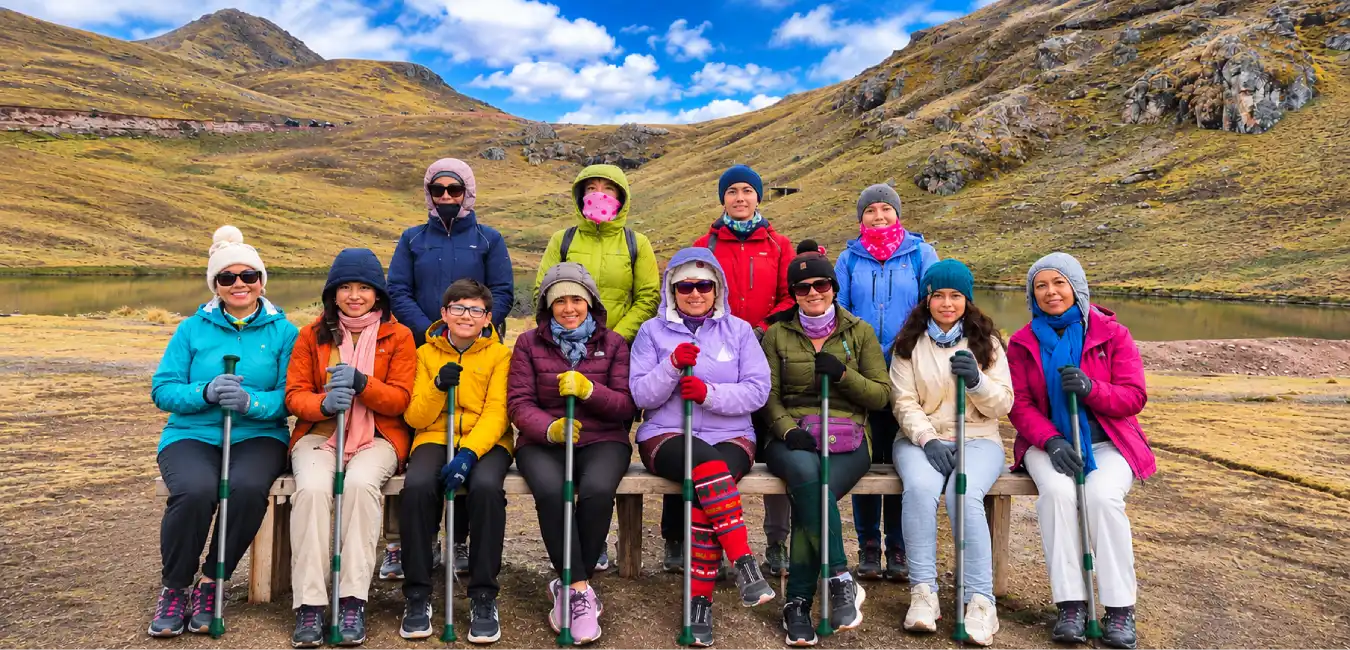
A lower price doesn't always mean a better deal.
Check which services are included and how the tour operator works with local guides, drivers, and communities.
How much money do you need to visit Rainbow Mountain on your own?
Expense | What you'll pay for | Price or estimate |
|---|---|---|
| Transportation | Intercity bus. | S/ 10 per person to Cusipata. |
| Entrance fee | Admission to Rainbow Mountain. | S/ 30 for foreign visitors / S/ 15 for Peruvians. |
| Breakfast | Meal before starting the hike. | In Cusipata:
|
| Lunch | Meal after visiting the mountain. | In Cusipata:
|
| Restrooms | Fee for using public restrooms. | S/ 2 per person. |
| Horse rental | Rental of a riding animal. | S/ 80 to S/ 120 per person. |
| ATV | ATV rental. | S/ 80 to S/ 200 per person. |
Other expenses during the excursion
In addition to the entrance fee, plan for extra expenses such as:
- Restroom fees.
- Horse rentals.
- ATV services.
- Drinks and snacks.
- Food along the way.
- Red Valley entrance fee, if you decide to visit.
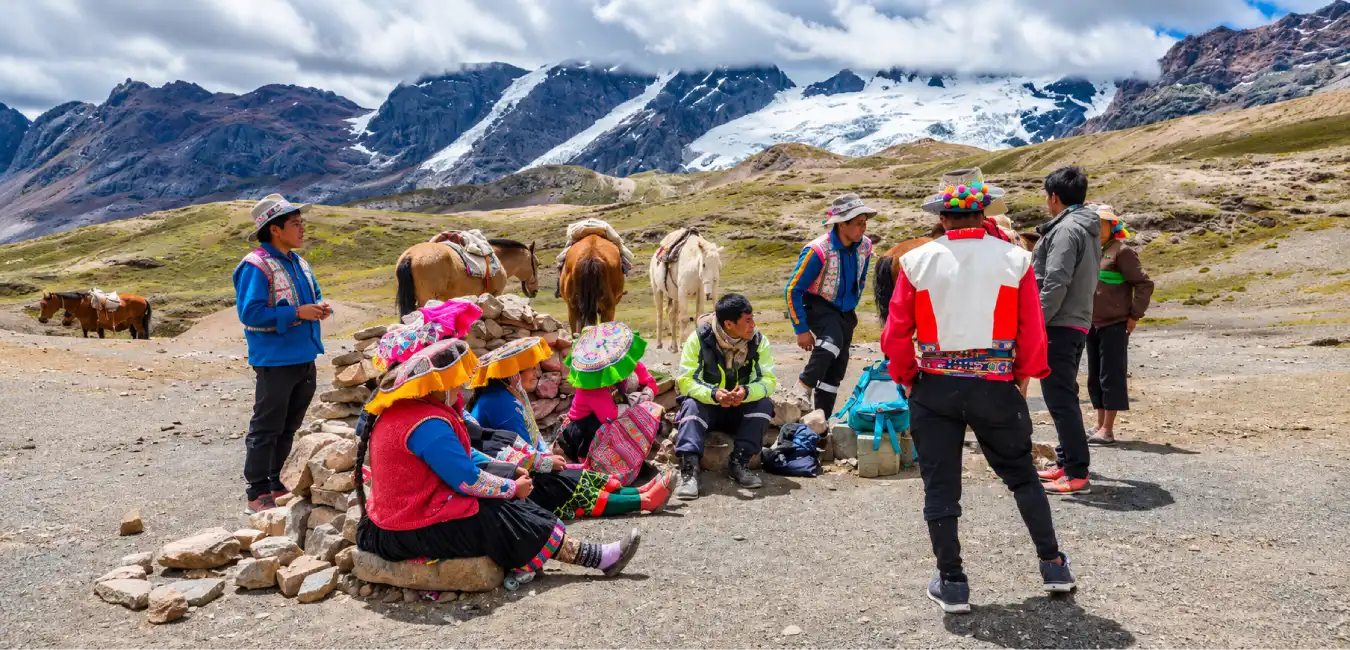
Bring cash in Peruvian soles, preferably in small bills. Don't rely on ATMs or card payments in this area.
Is it better to book a group tour or a private tour?
- Group tour: Share transportation and the excursion with other travelers. It's generally more affordable, but you'll need to follow the scheduled itinerary.
- Private tour: Enjoy a more flexible departure and customize stops and hiking pace according to the services included.
If you're looking for an excursion organized by a local tour operator, you can check out the options offered by Responsible Trekking.
What is the itinerary for a one day Vinicunca tour?
A trip to Rainbow Mountain takes up almost the entire day. Schedules depend on the route you choose, road conditions, and the group's hiking pace.
Approximate time | Activity |
|---|---|
| 3:00–4:00 a.m. | Hotel pickup in Cusco. |
| 4:00–6:30 a.m. | Drive to the trailhead. |
| 6:30–7:30 a.m. | Breakfast and preparation. |
| 7:30–9:30 a.m. | Hike to Vinicunca. |
| 9:30–10:30 a.m. | Visit the viewpoint and take photos. |
| 10:30 a.m.–12:00 p.m. | Hike back down. |
| 12:00–1:00 p.m. | Lunch. |
| 1:00–4:30 p.m. | Return to Cusco. |
This schedule is an estimate and may vary. If you want to visit Red Valley, allow extra time for the additional stop.
Is it difficult to hike up Rainbow Mountain?
The hike to Vinicunca is considered moderate to challenging, mainly because of the altitude. You don't need to climb or use technical equipment, but hiking above 5,000 meters (16,404 feet) requires physical effort and proper acclimatization. Lower oxygen levels can make you tire more quickly, even if you're used to hiking at lower elevations.
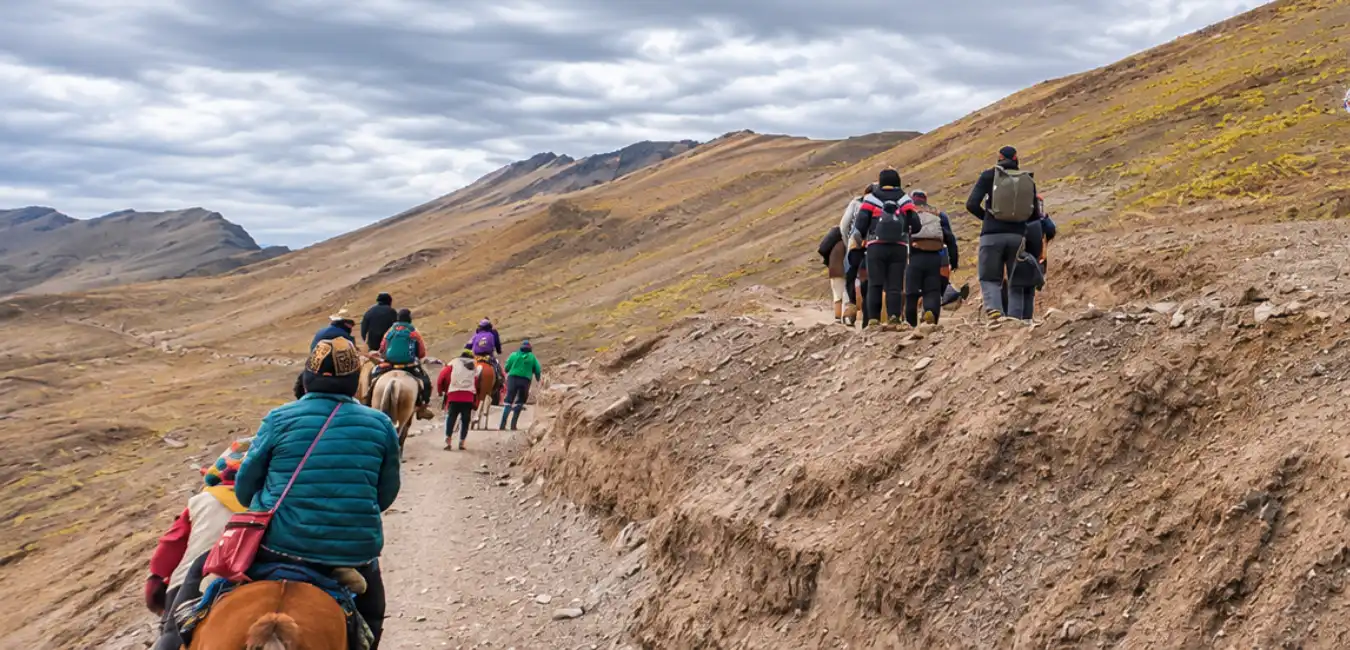
How far do you have to hike to reach Vinicunca?
The distance depends on which access route you choose:
- Via Cusipata: approximately 3 to 5 km (1.9 to 3.1 miles) uphill.
- Via Pitumarca: approximately 2 km (1.2 miles) uphill.
Can you ride a horse or ATV to Rainbow Mountain?
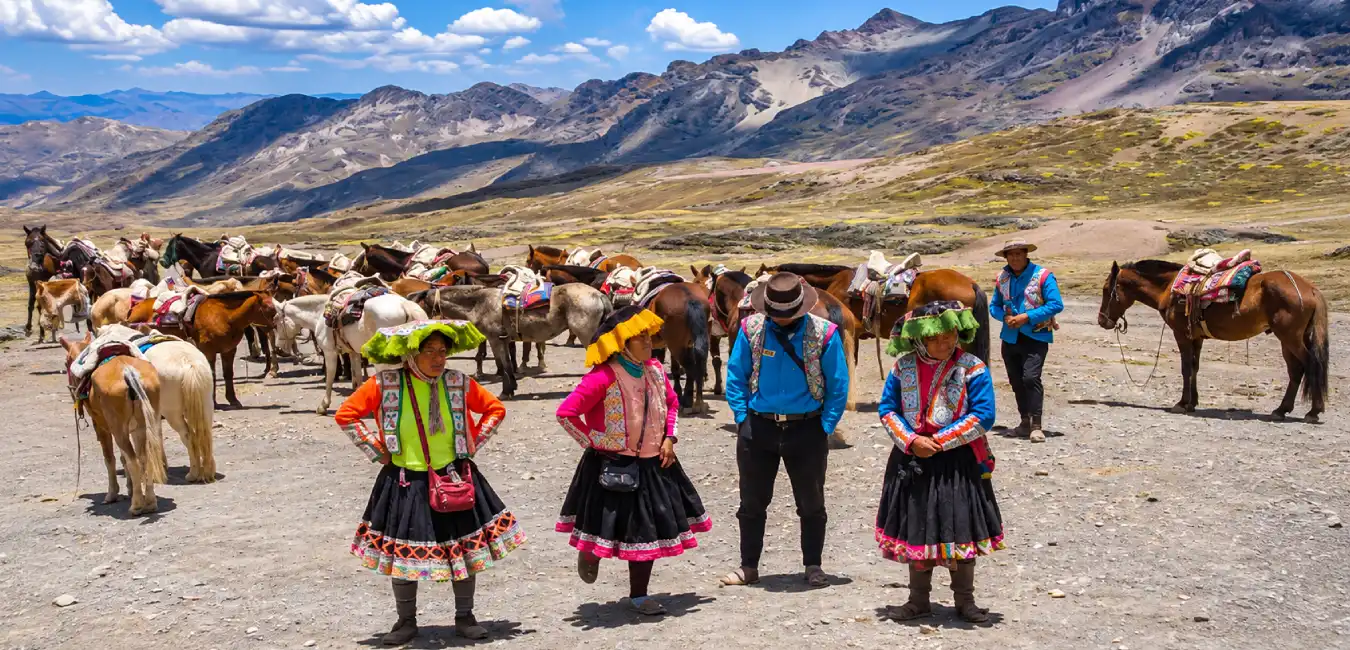
Yes. At certain access points, you can hire local services to reduce some of the physical effort.
- On horseback: Local horse handlers from the communities offer rides along certain sections of the trail. You'll generally need to hike the final stretch to the viewpoint.
- By ATV: Some services allow you to cover part of the route by ATV, especially along the Pitumarca access route. Check where the ride ends and how much hiking you'll still need to do.
Comparing Rainbow Mountain tour options
Details | Classic hiking tour | ATV tour | Horseback riding tour |
|---|---|---|---|
| Activity | Hiking along a mountain trail. | Partial ATV ride followed by a final hike. | Hiking and partial horseback ride. |
| Departure time | Approximately 3:00–4:00 a.m. | Approximately 4:00–5:00 a.m. | Depends on the tour package. |
| Return time | Approximately 4:00–6:00 p.m. | Approximately 4:00–6:00 p.m. | Depends on the tour package. |
| Total duration | 12–14 hours. | 10–14 hours, depending on the route. | Generally similar to the classic tour. |
| Hiking distance | Approximately 3 km (1.9 miles) uphill and 3 km (1.9 miles) downhill via the Llaqto route. | Less hiking required; depends on where the ATV ride ends. | Part of the uphill hike is covered on horseback, but you'll generally need to walk the final stretch. |
| Altitude | Approximately 5,000–5,200 meters (16,404–17,060 feet) in the Vinicunca area. | Approximately 5,000–5,200 meters (16,404–17,060 feet). | Approximately 5,000–5,200 meters (16,404–17,060 feet). |
| Physical difficulty | High due to the altitude and hiking. | Moderate; requires walking and riding at high altitude. | Moderate; depends on how much of the route you cover on horseback. |
| Transportation | Tourist transportation from Cusco. | Tourist transportation and ATV. | Tourist transportation and horseback riding. |
| Additional equipment | Trekking poles, appropriate clothing, and a backpack. | ATV, helmet, and protective gear. | Horse and equipment provided by the local service. |
| Estimated price | US$30–70 per person. | US$65–120 per person. | Approximately US$60–100 per person. |
How can you prevent altitude sickness?
Vinicunca is located above 5,000 meters (16,404 feet), so altitude is one of the main factors to consider before taking this excursion. To reduce your risk of altitude sickness:
- Spend at least two days acclimatizing in Cusco or the Sacred Valley before your excursion.
- Avoid hiking Vinicunca on the same day you arrive in Cusco.
- Get a good night's sleep before the hike.
- Drink water regularly.
- Avoid alcohol.
- Walk slowly and take breaks whenever you need them.
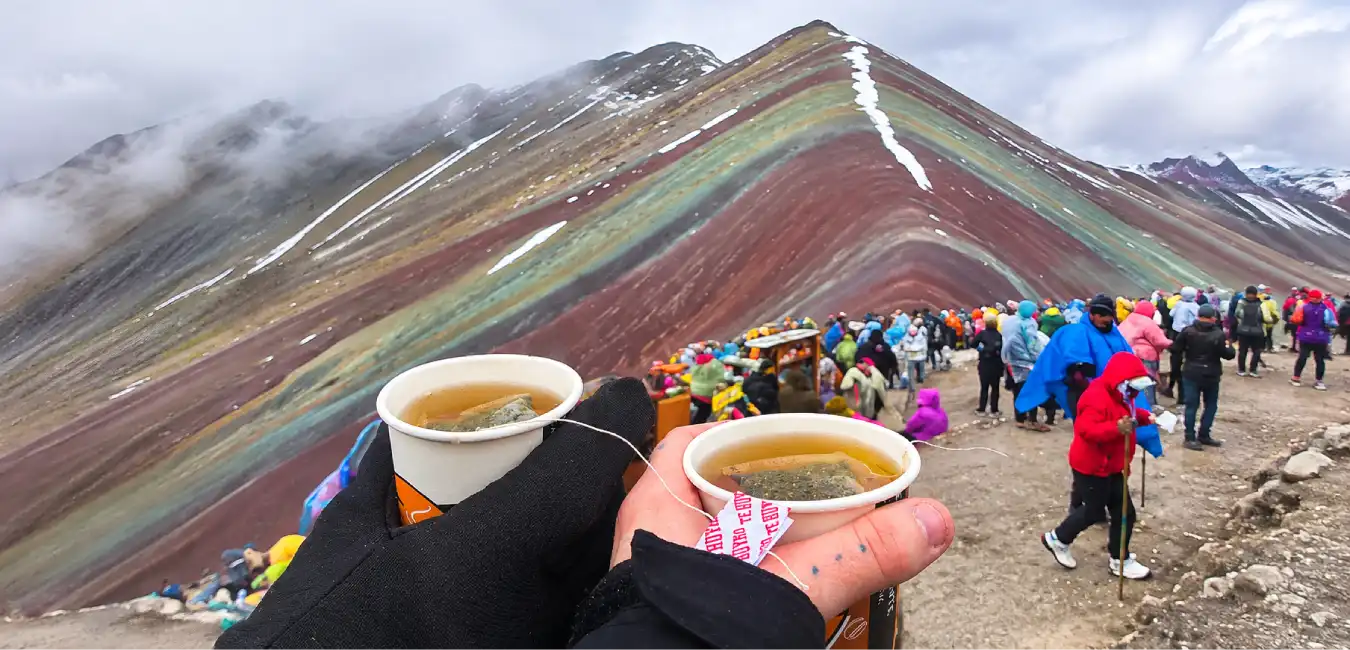
If you experience a severe headache, intense nausea, confusion, or difficulty breathing, inform your guide immediately and descend to a lower altitude. Seek medical attention if you have severe symptoms.
Who should take extra precautions before visiting Vinicunca?
People with heart or respiratory conditions, uncontrolled high blood pressure, or a history of altitude-related problems should consult a healthcare professional before taking this excursion.
Who is this hike not suitable for?
The hike involves uneven terrain, steep sections, and high altitude. Due to these conditions, it is not suitable for people who use wheelchairs, pregnant women, or older adults.
When is the best time to Visit Rainbow mountain?
Your experience changes depending on the season. Weather conditions affect the visibility of the colorful bands, trail conditions, and overall hiking comfort.
Season | Months | What to expect |
|---|---|---|
| Dry season | April to October (ideally May to September). | More clear days, better visibility, and generally firmer trails. Mornings are very cold. |
| Rainy season | November to March. | More rain, muddy trails, and fog. Snowfall is possible on some days and may cover parts of the mountain's colorful bands. |
What is the temperature like at Vinicunca?
The high altitude climate is cold and can change quickly. During the day, temperatures can range from 7°C to 12°C (45°F to 54°F), while early mornings and nighttime temperatures can drop below 0°C (32°F). Wind, rain, and fog can make it feel even colder.
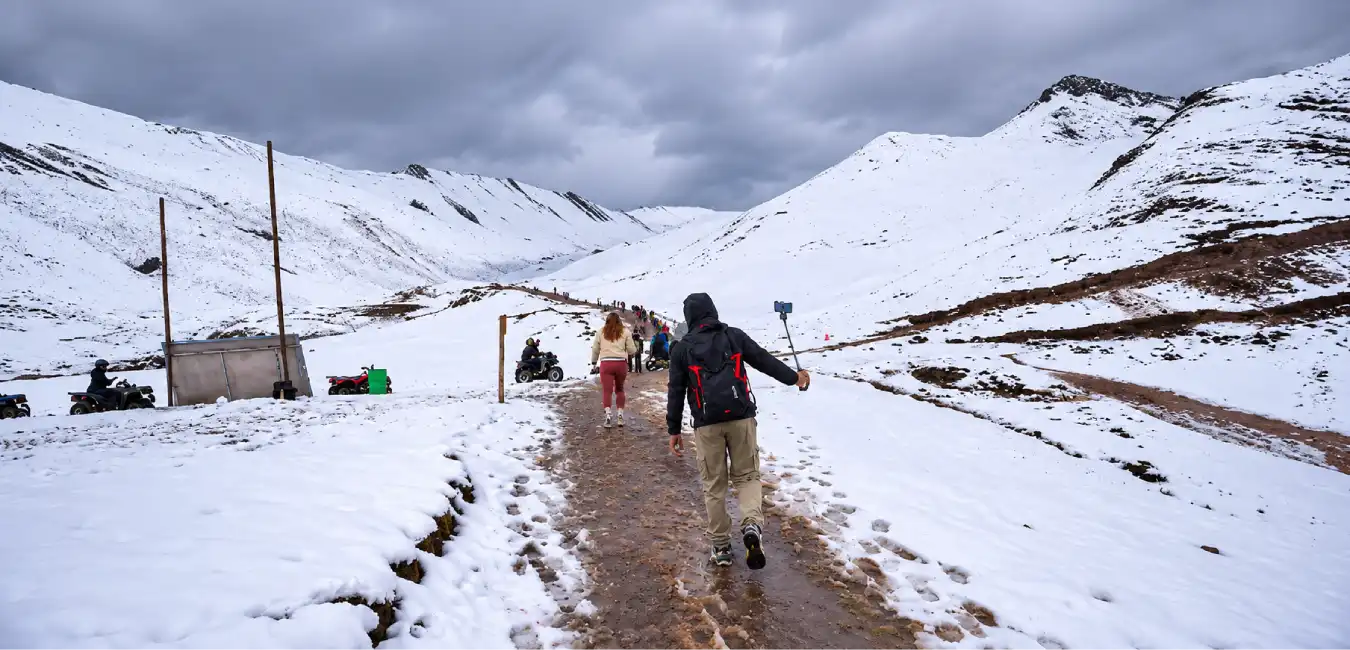
What is the best time of day to visit Rainbow Mountain?
It's best to arrive early, when visibility is often better and there are usually fewer visitors than during peak hours. Afternoons can also bring stronger winds, more clouds, or rain. However, mountain weather is unpredictable, so clear skies are never guaranteed.
What should you pack for Rainbow Mountain?
Pack a lightweight backpack with everything you need for a full day in the high Andes. Conditions can change throughout the day, so bring layers you can add or remove depending on the temperature.
- Layered clothing: thermal shirt, fleece jacket, and warm outer jacket.
- Waterproof jacket or rain poncho.
- Trekking shoes with good traction and grip.
- Warm hat, gloves, and scarf or neck gaiter.
- Sunscreen, sunglasses, and a sun hat.
- Water (at least 1 liter or 34 fl oz) and light snacks, such as fruit, nuts, or energy bars.
- Coca leaves or coca candies, if you normally use them.
- Cash in Peruvian soles for entrance fees, restrooms, local services, and purchases.
- ID or passport.
- Trekking poles, if you usually use them.
How to visit Vinicunca responsibly
The increase in visitors has created economic opportunities for local communities, but it also puts pressure on a high altitude ecosystem that recovers slowly. During your visit, follow these recommendations:
- Stay on marked trails and avoid stepping on vegetation.
- Take all your trash with you and never feed the animals.
- Ask permission before photographing local residents or flying a drone.
- Hire local services and buy products offered by the communities.
- Choose tour operators that work with small groups and respect the working conditions of local guides, horse handlers, and families.
Photography tips for Rainbow Mountain
Tip | How to get better photos |
|---|---|
| Best time of day | Take photos between 8:00 and 10:00 a.m., when natural light is usually good. |
| Clear days | Make the most of blue skies and natural light to capture the colorful bands and surrounding mountains. |
| Colorful bands | Find a good angle from the viewpoint to show the mountain's different layers. |
| Foggy conditions | Be patient and wait a few minutes to see if the fog clears. |
| Avoiding overexposed photos | Adjust your phone's exposure if the image looks too bright. |
| Respecting the trails | Take photos from designated viewpoints and avoid walking through protected areas. |
Traveler tip
Clean your phone's camera lens before taking photos, bring a portable charger, and avoid increasing the saturation too much when editing. Vinicunca's natural colors are the real highlight.
What other colorful Mountains can you visit in Cusco?
Vinicunca is the most famous Rainbow Mountain in Cusco, but it's not the only one. If you're looking for a different hike or a less crowded alternative, consider these options:
Palcoyo Rainbow Mountain
Palcoyo is located in the district of Checacupe, in the province of Canchis, at approximately 4,900 meters (16,076 feet) above sea level. Its main attraction is the chance to see several colorful mountains along a relatively short hike of approximately 1.5 km (0.9 miles). The walk usually takes around one hour and includes sections that are less demanding than the classic Vinicunca route. However, the altitude can still affect any visitor.
Pallay Punchu Rainbow Mountain
Pallay Punchu is located in the district of Layo, in the province of Canas, at approximately 4,700–4,800 meters (15,420–15,748 feet) above sea level. The drive from Cusco can take around 3.5 hours, depending on road conditions. Its name translates as “decorated poncho” and refers to the mountain's colorful ridges, which resemble the patterns of traditional Andean textiles. You can also combine your visit with a trip to Langui Layo Lake.
Comparing Vinicunca, Palcoyo, and Pallay Punchu
Feature | Vinicunca | Palcoyo | Pallay Punchu |
|---|---|---|---|
| Location | Pitumarca / Cusipata, Canchis and Quispicanchi. | Checacupe, Canchis. | Layo, Canas. |
| Approximate altitude | 5,036–5,200 meters (16,522–17,060 feet). | 4,900 meters (16,076 feet). | 4,700–4,800 meters (15,420–15,748 feet). |
| One way hiking distance | 2–5 km (1.2–3.1 miles), depending on the route. | Approximately 1.5 km (0.9 miles). | Approximately 3 km (1.9 miles). |
| Difficulty | Moderate to challenging. | Less hiking effort, but still at high altitude. | Moderate to challenging. |
| Scenery | Mineral bands and Ausangate Mountain. | Several colorful mountains. | Mountain ridges and sloping colorful bands. |
| Typical crowds | High. | Fewer visitors than Vinicunca. | Generally fewer visitors. |
| Best for | The classic Rainbow Mountain experience. | A shorter hike. | Unique landscapes and photography. |
Which one should you choose?
If you want to visit Cusco's most famous Rainbow Mountain, choose Vinicunca. If you prefer a generally shorter hike, consider Palcoyo. If you're interested in unusual mountain ridges and less familiar landscapes, Pallay Punchu may be a great alternative.
What other places can you visit after Rainbow Mountain?
After visiting Vinicunca, you can make the most of your stay in Cusco by visiting other attractions in the region. Depending on how much time you have, you can plan half day or full day excursions.
- Sacred Valley of the Incas: Visit Pisac, Ollantaytambo, and Chinchero to explore archaeological sites, Andean villages, and beautiful landscapes.
- Historic Center of Cusco: Walk around Plaza de Armas, the San Blas neighborhood, and Qoricancha.
- Sacsayhuamán: Admire its massive stone walls and enjoy panoramic views of Cusco.
- Ausangate: If you're looking for a multi day adventure, consider a trekking route through its mountains, lakes, and high altitude landscapes.
Ready to visit Rainbow Mountain? At Responsible Trekking, we'll take you to explore Vinicunca with local guides, small groups, and a commitment to respecting local communities and the natural environment. Check out our tours and choose the option that best fits your trip.
Frequently asked questions about Rainbow Mountain
Do i need to book a Rainbow Mountain Tour in advance?
Yes. During the busiest months, especially from May to September, it's best to book one or two days in advance. If you're traveling during peak season or have a tight schedule, try to arrange your tour even earlier.
Is there cell phone service or internet at Rainbow Mountain?
Cell phone coverage is limited and unreliable, and internet access is not guaranteed. Download your maps and save your tour details and contact information before leaving Cusco.
Where can i store my luggage during the Vinicunca tour?
The most convenient option is to leave your luggage at your hotel. Many accommodations offer luggage storage, and you can also ask your tour operator if this service is available.
Are there restaurants or places to buy food along the route?
You'll find small stalls at certain points selling water, drinks, and snacks. Options are limited, so bring your own food and enough water for the hike.
Can i visit Rainbow Mountain after visiting Machu Picchu?
Yes. You can include both destinations in the same trip. Plan your excursions so you have enough time to rest and acclimatize before hiking to Vinicunca, especially if you've just arrived in Cusco.
Can i visit Vinicunca if i have limited time in Cusco?
Yes, but set aside a full day for the excursion, which usually takes between 12 and 14 hours. If you're visiting Cusco for the first time, prioritize acclimatization before attempting a hike above 5,000 meters (16,404 feet).
How much cash should i bring to visit Vinicunca?
As a general guideline, bring an additional S/ 50 to S/ 100 per person to cover restrooms, drinks, snacks, and local services. If your tour doesn't include the entrance ticket, you'll need extra cash to pay for it. The total amount will depend on which additional services you choose.