
The Cusco Cathedral awaits you in the heart of Plaza de Armas, offering centuries of history, colonial architecture, and remarkable works from the Cusco School of Art. Explore its altarpieces and paintings, and learn the stories behind the cultural heritage of the former Inca capital. In this guide, you’ll find a half day itinerary with opening hours, starting points, and practical tips to make the most of your visit to Cusco.
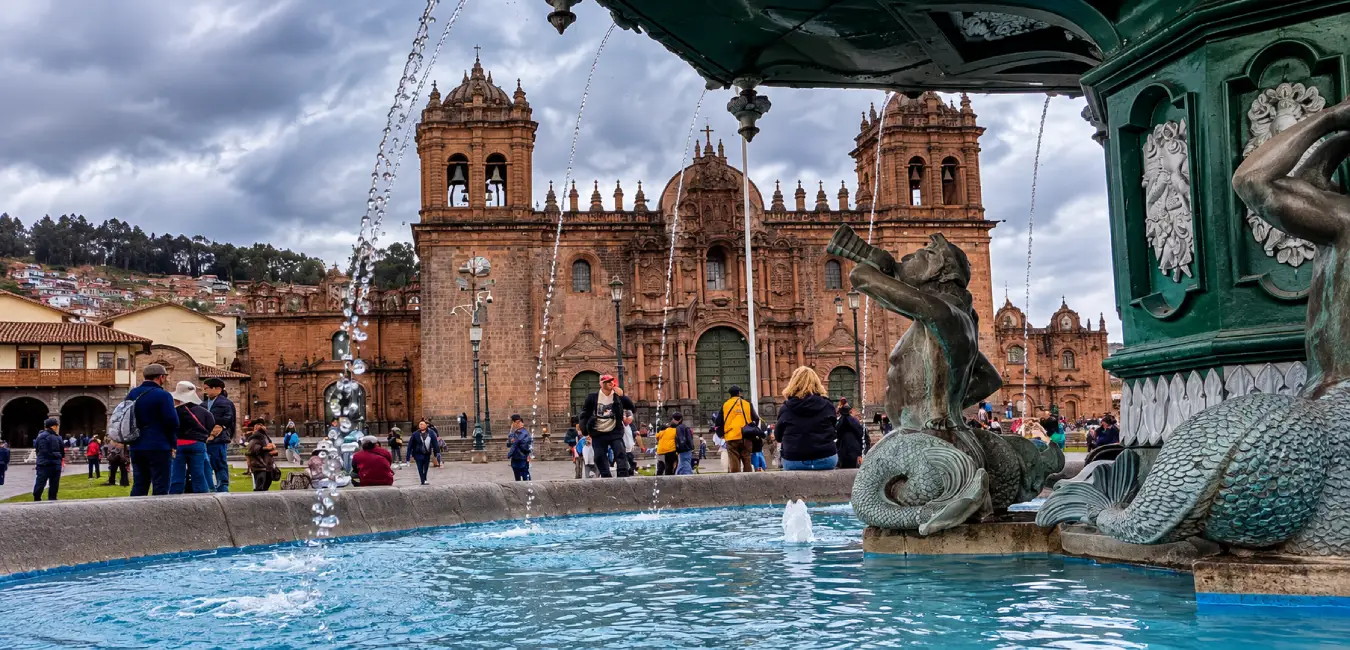
Quick facts about Cusco Cathedral for your visit
Location | North side of the Plaza de Armas, in Cusco's historic center. |
| Altitude | 3,400 meters above sea level |
| Architectural Styles | Gothic, Renaissance, Mannerist, and Baroque. |
| Construction Period | 1560 to 1654. The bishop consecrated the cathedral on August 19, 1668. |
| Admission | S/ 40 for international adults and S/ 20 for students and children. Confirm the price at the ticket office. |
| Hours | Approximately 10:00 a.m. to 5:00-6:00 p.m. Arrive before 4:30 p.m. |
| How much time do you need? | Between 1 and 2 hours. |
| Photography | Photography and video recording are not permitted inside. |
| World heritage status | Part of Cusco's Historic Center, which UNESCO added to its World Heritage List in 1983. |
| Cusco tourist ticket | Does not include the cathedral. |
Practical information about Cusco Cathedral
What is Cusco Cathedral Called?
Its full name is the Basilica Cathedral of our lady of the Assumption of Cusco. The name comes from the Marian dedication established by the Spanish during the early years of evangelization in 1533.
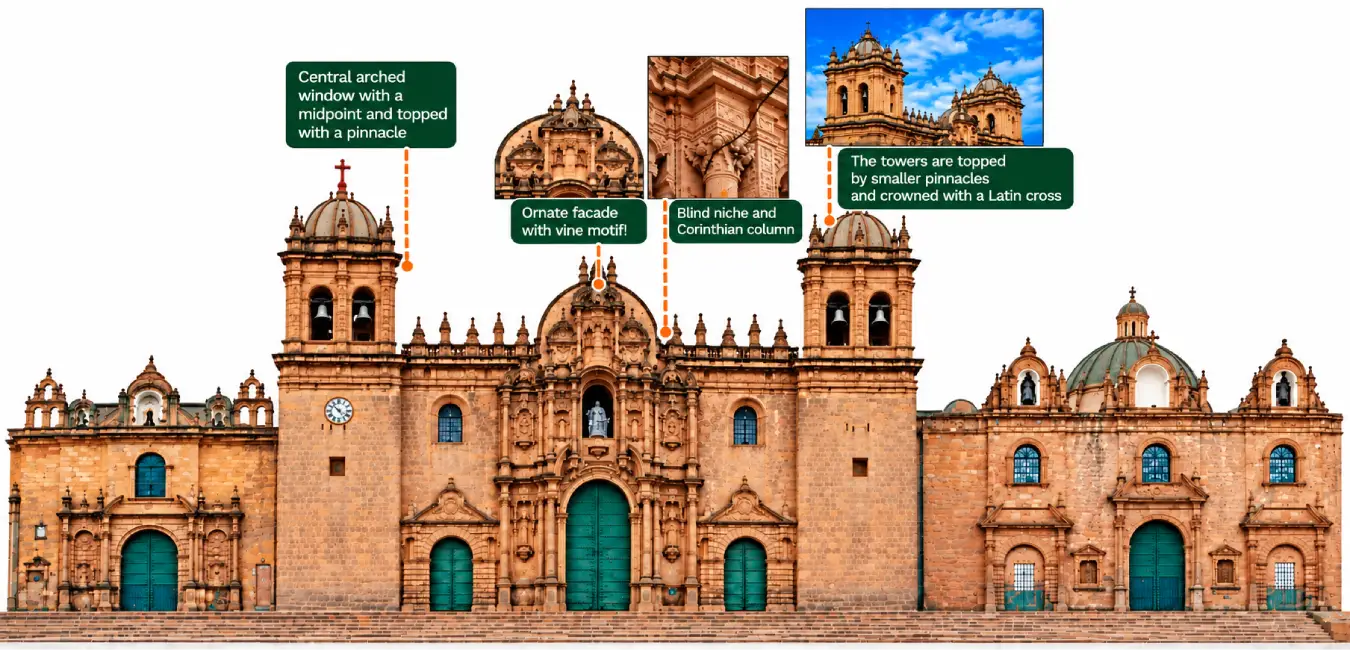
What is Cusco Cathedral, and why should you go inside?
Dedicated to Our Lady of the Assumption, Cusco Cathedral is the city's principal Catholic church. The Spanish built it over the former palace of Inca Wiracocha. Today, it remains an active church and is also home to one of South America's most important collections of colonial art.
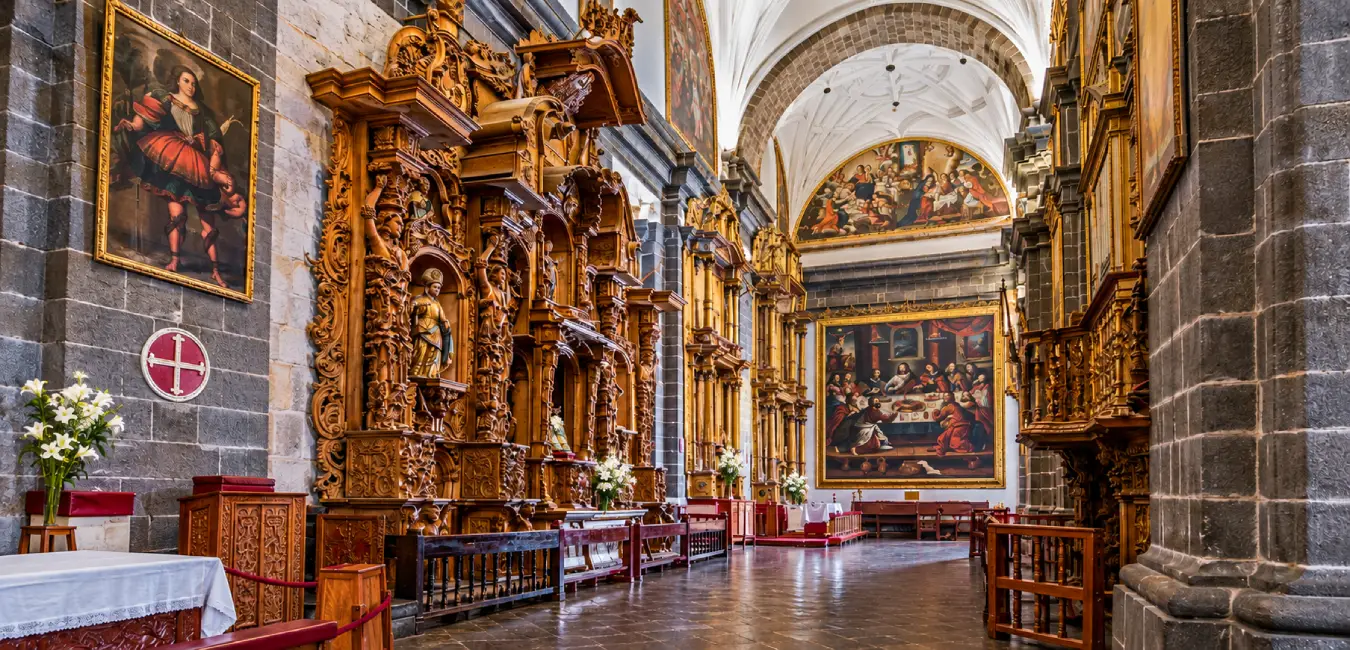
Where is Cusco Cathedral located?
The cathedral is in the historic center of the city, in the department, province, and district of Cusco. It stands on the north side of the Plaza de Armas, surrounded by historic streets and other attractions you can explore on foot.
How do you get to the Basilica Cathedral of Cusco?
Getting there is easy because the cathedral is right in the city center. If you're coming from Lima, the direct flight takes about 1 hour and 30 minutes and lands at Alejandro Velasco Astete International Airport.
- From the airport: Take an authorized taxi to the Plaza de Armas. The ride usually takes between 20 and 35 minutes, depending on traffic. The estimated fare is around S/ 15, although prices may vary. Agree on the fare before getting in.
- From other parts of the city: You can take a taxi or a local bus. If you're traveling by bus, get off near the Plaza de Armas at the Almagro or Santa Catalina stops, then continue on foot.
When is the best time to visit Cusco Cathedral?
You can visit Cusco Cathedral year round because the tour takes place indoors. For a more relaxed visit and shorter lines, we recommend going on a weekday and arriving early. Bring a light jacket because the interior can feel cold even on sunny days.
Cusco has mild daytime temperatures of 59-68°F (15-20°C), while nighttime temperatures can drop to nearly 32°F (0°C) during the dry season. Rain falls mainly from November through March, and frost can occur from May through September.
The History of Cusco Cathedral: From an Inca site to a Colonial church
What was on the site before Cusco Cathedral?
Before the Spanish arrived, this site was at the heart of Inca Cusco. It was home to Kiswarkancha, the palace of Inca Wiracocha, which featured stone walls, thatched roofs, and residences for his panaca, or royal lineage. Nearby stood Sunturwasi, a circular structure that housed weapons and shields that symbolized the power of the Inca.
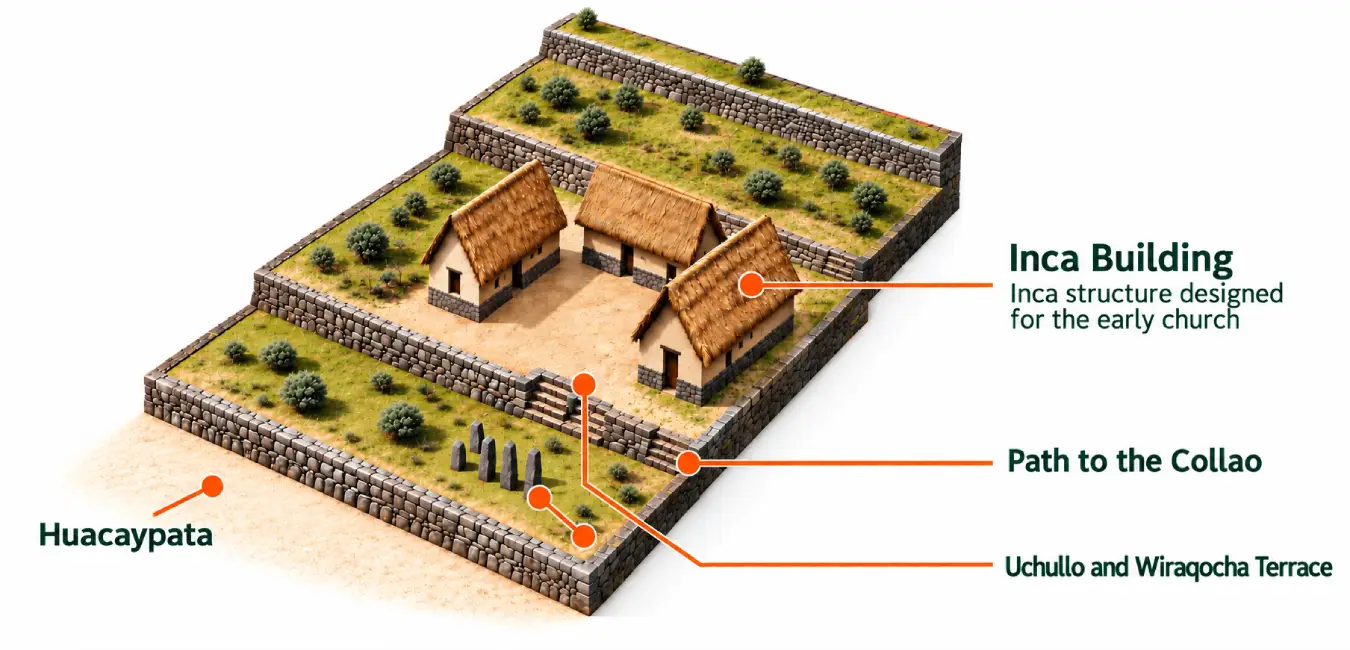
How did Construction of Cusco Cathedral begin?
On March 23, 1534, the Spanish refounded Cusco on top of Inca residences. Shortly afterward, between 1536 and 1539, they built the Church of El Triunfo, the city's first Christian church. Interestingly, the Spanish initially disagreed about where to build the cathedral. They first considered the site of El Triunfo, then Cusipata. Finally, in 1553, they decided to build it over Kiswarkancha.
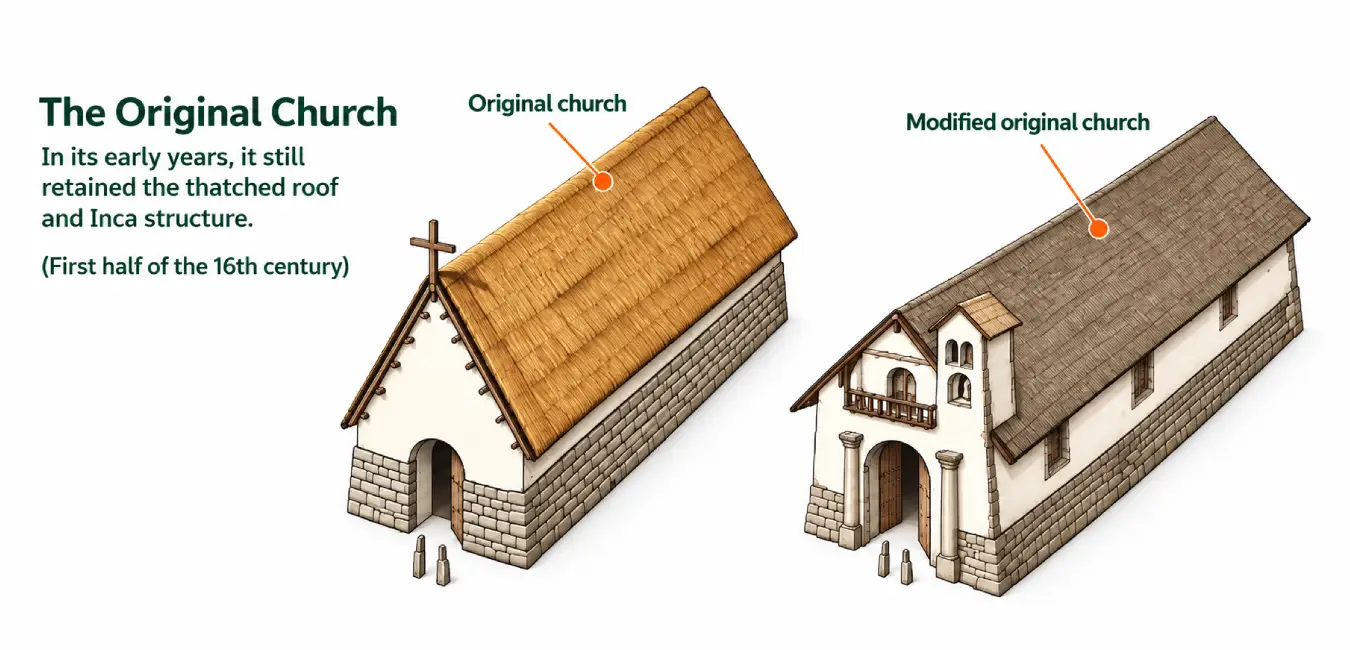
1560-1654: Nearly a century of construction
On march 11, 1560, Hernando Arias laid the first stone. Juan Miguel de Veramendi oversaw the initial construction work, and Juan Correa replaced him in 1564. Later, master builders including Francisco Becerra, Juan Rodríguez de Ribera, and Miguel Gutiérrez Sencio continued the project.
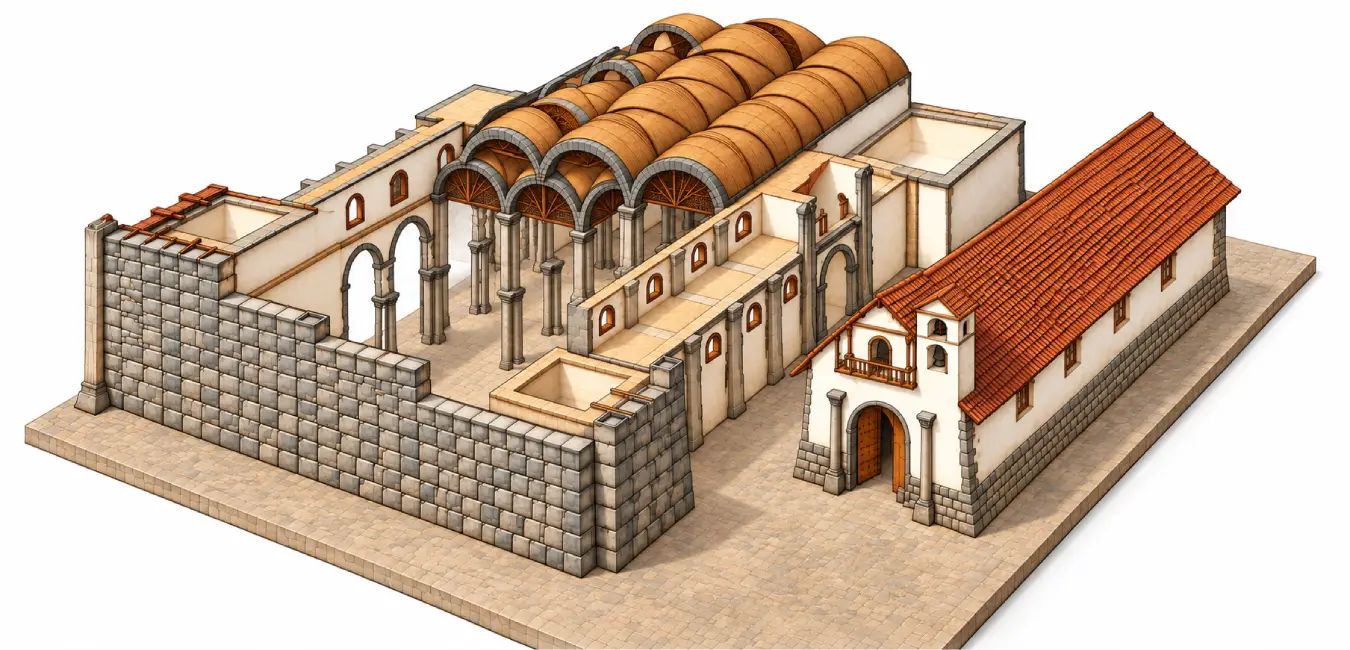
From Sacsayhuamán to Cusco Cathedral
The builders used large andesite blocks that, according to tradition, were taken from Sacsayhuamán. In this way, they reused Inca stonework to construct a new symbol of Spanish power. Work progressed in stages, however. For example, construction slowed down between 1570 and 1572 following the arrival of Viceroy Francisco de Toledo.
The 1650 earthquake and the shorter towers
In 1650, a powerful earthquake shook the city. The cathedral withstood much of the shaking, but the builders removed the third section of the towers to give them a lower, sturdier appearance. That's why the towers you see today look so solid. This event also helps explain the deep devotion to the Lord of the Earthquakes, whom we'll discuss later.
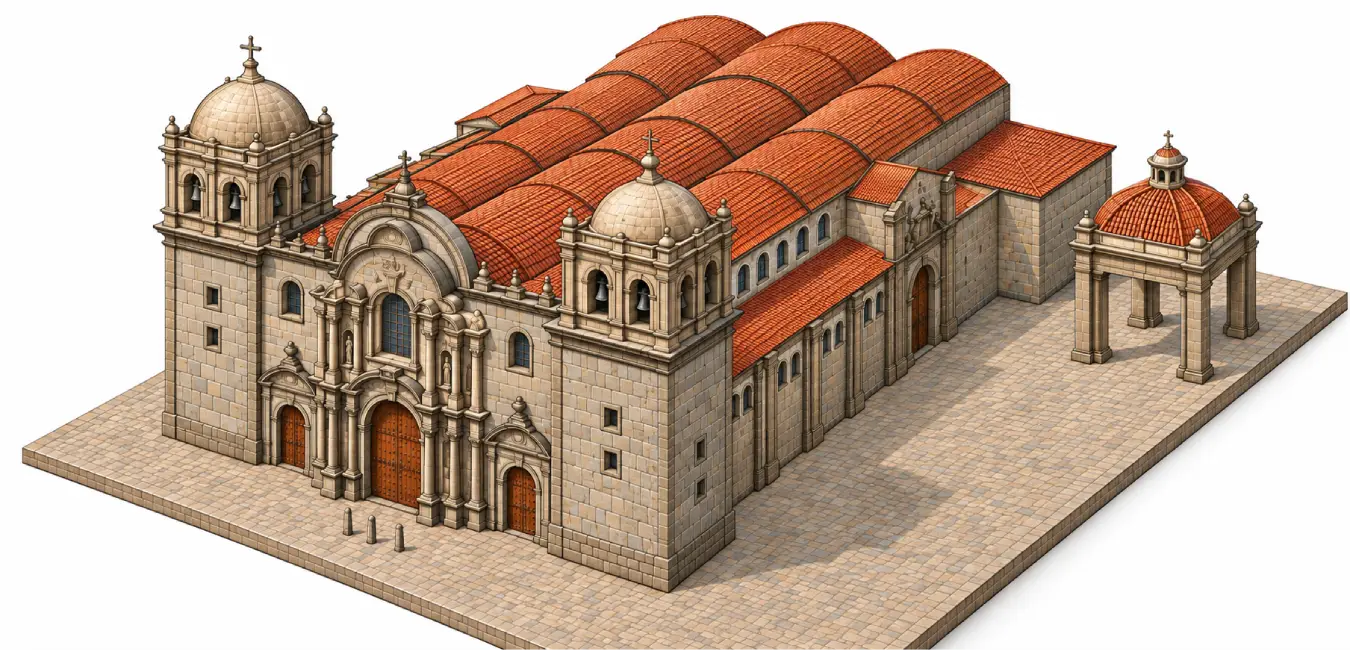
The consecration and expansion of Cusco Cathedral
The master builders completed the main structure in 1654, and Bishop Bernardo de Izaguirre consecrated the church on August 19, 1668, after 108 years of work. During the 18th century, the complex expanded with the reconstruction of El Triunfo, between 1729 and 1733, and the construction of the Church of the Holy Family. Bishop Gabriel de Arregui promoted the latter project in 1723. The architect's death halted construction for ten years, and the church was finally completed in 1735.
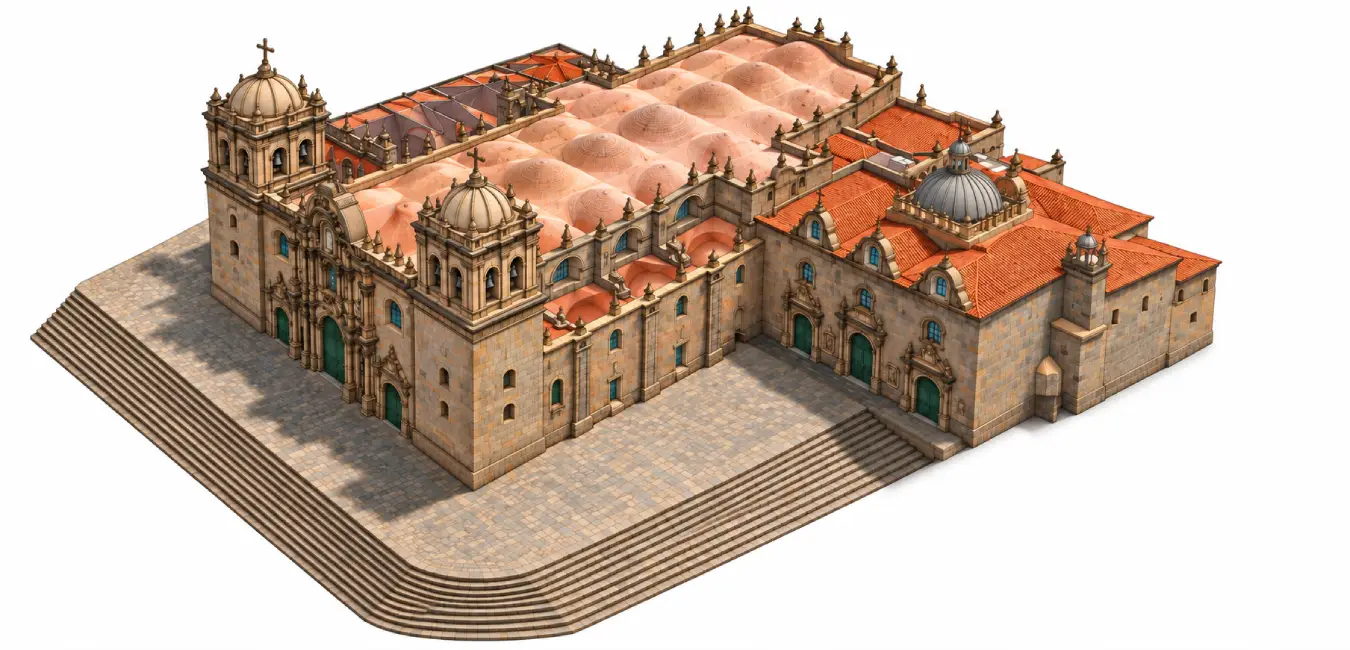
Recognition of Cusco Cathedral
Later, on February 8, 1928, the Catholic Church granted it the title of minor basilica. Finally, in 1983, UNESCO designated the city of Cusco a World Heritage Site, a recognition that includes its historic center, where the cathedral stands.
Three Churches that form a single complex
Many people assume the cathedral is a single building. In reality, three churches make up the cathedral complex.
- Basilica Cathedral: This is the central and largest building. Its three naves rest on 14 cruciform pillars and support 24 vaults.
- Church of El Triunfo: Cusco's first Christian church. Its name recalls the Spanish victory over the forces of Manco Inca, during which, according to tradition, the Virgin Mary and the apostle James intervened miraculously. Inside, you'll find the Cross of the Conquest and the crypt containing part of the ashes of Inca Garcilaso de la Vega.
- Church of the Holy Family: The smallest church in the complex, it features a Baroque style. Dedicated to Jesus, Mary, and Joseph, it displays striking altarpieces and paintings.
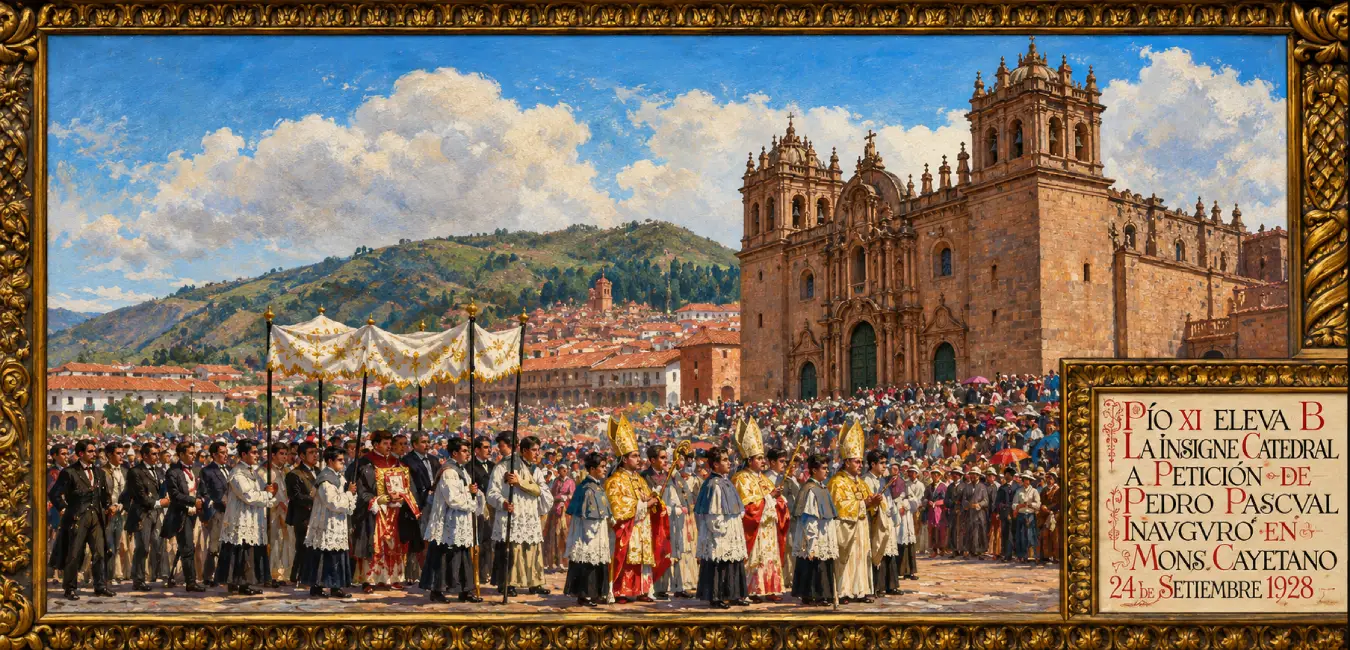
Take a closer look at the façade, too.
The central portal features restrained Baroque ornamentation, while the side portals follow the Mannerist style. That's why the building looks understated from a distance but reveals remarkable detail up close.
What to see inside Cusco Cathedral
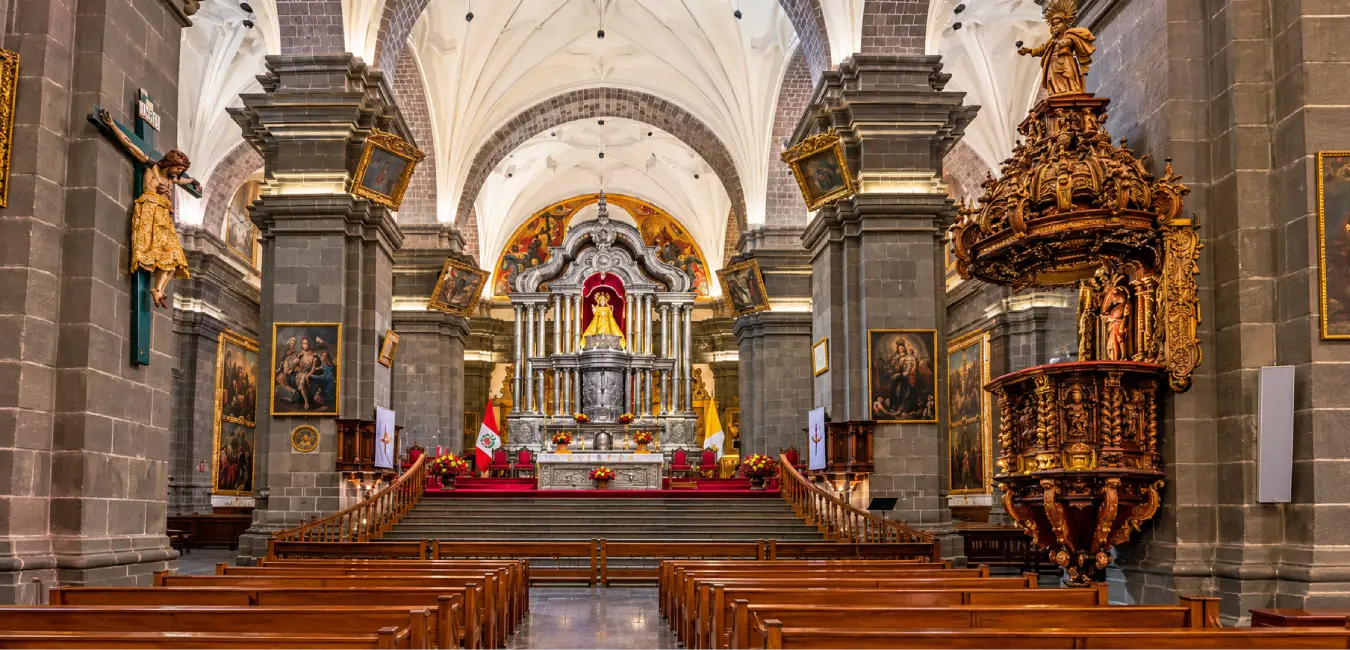
The silver high altar
Cusco master craftsman Martín de Torres worked on the high altar during the 17th century. Artisans covered it with repoussé silver sheets, using approximately 1,250 kilograms of silver donated by priest Manuel Boza. Later, they added more silver from the chapel of the Lord of the Earthquakes. Look closely at the columns, sheaves of wheat, and clusters of grapes. These symbols represent the Eucharist and also reflect the mineral wealth of the colonial viceroyalty.
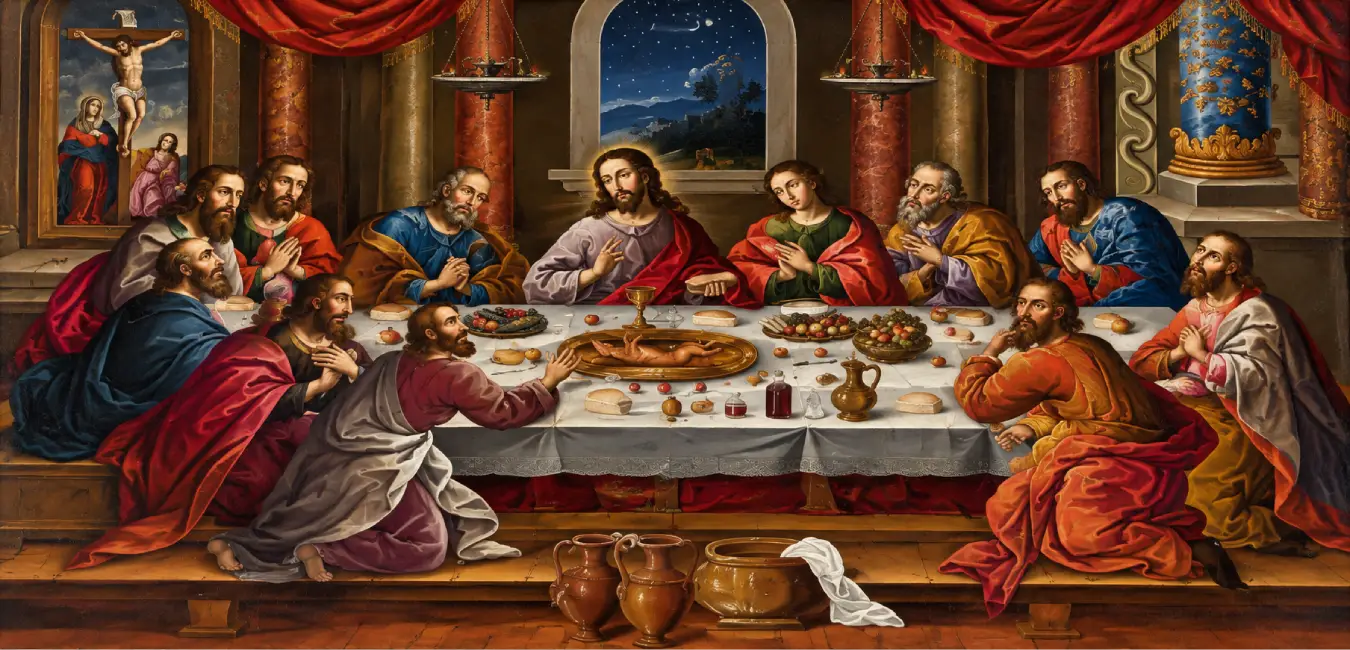
The last supper with andean ingredients
Marcos Zapata painted this canvas in 1755, drawing inspiration from European engravings but changing the menu. At the center of the table is cuy (guinea pig); a corn tortilla replaces the bread; and rocoto peppers, corn, papaya, and pomegranates appear alongside the other dishes. According to local guides, you can also spot a vizcacha, an Andean rodent traditionally regarded as a guardian of lakes and mountains. The painting measures about 16.4 by 13.1 feet (5 by 4 meters), so you'll need some time to find all its details.
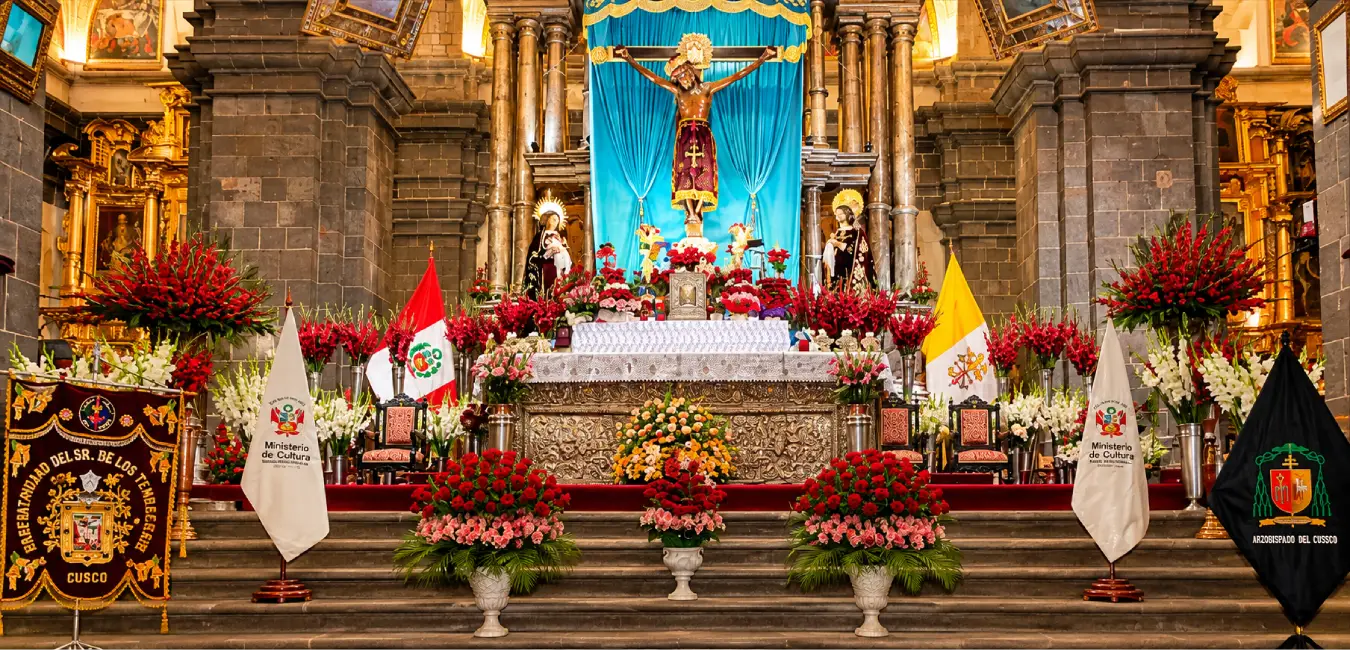
The lord of the earthquakes
Locals affectionately call this image Taytacha de los Temblores. According to tradition, when the image was carried in procession during the 1650 earthquake, the tremors stopped. Since then, he has been the city's officially sworn patron. People attribute his dark skin to candle smoke, incense, and the latex of the ñuqchu flower, which devotees scatter along his route. Every Holy Monday, thousands of people accompany him through the streets of the historic center.
The choir stalls and pulpit
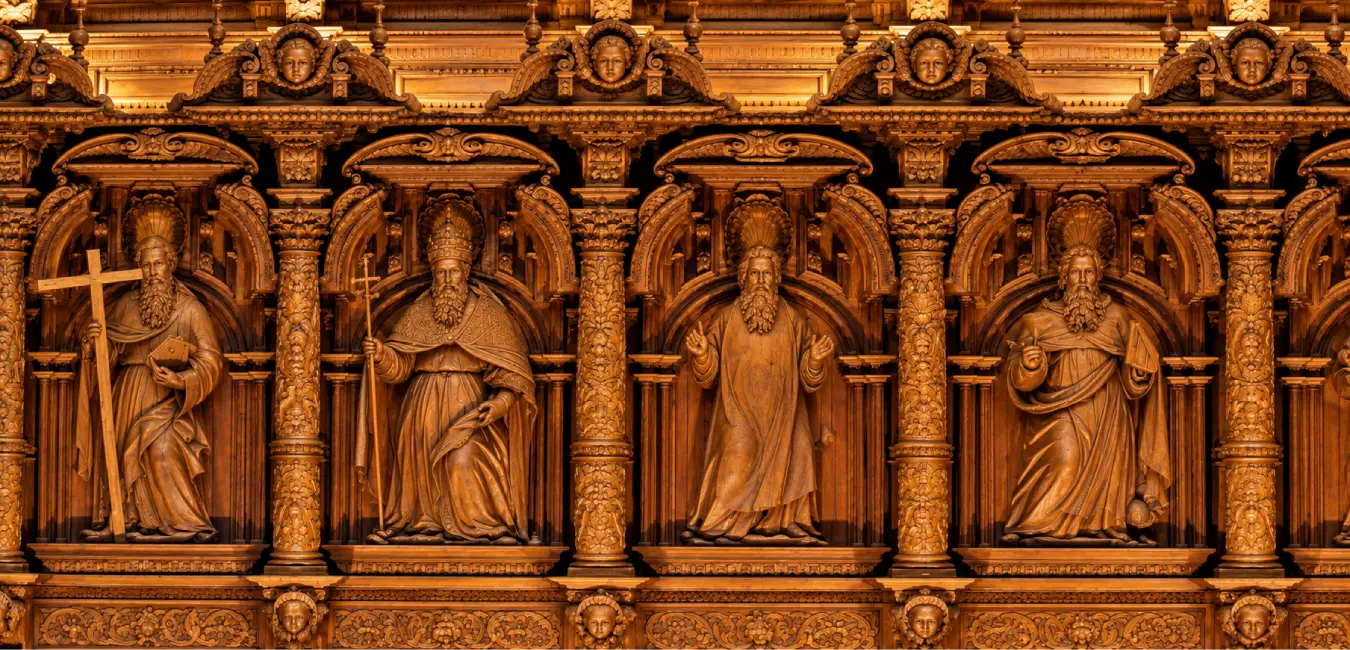
Woodcarvers sculpted the cedar choir stalls, decorating them with saints in low relief. Nearby, the pulpit, created in 1647 by cabinetmaker Juan Tomás Tuyru Tupa, features Solomonic columns and figures of the four Evangelists. At its center, you'll see the Immaculate Virgin Mary.
Paintings of the earthquake and Christ's Parables
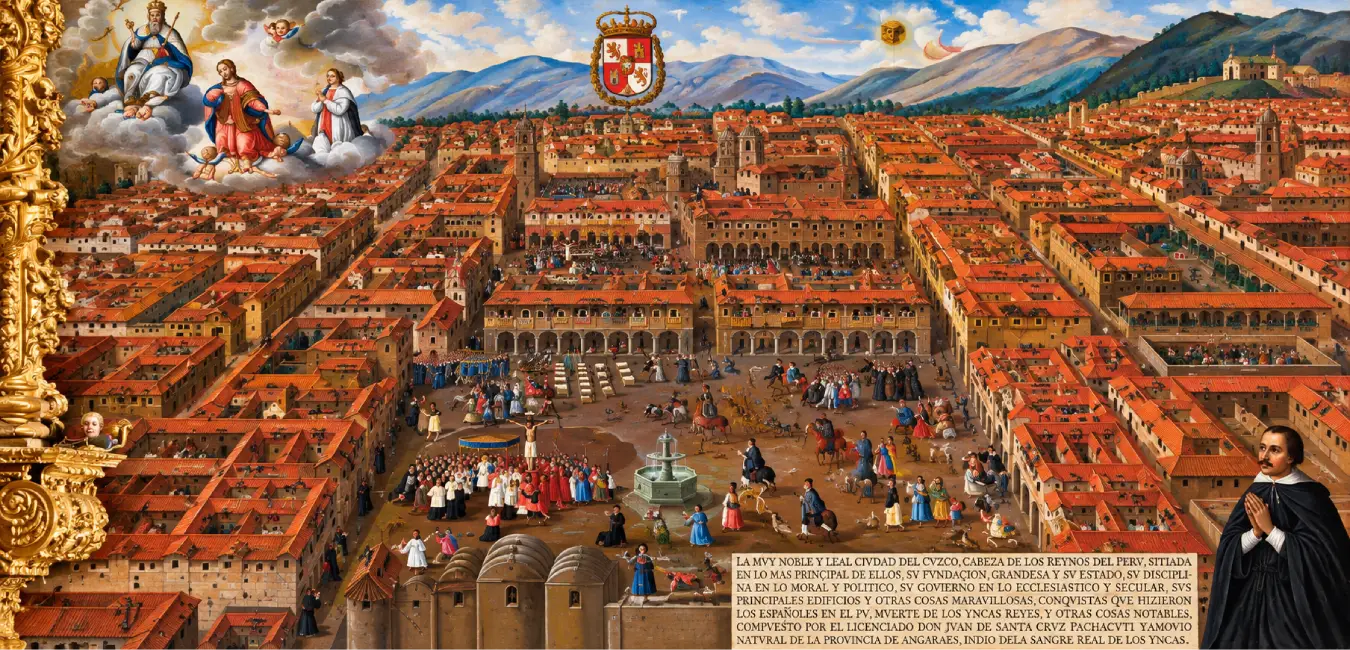
The painting depicting the 1650 earthquake, commissioned by Alonso Cortés de Monroy, serves as a visual record of the city in the midst of a crisis. Meanwhile, in 1681, Diego Quispe Tito painted the twelve parables of Christ, linking them to the twelve months of the year and the signs of the zodiac. In doing so, the artist brought Christian faith together with the calendar and astronomy.
The silver collection and the monstrance
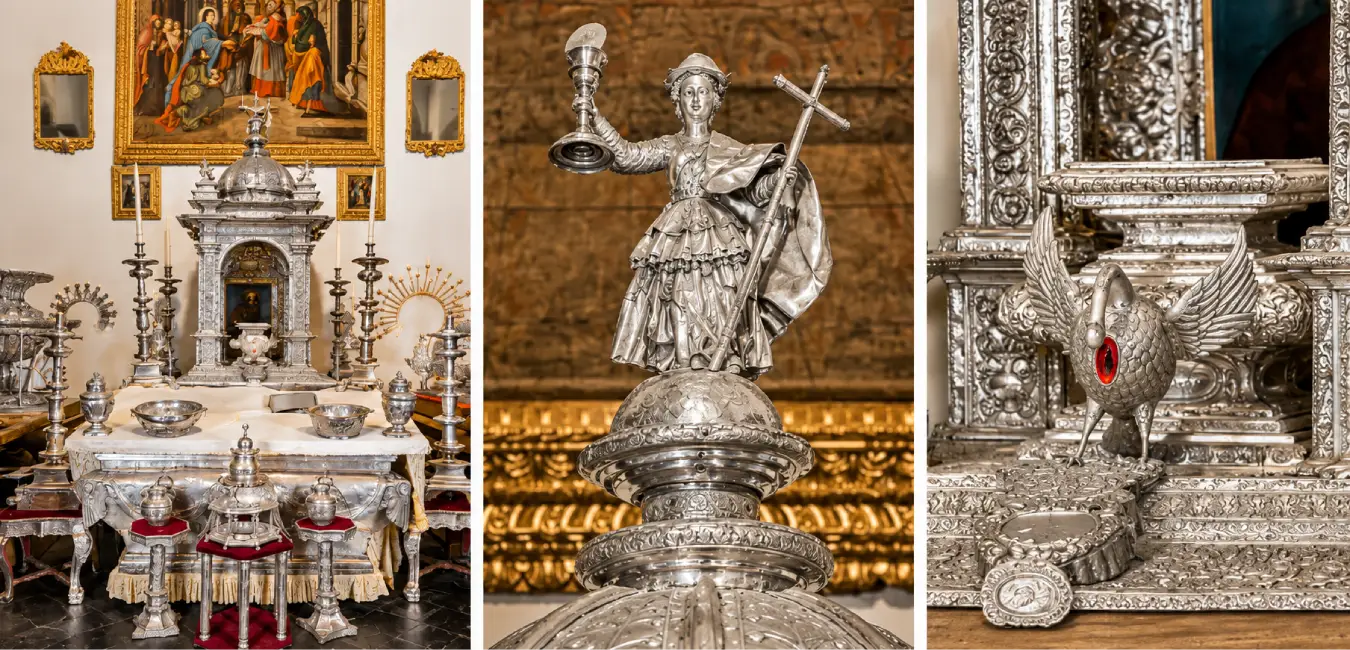
In the silver room, you'll find repoussé silver objects that are brought out each year for Corpus Christi, including an 18th century baldachin. The collection's main treasure, however, is the monstrance made by Gregorio Gallegos in 1745. It weighs 27 kilograms (59.5 pounds), stands 1.20 meters (3.9 feet) tall, and contains more than 1,000 precious stones and pearls, including diamonds, emeralds, rubies, and sapphires.
The sacristy
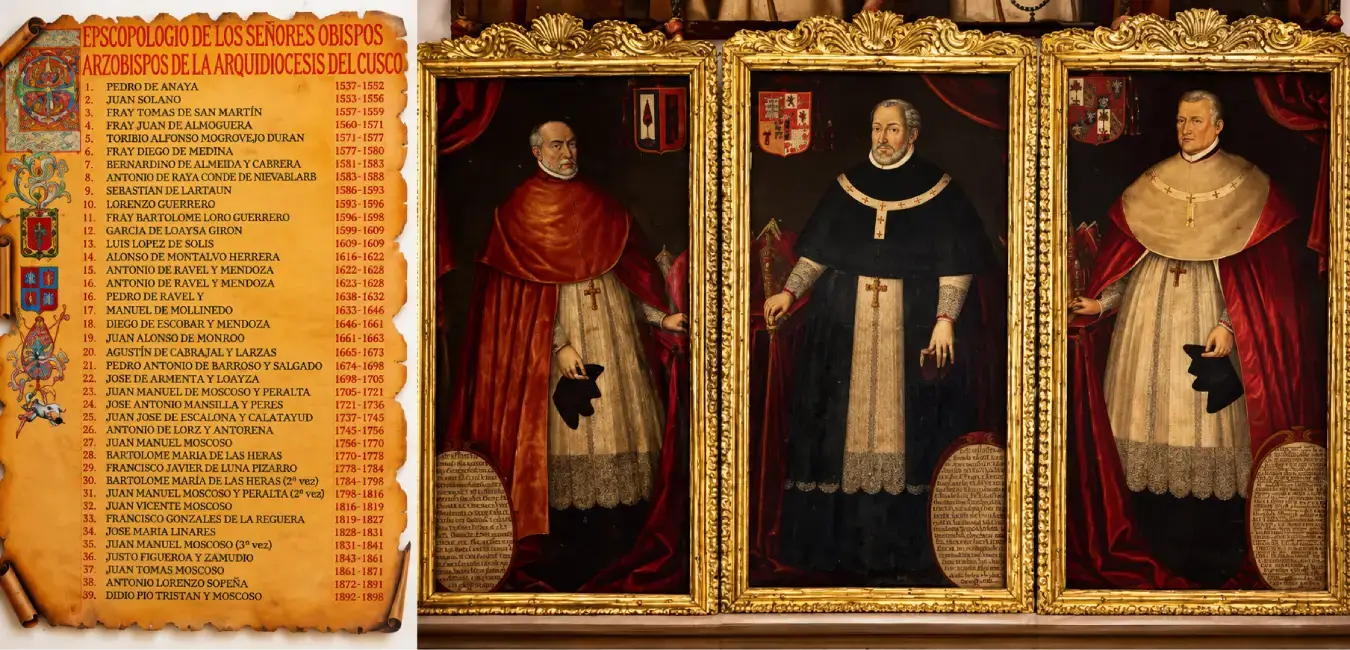
The sacristy's walls display portraits of Cusco's bishops, from Vicente de Valverde to more recent church leaders. You'll also find an Andean Baroque cedar altarpiece featuring a painting attributed to the Dutch artist Van Dyck.
The María Angola bell
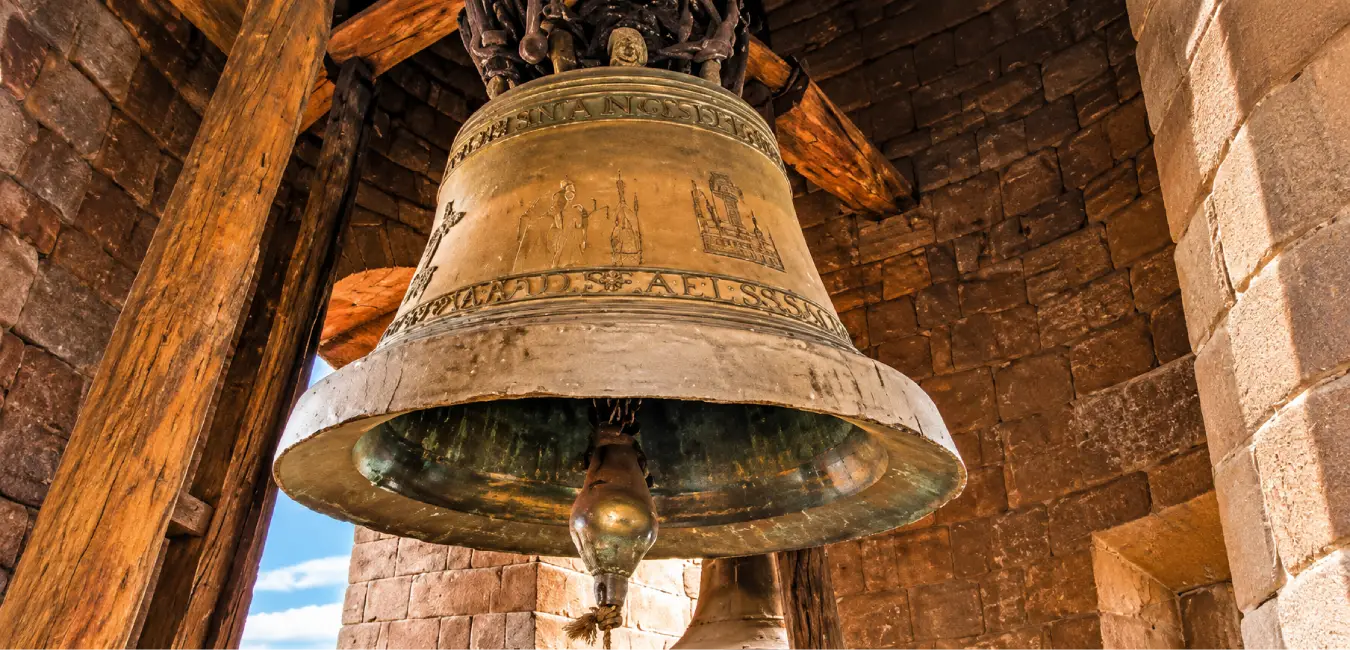
One of Peru's most famous bells hangs in the cathedral's towers. It was cast in 1659 and weighs 5,980 kilograms (13,184 pounds) and measures 2.15 meters (7.05 feet). Tradition holds that a woman of African origin named María donated 12 kilograms of pure gold and that the bell's sound could be heard up to 45 kilometers (28 miles) away. Today, it rings only for the most important celebrations, so if you hear it, consider yourself lucky.
The Crypts
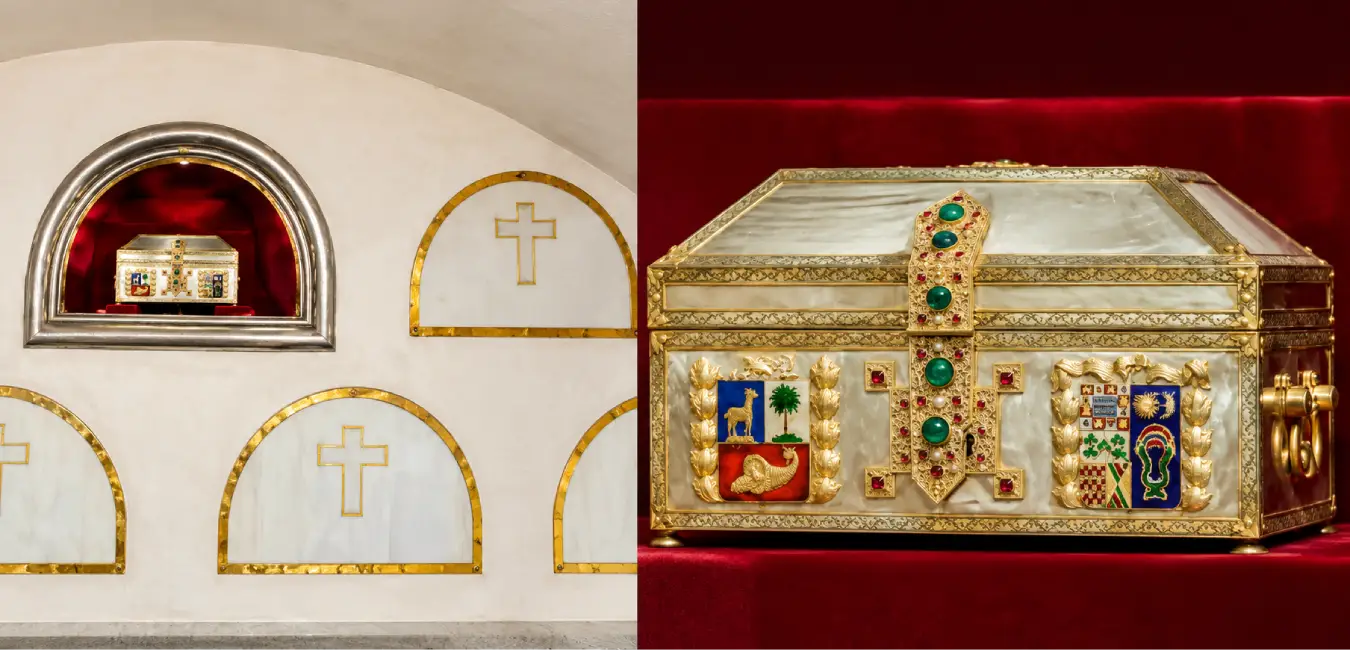
Bishops and archbishops of Cusco are buried beneath the high altar. At the Church of El Triunfo, meanwhile, part of the ashes of chronicler Inca Garcilaso de la Vega rests in a crypt. In 1978, King Juan Carlos I of Spain presented these remains, while the other half stayed in Spain. Keep in mind that the cathedral does not offer a regular catacomb tour.
The artists who brought the Cathedral to life
During the 17th century, the Cusco School of Art reached its peak. Indigenous, mestizo, and European artists filled the cathedral with paintings, altarpieces, and sculptures. These are the names worth remembering.
- Diego Quispe Tito: Painted the Zodiac series and the parables of Christ.
- Basilio Santa Cruz Pumacallo: Distinguished himself through his mastery of the Baroque style.
- Antonio Sinchi Roca: Painted the prophet kings on the pilasters and canvases for the Church of the Holy Family.
- Marcos Zapata: Created the 1755 painting of the Last Supper.
- Mauricio García: Received commissions for large scale projects. Historical records document a contract for 435 paintings in the mid 18th century. Martín de Torres and Juan Tomás Tuyru Tupa carved the cedar altarpieces and pulpit.
Legends and traditions surrounding Cusco Cathedral
Over the centuries, Cusco Cathedral has inspired stories and popular legends that blend history, faith, and mystery. Among the best known stories passed down among Cusco residents are the following:
The gathering of the saints
According to tradition, during Corpus Christi, all the city's saints gather in the cathedral to assess the behavior of their devotees. The Taytacha de los Temblores presides over the assembly, forgives their shortcomings, and encourages the people of Cusco to remember their saints throughout the following year.
The master builder and the devil
Another story tells of a master builder who, desperate to finish the project on time, sold his soul to the devil, allowing demons to work on the church at night. Of course, no source confirms this story, but the legend reflects how impossible such a massive construction project must have seemed.
Admission Tickets for Cusco Cathedral
Details | Information |
|---|---|
| Cathedral Admission |
|
| Religious Circuit Ticket | A ticket managed by the Archdiocese of Cusco. It includes four religious sites: the cathedral, San Cristóbal, San Blas, and the Archbishop's Palace with its religious art museum. |
| Cusco Tourist Ticket | Does not include the cathedral. |
| Where to Buy | At the cathedral entrance or at the ticket offices of the other churches included in the circuit, on the day of your visit. |
| Mass Services | You can attend Mass, but this does not count as a tourist visit, and some areas may be closed. |
| Reservations | Reservations are not required. During peak season and religious holidays, arrive early to avoid lines. |
| Guides | Guides are available at the entrance, and organized tours are offered in several languages. A guide can help you understand the paintings and altarpieces. |
Two ways to explore the Cathedral
A 90 minute tour inside the Cathedral
If you're not sure where to start, follow this itinerary. First, take a look at the exterior, then go inside and explore at a relaxed pace. Spend the rest of your time admiring the works that impress visitors the most. The order of the stops may vary depending on the day and staff instructions, so adjust your route to the areas open to visitors.
Stop | What to see | Time |
|---|---|---|
| Atrium and Façade | The two towers, the central portal, and the view of the Plaza de Armas. | 10 min |
| Naves and High Altar | The 14 pillars, 24 vaults, and repoussé silver altar. | 15 min |
| Choir and Pulpit | The cedar choir stalls and the 1647 pulpit. | 10 min |
| Lord of the Earthquakes | The dark image of the Taytacha and its connection to the 1650 earthquake. | 10 min |
| The Last Supper | The cuy, rocoto pepper, corn, and vizcacha depicted in Zapata's painting. | 10 min |
| Paintings of the Earthquake and the Parables | The city in 1650 and Quispe Tito's representation of the twelve months. | 10 min |
| Silver Room and Sacristy | The 1745 monstrance and portraits of the bishops. | 15 min |
| Church of El Triunfo | The Cross of the Conquest and Garcilaso's crypt, if your ticket includes access. | 10 min |
Only have 45 minutes?
Focus on the high altar, The Last Supper, the Lord of the Earthquakes, and the silver room. These four stops will help you understand what makes this cathedral so unique.
A half day itinerary around the Cathedral and its Surroundings
In one morning, you can visit Cusco Cathedral, admire the famous Twelve Angle Stone, and explore the traditional streets of San Blas. This itinerary combines history, architecture, and local culture in a walking route lasting approximately 4 to 5 hours.
Time | Location | Estimated time | What to see |
|---|---|---|---|
| 8:30-9:00 a.m. | Cusco Plaza de Armas | 20-30 minutes | Start your walk by admiring the historic buildings and the cathedral's façade. |
| 9:00-10:30 a.m. | Cusco Cathedral | 60-90 minutes | Explore its altarpieces, paintings from the Cusco School, and the Lord of the Earthquakes. Confirm visiting hours in advance. |
| 10:30-11:00 a.m. | Twelve-Angle Stone | 20-30 minutes | Walk to Hatun Rumiyoc Street and admire the precision of Inca stonework. |
| 11:00 a.m.-12:00 p.m. | San Blas Neighborhood | 45-60 minutes | Explore its cobblestone streets, artisan workshops, and traditional corners. |
| 12:00-1:00 p.m. | Return to the Plaza de Armas and Lunch | 45-60 minutes | Finish your route with lunch in the historic center. |
Tips for your visit
Start early, wear comfortable shoes, and confirm the cathedral's admission prices and opening hours before you go. If you have an extra hour, you can add Qoricancha to your itinerary and explore one of Cusco's most important Inca religious sites.
Tips for a smooth visit
- Bring a jacket: The interior feels cold throughout the year.
- Put your camera away: Photography and video recording are not allowed inside.
- Dress respectfully: This is an active place of worship, so choose modest clothing.
- Protect the artwork: Don't touch the pieces, and keep your voice low.
- Ask before booking a city tour: Many tours do not include cathedral admission because it must be paid separately.
Religious festivals worth planning your visit around
- Holy Week: On holy monday, the Lord of the Earthquakes is carried through the streets of the historic center in one of the country's largest religious processions.
- Corpus Christi: Celebrated on the Thursday following Trinity Sunday, usually in June. Fifteen images of saints and virgins arrive at the cathedral in a procession accompanied by music, dances, and traditional dishes.
- Christmas: The cathedral and the plaza fill with worshippers, lights, and celebrations.
Places to visit near the Cathedral
After your visit, walk just a few minutes to discover other fascinating places. For example:
- Qoricancha showcases the Temple of the Sun, over which the Spanish built the Convent of Santo Domingo.
- Kusicancha preserves remarkably precise Inca stone walls.
- Amaru Kancha recalls the palace of Huayna Cápac.
If you prefer Museums
- Inka Museum: 103 Cuesta del Almirante, Cusco.
- Pre Columbian Art Museum at Plaza Nazarenas: 231 Plaza de las Nazarenas, Cusco.
- Casa Concha Museum, with artifacts from Machu Picchu: 320 Santa Catalina Ancha Street, Cusco.
- Casa Garcilaso Museum: 165 Heladeros Street, Cusco.
Where to have lunch
- Restaurants on the plaza: Inkagrill at 115 Portal de Panes and Limo on the second floor of 236 Portal de Carnes.
- San Pedro Market serves local food just a short walk from the plaza.
Continue your journey beyond the Plaza
Llama Trail route: Qoricancha to Machu Picchu
We hike from Qoricancha to Huchuy Qosqo in the company of llamas on a new route that you can combine with stays in our domes and continue on to Machu Picchu via the classic Inca Trail, the Short Inca Trail, or by train.
Cultural experiences
Enjoy cultural evenings, traditional weaving, cooking classes featuring ceviche, pachamanca, and huatia, time with llamas, a traditional payment to Mother Earth ceremony, and the wide variety of Andean potatoes. You can also spend the night in our Andean Sky Dome accommodations at Piedra Resbalada.
“Experience the cathedral with Responsible Trekking, then take the next step and contact us by WhatsApp or email. We'll design a trip around your pace and interests. Tell us how many days you have and what you'd love to see, and we'll take care of the rest.”
Frequently asked questions about Cusco Cathedral
Is the Cathedral included in the Cusco Tourist Ticket?
No. You must purchase a separate admission ticket or visit with the Religious Circuit ticket.
Are the Cathedral, El Triunfo, and the Holy Family the same building?
No. They are three separate churches that form a single complex on the Plaza de Armas. The Basilica Cathedral stands in the center, with the other two churches on either side.
Can i visit with a guide?
Yes. Guides are available at the entrance, and historic center tours may also include the cathedral. A guide can help you better understand the paintings, chapels, and altarpieces.
Can i enter during mass?
Yes, you can attend the service. However, attending Mass does not replace a tourist visit, and some areas may be closed.
Are there catacombs to visit?
There is no regular catacomb tour. However, historical crypts and burial sites do exist, including the crypt at the Church of El Triunfo. If you want to visit catacombs, head to the Convent of San Francisco.
Does Cusco's altitude affect the visit?
The cathedral sits at approximately 3,400 meters (11,155 feet) above sea level. Walk slowly, drink water, and rest whenever you need to, especially if you've just arrived in the city.