
San Pedro Market is one of Cusco’s most traditional markets and an interesting stop if you want to experience the city beyond its archaeological sites. As you walk through its aisles, you’ll find Andean products, fresh fruit, local food, herbs, and handicrafts. In this guide, you’ll learn how to get there, opening hours, prices, what to eat, what to buy, how much time to spend there, and which places you can visit nearby.
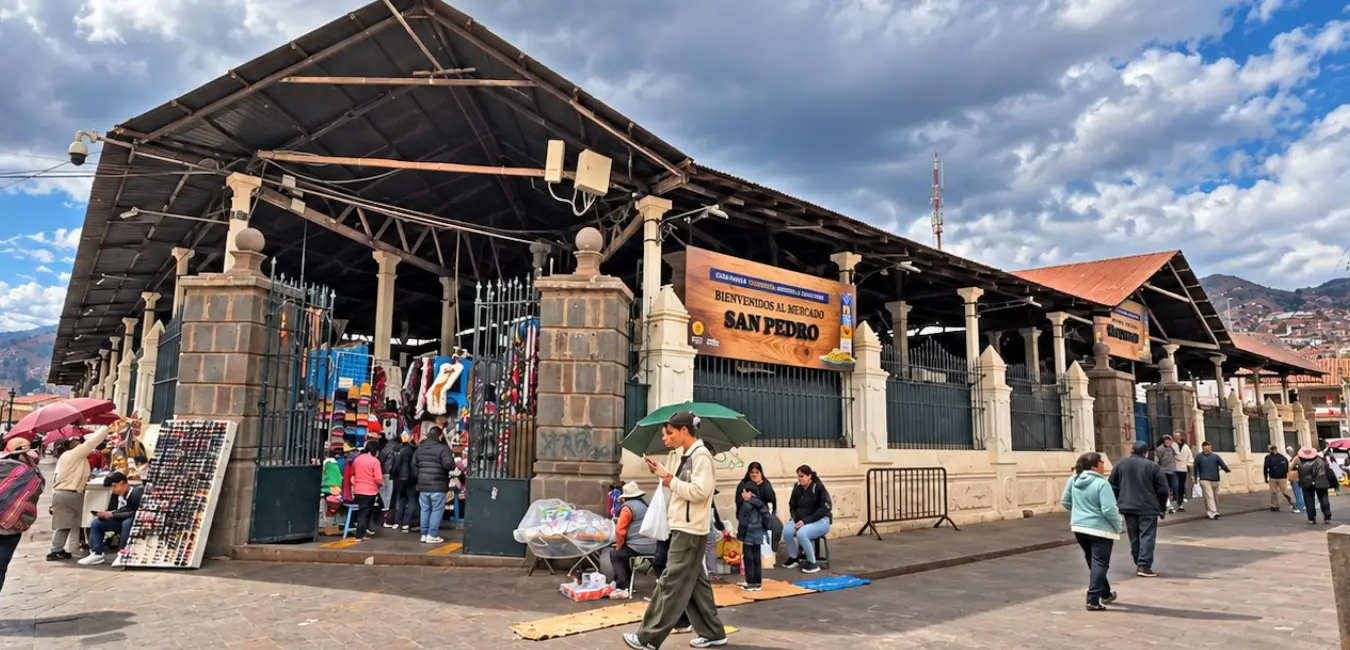
Quick facts about San Pedro Market
Fact | Information |
|---|---|
| Official name | San Pedro Central Market, formerly Frisancho Market. |
| Location | Traditional San Pedro neighborhood, Historic Center of Cusco. |
| Type of attraction | Food market and cultural space. |
| Tourism category | Cultural heritage: architecture and urban spaces. |
| Elevation | Approximately 3,400 m (11,155 ft) above sea level. |
| Construction | First stage in 1925 and second stage in 1955. |
| Cultural Heritage | Monument included in Peru's Cultural Heritage of the Nation since 2024. |
| Cultural value | Historical, architectural, technological, and social. |
| Nearby landmark | Across from the former train station. |
| Admission | Free |
| What you can do | Buy local products, try traditional food and drinks, browse handicrafts, and watch traditional products being prepared. |
What is San Pedro Market in Cusco?
San Pedro Central Market is the oldest and largest food market in Cusco's Historic Center. It operates every day of the year, has around 1,180 stalls, and supplies a large part of the city.
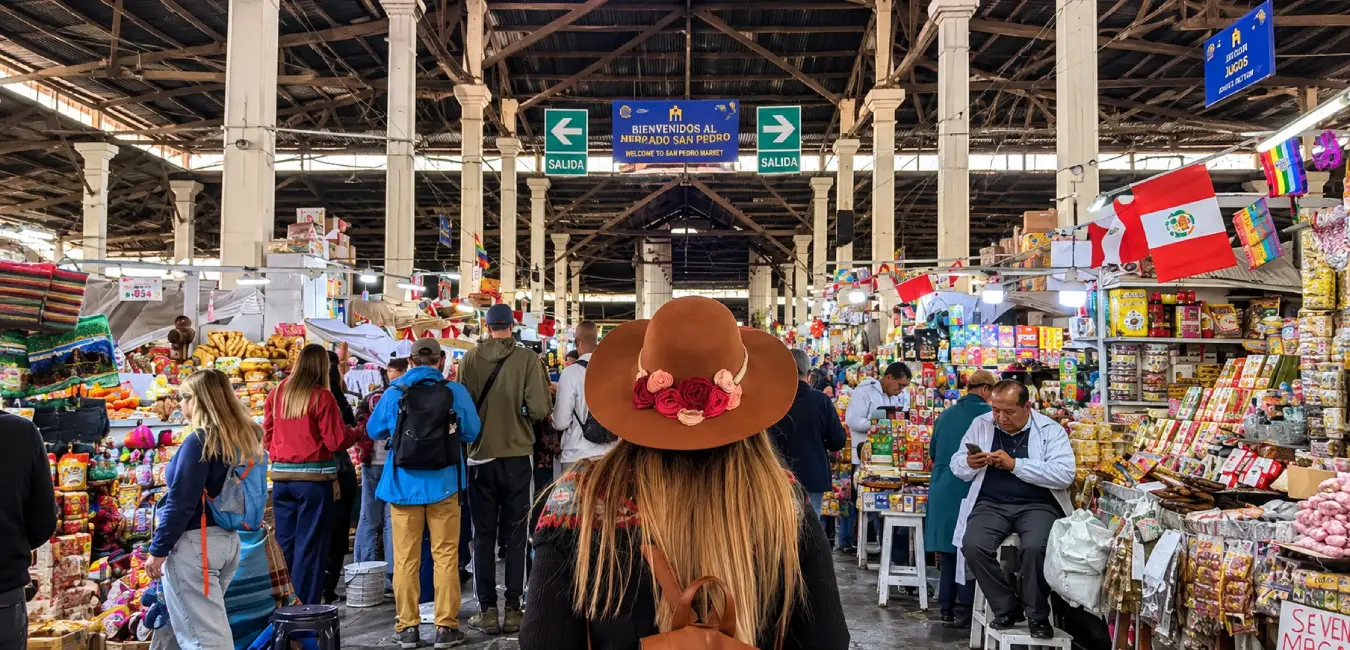
Why is San Pedro Market famous?
Its reputation doesn't come from a single attraction, but from several things that come together:
- Local products in one place: the market brings together agricultural products from nearby valleys, highland communities, and the Quillabamba jungle region.
- Affordable local food: it offers dishes that are generally less expensive than many restaurants in the Historic Center.
- Fresh juices and breakfast: the juice aisle has become an experience in its own right.
- Andean and Amazonian fruits: many are difficult to find outside Peru, and some are rarely found even outside the region.
- Herbs and traditional products: the herbal medicine section preserves knowledge passed down through generations.
- Handicrafts and souvenirs: textiles, chullos, and blankets are available at prices noticeably lower than those around the Plaza de Armas.
Where is San Pedro Market in Cusco?
The market is located in the San Pedro neighborhood, within the Historic Center of Cusco, across from the small plaza and church of the same name. It sits at around 3,350 m (10,991 ft) above sea level and is bordered by four streets.
Location fact | Details |
|---|---|
| Address | Santa Clara Street s/n, San Pedro Plaza, Historic Center of Cusco. |
| Bordering streets | Santa Clara, Cascaparo, Túpac Amaru, and Gohering Passage. |
| Main landmark | Across from San Pedro Church, next to the former train station. |
| Distance from the Plaza de Armas | Approximately 800 m (0.5 mi). |
| Elevation | About 3,350 m (10,991 ft) above sea level. |
| Area | San Pedro neighborhood, western edge of the Historic Center. |
How do you get to San Pedro Market?
Getting to San Pedro Market is easy from different parts of Cusco because it is located within the Historic Center and close to several of the city's main attractions. Here's how to get there from the most common starting points.
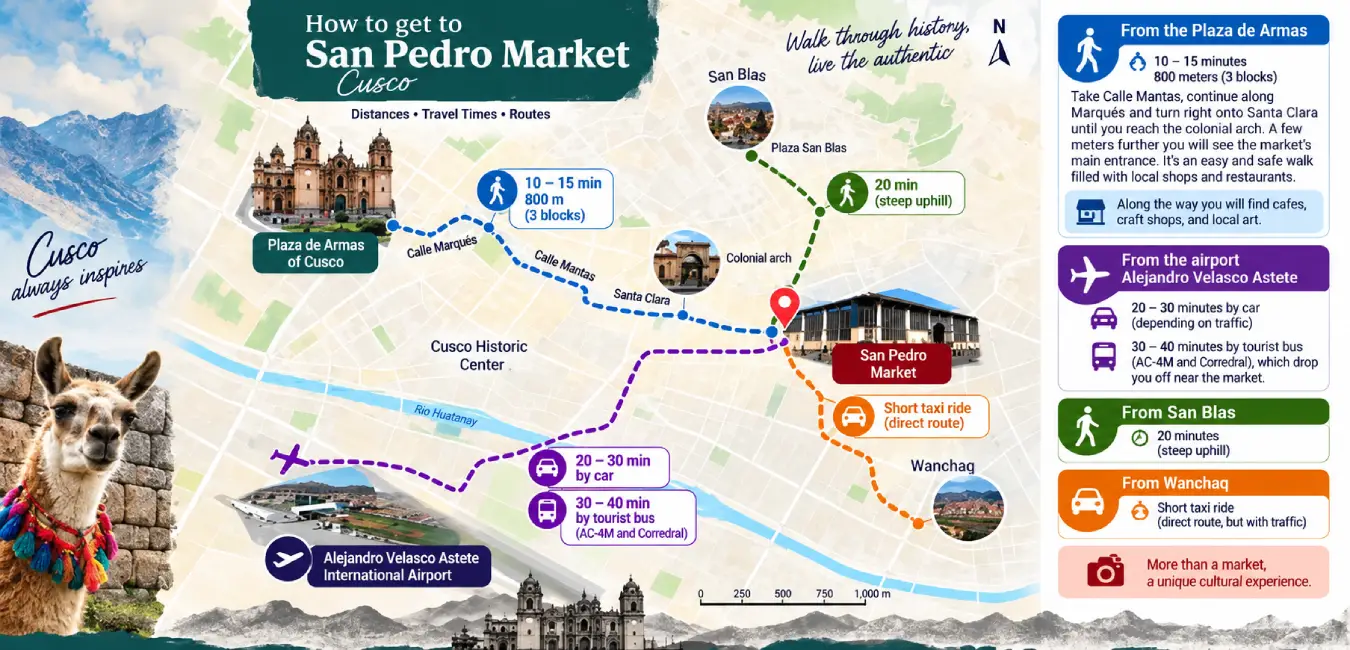
From the Plaza de Armas in Cusco
From the Plaza de Armas, you'll reach the market in about 10 to 15 minutes, depending on your walking pace. You'll cover roughly 800 m (0.5 mi) and pass through three blocks. Walking is the best option and also the most scenic. Take Mantas Street, continue along Marqués, and walk straight along Santa Clara until you cross the colonial arch; the market's facade is just a few steps farther. Along the way, you'll pass through one of the busiest commercial stretches of the Historic Center, so it's a good opportunity to locate currency exchange offices and ATMs before entering.
From Alejandro Velasco Astete Airport
By taxi, the ride takes between 20 and 30 minutes, depending on traffic. You can also take the urban buses C-4M and Dorado, which drop you just a few meters from the market; allow 30 to 40 minutes because they make frequent stops.
From San Blas or Wanchaq
From San Blas, it's about a 20 minute walk downhill. From Wanchaq, a short taxi ride is more convenient, the route is relatively flat but quite long.
Which entrance should you use at San Pedro Market?
The market has eight entrances, and each one puts you in a different area. Choose your entrance based on what you're looking for and you'll save yourself several unnecessary trips across the market.
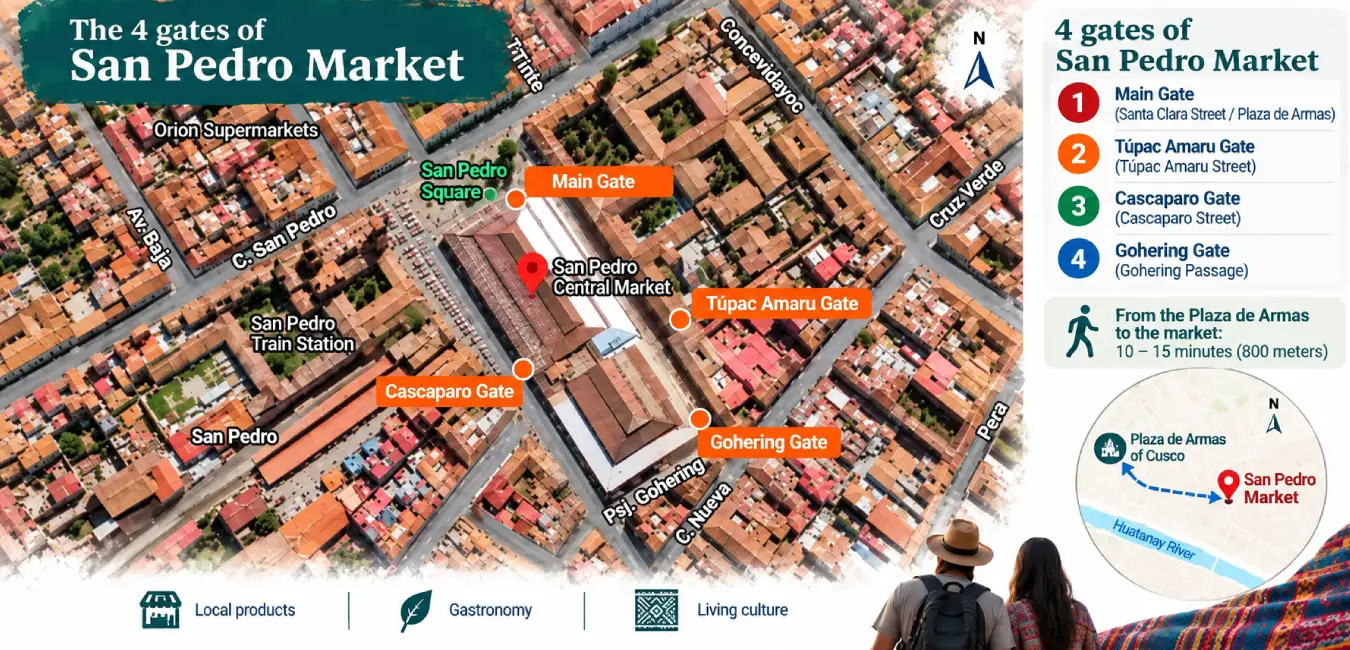
Entrance | What you'll find when you enter | Best if you're looking for |
|---|---|---|
| Main entrance (Plaza de Armas / Santa Clara side) | Textiles, alpaca clothing, blankets, hats, and souvenirs. | Buying gifts and souvenirs. |
| Túpac Amaru side | Fresh fruit, dried goods, nuts, and the famous juice aisle. | Having breakfast and trying fresh juices. |
| Cascaparo side | Groceries, Andean grains, cheeses, and bread. | Buying food and products to take with you. |
| Gohering Passage / southeast section | Local eateries and hot meals. | Having an affordable, tasty lunch. |
San Pedro Market hours
The market is open every day of the year, including Sundays and holidays. Each section follows its own schedule: juice stands, bakeries, and food stalls open early, while handicraft vendors usually start around 8:00 a.m.
Aspect | Details |
|---|---|
| Days open | Every day, including Sundays and holidays. |
| Approximate opening time | 6:00 a.m. |
| Approximate closing time | 6:00 p.m. |
| Busiest days | Saturday and Sunday mornings |
| Best time to explore | Between 8:00 and 10:00 a.m. |
| Busiest time | Between 11:00 a.m. and 2:00 p.m. |
What is the best time to visit San Pedro Market?
Each hour offers a different experience. morning is when you'll find the most commercial activity and the freshest products.
Time | What's happening | Best for |
|---|---|---|
| 7:30 – 9:00 a.m. | Bakeries, juice stands, and food stalls open; locals come in to shop. | Having breakfast and buying fresh bread. |
| 9:00 – 11:00 a.m. | The market is fully open and still comfortable to walk around. | A first visit and general exploration. |
| 11:00 a.m. – 2:00 p.m. | Peak crowds and busy food stalls. | Having lunch, although there is less space. |
| 2:00 – 4:00 p.m. | The pace slows down and vendors negotiate more calmly. | Shopping for textiles and handicrafts. |
| 4:00 – 6:00 p.m. | Gradual closing; some vendors discount fresh products. | Last-minute shopping |
How much time do you need to explore San Pedro Market?
If it's your first time in Cusco, set aside at least 1 hour.
Type of visit | Duration | What you can do |
|---|---|---|
| Quick visit | 30 – 45 minutes | General walk through, photos, and a fresh juice. |
| Food-focused visit | 1 – 2 hours | Breakfast or lunch, tastings, and a little shopping. |
| Guided visit | 1.5 – 2 hours | Historical context, explanations about local products, and conversations with vendors. |
| Visit combined with the Historic Center | 3 – 4 hours | Market plus the Plaza de Armas, Qorikancha, and Inca streets. |
What will you find at San Pedro Market?
The market is organized into sections based on the type of merchandise sold. Although the layout can change over time, these are the sections you'll recognize most easily.
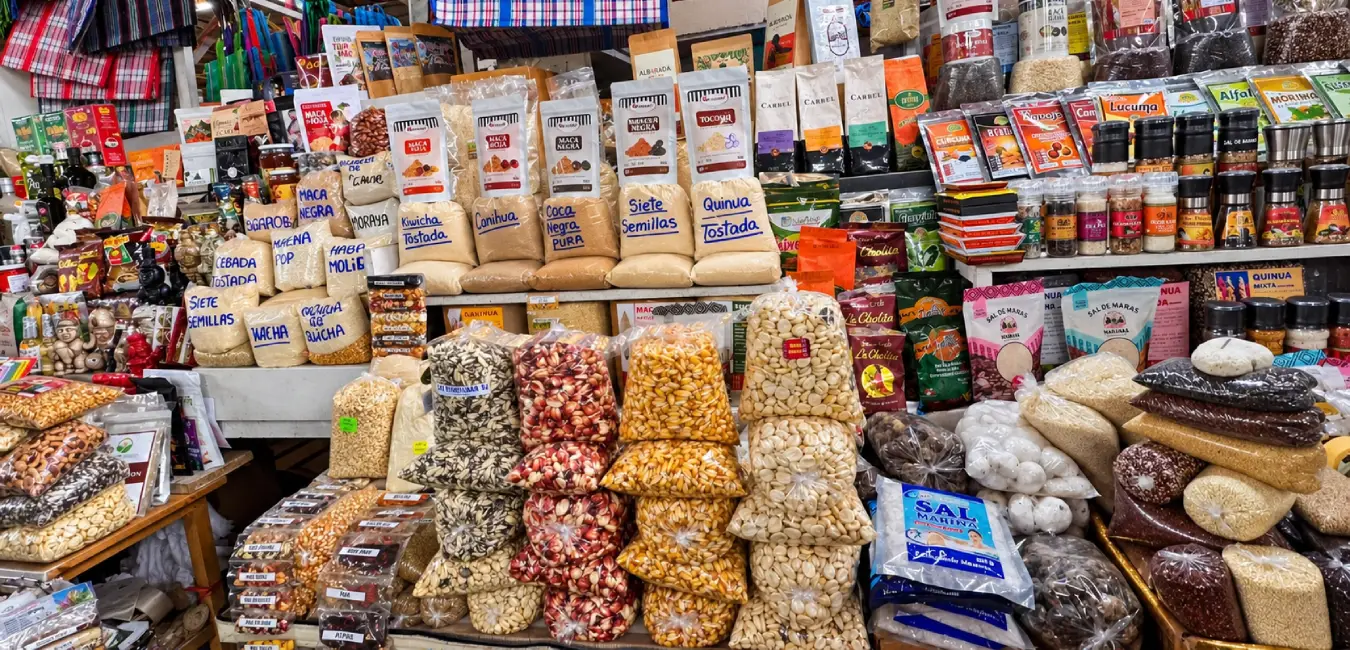
Fruits and andean products
Here, products from three different ecological zones come together, which gives you a good snapshot of Peru's geography.
Product | What it is | How to recognize or try it |
|---|---|---|
| Granadilla | Fruit with an orange colored skin and jelly like pulp. | Cut it open with your hands and eat it with a spoon. |
| Cherimoya | Green fruit with creamy white flesh. | It gives slightly when pressed once ripe. |
| Lucuma | Fruit with dry, orange colored flesh. | Widely used in ice cream and desserts. |
| Aguaymanto | Small, tart berry wrapped in a papery husk. | Usually sold in small bags. |
| Tumbo | A relative of granadilla, but more acidic. | Excellent in juice. |
| Pacae | Long pod with white, cotton-like pulp. | Open it like a bean pod. |
Native potatoes, Andean tubers, and grains
Peru grows more than 3,000 varieties of potatoes, and at San Pedro you'll see dozens of them stacked by color and size.
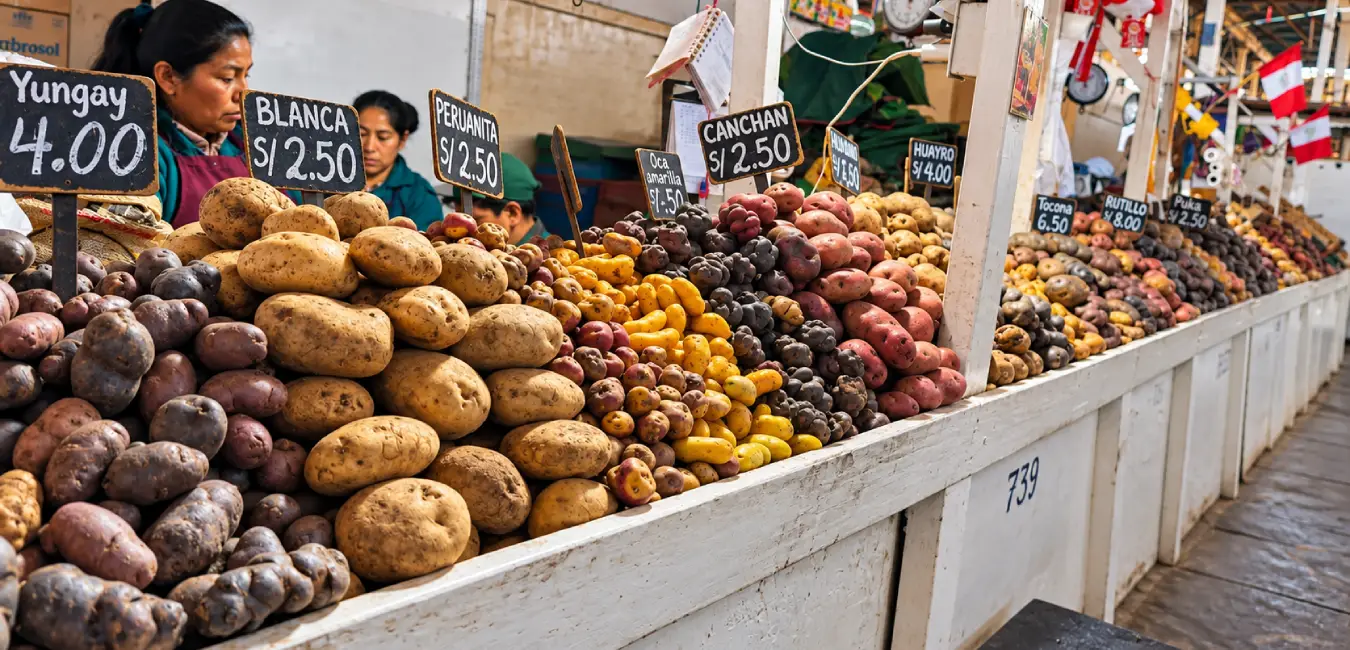
Product | What it is | How to recognize or try it |
|---|---|---|
| Native potatoes | Dozens of varieties with different colors and textures. | Each variety has its own culinary use |
| Oca, olluco, and mashua | Traditional Andean tubers. | They can be distinguished by their color and shape. |
| Chuño and moraya | Potatoes dehydrated through nighttime freezing. | A pre-Hispanic preservation technique. |
| Giant corn from the Sacred Valley. | Corn with exceptionally large kernels. | Used to make mote, traditionally served with chicharrón. |
| Quinoa and kiwicha. | Andean grains with high nutritional value. | Sold in bulk by the kilogram. |
| Cañihua | An Andean grain smaller than quinoa. | Often sold toasted or as flour. |
Bread, cheese, and chocolate
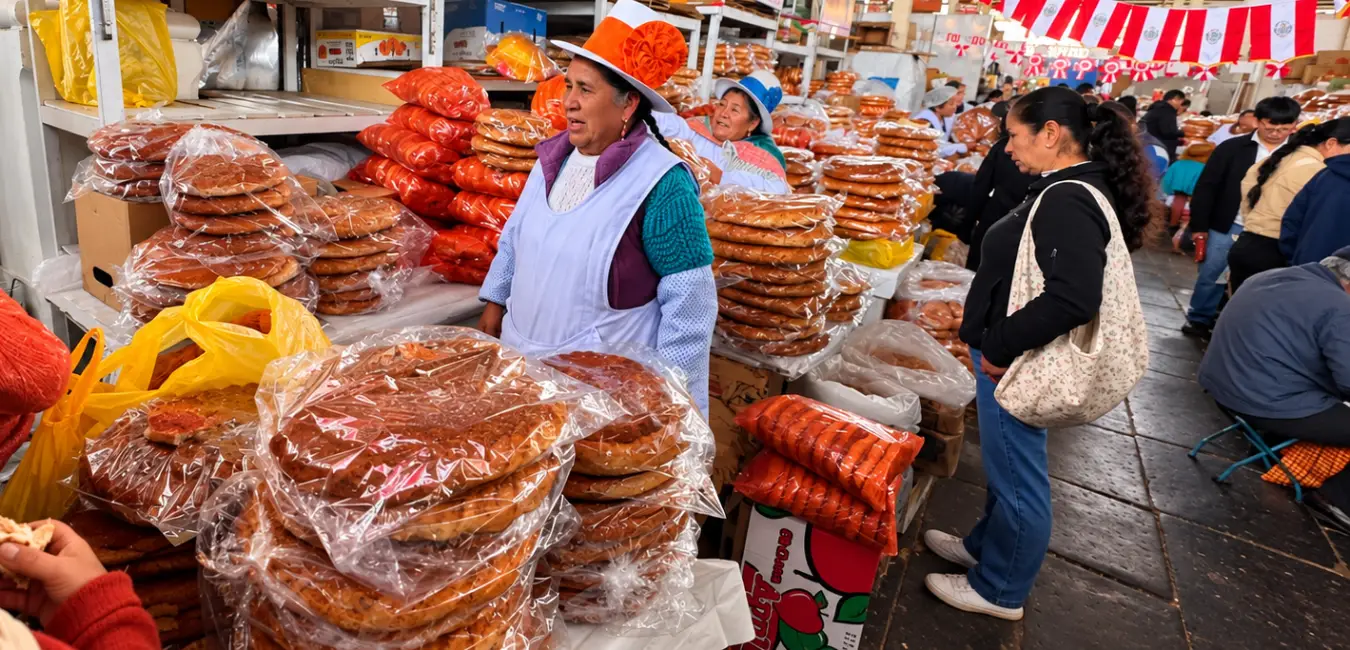
The market bakery makes chuta, Oropesa bread, wawa bread, and corn bread. Buy them in the morning while they're still warm. Nearby, dairy stalls sell fresh and aged cheeses from Sicuani and Ccorca, artisanal butter, and natural yogurt. If you like chocolate, try the cacao bars from the La Convención Valley.
Meat and fresh products
This section can be surprising. You'll see sheep heads, legs, organ meats, guinea pigs ready for roasting, and trout from Andean rivers. Everything has a purpose in local cooking, as chairo and head soup are prepared using these exact ingredients. If you're traveling with children or are sensitive to this type of display, you can pass through this section quickly or go around it using the outer aisle.
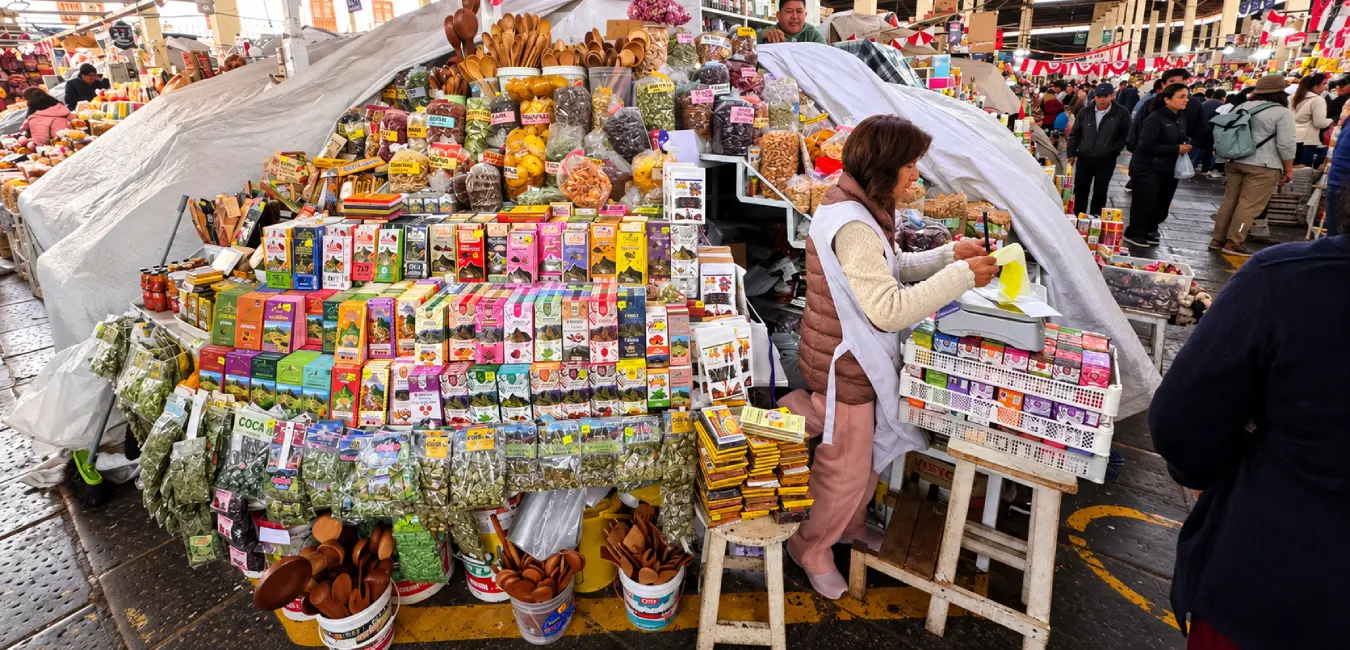
Medicinal herbs
The herbal medicine aisle is one of the most interesting parts of the market. You'll find muña, eucalyptus, chamomile, cedron, hercampuri, chanca piedra, cat's claw, and coca leaves, among many others. Vendors arrange them in bundles and often explain how people traditionally use them at home.
Coca leaves
In Peru, their consumption is legal and traditional. They are prepared as tea or chewed and play a deeply rooted ritual and social role in the Andes. Keep in mind that exporting them to other countries is prohibited in most destinations, so check your country's restrictions before traveling with them.
Ritual products
Next to the herbs, you'll also find the ritual section, with offering tables for Pachamama, colored candles, incense, and Ekeko figures. These objects are especially used in August during offerings to the earth. Treat them with the same respect you would give any ceremonial object.
Textiles and handicrafts
In the textile section, you'll find sweaters, blankets, chullos, bags, and socks at noticeably lower prices than those found in stores around the Plaza de Armas. Pay attention to the material: genuine alpaca feels cool to the touch and doesn't usually cause itching, while acrylic blends warm up quickly between your hands.
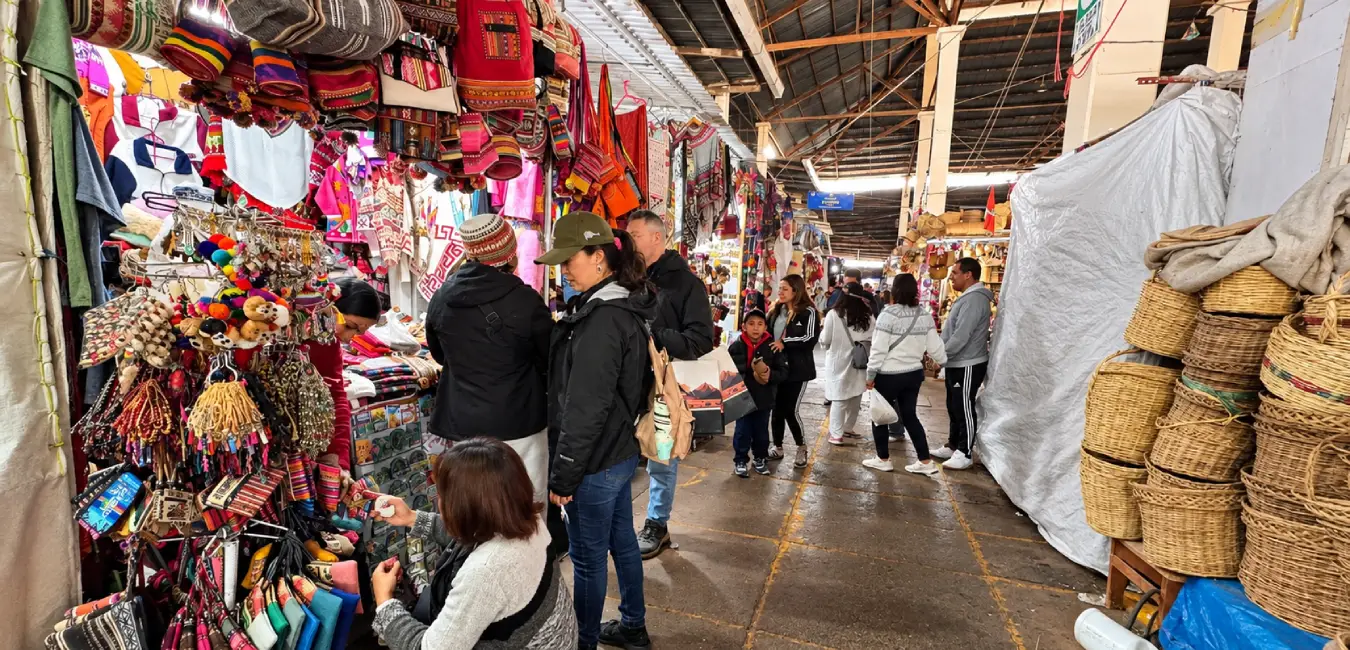
Typical Cusco products to buy
If you're looking for something representative of the region, these products travel well and offer a good taste of Cusco's pantry:
- Coffee from the "La Convención" and Quillabamba areas.
- Chocolate and cacao from the La Convención Valley.
- Quinoa, kiwicha, and cañihua sold in bulk.
- Maca flour.
- Muña, chamomile, and cedron herbal teas.
- Dried fruits and nuts.
- Spices and dried chilies, such as ají panca and dried rocoto.
- Chuño and moraya, which are lightweight and easy to transport.
- Maras salt in small packages.
- Textiles and handicrafts from nearby communities.
What to eat at San Pedro Market
The market's food stalls open very early and serve generous portions. Sit down on a bench, watch what the locals are ordering, and order the same thing.
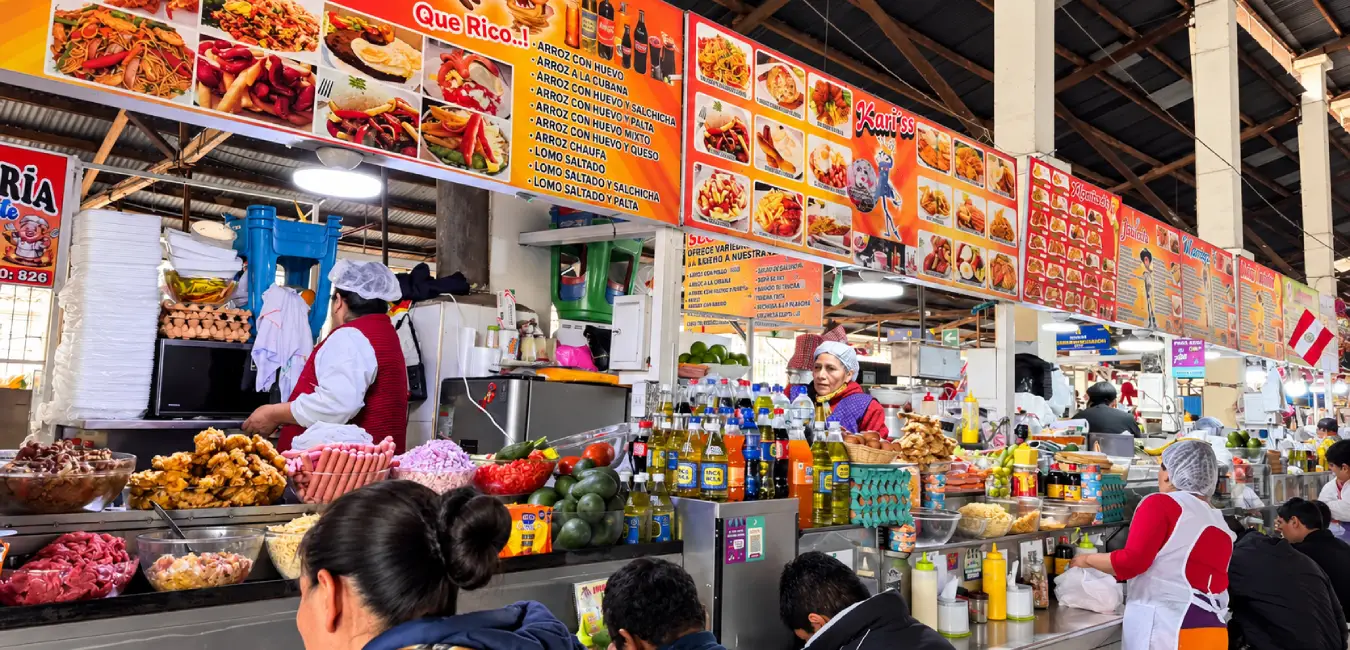
Traditional dishes you can try
It's worth distinguishing between dishes that are specifically associated with Cusco and those you'll find in markets throughout Peru. Both are worth trying, but they're not the same thing.
- Chiri uchu: Cusco's signature dish, served cold and combining guinea pig, chicken, jerky, cheese, fish roe, rocoto, corn fritter, and seaweed. It is prepared mainly during the Corpus Christi festival in June, so you won't find it available year round.
- Chairo: a thick, hearty soup made with chuño, lamb, fava beans, carrots, and Andean herbs.
- Adobo cusqueño: pork marinated in chicha de jora and slow cooked, traditionally eaten on Sunday mornings.
- Cusco-style chicharrón: fried pork served with mote, potatoes, sweet potatoes, and onion salad.
- Lechón al horno: roast pork served with tamal, moraya, and Oropesa bread. "It often sells out early."
- Roasted guinea pig: a traditional Andean ceremonial dish, crispy on the outside and served with potatoes and salad.
- Fried trout: from the region's rivers and lakes, served with rice and salad.
Common dishes found in markets throughout Peru
- Chicken soup: very popular for breakfast and one of the most commonly ordered dishes at San Pedro.
- Lomo saltado: a classic Peruvian stir-fry with Chinese influence, found throughout the country.
- Anticuchos: grilled beef-heart skewers, more closely associated with Lima than Cusco.
- Tamales and humitas: sold in the morning, either sweet or savory.
- Various soups: quinoa soup, head soup, and menestrón, among others.
Juices and breakfast at San Pedro Market
The juice aisle at San Pedro Market is open from 8:00 a.m. Vendors offer different combinations while blending the fruit fresh to order: papaya with milk, pineapple, tumbo, passion fruit, strawberry, or combinations of three or four fruits.
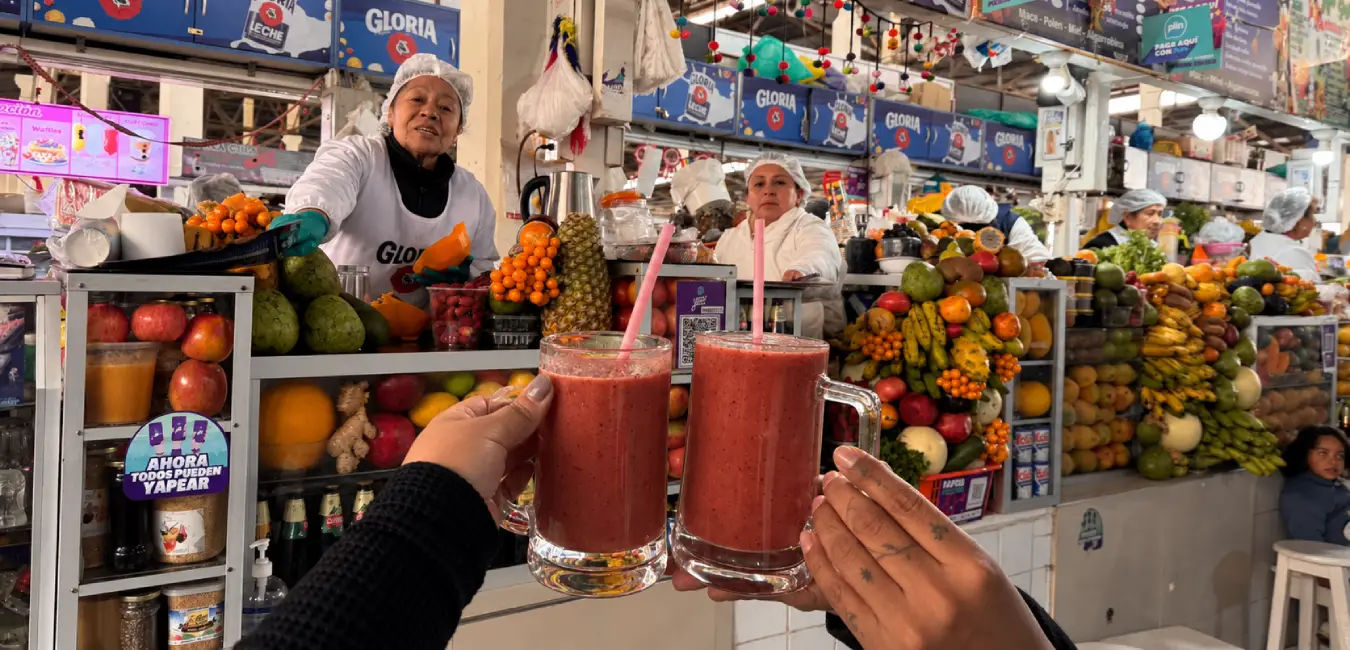
Our recommendation is to order a classic…
The special juice combines several fruits with maca, pollen, honey, and sometimes dark beer or algarrobina syrup. It comes in a pitcher and, at most stalls, includes a refill.
Is it safe to eat at San Pedro Market?
Yes, you can eat safely at San Pedro Market as long as you choose stalls with a high turnover of customers and good food handling hygiene.
Basic precautions for eating safely at a Cusco Market
- Choose the stall with the most local customers.
- Choose food that is hot and freshly served.
- Check that utensils and surfaces are kept clean.
- Drink bottled or boiled water.
- Eat fruit that you can peel yourself and avoid pre cut fruit that has been sitting exposed for a while.
- Pay attention to how food is handled and whether vendors wash their hands.
What to buy at San Pedro Market
The market works well both for buying products you want to take home and for purchasing food you'll eat during your trip.
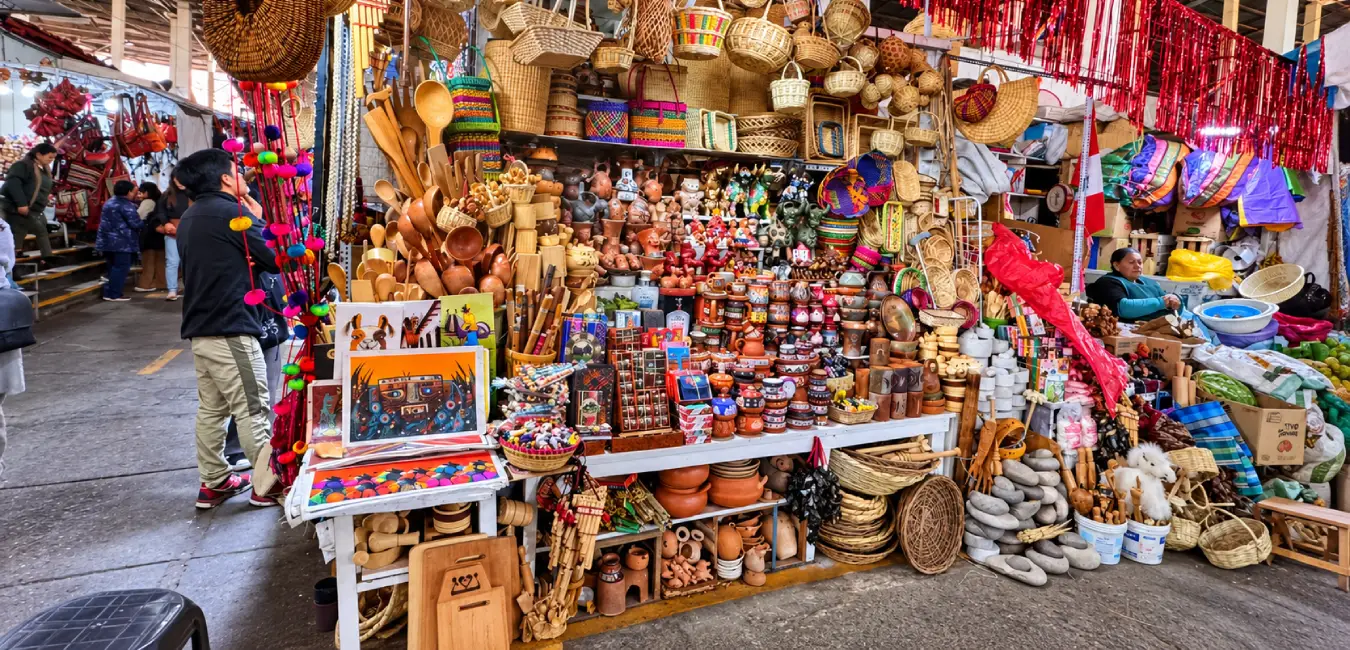
Products to take home
Before buying food to take back to your country, check the customs restrictions at your destination. Seeds, fresh products, and coca leaves are often prohibited.
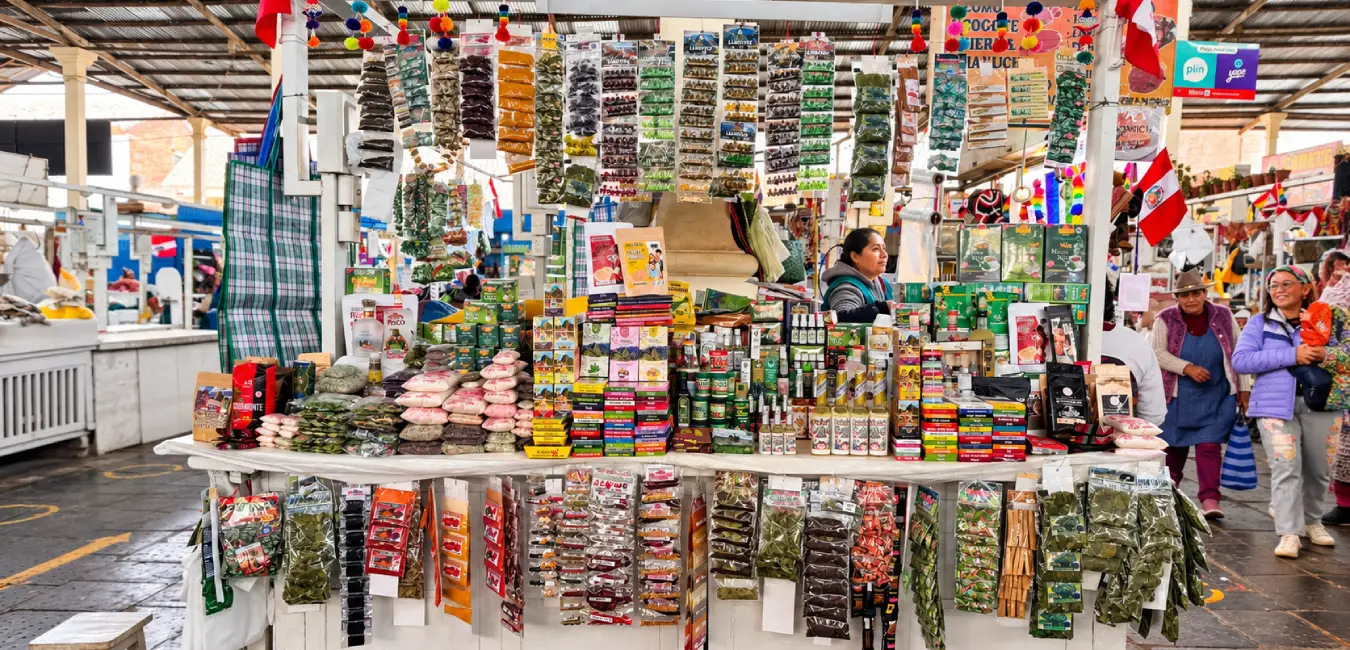
Product | Why buy it here | Tip |
|---|---|---|
| Peruvian coffee | You can find Peruvian coffee at a lower price than in some shops in central Cusco. | Ask them to grind it fresh to better preserve its aroma and flavor. |
| Chocolate and cacao | You'll find products made with cacao from the La Convención Valley. | Check the cacao percentage before buying, especially if you're looking for chocolate with a higher cacao content. |
| Quinoa and kiwicha | Sold in bulk and usually an affordable way to buy Andean products. | If you're taking them home, ask for them to be packed in a sealed, travel friendly bag. |
| Spices and dried chilies | You'll find a wide variety of spices and products used in Peruvian cooking. | Dried ají panca and dried ají amarillo are practical options to take home. |
| Herbal teas | You can find muña, chamomile, cedron, and other local blends. | Make sure the herbs are completely dry before buying them. |
| Dried fruits | They're lightweight, easy to transport, and practical for traveling. | They're a good snack option to take along on treks and hikes. |
| Maca flour | This Andean product is available in several forms. | For travel, it's best to buy it in a sealed, properly packaged container. |
| Alpaca textiles | The market offers textiles at competitive prices compared with some stores mainly geared toward tourists. | Check the texture and fiber content to know what materials the garment contains. |
| Maras salt. | This product comes from the Maras salt ponds in the Sacred Valley. | For easier transport, choose small, sealed packages |
How much do things cost at San Pedro Market?
Bring cash in Peruvian soles, especially small bills, because vendors often don't have much change.
Item | Approximate price (S/) | Note |
|---|---|---|
| Large fruit juice. | 8 – 15 approx. | A refill is included at most stalls. |
| Special juice with maca and pollen. | 12 – 18 approx. | The most complete version. |
| Chicken soup | 8 – 15 approx. | Generous portion. |
| Full meal (starter and main course) | 10 – 18 approx. | The most affordable option in the area. |
| Chicharrón or lechón. | 18 – 30 approx. | Depending on portion size. |
| Chuta bread (each) | 3 – 8 approx. | Depends on size. |
| Alpaca sweater. | 60 – 120 approx. | With bargaining |
| Woven chullo. | 15 – 35 approx. | Check the inside finish. |
| Bag of coca leaves. | 3 – 6 approx. | For tea or chewing. |
| Restroom use. | 0.50 – 1 approx. | Bring coins. |
Tips for paying at San Pedro Market
- Exchange money before you arrive; there are no ATMs or currency exchange offices inside the market.
- Ask for S/ 10 and S/ 20 bills, and keep S/ 0.50 and S/ 1 coins for the restrooms.
- Don't expect to pay by card; almost no stalls accept credit or debit cards.
- Some vendors, especially handicraft sellers, accept Yape or Plin. These services require a bank account in Peru.
- U.S. dollars are not commonly used in the market. Exchange them beforehand at a currency exchange office downtown.
- Spread out your cash: keep some readily accessible for purchases and the rest stored securely.
Can you bargain over the price?
It depends on the section. If you bargain, keep it friendly. Ask the price first, offer a reasonable amount rather than half the asking price, and if you reach an agreement, complete the purchase. Walking away after agreeing on a price is considered rude.
What is “Yapa” at San Pedro Market?
Yapa is a gesture of reciprocity and customer loyalty. If you buy fruit and ask for your little extra with a smile, you may receive something more. If you return to the same stall the next day, the vendor may recognize you and treat you like a regular customer: in Cusco, that relationship has its own name, la casera or el casero.
Words you should know at San Pedro Market
Knowing a few local words and expressions will help you get around San Pedro Market more comfortably. These simple phrases can make shopping and communicating with vendors easier.
Common market words and expressions
Word | Meaning | How to use it |
|---|---|---|
| Casera / casero | Female vendor or regular customer | Good morning, casera |
| Yapa (yapay) | Extra portion given as a gift | My little extra, please? |
| Allillanchu | How are you? in Quechua | A greeting that can surprise and delight locals |
| Allillanmi, añay | I'm well, thank you | Response and expression of thanks |
| Hayk'an? | How much does it cost? | A direct question in Quechua |
| Mote | Cooked corn | Served with chicharrón |
| Chuño / moraya | Potato dehydrated through freezing | A key ingredient in chairo |
| Chacchar | To chew coca leaves | A traditional practice associated with easing altitude discomfort |
Tips for visiting San Pedro Market
To enjoy your visit to San Pedro Market and explore its aisles comfortably, keep these practical tips in mind. They'll help you shop, try local products, and interact respectfully with vendors while experiencing the market at your own pace.
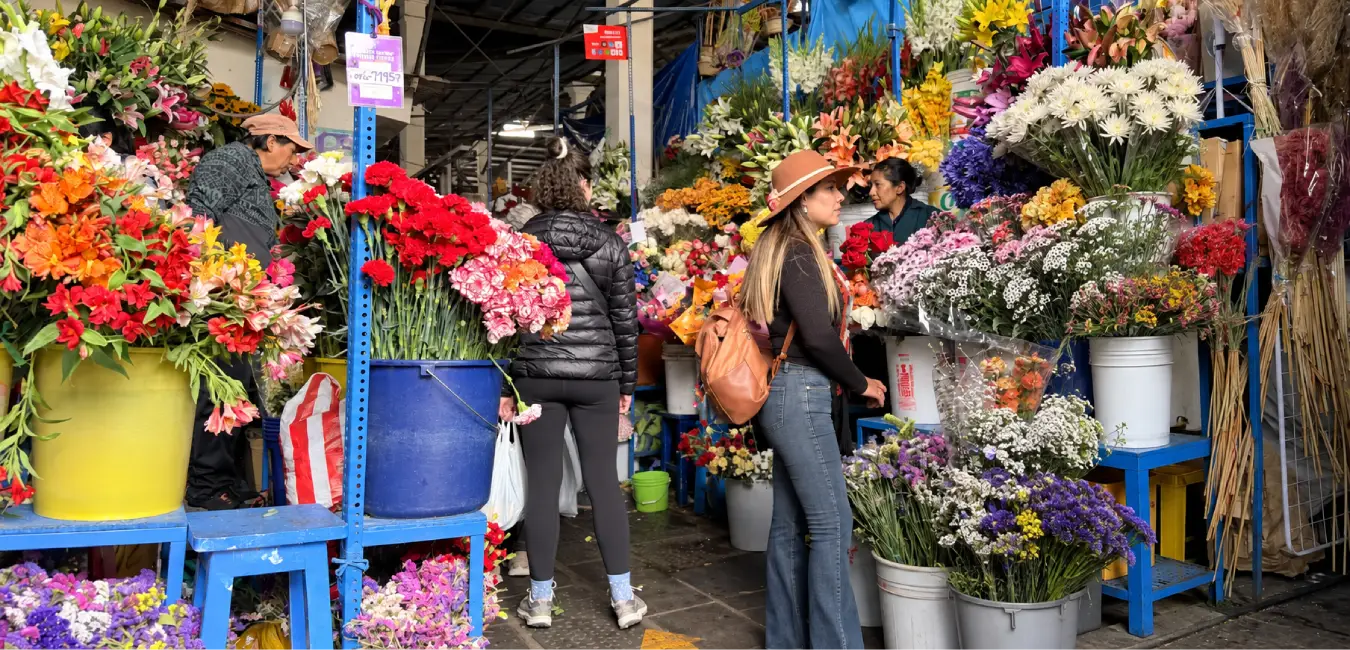
Safety precautions inside the Market
- Wear your backpack on the front in crowded aisles, especially between 11:00 a.m. and 2:00 p.m.
- Spread out your cash: keep some in your front pocket and the rest stored securely.
- Leave your passport in the hotel safe and carry only a copy.
- Avoid displaying your phone for extended periods near the entrances.
- Be careful around wet floors in the fish and vegetable sections.
- Don't accept offers from unofficial "guides" at the entrance; if you want historical context, book a formal tour.
Is San Pedro Market safe?
The market receives thousands of people every day. As with any busy market, keep an eye on your belongings and stay aware of your surroundings.
Ask the Price before buying
Always ask the price before accepting a product or being served a dish. This simple habit prevents misunderstandings and is completely normal among local vendors.
Respect the vendors
Say hello when you arrive at a stall and goodbye when you leave. A friendly attitude will open more doors than any bargaining technique.
How to take photos inside San Pedro Market
Many vendors don't want to feel like they're being treated as part of the scenery. That's why it's best to follow a simple protocol:
Helpful recommendations
- Ask permission before photographing a person or their stall.
- Accept a no without insisting.
- Avoid direct flash, especially in the food sections.
- Don't photograph money, cash registers, or payment transactions.
- If you're using professional equipment or drones, check with the market administration beforehand.
Avoid touching products without permission
Fruits, vegetables, and cheeses are handled carefully because they're sold by weight and appearance. Point to what you want and let the vendor pick it up for you.
Bring a reusable water bottle
Bring a bottle filled with bottled or boiled water. You can also use a reusable shopping bag to reduce plastic use.
Dress for Cusco's weather
Mornings are cold, while midday can be sunny. Wear layers you can remove, comfortable closed toe shoes, and sunscreen.
Don't buy products of questionable origin
Avoid items made from protected species, pieces presented as archaeological artifacts, or products without clear information about their origin. If you're unsure, ask questions and, if the answer is unclear, don't buy it.
Buy directly from vendors
Buying directly from vendors helps ensure that your purchase benefits the business serving you.
History of San Pedro Market in Cusco
Its history is closely connected to the growth of Cusco and the commercial traditions of its residents. Walking through its aisles gives you a glimpse into how local traditions, products, and flavors have remained part of everyday life across generations.
The ancient Inca road to Contisuyo
The land where the market now stands was not chosen by chance. Present day Santa Clara Street follows the route of an ancient Inca road that once left Huacaypata, today's Plaza de Armas, and connected the capital of the Tawantinsuyo with Contisuyo, one of the four regions of the empire. When you walk toward San Pedro, you're unknowingly following a section of the Qhapaq Ñan.
San Pedro market during the Colonial period
During the colonial period, the area was developed into city blocks and plots of land, and the city's municipal slaughterhouse operated here. It was known as the pampa of "Qasqaparo or Ccascaparo." The slaughterhouse was moved to Umanchata Street in 1921, freeing up the site before construction of the market.
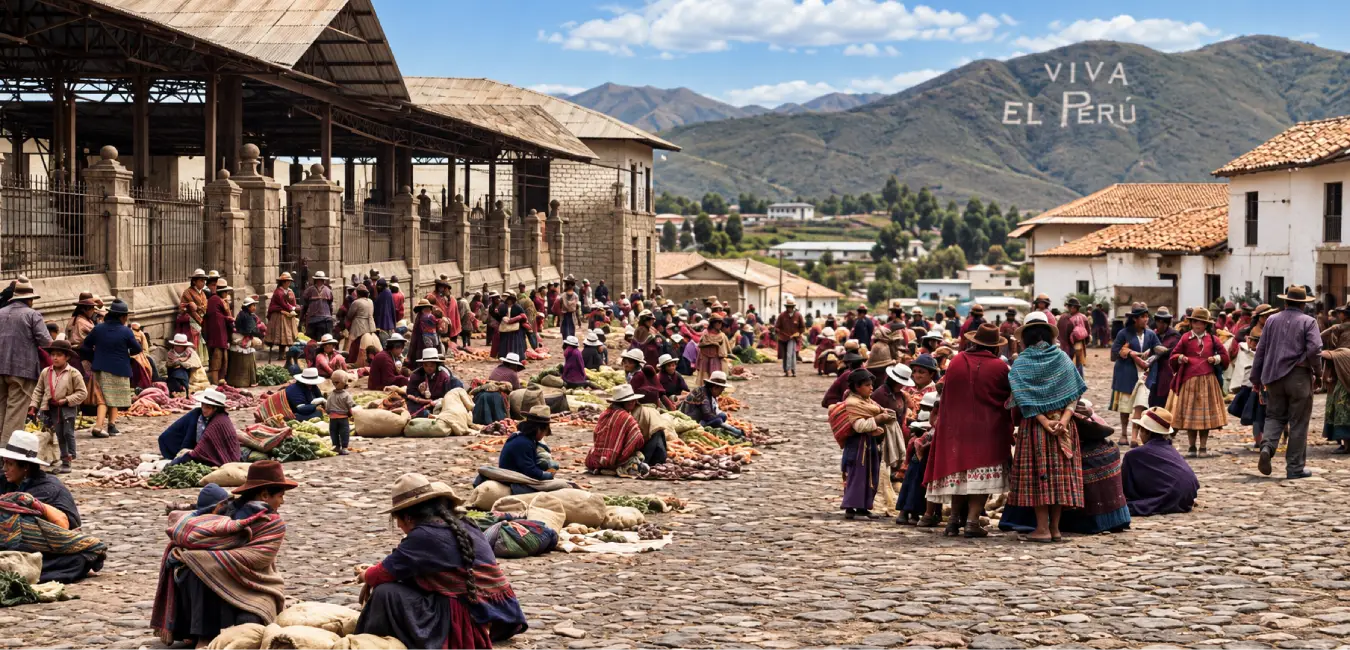
The 1905 competition
At the beginning of the 20th century, food in Cusco was sold outdoors in the Plaza de Armas and Plaza San Francisco. For that reason, in 1905, prefect Pedro José Carrión called a public competition to build a modern market. Two proposals were submitted: one by architect José Allio and another by engineer Teodoro Elmore. Elmore won and prepared the plans and budget.
The 1955 expansion
Following the 1950 earthquake and the city's rapid growth, authorities expanded the building in 1955. They demolished the southern block and built a two-story structure with a basement that takes advantage of the slope of the land, adding approximately 2,943 m² (31,678 sq ft). This section now houses many of the market's food stalls.
November 2024: Cultural heritage of the nation
Through Vice-Ministerial Resolution No. 0331-2024-VMPCIC/MC, the Ministry of Culture declared San Pedro Central Market a monument included in Peru's Cultural Heritage of the Nation. The resolution recognizes four values: historical, architectural, technological, and social, particularly because the market continues to transmit traditions from one generation to the next.
San Pedro Market tour with Responsible Trekking
If you want to experience San Pedro Market beyond a quick visit, you can include it in a tour of Cusco's Historic Center with Responsible Trekking. The experience combines the market with other historic sites in the city and is designed for travelers who want to experience Cusco through its heritage, food, and everyday life.
Historic center tour starting at San Pedro Market
Start at 8:00 a.m. with breakfast at the market and then visit San Pedro Church. From there, walk up Santa Clara Street and continue toward the Plaza de Armas and the Inca streets of the Historic Center.
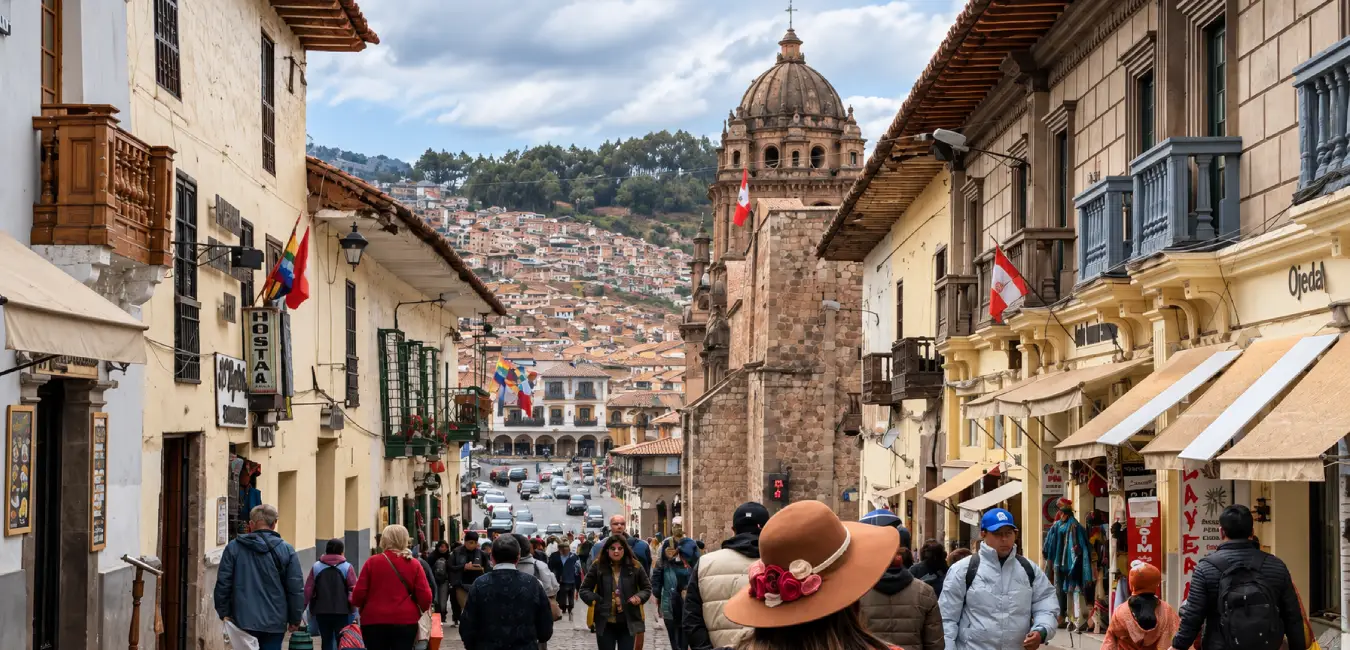
Food experience at San Pedro Market
If food is your main interest, the market can also be part of an experience focused on local flavors. You can learn about Andean fruits, regional products, fresh juices, and traditional dishes while seeing how they fit into everyday life in Cusco. This option is especially appealing if you want to combine food and culture in a single experience.
Common mistakes to avoid
- Arriving after noon and finding that the best dishes have already sold out.
- Showing up with only large bills or trying to pay by card.
- Taking photos without asking permission.
- Bargaining over prepared food or fresh juices.
- Trying to see the market in fifteen minutes. Give yourself at least an hour.
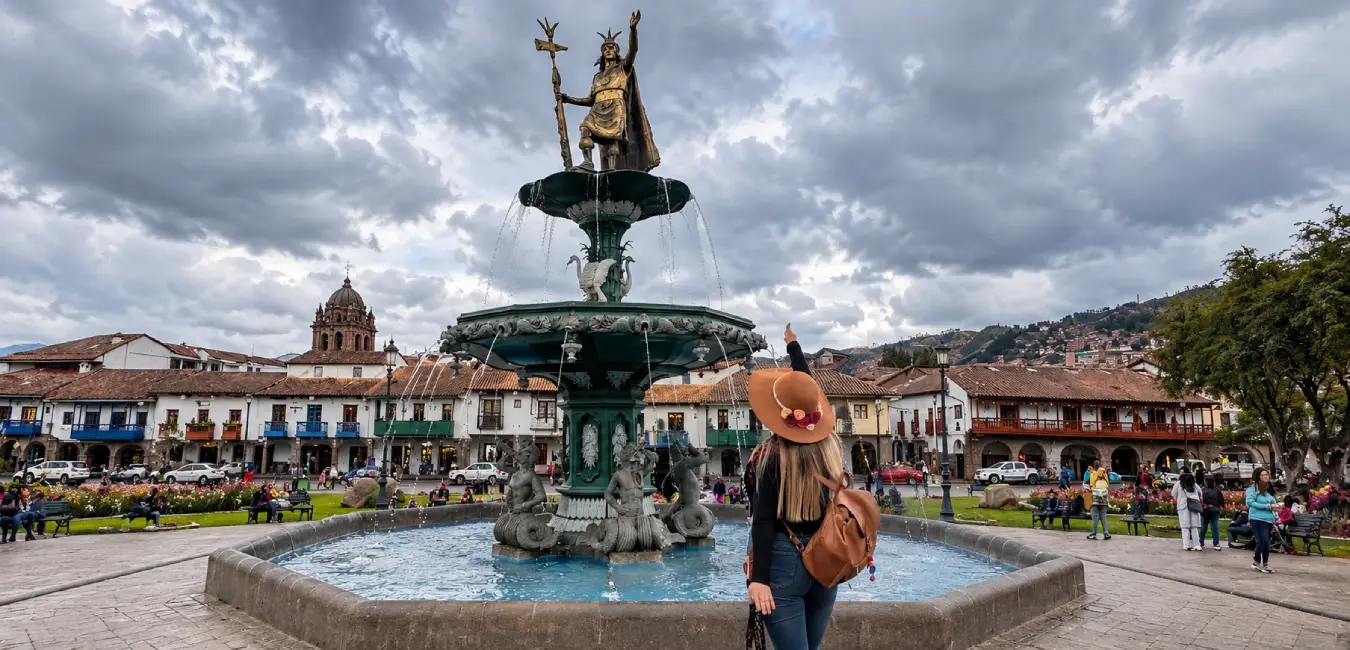
Plaza de Armas of Cusco
A 10 to 15 minute walk along Santa Clara Street will take you to the Plaza de Armas of Cusco. It was the Inca Huacaypata, the ceremonial center of Tawantinsuyo, and today it is home to the Cathedral, the Church of the Society of Jesus, and the colonial arcades. It is the natural starting point for almost any other walking route.
Cusco cathedral
Standing on the Plaza de Armas, built over the palace of Inca Wiracocha, it houses a remarkable collection of paintings from the Cusco School, including the famous Last Supper featuring a guinea pig.
Corikancha: Temple of the Sun
About 15 to 20 minutes from the market, you'll find Corikancha. The former Temple of the Sun preserves some of the city's finest Inca stonework, over which the Santo Domingo convent was built. The combination of the two construction systems offers a clear picture of what happened in Cusco after the conquest. Separate admission is required.
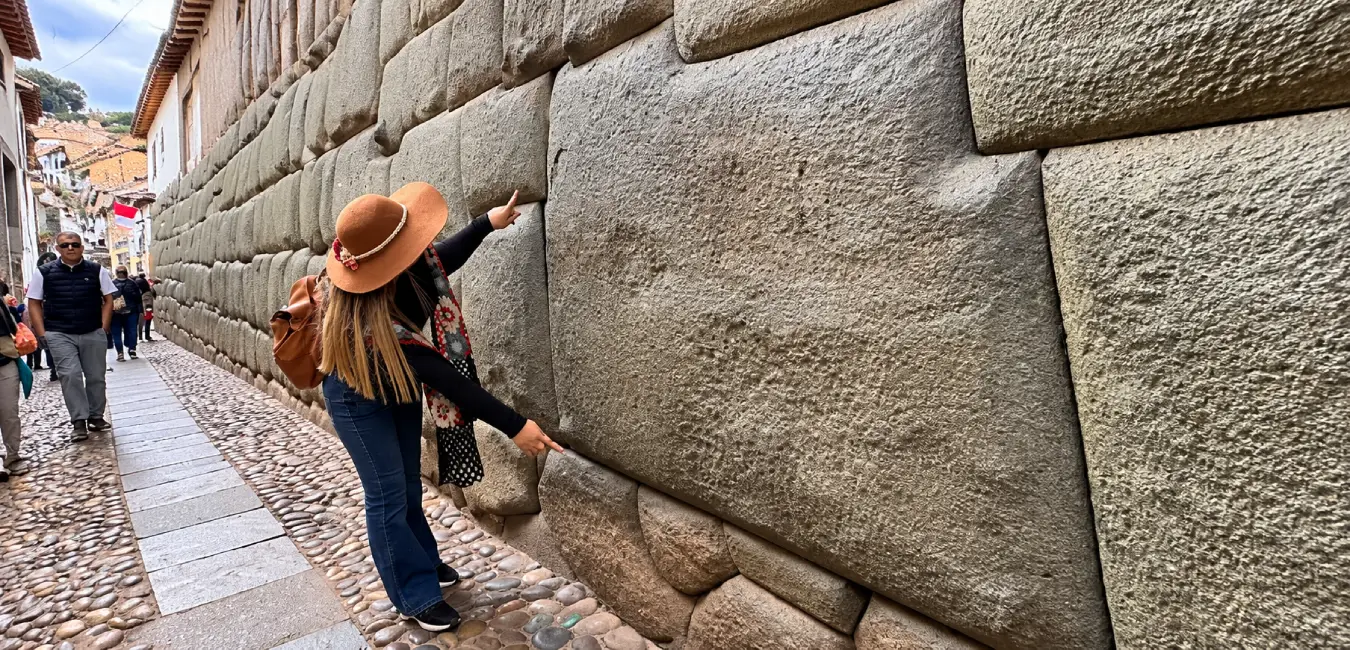
Twelve Angled stone
About a 15 minute walk away, this green diorite block, fitted into the wall of the former palace of Inca Roca with its 12 angles, has become a symbol of Inca stoneworking precision. The joints contain no mortar.
San Blas neighborhood
About 20 to 25 minutes from the market, uphill. This is the artisans' neighborhood, with narrow streets, workshops, cafés, and a small plaza offering one of the best views of the city center.
Explore Cusco on foot with our City Tour
Customize Your trip through Cusco
In addition to cultural experiences in the city, Responsible Trekking offers tours and treks to some of the region's main destinations, including the Sacred Valley, Machu Picchu, Rainbow Mountain, Humantay Lake, and different trekking routes. The company also offers customized itineraries for travelers who want to combine several destinations in one trip.
Is San Pedro Market worth visiting?
Yes, especially if you want to experience an everyday side of Cusco beyond the city's main archaeological sites. The market brings together food, Andean products, local commerce, and history in one place.
"If you're planning a trip to Cusco, you can start with San Pedro Market and continue with an experience tailored to your dates, interests, and activity level. Explore the tours and experiences offered by Responsible Trekking in Cusco."
Frequently asked questions about San Pedro Market
Is there an entrance fee for San Pedro Market?
No. Admission is free, and the market is not included in the Cusco Tourist Ticket.
How much time do you need to explore it?
One to two hours is enough for a complete visit. If you have breakfast and talk with the vendors, give yourself a full morning.
Was it really designed by Gustave Eiffel?
The most widely circulated version attributes the market to him, but historical documentation indicates that the 1905 competition was won by Peruvian engineer Teodoro Elmore and that the inauguration plaque mentions Roberto Cohring as the construction director. The European influence on the metal structure is evident; direct authorship by Eiffel, however, remains a subject of debate among researchers.
Are there guided tours of San Pedro Market?
Yes. Several city tours and food experiences include the market, and a local guide can help you identify products, understand how they are used, and communicate with vendors in Quechua.
Can i buy cheap souvenirs there?
Yes. Textiles, chullos, blankets, and handicrafts are considerably less expensive than those sold in stores around the Plaza de Armas, especially if you buy several pieces and bargain respectfully.
Is the market suitable for children?
Yes, although it's best to avoid the meat section with very young children and be extra careful in crowded aisles around midday.
Are there restrooms inside the market?
Yes. They charge a small fee of about one sol. Bring coins and, if possible, your own toilet paper.