
The Balcón del Diablo in Cusco welcomes you with a striking rock formation carved by a crystal clear river, a natural stone window, and the remains of an Inca sanctuary. However, many travelers know it only as “a beautiful cave.” In this guide, we’ll tell you ever thing you need to know: what Chakan means, how to get there step by step, what to see, the site’s history, and most importantly how to experience this sacred place respectfully.
What is Balcón del Diablo, or Chakan?
Balcón del Diablo is an archaeological and natural site formed by a massive limestone rock formation that stretches across the gorge from one side to the other, much like a dam. At its base, the Chakan River flows through a natural tunnel in the rock. Above it, a small cavity serves as a lookout over the entire micro watershed.
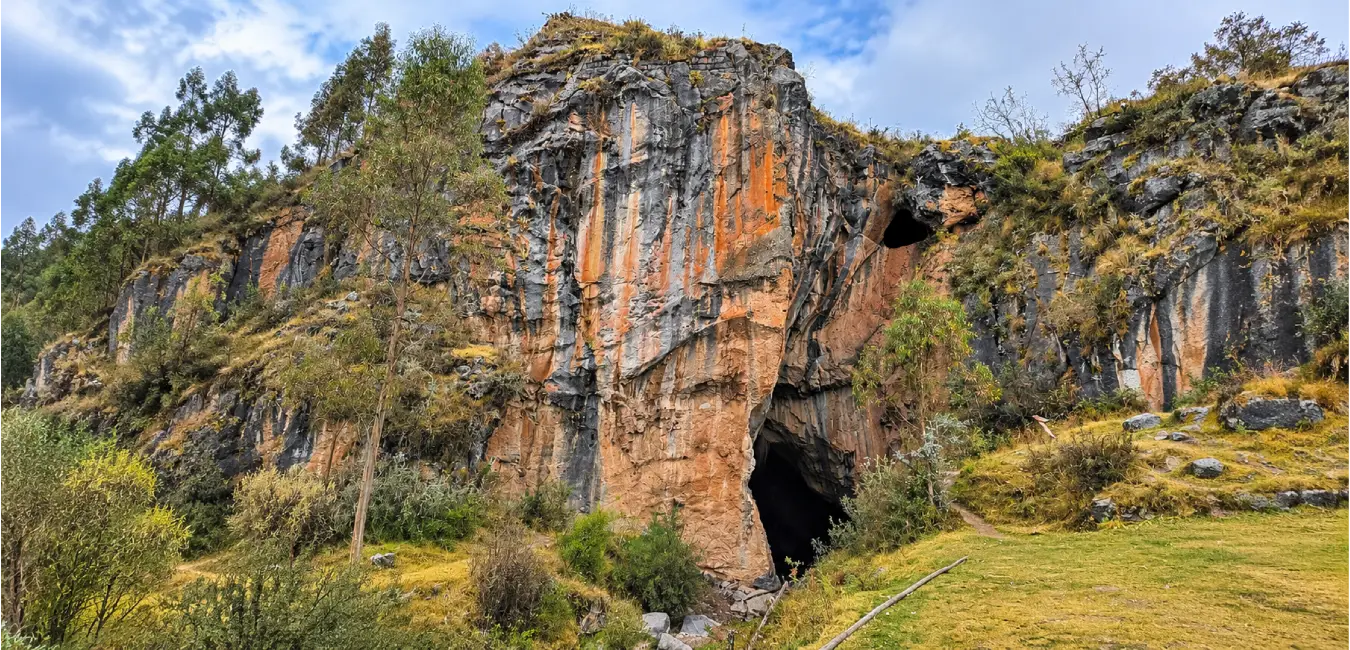
Balcón del Diablo at a Glance
| Quechua Name | Chakan (bridge). |
| Location | Sacsayhuamán Archaeological Park, Cusco Province and Region. |
| Elevation | 3,780 m (12,402 ft) above sea level, approximately 380 m (1,247 ft) higher than the Plaza de Armas. |
| Distance | Approximately 2.8 km (1.7 miles) northeast of Sacsayhuamán. |
| Hike | About 1 hour from Sacsayhuamán along the Inca ritual trail; easy difficulty. |
| Entrance Fee | Free. |
| Best For | Acclimatizing to the altitude, photography, learning about the Andean worldview, and hiking with llamas. |
Where is Balcón del Diablo located?
The archaeological site of Chakan is part of Sacsayhuamán Archaeological Park and is located in the southern Peruvian Andes, within the province and region of Cusco. Specifically, it sits at an elevation of 3,780 m (12,402 ft), approximately 2,800 meters (1.7 miles) northeast of the Sacsayhuamán esplanade, in the Chakan River gorge and near the community of the same name.
What does Chakan mean?
Chakan is a Quechua word meaning “bridge.” The name makes perfect sense: the rock formation extends across both sides of the gorge, allowing the river to flow underneath. It literally functions as a natural stone bridge.
Why is it called Balcón del Diablo?
The nickname originated during the colonial period. On the one hand, the triangular opening at the top of the rock resembles a balcony suspended over the abyss. On the other hand, colonial authorities who sought to eradicate Indigenous religious practices often associated places where Andean communities continued worshiping huacas with the devil. As a result, a water sanctuary acquired a name that, in reality, has nothing infernal about it.
How to get to Balcón del Diablo from Cusco
Getting there is relatively straightforward. You have several options, depending on your available time, budget, and the type of experience you want.
Hiking from Sacsayhuamán
This is the most authentic option. From Sacsayhuamán, head toward Llaullipata, where the Inca ritual trail begins. From there, follow the stone paved path through forests of Chachacomo, a native Andean tree, and continue along the marked sections of the trail. You will reach Devil’s Balcony in approximately one hour.
Walking from Cusco’s main square without a Tourist Ticket
From the Plaza de Armas, walk uphill through the San Blas neighborhood toward the Cristo Blanco viewpoint, which takes about 35 minutes. Then continue along the paved road. When the road splits, take the left hand turn. After another 35 minutes, you will find the dirt trail leading to Chakan. From there, the hike takes between one hour and an hour and a half.
By public Transportation or Taxi
If you would rather save your energy, take a local bus (Huerto route) toward the Sacsayhuamán area and get off at the Zona X or Cristo Blanco stop. The fare is approximately S/ 1.50-2.00. Alternatively, take a taxi to Llaullipata, near the beginning of the trail behind the Great Chinkana at Sacsayhuamán, and continue on foot to the huaca.
On horseback, by bicycle, or by ATV
Horseback riding services operate in the area, departing from ranches near Sacsayhuamán and combining Devil’s Balcony with Lanlacuyoc or Zona X, known for its rock labyrinths. Some operators also offer mountain biking descents and ATV rides.
Visit as part of the Llama Trail
If you want to experience Chakan in a truly different way, you can hike alongside llamas on the Llama Trail operated by Responsible Trekking. The hike begins at Qoricancha, follows the Qhapaq Ñan, passes Devil’s Balcony, and continues to Huchuy Qosqo. From there, you can continue to Machu Picchu via the Classic Inca Trail, the Short Inca Trail, or by train.
Travel times and difficulty options for Balcón del Diablo
Option | Approx. Time | Difficulty | Best For |
|---|---|---|---|
| Ritual trail from Sacsayhuamán. | 1 hour from Sacsayhuamán. | Easy | History enthusiasts with a Cusco Tourist Ticket. |
| Walking from San Blas / Cristo Blanco. | 2 to 2 hours 30 minutes. | Easy to moderate | Independent travelers without a tourist ticket. |
| Bus or taxi plus hiking. | 1 to 1.5 hours of hiking. | Easy | Travelers who want to save energy. |
| Horseback riding with Zona X. | 4 hours, including transfers. | Easy | Families and travelers who prefer not to hike. |
| Llama Trail route. | Multi-day route. | Moderate | Travelers looking for a complete cultural experience from Qoricancha to Machu Picchu. |
Important Information About the Tourist Ticket
You need the Cusco Tourist Ticket to enter the monumental sector of Sacsayhuamán. If you do not have one, choose route 2 or 3, which reach the trail without passing through the ticket checkpoint.
What to see at Chakan or Balcón del Diablo
Unlike what many travel guides suggest, Chakan is not just a single rock: it is a ceremonial complex with at least eight features worth identifying.
The Chakan or Chacaguanacauri Huaca
This is the massive rock formation that spans both sides of the gorge, acting as a dam and bridge. The Chakan River flows through a natural tunnel at the base of the rock, while a small cavity at the top provides a lookout over the entire micro watershed. If you look closely, you will notice a section of fine polygonal ashlar masonry with pillow shaped stonework made of limestone near the top. The Incas reserved this construction technique for their most important spaces.
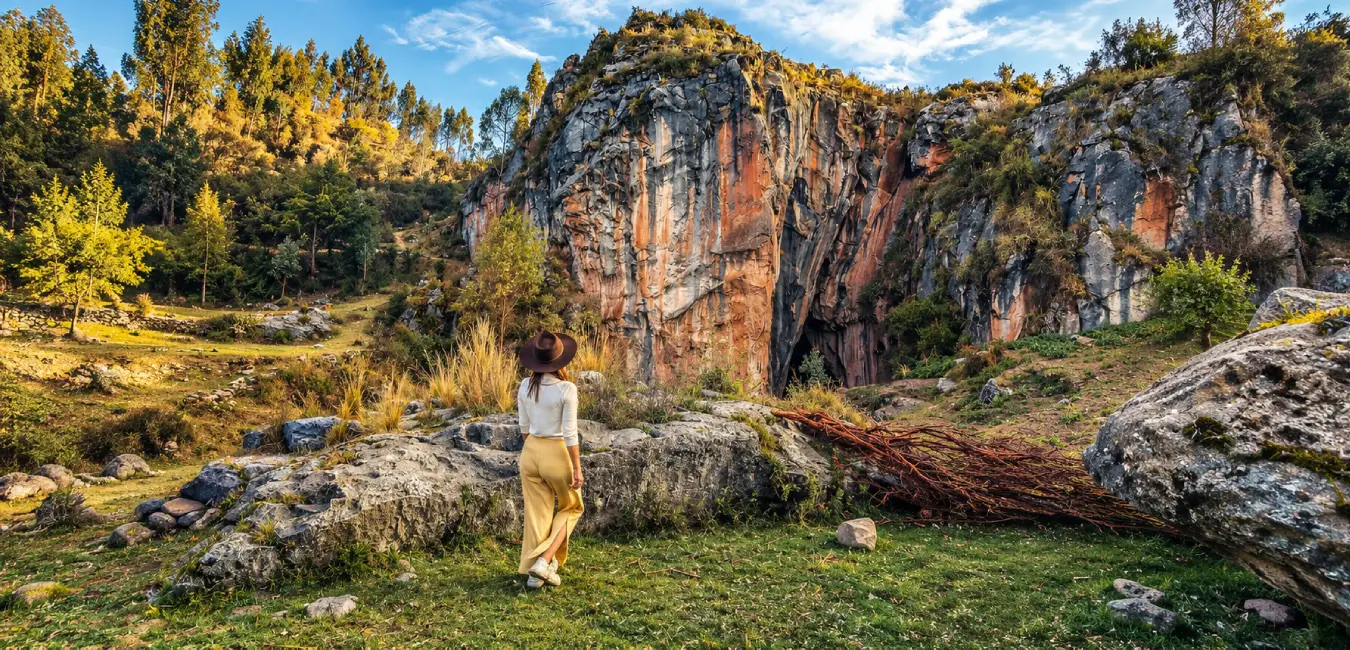
Balcón del Diablo and its grotto
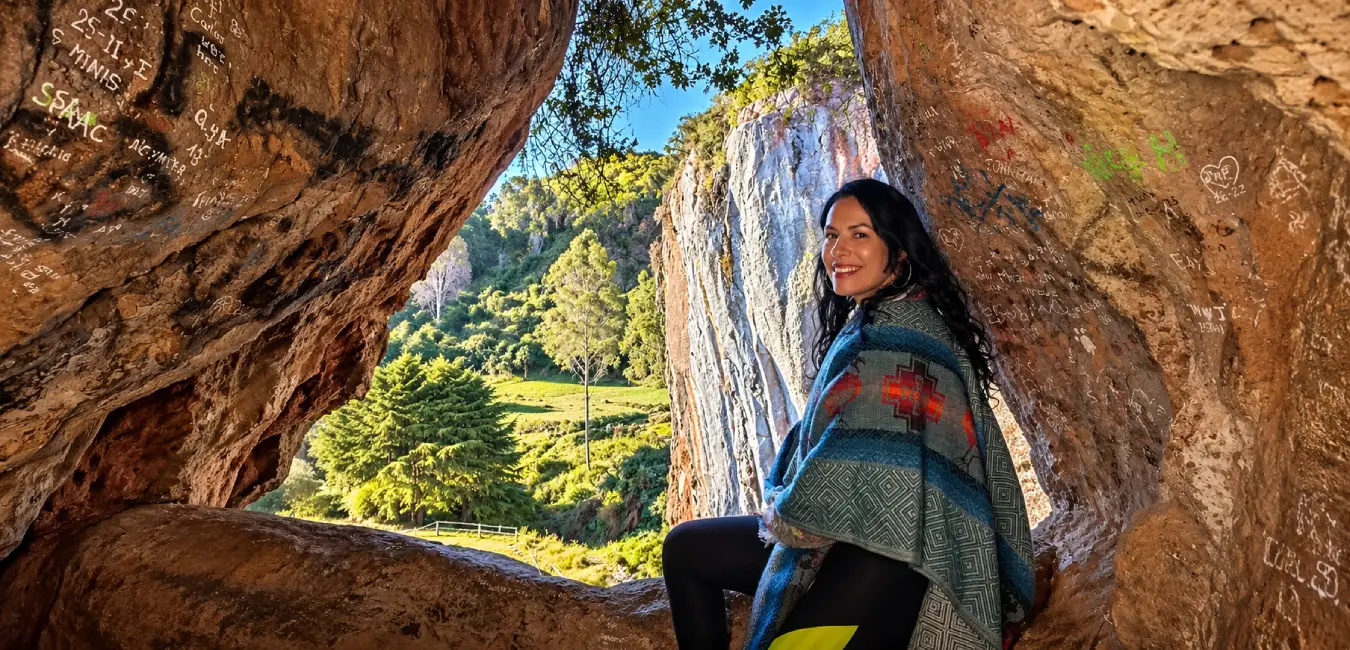
A crack at the top of the rock formation opens into an underground space. Inside, a triangular opening acts as a natural balcony from which you can watch the river flow into the grotto. The grotto is about 50 meters (164 feet) long. During the dry season, many visitors walk through the water, which often reaches calf height.
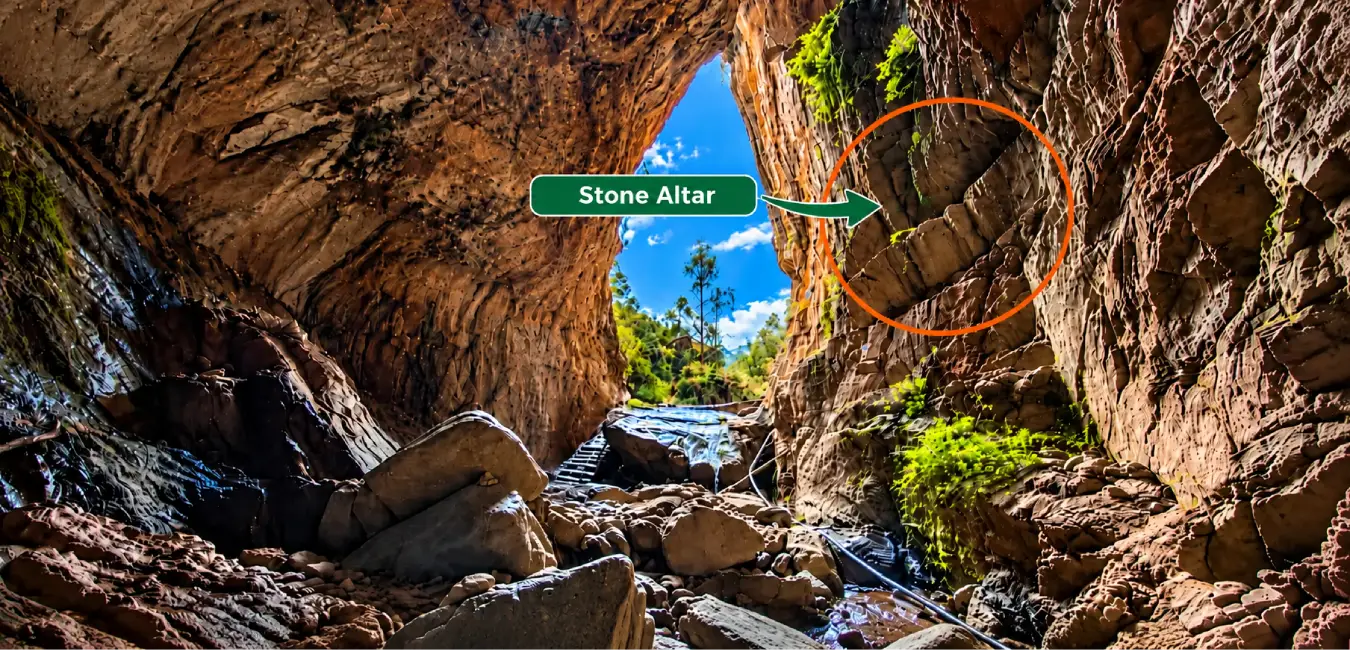
The Stone Altar
At the entrance to the grotto, you will find a stepped ceremonial table carved into the rock formation. This is where offerings dedicated to water were placed.
The Chacana
On the wall surrounding the rock formation, you will find a raised carving of an Andean cross made from andesite. This symbol represents the organization of the Andean cosmos into three worlds.
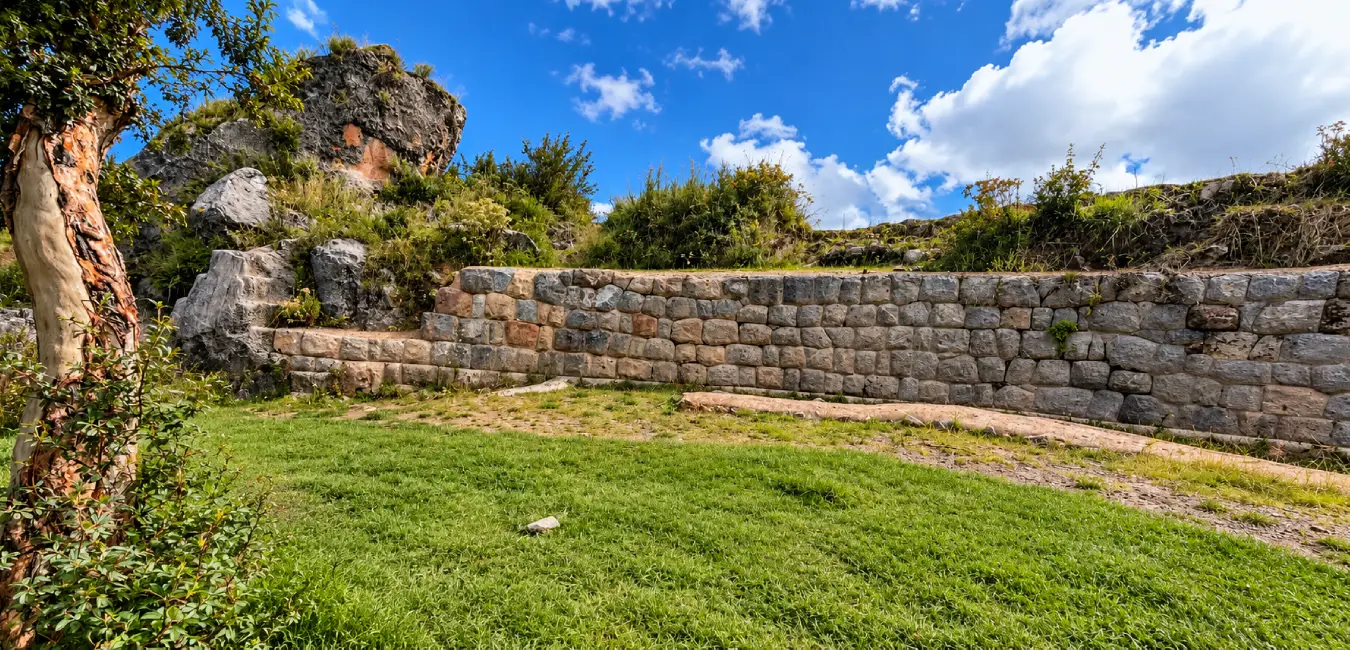
The stone Tianas
These are square shaped seats carved directly into the limestone outcrop, arranged around an open space. Participants of higher rank likely occupied them during ceremonies.
The water channel and Inca Trail
The Chakan channel runs above the rock formation, carrying water from the upper areas of Huayna Corco and Senqa. The main Inca road runs parallel to it and once connected Sacsayhuamán with Chinchero, Huchuy Qosqo, and the Sacred Valley.
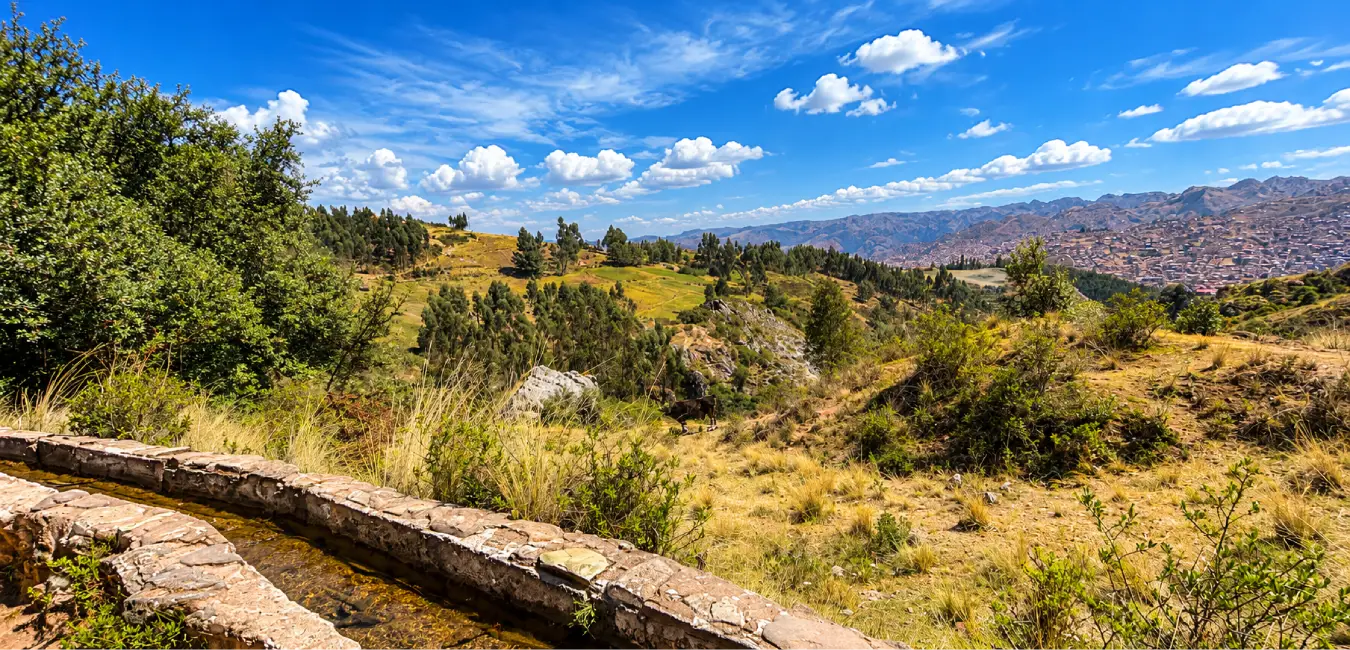
The rectangular enclosure
Nearby, a rectangular enclosure remains. It was used temporarily for ceremonies and special events.
The agricultural Terraces
Finally, look at the extensive agricultural terraces that local families still cultivate today. These terraces are integrated with water sources, open channels, and underground hydraulic structures, demonstrating how Inca engineering continues to function five centuries later.
History of Balcón del Diablo: The role of water at Chakan
When the Incas arrived, they transformed the landscape and the area surrounding the river. They built dams, terraced the slopes, and constructed enclosures where archaeologists have found remains of feasts and offerings dedicated to the huacas. Here are the key moments in that history.
Inca Roca and Mama Micay: The origins of the hydraulic works
Historical chronicles recount that Inca Roca married Mama Micay (also known as Michay), who came from Pataguaillacán and belonged to the Guayacanes ethnic group. After the marriage, the coya asked the Inca to channel Chakan’s water to irrigate the city’s agricultural fields. In response, Inca Roca discovered and channeled the waters of Hurin Chakan and Hanan Chakan, the two springs that feed the gorge.
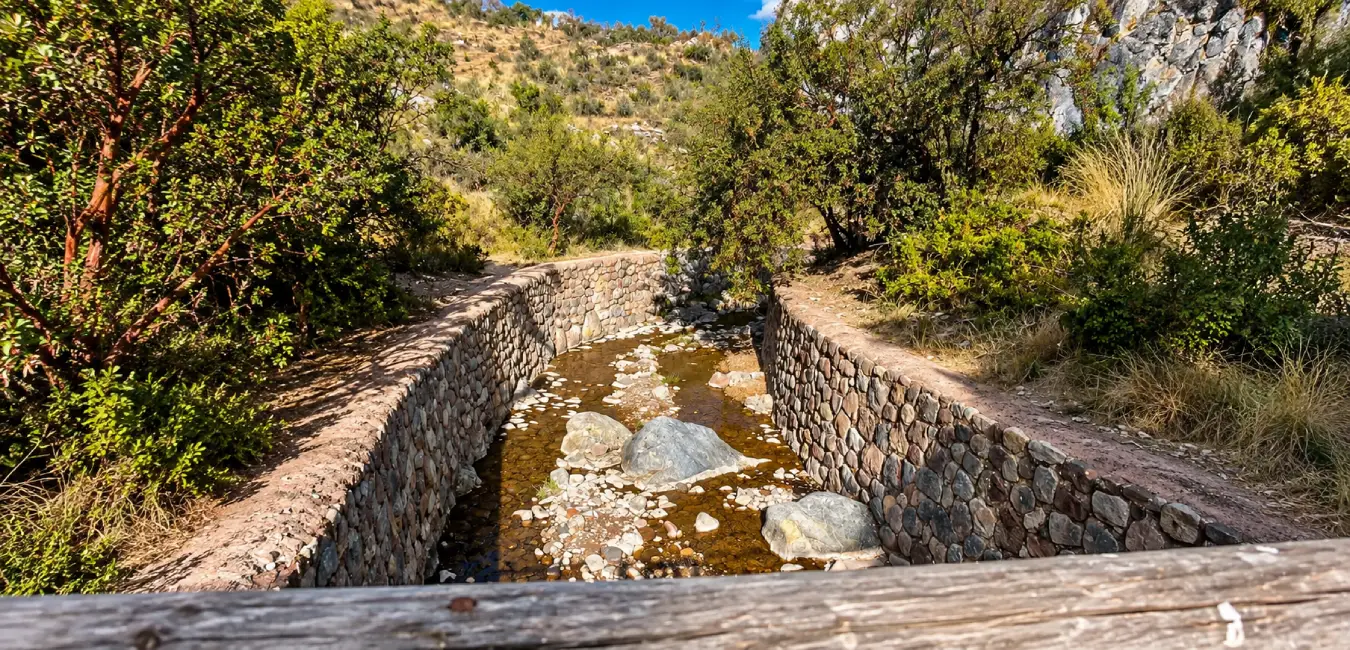
Pachacútec and Túpac Inca Yupanqui: Guardians of the springs
Later, during the reign of Pachacútec, Chakan gained considerable ritual importance and came under the care of his panaca (Iñaca Panaca). His son, Túpac Inca Yupanqui, later ordered the two streams to be repaired and lined with stone walls and slabs, together with his own panaca (Cápac Ayllu). In this way, Chakan’s water became a sacred resource.
Chacaguanacauri in the Ceque System
Inca Cusco was organized through the ceques, imaginary lines that radiated from Qoricancha and connected hundreds of huacas. Within this system, the Chacaguanacauri Huaca was located here. It was the seventh huaca on the fifth ceque of Chinchaysuyo, along the route toward Yucay. It was therefore a sacred space with restricted access, reserved for rituals, festivals, and ceremonies associated with the river.
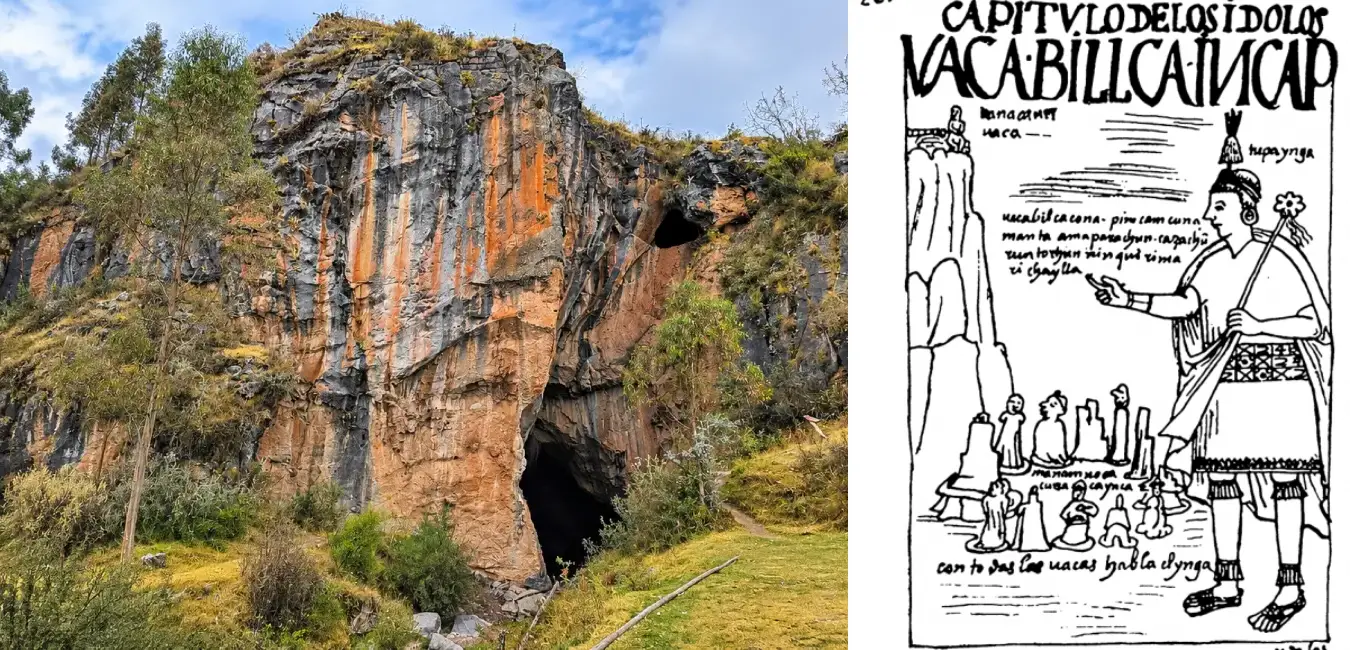
What was the relationship between Chakan, or Balcón del Diablo, and Apu Senqa?
Apu Senqa was the ninth huaca on the same ceque along which Chakan, Quespehuara, Aucaypata (today’s Plaza de Armas), and Cusicancha are aligned. In other words, a sacred line connected the mountain, Devil’s Balcony, and the heart of the Inca city.
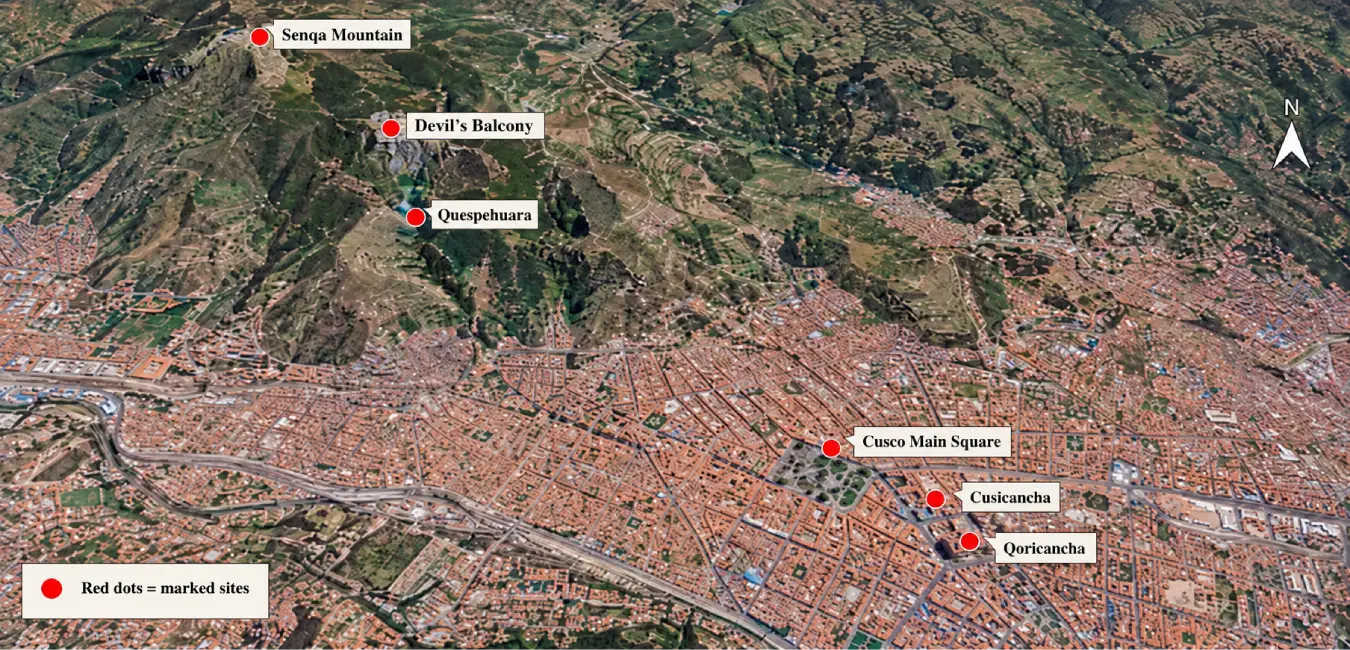
The legend of Chakan’s waters
A tradition recorded by chroniclers tells that while Inca Roca was praying to the great Ticci Viracocha at Chakan, he heard a thunderclap. He then pressed his left ear to the ground, where a large amount of blood was flowing, and heard the powerful sound of water running underground. According to the story, this revealed the springs that would bring life to the valley.
Balcón del Diablo today
- Today, the two springs are located within the Salkantay and Fortaleza communities. Hanan Chakan contains a SEDA Cusco water intake on the slope of Wankiruniyoq Hill, while Hurin Chakan corresponds to the gorge of the Yuraqkancha River.
- Today, the site is part of the Llama Trail, an ancient route connecting Sacsayhuamán with the Sacred Valley.
What ceremonies were associated with Chakan, or Balcón del Diablo?
During the Inca period, Chakan was the setting for various ceremonies related to ritual cleansing, purification, and fertility. These rituals reflected the importance of water in the Andean worldview, where it symbolized the renewal of life and the fertility of the land.
The mayocati ritual
Throughout the year, dams were built to hold the remains of offerings and ritual materials. When the time came, the dam was broken, and the force of the river carried everything away, symbolizing cleansing and the renewal of the cycle.
Cápac Raymi
During this major Cusco festival, noble boys between the ages of 12 and 15 were recognized as orejones and became members of the Inca elite. For the ceremony, they received huaracas, huaras, ear ornaments, and llautos. Meanwhile, at Chakan, noble maidens spun the threads used to make the fringes of the young men’s huaras.
Coya Raymi
During the month of Coya Raymi, the local population and royalty performed ritual baths at Chakan for cleansing, purification, and health. A general washing of all Cusco residents was organized to drive away disease.
The Tinkuy
A tinkuy is a place where two rivers meet. In Andean thought, which emphasizes duality and complementarity, this meeting symbolizes the union of two people and, consequently, the fertility that arises from their encounter.
What did the Incas offer at Chakan?
Excavations revealed deposits containing corn, potatoes, pottery used in ceremonies, bone beads, and silver objects. Researchers also identified plant species used in rituals as food, drink, aphrodisiacs, or magical and religious elements.
Category | Recorded Species and Items |
|---|---|
| Food | Potatoes, corn, sweet potatoes, capulí fruit, beans, and pacae. |
| Ritual and medicinal plants. | Sacha culantro, Huamanpinta, Llaulli, Barbasco, Huacamasha, Pijipíng, Macha macha (mullaca), Clove, Valerian, and Amancay. |
| Objects | Ceremonial pottery, bone beads, and silver pieces. |
Interesting facts and tips for visiting Balcón del Diablo
Here you will find recommendations on the best time to visit Devil’s Balcony, entrance costs, what to bring, and tips for exploring Chakan safely and responsibly.
Interesting Facts About Balcón del Diablo, or Chakan
- The Devil’s Balcony site is part of the Qhapaq Ñan, which connected Sacsayhuamán with Ñusta Pakana and continued toward Chinchero, Huchuy Qosqo, and Yucay.
- For the Incas, this rock was a huaca, a sacred place believed to possess its own life and worthy of worship and food offerings.
- At this site, descendants of the Incas cared for and “fed” the Huanacauri huaca.
Best Time to Visit Balcón del Diablo
You can visit year-round. However, the dry season, from April through October, offers firmer trails, clear skies, and lower river levels, making it ideal for walking through the grotto.
Season | Months | Weather | What to Expect |
|---|---|---|---|
| Dry | April–October | Sunny days; nighttime temperatures can drop below 0°C (32°F). | Firm trails and a grotto that is easier to walk through. |
| Rainy | November–March | Frequent rain; temperatures between 6°C and 21°C (43°F and 70°F). | Green landscapes, muddy trails, and higher river levels; avoid crossing the grotto. |
Best Time of Day to Visit
It is best to arrive in the morning, ideally between 8:00 and 11:00 a.m. The light is better for photos at this time, and you can also avoid the wind and cold that intensify in the afternoon.
How Much Does It Cost to Visit Balcón del Diablo?
Entrance to Chakan is free. However, keep two things in mind:
- First, if you enter through the monumental sector of Sacsayhuamán, you need the Cusco Tourist Ticket.
- Second, some local communities charge a small contribution for vehicle parking. Be sure to bring some cash in small bills or coins.
What to Bring to Balcón del Diablo
- Comfortable layers and a windbreaker.
- Hiking shoes or boots with good traction, because wet limestone can be slippery.
- Sandals or an extra pair of socks if you plan to walk through the grotto.
- A waterproof poncho, even during the dry season.
- Sunscreen, a hat, and sunglasses. UV radiation is intense at 3,780 m (12,402 ft).
- Water, snacks, and a bag to carry out your trash.
- Identification, cash, and your tourist ticket, if required.
Safety Tips and Responsible Travel
- Do not go alone, and return before sunset. The area is generally quiet in the morning but becomes isolated in the afternoon. It is best to visit in a group or with a local guide.
- Do not cross the grotto when the river is high, especially after heavy rain.
- Respect the huaca. Do not climb on Inca walls, move stones, or leave candles or other objects on the altar.
- Greet local families and ask permission before crossing their fields or taking photographs of them.
- Walk at your own pace if you have just arrived in Cusco. Stay hydrated and take breaks to acclimatize to the altitude.
Other Places Near Balcón del Diablo
If you visit Devil’s Balcony, you can make the most of your trip by exploring other archaeological sites in Cusco. Some are close to Chakan, while others require an additional hike.
Sacsayhuamán
About 2.5 km (1.6 miles) on foot from Cusco’s Plaza de Armas, Sacsayhuamán is known for its enormous stone walls, monumental structures, and panoramic views of the city. It is near Devil’s Balcony, within the archaeological area of Saqsaywamán.
Inkilltambo
This archaeological site preserves Inca enclosures, agricultural terraces, water channels, and carved rock formations. It is a great place to learn about Inca architecture in a natural setting. If you want to visit both Inkilltambo and Chakan, plan your transportation carefully because they are in different areas.
Ñustapakana
This archaeological site is associated with the ancient Inca ritual route connecting Qoricancha with Ñustapakana and passing through the Chakan area. It is about a 30 minute uphill hike from Devil’s Balcony. According to local legends, it served as a refuge for an Inca princess during the civil wars.
Huchuy Qosqo
Huchuy Qosqo, located above the Sacred Valley of the Incas, is an archaeological complex known for its agricultural terraces, stone and adobe structures, and impressive valley views. Visiting it requires a separate excursion and a six-hour hike.
Travel with people who know the trail. At Responsible Trekking, we organize small group excursions. Our guides help you learn about Chakan’s history as you follow the Qhapaq Ñan alongside llamas.
Frequently asked questions about Balcón del Diablo
Is the hike to Balcón del Diablo difficult?
No. It is an easy hike with gentle slopes, suitable for most travelers and highly recommended for acclimatizing to the altitude.
Is it safe to visit Balcón del Diablo?
Yes, especially in the morning and when visiting with a group. The area becomes isolated in the afternoon, so going alone is not recommended.
Can you visit Balcón del Diablo with Llamas?
Yes. Responsible Trekking’s Llama Trail passes through Chakan on a hike with llamas along the Qhapaq Ñan to Huchuy Qosqo. You can also combine the experience with a visit to Machu Picchu.
Can you combine Chakan with Huchuy Qosqo and Machu Picchu?
Yes. You can plan an experience connecting these places along ancient Inca trails, with several trekking options available. The exact route, duration, and way of reaching Machu Picchu will depend on your chosen itinerary and the services you book.