
Pachamama Ceremony in Cusco is an ancient Andean tradition dedicated to Pachamama. During this ceremony, you can take part in an offering to express gratitude, ask for permission, share your wishes, or seek protection. But what does this tradition really mean, what elements are included in an offering, and how can you participate respectfully? Here, we explain everything you need to know about this Andean ritual.
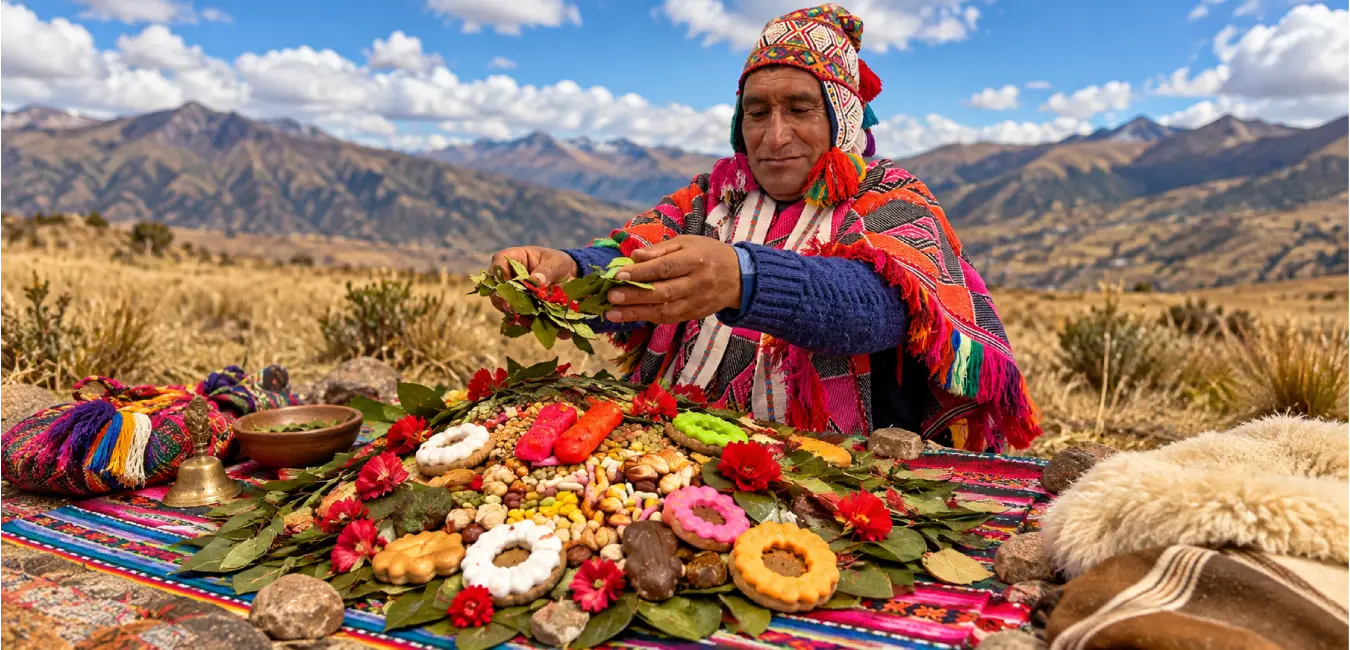
Pachamama Ceremony in Cusco: Key facts
Key fact | What you need to know |
|---|---|
| Quechua name | Haywarikuy (to offer, to give), also called despacho or mesa. |
| Who it is addressed to | The Pachamama, the Apus (sacred guardian mountains), and other forces of the landscape. |
| Central principle | Ayni, reciprocity: giving back to the earth part of what it gives you. |
| Most important date | August 1 and the entire month of August, although it is performed throughout the year. |
| Who leads it | A paqo or Andean ritual specialist. |
| Typical duration | Between 45 minutes and 2 hours in experiences for travelers. |
What is the Pachamama Ceremony?
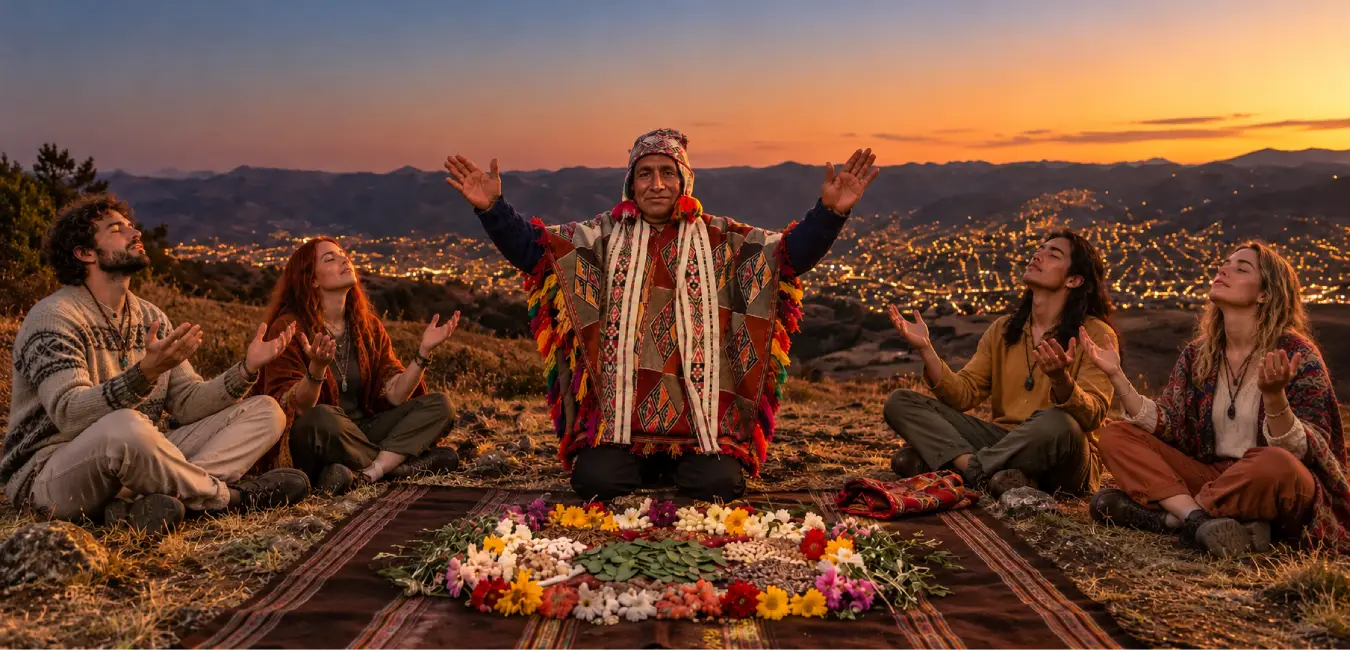
The Pachamama Ceremony is an Andean ritual ceremony based on gratitude and reciprocity with the Pachamama and the Apus. Through an offering, people give thanks for the harvest, water, livestock, health, and other aspects of life. At the same time, they may ask for permission, protection, or well being for whatever is about to begin.
What is the Pachamama Ceremony called in Quechua?
In Quechua, one of the best known ways to refer to the Pachamama Ceremony is Haywarikuy, which is related to offering or giving something. However, ritual vocabulary can vary depending on the community and region of the Andes.
Pachamama Ceremony, offering or Haywarikuy: Are they the same?
Although these terms are often used as synonyms, they may refer to different aspects of the ceremony. The Pachamama Ceremony can be understood as the complete ritual. The offering to the Pachamama, on the other hand, refers to the elements that are prepared and given. Meanwhile, Haywarikuy refers to the act of offering or giving.
Aspect | Pachamama Ceremony | Offering to the Pachamama |
|---|---|---|
| What it is | The complete ritual. | The elements that are given. |
| Who it is addressed to | Pachamama, Apus, springs, lagoons. | Mainly the Pachamama. |
| Format | Ceremony led by a paqo. | From a complete despacho to a simple gesture. |
| Everyday example | Family ceremony on August 1. | Pouring chicha onto the ground before drinking. |
| Duration | From 45 minutes to several hours. | It may last only a few seconds. |
What does the Pachamama Ceremony mean to Andean peoples?
For Quechua and Aymara communities, the Pachamama Ceremony is much more than a simple offering. It represents a way of relating to the earth through respect, gratitude, and reciprocity, understanding that it is part of life. In addition, the ceremony brings family and community together, strengthening bonds between generations around the same tradition
Why is a Pachamama Ceremony performed?
The reasons may vary depending on the person, the family, the community, and the circumstances. Some of the most common include:
- Gratitude: you acknowledge everything the earth has given you throughout the year.
- Reciprocity (ayni): you symbolically give back part of what you have received to maintain balance.
- Permission: you ask for authorization before building, traveling, or walking through a territory.
- Protection: you ask for well being for your family, friends, and work.
- Reconciliation: according to local tradition, you may ask forgiveness for showing disrespect toward nature.
- Cleansing: you seek to leave behind the worries and burdens you carry with you so you can feel lighter and at peace.
When is a Pachamama Ceremony performed in the Andes?
Andean peoples perform these ceremonies at different times of the year. For example, they may accompany the beginning of a project, an agricultural activity, a journey, or a hike. Likewise, some people turn to this tradition when they wish to ask for protection, well being, or renewal. In all cases, the timing and way it is performed depend on the customs of each community.
Is the Pachamama Ceremony a spiritual or cultural practice?
It is both. On the one hand, the Andean ritual has a spiritual dimension because it connects people with what they consider sacred. On the other hand, it is also a cultural expression that preserves knowledge, values, language, and customs. In fact, the tradition continues to be passed down from generation to generation.
Who is the Pachamama Ceremony addressed to?
The offering or Haywaricuy is addressed to the Pachamama, as a way of thanking her and respectfully asking her for something. According to tradition, the intention with which you make the offering and the way the paqo guides the ritual are important for the Pachamama to receive it.
Who is the Pachamama?
The Pachamama is Mother Earth in the Andean worldview, but her meaning goes far beyond the ground beneath your feet. The word pacha can refer to time, space, the world, and the earth, while mama means mother. Therefore, the Pachamama represents the mother of the world and of the time in which life unfolds.
What role do the Apus play?
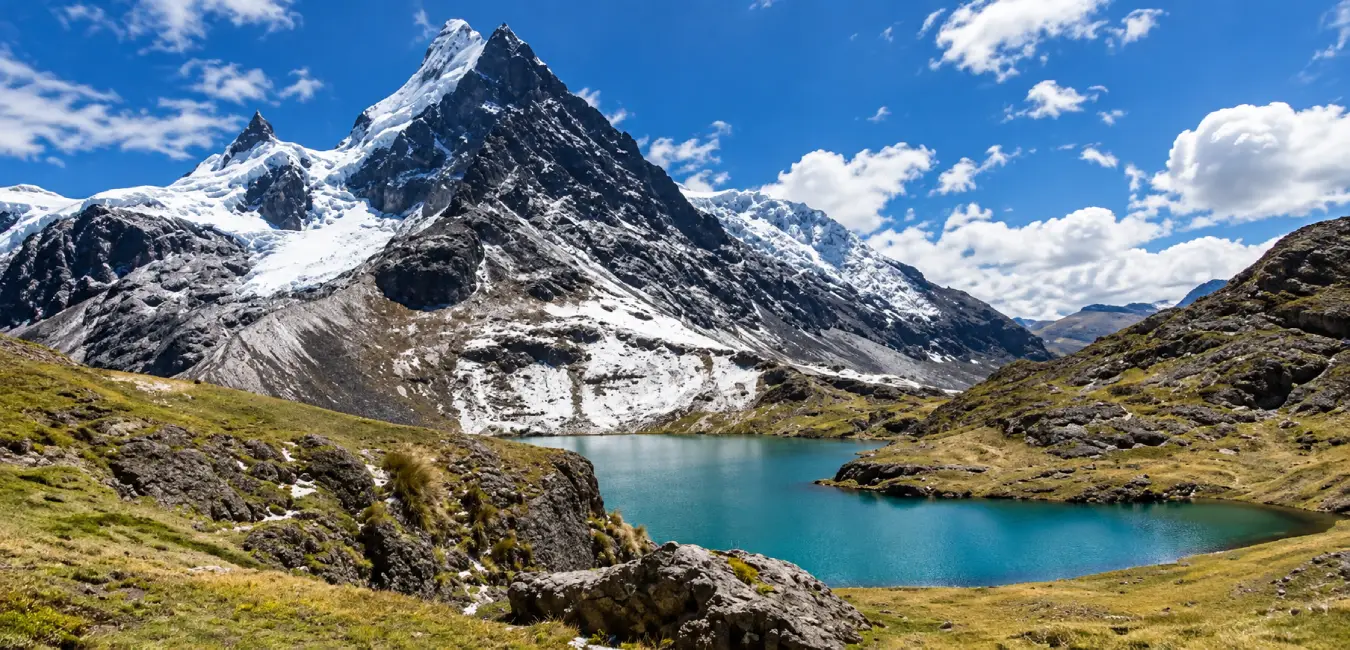
The Apus are the sacred guardian mountains that hold an important place in Andean tradition. While the Pachamama represents a force connected with life and nourishment, the Apus symbolize protection and presence from the heights. For this reason, before beginning a hike or entering certain territories, some people perform small gestures of respect, such as offering coca leaves or asking for permission.
Are Pachamama and Mother Earth the same thing?
No, Mother Earth is a Western concept that refers to the planet or nature, while the Pachamama also encompasses time and the lived world. In addition, Mother Earth Day (April 22) is a global environmental observance, while Pachamama Day (August 1) comes from Andean tradition.
When is the Pachamama Ceremony performed?
You can find Pachamama Ceremonies throughout the year, depending on the customs and needs of each community. However, in Cusco, August has a special significance.
Time | Reason for the Ceremony |
|---|---|
| August 1 (Pachamama Day) | Opening of the "month of the earth"; family offerings are renewed |
| All of August | The earth "is open and hungry" before planting |
| Carnival (February or March) | Gratitude for the first harvests and flowering of the fields |
| Beginning of construction, journeys, or businesses | Asking for permission and a safe journey |
| Before a hike or trek | Asking the Apus for permission to cross their territory |
Why is August special for the Pachamama?
August arrives at the end of the dry season and announces the first rains that will bring life back to the Andean fields. At this time of year, the earth is dry and, according to tradition, seems tired after the harvest. That is why it is said that the Pachamama “opens her mouth,” is hungry and thirsty, and it is time to offer her food before planting again.
Important fact…
In the Andes, August is considered a special month because the Pachamama is believed to be more receptive and in need of receiving offerings. For this reason, many families perform a Pachamama Ceremony. Thus, August 1 becomes an important date to give thanks, ask for permission, and renew the relationship with the earth.
What is the origin of the Pachamama Ceremony?
The origin of the Pachamama Ceremony can be traced to ancient practices of reciprocity and offering developed in different societies of the Andes before the Inca Empire. Cultures such as Wari and Tiwanaku performed different types of offerings using elements such as seashells, coca leaves, figurines, and textiles.
Chronological order of the Pachamama ritual
The Pachamama Ceremony before the Incas
The pre-Hispanic societies of the Andes developed different ways of relating to the earth and places considered sacred. The elements used in offerings included coca, corn, seeds, textiles, figurines, and seashells. Among them, mullu or Spondylus, which came from the coasts of present day Ecuador, held significant ritual value.
The Pachamama Ceremony during the Tawantinsuyo
During the Inca period, offerings were part of the religious and agricultural practices of the Tawantinsuyo. Products used included coca leaves, corn, chicha, seeds, and llama fat. Likewise, mullu held special value and could be part of certain offerings related to fertility, water, and rainfall.
Pachamama Ceremony during the Colonial period
With the arrival of the Spanish, the Church persecuted these practices during the “extirpation of idolatry” in the 17th century. Even so, communities did not abandon their offerings: they maintained them, adapted them, and linked them to the Catholic calendar. An example of this cultural encounter is the colonial painting La Virgen del Cerro, from Potosí, in which the Virgin Mary appears integrated with the mountain.
Pachamama Ceremony today
Today, the tradition continues to be present in both rural communities and urban areas. Families may perform it at agricultural, family, or personal moments, and some communities also share certain aspects of this practice with travelers interested in learning about Andean culture.
Period | What happened to the Pachamama Ceremony |
|---|---|
| Pre-Inca cultures | Offerings buried with shells, coca, and figurines at Wari and Tiahuanaco sites |
| Inca period | The state incorporated offerings into its agricultural and religious calendar; mullu became an elite offering |
| Colonial period | Persecution during the extirpation of idolatry and, at the same time, blending with the Catholic faith |
| Republic and 20th century | Communities maintained the ritual within family and agricultural settings |
| Present day | A living tradition in rural and urban areas; also shared with respectful travelers |
What is the relationship between the Pachamama Ceremony and the Andean worldview?
To better understand this ceremony, it is helpful to know some principles of the Andean worldview. These ideas help explain why the relationship between people, the earth, mountains, animals, and water holds such an important place.
The three worlds or pachas
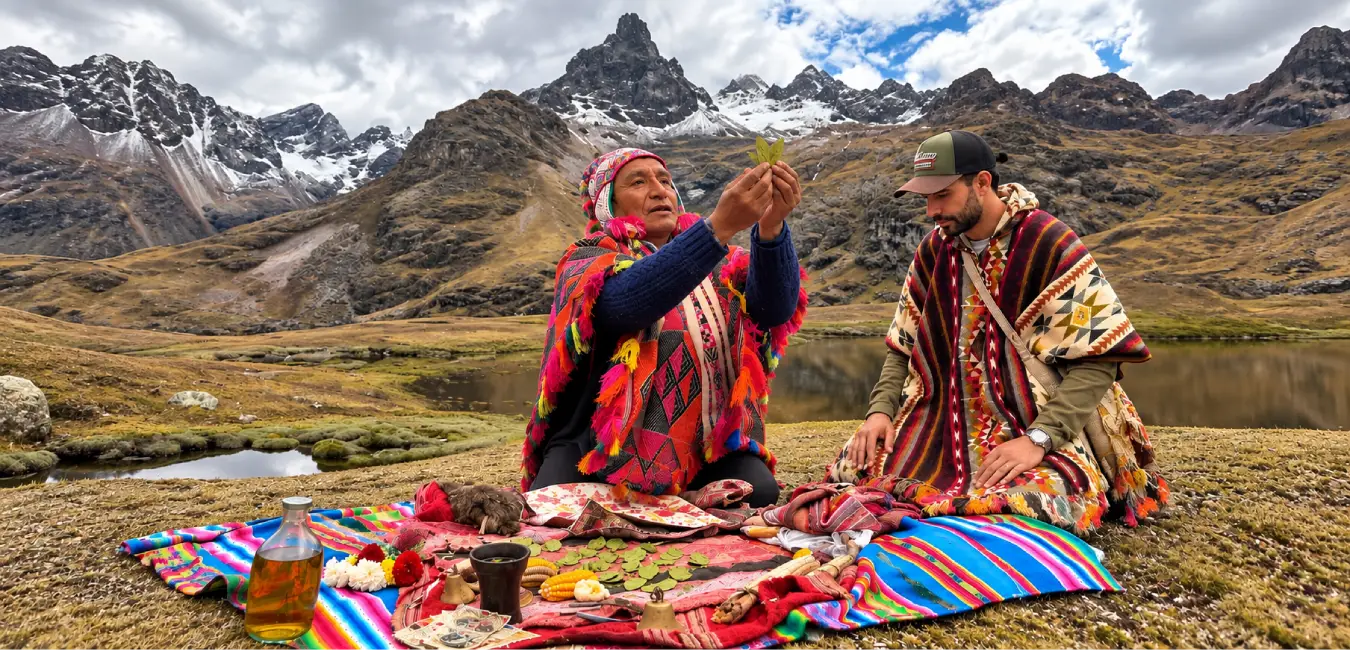
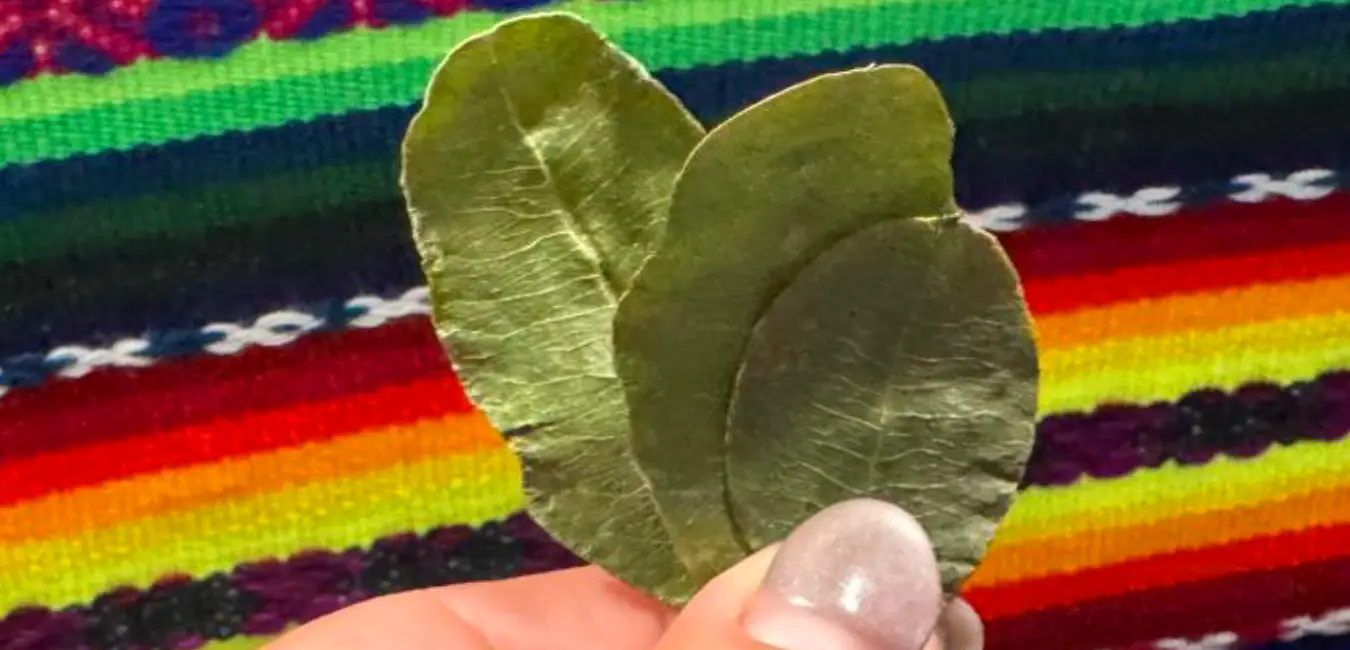
Andean tradition often explains the world through three planes: Hanan Pacha, associated with the world above; Kay Pacha, associated with the world in which we live; and Uku Pacha, connected with the world below, seeds, ancestors, and water. Therefore, the k'intu, traditionally made up of three coca leaves, can symbolically represent the connection between these three worlds.
Ayni or the principle of reciprocity
Ayni is based on a simple idea: when you receive something, you should also give something in return. In community life, for example, one person helps their neighbor and later receives their neighbor's help when they need it. Similarly, the earth provides food, water, and resources, while people express their gratitude through different gestures and offerings.
A nature that is part of life
Within the Andean worldview, mountains, lagoons, springs, and certain places may have a spiritual presence. For this reason, some people ask for permission before entering a territory or beginning a hike. From this perspective, nature is not understood simply as a resource. Rather, it is part of a relationship in which people also have responsibilities.
How is a Pachamama Ceremony performed step by step?
There is no single way to perform a Pachamama Ceremony. Each community, each paqo, and each reason for the ceremony may change its order, words, and elements.
Stages of the Andean Ceremony
Choosing the place
First, the paqo looks for an appropriate and peaceful space. When the ceremony takes place in nature, they may choose a place with a clear view of a mountain or a location considered special. Before beginning, they greet the place and ask for permission to perform the ceremony.
Preparing the mesa
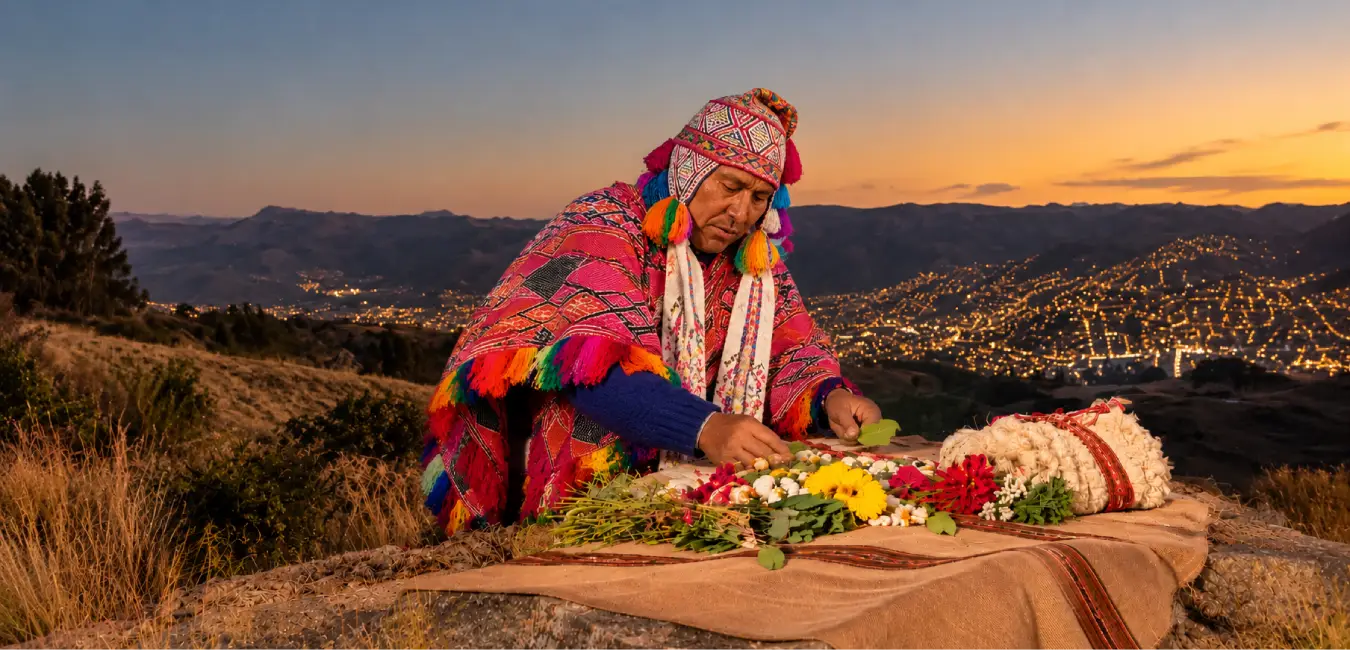
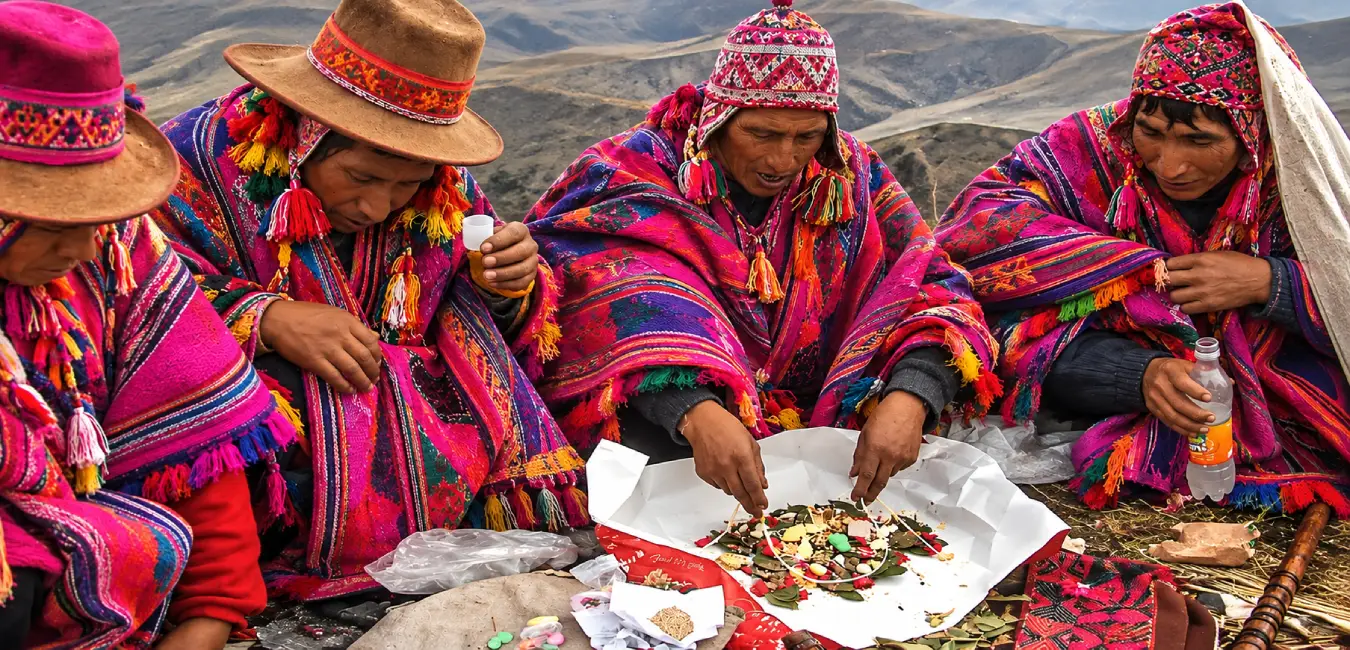
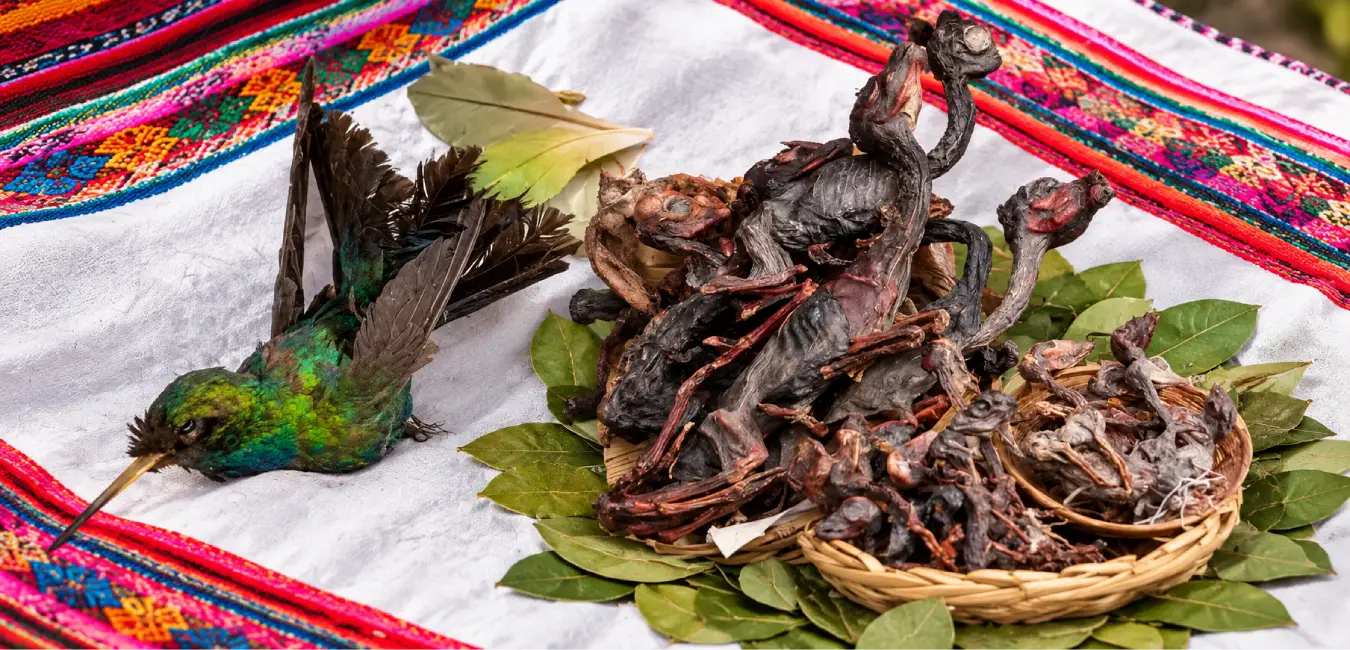
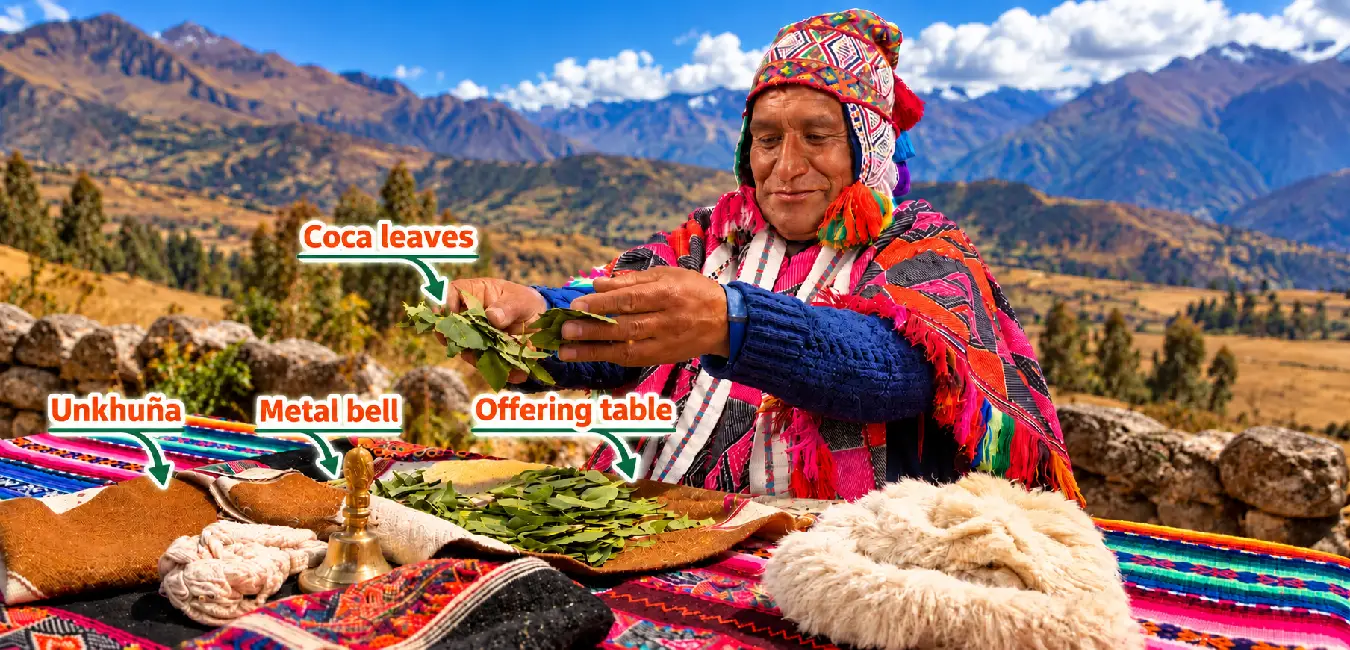
Next, the paqo spreads out an unkhuña, a small traditional textile, and begins to prepare the offering. They gradually place the elements that will make up the mesa on top of it.
Preparing the k'intus
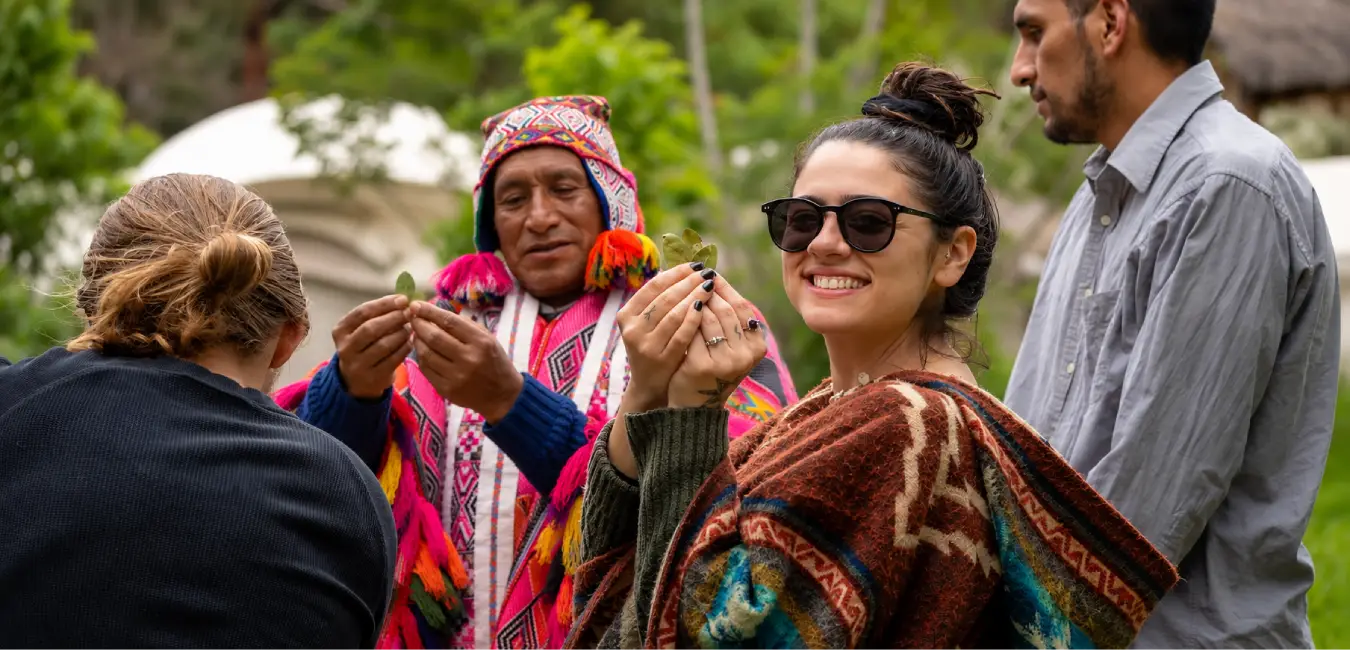
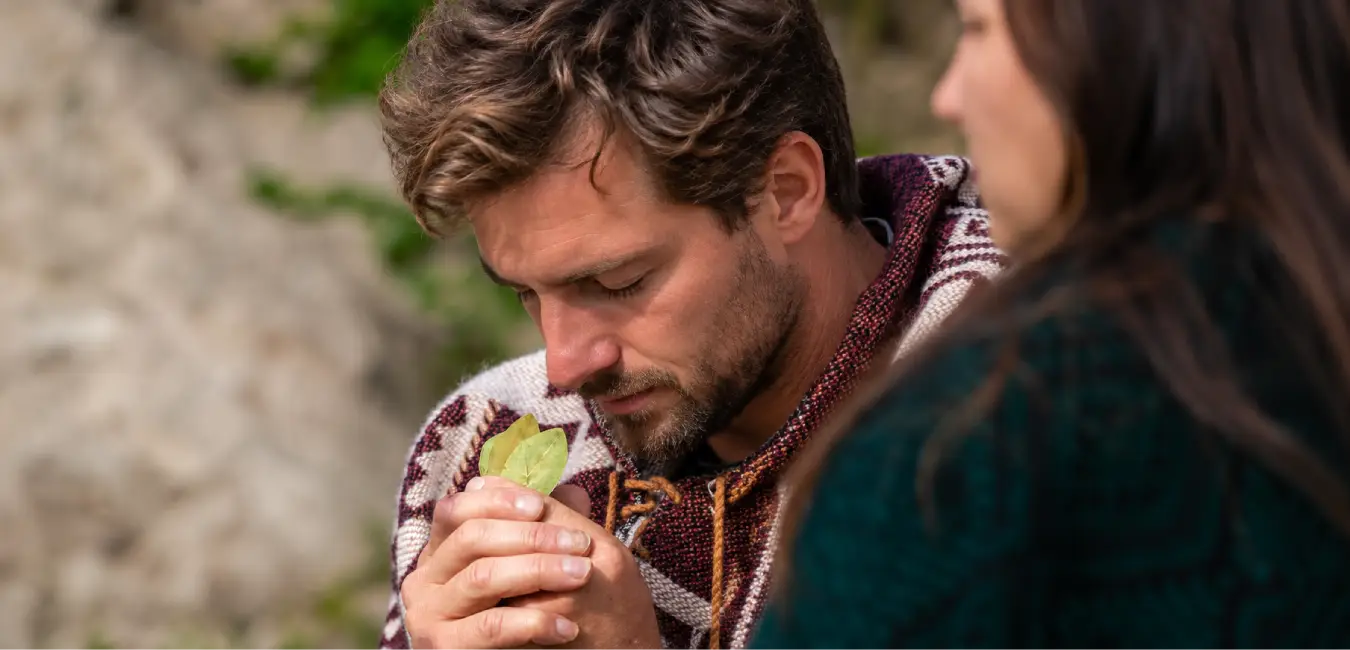
Then, you can choose three whole coca leaves that are in good condition. The paqo tells you how to hold them and then you can gently blow on them through the phukuy while thinking about what you want to give thanks for or ask for.
Preparing the offering
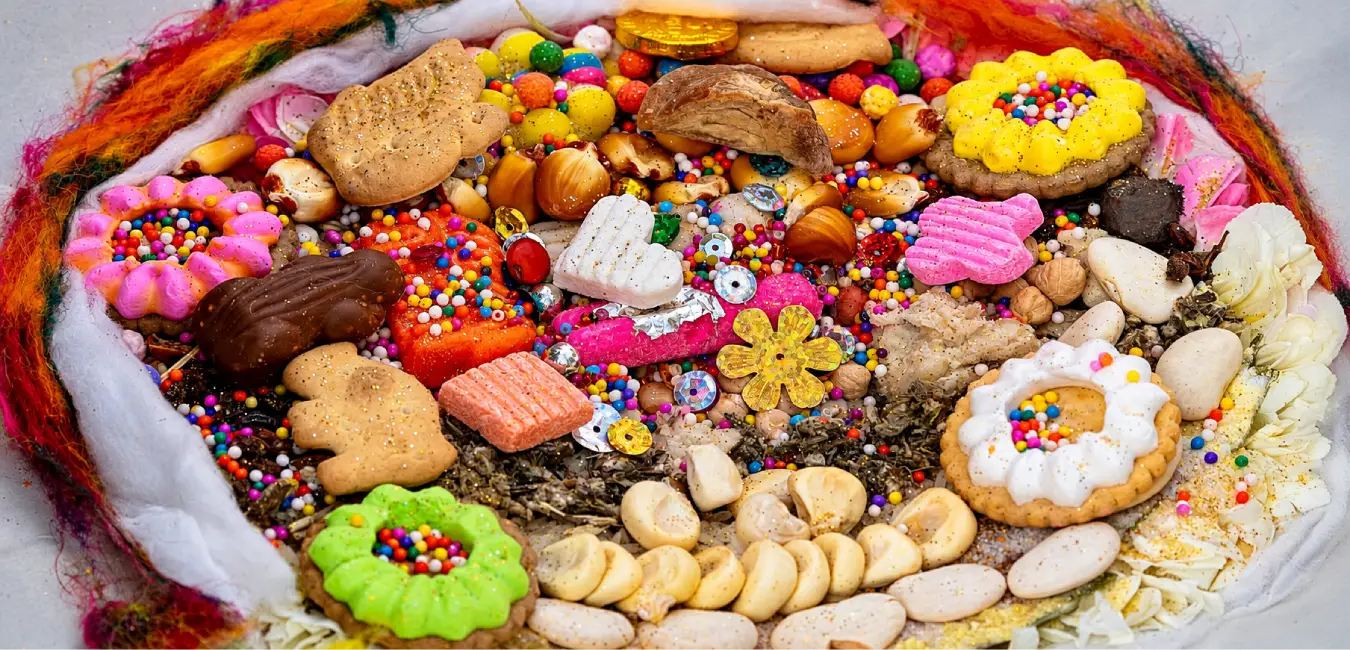
Next, the paqo adds different elements such as seeds, sweets, fats, figurines, and other products. Each element may have a specific meaning and, together, they form the offering that will be given to the Pachamama.
Invocations
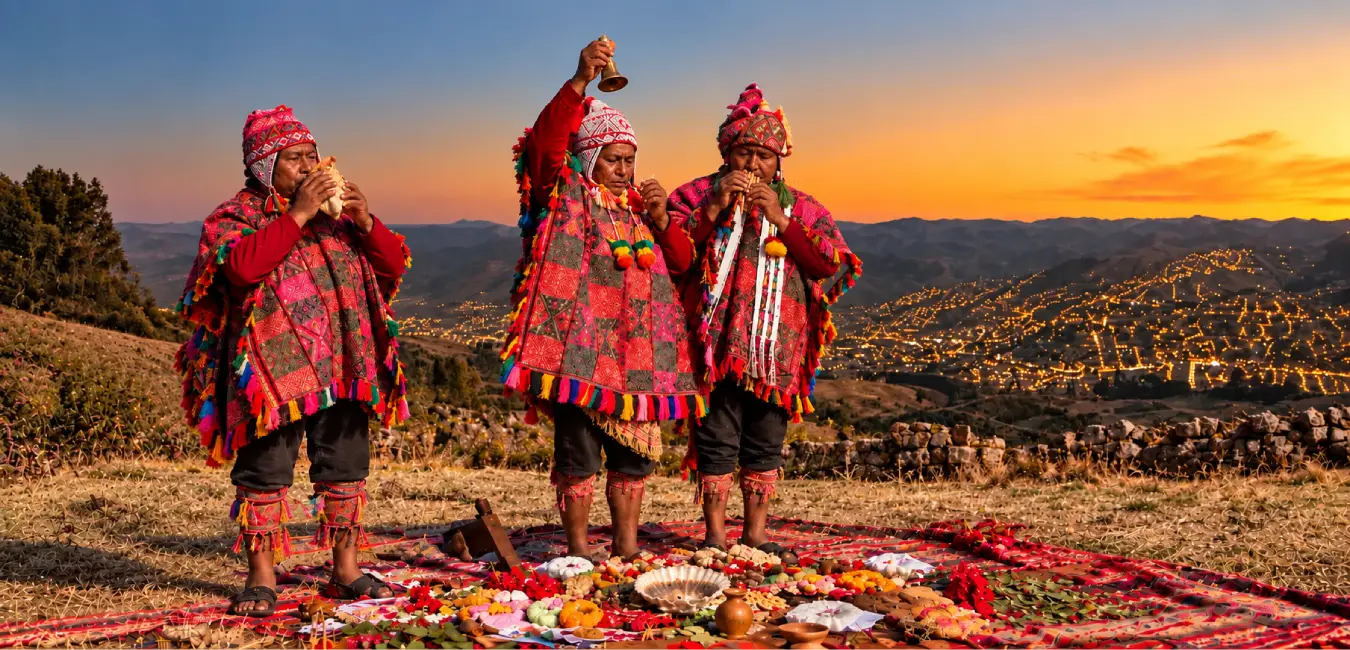
Then comes one of the central moments. The paqo performs the invocations in Quechua and mentions the Pachamama, the Apus, and other elements considered sacred. Some traditions also include references to God or the saints. Meanwhile, you can remain silent and respectfully accompany the moment.
The toast or t'inkay
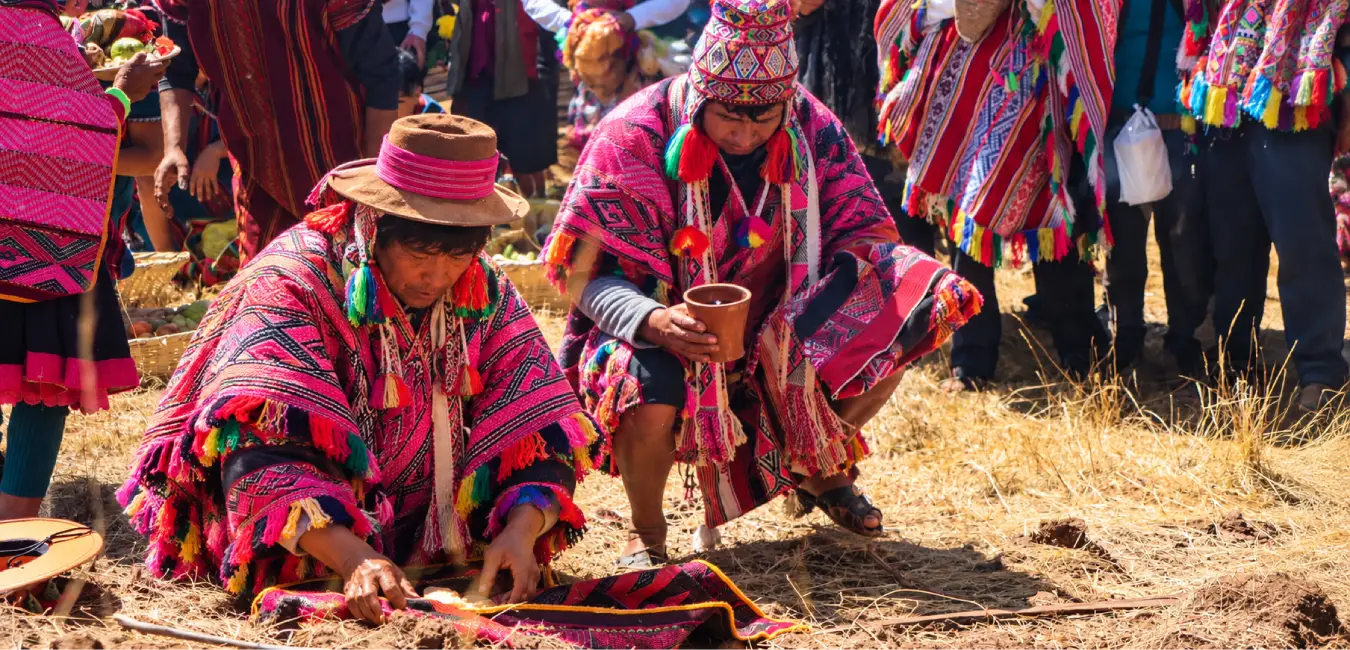
During the t'inkay, the paqo may sprinkle a few drops of chicha or wine toward the earth and the mountains. In this way, they symbolically offer the first sip before sharing the drink with the participants.
Giving the offering
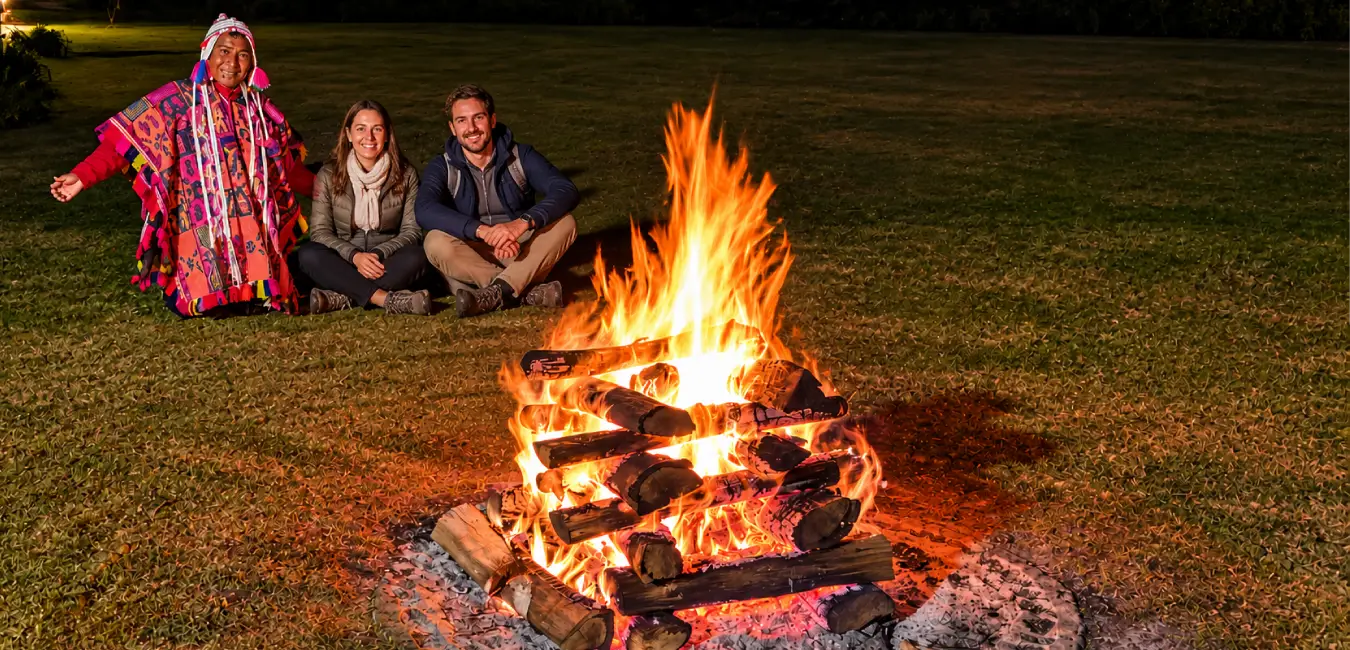
Finally, the paqo wraps the mesa and, depending on the ceremony, the offering may be burned or buried in an appropriate place. This gesture concludes the ritual and closes the moment of gratitude and request to the Pachamama.
What you may feel
Even if you do not share Andean spirituality, this ceremony can give you a moment to breathe, slow down, and feel at peace. During the ritual, you can give thanks for what you have experienced, express your wishes, and think about the goals you want to achieve. For this reason, many travelers remember it as one of the most personal experiences of their trip to Cusco.
What does an offering to the Pachamama contain?
The elements of a mesa can vary depending on the community, the paqo, and the intention of the ceremony. However, there are products that appear frequently.
Elements included in the Pachamama Ceremony
Element | Local Name | What It Symbolizes |
|---|---|---|
| Coca leaves in groups of three | K'intu | Connection between the three worlds and expression of intentions. |
| Corn, quinoa, beans, and other seeds | Muhu | Fertility, food, and future harvests |
| Sugar figurines | Misterios | Wishes related to home, animals, health, or travel. |
| Sweets, cookies, candies | - | Sweetening the relationship with the Pachamama |
| Llama or alpaca fat | Untu | Vital energy and strength |
| Red and black seeds | Wayruru | Protection, balance, and good luck. |
| Gold and silver sheets | Qori libro and qolqe libro | Symbolic relationship with the sun, moon, and abundance. |
| Colored wool or threads | - | The connection between all living beings |
| Small seashells | Mullu | Water, rain, and Andean ritual heritage. |
| Aromatic plants and incense | Wira q'oa, copal | Raising prayers through smoke |
| Flowers, especially carnations | T'ika | Beauty and gratitude |
| Chicha, wine, or cañazo | - | The drink shared with the earth during the t'inkay |
What does each element of the offering mean?
Coca leaves play an important role because they allow you to express an intention during the ceremony. On the other hand, seeds are associated with life, fertility, and future harvests. Likewise, sweets may represent the desire to maintain a harmonious and generous relationship with the Pachamama. However, the specific meaning of each element may change depending on the community and the paqo.
Respect for Andean wildlife
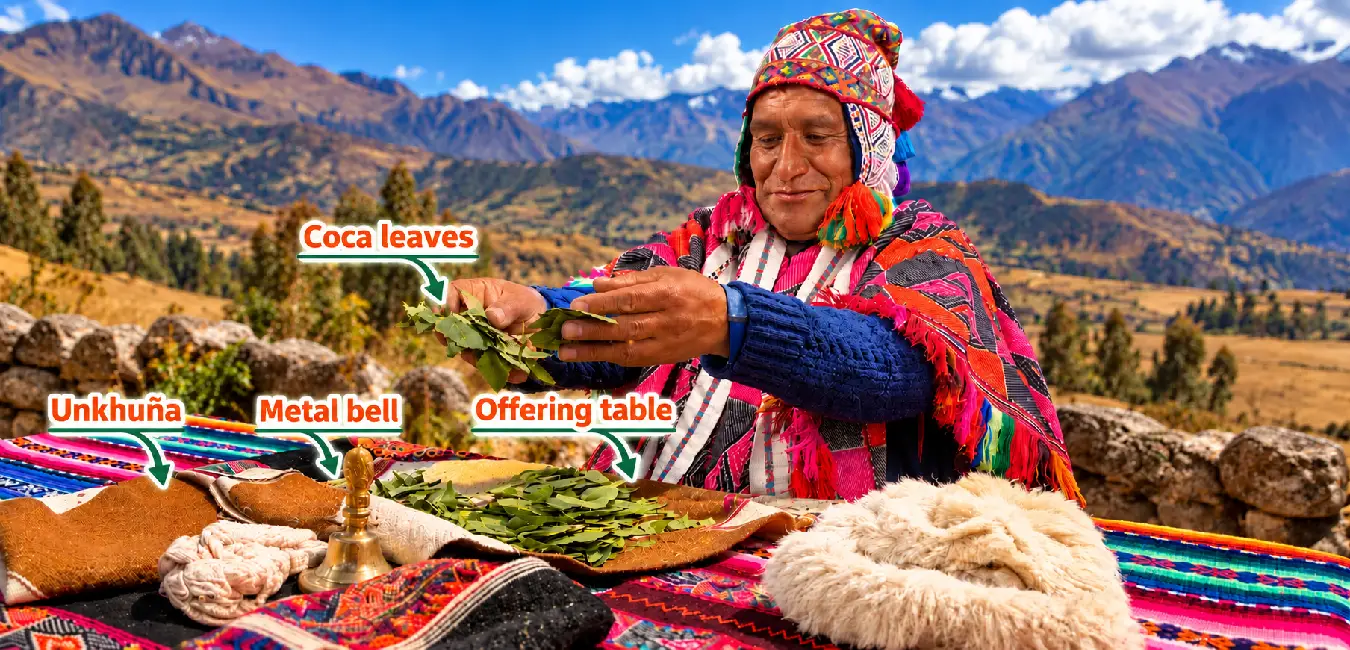
In some traditional mesas, you may find a dried llama fetus (sullu), especially in ceremonies for new construction, although it is not essential. Today, many paqos prefer to use symbolic figures instead. In addition, out of respect for wildlife and the law, avoid buying or using condor feathers, hides, or other parts of protected animals.
What is an Andean mesa?
The Andean mesa is the ritual space where the paqo assembles and presents the offering. In this sense, "mesa" also refers to the textile and the objects placed on it. Therefore, when someone says “let's make a mesa,” they may be referring to preparing the complete offering. The mesa brings together different elements in a small space and symbolically represents the connection between people, the earth, and the sacred world.
What can you find on an Andean mesa?
On an Andean mesa, you will find an unkhuña, a sacred stone or khuya, shells, and small metal bells. The paqo carefully places each element to represent the world above, the world here, and the world below. Although the elements may vary, you will be able to see how the mesa brings the connection and balance of the Andean universe together in a small space.
Who is the paqo and what role does he play?
The paqo is the intermediary between the earthly world and the sacred world of the Andes. He is the person who guides the ceremony and knows each step of the ritual; however, he is not exactly a “shaman” or an ordained priest. In some communities, it is believed that the Apus granted him this gift, especially after experiences such as surviving a lightning strike.
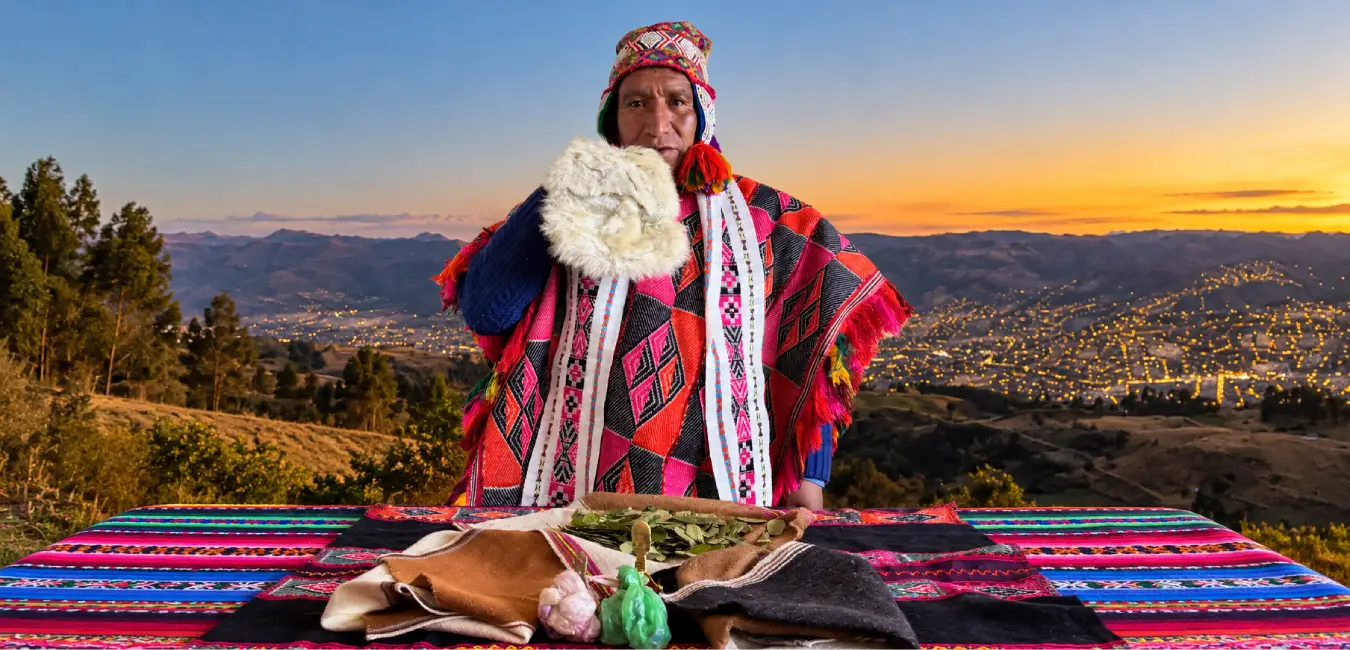
What does a paqo do during the Pachamama Ceremony?
During the ceremony, the paqo may be responsible for several tasks:
- Preparing the mesa and organizing the offering.
- Guiding participants through each stage.
- Performing the invocations.
- Interpreting certain ritual elements according to local tradition.
- Finally giving the offering to the earth or to the fire.
Types of ritual specialists
Type of Specialist | Traditional Role in the Cusco Area |
|---|---|
| Pampamisayoq | Works with the Pachamama and the "flat" earth; performs most family and agricultural ceremonies |
| Altomisayoq | Higher-ranking; according to tradition, communicates directly with the Apus |
| Paqos of the Q'ero Nation | Communities from Paucartambo recognized for strongly preserving this wisdom |
Keep in mind…
These names are not universal: in Puno, at Lake Titicaca, for example, the Aymara specialist is called a yatiri.
What is a Pachamama Ceremony like for travelers?
When you participate as a traveler, the experience can be adapted so that you understand what is happening without altering the meaning of the ceremony.
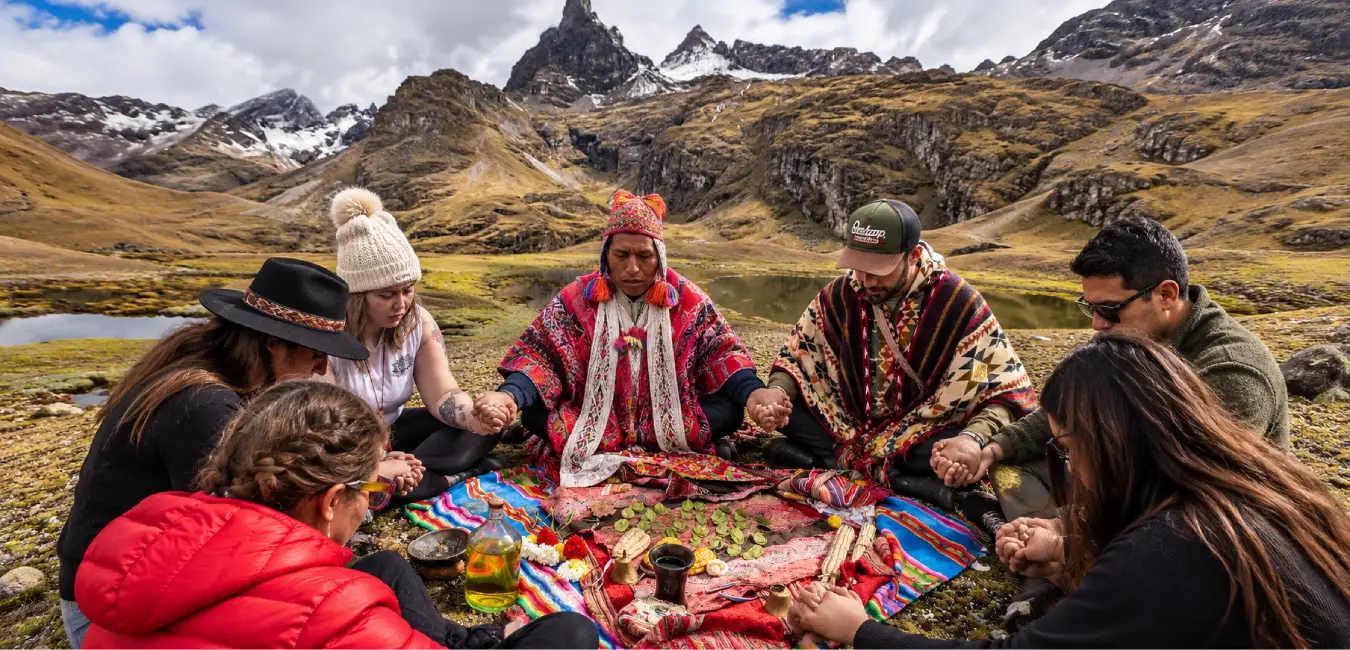
Pachamama Ceremony V.S. tourist experience
Traditional Ceremony | Traveler Experience |
|---|---|
| It is part of a family's or community's life. | It is organized for visitors. |
| The reason may be agricultural, family related, or community based. | The cultural meaning is explained. |
| The paqo leads it according to local tradition. | The paqo adapts the explanation to the group. |
| It does not necessarily have a fixed duration. | It usually has a pre-arranged duration. |
Traveler's tip…
If you travel to Cusco in August, take advantage of the dry season: skies are usually clear, and outdoor ceremonies can be especially beautiful. That said, nights are very cold, so bring proper warm clothing. And if you want to experience a Pachamama Ceremony in Cusco in August, book in advance because it is the busiest time of year.
Where to experience a Pachamama Ceremony in Cusco?
If you're looking for where to experience a Pachamama Ceremony in Cusco, you'll find different options. However, not all of them offer the same type of experience or work with communities in the same way.
Andean Sky Dome
At Andean Sky Dome, near Cusco, you can participate in a ceremony led by a paqo from the Q'ero community and share the experience in a small group. In addition, this experience can be part of The Llama Trail: Qoricancha to Machu Picchu, a route that combines hiking, Andean heritage, and cultural encounters.
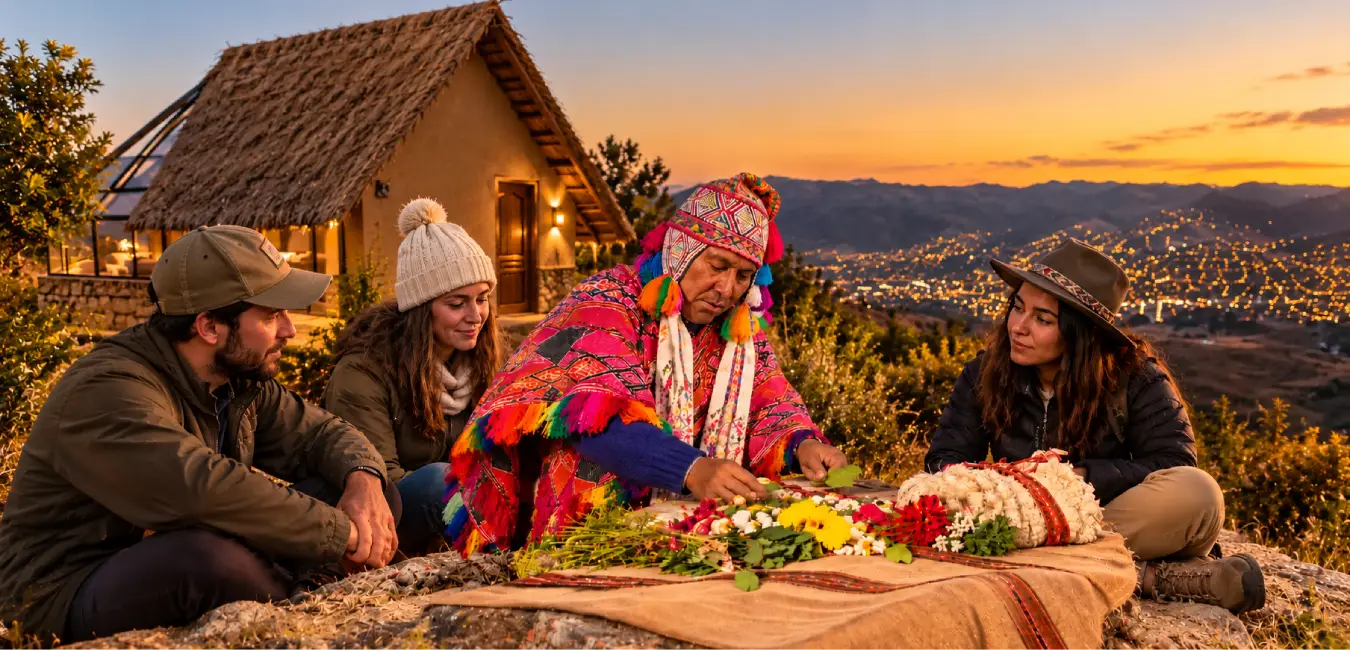
Pachamama Ceremony during a hike or trek
Some trekking routes also include small gestures of respect toward the Apus. For example, before beginning certain hikes, guides may share a k'intu or perform a brief offering. On routes such as Salkantay, Choquequirao, or Rainbow Mountain, these practices may take place according to the customs of the guides and the communities connected to the route.
Cultural experiences organized from Cusco
At Responsible Trekking, we organize the Pachamama Ceremony at Andean Sky Dome, our own space located near Cusco. There, you can participate in the ceremony alongside a paqo from the Q’ero community and a small group of travelers, creating a more intimate and respectful setting in which to learn about this Andean tradition.
Can you have a Pachamama Ceremony at Machu Picchu?
No, you cannot perform ceremonies or leave offerings inside Machu Picchu without the corresponding authorization from the Ministry of Culture. At Responsible Trekking, we can prepare the Andean mesa in the surroundings of Huchuy Qosqo, always respecting the conservation regulations of the archaeological site. Afterwards, we take the offering to an authorized location outside the archaeological area to burn or bury it responsibly.
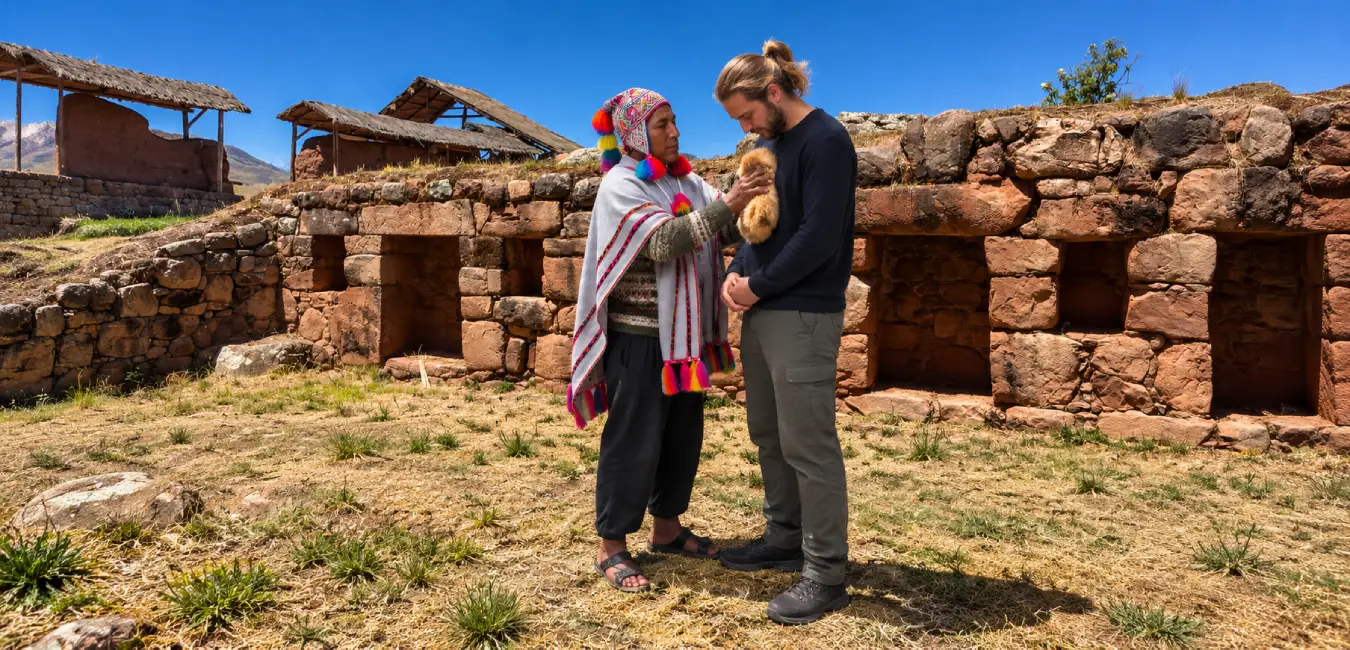
How to participate in a Pachamama Ceremony responsibly
Your attitude during the ceremony matters just as much as the experience you choose. Therefore, if you decide to participate, look for an activity that respects the community, the paqo, and the environment.
7 tips for experiencing the Ceremony respectfully
Choose local operators that work with community paqos and pay them fairly.
- Choose small groups, because they allow for a more intimate ceremony without crowds.
- Be wary of "express mystical tourism" that mixes the Pachamama Ceremony with ayahuasca or other Amazonian practices; these are different traditions.
- Take care of the environment: avoid plastics, do not leave waste behind, and respect fire regulations, especially during the dry season, when the risk of wildfires increases.
- Do not buy protected wildlife products, such as condor feathers or wild animal skins.
- Listen more than you speak and ask questions with genuine curiosity at the end.
- Do not repeat the ritual at home as if it were a recipe. If it inspired you, honor what you learned by caring for the earth in your daily life.
Our perspective as a local agency
At Responsible Trekking, we believe that the Pachamama Ceremony is not "sold": it is shared. That is why we work with Andean families, in small groups, and let the paqo set the pace. For us, responsible travel means allowing the community to decide what to share and how to share it.
How long does a Pachamama Ceremony last?
An experience for travelers usually lasts between 45 minutes and 2 hours, depending on the group and the ceremony. A community ceremony or a ceremony held during August can last for several hours and may even continue into the night with music, food, and conversation.
How much time should you set aside in your itinerary?
The most practical option is to set aside half a day. This way, you'll have enough time for transportation, the ceremony, and a relaxed conversation with the paqo after the ritual. This will keep you from rushing off to your next activity and allow you to experience the ceremony with greater attention.
Can I participate in the Pachamama Ceremony?
Yes, you can participate in a Pachamama Ceremony as long as you do so respectfully and follow the guidance of a paqo. You can prepare your k'intus, blow on them with your intention, listen, take part in the toast, and accompany the offering as it is given. Meanwhile, the paqo leads the ceremony and guides you through each moment, allowing you to learn about this tradition without trying to reproduce it on your own.
What should you bring to participate?
Normally, the experience already includes the elements needed to prepare the offering. However, if you'd like to bring something special, such as fruit, sweets, chocolate, or flowers, ask the paqo first. If they consider it appropriate to include it, you can add it to the mesa. More than the monetary value of the object, what matters is the intention with which you give it.
For your comfort, bring
- A waterproof jacket
- Sunscreen
- Water bottle
- Comfortable footwear.
What to wear during a Pachamama Ceremony
There is no specific dress code for participating in a Pachamama Ceremony. Even so, we recommend wearing comfortable and modest clothing, without the need to adopt a “mystical” outfit. During the ceremony, avoid wearing a hat or any other head covering; covering your head during this moment is considered disrespectful to the Pachamama.
How should you behave during the ceremony?
Your attitude can make a difference during the ceremony. Think of it as entering a sacred space, just as you would when visiting a temple or participating in an unfamiliar family ceremony.
Simple guidelines on what to do and what to avoid during a Pachamama Ceremony.
Yes, Do this | Better avoid this |
|---|---|
| Remain silent while the paqo is invoking | Interrupting with questions in the middle of the prayer |
| Receive the coca leaves with both hands | Touching or moving the mesa without permission |
| Follow the paqo's instructions at every step | Stepping over the textile or the offering |
| Put your phone on silent | Treating the ritual like a show or laughing at the gestures |
| Ask your questions at the end | Drinking excessive amounts of alcohol during the toast |
| Thank the paqo and the community | Taking elements of the offering as souvenirs |
If you have questions about the use of coca or alcohol during the toast, mention them beforehand. You can simply bring the drink to your lips or pour a few drops onto the earth; no one will force you to drink. Likewise, if you follow another religion, you can accompany the ritual in silence.
Can you take photos or record?
It depends on the paqo and the moment of the ceremony. In general, you can take some photos while the mesa is being prepared, but it is best to put your camera away during the invocations and the presentation of the offering. In the end, the best memory of a Pachamama Ceremony usually does not remain on your phone, but in what you felt.
Basic rules for taking photos
- Ask for permission before photographing the paqo or community families.
- Do not use flash: several paqos consider it disruptive to the ceremony.
- Avoid drones because they disrupt the silence and intimate nature of the ritual.
- Before posting the paqo's face on social media, ask whether they are comfortable with it.
Quick glossary of the Pachamama Ceremony
Before participating, knowing a few words will help you better understand the paqo's explanations.
Word | Meaning |
|---|---|
| Pachamama | Mother Earth, mother of time and space. |
| Apu | Spirit of the sacred guardian mountain. |
| Ayni | Reciprocity, mutual aid. |
| Paqo | Andean ritual specialist. |
| K'intu | Group of three coca leaves. |
| Phukuy | Blowing on the k'intu to transmit the intention. |
| T'inkay | Sprinkling a drink onto the earth as a ritual toast. |
| Haywarikuy | To offer, to give; Quechua name for the ceremony |
| Unkhuña | Square textile where the mesa is assembled. |
| Hanan, Kay y Uku Pacha | World above, this world, and world below. |
Would you like to experience a Pachamama Ceremony in Cusco in a close and respectful way? At Responsible Trekking, we organize this experience together with a paqo and in small groups. You can also combine it with our The Llama Trail: Qoricancha to Machu Picchu and experience other expressions. Write to us and tell us what you have in mind; we’ll be happy to help you plan your experience.
Frequently asked questions about the Pachamama Ceremony
What does the Pachamama Ceremony mean in Cusco?
It means giving thanks and returning to the Pachamama and the Apus part of what they give, following the Andean principle of ayni or reciprocity. It is not an economic payment.
What do you do during a Pachamama Ceremony?
A paqo prepares an offering on a sacred textile with coca leaves, seeds, sweets, and other elements; then invokes the Pachamama and the Apus, performs a toast, and gives the offering by burning or burying it.
Why is the Pachamama Ceremony performed?
To give thanks for the harvests and health, ask for permission before planting, building, or traveling, and maintain balance between people and nature.
Can you have a Pachamama Ceremony at Machu Picchu?
No. Ceremonies are not allowed inside Machu Picchu or other protected archaeological sites without authorization from the Ministry of Culture. You can experience it in nearby communities or natural areas.
Does the Pachamama Ceremony include ayahuasca?
No. The Pachamama Ceremony is an Andean tradition, while ayahuasca belongs to Amazonian traditions. They are different practices.
What happens if the offering does not burn properly?
According to popular belief, a lively fire and white ashes indicate that the Pachamama accepted the offering. If the fire goes out, the paqo usually interprets it and may sometimes repeat a gesture.
Is the Pachamama Ceremony performed only in Peru?
No. Communities in Bolivia, Ecuador, northern Chile, and northwestern Argentina also honor the Pachamama, although each region has its own ways of doing so.