
The Toritos de Pucará are traditional ceramic figurines from the Puno highlands of Peru. They symbolize protection for the home, prosperity, fertility, and the continuity of family life. In this blog, we’ll explore the true origins of these iconic little bulls, why their tongues stick out and their tails point upward, what each detail of their design represents, how much an authentic Torito de Pucará costs, and, most importantly, how to visit its birthplace during your trip to southern Peru.
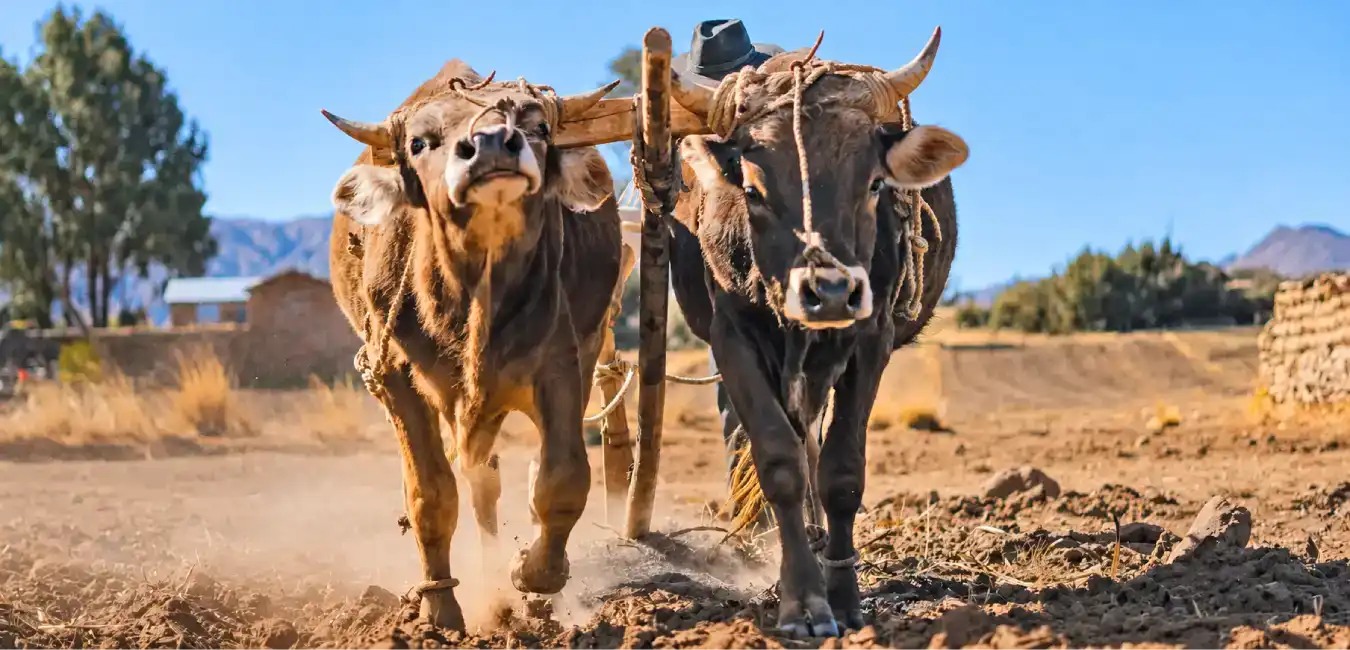
What are the Toritos de Pucará?
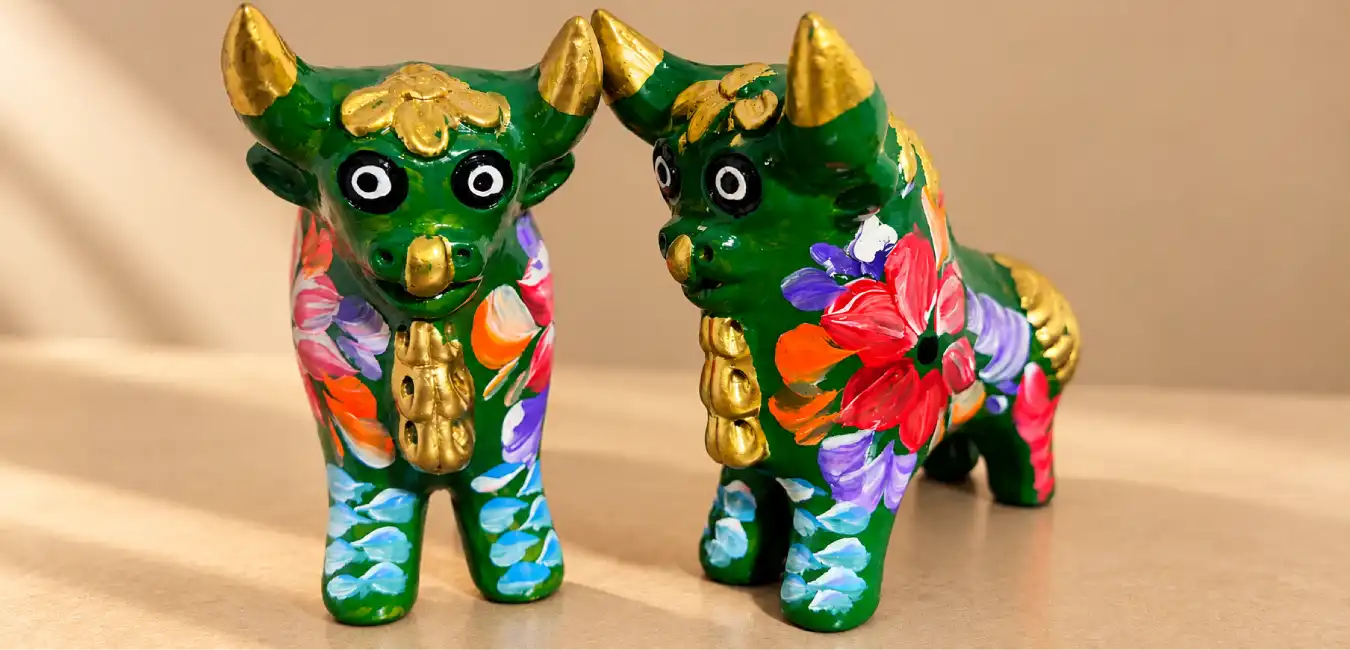
The Toritos de Pucará are ceramic figurines traditionally crafted in the Peruvian Altiplano, in southern Peru. Artisans shape the bulls with decorated bodies, raised horns, expressive eyes, and a tongue sticking out of the mouth. They then add ornamental details and finishes that make each piece unique.
Where do the Toritos de Pucará originate?
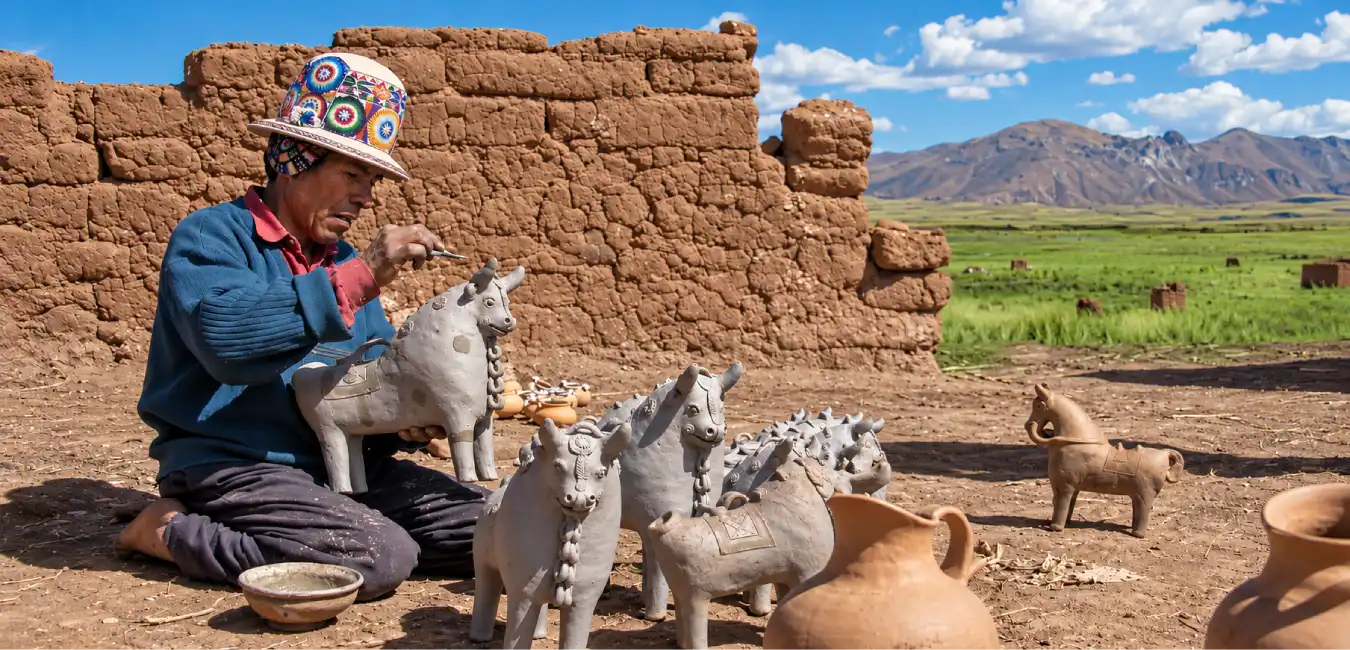
Although they bear the name Pucará, these traditional bull figurines originated in the pottery making communities of Santiago de Pupuja and Checca Pupuja, in the province of Azángaro, Puno region. In these communities, ceramic artisans developed traditional clay modeling techniques that eventually turned these figurines into one of Peru's most recognizable symbols of folk art.
Why are they called "Toritos de Pucará"?
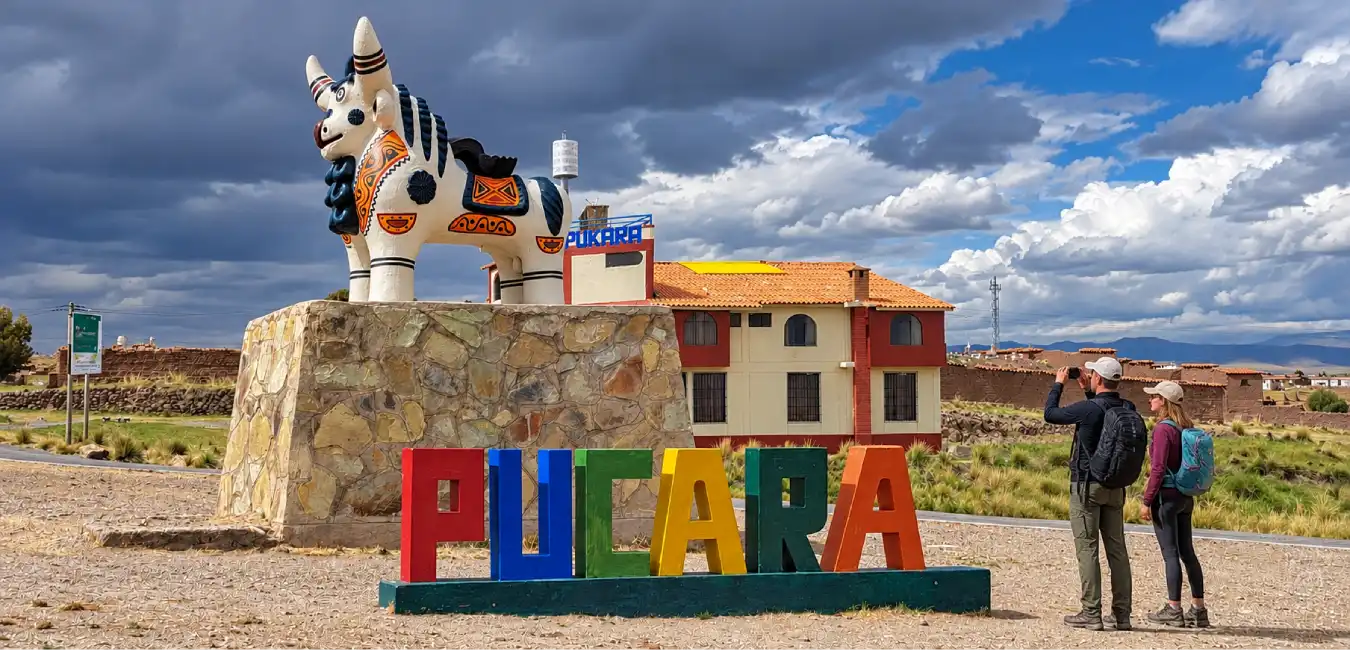
When the Southern Railway reached the area in the early 20th century, the train station in Pucará became the nearest sales point for these ceramic bulls. Merchants sold them to train passengers, and by the 1940s, the figurines had become well known among travelers, who began calling them after the station. Over time, the town of Pucará, in Lampa Province, also developed into an important center for their production and sale.
Fact | What the sources say |
|---|---|
| Place of origin | Checca Pupuja community, José Domingo Choquehuanca District, Azángaro Province, Puno. |
| Origin of the name | The Pucará train station, where the figurines were sold to travelers. |
| Historical period | After the Spanish Conquest: cattle were introduced to Peru by the Spanish in the 16th century. |
| Traditional colors | Two main tones: the cream color of fired clay and walnut brown details. |
| Recognition | Declared National Cultural Heritage in 2019, with National Day celebrated every March 18 since 2022. |
History of the Toritos de Pucará
Ultimately, the Torito de Pucará is much more than a colorful souvenir. It represents a legend of water and drought, a livestock ritual preserved in clay, a lesson in Andean balance, and the patient craftsmanship of hundreds of pottery making families. So, when you spot one on a rooftop or hold one in your hands, remember that you're holding centuries of Altiplano history. And if you can, make the trip to its homeland. We promise every mile will be worth it.
From the andean Illa to the Mestizo bull
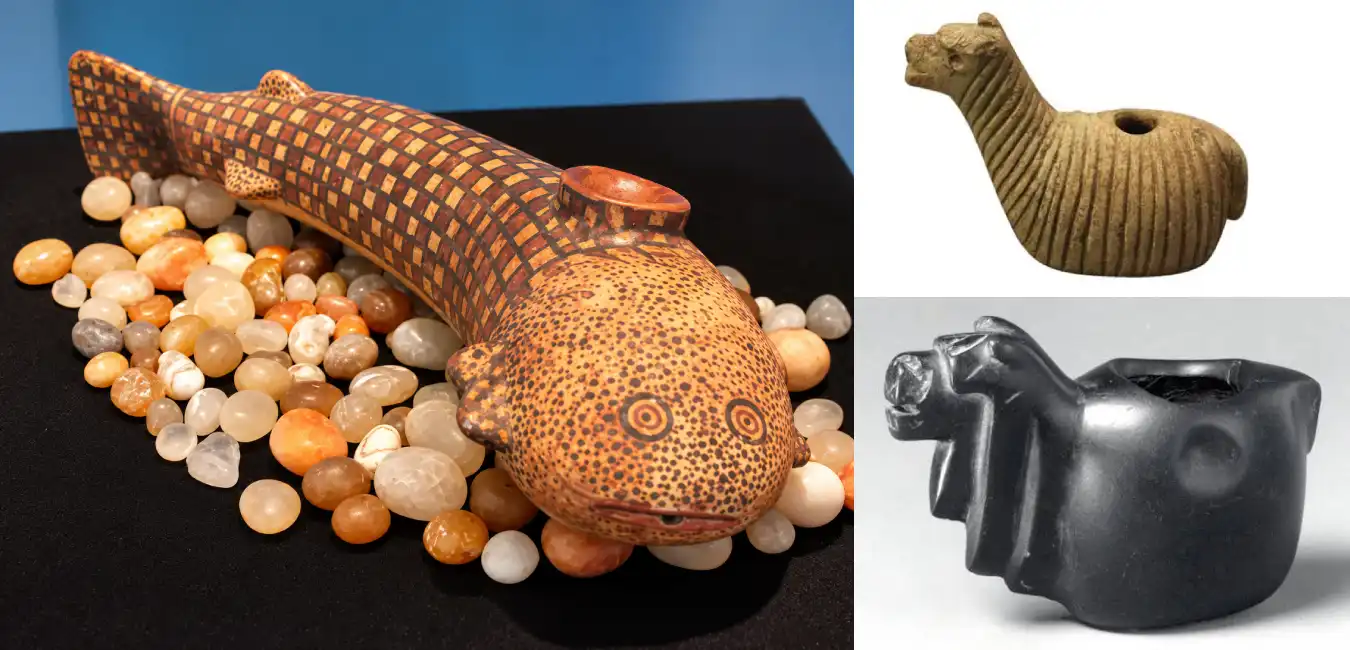
Before the arrival of the Spanish, families in the Altiplano used small animal figurines, especially those depicting camelids, known in Quechua as conopa and in Aymara as illa. These sacred objects were believed to hold the vital energy of livestock and the family. During ceremonies, they were filled with chicha, a traditional fermented corn drink, and the liquid was then sprinkled over the animals to ask for their reproduction and abundance.
Andean syncretism in the Toritos de Pucará
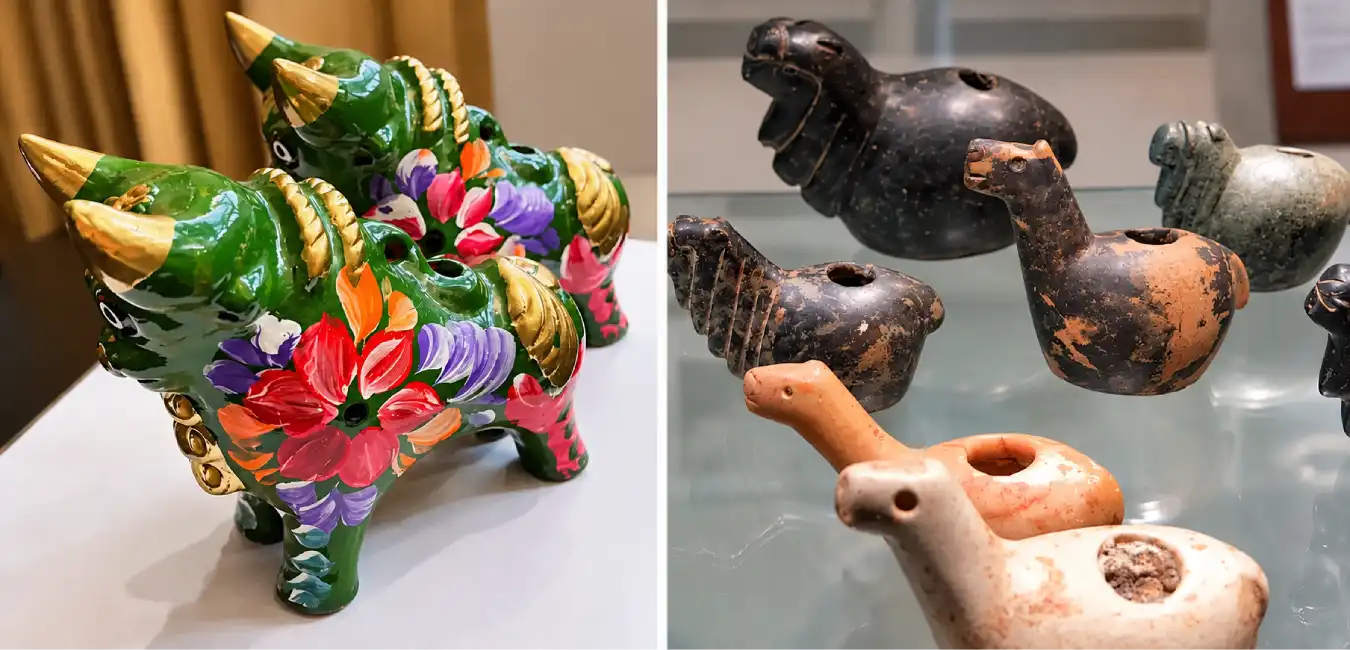
When cattle arrived with the Spanish Conquest, local potters incorporated the bull into this ancient tradition. The Torito de Pucará is therefore a product of Andean syncretism: a pre-Hispanic belief that adopted a European animal and transformed it into a symbol of its own. In fact, Peru's Congress describes it as an example of the mestizo art of southern Peru.
The legend of the bull that brought water from a rock
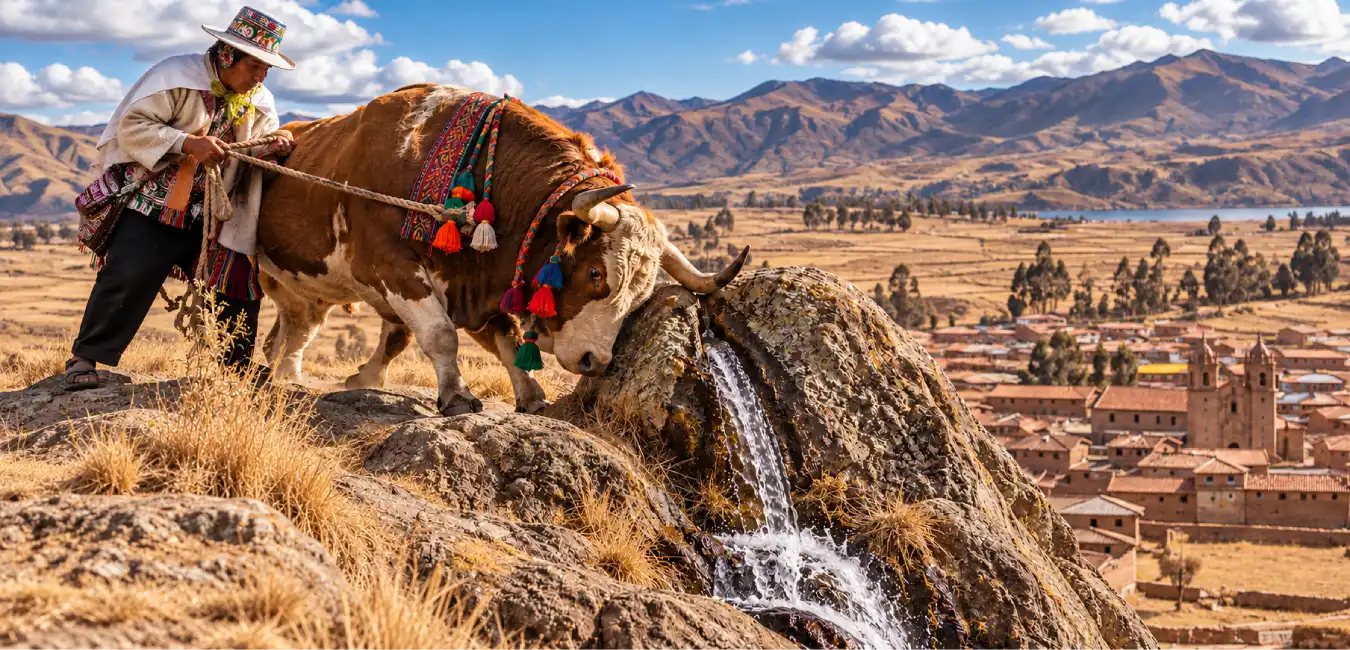
According to Pucará's oral tradition, the town once suffered a terrible drought. Desperate to save his community, a farmer climbed the great rocky outcrop overlooking the town with his bull to offer it to the deity in exchange for rain. The animal resisted. However, as it rubbed against the rock, one of its horns struck the stone, and water gushed out, providing enough to save everyone.
Travel tip
When you arrive in Pucará, look up toward the rocky outcrop rising behind the town. This is the setting of the legend, and in the afternoon light, it offers one of the best photo opportunities in the Altiplano.
Señalakuy, the festival that explains the bull's sticking out tongue
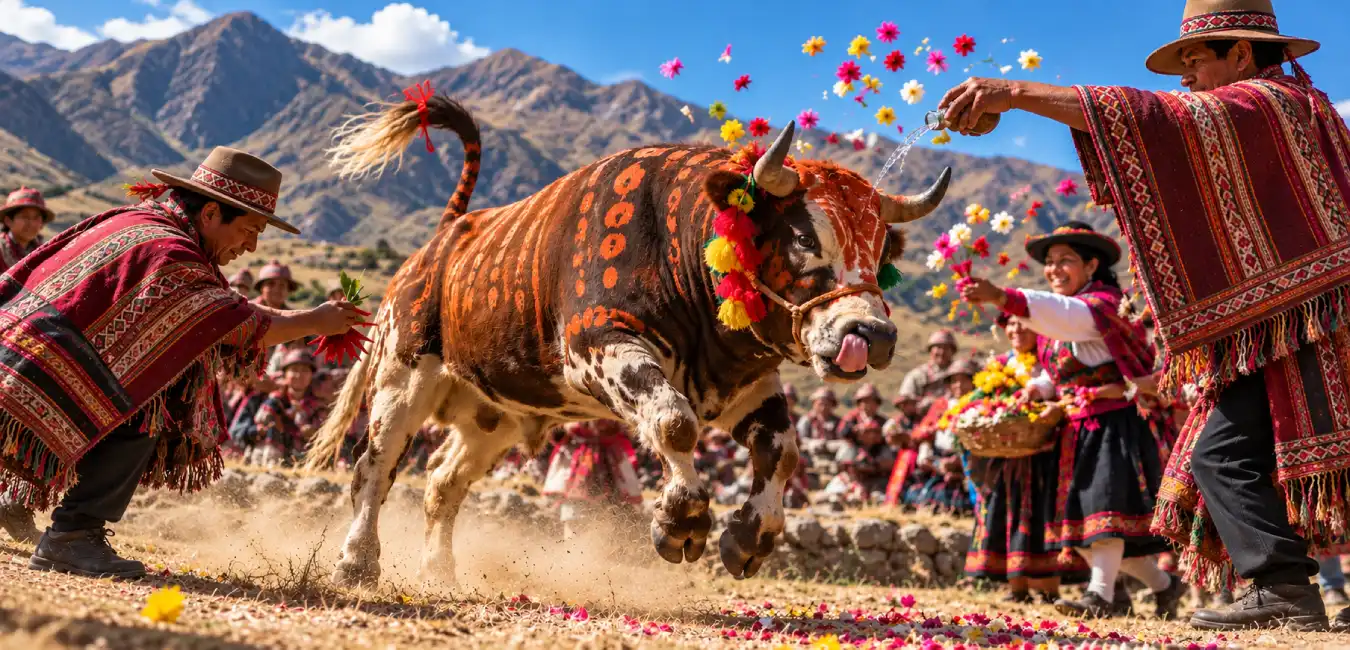
Have you ever wondered why the bull always has its tongue sticking out and its tail curled over its back? It's not just an artistic choice. This distinctive pose comes directly from the señalakuy (also spelled "señalacuy"), an Andean livestock branding ceremony still practiced in Altiplano communities, often during Carnival or the Feast of the Holy Trinity.
How the Señalakuy Ceremony is performed
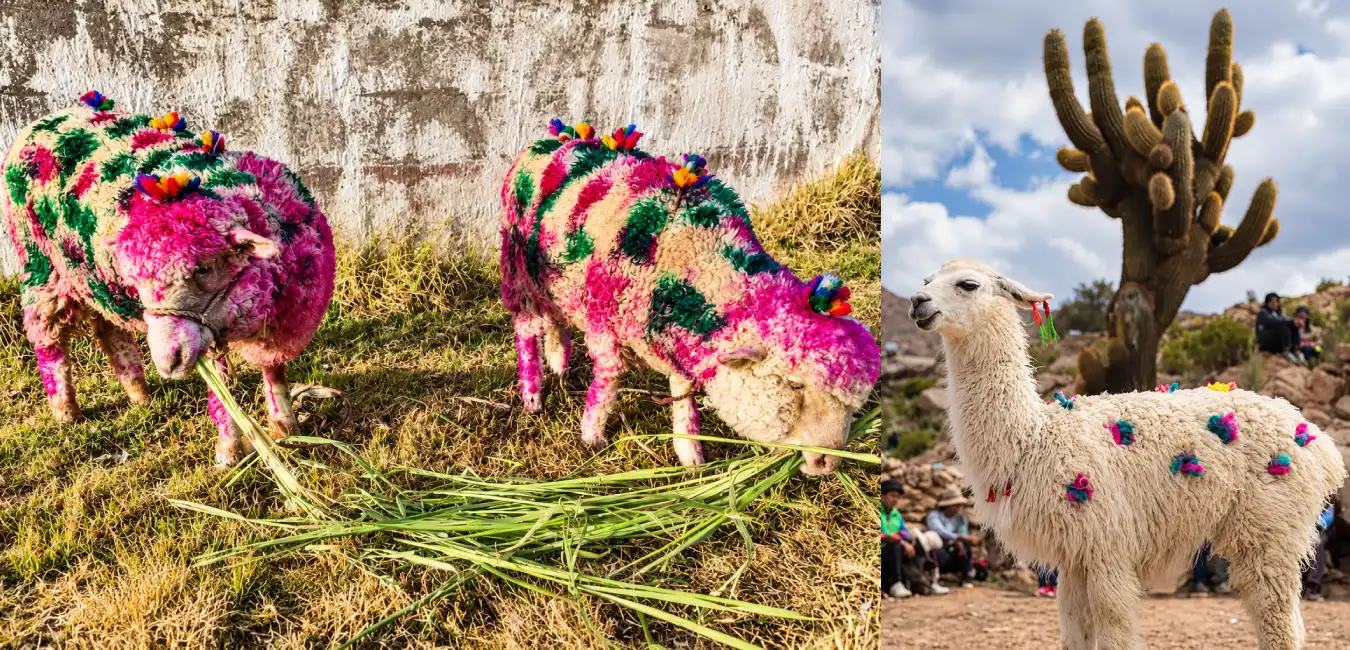
During this ceremony, the most striking bull was selected and decorated with ocher paint before receiving small markings. The participants then applied aguardiente, a traditional sugarcane liquor, to its nose and chili pepper beneath its tail. This made the animal jump around with its tail raised, licking its muzzle as people tossed flowers toward it. In other words, each Torito de Pucará captures a moment from this traditional fertility celebration in clay.
Official recognition of the Torito de Pucará
| Year | Recognition |
| 2019 | Peru's Ministry of Culture declares the knowledge, techniques, and practices of traditional pottery from Checca Pupuja part of the Nation's Cultural Heritage (Vice-Ministerial Resolution No. 027-2019-VMPCIC-MC, February 27). |
| 2021 | Peru's Ministry of Foreign Affairs promotes the exhibition "Toro Itinerante de Pucará, Ambassador of the Peruvian Altiplano," which travels to cities across Peru and around the world. |
| 2022 | Law No. 31492, published on June 12, establishes March 18 as National Torito de Pucará Day. |
| 2023 | To mark 150 years of diplomatic relations between Peru and Japan, "Pukara-chan," a mascot inspired by the traditional bull figurine, is introduced. |
| 2025 | Pukara-chan becomes the official mascot of the Peruvian Pavilion at Expo 2025 Osaka-Kansai. |
When is National Torito de Pucará day celebrated?
Every March 18, Peru celebrates National Torito de Pucará Day, established under Law No. 31492, enacted in 2022. The day aims to promote and preserve the knowledge, techniques, and pottery making practices associated with this tradition, as well as the bull figurine's role as a symbol of friendship between Peru and Japan.
What does each part of the Torito de Pucará symbolize?
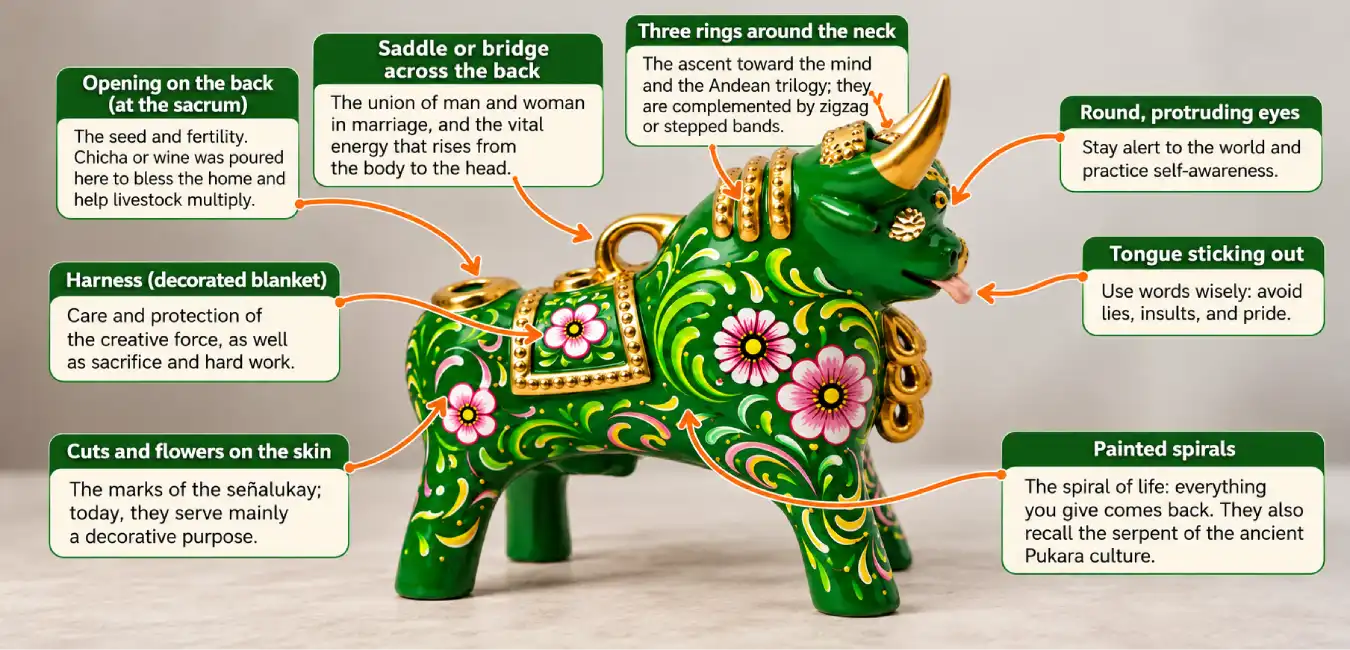
Here's a breakdown of what each element symbolizes, so the next time you hold one of these traditional figurines, you'll know exactly what you're looking at.
The secrets behind the Torito de Pucará
| Element | What It symbolizes |
|---|---|
| Opening on the back (near the sacrum) | Seeds and fertility. Chicha or wine was poured through this opening to bless the livestock and encourage its growth. |
| Handle or bridge across the back | The union of man and woman in marriage, as well as the vital energy rising from the body to the head. |
| Enjalme (decorated blanket) | Care and protection of creative life force, as well as sacrifice and hard work. |
| Three bands around the neck | The ascent toward the mind and the Andean trilogy. They are complemented by zigzag or step like patterns. |
| Round, bulging eyes | Staying alert to the world and practicing self-awareness. |
| Tongue sticking out | Using words wisely and avoiding lies, insults, and pride. |
| Painted spirals | The spiral of life: everything you give comes back to you. They also recall the serpent motifs of the ancient Pukara culture. |
| Lines and flowers on the body | Marks associated with the señalakuy ceremony. Today, they serve mainly as decoration. |
What do the colors of the Torito de Pucará mean?
Before choosing one, there's something important to know: traditional Toritos de Pucará originally featured just two colors: the white or cream of unpainted fired clay and the walnut brown used on the head, horns, and decorative details.
Color | Popular meaning | Ideal for… |
|---|---|---|
| White / Cream | Peace, purity, and protection for couples | Newlyweds or a new home |
| Walnut / Brown | The classic bull, representing a connection to the land and tradition | Collectors looking for an authentic piece |
| Red | Protection, security, and strength | A home's entrance or a business |
| Yellow | Abundance and financial prosperity | A business or office |
| Green | Health, well-being, and renewal | A gift for someone starting a new chapter |
| Blue | Harmony and heavenly protection | Relaxation or meditation spaces |
| Orange | Joy, creativity, and optimism | Study areas, workshops, or children's rooms |
| Black | Protection against negative energy | Anyone looking to cleanse their space |
Did you know?
The meanings associated with each color vary by seller and region; there is no official color chart. In an older interpretation, white represented purity, while black symbolized personal flaws that each person should work to overcome. That's why some artisans still sell black-and-white pairs as a reminder of balance.
Why are two Toritos de Pucará placed on rooftops?
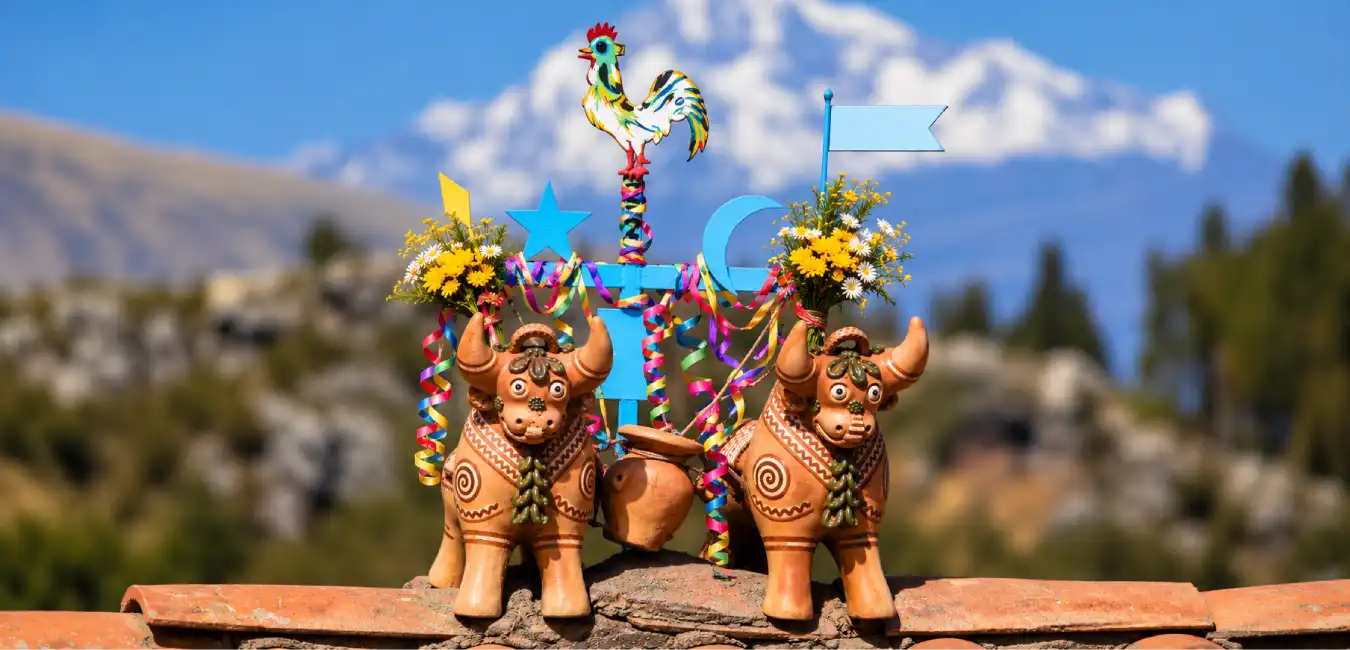
If you travel through Puno or the communities around Cusco, you'll notice that the Toritos are almost always displayed in pairs. In the Andean worldview, life is shaped by complementary pairs: the sun and the moon, day and night, and man and woman. Two bulls together therefore represent Andean duality the union of opposing energies that balance one another for the well being of the family.
The andean rooftop trilogy
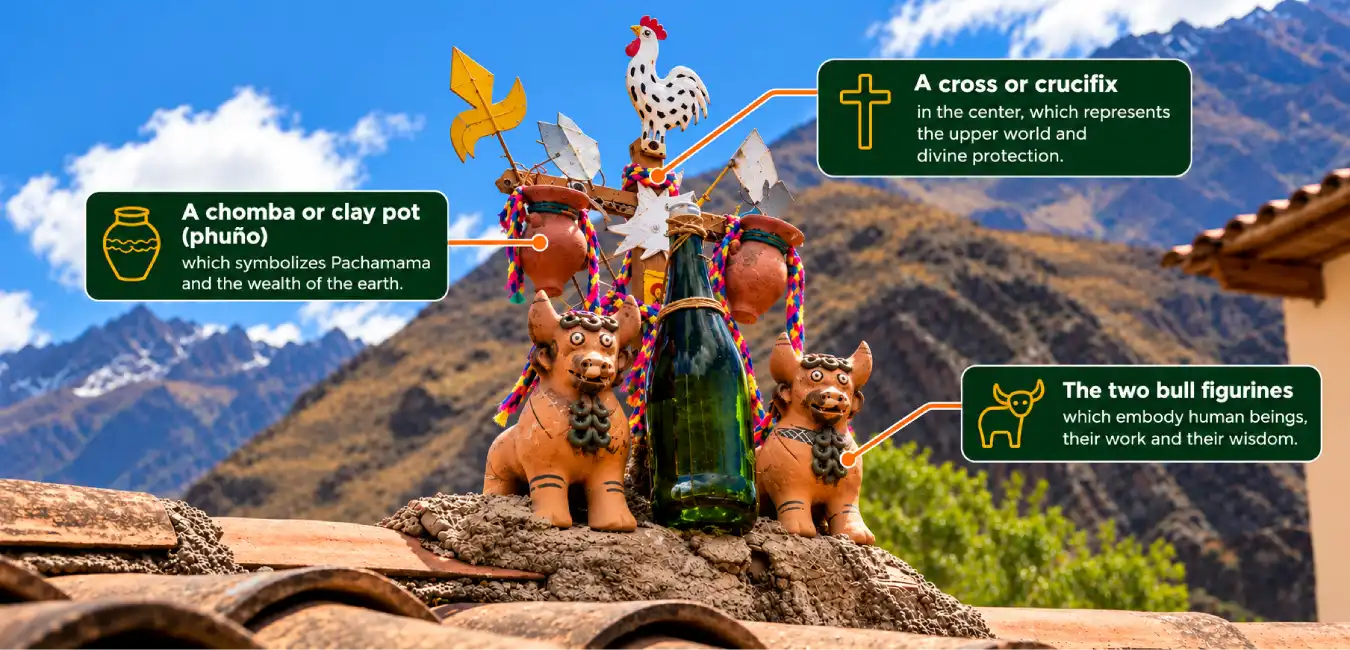
The bulls are often accompanied by other objects. Together, these elements form a symbolic trilogy found on many Andean rooftops:
- A cross or crucifix in the center, representing the upper world and divine protection.
- A clay chomba or water jar (phuño), symbolizing Pachamama, Mother Earth, and the abundance of the land.
- The two bulls, representing human beings, their work, and their wisdom.
Wasi Qhatay, the traditional house roofing ceremony
In many Andean communities, the Toritos are placed on rooftops during the "wasi qhatay," a ceremony celebrating the completion of a new home's roof. Godparents and family members gather to celebrate with music, chicha, and offerings, helping bless and protect the home from the very beginning.
Can i place a Torito inside my home?
Absolutely! Today, many Peruvian families display their Toritos on a sideboard, shelf, or near the main entrance. According to tradition, the important thing is to keep them as a pair and place them somewhere visible.
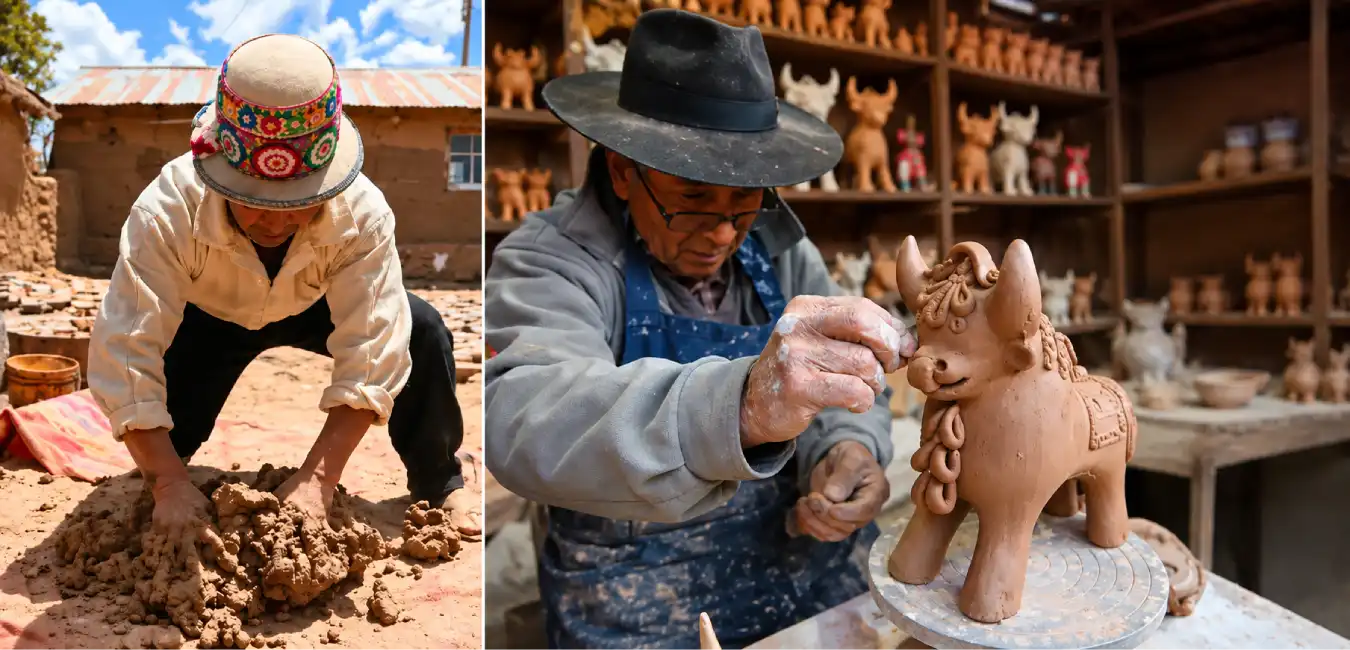
How are the Toritos de Pucará made?
Making a Torito is a craft learned within the family and passed down from one generation to the next.
How Toritos de Pucará are made
- Selecting the clay. Artisans combine different types of clay, including gray, yellow, green, reddish, slate colored, and chocolate brown varieties, along with minerals such as kaolin and dolomite.
- Preparing the clay. The clay is ground, soaked, and sifted before local fire resistant earth is added to help it withstand high temperatures.
- Shaping the figurine. Using their hands and simple molds, artisans shape the body, head, horns, and raised decorative details.
- Drying and first firing. The figurine is air-dried and then fired in a kiln at temperatures above 800°C (1,472°F).
- Decorating. Finally, artisans hand-paint the details using natural and mineral pigments. The piece may be fired again if the finish requires it.
The Torito de Pucará as a symbol of Responsible Trekking
At Responsible Trekking, the Torito de Pucará represents our Andean identity, the protection of the home, prosperity, and the deep connection between local communities and their land. We have adopted it as one of our symbols because it reflects our commitment to preserving traditional practices, celebrating local culture, and supporting the well-being of the communities that welcome us.
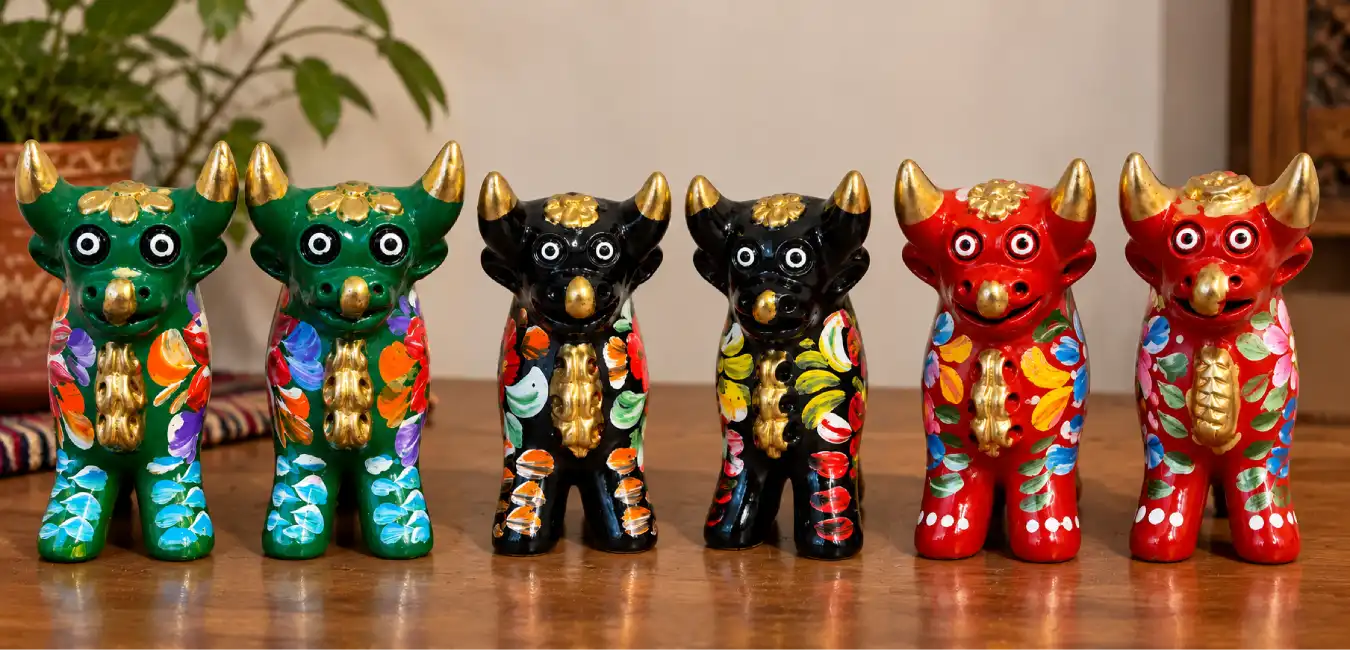
A small gift with a special meaning
When we give our travelers a Torito de Pucará, we want to share a little piece of our culture with them. It's a gesture of friendship, affection, and gratitude, along with our best wishes for happiness, prosperity, and many wonderful journeys ahead.
How to visit Pucará during your trip through southern Peru
Pucará is a peaceful town in the Peruvian Altiplano, located in Lampa Province, in the Puno region, about 104 km (65 miles) north of Puno. Its location makes it a convenient stop along the route between Cusco and Lake Titicaca, making it an excellent addition to your trip through southern Peru.
What you should know before visiting Pucará
Travel information | Details |
| Location | Pucará District, Lampa Province, Puno Region. |
| Elevation | Approximately 3,860 m (12,664 ft) above sea level. |
| Climate | Cold and dry, with temperatures ranging from approximately 3°C to 14°C (37°F to 57°F). |
| From Puno | About 105 km (65 miles), or roughly 2 hours by road. |
| From Juliaca | About 60 km (37 miles), or approximately 1 hour by road. |
| From Cusco | Along the Cusco–Puno overland route. Many tourist buses stop here. |
| What to Bring | Sunscreen, sunglasses, a windbreaker, and warm clothing. |
What can you visit in Pucará?
- Pukara Archaeological Complex and Kalasaya Temple. This was the center of the Pukara culture (approximately 500 BC-AD 400), one of the earliest civilizations in the northern Lake Titicaca basin.
- Pucará lithic museum. It displays pre-Inca monoliths and stone stelae, including the well known Lightning Stela.
- Santa isabel Church. A colonial church built with reddish stone, making it a great spot for photographs.
- Torito square and Bolívar square. The heart of town, surrounded by ceramic shops.
- Artisan workshops. One of the highlights of the visit is watching the entire crafting process. At several workshops, you can even paint your own Torito alongside local master artisans.
Suggested route
Cusco – Pucará – Puno – Lake Titicaca.
Other places to visit near Pucará
If you have time after meeting the artisans who make the Toritos de Pucará, take the opportunity to explore more of the Altiplano. Near Puno, you'll find islands where local communities preserve their traditions, as well as archaeological sites that offer a glimpse into the region's history. Here are three places to add to your trip.
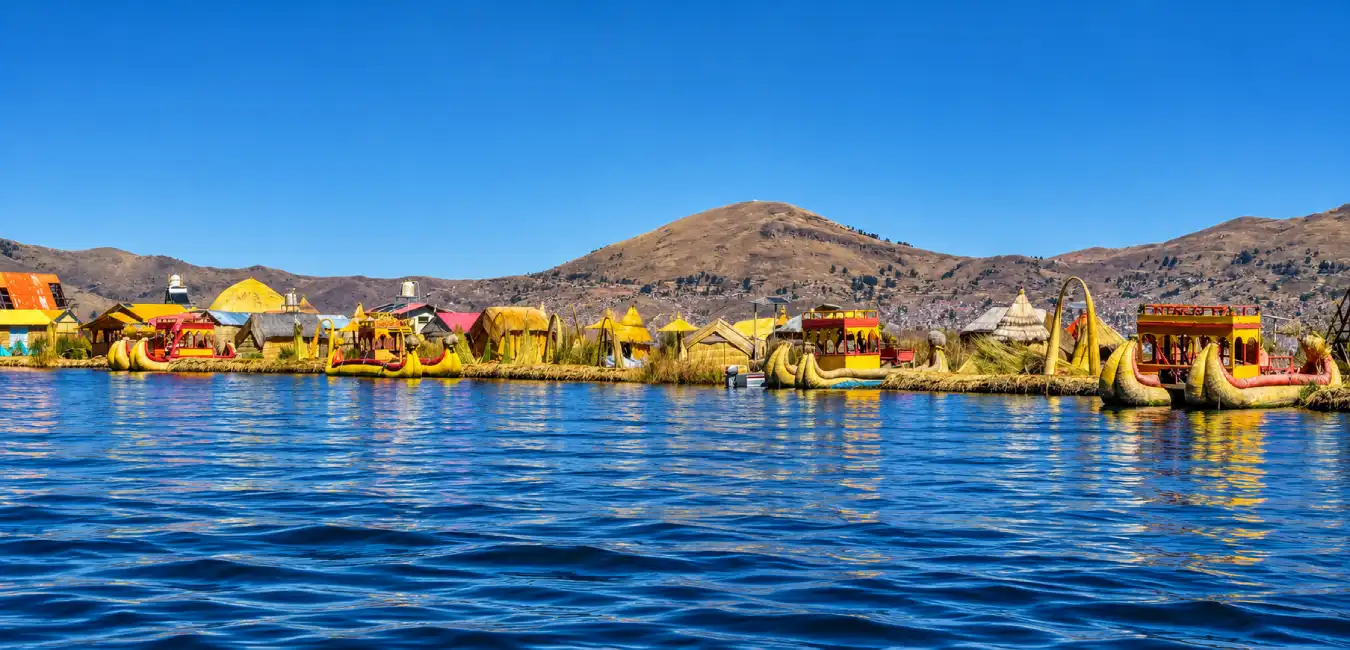
The Uros floating islands
The Uros floating islands are among the most popular attractions on Lake Titicaca. They are built from totora reeds, an aquatic plant that local families also use to make boats and other everyday objects. During your visit, you'll learn how the islands are built and maintained, hear local stories, and gain insight into the community's traditional way of life.
Amantaní Island
Would you like to spend more time along the shores of Lake Titicaca? On Amantaní Island, you can walk along rural trails, take in the Altiplano scenery, and get to know the local communities and their way of life. You can also hike to the ceremonial sites of Pachatata or Pachamama, where, weather permitting, you'll enjoy sweeping views of the lake.
Sillustani burial towers
If you're interested in the ancient history of the Altiplano, set aside a few hours to visit Sillustani. This archaeological complex is known for its impressive chullpas, large stone funerary towers built by pre-Hispanic societies, particularly the Colla people and later the Incas. Beyond exploring their architecture, you can enjoy the scenery around Lake Umayo, which surrounds the site and creates a beautiful setting for a walk.
How to plan your route
You can adjust your itinerary depending on how much time you have available:
Time Available | Suggested itinerary |
| 1 Day | Visit Pucará to explore the town, ceramic workshops, Lithic Museum, and archaeological complex. If you're traveling between Cusco and Puno, you can stop in town, provided your transportation allows it. |
| 2 Days | Spend time exploring Pucará, then continue to Puno. From there, take a day trip to the Uros Floating Islands. |
| 3 Days | Combine Pucará and Puno with visits to the Uros Islands and Amantaní Island, where you can stay with a local family and learn about their customs. |
| 4 Days | Add the Sillustani burial towers and spread your visits across Pucará, Puno, the Uros Islands, and Amantaní to enjoy the journey at a relaxed pace. |
Where to buy Toritos de Pucará and how much do they cost?
The price of a Torito de Pucará depends on its size, level of detail, and where you buy it. As a general rule, the closer you are to the artisan's workshop, the better the price and the greater your chances of finding an authentic piece.
Toritos de Pucará price guide
Where to buy | Estimated price (2026) | Why buy there? |
|---|---|---|
| Workshops in Pucará | Starting at S/ 10 for small pieces | Prices at the source, authentic handmade pieces, and direct contact with artisans. |
| Markets in Puno | S/ 10–60 | A wide selection, with opportunities to visit nearby workshops. |
| Chinchero (Cusco) | S/ 15–80 | A good opportunity to shop during your Sacred Valley tour. |
| San Pedro Market (Cusco) | S/ 20–100 | Convenient central location, with different sizes and colors available. |
| Shops in Lima and online stores | S/ 25 for a 6.5 cm piece to S/ 650 for a 37 cm premium piece. | Larger, premium pieces and home delivery options. |
These are estimated prices collected from markets and shops in 2026. Actual prices may vary depending on the season and your bargaining skills.
How to recognize an authentic Torito de Pucará
- Check the back. Traditional Toritos have an opening on their backs.
- Feel the weight. Handmade ceramic pieces are heavier than plaster or resin replicas.
- Look for small imperfections. Hand-painted patterns are never exactly the same from one piece to another.
How to pack your Torito for a flight without breaking it
Ask the seller to wrap it in paper and bubble wrap, then place it among your clothes, in the center of your suitcase. If it's a large or valuable piece, it's best to carry it in your hand luggage.
“Experience the Torito de Pucará route with Responsible Trekking. We're a 100% locally owned tour operator based in Cusco. We travel in small groups because we believe the Altiplano is best enjoyed at a relaxed pace, with respect for local traditions and genuine connections with the communities. Message us on WhatsApp, and we'll help you plan a trip tailored to your interests. The Toritos are waiting for you on the rooftops of the Altiplano!”
Frequently Asked Questions About the Toritos de Pucará
What does the Torito de Pucará symbolize?
It symbolizes protection for the home, financial prosperity, and fertility. When displayed in pairs, the bulls also represent Andean duality and harmony between men and women.
Why are two Toritos Placed on rooftops?
According to the Andean worldview, everything exists in complementary pairs. Two Toritos together are believed to balance the energies of the home and protect it from negative influences.
Which color Torito de Pucará brings good luck?
Yellow is associated with abundance and wealth, while red symbolizes protection. However, the traditional Torito is white or cream with walnut-brown details.
Can you visit Pucará on a tour?
Yes. Pucará lies along the overland route between Cusco and Puno, about 104 km (65 miles) from Puno. Many tourist tours include stops at its museum, archaeological complex, and local pottery workshops.
Is the Torito de Pucará recognized as cultural heritage?
Yes. In 2019, Peru's Ministry of Culture declared the traditional pottery-making techniques of Checca Pupuja, the birthplace of the Torito de Pucará, part of the Nation's Cultural Heritage