
Ask anyone who's been to Peru what they miss most, and there's a good chance they won't say Machu Picchu. They'll say the food. Specifically, that plate of ceviche they ate at a crowded lunch spot in Lima, or the bowl of soup a grandmother served them in a mountain village for less than the price of a coffee back home.
Peruvian food has quietly become one of the most talked-about cuisines in the world, and once you understand where it comes from, it's easy to see why. This guide walks you through what makes it special, the traditional Peruvian dishes you shouldn't leave without trying, the everyday meals Peruvians cook at home, the sauces that go on everything, what people drink, how the food changes from the coast to the Andes, and a few practical things worth knowing before you sit down to eat.
What Is Peruvian Food?
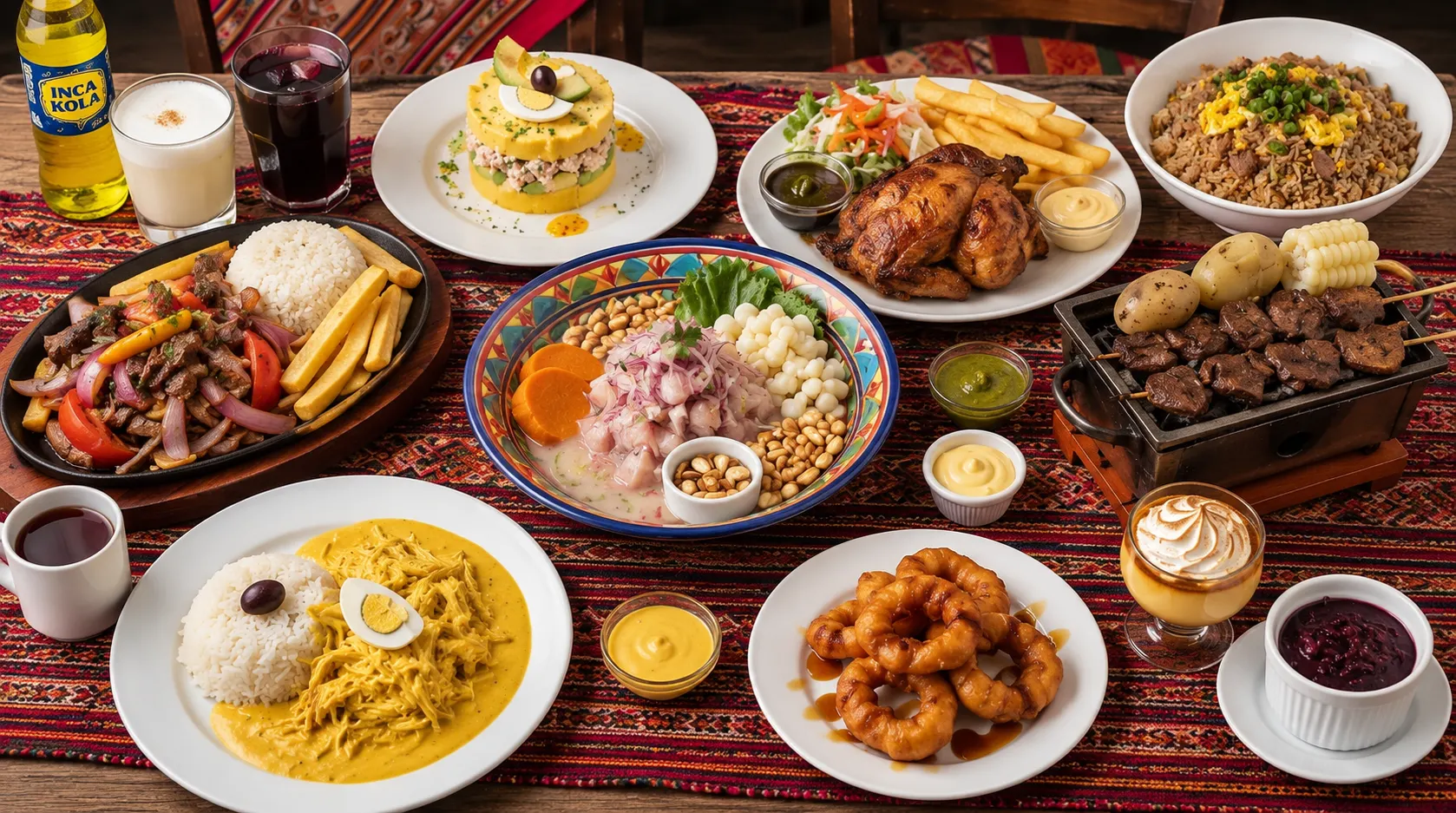
At its core, Peruvian cuisine is what happens when an ancient food culture meets five centuries of immigration. The foundation is indigenous. Long before the Spanish arrived, people in the Andes were growing potatoes, corn, quinoa, and chili peppers, and fishing communities on the coast were eating raw fish seasoned with local fruit juices and peppers.
Then came the Spanish, who brought beef, pork, chicken, onions, garlic, rice, and citrus. Enslaved Africans brought techniques and dishes that still shape Lima's food today. Later, Chinese and Japanese immigrants arrived in the 1800s and early 1900s, and Italian families settled along the coast. Each group adapted its cooking to what grew in Peru, and the result is a cuisine that doesn't really taste like anything else.
Why Is Peruvian Cuisine So Famous?
A big part of it is recognition from the outside. Peru has won the World Travel Awards title of World's Leading Culinary Destination multiple times, and Lima's restaurant scene regularly lands on international best-of lists. In 2023, Central, run by chef Virgilio Martínez, was named the best restaurant in the world by The World's 50 Best Restaurants.
But fame alone doesn't explain it. What really hooks people is how bright and fresh the food tastes. Lime, chili, cilantro, red onion, and fresh seafood show up again and again, and even the heartier Andean dishes have a depth that comes from ingredients you simply can't find anywhere else.
What Ingredients Are Used in Peruvian Food?
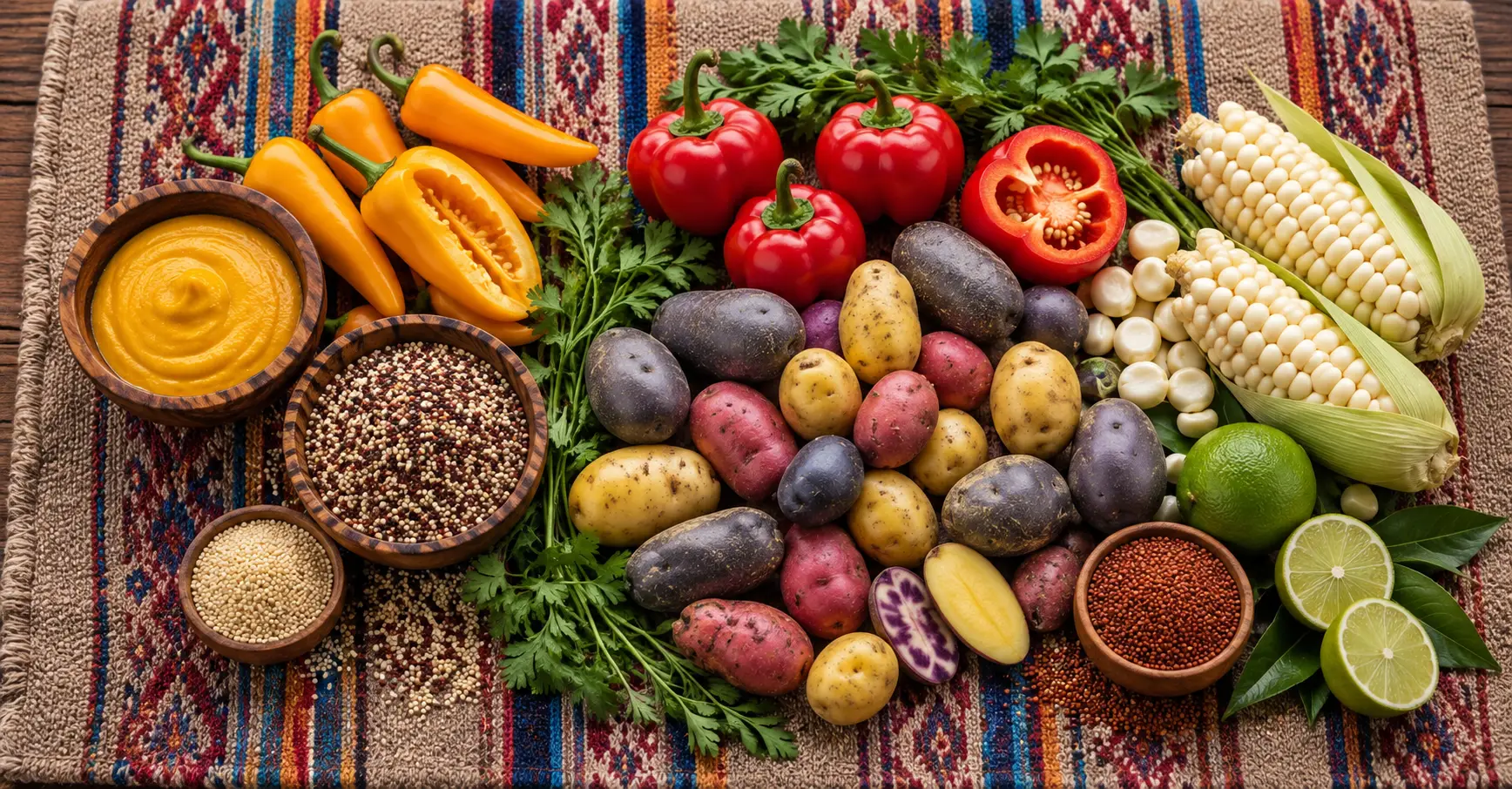
If you learn just a handful of ingredients, Peruvian menus will suddenly make a lot more sense:
- Potatoes. Peru is where the potato was first domesticated, and the country grows more than 3,000 native varieties. Yellow potato (papa amarilla) is the one you'll taste most often, especially in causa and papa a la huancaína.
- Ají amarillo. This yellow-orange chili is the backbone of Peruvian cooking. It's fruity and warm rather than blazing hot, and it turns up in sauces, stews, and marinades.
- Rocoto. A thick-walled red pepper from the Andes. It looks like a bell pepper but packs real heat, so treat it with respect.
- Corn (choclo). Andean corn has huge, chewy, pale kernels. You'll see it on the side of ceviche, in soups, and roasted as a snack called cancha.
- Quinoa and other grains. Quinoa, kiwicha (amaranth), and cañihua are traditional highland staples, not just health-food trends.
- Lime (limón). Peruvian limes are small and sharp, and they're essential for ceviche.
GOOD TO KNOW
When a Peruvian menu says limón, it means a small green lime, not a lemon. And when you see ají, it just means chili pepper. Those two words will help you decode half the menu.
What Are the Most Famous Peruvian Dishes?
Here are the dishes that come up again and again, whether you're eating in a local market or a white-tablecloth restaurant. If you only have a week in Peru, try to work your way through as many of these as you can.
Ceviche
Fresh raw white fish, cut into cubes and “cooked” in lime juice with red onion, ají, salt, and cilantro. It usually comes with sweet potato and corn to balance out the acidity. The leftover marinade is called leche de tigre (tiger's milk), and a lot of people drink it straight or order it by the glass as a hangover cure. Peruvians eat ceviche at lunch, when the fish is freshest, so don't be surprised if cevicherías close in the late afternoon.
The idea is much older than lime, though. Historians believe coastal cultures like the Moche were already curing fish with the juice of tumbo, a tart local fruit, and chili peppers around 2,000 years ago. Limes and onions arrived with the Spanish, and that's when ceviche started to look like the version you'll eat today. Most cooks in Lima use ají limo, a small, fragrant chili, for the heat.
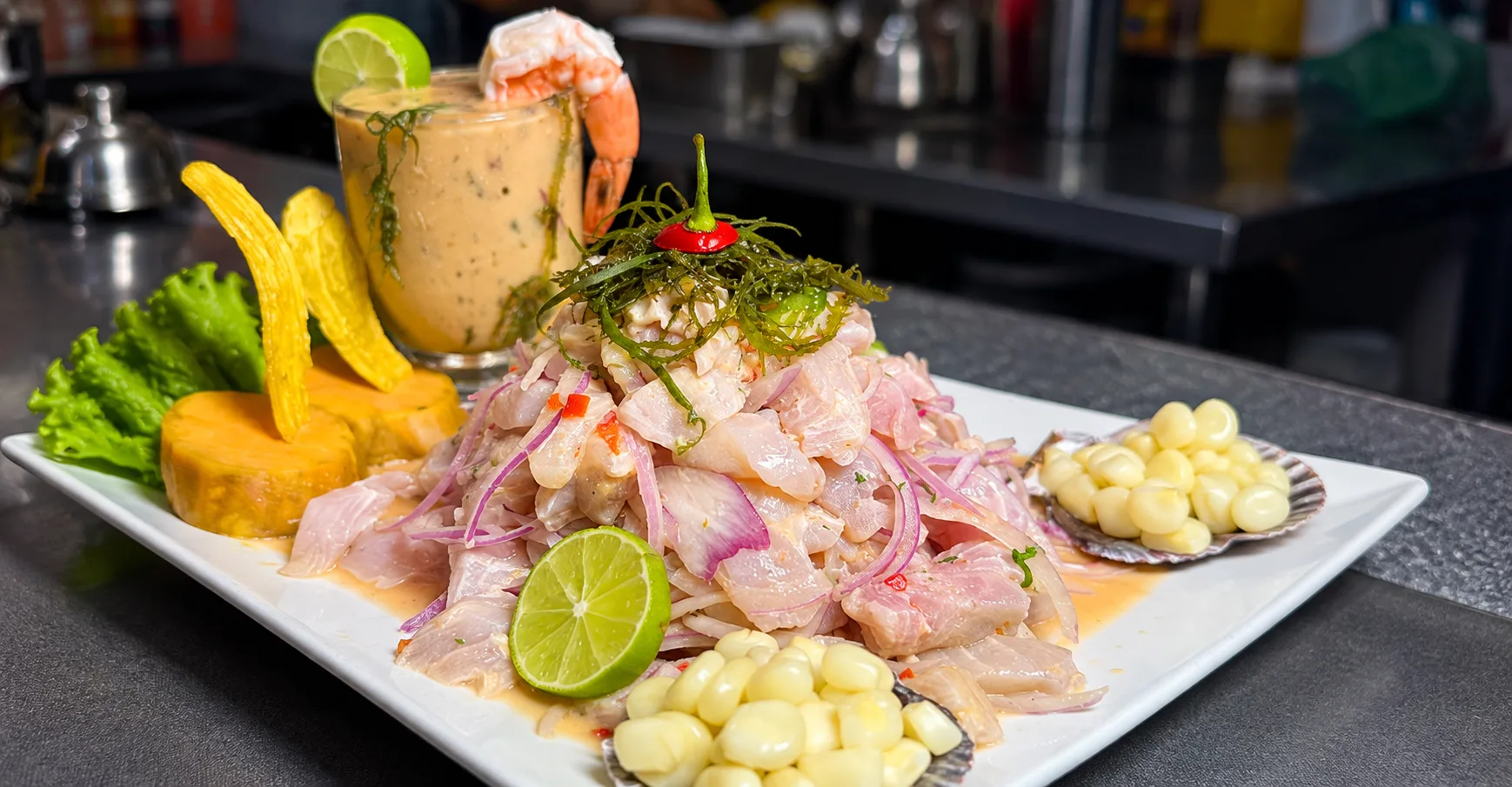
Served with: sweet potato (camote), boiled Andean corn (choclo), crunchy toasted corn (cancha), and sometimes a leaf of lettuce or a bit of seaweed.
Lomo Saltado
This is the dish that best shows off chifa, the Peruvian-Chinese style of cooking you'll learn more about at the end of this guide. Strips of beef get stir-fried at high heat with red onion, tomato, ají amarillo, garlic, and soy sauce, often with a burst of flame as the cook tosses the wok, then served with French fries and white rice. Yes, fries and rice on the same plate. It sounds odd until you try it, and then it just makes sense.
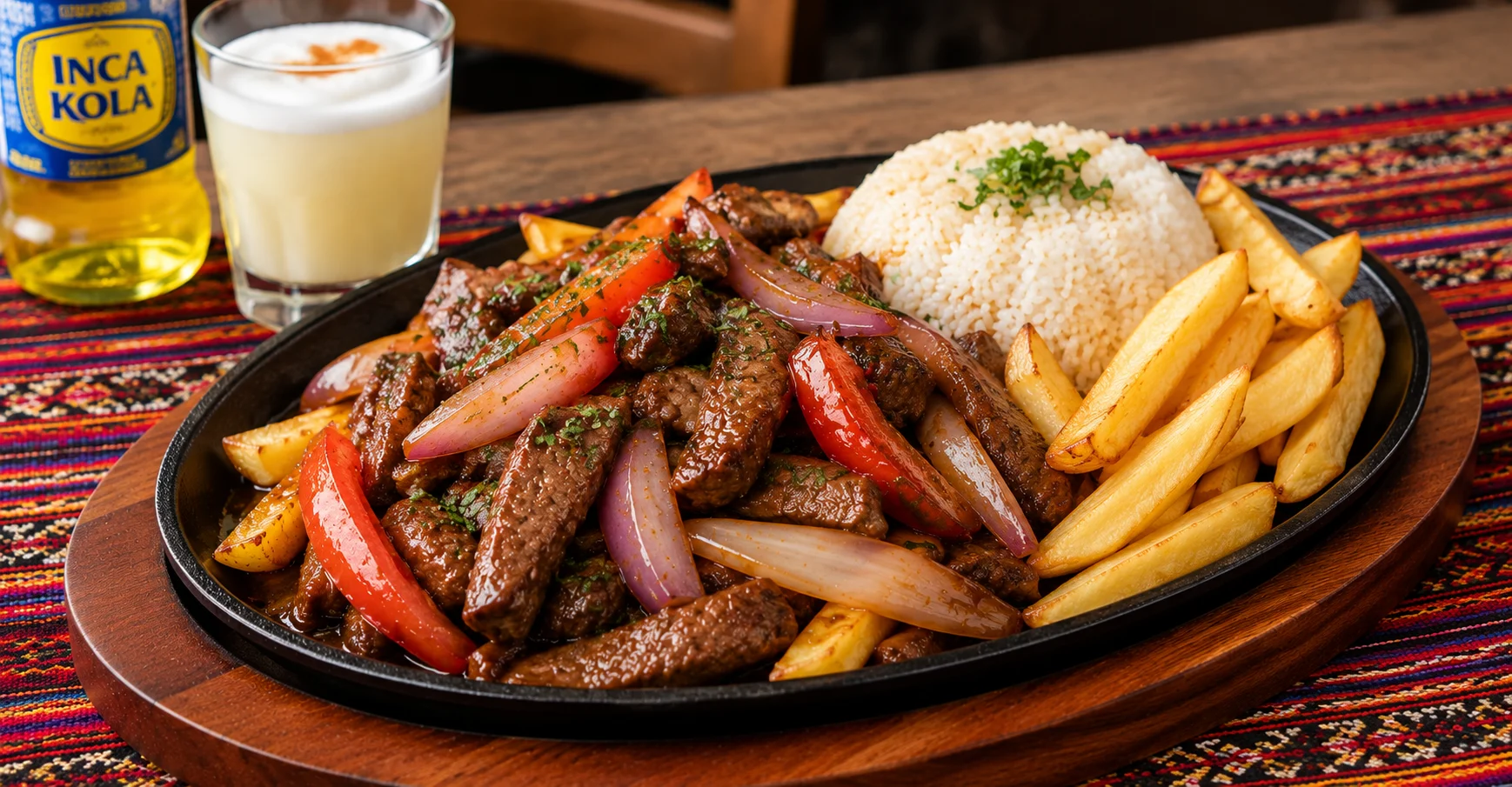
Lomo saltado is on almost every menu in the country, and it's a safe bet if you're not sure what to order. The dish took shape in the late 1800s, when Chinese cooks brought the wok and soy sauce into everyday Peruvian kitchens.
Served with: white rice and thick-cut French fries, often tucked right into the juices of the stir-fry.
Ají de Gallina
Shredded chicken in a thick, creamy yellow sauce made from ají amarillo, bread soaked in milk, cheese, and ground nuts. It's usually served over rice with boiled potato, a black olive, and a slice of hard-boiled egg. Ají de gallina is pure comfort food, mild enough for people who don't like spice, and a great first dish if you're nervous about trying something new. It's a colonial-era recipe that started as a Spanish-style stew and got its Peruvian identity once cooks swapped in local chilies.
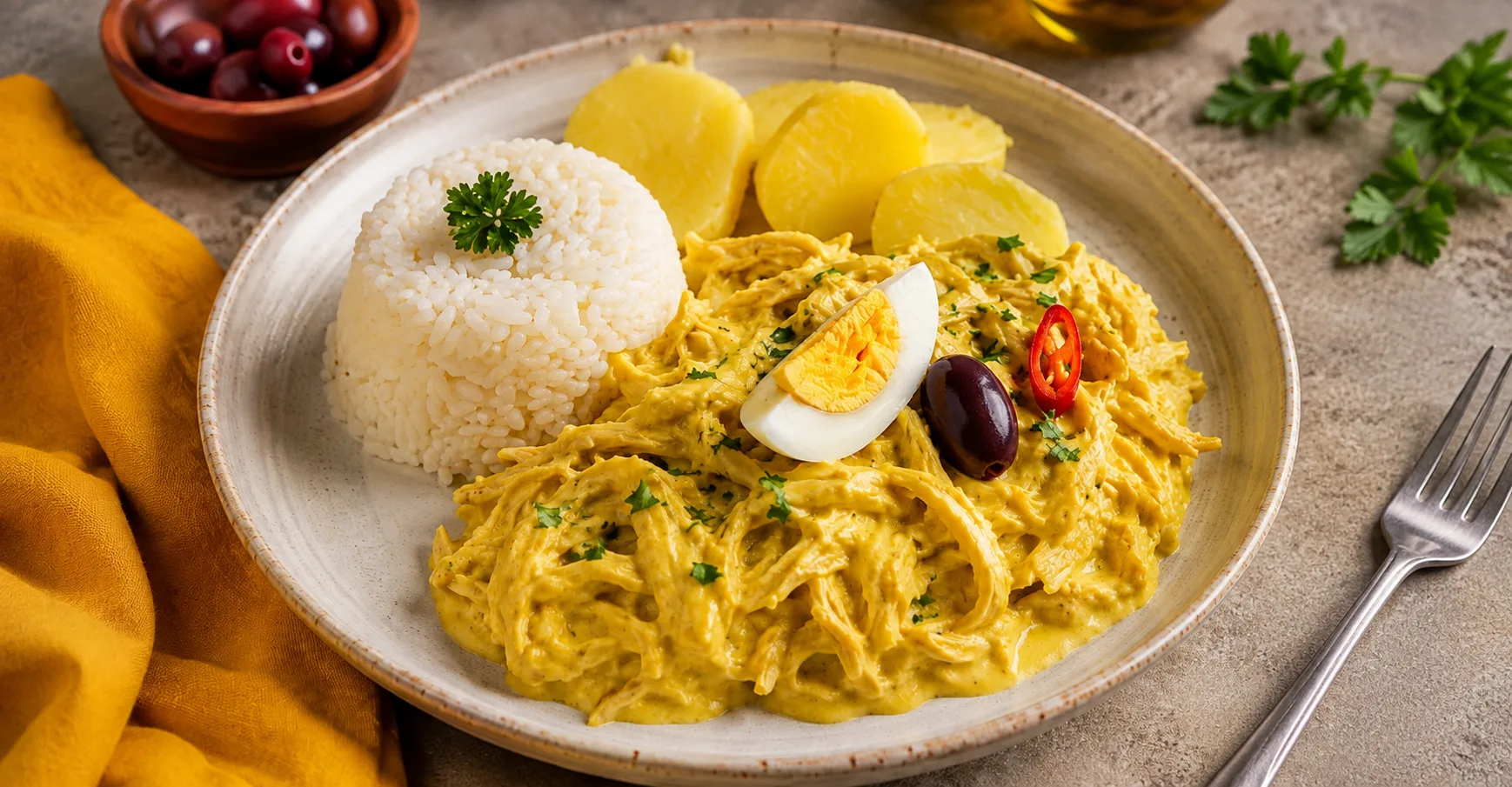
Served with: white rice, boiled yellow potato, a black botija olive, and hard-boiled egg.
Causa Limeña
A cold, layered dish made from mashed yellow potato seasoned with lime and ají amarillo. Between the layers you'll usually find chicken or tuna salad, avocado, and sometimes shrimp. Causa looks almost like a savory cake, and it's a popular starter along the coast, especially in summer. One popular story says the name comes from the War of the Pacific (1879 to 1883), when women in Lima sold it to raise money “para la causa” (for the cause), though the Quechua word kausay, meaning sustenance or life, is an equally likely origin.
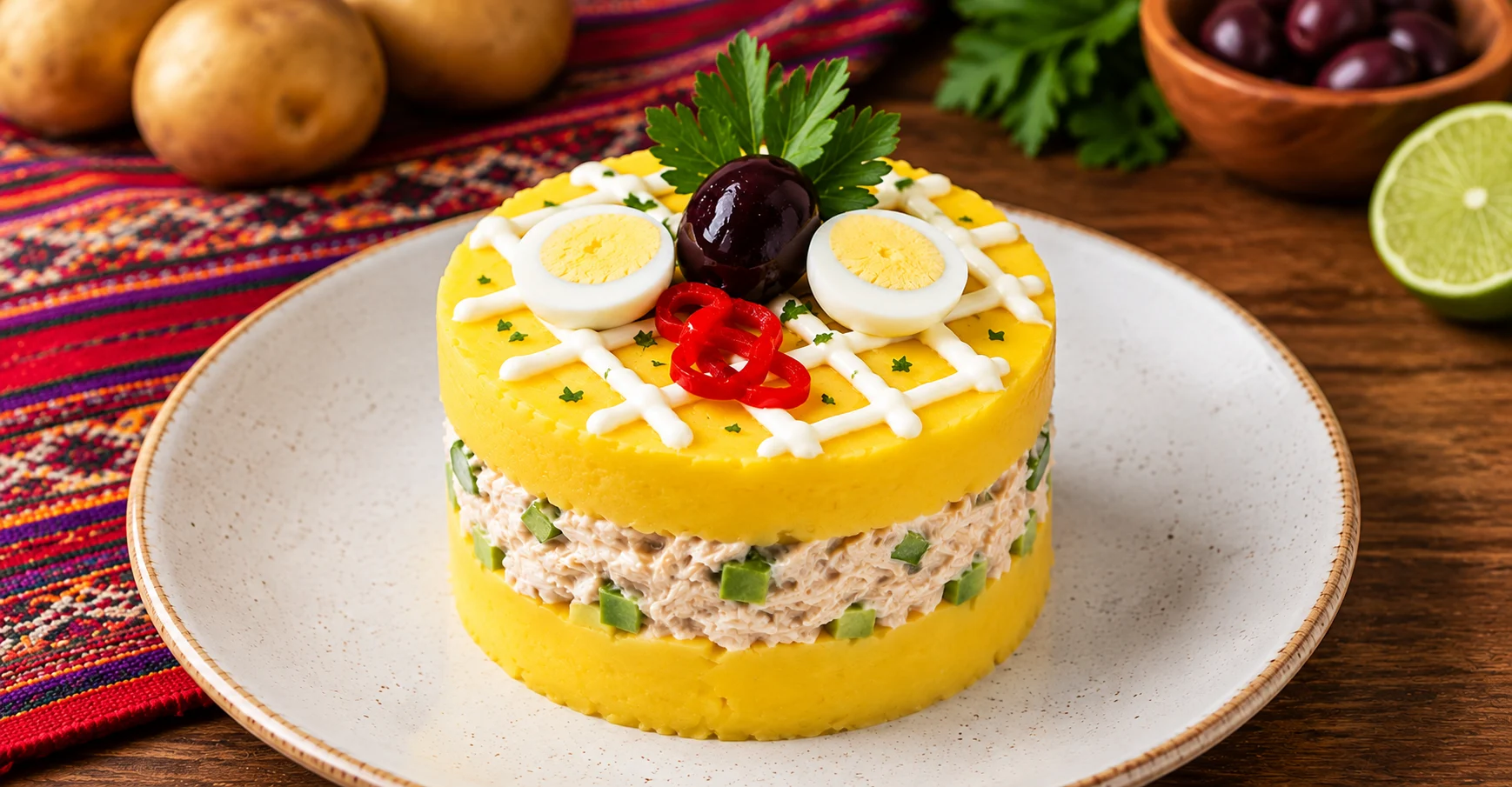
Served with: sliced avocado, hard-boiled egg, black olives, and a drizzle of mayonnaise or huancaína sauce.
Papa a la Huancaína
Boiled yellow potatoes covered in a creamy sauce made with ají amarillo, fresh cheese, milk, and crackers. It's simple, cheap, and ridiculously good. You'll see it as an appetizer in set-lunch spots, and the huancaína sauce also shows up as a dip for fried yuca and other snacks. As the name suggests, it's linked to Huancayo, in the central highlands.
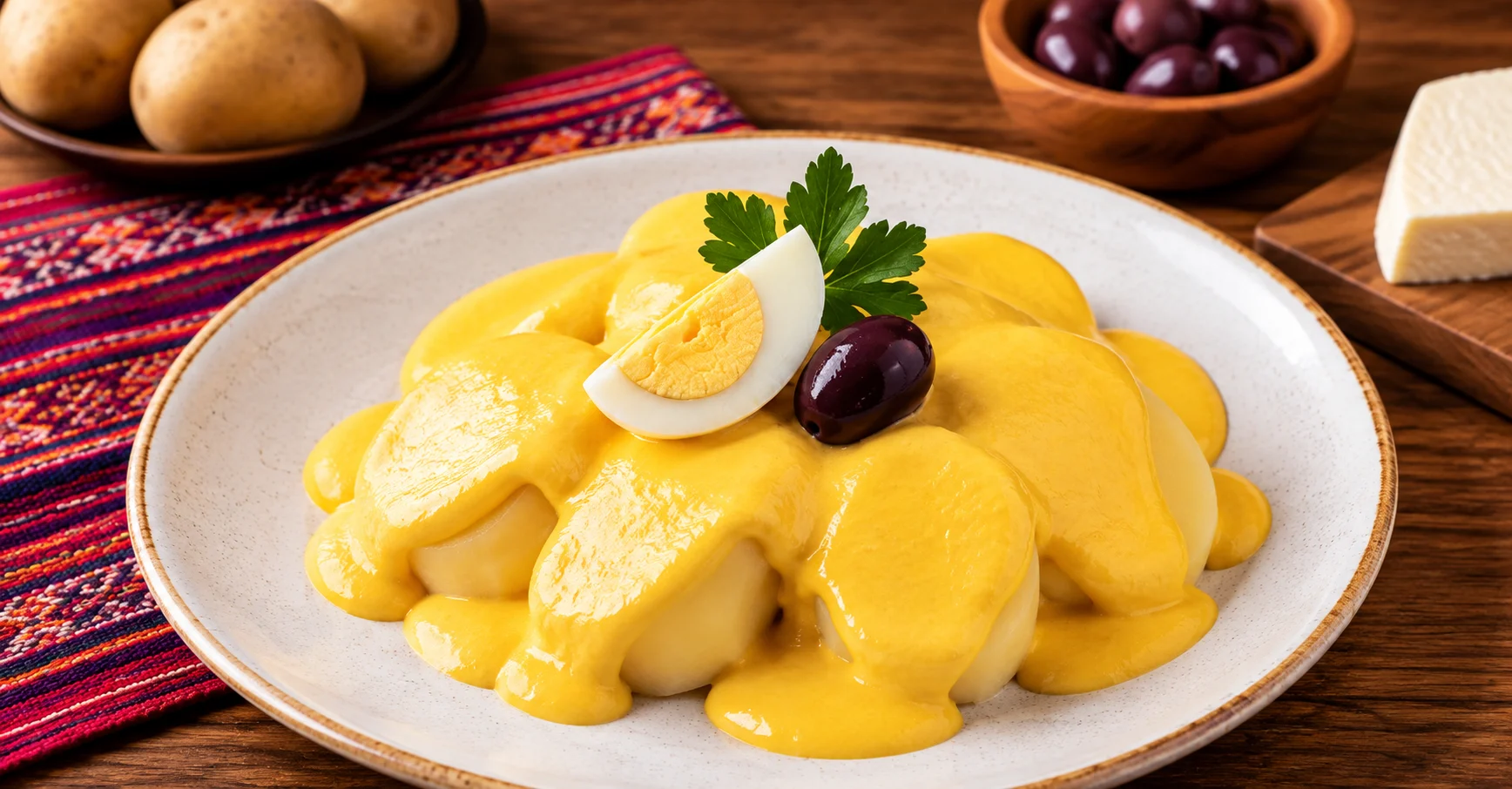
Served with: lettuce leaves, a black olive, and slices of hard-boiled egg.
Pollo a la Brasa
Peruvian rotisserie chicken, marinated in spices and roasted over charcoal until the skin crackles. It's typically served with fries, salad, and a lineup of sauces, including a bright green ají sauce that people get very attached to. Pollo a la brasa dates back to the 1950s in Chaclacayo, just outside Lima, and it's so popular that Peru dedicates a day to it every July. For a lot of Peruvian families, it's the default Sunday dinner.
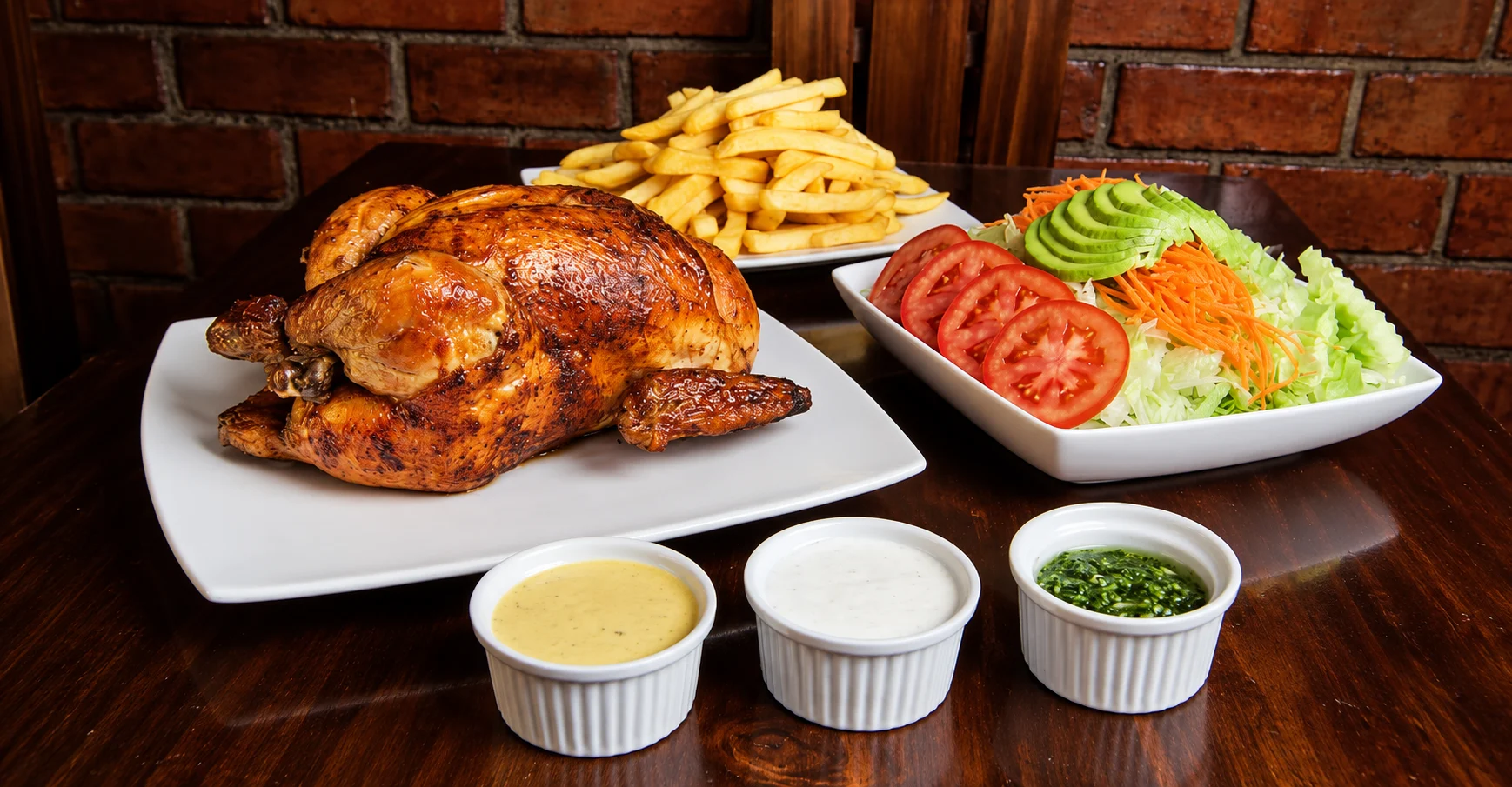
Served with: fries, a simple salad, and sauces like ají verde, mayonnaise, and golf sauce (a pink mix of mayo and ketchup).
Anticuchos
Grilled skewers of marinated beef heart. Before you skip this one, give it a chance. The meat is tender, smoky, and tastes more like a good steak than organ meat. Anticuchos are a classic evening street food, sold from smoky grills on street corners all over the country. The marinade is what makes them special: ají panca (a smoky, dark red chili), vinegar, garlic, and cumin. The dish dates back to colonial times, when enslaved Africans were given the cuts of meat nobody else wanted and turned them into something incredible.
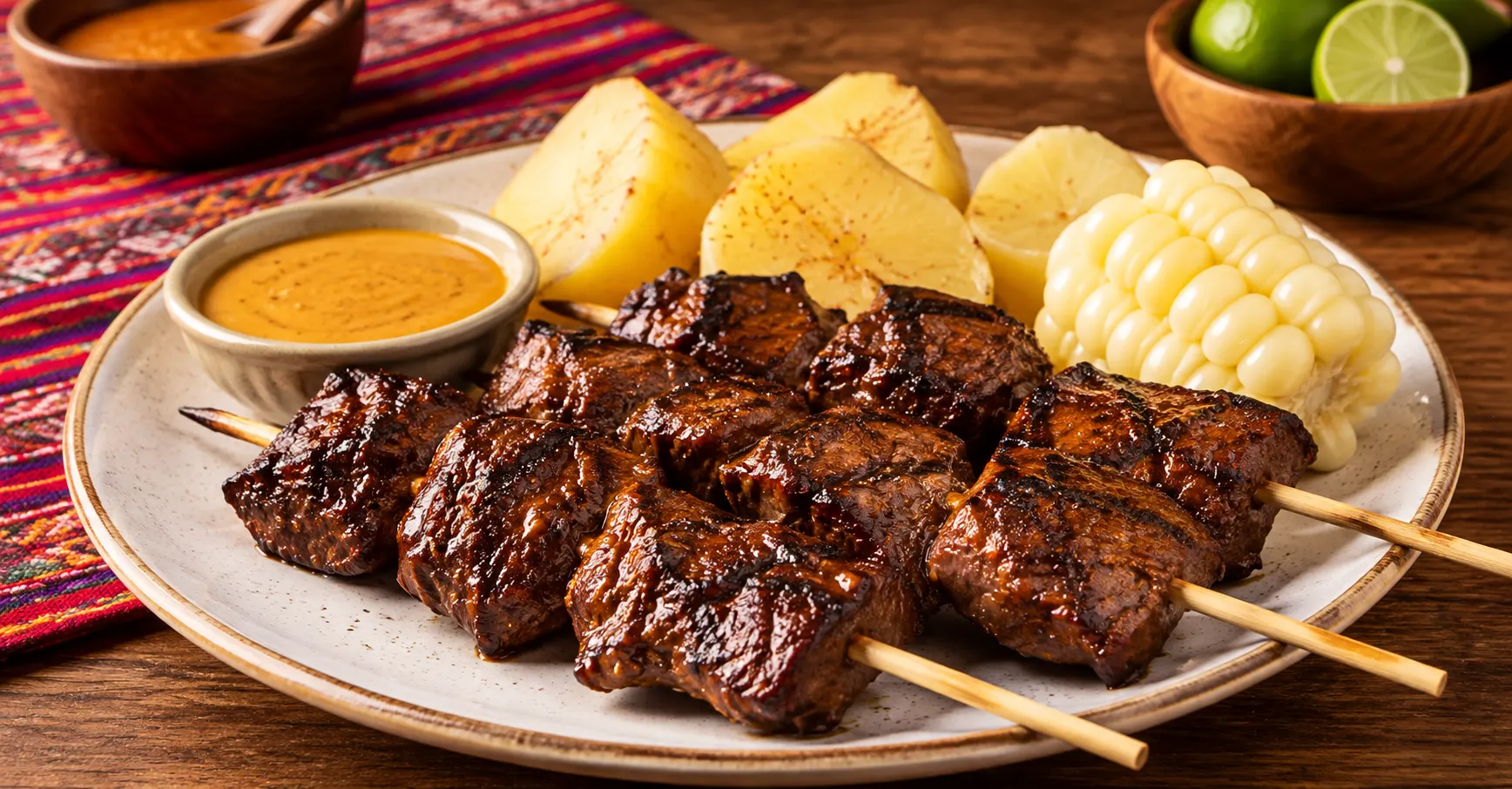
Served with: boiled potato, a chunk of corn on the cob, and a spicy ají or rocoto sauce on the side.
Rocoto Relleno
This is Arequipa's signature dish. A rocoto pepper is stuffed with seasoned ground beef, onion, olives, and egg, topped with cheese, and baked. The classic side is pastel de papa, a creamy layered potato and cheese gratin. The cooks remove the seeds and blanch the pepper a few times to tame the heat, but it still has a kick. The recipe is a Spanish stuffed-pepper idea adapted to a very Peruvian chili, and some cooks add raisins, which gives it a sweet and spicy balance.
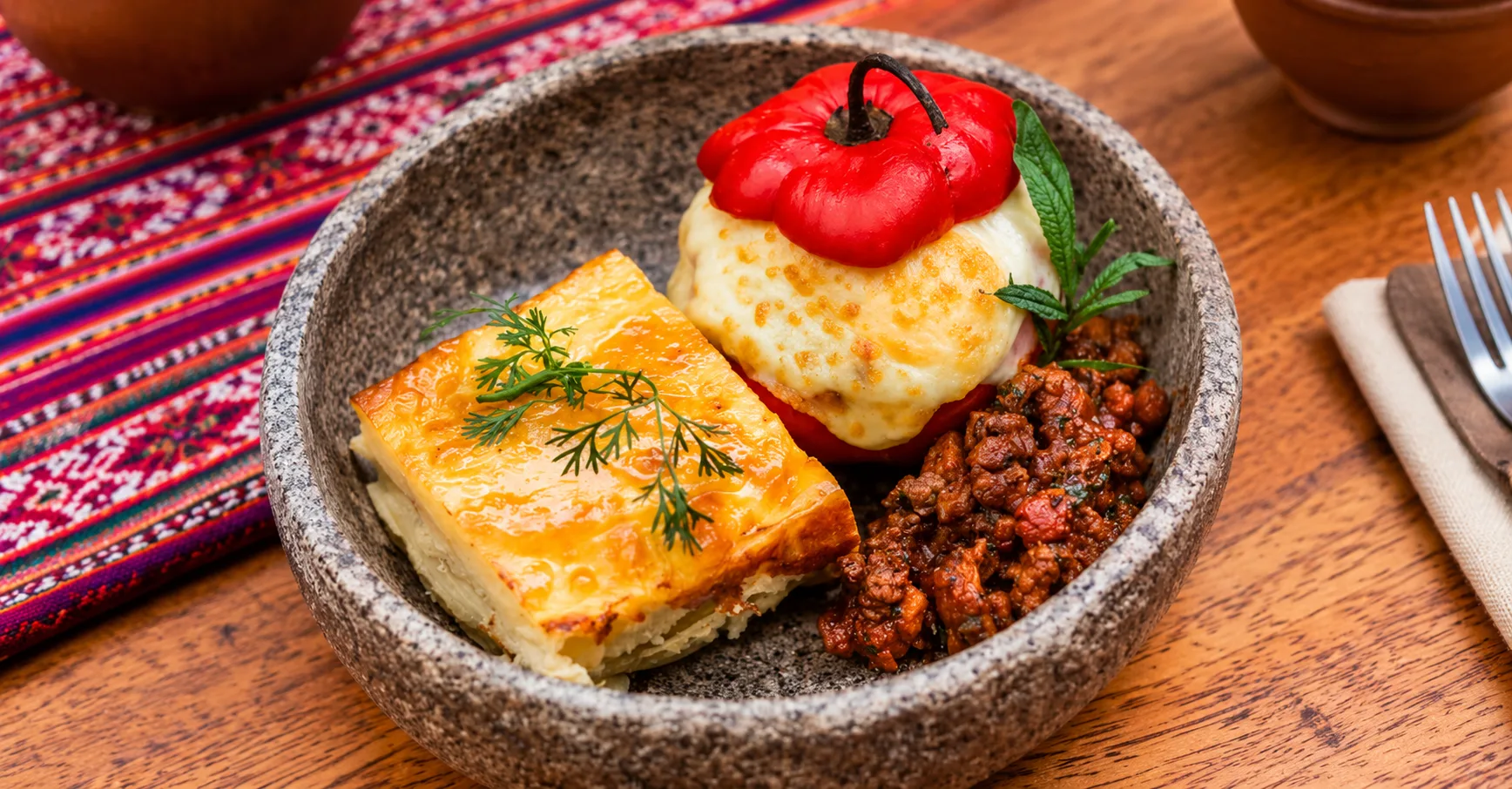
Served with: pastel de papa, and sometimes a side of salad or rice.
Arroz Chaufa
Fried rice with egg, scallions, soy sauce, and your choice of chicken, pork, beef, or seafood. It's a staple of chifa restaurants and one of the most affordable, filling meals you'll find anywhere in Peru.
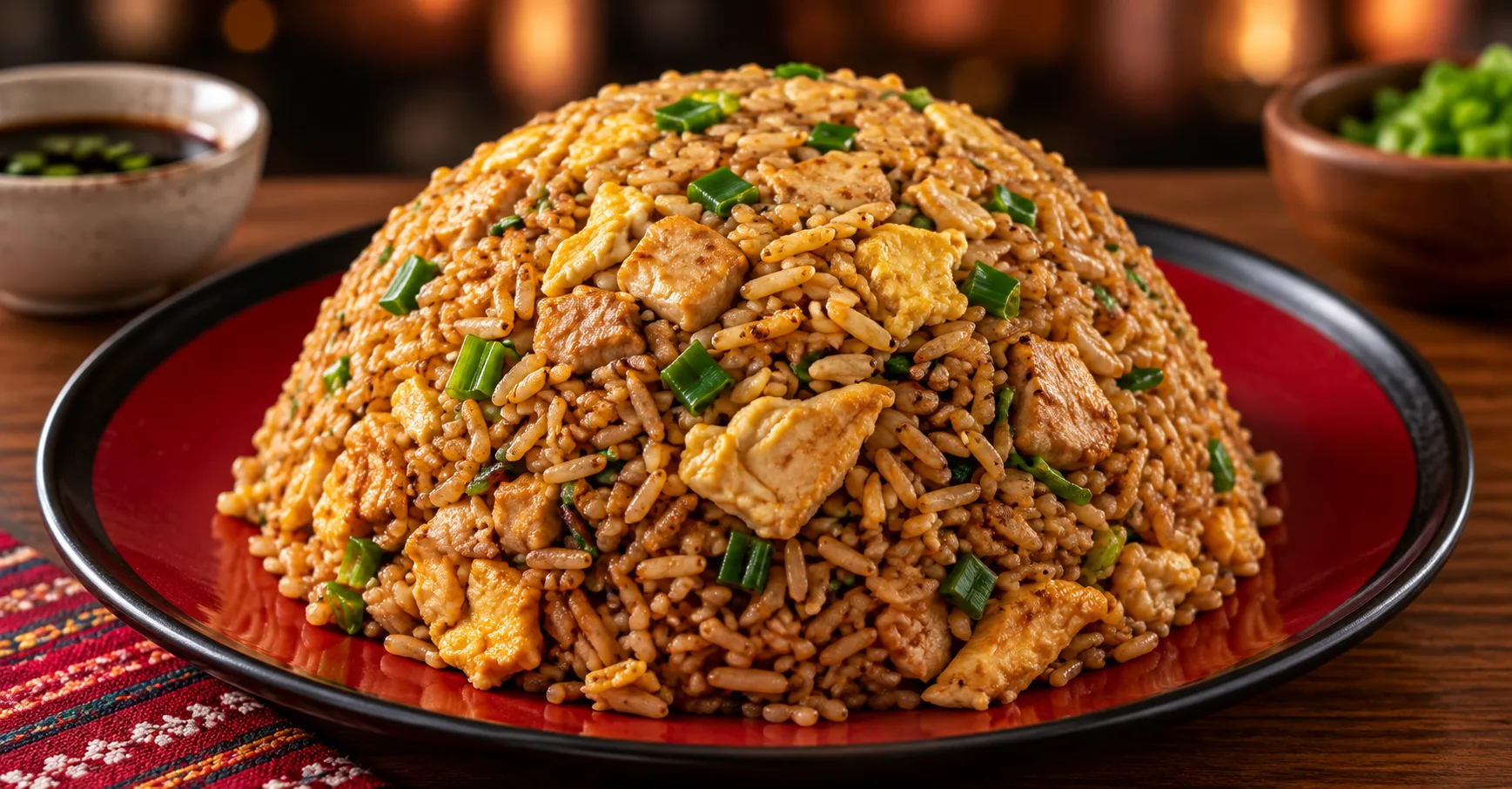
Served with: a sprinkle of scallions, soy sauce on the table, and often a side of fried wonton or a sweet and sour dish.
Arroz con Pato
The pride of northern Peru, especially Chiclayo. Duck is marinated with dark beer, garlic, and ají, then cooked slowly until tender. The rice cooks in the same pot with the duck juices and a big dose of blended cilantro, which turns it a deep green. It's rich, earthy, and one of the most flavorful rice dishes in the country.
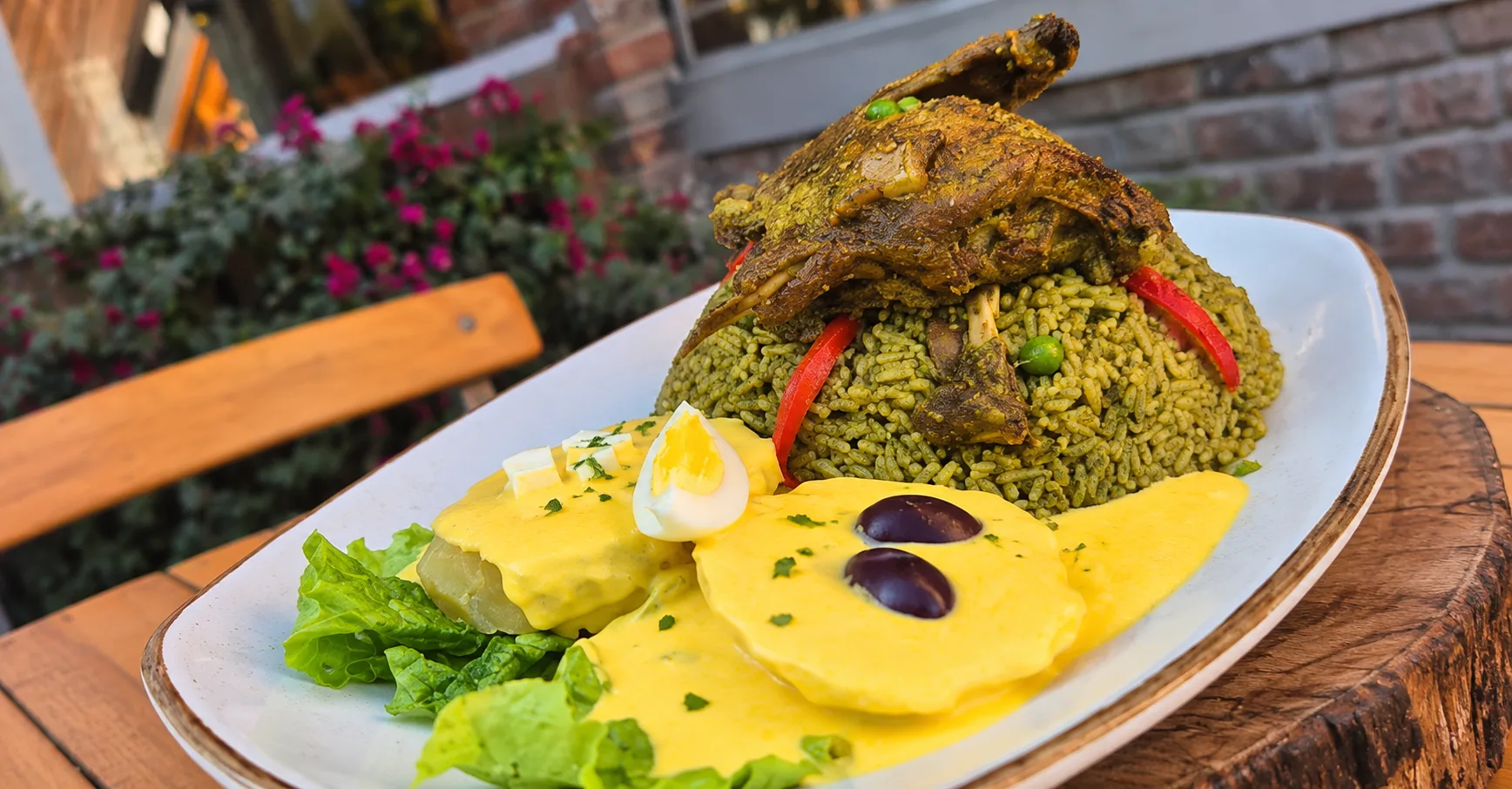
Served with: salsa criolla and, in the north, a side of creamy huancaína or a spoonful of ají.
Quick Reference Table of Classic Peruvian Dishes
| Dish | What it is | Spice level | Where it's most typical |
|---|---|---|---|
| Ceviche | Raw fish cured in lime with onion and chili | Medium | Coast, especially Lima |
| Lomo saltado | Stir-fried beef with fries and rice | Mild | Everywhere |
| Ají de gallina | Creamy chicken in ají amarillo sauce | Mild | Everywhere |
| Causa limeña | Layered cold potato with chicken or tuna | Mild | Lima and the coast |
| Papa a la huancaína | Potatoes in creamy cheese and chili sauce | Mild | Everywhere |
| Pollo a la brasa | Charcoal-roasted rotisserie chicken | Mild (sauces are hot) | Everywhere |
| Anticuchos | Grilled beef heart skewers | Medium | Street stalls, evenings |
| Rocoto relleno | Stuffed spicy pepper, baked | Hot | Arequipa |
| Cuy al horno | Roasted guinea pig | Mild | Cusco and the Andes |
| Chiriuchu | Cold festive platter of meats, seaweed, and corn | Medium | Cusco, especially in June |
| Arroz chaufa | Peruvian-Chinese fried rice | Mild | Chifa restaurants |
| Arroz con pato | Green cilantro rice with slow-cooked duck | Mild | Chiclayo and the north coast |
| Arroz con pollo | Green cilantro rice with chicken | Mild | Homes and set-lunch spots |
| Pachamanca | Meat and tubers cooked underground | Mild | Central Andes, Sacred Valley |
| Chupe de camarones | Creamy river-shrimp chowder | Mild | Arequipa |
| Juane | Rice and chicken wrapped in leaves | Mild | Amazon |
What Is the National Dish of Peru?
If you're wondering about the national dish of Peru, the answer most Peruvians will give you is ceviche. The government declared it part of the country's Cultural Heritage in 2004, Peru celebrates National Ceviche Day on June 28, and in 2023 UNESCO added the traditions behind preparing and eating ceviche to its list of Intangible Cultural Heritage.
That said, don't be surprised if someone argues for lomo saltado, pollo a la brasa, or even cuy. Peruvians love talking about food almost as much as they love eating it.
What Do Peruvians Eat at Home Every Day?
Restaurant menus get all the attention, but a lot of the best typical Peruvian food is the stuff families cook on a regular Tuesday. These are the dishes you'll see on chalkboards outside set-lunch spots, and they're some of the most satisfying meals in the country.
Arroz con Pollo
Rice and chicken, Peruvian style, which means the rice is bright green. The color comes from a big handful of blended cilantro, cooked into the rice along with peas, carrots, red bell pepper, and sometimes a splash of dark beer. The chicken is browned first and then simmered right in the pot. It's the Peruvian cousin of Spanish rice dishes like paella, and it's one of the most common home-cooked lunches in the country.
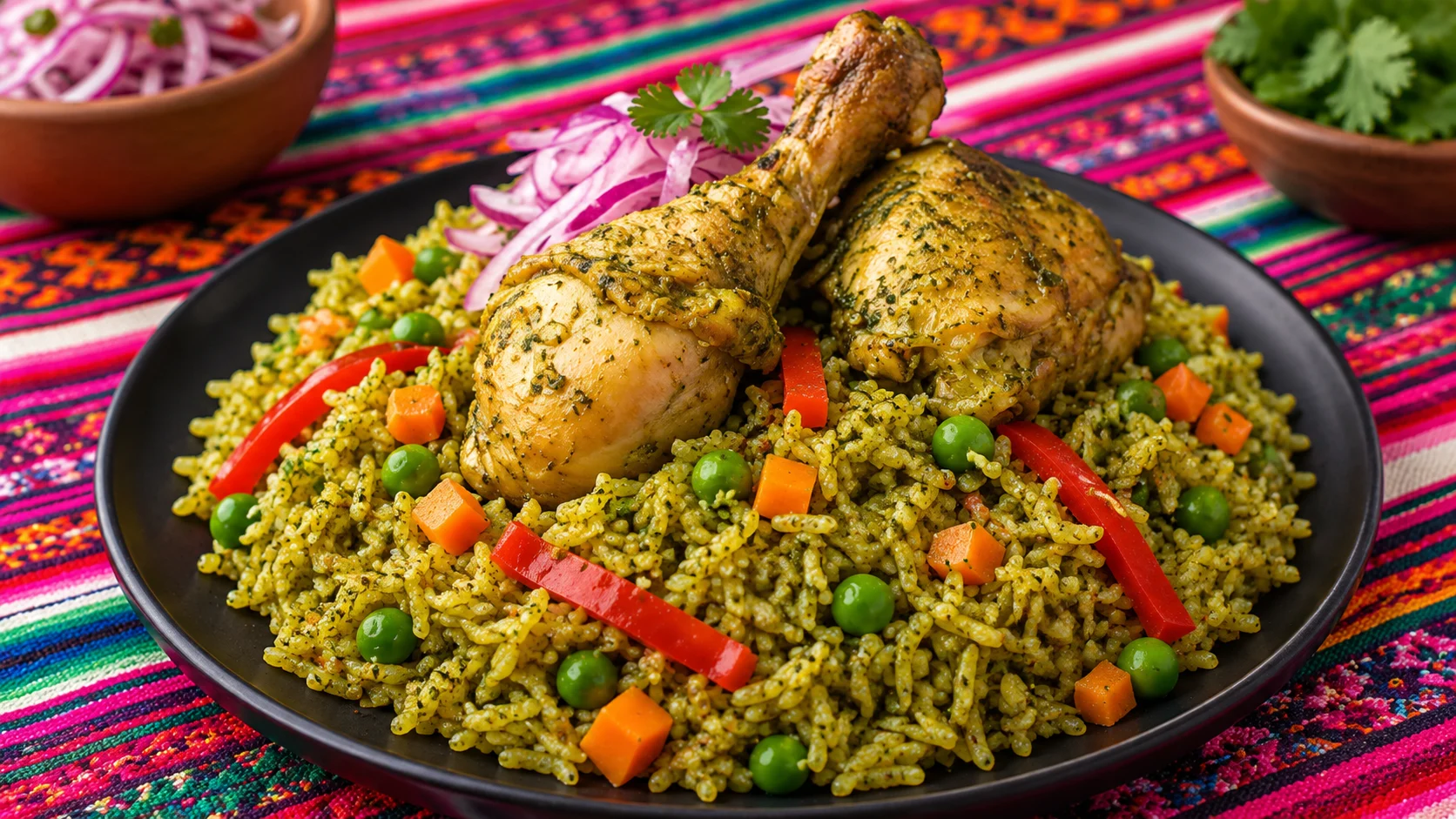
Served with: salsa criolla (lime-marinated red onion) and, often, a scoop of papa a la huancaína on the side.
Seco de Res
Despite the name, which means “dry,” seco is a rich, saucy stew. Beef, lamb, or goat is slow-cooked in a sauce of cilantro, garlic, onion, ají amarillo, and chicha de jora or beer until it's falling apart. The dish is especially associated with the north coast, where seco de cabrito (goat) is a point of regional pride.
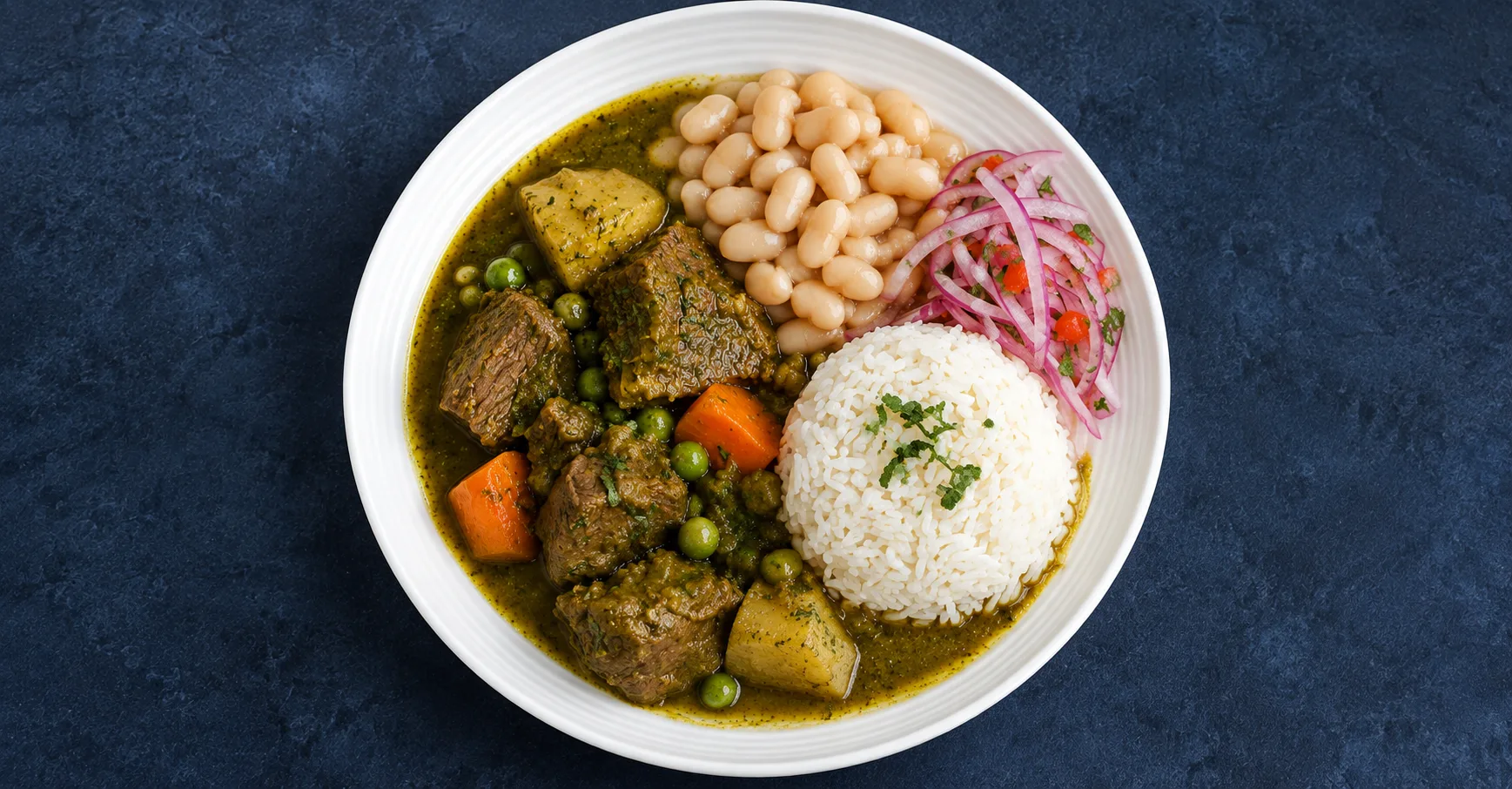
Served with: white rice and creamy canary beans (frejoles), plus salsa criolla on top.
Tacu Tacu
A brilliant way to use leftovers. Cooked rice and beans are mashed together, seasoned with onion, garlic, and ají, then pan-fried into a crispy golden patty. Tacu tacu comes from Afro-Peruvian kitchens in Lima, where cooks made the most of whatever was left over from the day before. Order it a lo pobre if you're really hungry.
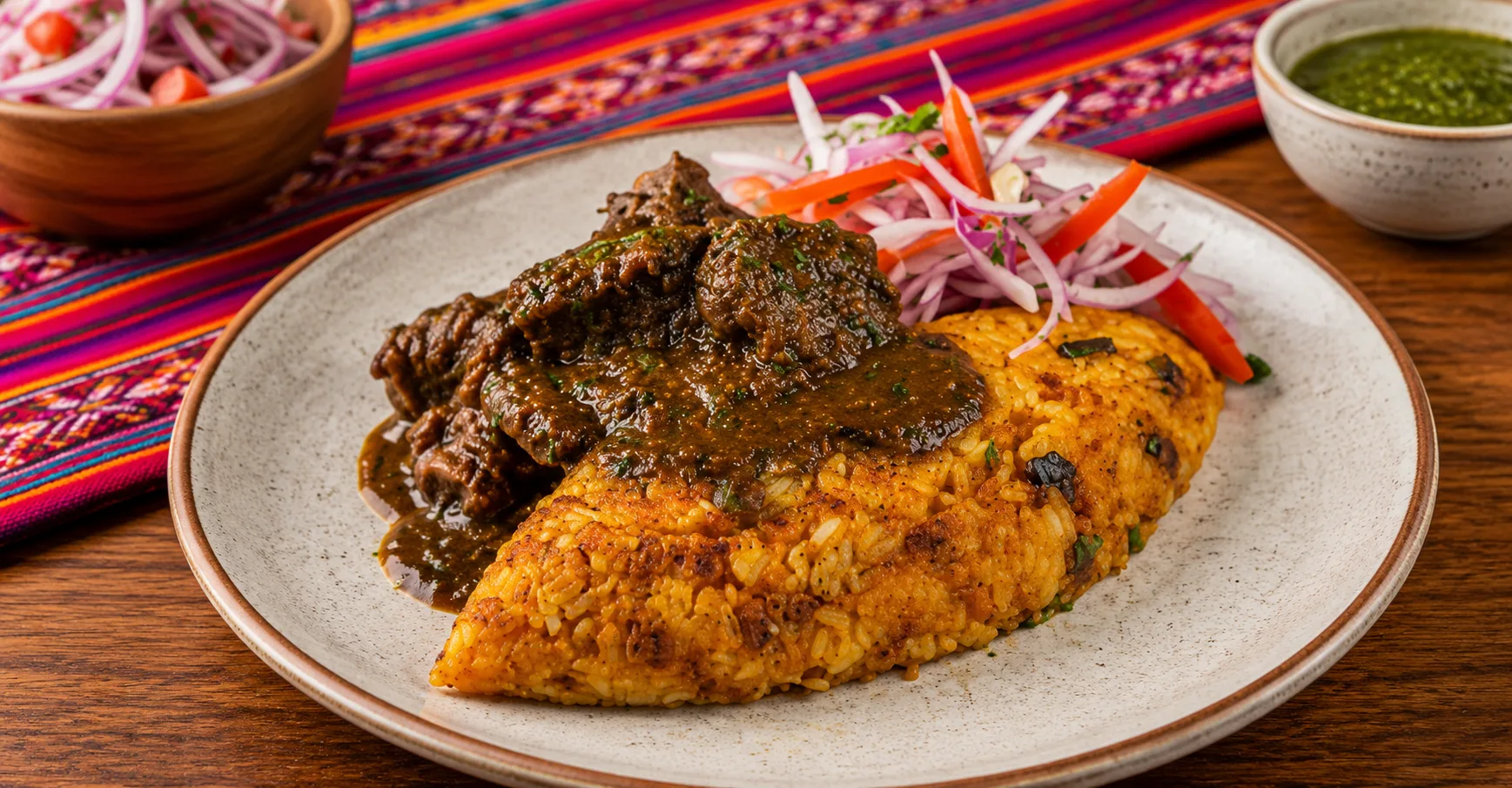
Served with: a thin steak, a fried egg, and fried plantain when you order it a lo pobre, or seafood sauce in more upscale versions.
Carapulcra
One of the oldest dishes in the country. Carapulcra is a stew made with papa seca, potatoes that have been boiled, cut, and sun-dried until they look like little pebbles. They're toasted and simmered with pork, ají panca, garlic, and ground peanuts, and sometimes a square of dark chocolate for depth. Its name is often traced to the Aymara words qala purka, a stew cooked with hot stones, and the highland original was made with alpaca meat. During colonial times the dish traveled to the southern coast, where Afro-Peruvian cooks in Chincha added pork, chicken, cloves, and peanuts and made it the version most people eat today.
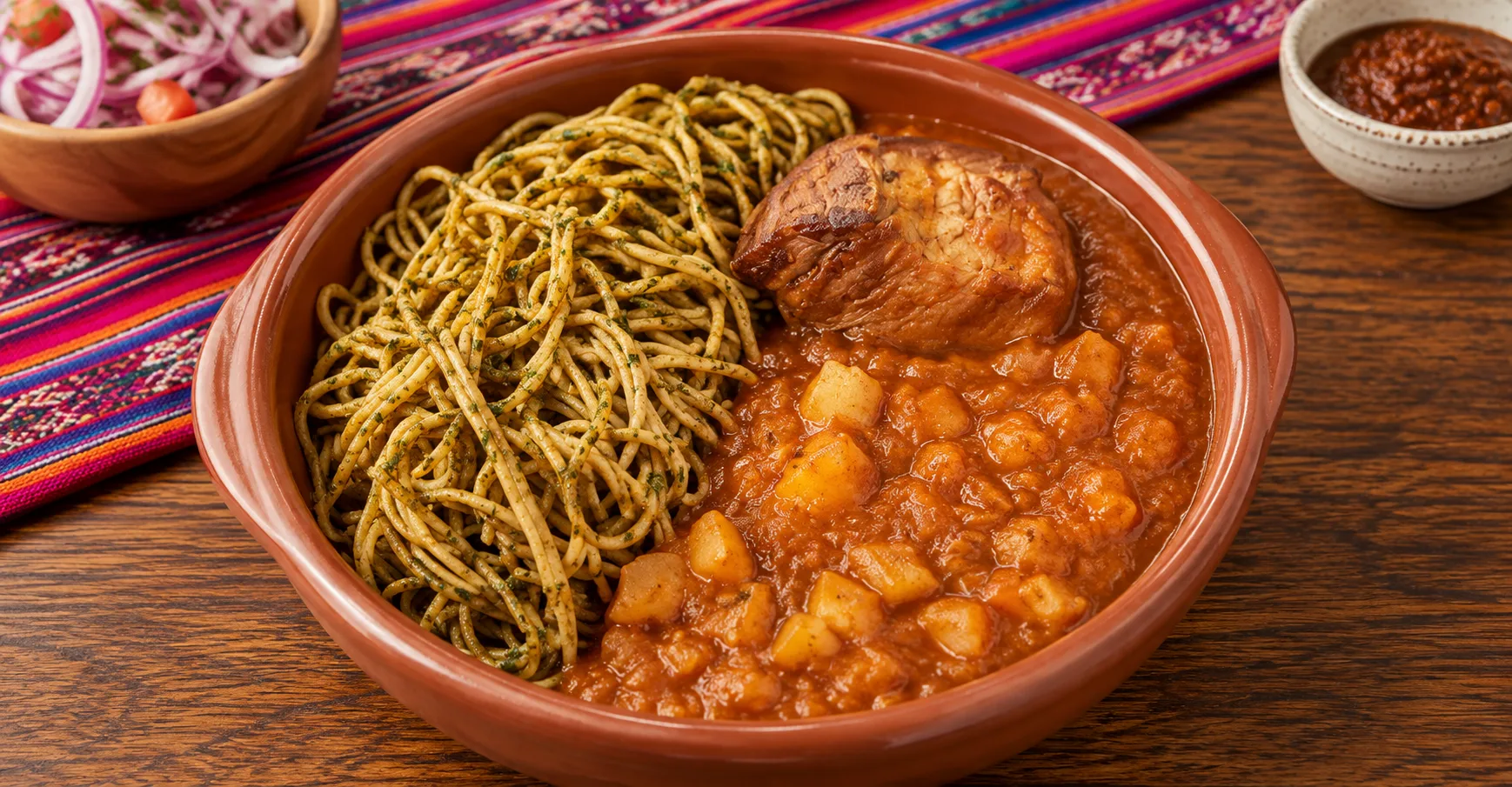
Served with: sopa seca, a noodle dish flavored with basil and ají, in a combination Peruvians simply call carapulcra con sopa seca.
Cau Cau
A stew of beef tripe (or chicken, for the less adventurous) and diced white potatoes cooked with ají amarillo, garlic, onion, fresh mint, and a pinch of palillo, a local turmeric that turns it golden yellow. Cau cau comes from Afro-Peruvian cooks in colonial Lima, who turned inexpensive cuts into something deeply flavorful. It's a staple of set-lunch menus.
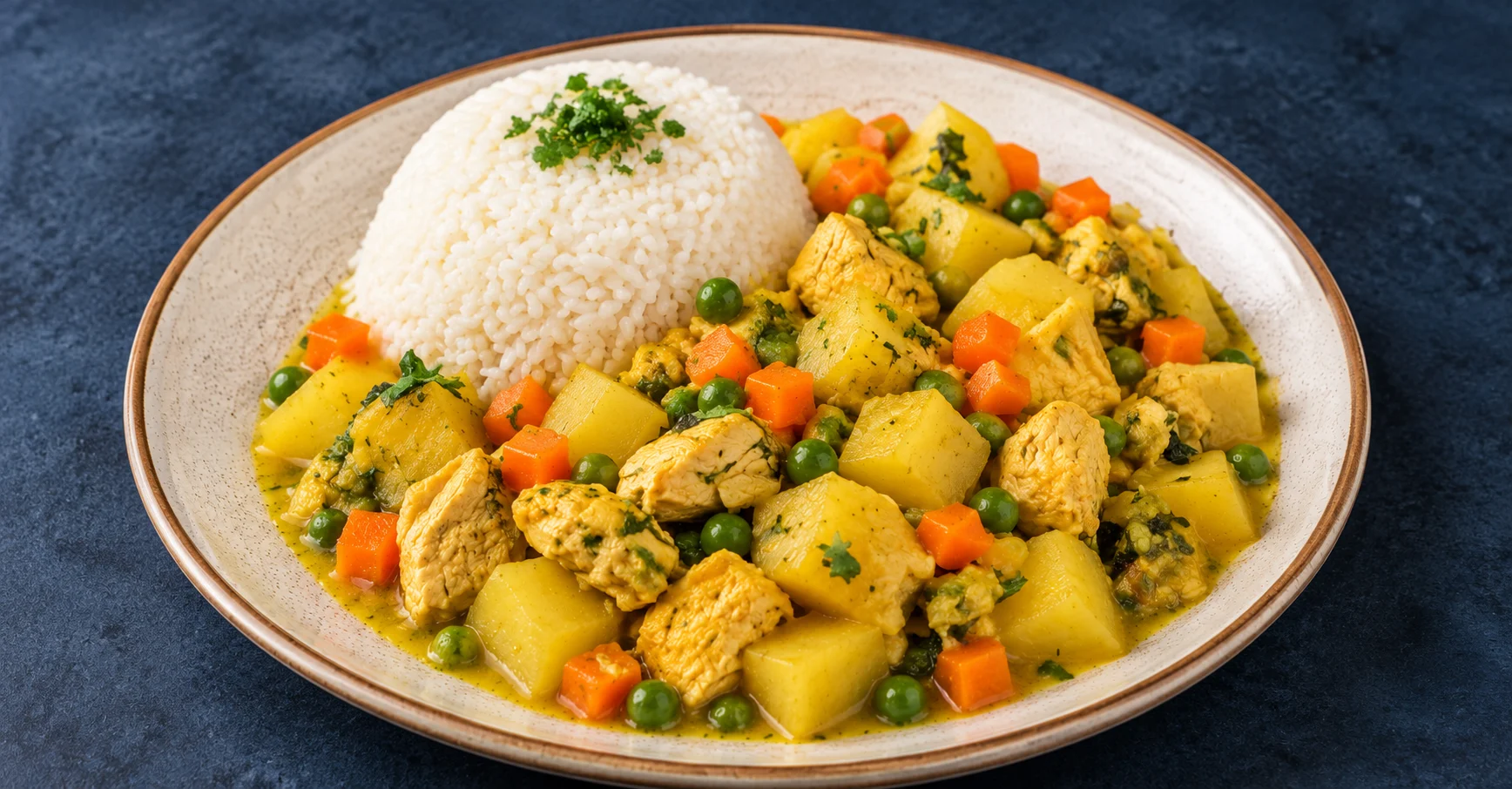
Served with: white rice, and salsa criolla on the side.
Estofado de Pollo
Peru's everyday chicken stew, the kind of dish that shows up on a cold day or a busy weeknight. Chicken thighs and drumsticks simmer with carrots, peas, and potatoes in a sauce of tomato, onion, garlic, ají panca, and a splash of red wine or beer. Nothing fancy, just good home cooking.
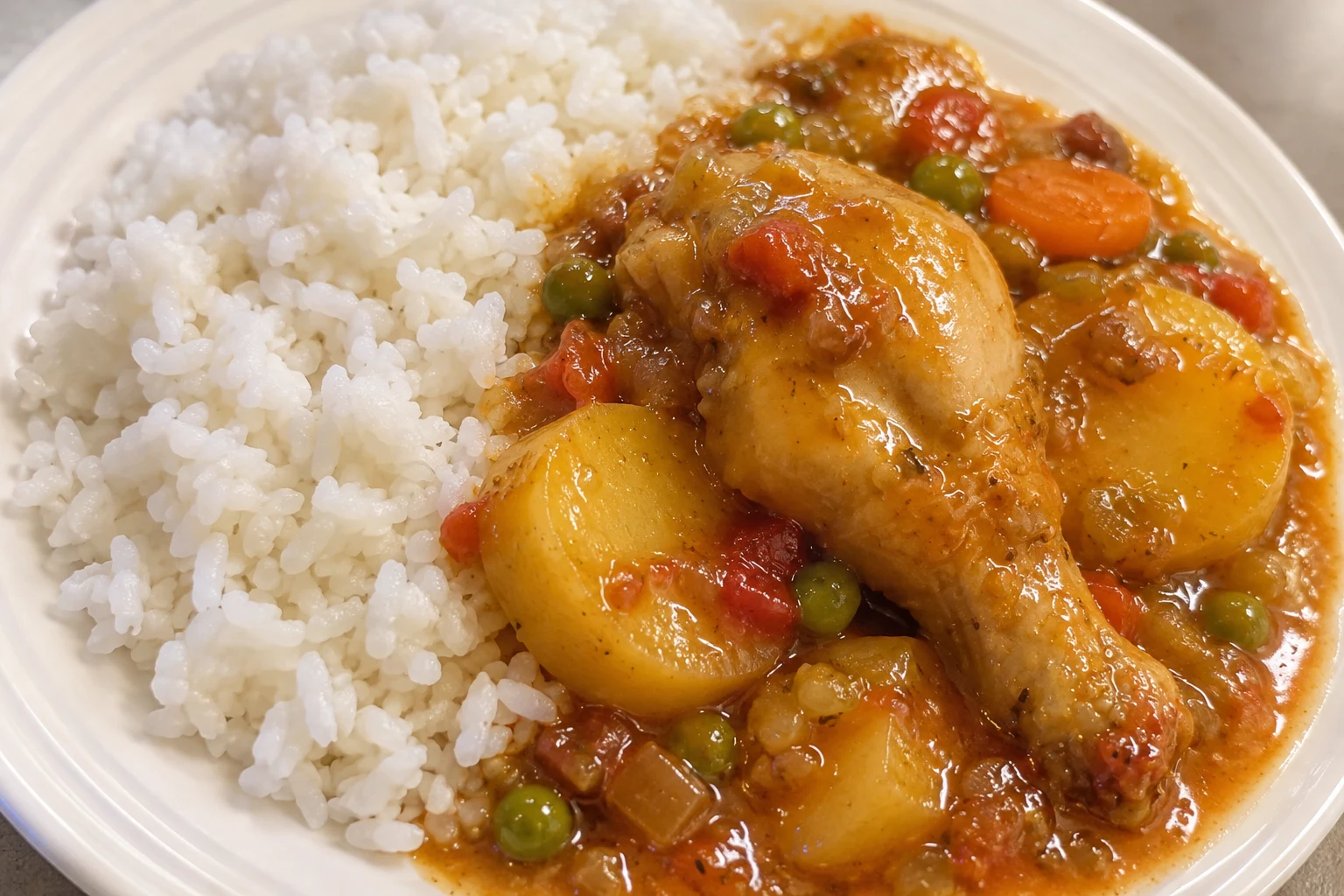
Served with: white rice to soak up all the sauce.
Olluquito con Charqui
An Andean classic built on the olluco, a small, glossy tuber that's crunchy and slightly sweet, a bit like jícama. It's cut into thin strips and cooked with charqui, dried alpaca or llama meat, plus ají panca and garlic. Some cooks swap the charqui for beef or chicken. It's one of the best examples of how the highlands preserved food long before refrigerators.
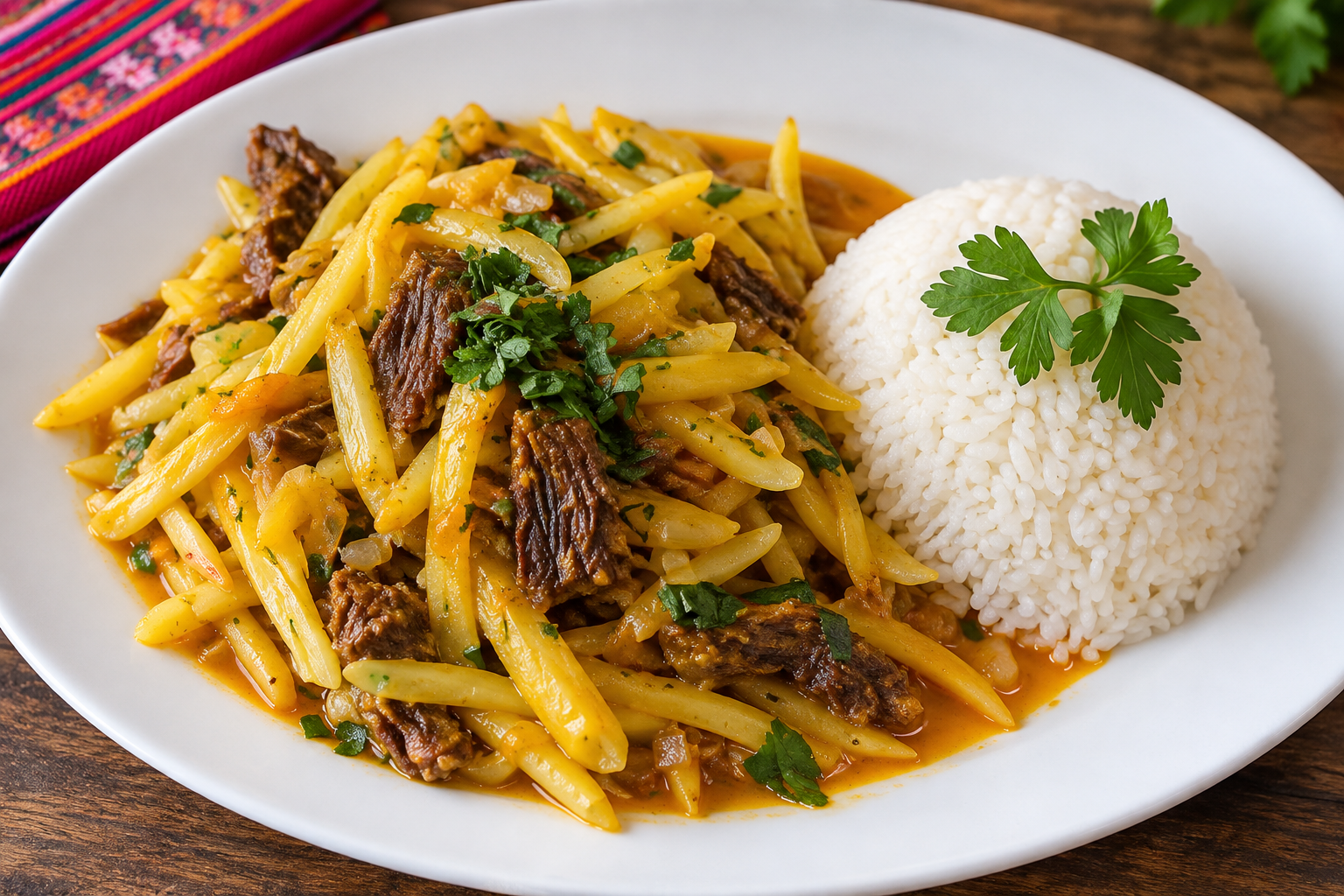
Served with: white rice.
Chicharrón
Pork, usually belly or shoulder, first seasoned with salt and then simmered in water until the water cooks off and the meat fries in its own fat. It ends up crunchy outside and tender inside. Chicharrón has Spanish roots, but Peruvians have made it their own, and it's a Sunday morning favorite, especially in a sandwich.
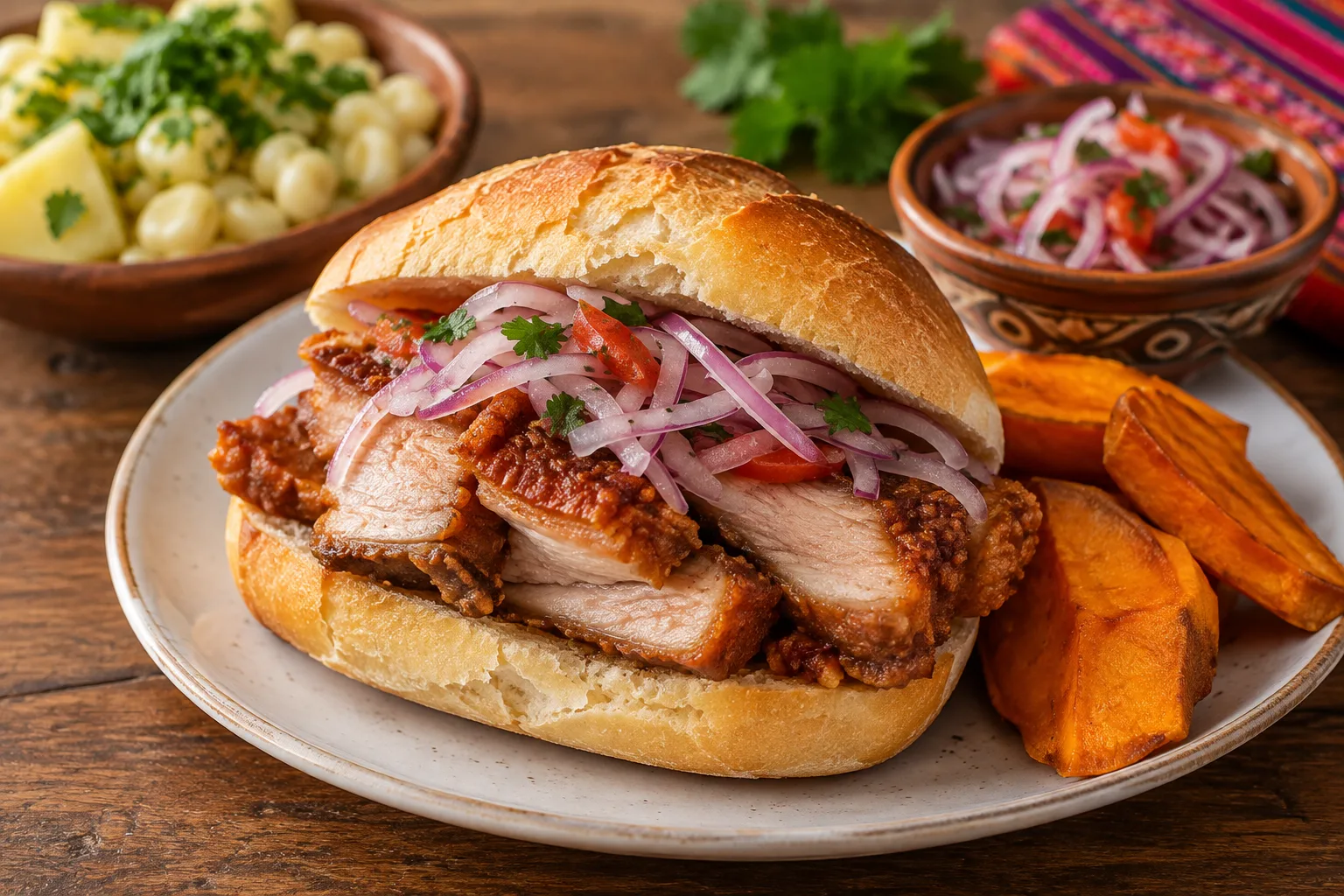
Served with: fried sweet potato and salsa criolla in a pan con chicharrón, or with mote, potato, and mint in the Andes.
How Does Peruvian Food Change From Region to Region?
Peru packs desert coastline, high mountains, and Amazon rainforest into one country, and the food follows the landscape. Where you eat changes what's on your plate far more than you might expect.
Coastal Peruvian Food
The coast is seafood country. The cold Humboldt Current keeps the Pacific full of fish, so ceviche, tiradito, jalea (a big platter of fried seafood), and arroz con mariscos, a Peruvian cousin of paella often finished with a little grated Parmesan, are everywhere. Lima is the capital of all of it, and it's also where you'll find the strongest Afro-Peruvian, chifa, and Nikkei influences. Farther south, in Paracas and Ica, you'll eat fresh seafood by the ocean and then head inland to the vineyards where pisco is made.
What Is Arequipa Food Known For?
Arequipa might have the proudest food culture in Peru, and its picanterías, traditional restaurants run for generations by women known as picanteras, are the best place to taste it. Besides rocoto relleno, look for these:
- Chupe de camarones. A big, creamy chowder made with river shrimp from the Majes and Ocoña valleys, potatoes, corn, rice, milk, egg, and fresh cheese, perfumed with huacatay (Andean black mint). It's traditionally a Friday dish and it's a full meal on its own.
- Ocopa arequipeña. Boiled potatoes in a sauce of huacatay, ají mirasol, peanuts, and cheese. Think of it as Arequipa's answer to papa a la huancaína.
- Adobo arequipeño. Pork marinated in chicha de jora, vinegar, and spices, then slow-cooked in a clay pot. Locals eat it on Sunday mornings with a round bread called pan de tres puntas.
- Solterito. A fresh, colorful salad of fava beans, fresh cheese, onion, tomato, corn, rocoto, and olives. A great light option if you're headed to the Colca Canyon.
Andean Food
In the highlands, the food gets heartier. Think thick soups, slow-roasted meats, corn, potatoes of every color, and freeze-dried potatoes called chuño, which Andean communities have been making for centuries by leaving potatoes out to freeze at night and dry in the sun. Around Lake Titicaca in Puno, fried or grilled trout is the local favorite, often served with quinoa. Alpaca meat also shows up on menus in Cusco, Puno, and Arequipa. It's lean, mild, and a lot more common here than visitors tend to assume.
What Is Pachamanca?
Pachamanca is less a single dish than a whole event. The name comes from Quechua, where pacha means earth and manka means pot, and that's exactly how it works. A pit is dug in the ground and lined with stones that are heated in a wood fire until they're scorching. Then layers of marinated meat (lamb, pork, chicken, sometimes guinea pig), potatoes, sweet potatoes, fava beans, corn, and humitas (sweet corn tamales) go in, wrapped in herbs like huacatay and chincho. Everything gets covered with more hot stones, leaves, and earth, and cooks slowly for about an hour or more.
The tradition goes back centuries and is tied to giving thanks to Pachamama, Mother Earth, after the harvest. It's most closely associated with the central highlands, especially Junín and Huánuco, but you'll find it throughout the Andes, including the Sacred Valley near Cusco. It's almost always made for a group, so if you get invited to a pachamanca, say yes.
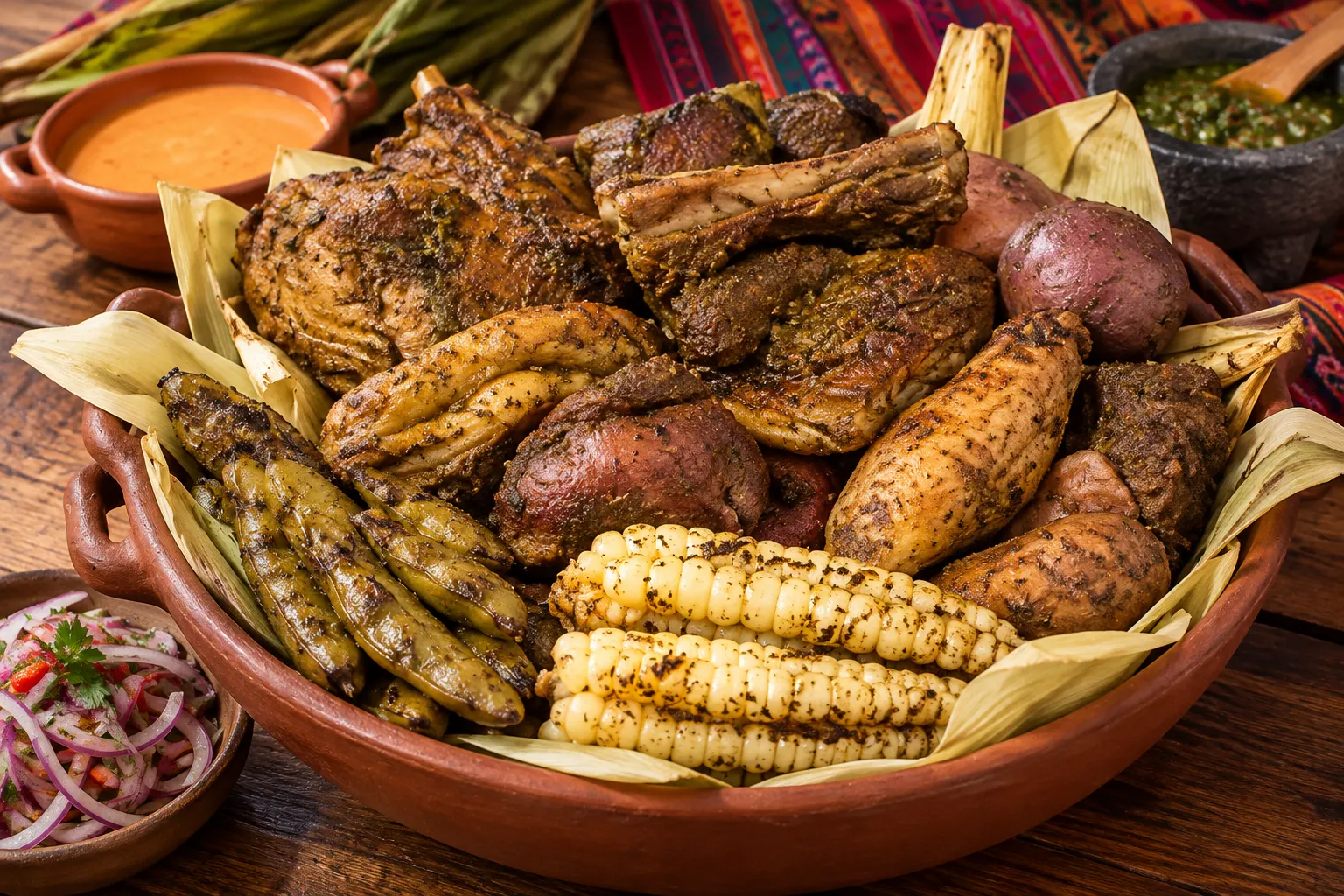
Served with: the potatoes, sweet potatoes, beans, and humitas cooked in the same pit, plus a spicy green herb sauce and chicha de jora.
What to Eat in Puno and Lake Titicaca
At nearly 12,500 feet (3,800 meters), Puno's food is built for the cold. Fresh trout from Lake Titicaca is the star, fried, grilled, or cooked a la plancha. You'll also find chairo, a hearty soup with chuño, beef or lamb, wheat, vegetables, and dried meat called chalona, and pesq'e de quinua, a creamy quinoa dish with milk and cheese that shows how central this grain is to life on the altiplano. On the lake islands, families often serve simple meals of quinoa soup, potatoes, and fresh cheese to visitors.
Amazonian Food
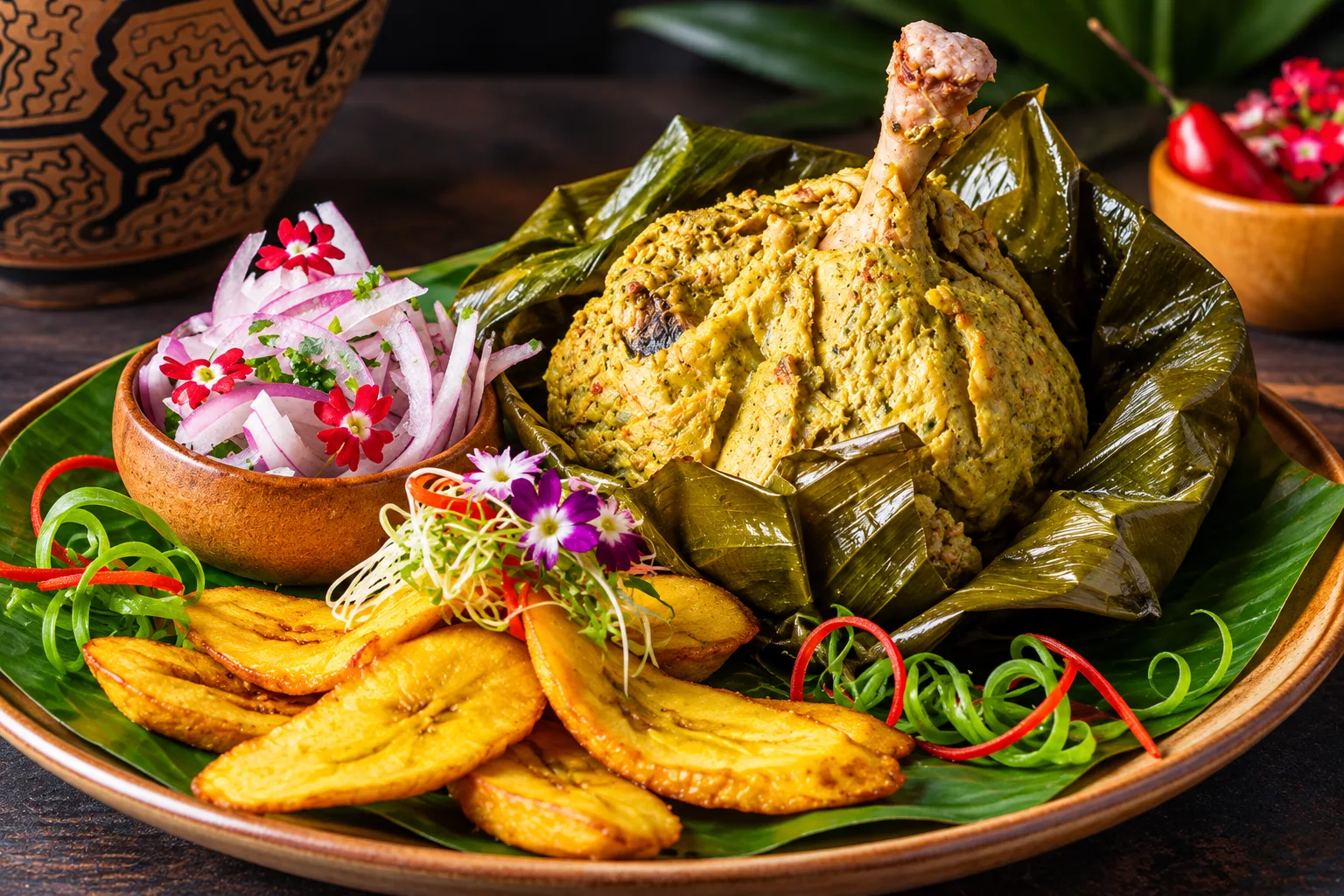
The jungle has its own flavors entirely. Juane, rice seasoned with turmeric and wrapped with chicken, egg, and olives in bijao leaves, is the most famous dish, and it's the star of the San Juan festival every June 24. Then there's tacacho con cecina (fried green plantain mashed with pork cracklings, served with smoked pork), patarashca (river fish wrapped in leaves and grilled over coals), and big river fish like paiche. Tropical fruits such as camu camu and aguaje turn up in juices and ice cream. Even if you don't make it to the Amazon, you'll often find these dishes in Lima.
What Food Is Cusco Known For?
If you're traveling to Machu Picchu, you'll spend at least a few days in Cusco, and the food in Cusco deserves just as much attention as the Inca stonework. The old Inca capital sits at about 11,150 feet (3,400 meters), so the cooking here is hearty, built around corn, potatoes, Andean grains, and slow-roasted meats. Here's what locals actually eat.
Chiriuchu
If there's one dish that belongs to Cusco more than any other, it's chiriuchu. The name comes from Quechua, where chiri means cold and uchu means chili, so you can think of it as a “cold spicy” platter. And it really is a platter. A traditional plate brings together roasted guinea pig, hen or chicken, charqui (dried meat), sausage and blood sausage, cochayuyo seaweed, fish roe, fresh cheese, toasted corn, a small corn fritter called a torreja, and slices of rocoto on top. Everything is served cold and eaten with your hands.
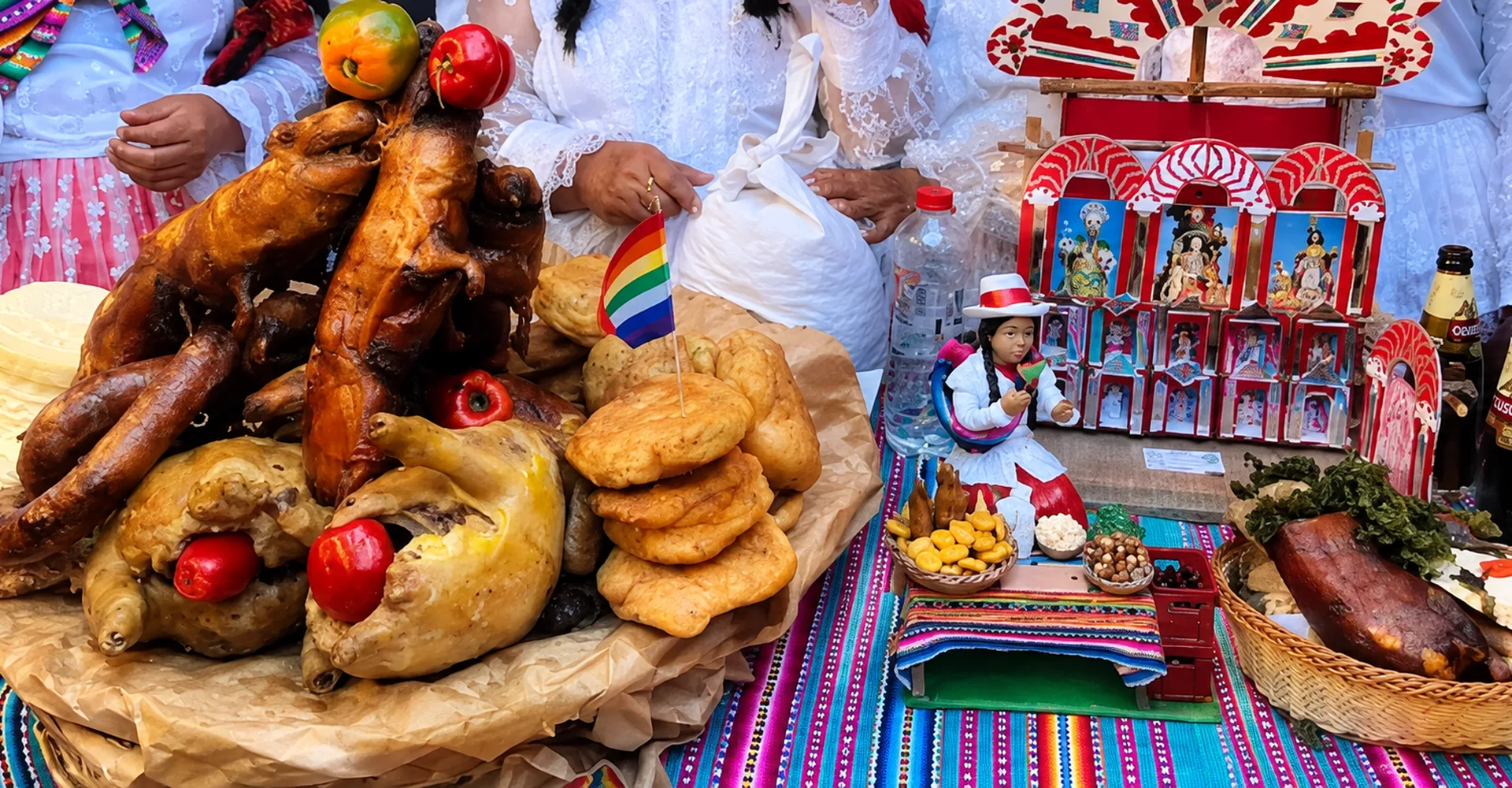
What makes chiriuchu special is the story behind it. The ingredients come from every corner of Peru: seaweed and roe from the coast, meat, corn, and cheese from the Andes, and chili from the valleys. Many locals see it as a symbol of the old Inca world, when goods traveled to Cusco from every region of the empire. Today it's the official dish of Corpus Christi, Cusco's biggest religious festival, celebrated in June (the date moves each year with the Catholic calendar). During the festivities, dozens of cooks set up around the Plaza de Armas and families line up to share huge plates. If your trip lands in June, don't miss it. The rest of the year, you can still find it at traditional picanterías and some restaurants in the historic center.
Served with: a cold glass of chicha de jora or a beer, and plenty of napkins.
Cuy al Horno
Guinea pig, roasted whole in a wood-fired oven until the skin is crisp. Cuy has been raised for food in the Andes for thousands of years, and it's still the centerpiece of birthdays, weddings, and festivals. It's a real tradition, not a gimmick for tourists. The meat tastes a little like dark-meat chicken or rabbit. Towns like Tipón and Lucre, in the South Valley just outside Cusco, are famous for it. In Arequipa you'll also see cuy chactado, where the guinea pig is flattened under a stone and fried.
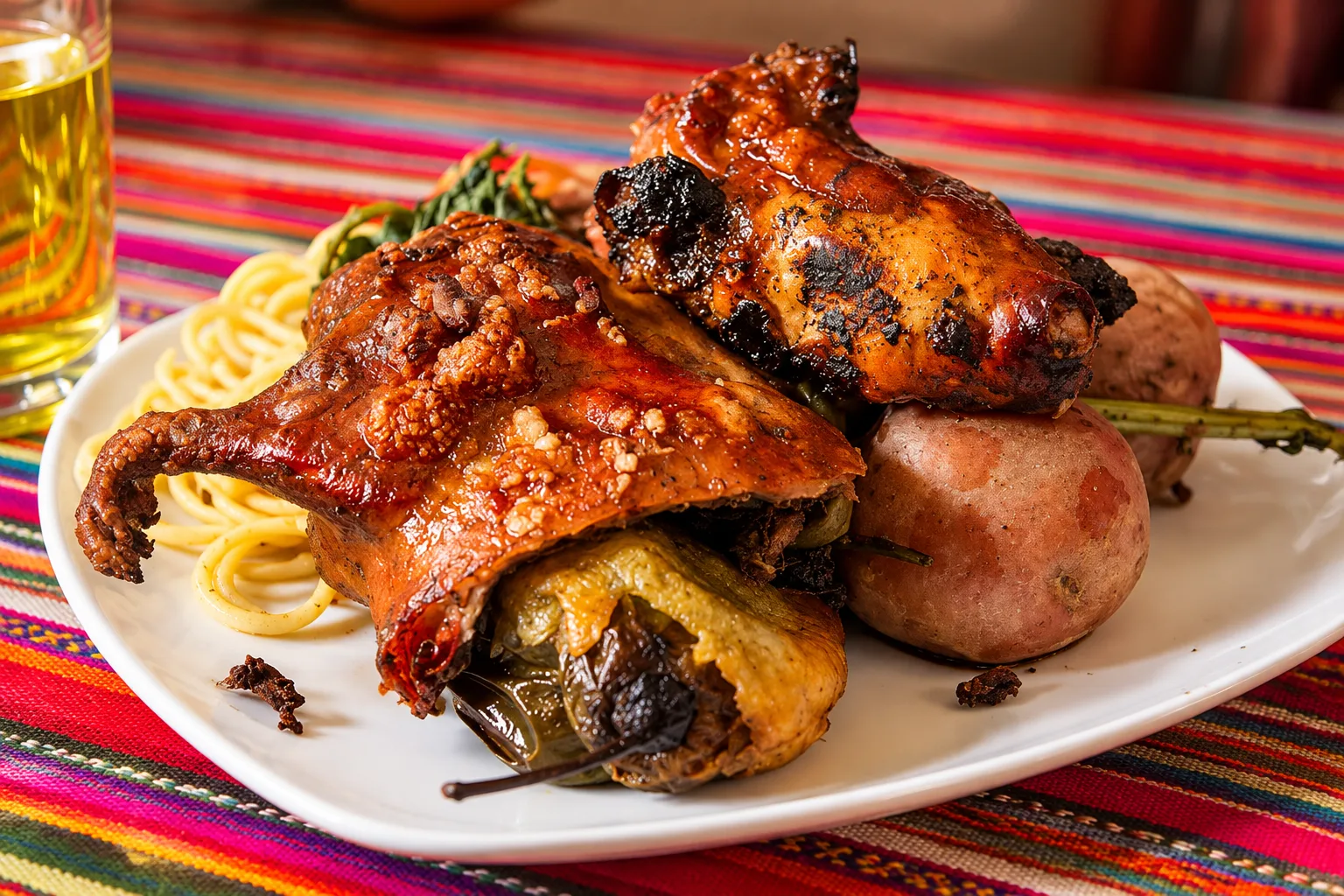
Served with: stuffed or boiled potatoes, a stuffed rocoto, and sometimes noodles or a corn tamal.
Adobo Cusqueño
Pork marinated in chicha de jora, ají panca, garlic, and spices, then simmered slowly. It started as a way to preserve meat and became a Sunday morning tradition, supposedly the best cure after a Saturday night out. Cusco's version is a little lighter and brothier than Arequipa's.
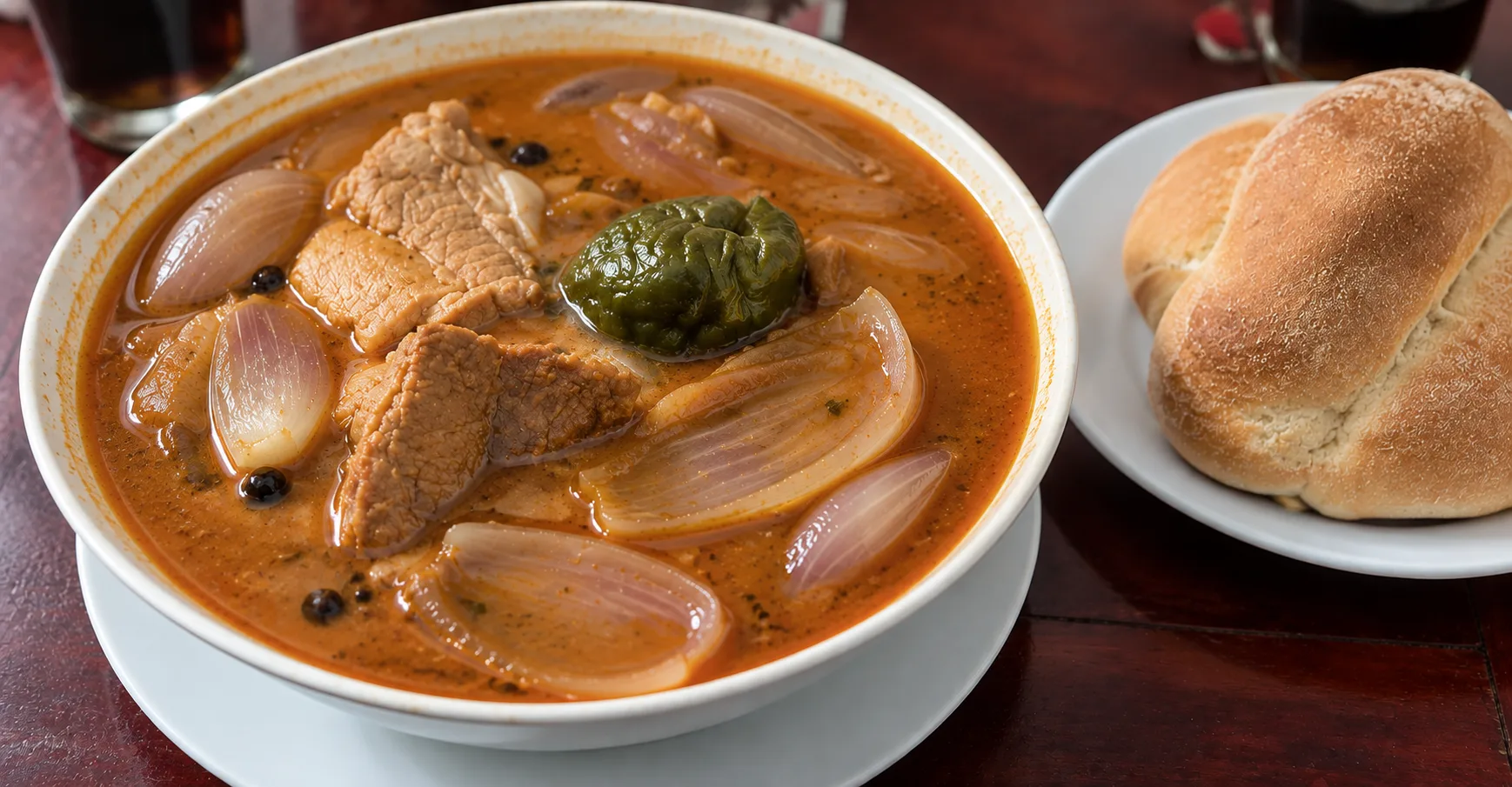
Served with: a round, soft bread for dipping into the broth.
Chicharrón Cusqueño
Big chunks of pork cooked in their own fat until they turn golden and crunchy. The town of Saylla, about 20 minutes from Cusco, is so famous for chicharrón that locals drive out on weekends just to eat it.
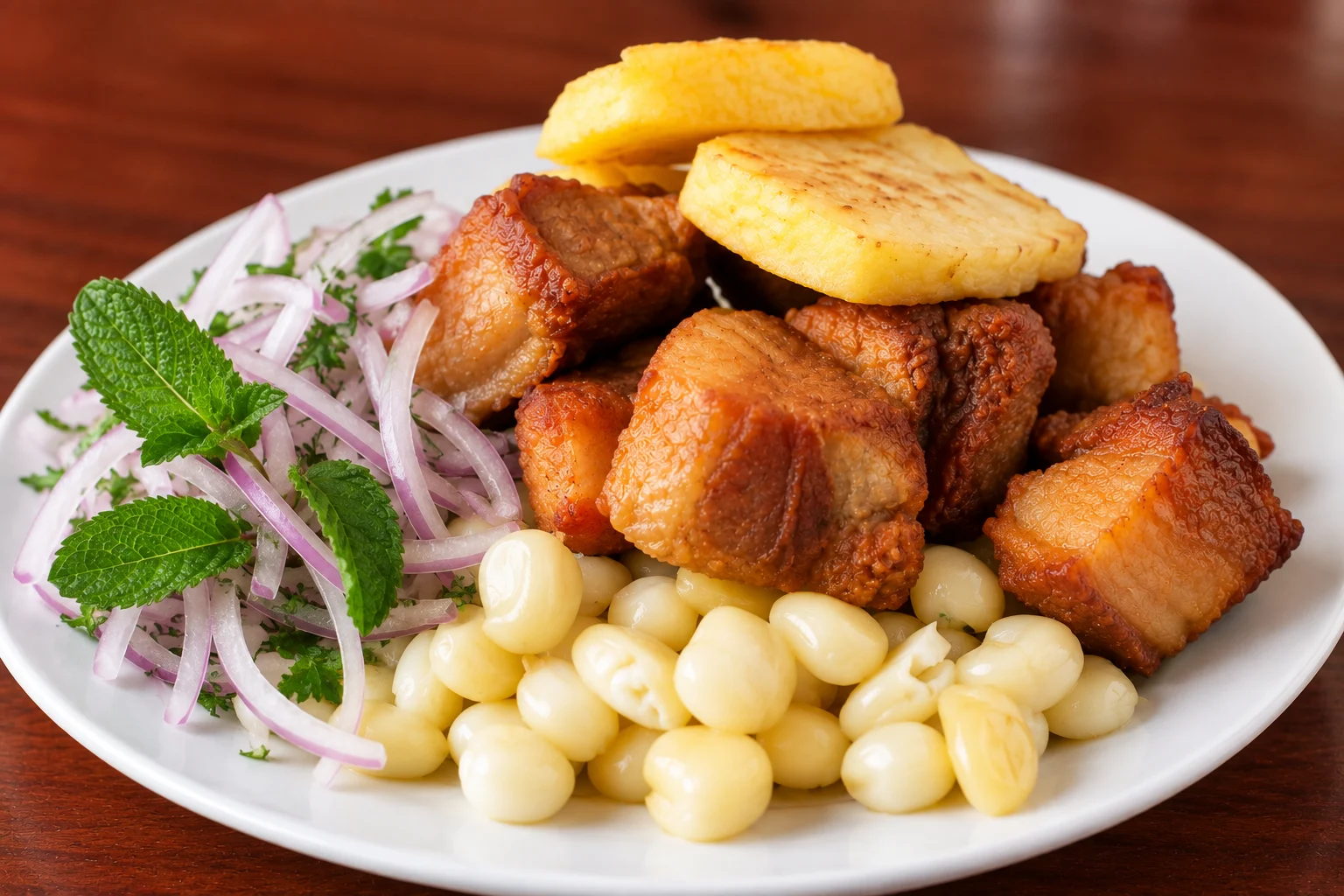
Served with: mote (big corn kernels), potato, fried sweet potato, and a salsa of onion and fresh mint.
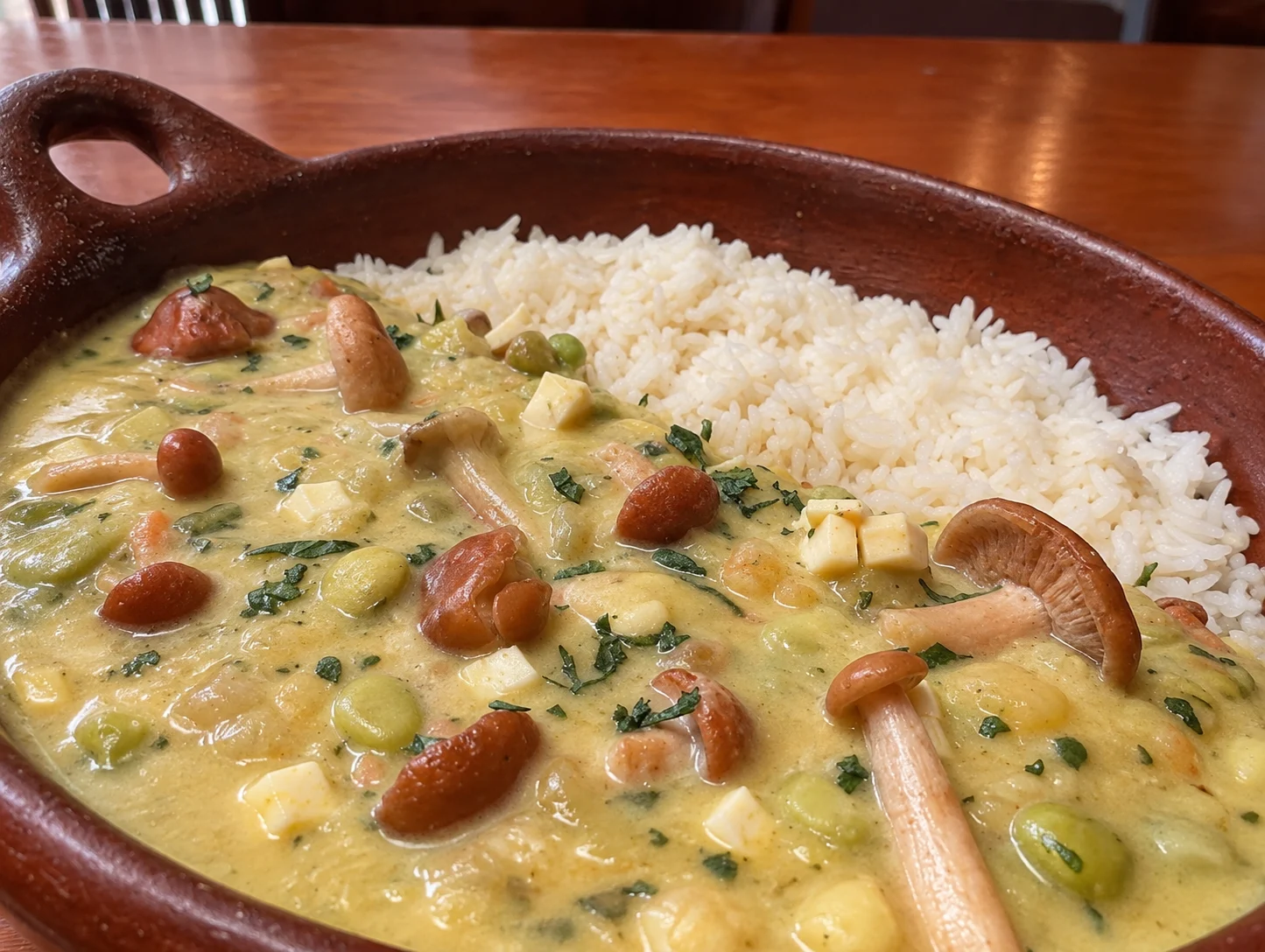
Kapchi
A creamy dish made with fava beans or mushrooms, fresh cheese, milk, and a little ají. It's simple, comforting, and one of the best choices in Cusco if you're looking for something vegetarian.
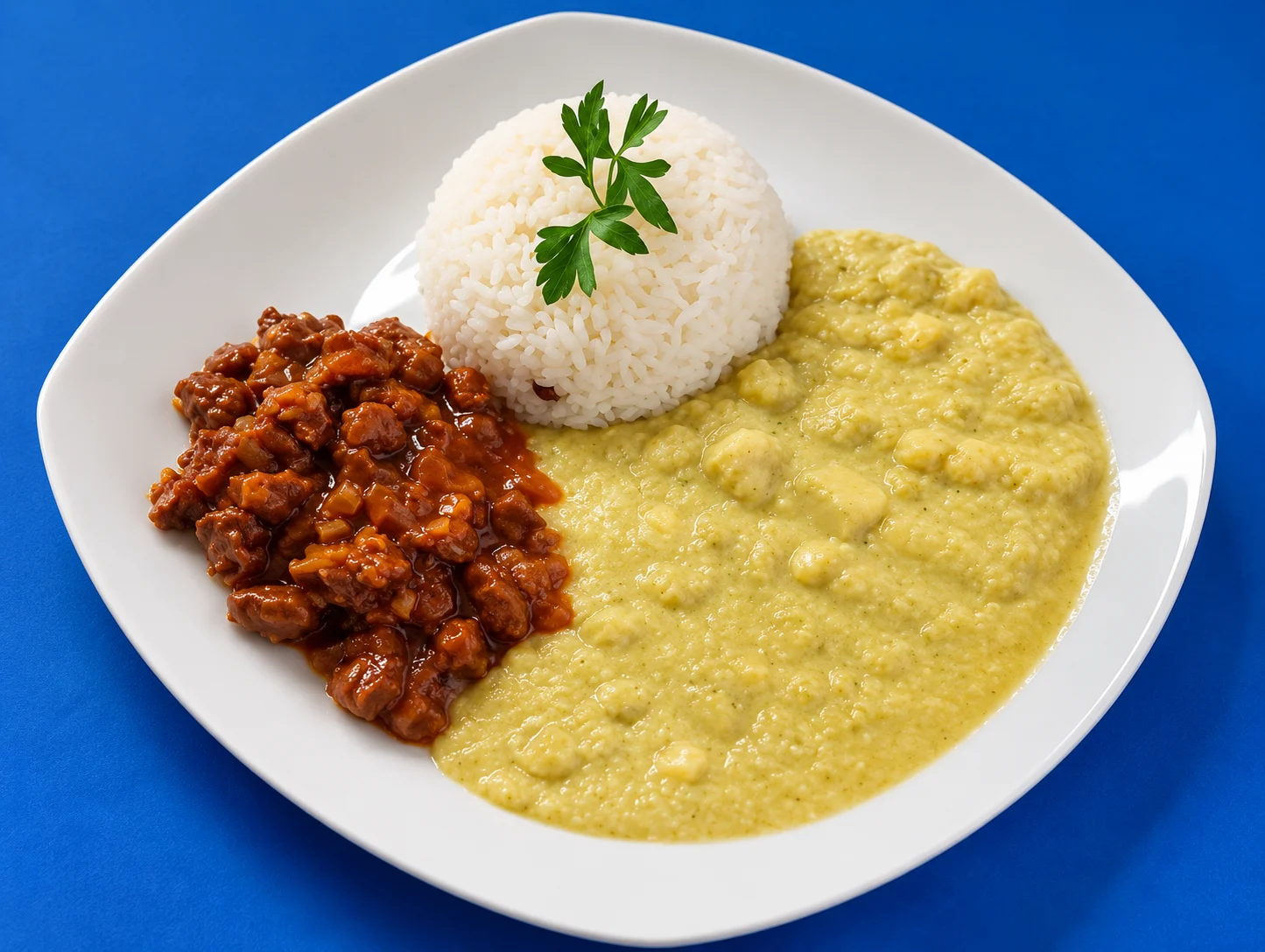
Guiso de Tarwi
Tarwi is an Andean lupine bean packed with protein. It's naturally bitter, so it gets soaked in running water for days before cooking. In Cusco, it's stewed with milk, cheese, garlic, and cumin into a thick, nutritious dish that highland families have eaten since long before the Incas.
LOCAL TIP
For the most authentic meals, look for a picantería or a quintería. These are traditional, often family-run spots where locals eat, the portions are big, and chicha de jora is usually on hand. You'll find some of the best ones in the San Blas and San Pedro areas of Cusco, and Arequipa's picanterías are practically an institution.
What Sauces Do Peruvians Eat With Their Food?
If you ask a Peruvian what makes their food taste like home, a lot of them will point to the little bowls on the table. Peruvian sauces and condiments, called cremas or ajíes, are served with almost every meal, and every family and restaurant has its own recipe. Here are the ones you'll run into most.
| Sauce | What's in it | Heat | Goes best with |
|---|---|---|---|
| Ají verde (green sauce) | Green chili, huacatay, cilantro, cheese or mayo | Medium | Pollo a la brasa, fries |
| Salsa criolla | Red onion, lime, ají, cilantro | Mild | Almost everything |
| Huancaína | Ají amarillo, fresh cheese, milk | Mild | Potatoes, fried yuca |
| Ocopa | Huacatay, ají mirasol, peanuts, cheese | Mild | Potatoes (Arequipa) |
| Uchucuta | Rocoto, huacatay, sometimes peanuts or cheese | Hot | Cuy, potatoes (Cusco) |
| Crema de rocoto | Rocoto, oil, garlic, lime | Very hot | Anticuchos, ceviche |
| Ají de pollería | Ají amarillo, mayonnaise, lime | Mild to medium | Rotisserie chicken |
What Do People Drink in Peru?
Pisco Sour
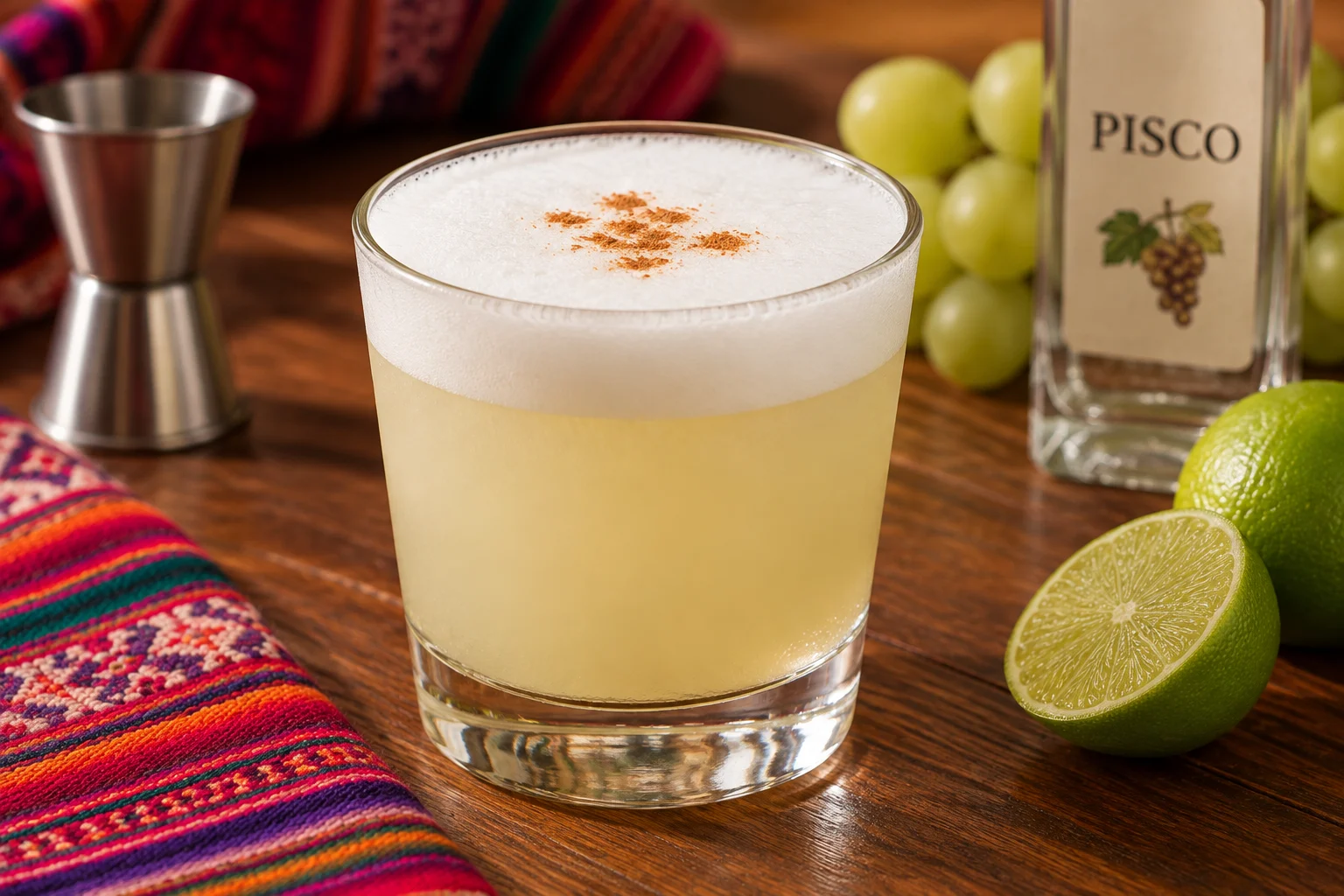
Peru's national cocktail mixes pisco (a grape brandy), lime juice, simple syrup, egg white, and a few drops of Angostura bitters. It's frothy, tart, and stronger than it tastes. Peru even celebrates National Pisco Sour Day on the first Saturday of February. Keep in mind that alcohol hits harder at altitude, so go easy on your first night in Cusco.
Chicha Morada
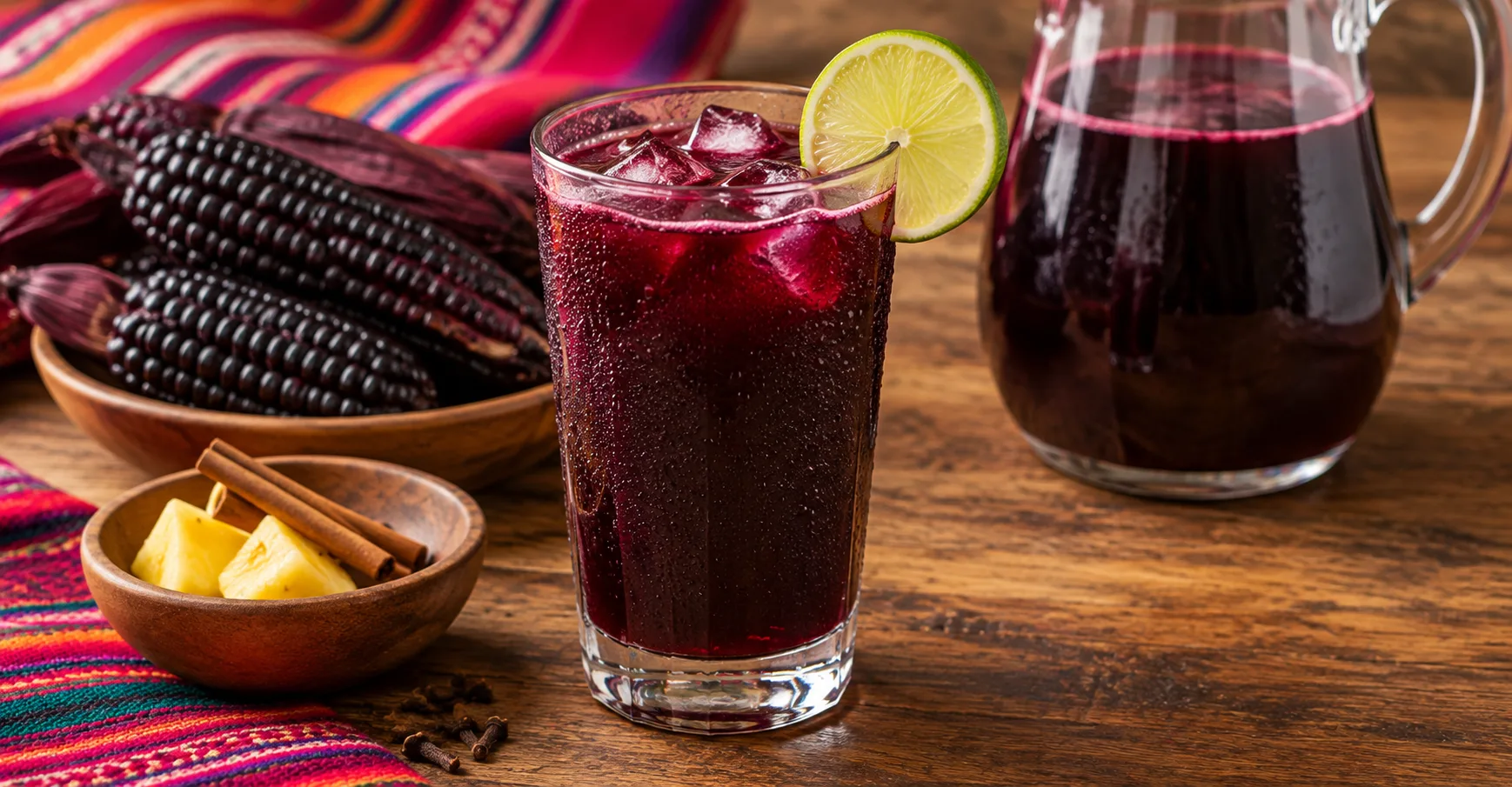
A sweet, deep-purple drink made by boiling purple corn with pineapple, cinnamon, and cloves, then adding lime and sugar. It's non-alcoholic, super refreshing, and you'll find it at almost every lunch spot.
Chicha de Jora
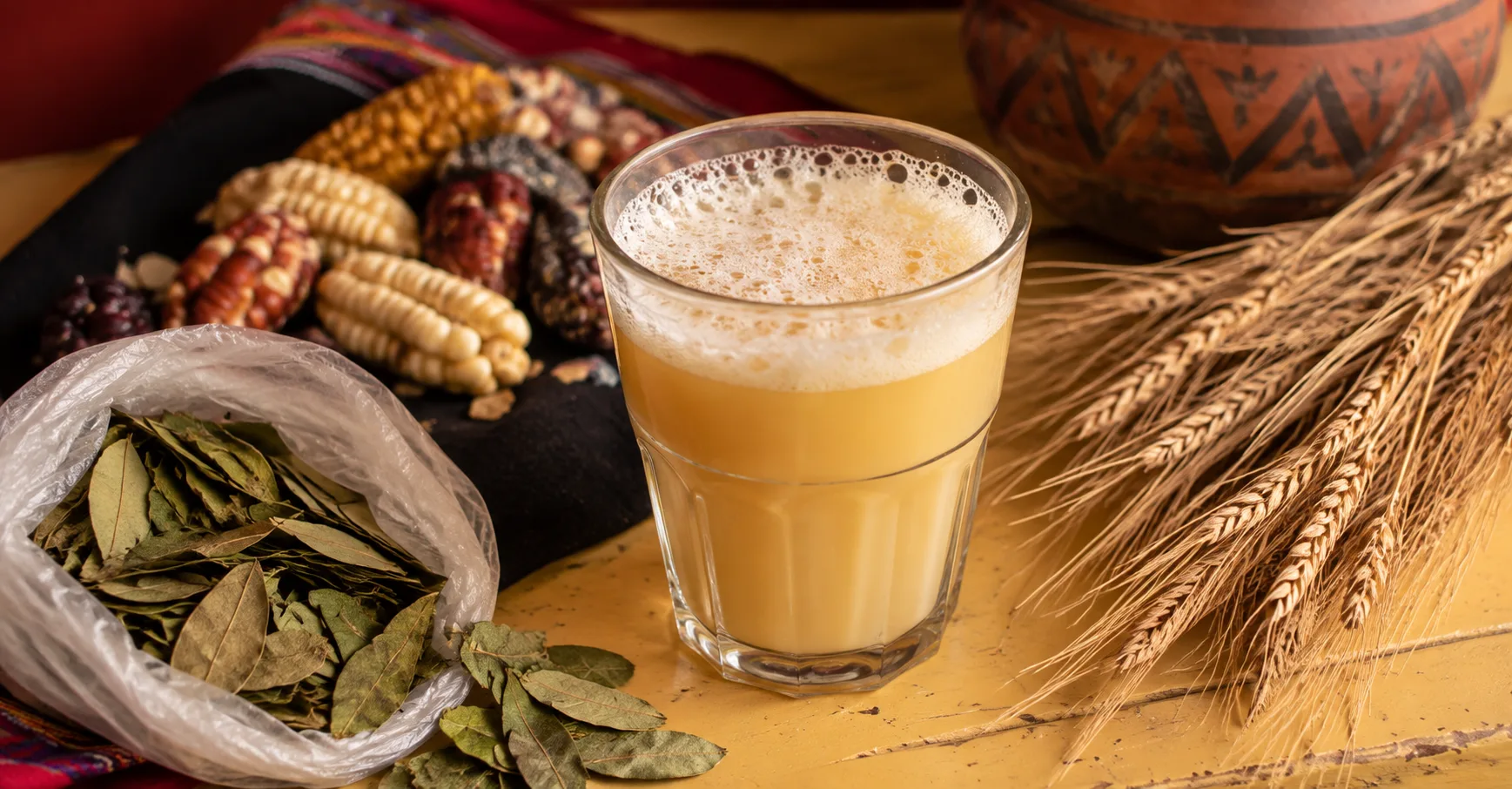
This one is alcoholic. It's a fermented corn beer that goes back to Inca times, when it played a big role in ceremonies. Today you'll still find it in highland picanterías. Look for houses with a stick and a red flag or plastic bag hanging over the door. That's the traditional sign that fresh chicha is being served inside.
Inca Kola
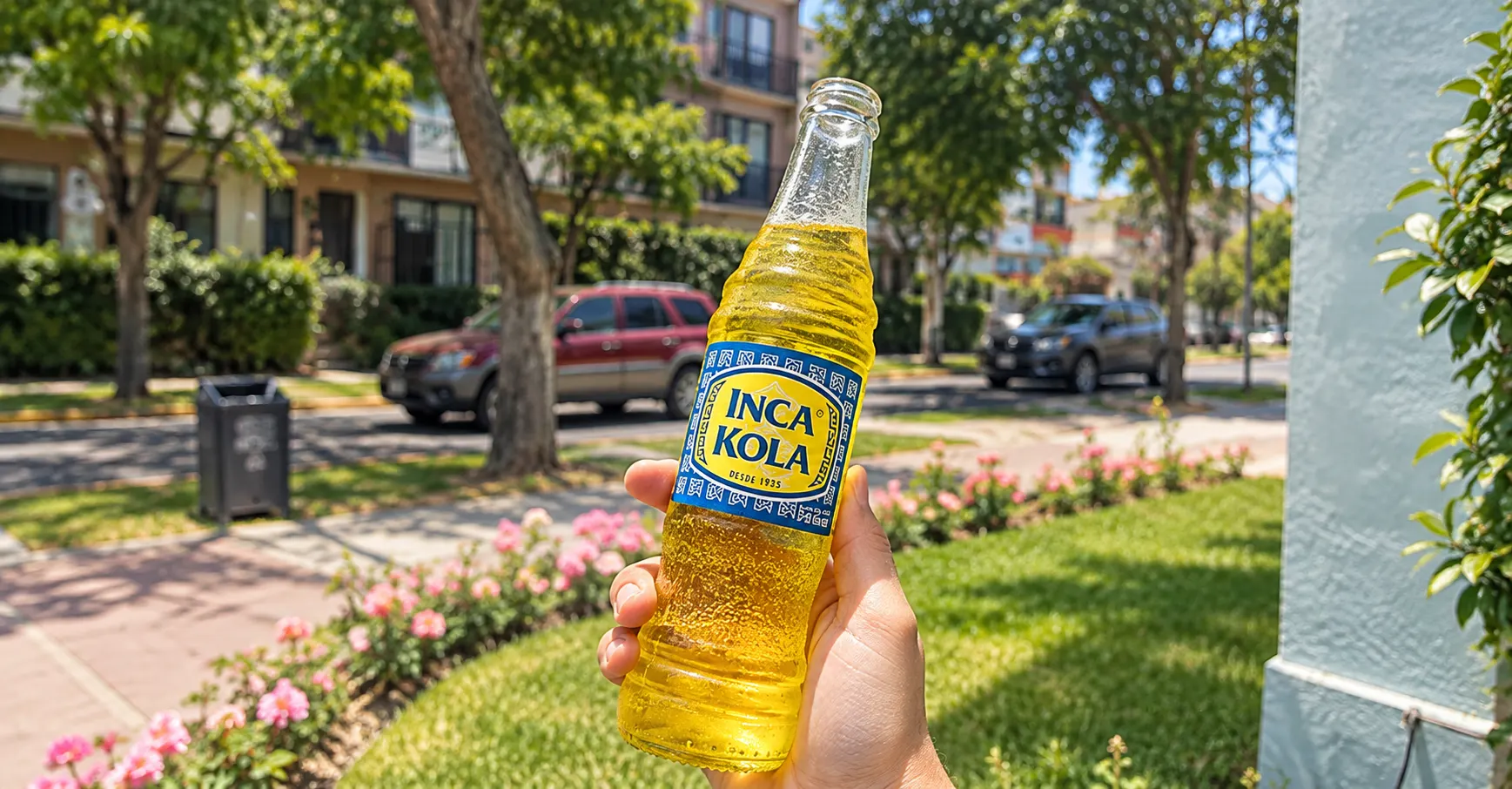
A neon-yellow soda that tastes a bit like bubblegum and cream soda. Peruvians are fiercely loyal to it, and it goes surprisingly well with chifa and pollo a la brasa.
Coca Tea
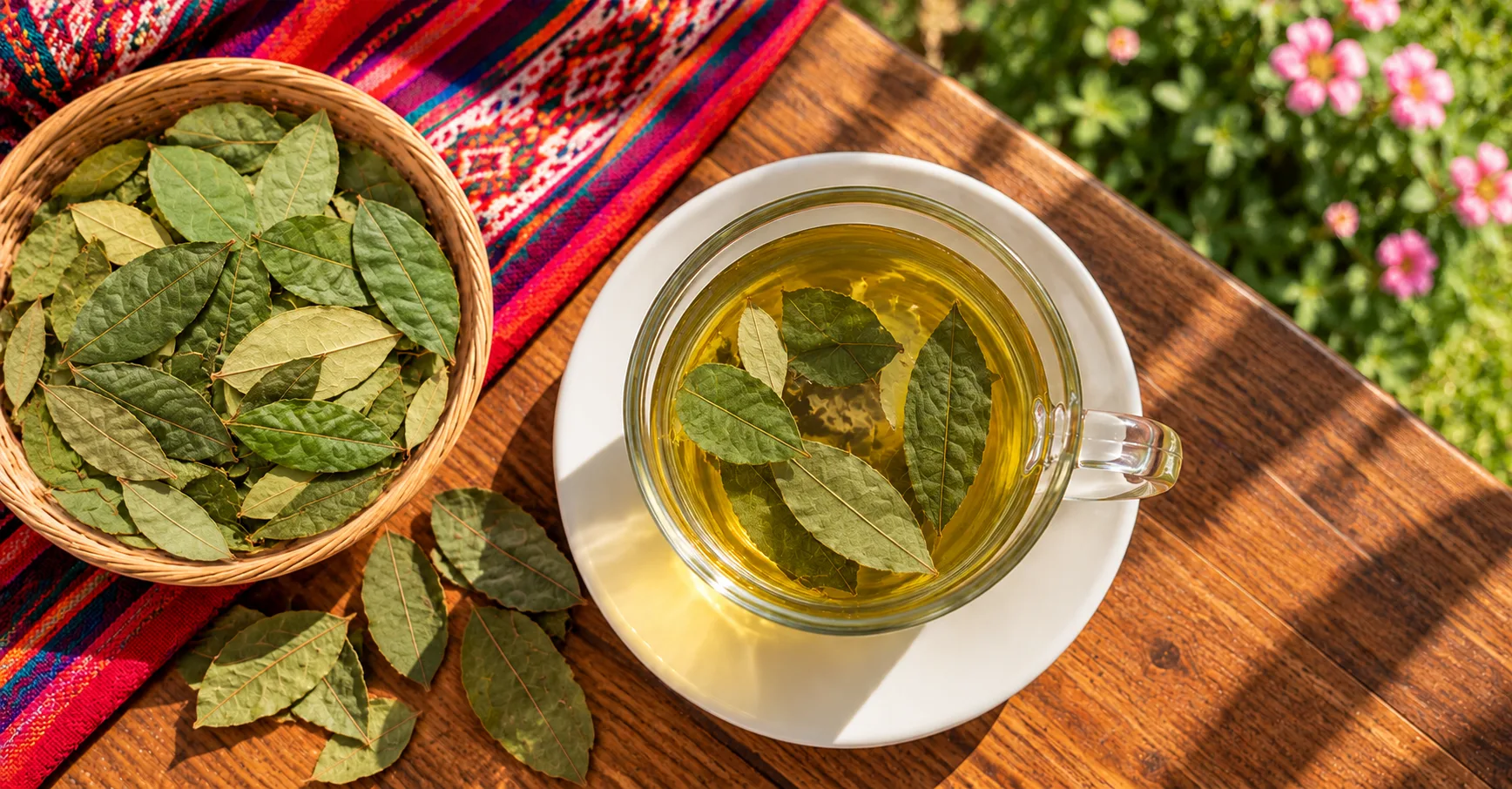
Mate de coca is a mild herbal tea made from coca leaves, and you'll be offered it the moment you arrive in Cusco. Locals drink it to help with altitude and digestion. It's legal in Peru and has only a tiny stimulant effect, similar to a cup of green tea, but it can show up on drug tests, so skip it if that's a concern for your job.
What Are the Most Popular Peruvian Desserts?
If you have a sweet tooth, Peru is going to be a problem, in the best way. Peruvian desserts grew out of the same mix of cultures as the rest of the food. Spanish convents brought custards, meringues, and manjar blanco. Afro-Peruvian cooks turned cheap ingredients like bread, rice, and raw cane sugar into rich, spiced sweets. And native ingredients such as purple corn, lúcuma, and sweet potato gave everything a flavor you won't find anywhere else.
You'll find most of these in bakeries, markets, and street carts rather than fancy restaurants, and a lot of them cost just a few soles. Here are the ones worth hunting down.
Picarones
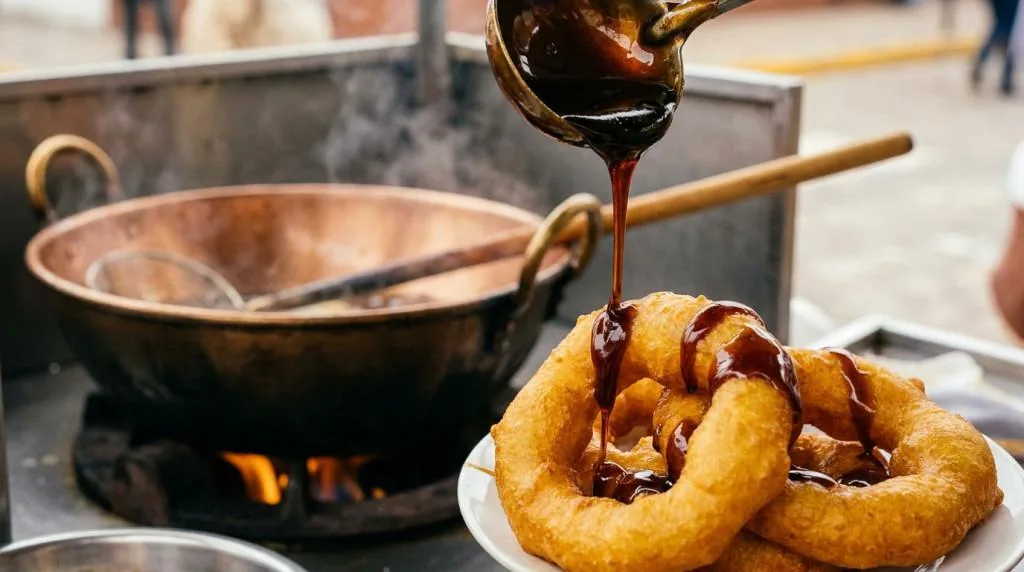
If you only try one Peruvian dessert, make it this one. Picarones are ring-shaped fritters made from a dough of sweet potato and squash, fried right in front of you and drizzled with chancaca syrup, a thick sauce made from raw cane sugar, orange peel, cinnamon, and cloves. They're crispy outside, soft and chewy inside, and best eaten hot from a street cart in the evening. Watching the vendors shape the rings with their fingers and flick them into the oil is half the fun.
Suspiro a la Limeña
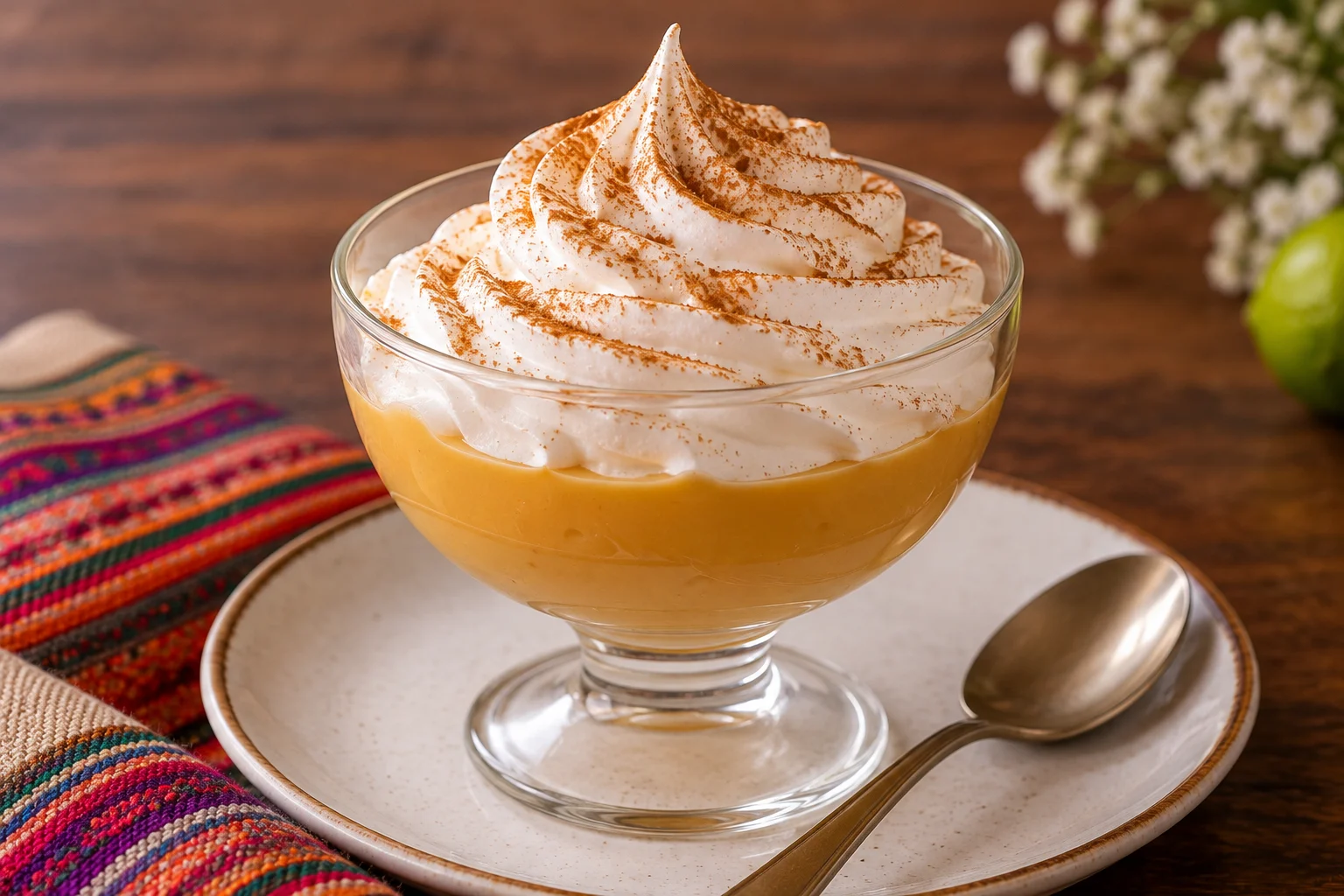
This one is famously, unapologetically sweet. The base is a silky caramel custard made from condensed and evaporated milk and egg yolks, topped with a cloud of meringue flavored with port wine and a dusting of cinnamon. The name means “sigh of a Lima woman,” and legend has it the 19th-century poet José Gálvez named it because it was “sweet and soft like a woman's sigh.” A few spoonfuls is usually plenty.
Mazamorra Morada
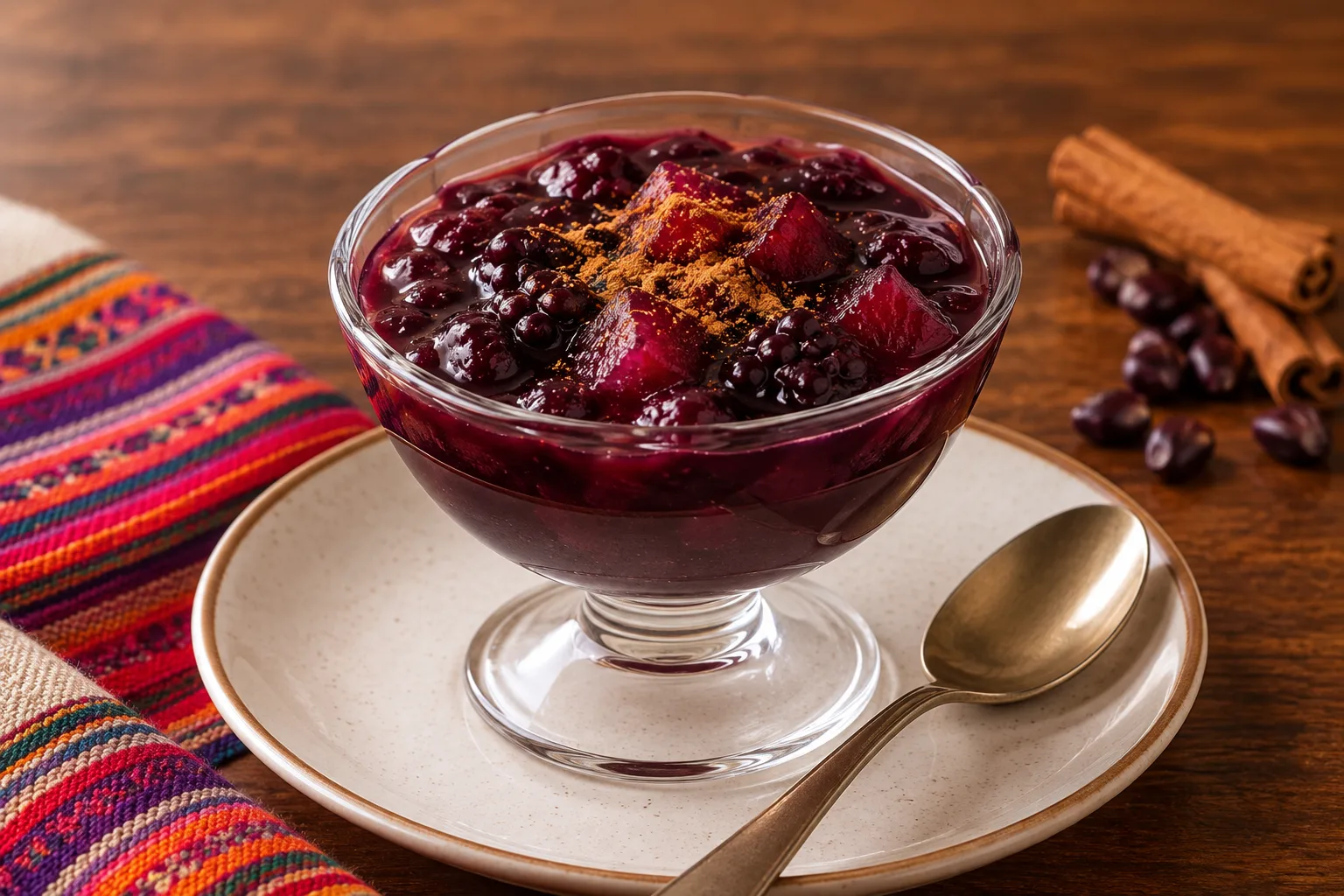
A thick, jelly-like pudding made by cooking purple corn with pineapple, dried fruit like prunes and apricots, cinnamon, and cloves, then thickening it with sweet potato starch. It's the same purple corn used in chicha morada, so if you liked the drink, you'll like this. It's a year-round favorite, but it's especially popular in October, which Peruvians call the purple month.
Arroz con Leche
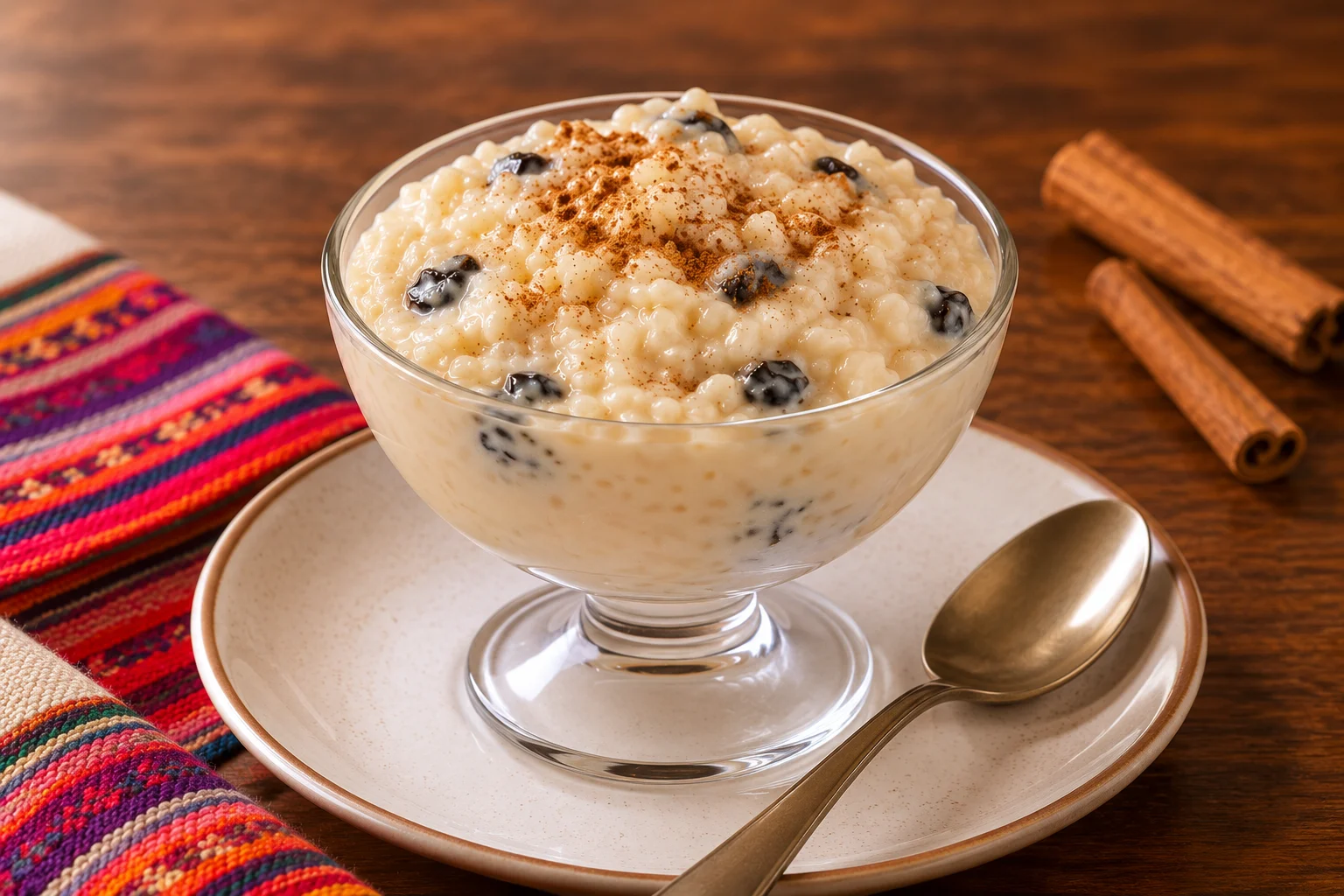
Peruvian rice pudding is creamy and scented with cinnamon, cloves, and sometimes orange peel or raisins. It's comfort food in every Peruvian home. Here's the fun part: when you order mazamorra morada and arroz con leche served side by side in the same cup, it's called un clásico, and it's one of the most traditional desserts you can get in Lima.
Alfajores
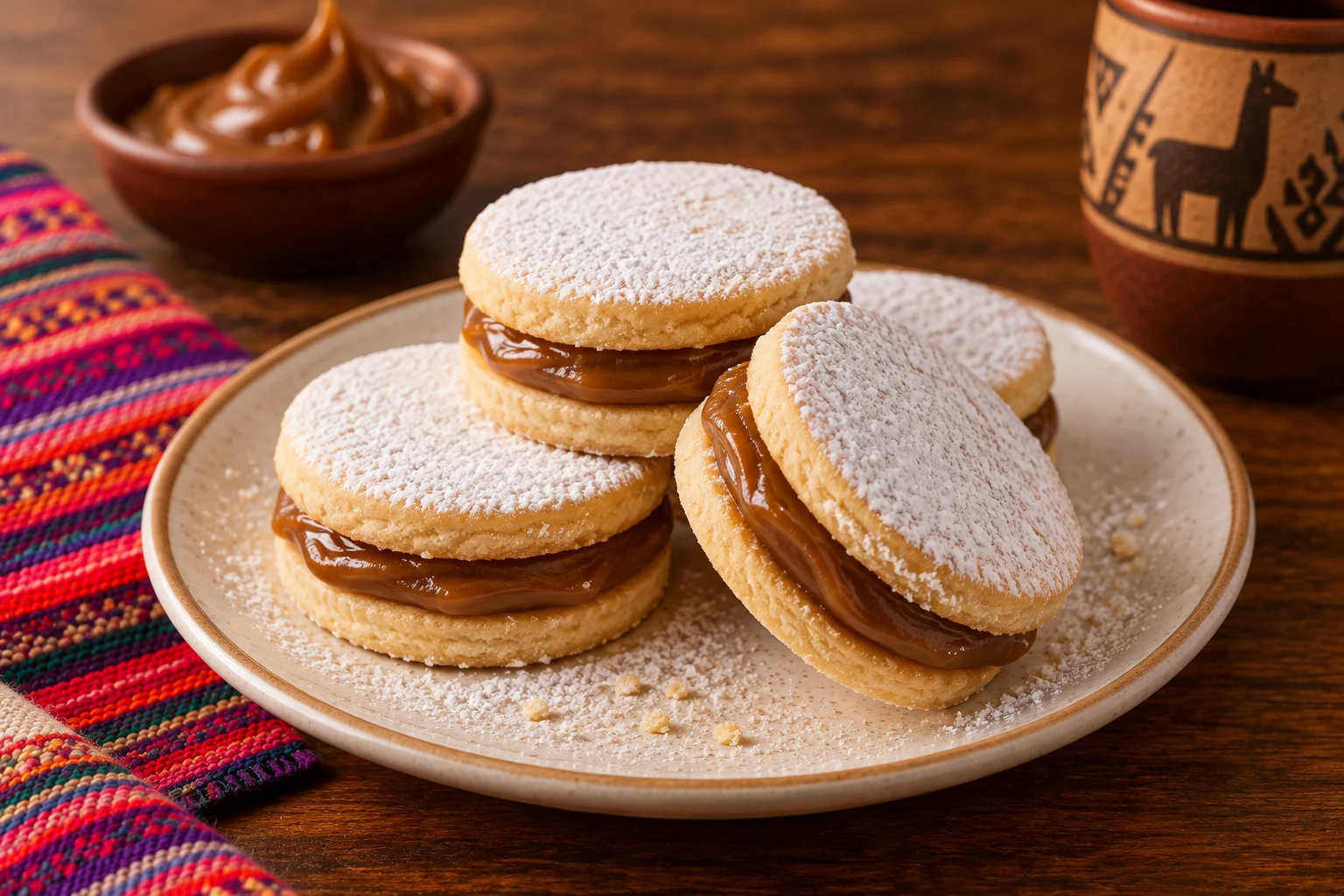
Two tender, crumbly shortbread cookies sandwiching a generous layer of manjar blanco (Peru's version of dulce de leche), finished with a snowfall of powdered sugar. You'll find alfajores in every bakery in the country, and they make an easy souvenir to bring home.
King Kong
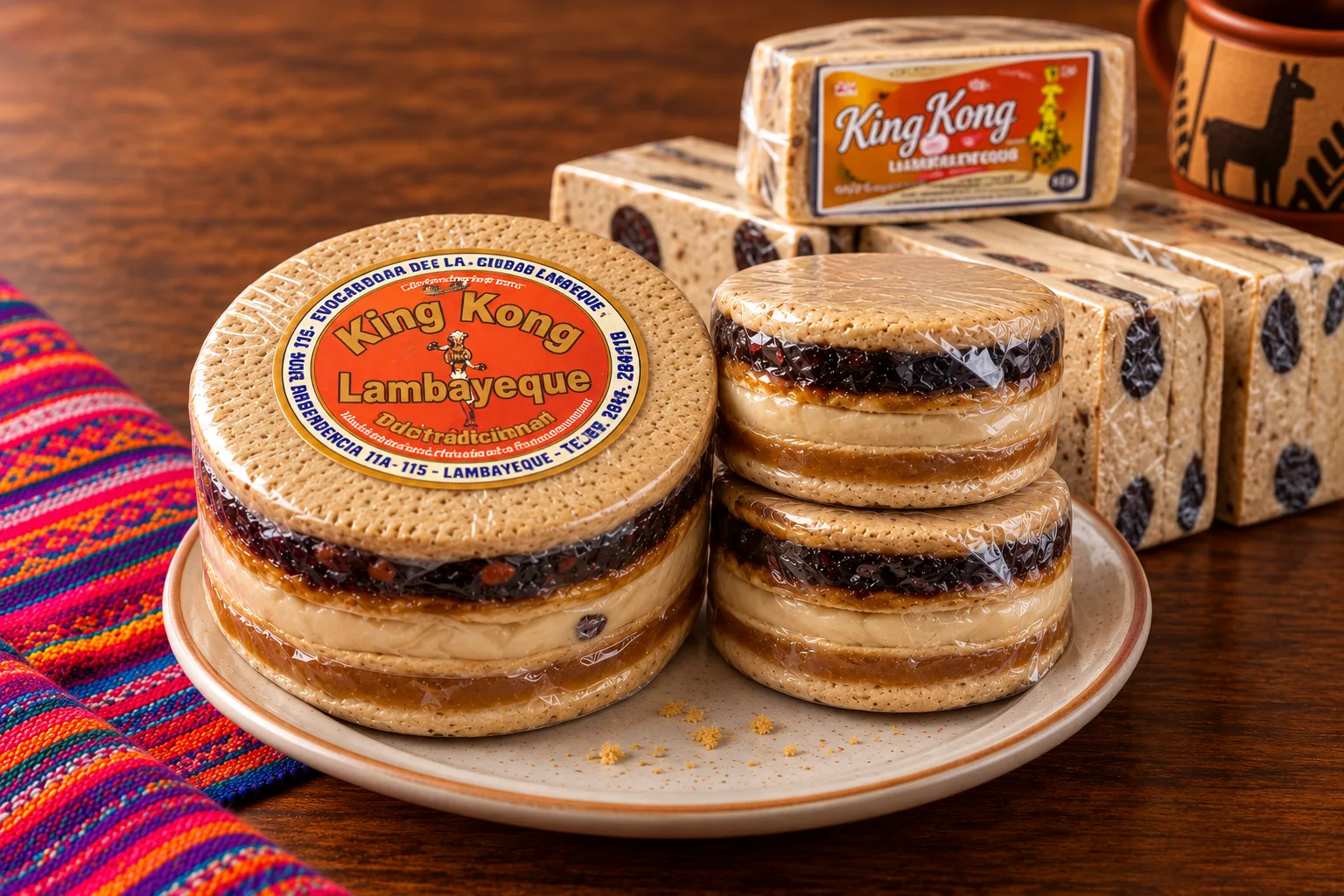
Think of this as an alfajor that got out of hand. The King Kong comes from Lambayeque, in northern Peru, and it's a giant, rectangular stack of cookie layers filled with manjar blanco and sweet pineapple or peanut paste. It's usually sold by the slice or in big boxes meant for sharing. Legend says it got its name in the 1930s, when the movie King Kong came out and locals joked that the dessert was as huge as the ape.
Queso Helado
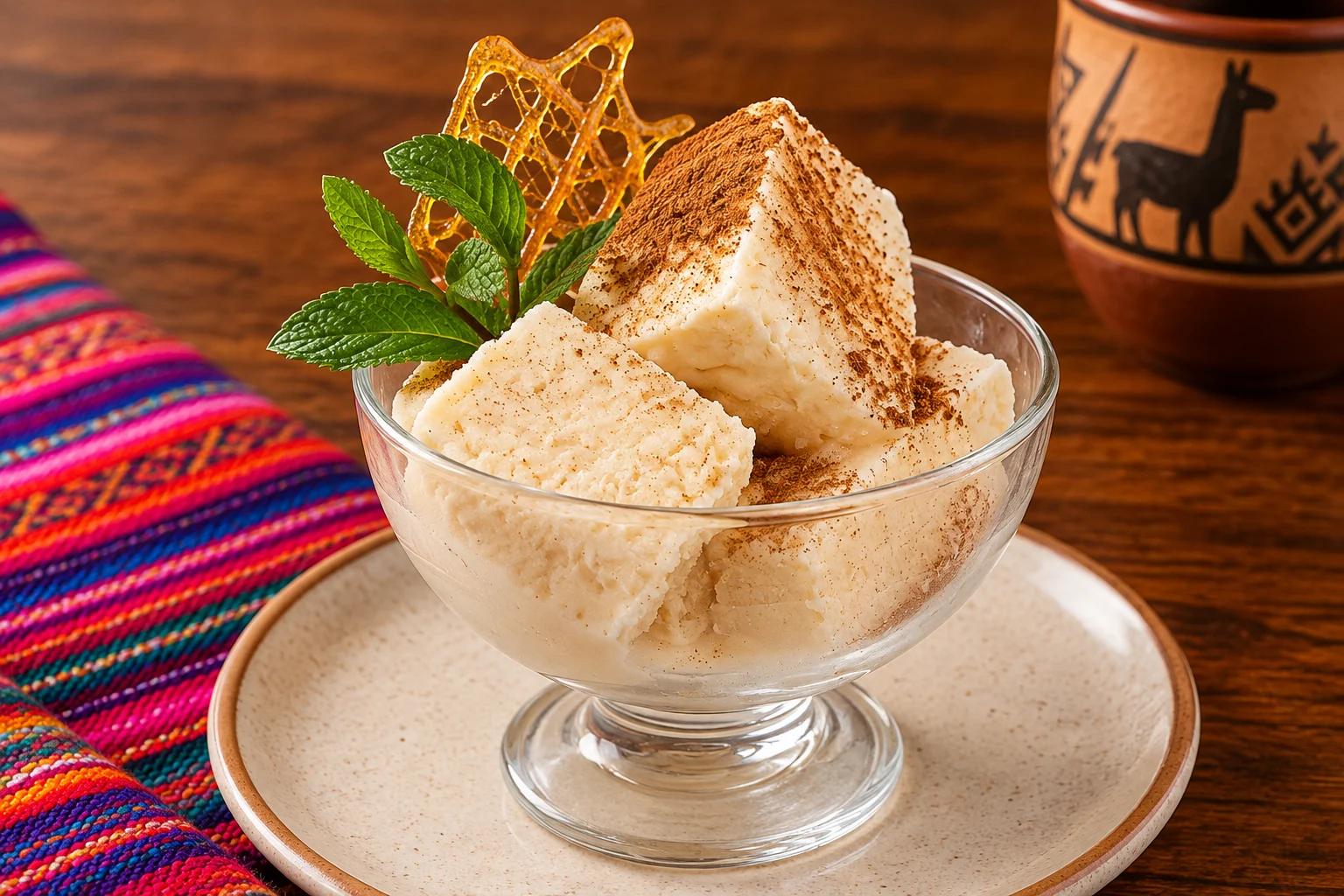
Arequipa's most beloved treat, and the name is misleading. Queso helado translates to “frozen cheese,” but there's no cheese in it at all. It's a creamy ice cream made from milk, coconut, cinnamon, cloves, and vanilla, traditionally churned by hand in a metal pot set over ice and salt. You'll see vendors selling it in little cups around Arequipa's main square, often with a sprinkle of cinnamon on top. If your trip includes Arequipa or the Colca Canyon, don't leave without trying it.
Helado de Lúcuma
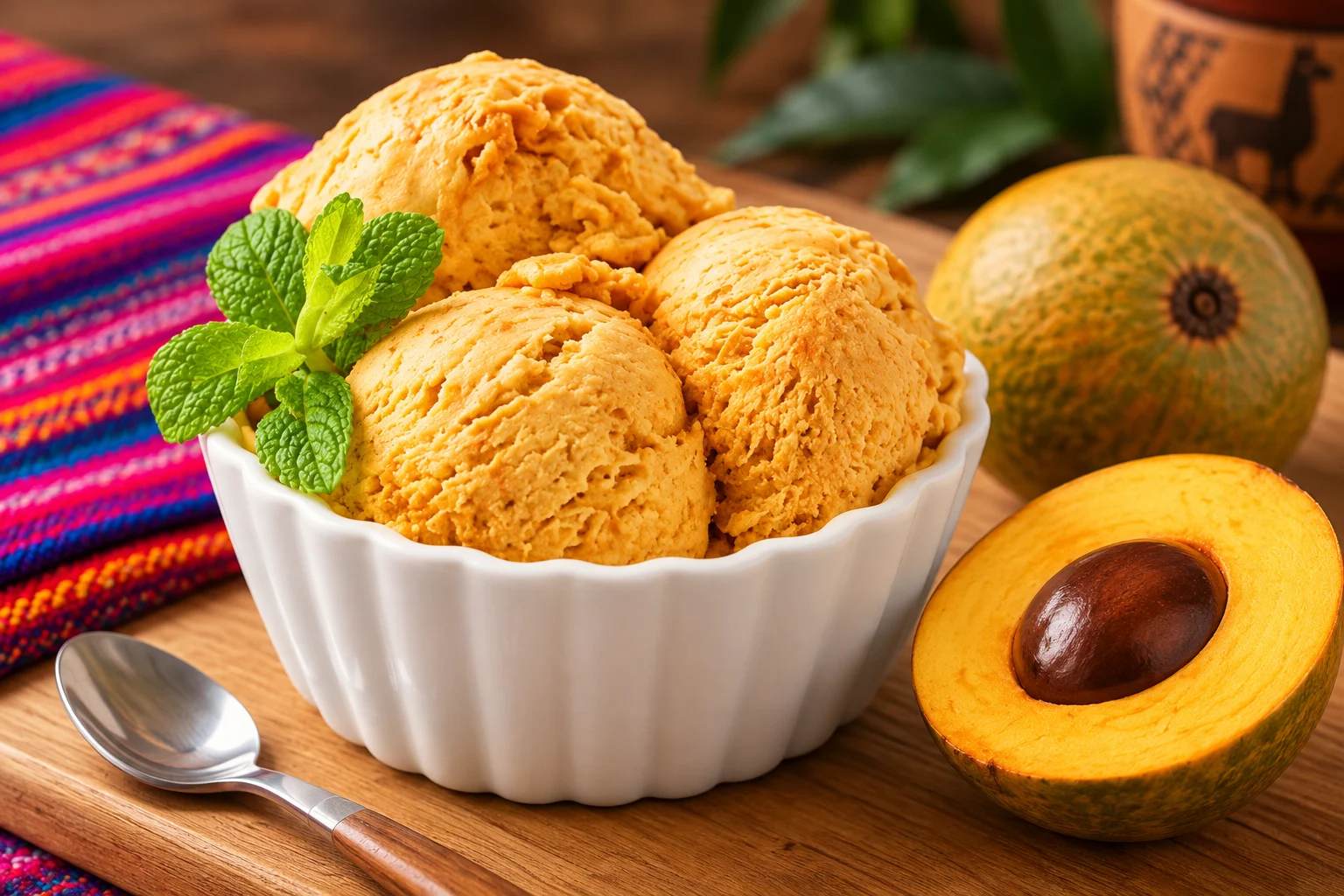
Lúcuma is an Andean fruit with a flavor somewhere between maple syrup, butterscotch, and sweet potato. It's the most popular ice cream flavor in Peru, beating out chocolate and vanilla, and it also shows up in cakes, mousses, and milkshakes. Once you try it, you'll understand why Peruvians are so proud of it.
Turrón de Doña Pepa
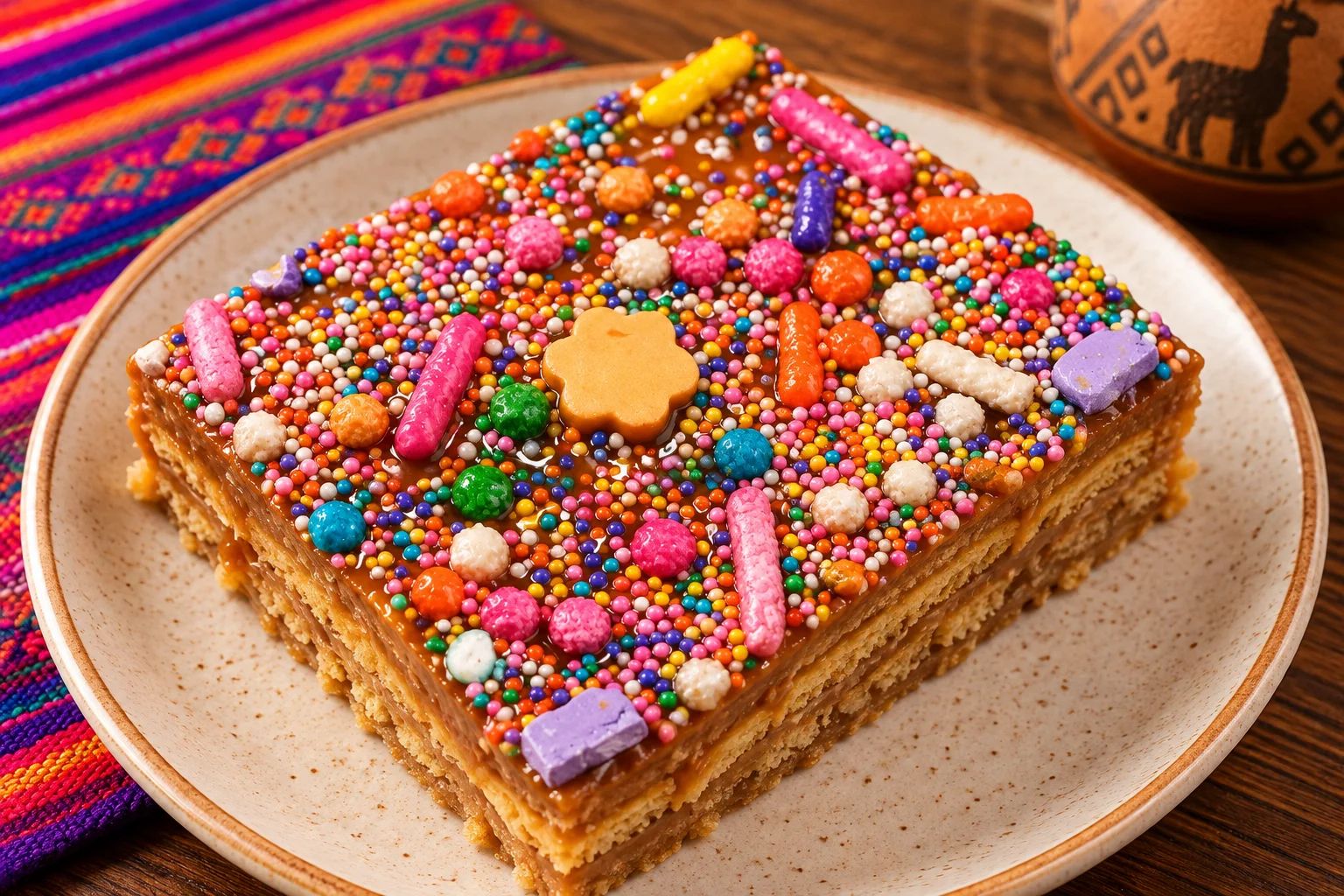
A layered bar made of anise-flavored cookie sticks soaked in a thick syrup of chancaca and fruit, then topped with colorful candy sprinkles. It's tied to the Señor de los Milagros (Lord of Miracles) festival in October, one of the largest religious processions in the Americas. According to tradition, an enslaved Afro-Peruvian woman named Josefa Marmanillo created it in the 1800s as an offering after regaining movement in her arms.
Arroz Zambito
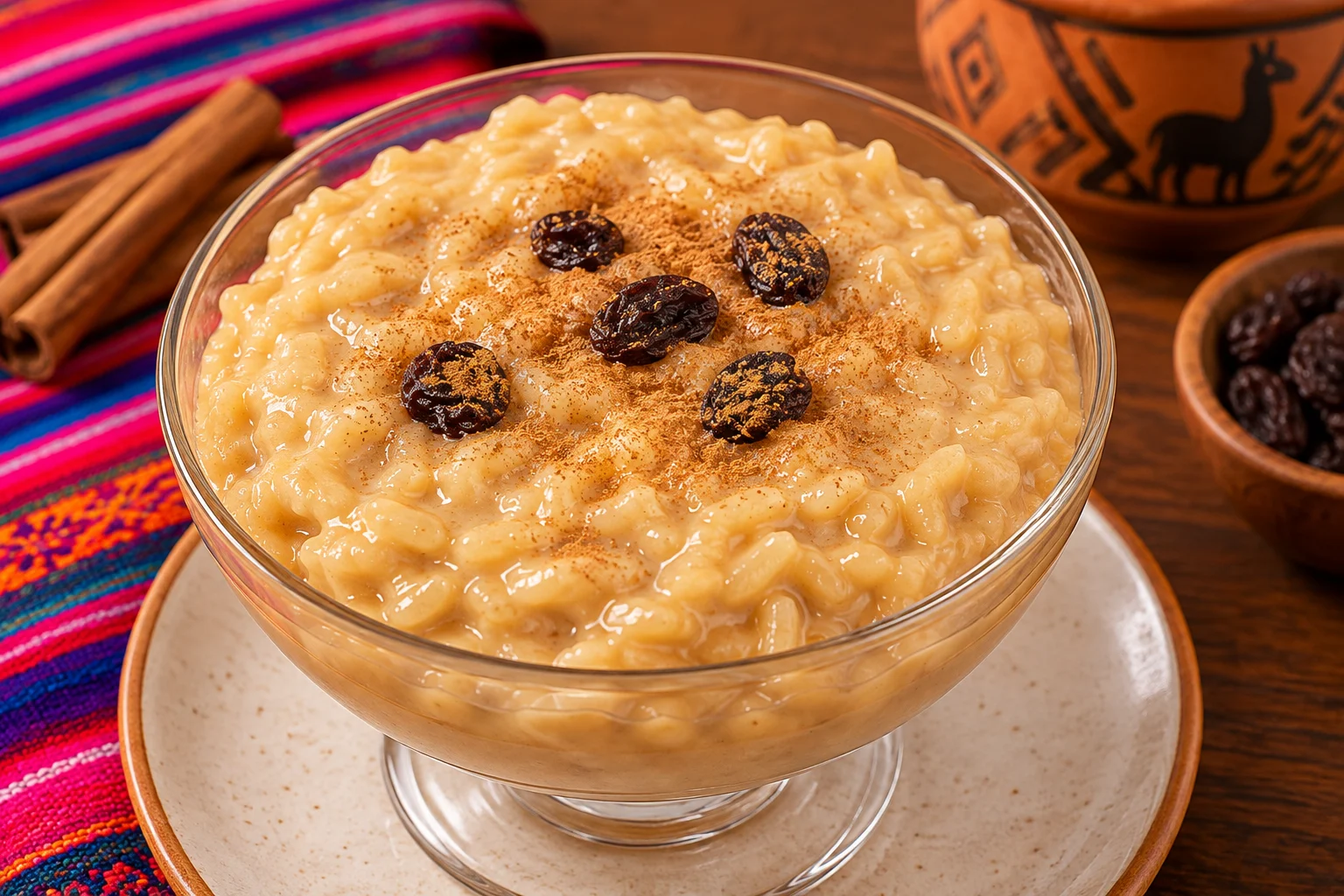
If arroz con leche had a darker, spicier sibling, this would be it. Arroz zambito is a rice pudding sweetened with chancaca instead of white sugar, which gives it a caramel-brown color, and it's loaded with coconut, raisins, and sometimes nuts, plus cinnamon and cloves. It's a beloved Afro-Peruvian dessert, mostly made at home and in criollo restaurants in Lima.
Chocotejas
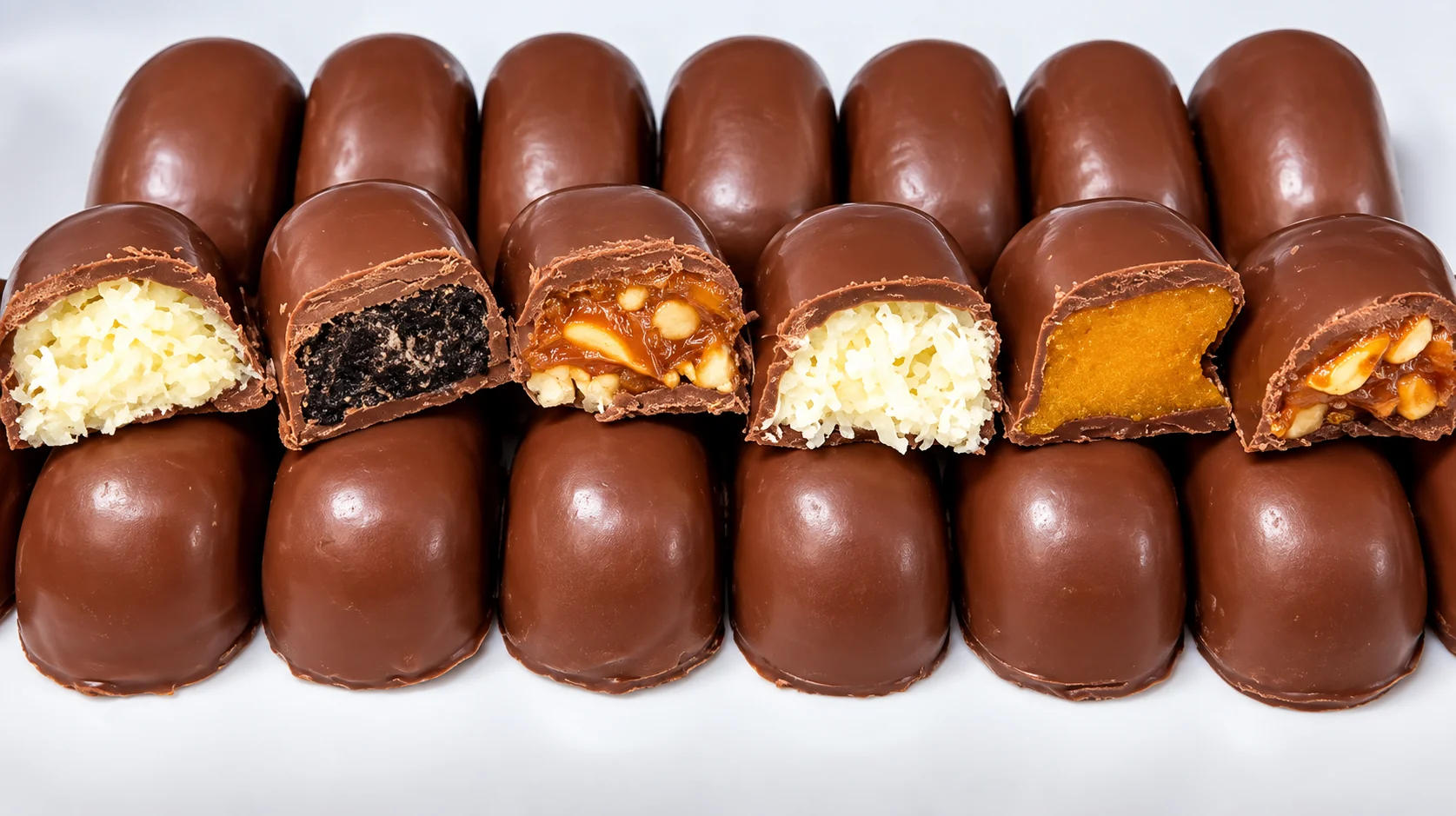
Ica's favorite sweet and one of the best edible souvenirs in Peru. Chocotejas are bite-size candies filled with manjar blanco and a pecan, a dried fig, a candied citrus peel, or a pisco-soaked raisin, then dipped in chocolate. They come from the older teja, the same filling wrapped in a white sugar shell. If you visit Ica or Paracas, you'll see shops selling boxes of them everywhere.
Crema Volteada
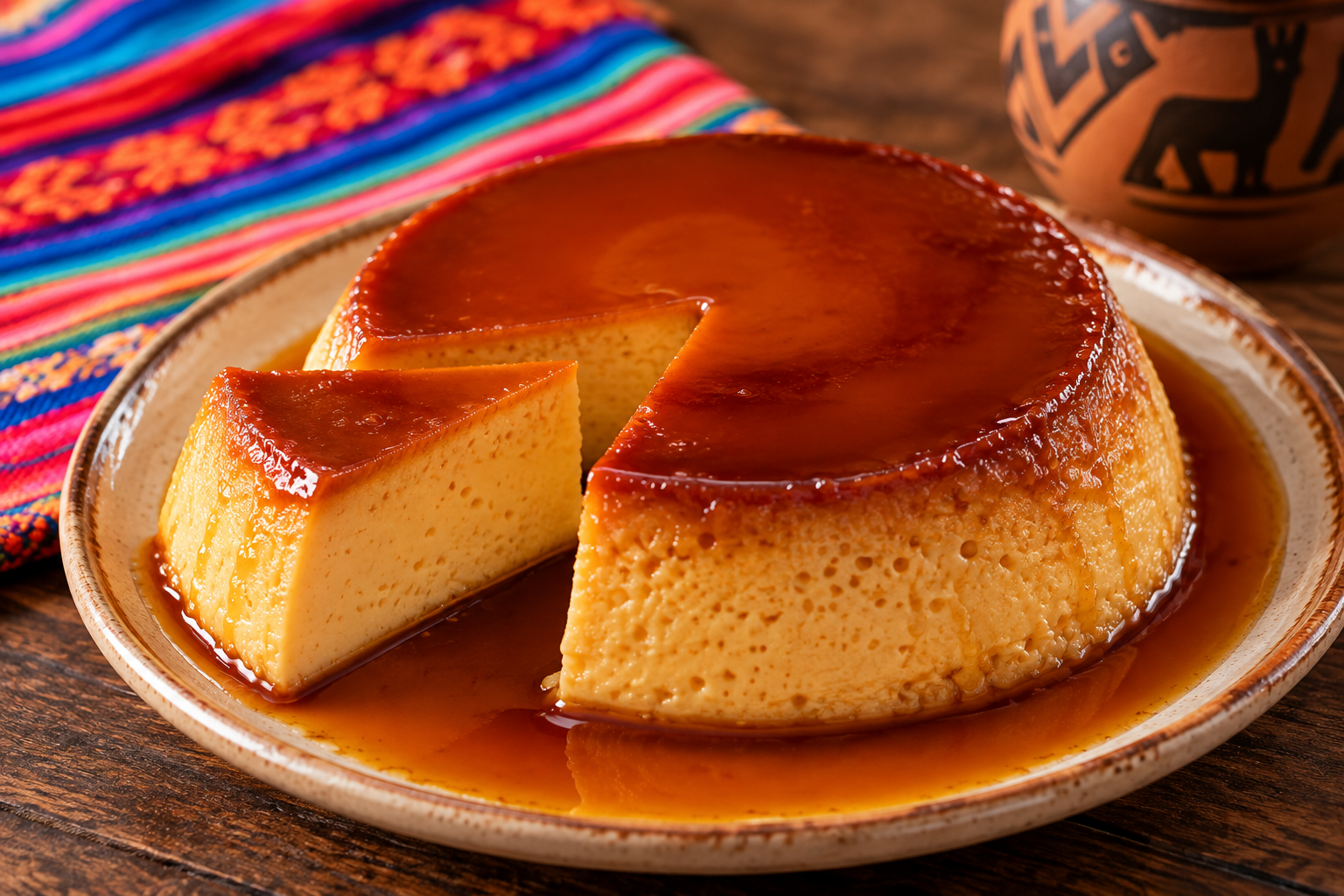
Peru's take on flan, made with condensed and evaporated milk, which makes it denser and creamier than the Spanish version. It's baked in a caramel-coated mold and flipped over before serving, which is where the name, meaning “upside-down cream,” comes from.
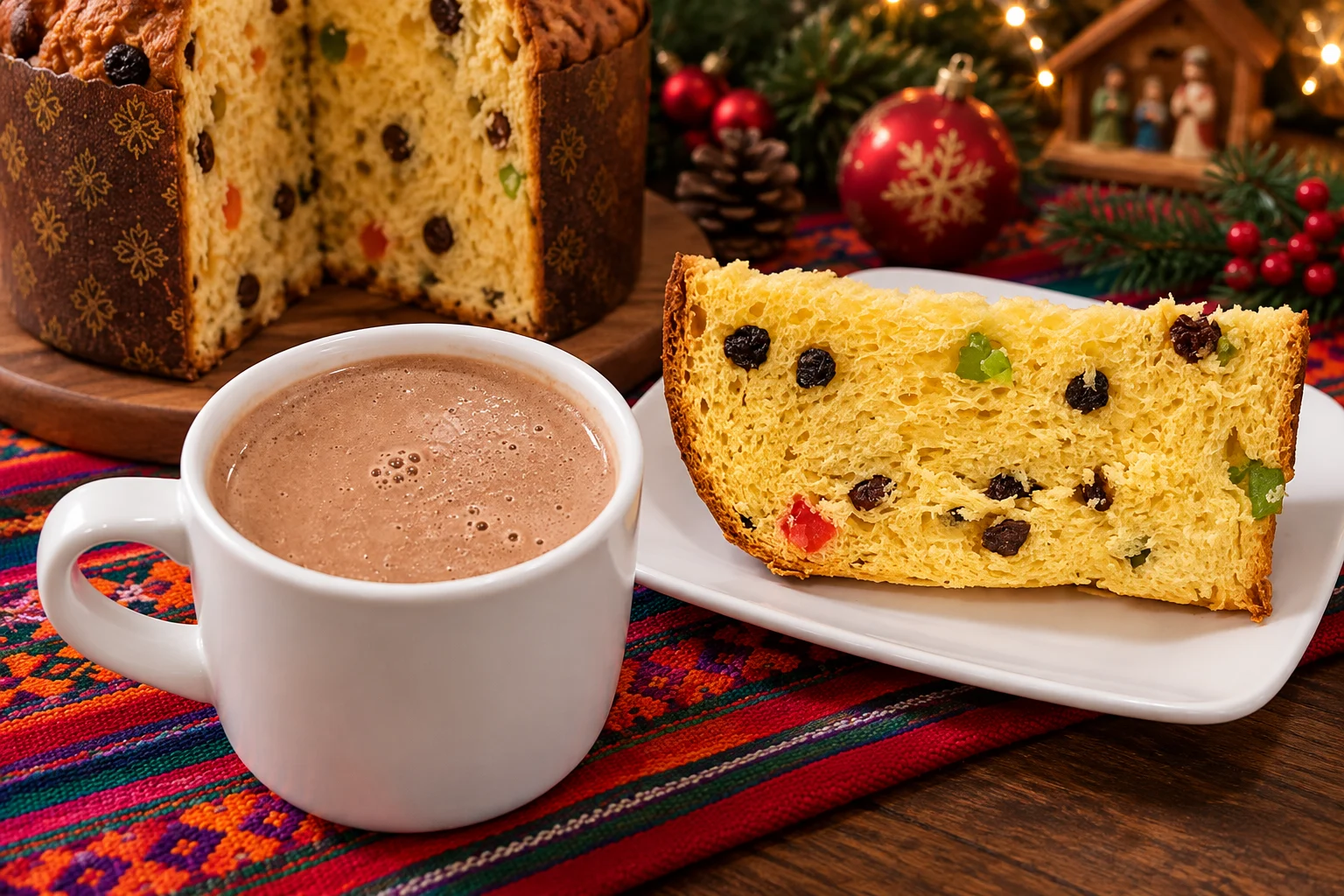
Chocolate and Panetón at Christmas
Here's a tradition that catches visitors off guard. In December, Peruvians drink thick, spiced hot chocolate with a slice of panetón (the Italian-style fruit bread), even when it's summer and hot outside on the coast. Companies and communities host chocolatadas, events where hot chocolate and panetón are handed out to kids. In the Cusco region, the cacao often comes from the valleys of La Convención, and you'll find plenty of chocolate shops in the city where you can learn how Peruvian cacao turns into a bar.
Quick Guide to Peruvian Desserts
| Dessert | Main ingredients | Where to find it | Best time |
|---|---|---|---|
| Picarones | Sweet potato, squash, chancaca syrup | Street carts nationwide | Evenings |
| Suspiro a la limeña | Milk caramel, port meringue | Lima bakeries and restaurants | Year-round |
| Mazamorra morada | Purple corn, dried fruit, spices | Markets, bakeries | Year-round, peaks in October |
| Arroz con leche | Rice, milk, cinnamon | Everywhere | Year-round |
| Alfajores | Shortbread, manjar blanco | Bakeries nationwide | Year-round |
| King Kong | Cookie layers, manjar blanco, pineapple | Lambayeque, souvenir shops | Year-round |
| Queso helado | Milk, coconut, cinnamon | Arequipa | Year-round |
| Turrón de Doña Pepa | Anise cookies, fruit syrup | Lima and nationwide | October |
| Arroz zambito | Rice, chancaca, coconut, raisins | Lima homes and criollo spots | Year-round |
| Chocotejas | Manjar blanco, nuts or fruit, chocolate | Ica, souvenir shops | Year-round |
| Hot chocolate and panetón | Cacao, spiced milk, fruit bread | Everywhere | December |
SWEET TIP
Bakeries in Peru often sell desserts by the slice or by the cup for just a few soles. Instead of ordering one big dessert, grab three or four small ones and share. It's the easiest way to try a bit of everything.
What Is Peruvian Food Culture Like?
To really understand Peruvian food culture, you have to understand that food here is about people as much as flavor. Meals are shared, recipes are passed down, and every region defends its own version of a dish with real passion. A few customs are worth knowing before you sit down at the table.
Lunch Is the Main Meal
Peruvians eat their biggest meal in the middle of the day, and it usually comes in courses: a soup or starter (the entrada), a main dish (the segundo), and a drink. That's why the menú del día exists, and why many traditional restaurants, especially cevicherías and picanterías, open only for lunch.
Every Dish Has Its Partners
Classic Peruvian plates are almost never served alone. Ceviche comes with sweet potato and corn to soften the acid, rocoto relleno comes with pastel de papa to cool the heat, and rice shows up next to nearly everything. Those pairings aren't random. They're how cooks have balanced flavor, texture, and nutrition for generations, so try dishes the way they're meant to be served before you start swapping sides.
Sundays Are for Family Food
Sunday is the big family food day. In Cusco and Arequipa, it starts with adobo in the morning. In Lima, a lot of families head out for pollo a la brasa or a long seafood lunch. Across the Andes, fiestas, weddings, and harvest celebrations often mean a pachamanca, a roasted cuy, or a huge pot of soup shared with the whole community.
Peru Celebrates Its Food on the Calendar
Peruvians are so proud of their food that several dishes and drinks have their own national days. If your trip lines up with one of these, expect special menus and crowded restaurants.
| Celebration | When |
|---|---|
| National Pisco Sour Day | First Saturday of February |
| National Ceviche Day | June 28 |
| Day of Pollo a la Brasa | Third Sunday of July |
| National Pisco Day | Fourth Sunday of July |
| Day of Peruvian Gastronomy | Second Sunday of September |
| Señor de los Milagros (turrón season) | October |
| Corpus Christi in Cusco (chiriuchu) | June, date varies with the religious calendar |
Where Can You Find the Best Peruvian Food?
Good food is everywhere in Peru, but each city has its own specialty. Here's where to go for what.
Lima
The capital is where you'll find the widest range, from fishermen's cevicherías to world-famous tasting menus. Head to Miraflores and Barranco for seafood lunches, Barrio Chino (Chinatown) in the historic center for chifa, and restaurants like Central and Maido if you want to splurge on a meal you'll talk about for years.
Cusco and the Sacred Valley
This is the place for Andean cooking. Eat at the food stalls in San Pedro Market, look for picanterías in San Blas, try cuy in Tipón, chicharrón in Saylla, and bread in Oropesa. Out in the Sacred Valley, some communities and lodges prepare pachamanca for visitors, which is one of the most memorable food experiences in the region.
Arequipa
Arequipa's historic picanterías serve rocoto relleno, chupe de camarones, adobo, and ocopa at lunchtime, and many of them have been run by the same families for generations. Finish with a cup of queso helado near the Plaza de Armas.
Puno and Lake Titicaca
Go for fresh lake trout, quinoa dishes, and hearty soups. Many visitors say a simple home-cooked lunch with a family on the islands was one of the best meals of their trip.
Ica and Paracas
Pair fresh seafood by the ocean in Paracas with a visit to the pisco bodegas around Ica, where you can taste pisco straight from the source and pick up a box of chocotejas on the way out.
What Is Peruvian Street Food Like?
Some of the best meals you'll have in Peru cost a couple of soles and come from a cart on the corner. Peruvian street food is fast, cheap, and tied to specific times of day. In the morning, look for tamales, sandwiches de chicharrón, and emoliente, a warm herbal drink made from barley and medicinal plants. By evening, anticucho grills fire up, and carts selling picarones and salchipapas (fries with sliced hot dogs) take over the streets.
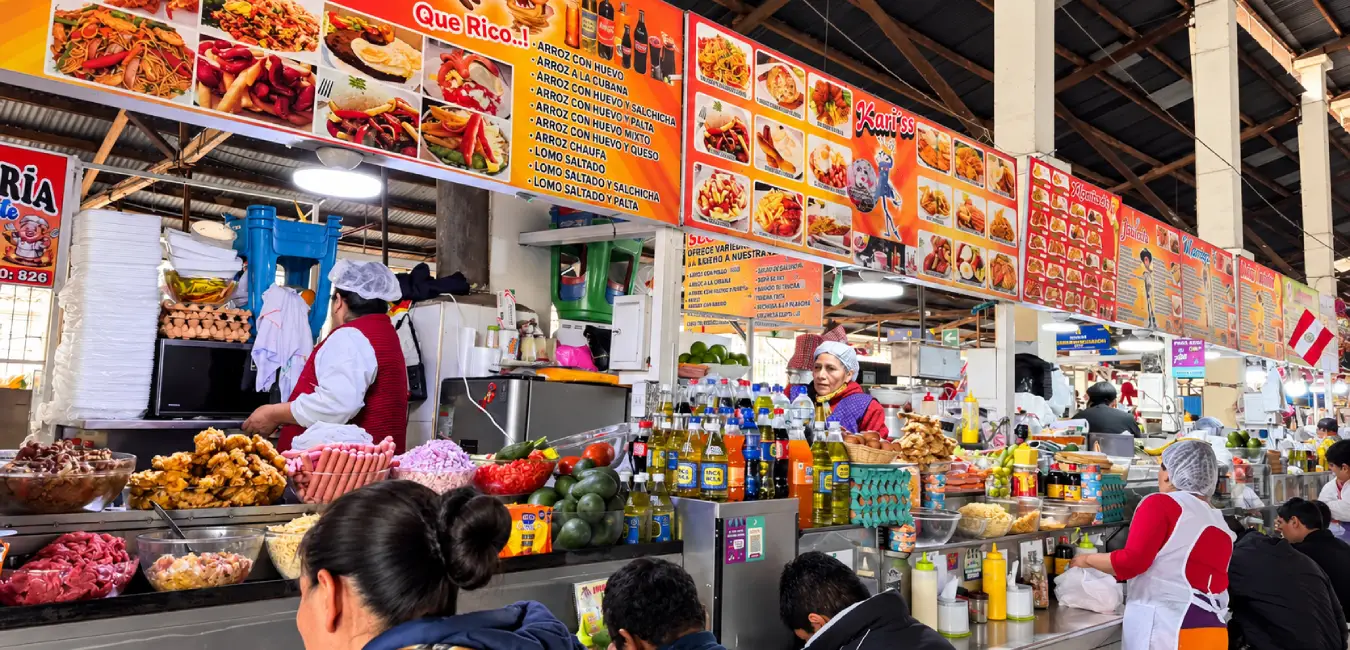
Local markets are another great place to eat. In Cusco, San Pedro Market has rows of food stalls selling soups, fresh juices, and set lunches. Pull up a stool at a busy one and just order what the people next to you are having.
Is Peruvian Food Spicy?
Not as much as people think. Ají amarillo gives many dishes color and a gentle warmth, but it's more fruity than fiery. The real heat usually comes on the side, in small bowls of sauce made with rocoto or ají limo, so you can add as much or as little as you want. The exceptions are rocoto relleno and some ceviches, which can bite back. If you're sensitive to spice, ask for your dish sin ají or sin picante (without chili), or ask for the sauce aparte (on the side). And if you have food allergies, double-check the sauces, since ají, huacatay, peanuts, and cheese show up in a lot of them.
Is It Safe to Eat Street Food and Ceviche in Peru?
Generally, yes, as long as you use a little common sense. Most travelers eat their way across Peru without any problems. A few habits go a long way:
- Eat where locals eat, a long line of Peruvians is the best review a food stall can get.
- Have ceviche at lunch, at a busy cevichería, since that's when the fish is fresh.
- Drink bottled or filtered water, and don't drink from the tap.
- Be careful with raw salads and unpeeled fruit during your first few days, especially at small stalls.
- Carry small bills and coins for markets and street carts, since most stalls don't take cards.
- At high altitude, eat light meals when you first arrive. Your body is working harder than usual, and heavy food at night can make altitude sickness feel worse.
How Much Does Food Cost in Peru?
Eating in Peru can be incredibly cheap or seriously expensive, depending on where you go. The best-value meal is the menú del día, a set lunch that usually includes a soup or starter, a main dish, and a drink. At local restaurants, it typically runs around S/12 to S/25 (roughly US$3 to US$7), and it's how most Peruvians eat lunch on a weekday.
| Type of meal | Approximate cost per person |
|---|---|
| Street snacks (tamales, picarones, emoliente) | S/2 to S/10 |
| Menú del día at a local restaurant | S/12 to S/25 |
| Main dish at a mid-range restaurant | S/35 to S/70 |
| Ceviche at a good cevichería | S/35 to S/60 |
| Pisco sour at a bar | S/20 to S/40 |
| Tasting menu at a top Lima restaurant | US$150 to US$300+ |
Prices are approximate and change by city and season. Tourist areas like Cusco's Plaza de Armas tend to cost more than neighborhoods just a few blocks away.
Can Vegetarians and Vegans Eat Well in Peru?
Definitely, though it takes a little more planning outside big cities. Traditional Peruvian cuisine is meat-heavy, but a lot of classics are naturally vegetarian or easy to adapt: papa a la huancaína, kapchi, quinoa soups, tamales with cheese, and fresh salads made with Andean corn and fava beans. Lima and Cusco both have plenty of vegetarian and vegan restaurants. It helps to know a few phrases: soy vegetariano/a (I'm vegetarian), sin carne (without meat), and sin pollo (without chicken), since some people don't count chicken as meat. Also, ask about hidden ingredients. A vegetable soup can still be made with beef broth, and causa often comes with chicken or tuna unless you ask for a vegetable filling.
How Is Peruvian Food Different From Mexican or Other Latin American Food?
A lot of first-time visitors expect tacos, tortillas, and beans with every meal. That's not really Peru. Corn tortillas aren't part of everyday eating here, and potatoes and rice do most of the heavy lifting instead. The heat is also different. Mexican cooking leans on a wide range of dried chiles, while Peruvian food is built around fresh ají amarillo and rocoto, and the spice is often served on the side as a sauce.
The other big difference is Asian influence. No other cuisine in Latin America has absorbed Chinese and Japanese cooking as deeply as Peru has, and two whole styles of cooking came out of it.
What Is Chifa?
Chifa is Peruvian-Chinese food, and it's everywhere. Cantonese immigrants began arriving in 1849 to work on coastal plantations, and they started cooking with local ingredients, and over time their dishes became part of everyday Peruvian eating. Stir-frying in a wok, soy sauce (called sillao), ginger, and scallions all came from this tradition. Arroz chaufa, a Peruvian take on fried rice, is one of the most common lunches in the country, and you'll find chifa restaurants in pretty much every town, including Cusco.
What Is Nikkei Cuisine?
Nikkei is the blend of Japanese and Peruvian cooking. Japanese immigrants, many of them working near the coast, brought a deep respect for raw fish and precise knife work. That influence shows up in dishes like tiradito, thin slices of raw fish dressed with a spicy citrus sauce, which feels like a cross between sashimi and ceviche. In Lima, Maido is the restaurant most people point to when they talk about Nikkei at its best.
Frequently Asked Questions About Peruvian Food
What is typical Peruvian food?
Typical Peruvian food includes ceviche, lomo saltado, ají de gallina, arroz con pollo, papa a la huancaína, and pollo a la brasa. Most meals are built on native ingredients like potatoes, corn, chili peppers, and quinoa, combined with rice and influences from Spain, Africa, China, and Japan.
What is considered a delicacy in Peru?
Cuy (guinea pig) is the best-known delicacy, especially in Cusco and the Andes, where it's served at celebrations. Pachamanca and Arequipa's chupe de camarones are also considered special-occasion food.
What is Lima's signature dish?
Ceviche is Lima's signature dish, followed closely by causa limeña and ají de gallina. Lima is often called the gastronomic capital of South America, and it's where most of Peru's fusion cooking developed.
Why is Peruvian food so different from other cuisines?
It blends thousands of years of Indigenous ingredients and techniques with Spanish, African, Chinese, Japanese, and Italian influences. Add Peru's huge range of climates, from ocean to mountains to rainforest, and you get a cuisine with an unusually wide variety of flavors.
What is the most popular food in Peru?
Ceviche is the most iconic, but in day-to-day life, pollo a la brasa and lomo saltado are probably what Peruvians eat most often. All three are worth trying.
What is a typical Peruvian breakfast?
It's usually simple. Think bread with cheese, avocado, or chicharrón, plus coffee, tea, or quinoa drinks. On weekends, tamales and heartier sandwiches are common.
Do Peruvians really eat guinea pig?
Yes, especially in the Andes. Cuy has been raised for food for thousands of years, and it's served at festivals and family celebrations. It's a real tradition, not just a tourist attraction.
What is Peru's national drink?
The pisco sour is the national cocktail, and pisco is the national spirit. For non-alcoholic drinks, chicha morada and Inca Kola are the most popular.
What is the best city in Peru for food?
Lima is widely considered the food capital of South America. That said, Arequipa is famous for its picanterías, and Cusco is the place for traditional Andean cooking.
What Peruvian dishes should I try first?
If it's your first time, start with easy crowd-pleasers like lomo saltado, ají de gallina, and pollo a la brasa. Once you're comfortable, move on to ceviche, anticuchos, and Andean specialties like pachamanca, cuy, or chiriuchu.
Can you eat ceviche in Cusco?
Yes. Even though Cusco is high in the mountains, fish arrives fresh from the coast every day, and the city has good cevicherías. You'll also find ceviche made with local trout. Just stick to busy places and eat it at lunch.
What is the difference between chifa and nikkei?
Chifa is Peruvian-Chinese cooking, built on wok techniques and soy sauce brought by Cantonese immigrants. Nikkei is Peruvian-Japanese cooking, focused on raw seafood, precise cuts, and clean, citrusy flavors.
What is the most popular Peruvian dessert?
Picarones and suspiro a la limeña are the most famous, and lúcuma ice cream is the most popular ice cream flavor in the country. In Arequipa, queso helado is the local favorite.
Is Peruvian food healthy?
A lot of it is. Ceviche, quinoa dishes, soups, and grilled fish are fresh and nutritious. Fried dishes and creamy sauces are richer, so it really depends on what you order.
When do Peruvians eat lunch?
Lunch is the main meal of the day, usually between 1:00 and 3:00 p.m. Dinner tends to be lighter and later.
What are 20 popular Peruvian dishes?
Some of the most popular Peruvian dishes include ceviche, lomo saltado, ají de gallina, pollo a la brasa, causa limeña, anticuchos, papa a la huancaína, arroz con pollo, rocoto relleno, pachamanca, cuy, chiriuchu, tacu tacu, arroz chaufa, juane, tacacho con cecina, carapulcra, chupe de camarones, aguadito de pollo, and picarones.
Is Peruvian food similar to Mexican food?
Both cuisines use ingredients such as corn, potatoes, and chili peppers, but their flavors and cooking traditions are different. Peruvian food also reflects strong Indigenous, Spanish, African, Chinese, Japanese, and Italian influences.
What are the top 10 foods to try in Peru?
For a first visit, try ceviche, lomo saltado, ají de gallina, pollo a la brasa, causa limeña, anticuchos, papa a la huancaína, pachamanca, cuy, and chiriuchu.
What is the most unusual food in Peru?
Some foods that may seem unusual to visitors include cuy (guinea pig), anticuchos made with beef heart, and traditional Amazonian dishes. These foods are part of Peru's long-standing culinary traditions.
Why is Peruvian food so famous?
Peruvian food is famous for its regional diversity, native ingredients, and combination of Indigenous traditions with Spanish, African, Chinese, Japanese, and Italian influences. Peru's coast, Andes, and Amazon also contribute very different ingredients and cooking styles.
Is Peruvian food spicy?
Peruvian food can be spicy, but most dishes are not extremely hot. Ingredients such as ají amarillo and rocoto add flavor and heat, and you can usually ask for a milder version.
Is Peruvian food Hispanic or Latino?
Peruvian cuisine is part of Latin American cuisine, but it comes from many cultural traditions. Its Indigenous roots have been combined with Spanish, African, Chinese, Japanese, Italian, and other influences over centuries.
What is the difference between Peruvian and Mexican food?
Peruvian and Mexican cuisine share ingredients such as corn and chili peppers, but they have different histories, flavors, and techniques. Peruvian cuisine is particularly known for ceviche, Andean ingredients, chifa, and Nikkei cooking.