
The weather in Cusco runs on two seasons, not four. Days sit near 68°F all year, nights fall close to freezing from June through August, and the rain arrives between November and March, with the dry season running May to October. Most people picture Peru and think jungle heat, then step out of the airport at 11,150 feet and realize the t-shirt was a mistake, because up here altitude beats latitude every time. That is also why most Peru weather advice lets you down, since it is written for Lima or the Amazon. What follows is what the weather in Cusco, Peru actually does across the year, and what it means for hiking, packing, and choosing your dates. On spelling, you will see the city written both ways, so Cuzco weather and Cusco weather mean the same thing.
Two Seasons, Not Four in Cusco
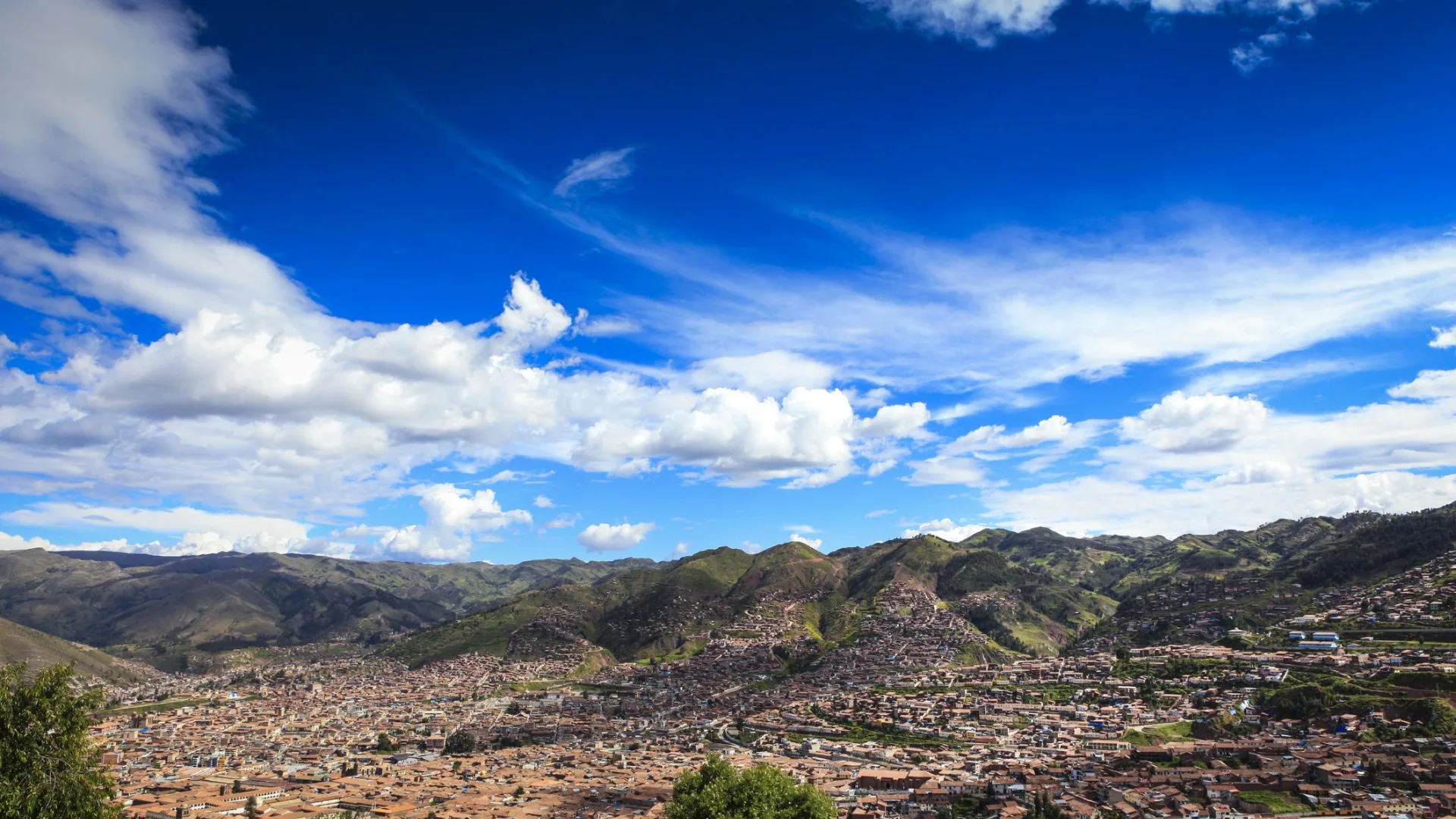
There is no actual concept of seasons such as spring, summer, autumn, and winter in Cusco; only a dry season and a wet season, and all planning will ultimately depend on whichever season you visit.
The dry season occurs from May to October, with clear skies, cold evenings, great trail conditions, and most visitors.
The wet season occurs from November to April, with warm nights, lush green surroundings, heavy rains during the day, and very few visitors.
April and October are in-between months, and most visitors prefer visiting at these times.
The daytime temperatures do not fluctuate much all year round. The temperature is always 66°F to 70°F (19°C to 21°C) whether it is January or July; only the rain and nighttime temperatures change.
One Thing That Trips People Up
In Peru, located in the southern hemisphere, everything is reversed. July is the winter season, while January is the summer season. This can be a surprise to many tourists coming from North America and Europe, where "summer" implies clear skies, but in Cusco, it means rainy season, and "winter" is the time with the best visibility.
It explains an apparently contradictory phenomenon the coldest nights and hottest days occur during the same season June through August.
If you prefer dry trails and views of Machu Picchu, travel from May to September and make your reservations well in advance.
If you would like a more relaxed Cusco and cheaper costs, travel during April, October, or November and bring a rain jacket.
Cusco's Elevation Explains Almost Everything
The altitude of Cusco stands at 11,150 feet (3,400 meters). It is even more elevated than many of the ski resorts found in Colorado. It also contains one third the amount of oxygen present in the sea level air and has low amounts of heat.
Why the Sun Feels Stronger Here
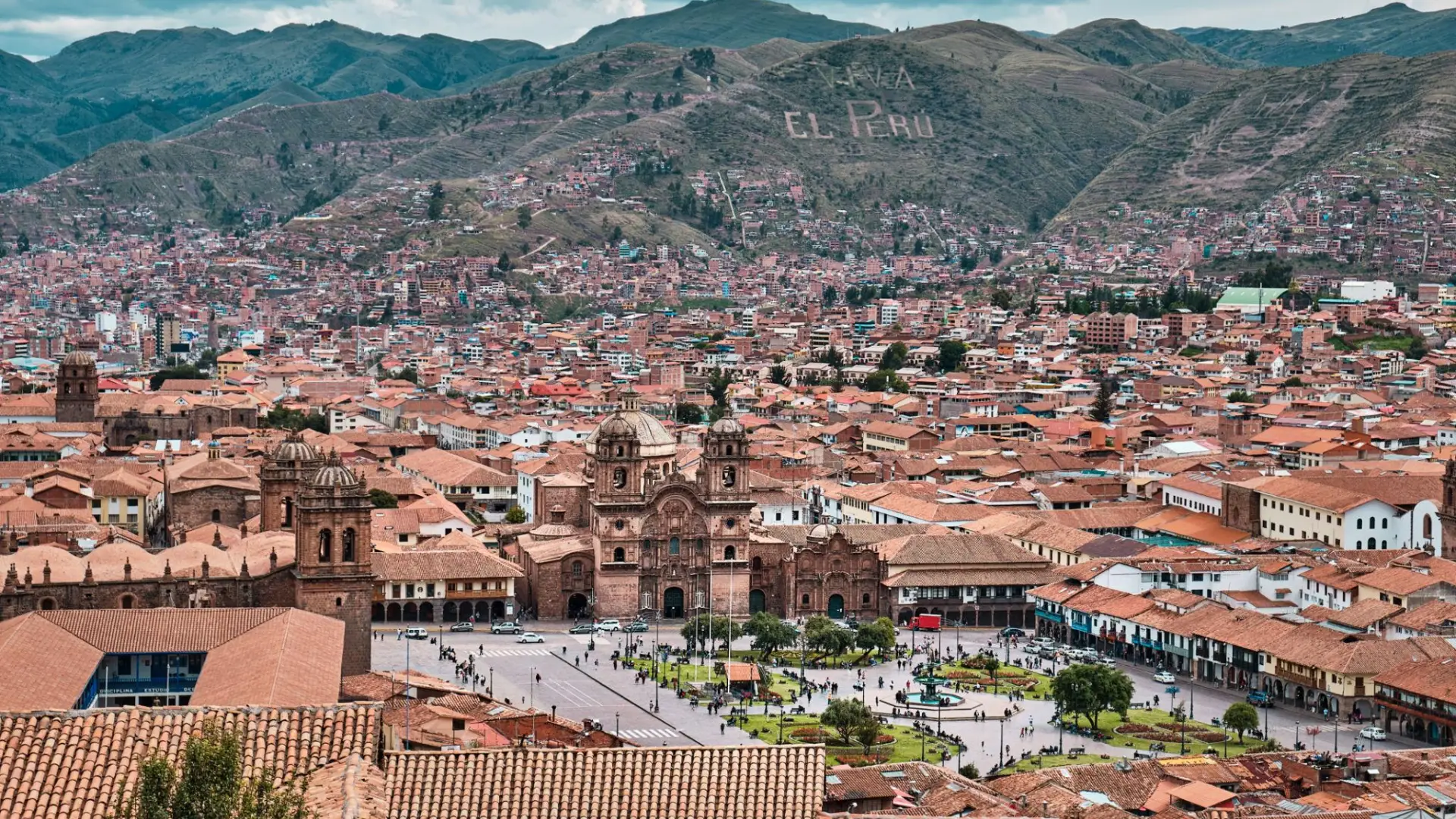
The atmosphere is thin between you and the sun, and you are located near the equator. The UV index reaches an extreme level in Cusco at any time, including when the weather is cool. Everyone gets burned on cloudy afternoons in July because the air temperature was never hot enough.
Use sunscreen daily and reapply it. Take a hat with a brim and UV blocking sunglasses with you. This is not a cliché for travel blogs but our most common traveler complaint in their first 48 hours in Peru.
The Temperature Swing Between Noon and Midnight
This thin and dry air is incapable of retaining heat. With the sun setting behind the mountains, the temperature in Cusco, Peru will rapidly fall. A day of June with temperatures reaching up to 68°F by 2 PM might fall to as low as 34°F by 4 AM.
A thirty-degree difference is one of the biggest things that gets underestimated regarding the Cusco temperature.
The Air Is Dry Enough to Crack Your Skin
No one talks about this issue until they experience it. The atmosphere in Cusco is quite dry, even as low as 45 percent relative humidity between May and August.
Make sure to bring along plenty of lip salve, hand lotion, and moisturizer, while also consuming more water than you think is necessary. Even the dry air will remove fluids from you through your breathing.
WHAT THIS MEANS FOR YOU
See if there is heating at your hotel because many old hotels within the historical core lack it, so the rooms are as cold as the night air.
The hot water bottle will cost you around three soles at the markets and will make a great difference in June and July.
The Dry Season (May Through October)
The reason why this period is called high season. From May to September rain will be infrequent enough to allow planning treks without taking chances on the weather. Mornings begin clear and cold, quickly warm under the sun and remain so till afternoon.
Dry Season Weather: How It Looks Like On A Typical Day
6 a.m.: Cold. Somewhere between 32°F and 40°F. Frost on the roofs in June and July.
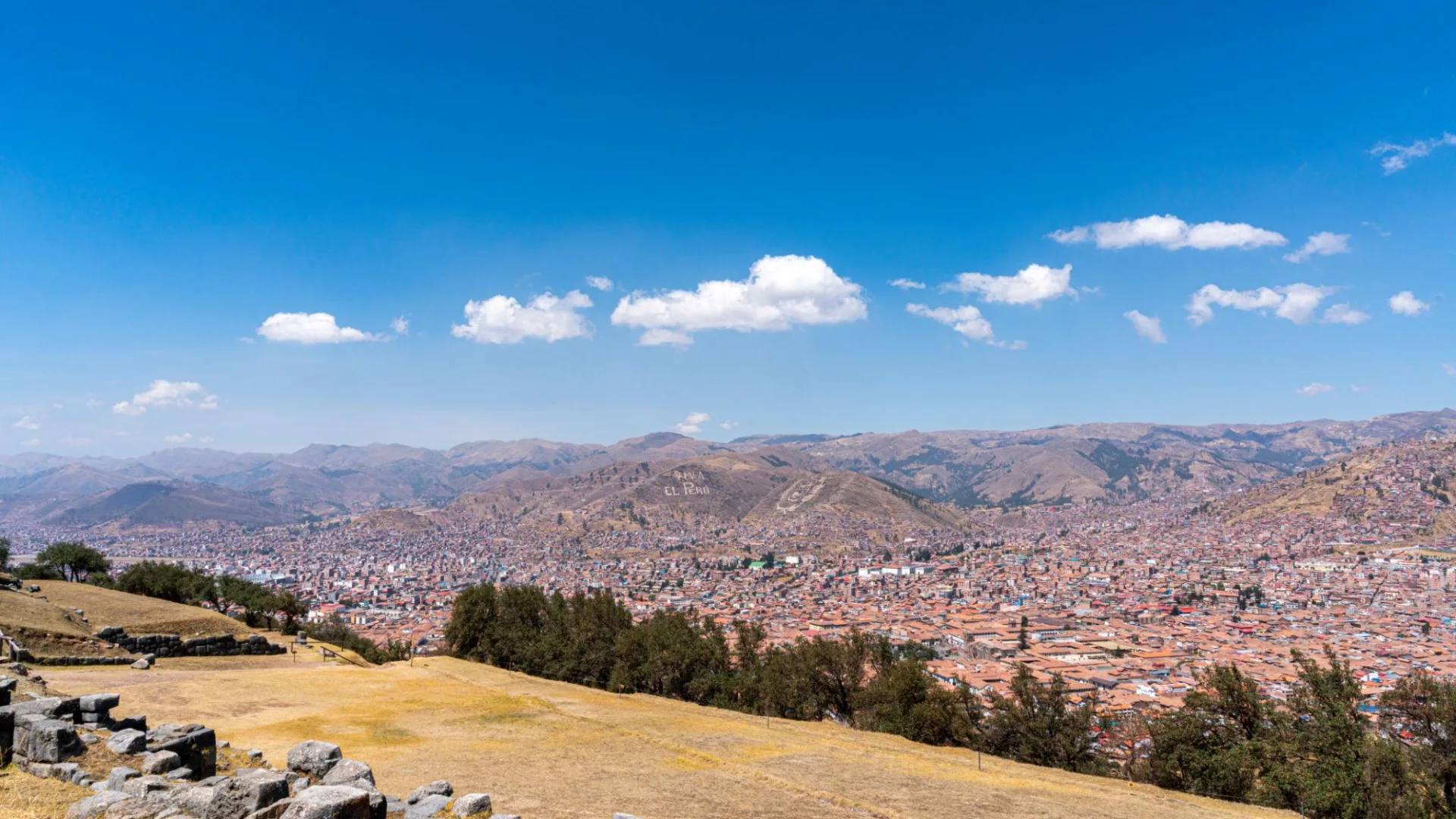
9 a.m.: The sun rises above the ridge line and the whole city starts warming up rapidly. You start to get rid of your clothes.
Noon – 3 p.m.: The warmest time of the day. About 68°F when sunny and cooler in the shadow.
5 p.m.: Sun goes down and the temperature drops within minutes.
8 p.m. and later: Cold again. Jacket weather each night.
The Cold Snap Nobody Warns You About
Every year during the dry season, cold winds blow from the south and bring very low temperatures for two or three days. Locals know it as friaje. This weather normally occurs in June through August.
When there is a friaje, there may be snowfall and sleet at high altitude mountain passes along the Inca Trail and Salkantay trails and night temperatures will drop to below 25°F. If you have come prepared for it, then it poses no threat, but for those that came without, it will ruin their trip.
August Wind
Those wondering what the weather will be like in Peru in August need to hear this one. There is a dry and persistent wind that blows through the Sacred Valley during August. It is not particularly strong, but it will make you feel dry quickly and cause chapped lips. Dust becomes a problem while hiking.
The Wet Season (November Through April)
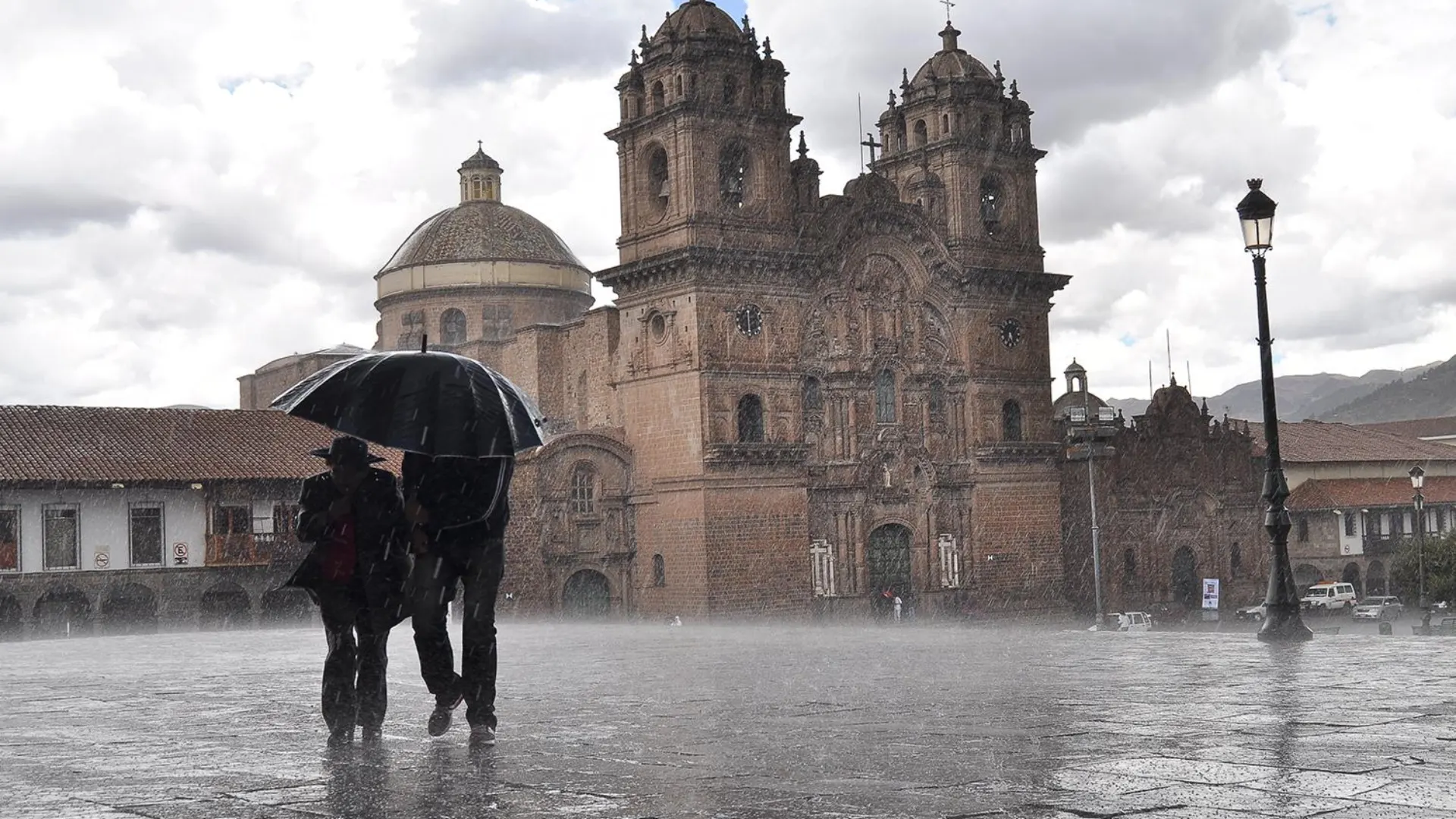
The wet season has received unfair treatment in the form of bad publicity. Yes, it is true that it rains; however, no, it does not rain for all of the day.
How Much It Actually Rains
Cusco receives about 28 inches of rainfall annually, and the majority of this rainfall happens between December and March. In January and February, when the rainfall is greatest, it averages almost 5.5 inches of rain on 18 to 25 rainy days.
The timing is even more important than the amount. Days during the wet season start clear or partly cloudy. The clouds build by noon, and rainfalls occur in the late part of the day or night.
Hail, Not Snow
Cusco experiences more hail than most people think, and it can be a shock when it happens for the first time. The hail stones are about the size of a nickel and fall hard for 5 or 10 minutes before stopping suddenly, like some valve had been turned off.
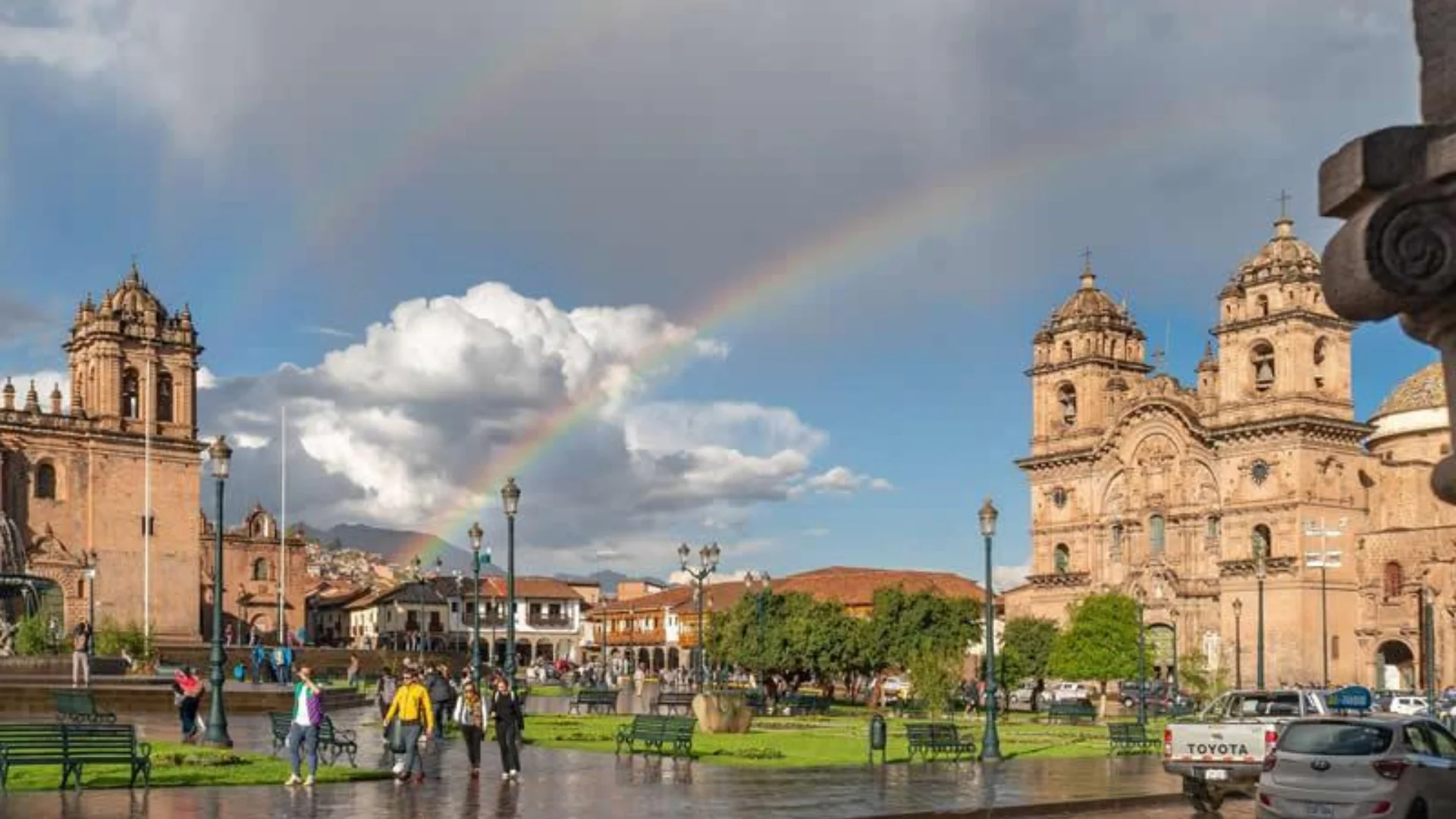
There is an adage in the Andes about how quickly the weather here changes its mind. For a day in the wet season, this is an understatement. Sunshine, clouds, hail and a rainbow can all occur in the same day.
What Rain Means for Machu Picchu and the Trails
Machu Picchu operates throughout the year, and wet season mornings here can be truly beautiful. Fog flows in between terraces, rises, and falls again. Many of the most beautiful pictures of the site have been taken in February.
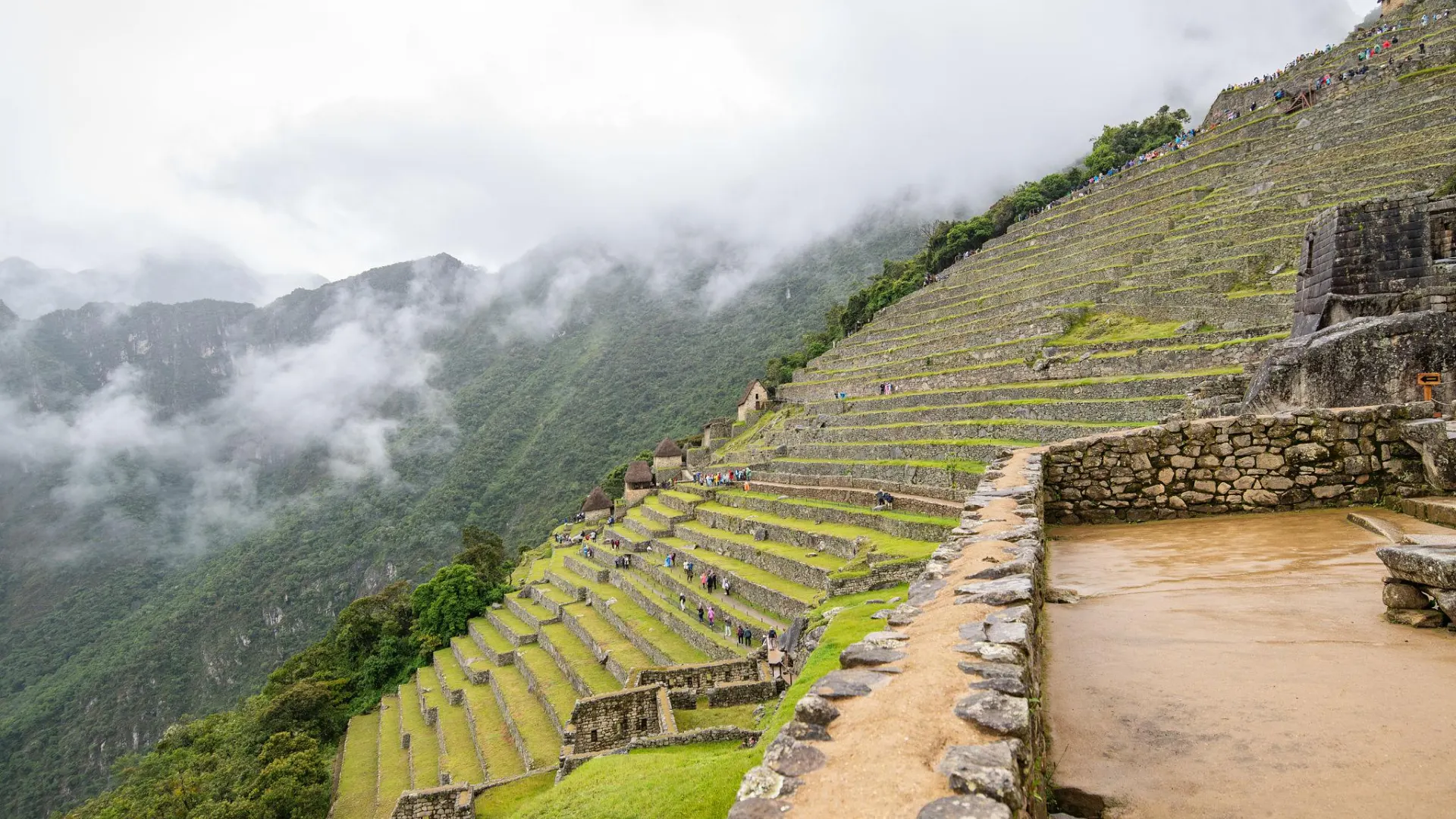
The compromise is in the walkability. The stone stairs become slippery, paths made of soil become muddy, and landslides sometimes obstruct road access to the valley or even railway transport. Plan an extra day if you are going to visit the site in December-March.
IMPORTANT DATE
The Inca Trail will be closed for maintenance during all of February. If February is the only time you have available, you can take the Salkantay Trek or go by train to Machu Picchu.
Dry Season vs Wet Season at a Glance
Here are the two seasons laid out side by side, based on the traveler experience.
| Dry Season (May – October) | Wet Season (November – April) | |
| Daytime conditions | Sunny, dry, 66-70° F | Damp, cloudy days, 66-68° F |
| Nights | Cold; freezes at night in June and July | Moderate; 43-46° F |
| Rain pattern | Rare. A shower every couple of weeks | Daily buildup, heaviest mid-afternoon |
| Trail conditions | Dry, dusty, good visibility | Muddy trail, slippery stone steps and foggy |
| Machu Picchu views | Visibility for most mornings | Misty morning, clears up and repeats |
| Crowds | Big crowds; peak times between June and August | Smaller crowds; holiday exceptions |
| Prices | Most expensive of the year | Lower hotel and flight prices |
| Inca Trail | Open, book your permit months in advance | Closed throughout February |
Cusco Weather by Month
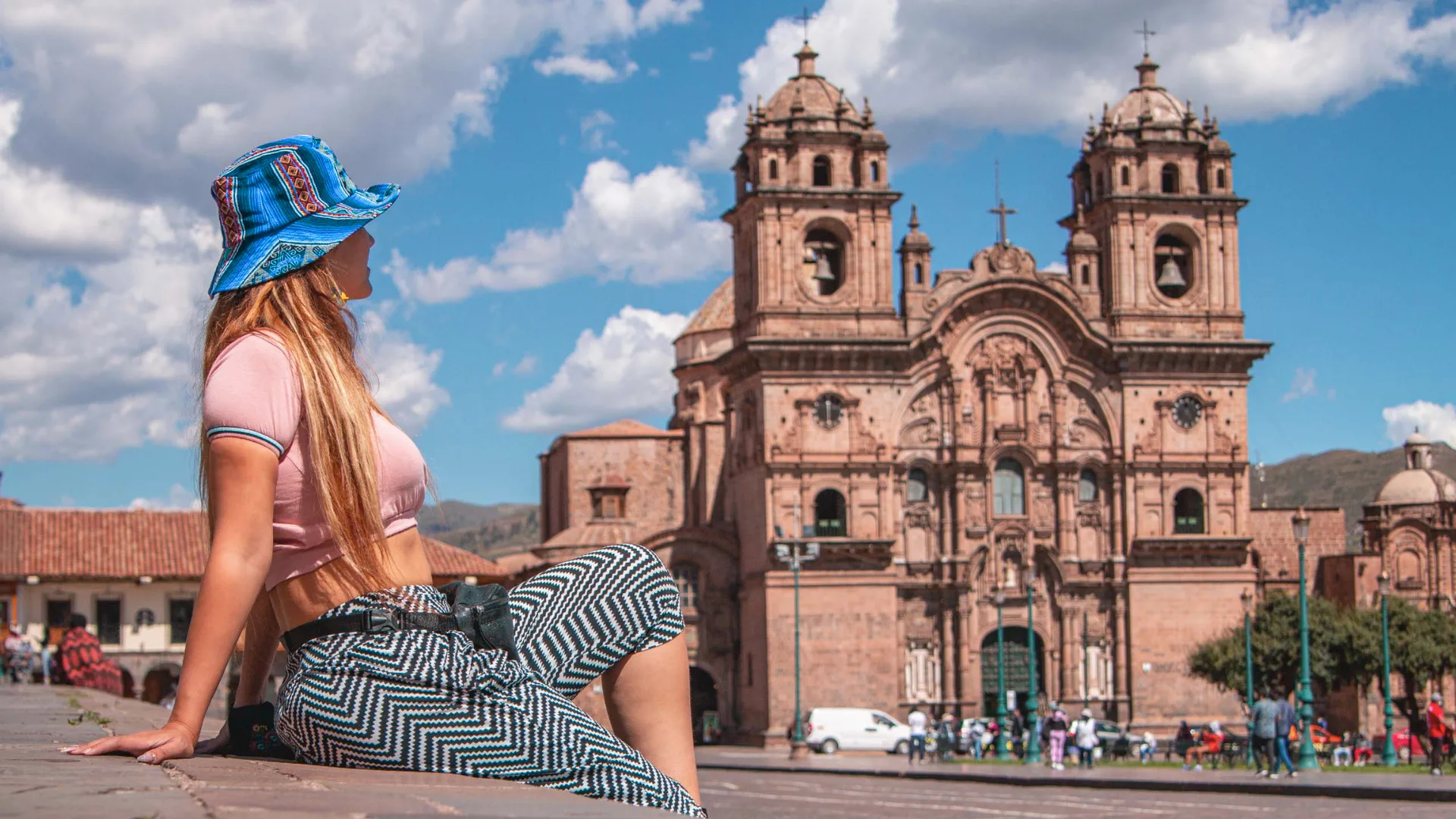
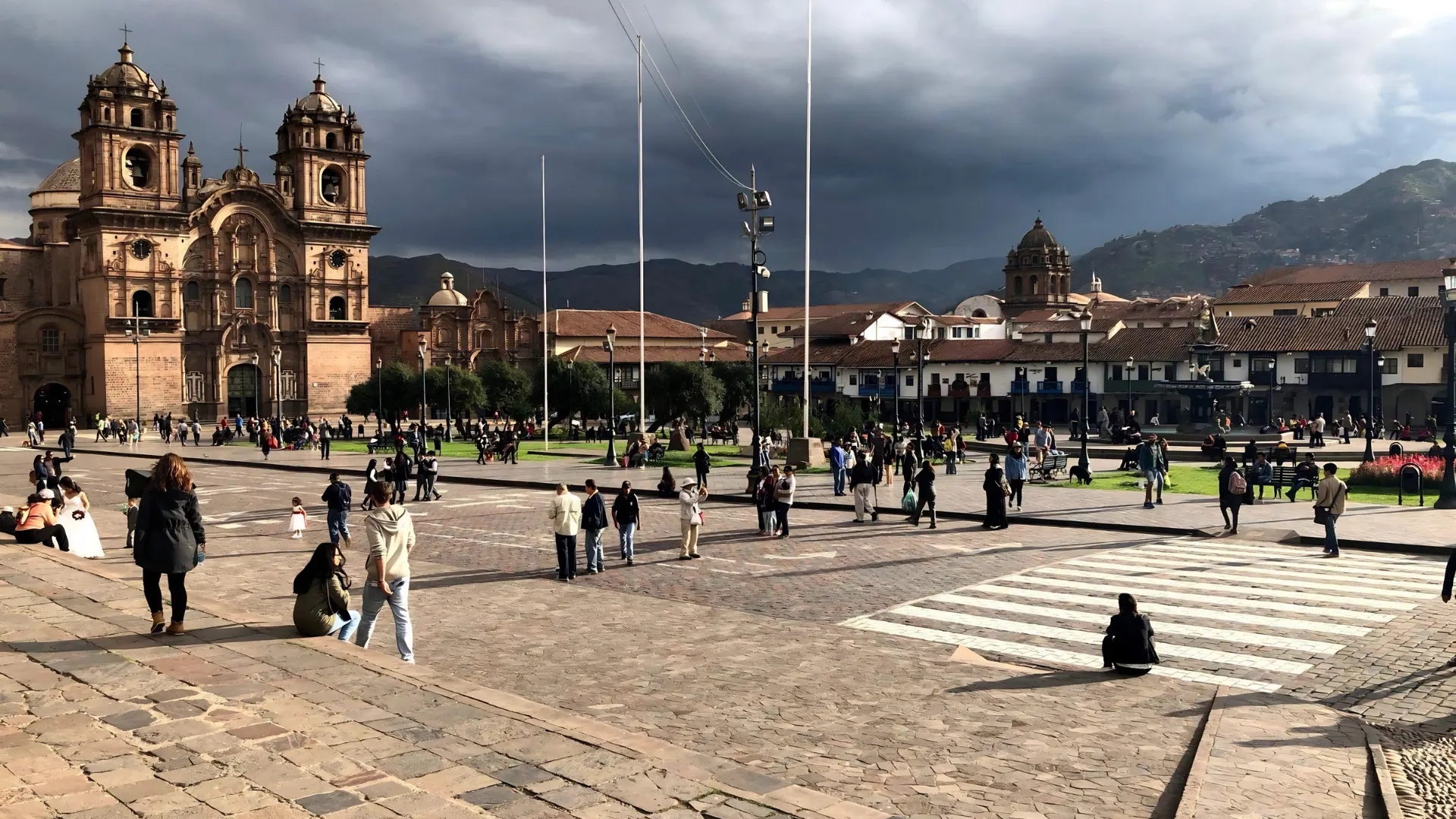
Here is the Cusco weather by month in a single table below. The numbers in the table below represent average values for the city of Cusco. The temperatures in Sacred Valley are several degrees warmer, and those at Machu Picchu are warmer and more humid because it's situated 3,400 feet lower.
| Month | Avg High | Avg Low | Rainfall | Season | Crowds |
| January | 66°F / 19°C | 45°F / 7°C | 5.7 in / 145 mm | Wet | Low |
| February | 66°F / 19°C | 45°F / 7°C | 5.5 in / 140 mm | Wet (peak) | Lowest |
| March | 66°F / 19°C | 45°F / 7°C | 4.3 in / 110 mm | Wet, easing | Low |
| April | 68°F / 20°C | 43°F / 6°C | 2.0 in / 50 mm | Transition | Building |
| May | 68°F / 20°C | 37°F / 3°C | 0.5 in / 13 mm | Dry | Busy |
| June | 68°F / 20°C | 33°F / 1°C | 0.2 in / 5 mm | Dry, cold nights | Peak |
| July | 68°F / 20°C | 32°F / 0°C | 0.3 in / 7 mm | Dry, cold nights | Peak |
| August | 69°F / 21°C | 34°F / 1°C | 0.4 in / 10 mm | Dry, windy | Peak |
| September | 70°F / 21°C | 39°F / 4°C | 1.0 in / 25 mm | Dry, warming | Busy |
| October | 70°F / 21°C | 43°F / 6°C | 1.9 in / 48 mm | Transition | Moderate |
| November | 70°F / 21°C | 44°F / 7°C | 3.1 in / 78 mm | Early wet | Moderate |
| December | 68°F / 20°C | 45°F / 7°C | 4.8 in / 123 mm | Wet | Holiday spike |
Cusco Is Not One Climate, It Is Dozens
This is the information that is usually not provided in most weather guides. The Cusco region spans 27,800 square miles, divided into thirteen provinces and ranges in elevation from glaciated areas above 20,000 feet all the way down to the Amazonian lowlands. In La Convención province of the northern jungle, the temperatures reach up to 89°F, while in Canchis, a southern province of the highlands, they fall to 24°F at night.
This is important because very few people spend their entire stay in the city of Cusco. You are always moving to different elevations, which means that you gain a couple of degrees of warmth for every 1,000 feet that you descend.
| Place | Elevation | Typical high | Typical low |
| Cusco city | 11,150 ft / 3,399 m | 68°F / 20°C | 32°F / 0°C |
| Chinchero | 12,316 ft / 3,754 m | 66°F / 19°C | 28°F / -2°C |
| Maras | 10,826 ft / 3,300 m | 68°F / 20°C | 32°F / 0°C |
| Pisac | 9,751 ft / 2,972 m | 71°F / 22°C | 37°F / 3°C |
| Calca | 9,596 ft / 2,925 m | 77°F / 25°C | 41°F / 5°C |
| Urubamba | 9,419 ft / 2,871 m | 73°F / 23°C | 39°F / 4°C |
| Ollantaytambo | 9,160 ft / 2,792 m | 75°F / 24°C | 39°F / 4°C |
| Machu Picchu | 7,972 ft / 2,430 m | 80°F / 27°C | 46°F / 8°C |
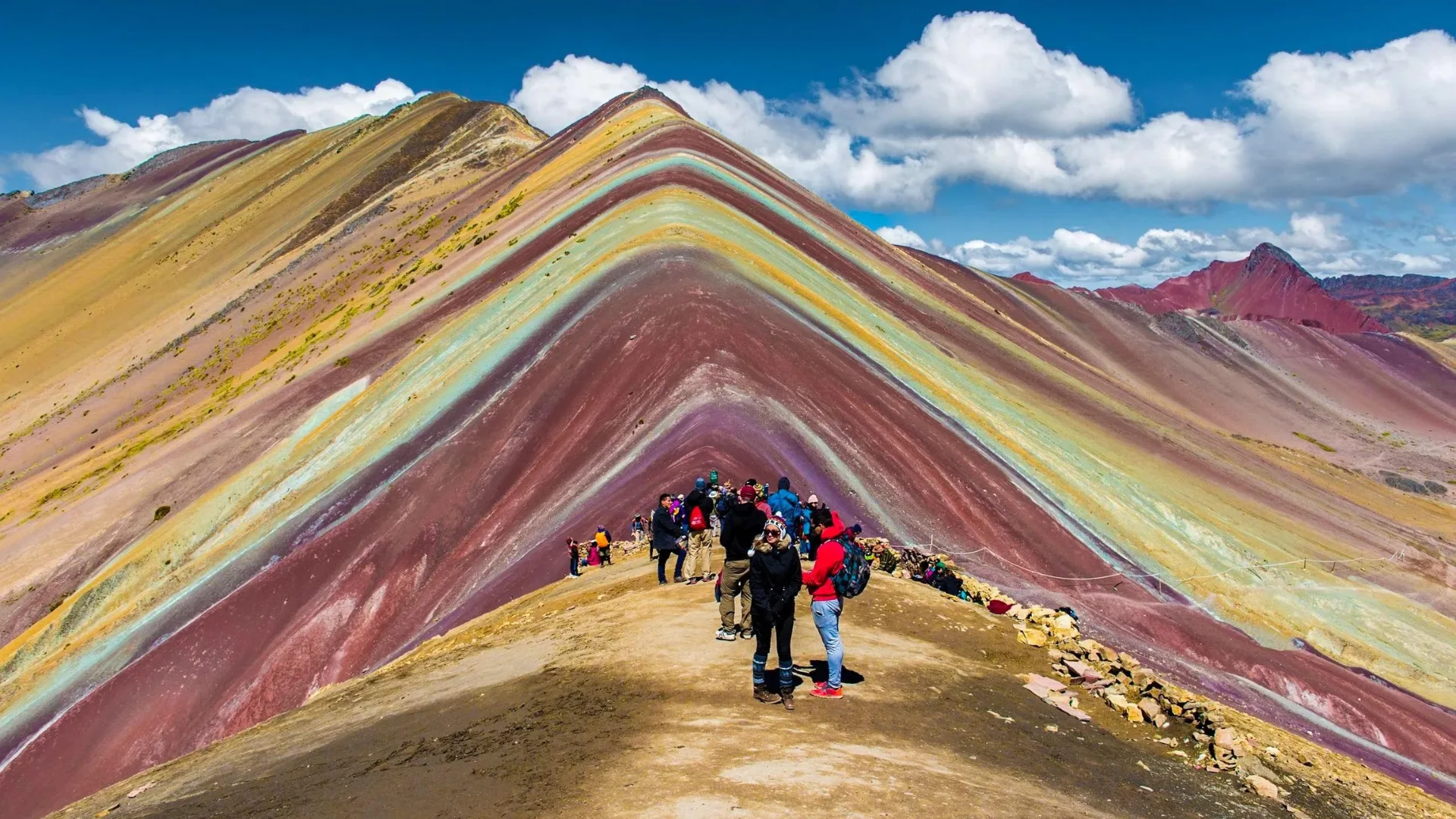
| Rainbow Mountain | 16,522 ft / 5,036 m | 57°F / 14°C | 14°F / -10°C |
| Ausangate base camps | above 15,000 ft / 4,600 m | 32°F / 0°C | 1°F / -17°C |
The Sacred Valley Is Warmer Than Cusco
The Sacred Valley is found along the Vilcanota River from 9,100 feet to 9,800 feet, that is 1,300 feet to 2,000 feet lower compared to the city. This is felt as soon as you arrive. Ollantaytambo and Calca heat up nicely during the day, and the nights are much easier than those of Cusco.
That is precisely the reason why many tour guides recommend spending your first two nights here. You get easy adaptation to altitude and good weather all at once. The exception is Chinchero; it is located higher up compared to the city and reaches 12,316 feet.
Machu Picchu Is Warmer and Wetter Still
Machu Picchu lies around 7,970 feet above sea level at the fringe of the cloud forest, where the Andes begin their descent into the Amazon rainforest. Daytime temperatures at this site get to around 80°F, with minimum temperatures never dipping below 46°F. However, the downside is humidity and precipitation. It is the cloud forest that supplies the site with its much-fabled mist, and it also boasts more than 400 varieties of orchids within its historical grounds.
Practical tip: don’t pack for Cusco thinking it will serve you well at Machu Picchu. By 10 a.m., you’ll be lugging your jacket around, and by 2 p.m., you’ll be wishing for your rain jacket.
The High Passes Are a Different Sport
The Rainbow Mountain rises at an elevation of more than 16,500 feet, where the temperature during the day goes up to about 57 degrees Fahrenheit, and the temperature drops to 14 degrees Fahrenheit at night. Treks on and around Ausangate, which is the highest mountain in the area at 20,944 feet, are even colder. These are the areas where snow, freezing rain, and wind chill are a possibility in every month of the year.
In case your trip includes Rainbow Mountain, Humantay Lake, or a high pass along the Salkantay Trail, bring appropriate cold weather gear irrespective of whatever the Cusco forecast may say.
Why the Forecast You Checked Is Probably Wrong
These people have all accessed this site via entering terms such as weather Cusco, temperature Cusco, or weather Cusco Peru into their phones. These searches all yield the same information; one number for one point, specifically the city center at an altitude of 11,150 feet. This number is precise but not particularly helpful.
This is because of all the reasons above. When your activities for the day include catching a bus to Ollantaytambo, a train ride through the valley, and hiking at Machu Picchu, you experience four separate climate zones during the course of your day.
Check the Forecast for Where You Are Going
- Check Machu Picchu weather forecast separately from that of the city. Machu Picchu has a different climatic zone, not just a variation of the city’s climatic zone.
- When going to high altitude on a day trip, assume weather to be 15-20 degrees colder than that of the city and expect wind.
- In case of rainy season, don’t think of rainy or non-rainy but the time of rainfall. In case of 70 percent chance of rainfall, consider it an hour of rainfall in the afternoon.
Trust the Season Over the Ten-Day
Predictions of mountain weather conditions more than three days into the future can be pretty much considered guesswork around here. If you are still in the process of selecting your dates, then the seasonal trend provided in the table above will be of much more help to you than any ten-day forecast.
When Is the Best Time to Visit Cusco?
There is no single right answer. It depends on what you came for.
Best for Hiking and Trekking
May, June, and September. You have dry trails and good visibility without the full peak of July-August. Our personal favorite is September, when the greenery has returned to the landscape but the rains have not yet started.
Best for Clear Machu Picchu Photos
June through August. Fog will clear up every day without fail and you will enjoy blue skies for a long while. Get to the site early, for the first opening time slot.
Best for Fewer Crowds
February and March. This time of the year, Cusco seems like an actual Andean working city again, as opposed to being a tourist destination. Restaurants have space, ruins have room, and permits are easy to acquire. You are bound to get caught in some rain.
Best for Festivals
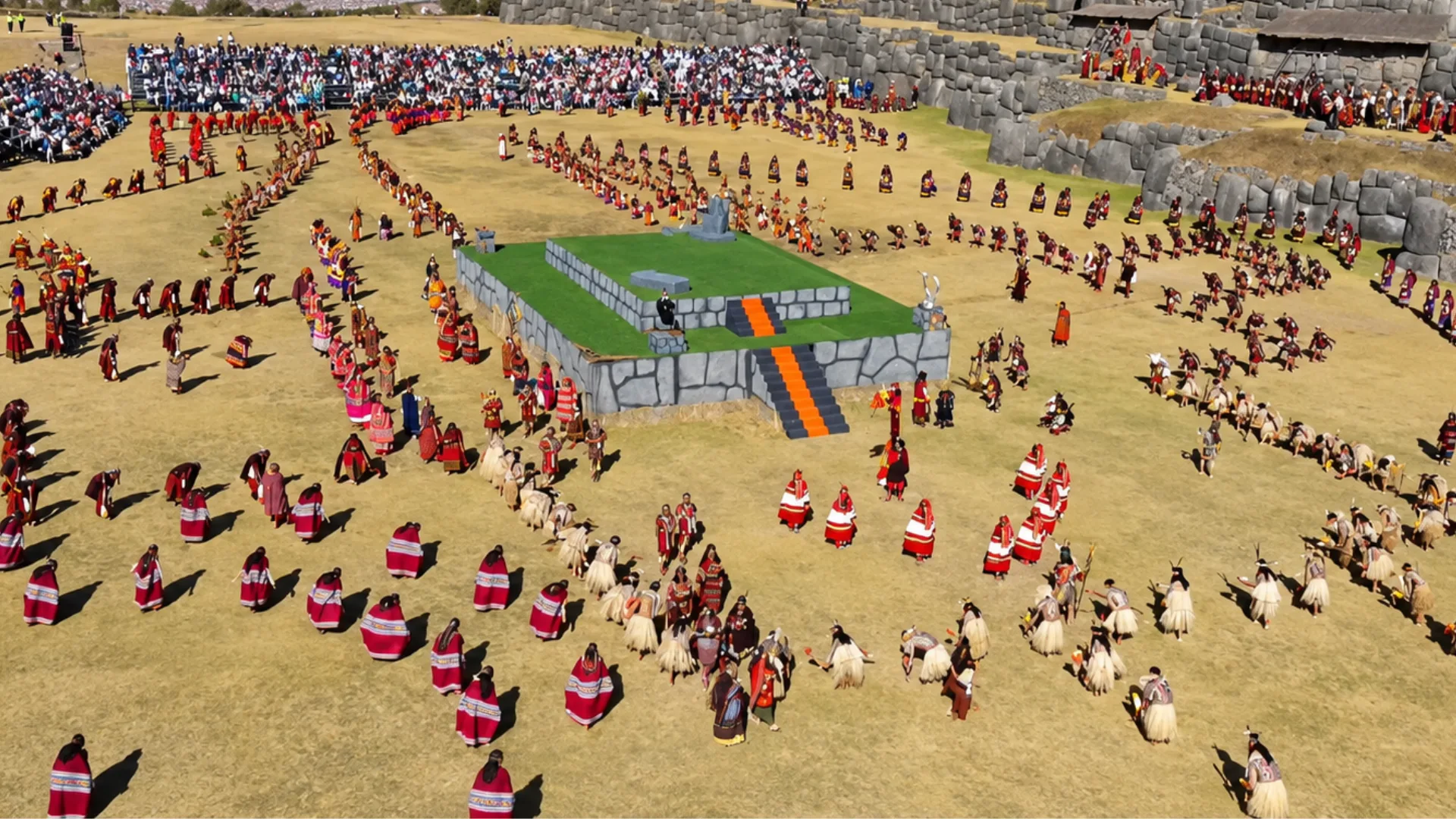
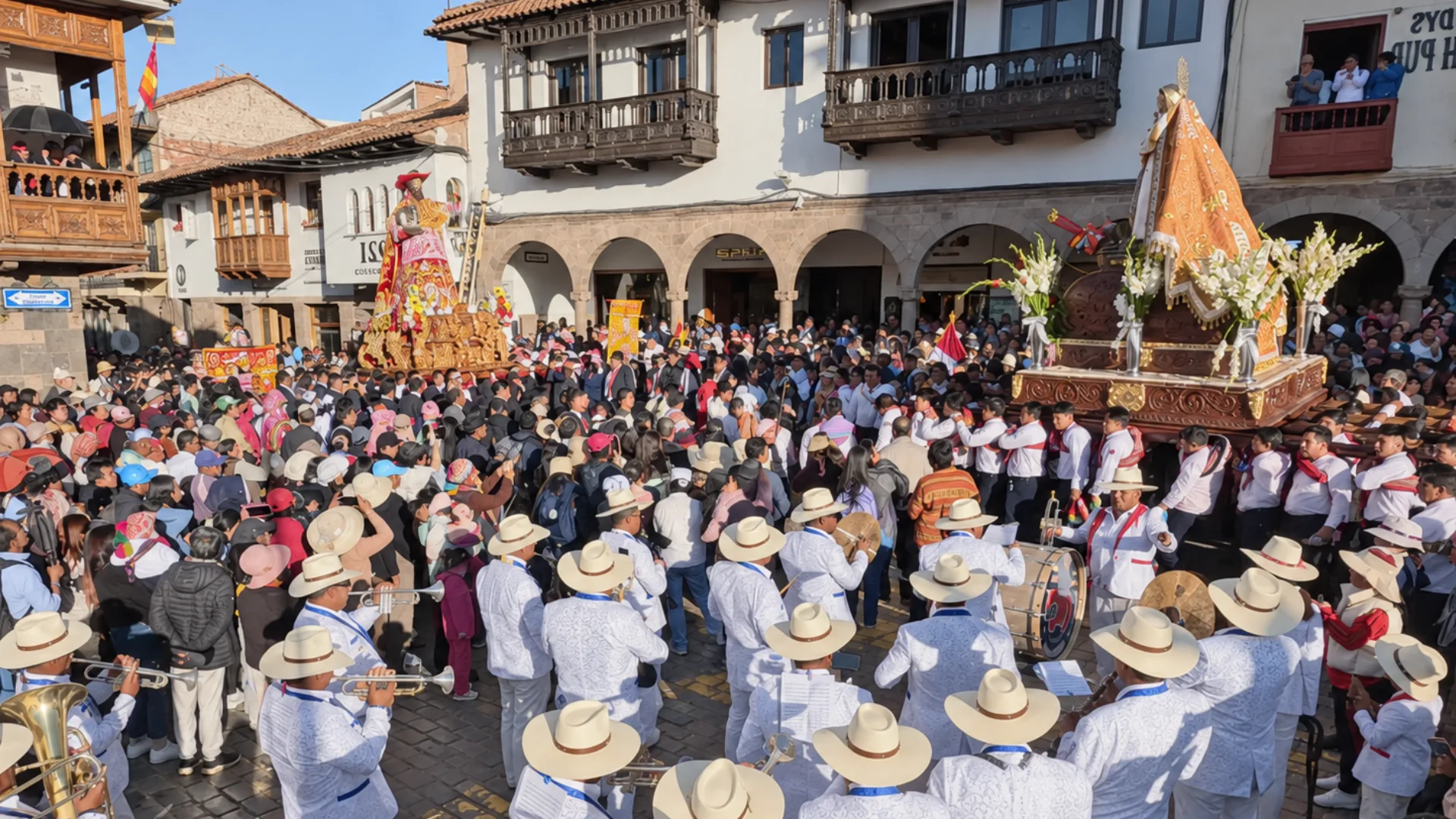
Definitely June. Weather in Cusco during June promises you clear skies all month long, along with celebrations corresponding to them. Inti Raymi in June 24 is the biggest celebration of the Andes, filling up the entire city along with Corpus Christi before that. If you would like to experience it, book accommodation four to six months in advance.
Best for Budget Travelers
November and March. Shoulder seasons mean no holiday price surges, reasonable weather, and skipping the rainy season of February as well.
What to Pack for Cusco Weather
Pack for one warm day and one cold night every day. That is all there is to it.
The Layering System That Works
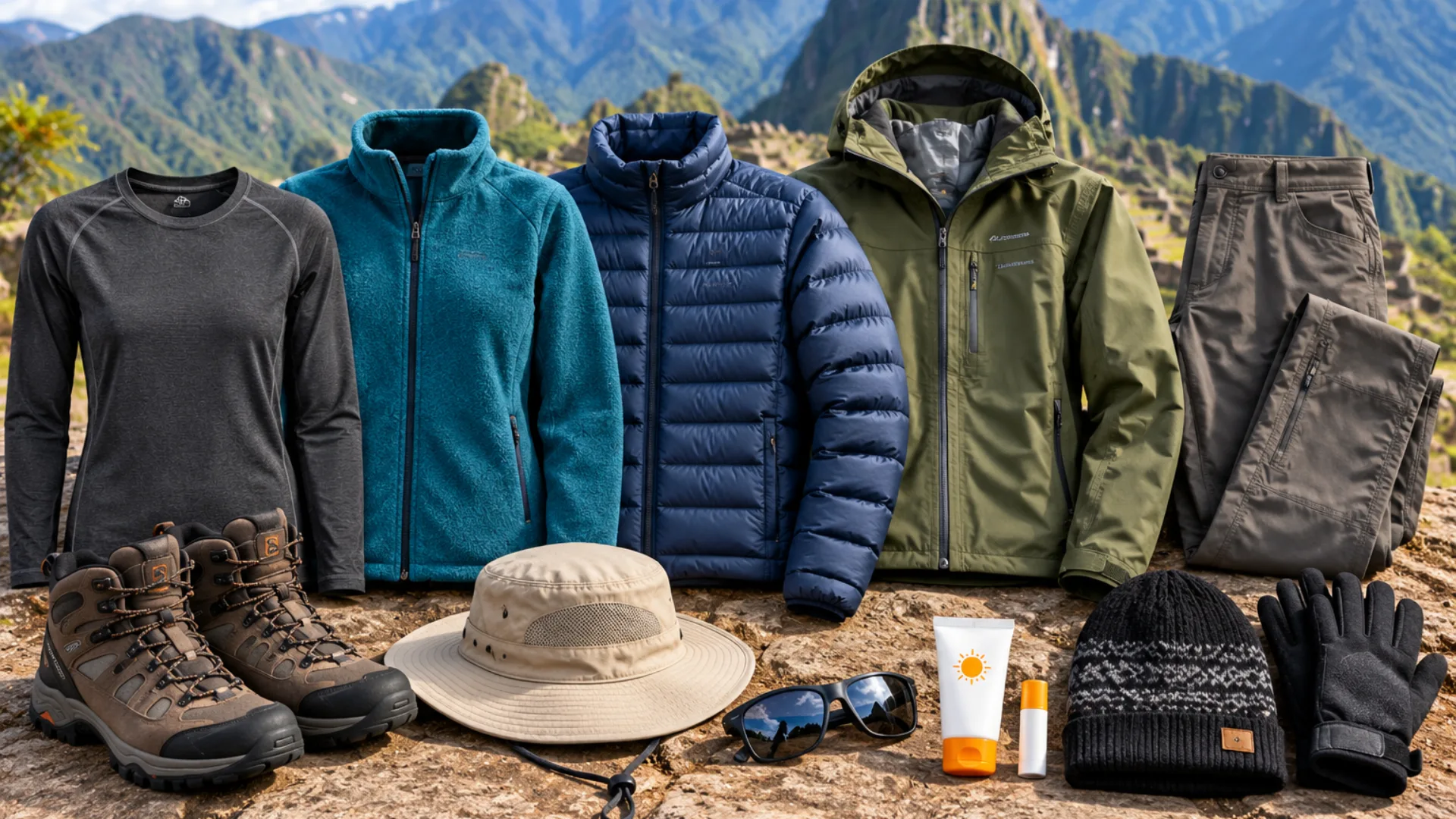
- Base layer: merino or synthetic long sleeve. Cotton holds sweat and turns cold on you.
- Mid layer: fleece or a light down jacket. This is what you will live in after 5 p.m.
- Outer layer: a windproof, waterproof shell. Useful in every month of the year.
- Bottoms: hiking pants that dry quickly. Jeans are heavy and miserable when wet.
- Footwear: broken-in boots with ankle support and real tread. Cusco streets are steep, uneven cobblestone.
- Sun kit: SPF 50, wide-brim hat, UV sunglasses, lip balm with SPF.
- Warm hat and gloves for June through August. You will use them on early morning starts.
Wet Season Additions
- Rain cover for your daypack, plus dry bags or heavy zip-lock bags for electronics.
- Quick-dry towel and a second pair of socks in your day bag.
- Poncho over an umbrella. Ponchos protect your backpack and hands when it is raining.
LOCAL TIP
There is no need to take everything with you. There are many outdoor equipment stores near the Plaza de Armas and San Blas district. It is easy to rent fleece, sleeping bags, and trekking poles, which are inexpensive.
Staying Warm Indoors, Which Nobody Warns You About
This is something that visitors will always pick up on immediately upon arriving. Central heating is nonexistent in the region of Cusco. Most guesthouses, hostels, and even mid-range hotels located within the old town lack central heating completely, leaving your room at the same temperature that it is outside at night. If the night is a July night, then it is close to freezing.
How Locals Actually Handle It
Alpaca blankets. Every single bed in the city is covered in them and they work far better than they look. If you are cold, just ask for some more. Nobody will think anything of it.
Hot water bottle purchased from any market and left overnight. Just three or four soles and it changes everything about the night.
Sunlight as a heating device. You will see the shopkeepers standing outside their doorways during the middle of the day, but they aren’t taking a rest break. They are heating themselves up, since the street is hotter than the room.
What to Check Before You Book
High-end hotels do have heating facilities, but you should never take anything for granted. Mail them asking specifically, particularly during June, July, and August. You might also want to inquire about the timings of hot water availability, as some of these older buildings work on a time-limited basis.
If you get chilly easily, a down jacket is the one thing you must carry in your luggage. Not just for hikes, but dining out, traveling by bus, and sleeping.
How Altitude and Weather Work Together
Altitude sickness is worsened by dehydration, which occurs rapidly at high altitudes. You should aim to drink around two or three liters per day, and more if you are hiking.
Allow yourself two full days in Cusco or, even better, the Sacred Valley, before attempting any activity. This is because the valley lies 500 feet lower than the city and makes for a gentler introduction. Do not drink too much alcohol on your first night. The tea from coca leaves aids some people, but has no effect on others.
If you get a headache that cannot be cured with medication, or have trouble breathing while at rest, move to a lower elevation and consult a doctor. Altitude sickness is very common and generally not very serious.
Frequently Asked Questions About Cusco Weather
Does it snow in Cusco?
Almost never in the city itself. Frost is common on winter mornings, but snow at 11,150 feet is rare. Snow does fall on the high passes above 14,000 feet, including sections of the Salkantay Trek, mainly during cold snaps between June and August.
What is the coldest month in Cusco?
July. Daytime highs stay near 68°F, but overnight lows average around 32°F and can dip lower during a cold snap. June is a close second.
Can you visit Machu Picchu in the rainy season?
Yes. The site is open every day of the year. Expect mist, slippery stone, and a real chance of afternoon rain, along with far smaller crowds and a much greener landscape.
Is the Inca Trail ever closed?
The classic four-day Inca Trail closes throughout February every year for maintenance. All other months require a permit, and dry-season permits typically sell out five to seven months in advance.
How many layers do I actually need?
Three is the working number: base, insulating mid, and a wind and waterproof shell. You will add and remove them several times a day.
What is the weather like at Rainbow Mountain?
Cold and exposed. Rainbow Mountain sits above 16,500 feet, where daytime highs reach about 57°F and overnight lows fall to roughly 14°F. Most tours start before dawn, so the coldest part of your day is the drive and the first hour of walking.
What is the weather like in the Sacred Valley?
Milder than Cusco. Valley towns sit 1,300 to 2,000 feet lower, so highs reach 73°F to 77°F in Urubamba, Ollantaytambo, and Calca, and lows stay around 39°F to 41°F. Chinchero is the outlier, sitting higher than the city and colder than the rest of the valley.
Do hotels in Cusco have heating?
Often not. Budget and mid-range places in the historic center usually rely on thick alpaca blankets instead. Confirm with the property directly if you are traveling between May and August.
Is July winter or summer in Cusco?
Winter. Peru is in the southern hemisphere, so July falls in the middle of the cold, dry season. It also delivers the clearest skies of the year, which is why it is peak tourist season despite being winter.
Is Cusco weather the same as Machu Picchu weather?
No. Machu Picchu sits at about 7,970 feet, roughly 3,200 feet lower, on the edge of the cloud forest. It is warmer, more humid, and gets more rain. Bring the rain shell even on a clear Cusco morning.